Tag Archives: books

The Man Who Saw Everything, a Booker Prize long-listed novel by Deborah Levy

Blurb quotes on the Kindle edition and a few reviews I’ve found online say this novel is about history, totalitarianism, the nature of love.  A time-bending sort of post-modernist Zelig meets the Hallmark Channel.  Which is not what I found in the reading of it; not at all.

I do get the time-bending comment: with sections introduced by chapters titled London, September 1988, East Berlin, September 1988 and London, June 2016  but passages within each of those wherein protagonist Saul Adler seems not to know which time period he is in.  That effect is subtle though, until, in what we are given to believe is 1988, Saul says he noticed “a small, flat, rectangular object” lying in the road and, a few moments later, that “The object was speaking.  There was definitely a voice inside it…”  As confirmed later, we readers recognize that object as a cell phone; but not of any type that would have existed in 1988.

A few chapters later, while speaking with his lover Walter in Berlin and still in 1988, Saul foretells him of the fall of the Soviet Union, toppling of Berlin’s wall and collapse of the Soviet Union. Nowhere does Levy explain this prophecy as result of magic, time travel, or anything else.  The incident is just dryly related, and the reader left to puzzle.  Other anomalies follow, at first few and far between but then more frequent until, by the final chapters, Saul has clearly come unmoored from the present and is adrift among all the times he’s lived, and all their places and events.

One possible wink from the author: Jennifer’s highly regarded and financially successful art photography is described as being all about damage, distortion and breaking images into random parts and pieces – just as memory disrupts and rearranges our recall of the past.

Throughout, even as Saul’s language suggests he is narrating events in the present tense there seem to be jumps and skips between paragraphs, incidents, even lines. Descriptive passages tend toward the skeletal: rather than fulsome observations connected to a situation, we get tiny scraps of setting, one odd bit here, another unrelated and seemingly insignificant bit there.  Much the way old memories may consist only of whichever odd details lodged most deeply in the archive, rather than the organized observations one would consider worth noting while inside the situation.

Eventually, Saul is hospitalized and terminally ill (though no one ever identifies a specific malady) and we hear those around him patronizing, papering over his misidentification of doctors as characters from his past.  At which point it seems certain that Saul is suffering from dementia.  Which realization, considering those odd anomalies earlier on, led me to conclude with somewhat less certainty that the entire novel from start to finish consists of his dementia-altered memories. Initially these track somewhat closely with real events and linear time but later, as his illness progresses, the recollections become peppered with progressively more holes, more starts, stops and doubling back until, in the last, he jumbles every time and place and person together. ‘Seeing everything,’ as the title suggests, but all at once,. This  climaxes as Saul recalls/imagines himself crossing Abbey Road in a scene which has been recounted several times over the novel’s course, varying each time but always ending in an mid-road collision. In this final instance, Saul makes it all the way across the road and reaches out to take the outstretched hand of Luna, another lover from his youth who went missing in Berlin back in 1989 and never resurfaced.  Never, that is, until this last ‘crossing over’ moment of Saul’s addled (hence the surname Adler?) memory/imagining.

I have no direct knowledge what was the author’s intent; it’s quite possible that I’m misreading things altogether. I readily admit dryness and nonlinearity of this Booker Prize long-list honoree are not my native terrain; it may all be above my comprehension.  For this reader, though, the political or sociological commentary which others seem to find here feel peripheral, more context than theme.  What I do strongly connect to is the intensely personal portrait of a mind going to pieces due to some form of progressive age-related dementia.

If one is up for that, The Man Who Saw Everything has much to offer. 

P.S. – speaking of going to pieces, the new novel E Unum Pluribus, is currently available online, in six free installments.

Packed with intrigue and fueled by politics, economics and murder (as well as gender, class, language and even the origins of faith), E Unum Pluribus imagines how the USA’s current ‘culture wars’ may bring about its end, and the chaos of smaller sovereignties which might rise from ro replace it. 

Anyone can read this novel totally for free simply by navigating to the home page of this website and selecting E Unum Pluribus from the top menu, or via this link: https://robinandrew.net/2026/01/01/e-unum-pluribus/

A Tale of Two Cities

A novel reflection of its time – and of ours!

Ah, a ‘Classic.’  One of those volumes you pick up because, – well, because you were supposed to have read it long ago but didn’t and instead used the Classics Illustrated version to eke out a book report, and now that you’ve visited the cities where it takes place and the home of the author and are seeing history repeat itself every day all around you (and not in the good ways…).  Confession over, this just seemed like a good time to finally make the effort.

And an effort it is, given Dickens’ pacing – a simple statement by one of his characters may take a full page of text, or several.  There’s a frustrating prissiness, also, to the language: no one ever seems to say anything directly, they’re constantly alluding to the subject, circling around the point and adjectivizing till the cows come home too late for the ball.

Character development is fairly rudimentary here as well. The eventual hero, Sydney Carton, seems to have accepted himself from the start as a dishonorable failure, for no documented reason. That the others tolerate his sullen and self-pitying presence must be assumed to reflect their Good Christian Upbringing and duty of charity (granted, attorney Lorry also finds him a cheap and useful lackey).  Romantic lead Charles Darnay, clearly intended to be a decent man wrongly accused and sentenced, is little more than a cipher; too honorable to be credible and yet very happy to passively accept the good fortune others keep shoving his way.  Lovely Lucie Manette is given little to do but swoon and faint and stand by her man Darnay, while her father, “the Good Doctor” Manette, comes off as Mother Theresa in tweeds.  Perhaps the most fully conceived character is Ernest Defarge, Manette’s former servant and now wine merchant/revolutionary, whose dueling loyalties to his old master and to The Revolution cause him more internal conflict (and this reader more extended interest) than any of the others.  Ernest’s wife, the infamous Madame Defarge, is as bloodily single-minded as he is conflicted, making their odd coupling far more intriguing than Darney and Lucie’s butterflies-circling-round-the-head romance can ever be.

Dickens does paint a vivid picture of a nation tearing itself to pieces, effectively contrasting the arrogant inbred presumptuousness of French aristocracy with the abject poverty and hopelessness of the nation’s peasants and slumdwellers. That the aristocrats of his native Britain come off more sympathetically may be due to nationalist pride, or the fact that their system started working toward a semblance of equality nearly six hundred years before the start of the French eruption.  Either way, this is fiction with a social conscience and Dickens clearly hoped to educate his 1859 audience to the very real issues behind the headline excitement of guillotine and barricades. Dickens wrote this roughly 70 years after the Reign of Terror; George Orwell’s Down and Out in Paris and London came roughly sixty years after that and we are now about a hundred years after Orwell watching the rise of a new aristocracy fueled by private equity and technology monopolism suggest that neither France, nor once-great Britain nor the smoldering USA have learned much from Paris’ example.

Knowing all along how the story is going to end (thank you again, Classics Illustrated) does take away some drama its original audience would have experienced.  Even allowing that, the genteel way in which this tale circles to its last page, the very late injection of a poor damned damsel to ease Carton’s heart, and even Carton’s final oration amount more to a tailing-off than a climax. That the famous “It is a far, far better thing I do…” speech turns out to have been an unspoken exercise in self-praise colors its inspirational value with a heavy dose of narcissism; a coloration the more striking given that today’s most prominent nouveau-aristocrat makes daily display of the very same failing.

Charles Dickens is too long gone from this earth, and his place in literary history far to secure, for anything I say to harm his emotions, legacy or purse. In full expectation, then, that the world will forever rate A Tale of Two Cities a far, far better novel than any I may ever write, I’ll settle for confirming that it is a classic, but largely a period piece. Valuable more for what it shows of the era in which it was written and acclaimed – and perhaps as a nineteenth-century equivalent of today’s on-line influencer marketplace by having first been self-published in serial format – than for the actual experience of reading it.

P.S.speaking of serialization: the new speculative fiction, E Unum Pluribus, is currently available online, in six free installments.

Packed with intrigue and fueled by politics, economics and murder (as well as gender, class, language and even the origins of faith), E Unum Pluribus imagines how the USA’s current ‘culture wars’ may bring about its end, and what sort of institutions might rise from its rubble.  Anyone can read this novel totally for free simply by navigating to the home page of this website and selecting E Unum Pluribus from the top menu, or via this link: https://robinandrew.net/2026/01/01/e-unum-pluribus/

This post is public, so please share as widely as you wish.

If you like what youread here at robinandrew.net, please subscribe – it’s free!

If Gender Ain’t Sex, What is it?

(The novel, E Unum Pluribus, is narrated by Jack Shirley, an office intern whose gender behavior doesn’t always fit the expectations common in contemporary Amero-European culture.  Anticipating that Jack’s character may arouse comment, this is one in a series of posts to share the author’s thoughts around those expectations. Caution: this one gets a bit long…)
A previous post* suggested, given that the vast majority of social interactions do not afford us the opportunity to know what reproductive cells any individual’s organs produce (the recent Presidential definition of ‘sex’), nor whether they have a penis or a vagina (the more common and time-tested way of differentiating the sexes) nor (in deference to current anti-trans sentiments) what their genitals may have looked like at the time of their birth (a particularly difficult standard to meet, in any normal social situation!), it is very rare that we actually and definitively know the sex of any person we may meet.

That post went on to comment that the common practice of calling some persons men and some women (as opposed to male and female) is really based not on sex but on gender, the wide range of visual, audible, or other cues that we presume to be consistent with the sex we cannot actually identify. 

Herewith, a (very) abbreviated list of some of the cues which are available in social contexts and so may be incorporated as we make our presumptions of sex (starting, for no critical reason, from top and running towards bottom):

Length of the hair on one’s head – and its style of cut, neatness/carelessness

Whether that hair is obviously bleached or colored

Whether it interferes with range of vision, or is artificially held in position (clips, spray…)

Pattern of visible hair loss (if any; though this can be obscured by corrective measures)

Earrings (none, one or two or more; fixed in place or changeable; size, shape, color, material…)

Size and shape of head

Ditto, of face

Ditto, of eyes

Ditto, of eyebrows and whether they appear to have been plucked, waxed or otherwise altered

Ditto, of nose

Ditto, of lips, and their color (whether natural, or artificial)

Wearing of cosmetics/make-up – how much, how ‘natural,’ dramatic – or plausibly deniable.

Presence, extent and appearance of body hair on face, legs, chest, arms, armpits, nostrils, ears, groin…and whether that is flaunted, hidden, styled, removed or simply never spoken about

Presence of tattoos – size, location, extent, content – as well as piercings or other body modifications

Noticeability of laryngeal prominence (‘Adam’s Apple’)

Pitch, tone, softness etc. of voice, not to mention word choice, emotional content of speech…

Width of shoulders (relative to chest, hips etc.)

Thickness of arms (is the person ‘pumped,’ ‘skinny,’ ‘flabby,’ or ‘undeveloped’…)

Size and/or slenderness of hands and fingers, visible veins on back of hands

How carefully fingernails are trimmed, filed and cleaned (or not!) and to what curvature

Presence of paint or polish on said fingernails

Convexity of the chest (flat, not flat, prominent; in near-infinite variations and degrees)

Color, fabric, pattern of whatever clothes cover the upper body (shirt, blouse, tunic, crop, tank…)

Size and location of fasteners on such clothes

Tailoring of such clothes (sleeve length and cuff style, collar style, cut full or fitted, cut short to expose midriff, or tailored long to cover hips; tucked or untucked….)

Types, amount, styles and weightiness of jewelry

Slenderness of waist, relative to other body parts

Location of waist (high, thanks to long legs and a short torso, or low due to short legs and long torso) though this is often disguised or manipulated high- or low-waisted clothes

Prominence, or not, of ‘belly’

Location and proportions of belly or abdominal bulk

Width of hips/butt relative to waist and shoulders.

Shape and ‘fullness’ of derriere (butt)

Wearing clothes that cover each leg separately (pants) or together (skirt, dress, robe, gown, toga, sarong, thobe, kilt, gho, dhoti, kimono, boubou, djellaba, shalwar kameez, etc.).

Whether footwear is traditionally functional, or whimsically decorative and ‘impractical’

Height of shoe heels (cowboy boots being an exception to the usual  interpretation of this)

Paint or polish on toe nails

And, abandoning the head-to-toe geography, a few more generalized gender distinguishers:

Dressed in clothes that look practical/durable/rugged, or obviously decorative (‘frivolous’)

Wearing an ‘outfit’ (meaning multiple items of the same fabric and color, or items carefully and obviously selected to create a nameable ‘look’)

(Other than a man’s business suit, which is very carefully regimented and strategized and certainly intended to convey a certain ‘look’ and image, but would never be called ‘an outfit’ by the sort of men who habitually don it)

Posture (shoulders or hips forward? head high or neck bent? spine straight or curved?)

Gait (long or short strides, quick or leisurely, bowlegged, pigeon-toed, bounding, ‘mincing,’ marching…)

How one sits or crosses one’s legs – a man-spread vs. an aspirin between the knees look

Default facial expression – open and welcoming, serious, wary, challenging, belligerent…

Engaged in an activity or occupation commonly thought of as manly or feminine, serious or frivolous, rowdy or refined, graceful or violent, ‘productive’ or ‘women’s work.’

Smelling sweetly of perfume/cologne

Or, less sweetly, of sweat, waste, food or beverage, poor hygiene or simple lack of the economic means to avoid odors

Exposing the flesh of one’s legs, arms, shoulders or more in any but an athletic situation (acceptable and even encouraged for females even in very formal settings, but highly unacceptable for males in those very same settings)

So? (you may well ask).

Clearly, that list can go on almost without end, but the above examples seem sufficient to illustrate that, as much as we regularly employ such cues to classify individuals as ‘a man’ or ‘a woman’ and also, very importantly, to critique individuals for not behaving ‘like a man’ or ‘like a woman,’ none of these cues are actually direct consequences of the form (or function) of a person’s reproductive organs. 

And, given the number of such cues, it is virtually impossible that any two individuals will exhibit exactly the same variation on every cue (except perhaps, identical twins dressing identically and acting identically as a prank; an exception which actually helps illustrate the validity of the rule in every other case).  Even uniformed personnel and incarcerated persons – or performers in a chorus line – who are required to dress uniformly and follow uniform rules for hair, jewelry, cosmetics, etc., are readily distinguished from one another by various gender cues.

Oh, and:

Many of these cues are exhibited and/or interpreted differently by individuals of different racial or ethnic heritage

Many of these cues are exhibited and/or interpreted differently by persons from different cultures, locales, native languages and even political leanings

Many of these cues are, or have been, interpreted differently by persons of different generations, or historical periods

Those statements are true despite the relatively slow pace of natural biological evolution giving assurance that the form and function of male and female sexual organs do not differ significantly from one heritage, culture or time period to another, so those differences of expression and interpretation cannot be dictated by what we say governs one’s sex.  Though expressions of gender cues may very well be chosen in conscious or subconscious effort to appear as one sex or the other; such choices would be entirely unnecessary if one’s actual sex was as apparent and binary as we are conditioned to presume.

Further, for each such cue, there exists a wide range of variance among males, and also a wide range of variance among females and one can readily identify persons who otherwise appear to be men, but whose expression of a particular cue falls within the range of variance exhibited by females for same. Conversely, one could readily identify persons who otherwise appear to be women, but whose expression of a particular cue falls within the range of variance exhibited by males.

For those reasons and more, identifying any number of ‘masculine’ or ‘feminine’ cues given out by any individual can, at best, influence one’s perception of the likelihood that that individual is male or female but none of these cues, by themselves or in combination, are actually reliable proof of any individual’s biological sex

To the extent any publicly available cues reveal anything at all about an individual, it is their gender, not their sex and given the number of possible cues and the variations in how each individual exhibits or interprets each of those cues over time, the reality is that there are not two genders – one exclusively manly and the other exclusively womanly and each fixed at birth and separate from the other – but as many genders as there are individuals.

(If not more, since one’s expressions of many such cues naturally varies from day to day and over a lifetime!)

Thus, ‘non-binary’ is far more than a woke label for some newly-invented identity group of persons who intentionally violate gender norms.

In the most basic sense, ‘non-binary’ is what all humans are.  It is part and parcel of being an individual.  Every one of us embodies, consciously or not, our own unique blend of gender cues and characteristics.  Acknowledging that, and allowing for it in our language, laws, polices and behaviors towards one another is a prerequisite to allowing life, liberty and the pursuit of happiness to all.

It’s time to slay the gender binary!

*Previous post: Humans Got Gender!  7/27/2026, https://nobodysays2025.substack.com/publish/post/203904286

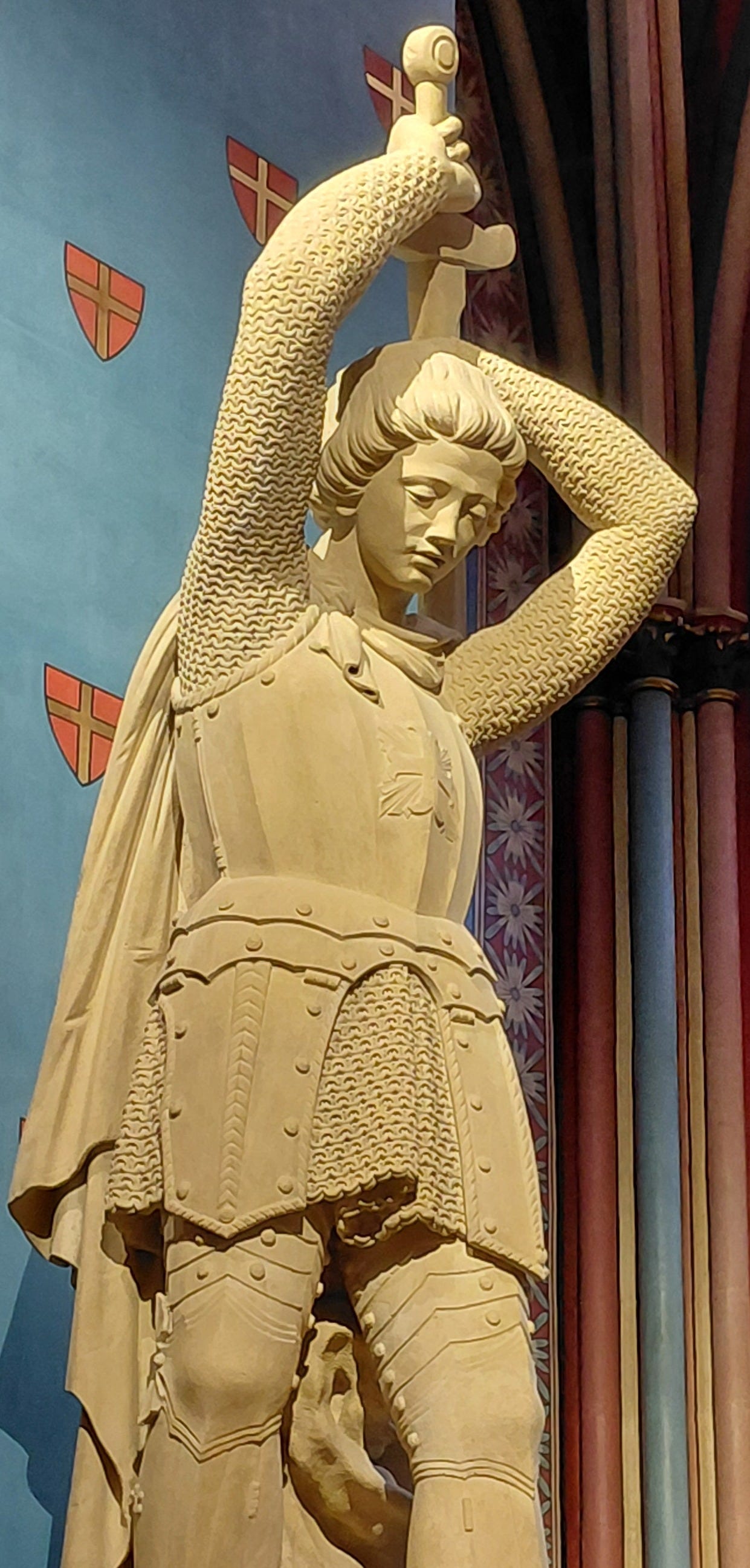
Image: author photograph of a statue of St. George, The Dragon Slayer, taken in the Cathedral of Notre Dame, Paris, France.

P. S. – E Unum Pluribus is a speculative fiction exploring one way in which our current ‘culture wars’ may bring an end to the U. S. A., and what might come in its wake. With a thrilling plot driven by politics and economics (as well as gender, class, language and even the origins of faith) the novel is currently being serialized online and anyone can read it, at no cost, by navigating to home page of this website E Unum Pluribus from the top menu, or via this link: https://robinandrew.net/2026/01/01/e-unum-pluribus/
e ain’t Woke – (You can’t diversify, equitize or inclusive-ize what you don’t first label).

Between a recent post emphasizing the distinction between a person’s ‘sex’ and that same person’s ‘gender’*, the earlier post entitled ‘e is an Enabler’**, and a few passages in the novel E Unum Pluribus, (currently being serialized online, for free***) it’s possible some readers might dismiss this site as just one more hotebed of Identity Politics; the tyranny of a woke liberal elite telling everyone else what to do and say and even think…

First off, labelling every person all the time as either a man/boy or a woman/girl and insisting that those labels are eternal, unchangeable and mutually exclusive – as our current Chief Executive attempted to due shortly after assuming office for the second time –  has got to be the most profound and ubiquitous instance of Identity Politics in history! 

Across uncountable generations, geography and cultures, such gender identification has served as excuse to apportion rights differently to the genders (almost always to the detriment of women…), to justify unequal treatment (ditto), to write laws (wives classified as the property of husbands, women unable to inherit and restricted in travel, dress, voting, etc.) to justify unequal prosecution, judgement and sentencing for affronts against a man versus the same affront committed on a woman, and on and on.  On that basis alone, anyone who professes to believe in stamping out ‘diversity,’ ‘equity’ and ‘inclusion’ (DEI) because they result in unequal treatment on the basis of identity should be totally on board with using non-gendered language for all official purposes.

That last phrase, ‘official purposes,’ highlights another important point: nothing written here suggests or advocates that people stop using gendered pronouns entirely.  There are plenty of instances where ‘he’, ‘she,’ ‘him,’ her’ and all their derivatives are useful and convenient because the desired gender identity of a subject person is a known fact or has been made abundantly clear by the subject’s voluntary choices and acts.

True as that is, though, it is also true that there are instances where the gender self-identity of a subject is not readily determinable except by an observer applying their own stereotypes, prejudices or preconceptions. For those instances, the use of non-gendered pronouns (e, em eir and so on, or something similar) is a simple and effective way to avoid the ‘woke’-ness of sorting individuals into identity groups and treating them differently as consequence. 

Even as English-language speakers continue to use gendered language in many or even most instances, there is real freedom and justice to be gained by using non-gendered language when drafting laws and policies whose intent/content do not truly depend upon a person’s gender expression (which is very nearly all laws and policies, really).  And also, to use such non-gendered language whenever one does not yet know the gender self-image of a person or where a person has made clear that e does not choose to conform to the ‘gender’ stereotypes of others. This small addition to our quiver of words is actually a worthy way to avoid and reduce Identity Politics.

Using ‘e’ ain’t woke, it’s a path to more effective communication, an enabler of individual freedom and simply one tiny increment in the ongoing and perpetual evolution of perhaps the most useful tool we’ve inherited from generations before us: the English language.

*Humans Got Gender, https://robinandrew.net/2026/06/28/humans-got-gender/

**’e’ is an Enabler, https://robinandrew.net/2026/03/01/e-is-an-enabler/

*** E Unum Pluribus is speculative fiction, and a warning that states’ rights, religious nationalism and intentionally divisive political tactics may soon bring about the end of what George Washington termed the American nation’s “Great Experiment.”  Shining its light on what we stand to lose if we do not come together, what could rise in its place and what it would take to begin repairing the damage, this cry of alarm is currently being serialized online and is available to anyone, for free by navigating to the homepage of robinandrew.net and selecting E Unum Pluribus frmthe home page’s top menu, or via the following link:

Feel free to share this post as widely as you wish and, if youlike what you read here, please subscribe to robinandrew.net – it’s totally free!

Humans Got Gender!

(The new speculative fiction, E Unum Pluribus, is narrated by Jack Shirley, a bureaucratic intern whose behavior transcends gender expectations of present day Amero-European culture.  Anticipating that the character of Jack may generate comments, this and future posts will share some thoughts around those expectations.)

Look up ‘gender’ on the Internet these days and you may well encounter vehement statements to the effect that ‘gender does not exist’ or ‘there is no such thing as gender.’  What these claims seem to intend is that the concept of ‘gender’ in human beings is an imagined construct foisted on us by radical academics and activists to confuse or obscure what the commentator believes to be a real and eternal truth: that being ‘a man’ or ‘a woman’ is simply and absolutely a matter of one’s fixed and binary biological sex*. 

To that point, on the first day of his second term, Mr. Trump issued an Executive Order purporting to set the record straight on “Gender Ideology” and “Biological Truth**.”  Sex, as defined by the Order, is determined by the reproductive cells which one’s body may produce, which means it can be confirmed only by some fairly invasive medical examination and so is of no use in common daily life.  Even if we allow that the authors of that Order were just searching for a more legally-defensible way to avoid saying what they really meant – that any person who was born with an apparent penis is absolutely and forever ‘a man’ and anyone born with genitals that did not look like a penis is absolutely and forever ‘a woman’ – the same limitation is true. What sort of genitals a person carries – and even more, what their genitals looked like at birth! – is simply not determinable in any normal sort of public interaction. 

Despite that, we regularly refer to or address even total strangers as him or her, Mr., Miss, Mrs, Ms, Ma’am or even “hey Dude!”  Every time we do so, we are making assumptions based upon a variety of cues other than the form of their genitals or the reproductive cells which might issue therefrom.  What we do use in making those assumptions are a wide variety of stereotypes accumulated over the course of our lives.  A short list of attributes that can influence whether we identify an individual as man or woman might include the configuration of their garments (dress, skirt or pants; and if the latter, their fabric, colors, trim, tailoring and tightness), length and shape of one’s hairstyle (and the naturalness or artificiality of the hair’s cut, color and styling), bodily characteristics (height, bulk, proportions, muscular definition), carrying a purse in hand or a wallet in a pocket, use of cosmetics or scents (and which scent!), how they move (or throw a ball…), how they speak, what tasks they perform in the family, what outside occupation they do or do not have and even which emotions they readily express or how they express them.

Since none of those deciding factors actually involve knowledge of the person’s sexual organs/cells, the resulting assumptions about a person’s identity cannot be based upon their ‘sex’ as defined by Mr. Trump’s order and similar doctrines. For that reason, it is customary to refer to that complex of factors and the summary judgements based upon them as ‘gender’ and that is why conscientious conversation, writing or legislation uses different words for a person’s sex – ‘male,’ ‘female’ – than for public gender – ‘man, woman, boy, girl’.  Humans developed language because it facilitates useful communication and effective language around gender reflects the way we make assumptions, thereby serving the needs of speakers and listeners, writers and readers.

Human gender exists. If it did not, our everyday language wouldn’t employ gendered words and presumptions to address issues which are not actually sexual.  Future posts in this series will share more thoughts on some of those issues.

* Since these posts are about gender, not sex, they won’t delve into the scientifics of the latter.  Suffice to say, nothing here or which follows is intended to accept that the biological ‘sex’ of humans is as simple, absolute and binary as sometimes claimed.

** https://www.govinfo.gov/content/pkg/DCPD-202500135/html/DCPD-202500135.htm provides the text of Mr. Trump’s proclamation.

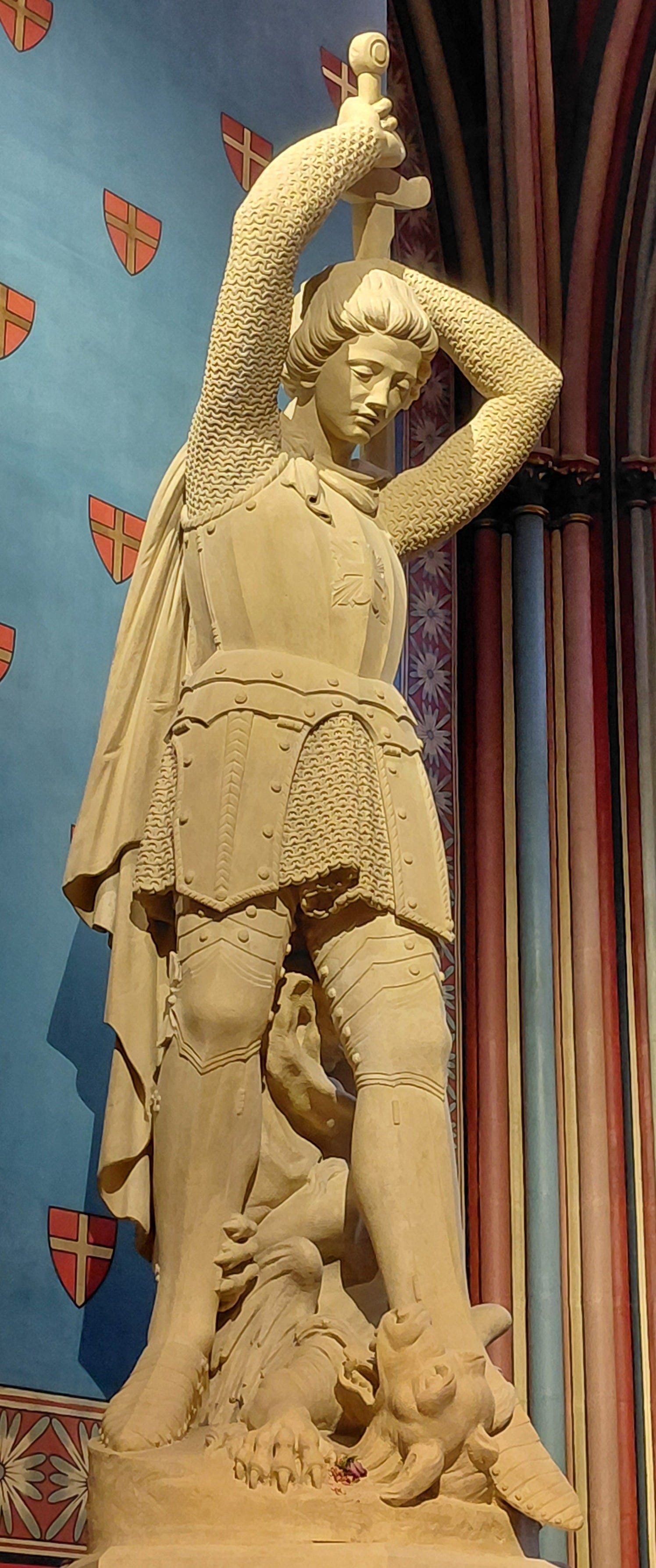
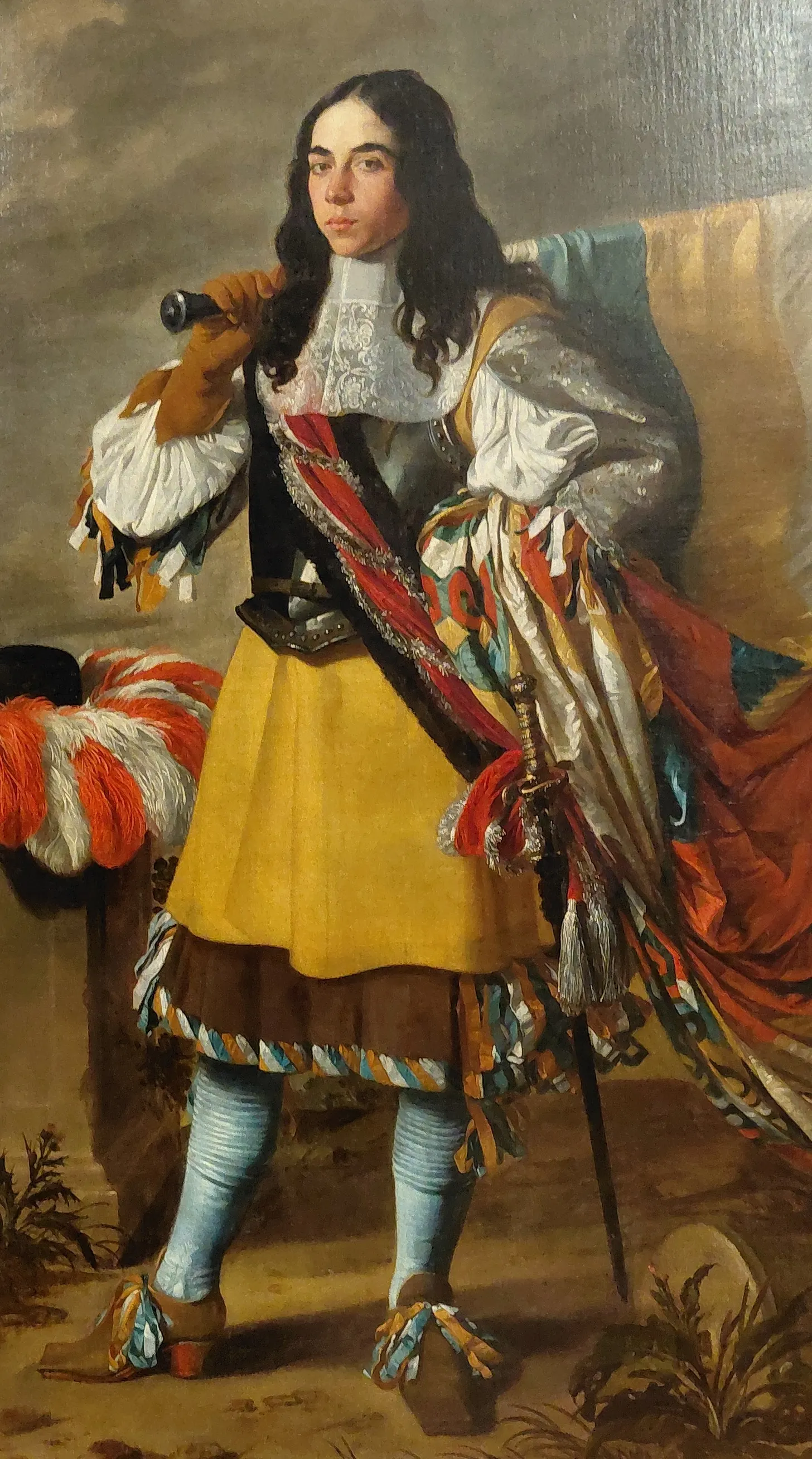
(Illustrations in this post taken from The Standard Bearer, an 1664 painting by Vigor Boucquet, in the collection of The Louvre, Paris.)

P. S. – E Unum Pluribus is a speculative fiction exploring one way in which the political overreach of our current leadership may bring an end to the U. S. A., and what might come in its wake.  With a thrilling plot driven by politics and economics (as well as gender, class, language and even the origins of faith) the novel is currently being serialized online and anyone can read it, at no cost, by returning to this website’s home page and selecting E Unum Pluribus from the top menu, or via this link: https://robinandrew.net/2026/01/01/e-unum-pluribus/

If you think this post has value, feel free to share it!

If you like what you read here at robinandrew.net, please consider subscribing – it’s totally free of charge!

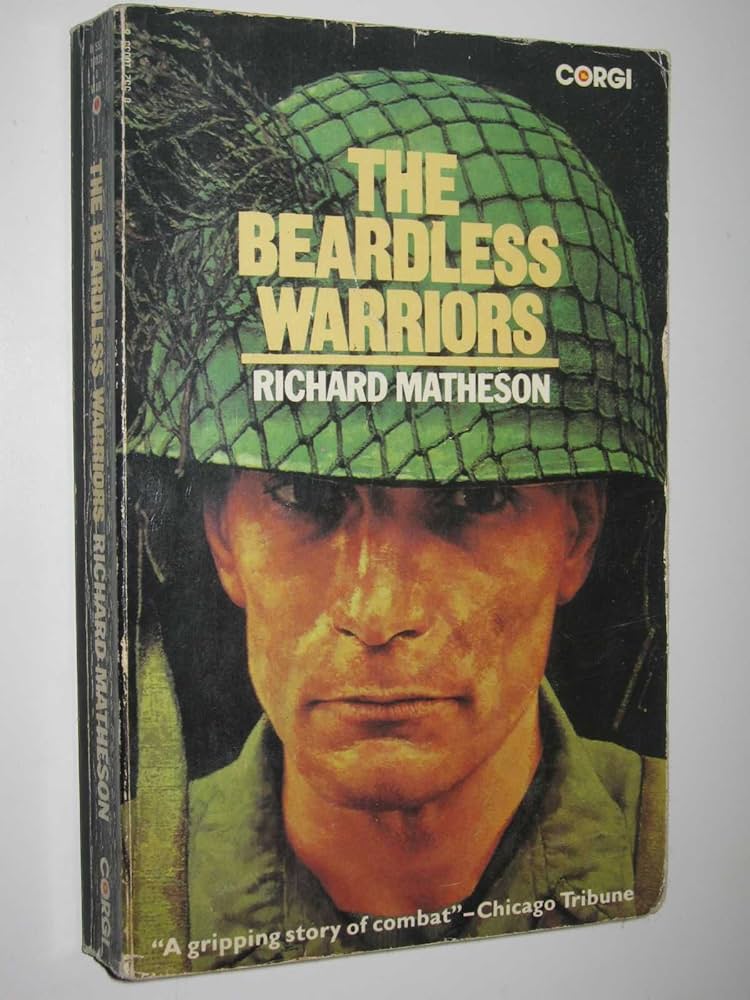
The Beardless Warriors, by Richard Matheson

Didn’t recognize the author by name when I saw this paperback on the ‘Free’ shelf, only later learned he was the author of ‘I Am Legend,’ ‘The Incredible Shrinking Man,’ and ‘What Dreams May Come;’ all successful popular novels also turned into movies.  No, what drew me in was that Matheson had been among the many eighteen-year-old reinforcement troops sent to join U. S. infantry units as they moved into German territory in December of 1945 – which puts him in spitting distance and time of my father, who was also eighteen when he reported for duty, was trained, shipped over and served in combat until being seriously injured on April 11,1945, less than a month before the end of fighting in Europe.  Matheson took fifteen years to get this ‘memoir in the form of a novel’ (my characterization) written and published, so nearly as many years as those reinforcements were granted before being committed to the battlefield, and the time was well spent.  Despite my having previously read several other battlefield memoir/history/fictions, this one elevated by an order of magnitude my attempts to imagine what that experience must have felt like. 

From the first sentence, Matheson tells his story almost breathlessly, plunging the reader directly into the experiences of one Everett Hackermeyer, a motherless child and nearly fatherless too, with little to live for and few tools to do so.  We see the confusion and futility of war from his perspective and feel the importance of his developing relationship with a much older (all of thirty-eight years-old!) Sergeant, a no-nonsense nuts and bolts leader who has learned and accepted the hard truth that no matter how well he performs, many men will die under his command.  As is often prominent in memoirs of Vietnam, we see how senseless the orders from on high appear to those who must follow them – war, for an infantryman, is not geopolitical or strategic, it is only struggle. At times it seems the only thing that changes from day to day is the rolling succession of squad members, as one after another are injured or killed, replaced (though not in the same numbers at this late stage) and their replacements in turn are inducted and ground up by the coincidence and accident of chaotic violence.

The novel’s action covers only a couple of weeks, all centered on moving a few short miles to take seemingly one unimportant town, which could have made for monotony, but Matheson is a champ at finding new and creative words to describe similar battle scenes and the dull and dyspeptic interludes between them.  Hackermeyer’s evolving knowledge and emotions also give each skirmish the specificity to feel new. Approaching novel’s end the author gives us a skirmish only slightly more significant than the preceding ones, but with personal incidents that make it satisfyingly climactic, even as the reader understands that the hell these men have been living will go on and on until the day that awful war ends, even if they are lucky enough to live to see it.

It has been said that the experience of being in combat cannot be communicated to those who have not lived it, and I don’t doubt that that is true. The Bearded Warriors though, makes more progress in that direction than anything else I’ve encountered, helping me to understand (now that it is years too late) what my father must have experienced and how it probably transformed the bright-eyed young man he had been into the tightly controlled and deeply insulated veteran I knew as I was growing up.

Surviving battle is not the same thing as coming through unscathed.

This novel is a definite keeper and deserves to be read by anyone who claims that fighting for even the most just cause is a path to glory.

P. S. – As America’s leaders seek drama and ‘glory’ in wars of their own creation, the thrilling speculative fiction E Unum Pluribus explores one way in which their winner-take-all governance may bring about the end of the USA – and how very much we stand to lose if we allow that. The novel is currently being serialized online and anyone can read it, for free, starting at https://robinandrew.net/2026/01/01/e-unum-pluribus/

(Those who are wary of unfamiliar links can access it just by going to robinandrew.net and clicking on E Unum Pluribus in the menu at top of the home page.) 

The Last Debate, Jim Lehrer

Lehrer, the late PBS anchorman, skewers his own profession in a tale of journalists run amok which, despite being over 30 years old, in many ways seems to reflect our current moment.

At opening, David Donald Meredith, a populist politician of little relevant qualifications or experience has just been polled as leading the Presidential election race on the strength of his racist, authoritarian, anti-elite, pro-religious and contra-constitutional rabble-rousing (sounds familiar…).  When several journalists are selected to question the two leading candidates during the one and only debate to which their respective campaign managers have agreed, they find themselves in an ethical dilemma: whether to act in a clinically objective manner and hope against all indications that the voters will recognize and select the one qualified candidate, or to use their position as moderators to skewer Meredith on a raft of unconfirmed accusations of bad and violent behavior and so ensure that a truly dangerous demagogue does not reach the White House.

Since the novel is told in the past tense, it is no spoiler to say the panel soon chooses the latter approach and so swings the election to Meredith’s oppponent. The remaining two thirds of the novel is spent recounting how they made that decision and the diligent effort it takes the narrator (an alt-universe tabloid-journalist version of Lehrer himself?), to document it for the narrative non-fiction book which The Last Debate pretends to be.  (Fwiw, with Meredith defeated, his opponent, the previously unimpressive Paul L. Green, turns out to be a pretty good Chief Executive, perhaps validating their risky choice and leaving only the credibility of the journalistic profession to die for what Lehrer clearly considers their sins.)

A few quibbles – since the outcome is disclosed so early, most of the book is occupied with details of the tabloid journalist’s work, unfortunately showing the reader just how tedious that can be.  Rather banal conversations are recounted line by line with neither enough individuality nor amusing detail to justify their length, especially since the plot structure has already taken much real drama out of them.  There are also troubling issues around names and pronouns.  Between the large cast of political characters and the questionable choice of having two women named Barbara interacting (and even sharing an apartment!), as well as a candidate whose last name invites confusion when used by itself (since Meredith is more familiar as a female first name) Lehrer is constantly identifying people by full first and last names to a degree that feels artificially formal and further impedes dramatic flow. 

A similar effect happens when the fictional first-person narrator must protecting the identity of a very famous informant, To avoid giving the clue of this persons sex/gender, Lehrer chooses to use “he/she,” “his/her”’ and similar clunky work-arounds which make the section feel more a bureaucratic document than the climax of a political thriller. (An excellent argument, BTW, for writers and speakers of the English language to adopt non-gendered pronouns as argued in the post ‘e is an Enabler’ which is available via this link:   https://robinandrew.net/2026/03/01/e-is-an-enabler/  or simply by going to robinandrew.net and scrolling down to the 03/01/26 post of that title.)

Overall, an imperfect but worthwhile read that today raises a very large question its author could not possibly have intended back when it was written and published: If Jim Lehrer could see the danger of a character like Meredith all the way back in 1995, how did so many of our fellow Americans end up falling for his doppelgänger in 2016 and 2024 and perhaps even thereafter…?

P. S. – ‘E Unum Pluribus’ is speculative fiction about a very different way in which America’s current political dramas may play out. With a thrilling plot driven by politics and economics as well as gender, class, language and even the origins of faith, the novel is currently being serialized online and anyone can read it, at no cost, by navigating to the home page of this website and selecting E Unum Pluribus from the top menu, or via this link: https://robinandrew.net/2026/01/01/e-unum-pluribus/
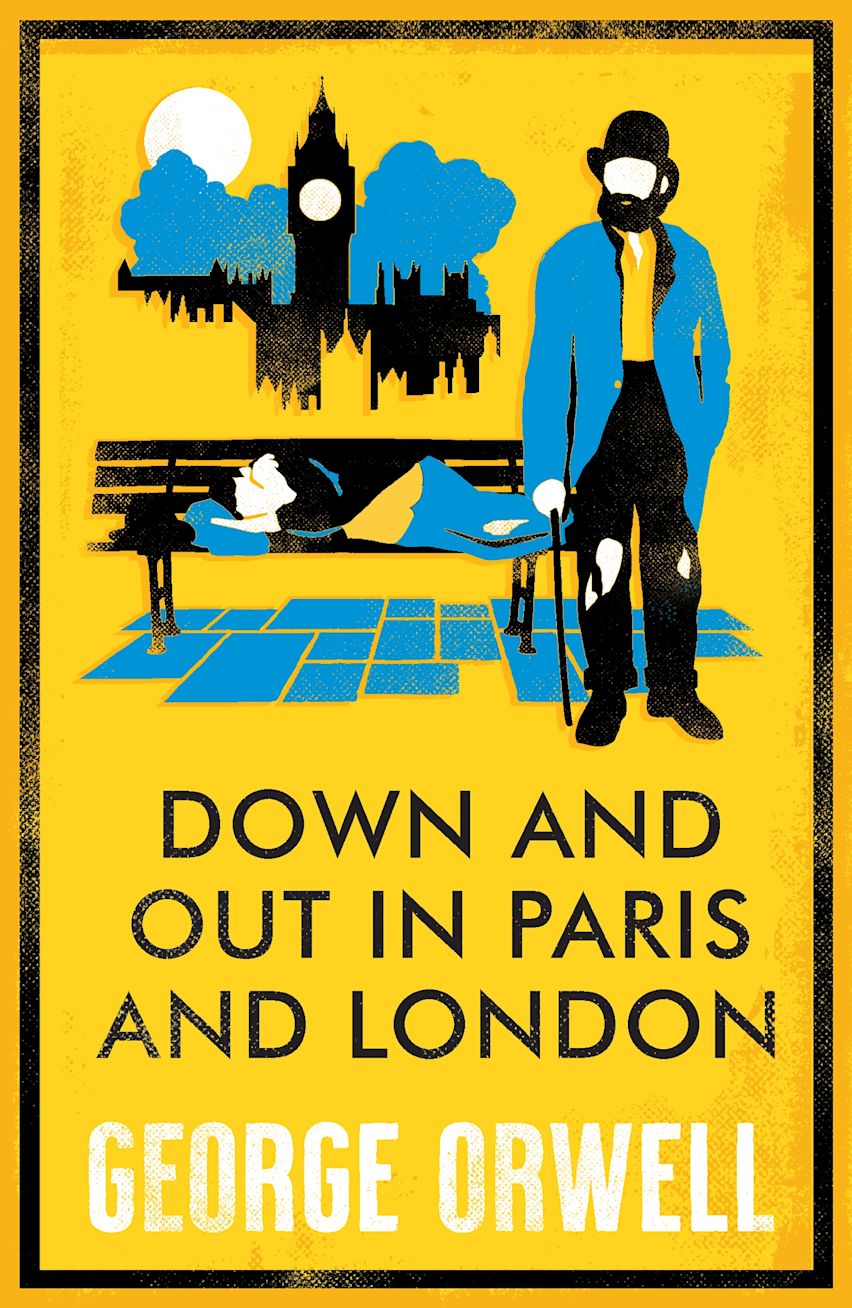
‘Down and Out in Paris and London,’ George Orwell’s 1933 Social Realism

Variously described as a novel and as a memoir presented as a novel, this brief volume certainly has the feel of hard-won experience.  With little preamble Orwell throws the reader into a squalid neighborhood of Paris circa 1930 where we experience the scramble for enough food to avoid starvation and a place to sleep – if one dare drift off while in intimate proximity to any number of strangers, swindlers, thieves, the deranged, the pious and the police. 

Visions of filth, sweat and stink dance in our heads as the narrator (who is in no way distinguished from what we know of the author himself) finds job, loses job, finds room, loses room, earns a few francs and spends all of them on barely enough bread, margarine, tea and tobacco to keep his body upright.  Along the way we are treated to character sketches of many sketchy characters, a few of whom have preserved hearts of something better than lead, another few of whom possess remarkably bright minds despite the grinding effects of their poverty and hopeless circumstances.

Despairing of his ‘opportunities’ in Paris, our guide is thrilled when an old acquaintance in London proffers a job as caretaker to an elderly invalid.  Loaned funds just sufficient for travel and a few days subsistence, he is soon in that great city, only to find the promised position has evaporated as the ‘tame imbecile’ and company have themselves left for the same continent he just abandoned. Now we follow our guide into the bowels of British social services and charities as he learns to navigate ‘the spike’ (a sort of municipal homeless shelter offering prison-like rules and conditions in exchange for horrible food and worse sleep abetted by a tracking system that keeps its customers constantly walking from town to town and so unavailable for any sort of work or betterment), church-run shelters (considered worse than the spike for their insistence on performative piety and the hypocrisy of their tenders), the Embankment (among the few places in London where one is allowed to sleep outdoors, but its benches, noise and Bobbies make sleep next to impossible) and commercial lodging houses (better accommodations, but prices out of reach for the truly destitute).

Given Orwell’s known Socialist leanings, it’s no surprise there’s a certain class consciousness to all this.  His conviction that nearly all the ‘idle’ poor would readily choose to work for their keep if there were jobs available seems a bit broad and naïve ( not to mention the number whose physical, intellectual or/and emotional disabilities and dis-aptitudes might make the unsuitable for hiring).  His modest proposal – group homes where the residents tend gardens which provide a portion of their food, thus requiring a lesser subsidy than the current system wherein they are virtually prohibited from working and earning because the feeble accommodations available will only accept the absolutely penniless – is probably even less likely of enactment today than it would have been in his time.

A painful read, reflecting what the least favored among us must endure simply to survive – but well worth revisiting as the current U. S. administration works to slice open our own social safety net and condemn millions of immigrants and citizens alike to conditions little better than what Orwell describes. (And sometimes worse, incarcerating non-citizens of no significant criminal history without legal process or recourse and even banishing some of them to whatever cutthroat minor state will take our tax money in exchange for receiving and disposing of them). 

P. S. – E Unum Pluribus is a speculative fiction shaped by the economic consequences of the USA’s present partisan divide.  It is currently being serialized online, for free, and you can read its first installment at: 

The Winter Soldier, Daniel Mason

A masterful work that rewards the stout-hearted reader.  Set in the Austro-Hungarian Empire during the First World War, the narrative vividly evokes the cold, hunger, pain and desolation of a nearly-forgotten military aid station serving the Russian front.  Despite having trained in the academics of medicine, Lucius Krzelewski, son of Polish aristocrat industrialists relocated to Vienna after their nation was absorbed into the Empire, is totally unprepared to help the maimed, sick, starved and addled soldiers for whom he is suddenly responsible.  Only the patience and wisdom of the station’s one nurse, Sister Margarete, allows him to fake it till he can make it.  All the while, the front lines advance and retreat, supplies are unpredictable and violence can erupt at any moment. 

Thrown together under such circumstances, it seems ordained by the god of literature that Lucius and Margarete will become attracted to one another, though it is only after a tragic episode involving Horvath, a patient suffering extreme mental distress for which Lucius feels he is close to achieving a breakthrough, that they are drawn to act on their attraction. And, in true romantic fashion, are soon separated, leading Lucius to spend the next several years trying to reunite with Margarete among the chaos first of war, then its aftermath. 

As the novel’s end approaches, it seems Mason is steering Lucius toward a joyous reunion with his loved one but then, in literally the last three pages, he flips the table and crafts an ending which replaces conventional confection with a much superior concoction of wisdom, insight and generosity.

(Spoiler alert:  Lucius himself christens the patient Horvath a “winter soldier,” but later, as his own troubling memories and nightmares – what we today might label PTSD – plague him and isolate him from the comfortable society to which he has returned, it seems he could as well be the titular character.  By story’s end though, one wonders if Margarete is not the true ‘winter soldier,’ the one who has campaigned longest, hardest, most courageously and most selflessly to ameliorate the damage war can do.  In fact, one can even frame this as a feminist novel; all those boastful arrogant males waging war for to salve their egos while, nearly unnoticed, women care endlessly for children, husbands, fathers, rulers, nations.  When we learn Margarete has birthed a child after the war, we are reminded that through all the deadly deprivation of that wilderness aid station, she was also managing her own monthly cycle – discretely, without modern ‘products,’ complaint, days off or even allowing her discomfort to show.  ‘The weaker sex,’ indeed.)

Throughout, Mason demonstrates an exhaustive knowledge of the period, its medicine (he is a physician himself, but a modern one….), warfare in a far-away corner of northeastern Europe, intricacies of the era’s railway network and more.  At times verging near to distraction, this detail ultimately gives his narrative the authenticity and credentials to hold the reader’s attention while he builds our emotional connection to Lucius and Margarete.

Again, masterful.  This is not a book for every reader, but for those willing to weather its painful realties, ample rewards await.  I’m holding on tightly to my copy of Daniel Mason’s The Winter Soldier.

P. S.: E Unum Pluribus is a new speculative fiction about a very different time and place and another government serving its own interests rather than those of its people.   The novel is currently being serialized digitally at no charge and you can be among the first to read it by navigating to this site’s home page and scrolling down to the post titled ‘E Unum Pluribus’ or just select the item of that same name in the top menu.  Any way you get there, it’s totally free!

If you like what you read here at robinandrew.net, feel free to share any posts as widely as possible. And consider subscribing, it’s totally free!

The Fort Bragg Cartel, by Seth Harp

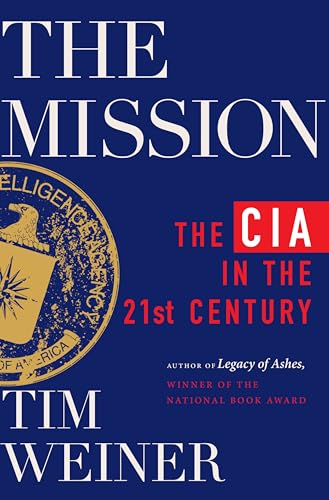
Having recently read The Mission, Tim Weiner’s history of the 21st Century CIA, which naturally contains many references to our nation’s Special Forces, it felt appropriate to check out this more populist look at one aspect of those forces.

Based on his own reporting for Rolling Stone magazine and other outlets, Harp gives us an abundance of anecdote; the parade of murders, suicides and drug- and alcohol-fueled behaviors on or adjacent to the Fort is head-spinning.  He provides a substantial ‘Notes’ section as well, though, oddly, these notes are not called out in the text; one has to read them at the back of the book and then, if interested in a particular one, go to the page indicated and search for a key phrase to find the relevant text.  Then too, many of these notes are not attributions. Better than no back-up at all, but less than totally convincing and perilously like the growth pattern of social-media conspiracy theories; a self-referential circle of fingers all pointing to one another with no object at its center.  Regardless there is plenty of evidence here that things are not copasetic.

As its title suggests, the book contends that there has existed for many years some sort of organized smuggling operation centered on the Fort Bragg premises and that this operation is at least tolerated – if not actually headed – by unknown persons higher up in the chain of command than the various Special Forces operatives, support personnel and hangers-on who are directly involved in the book’s incidents.  The argument in favor of this contention is largely of the ‘it seems too likely to not be true’ variety.  At several dramatic points we hear about a thumb drive left behind by one of the murdered smugglers who claimed it documented crimes and criminals significant enough to act as his insurance policy – or to get him killed.  Supposedly still held in evidence by one of several law enforcement agencies which have themselves been repeatedly painted as shielding military miscreants out of ‘blue line’ solidarity with the ‘green line,’ the closest we get to a big reveal of the drive’s contents is when one source tells Harp it actually contains no data, though whether that is because the crucial data was erased by some double- or triple-agent in the ranks or because it never existed at all is left unresolved. In other words, a big nothing-burger.

Regardless whether or not the actual Cartel exists, it seems undeniable that armed forces by their profession accustom some of their members to use of force and violence.  That they groom some personnel, especially strength-proud young males, to believe themselves unbound by the moral and legal codes that constrain civilian life, and that these tendencies are strongest at the ‘tip of the spear,’ units like Rangers, Green Berets, Seals and Delta Force who are increasingly deployed to do the dirtiest ‘wet work’ of our national defense.  Over the decades those ranks have shifted from short term citizen-soldiers to longer-serving career professionals at the same time their assignments have moved farther from ‘regular’ infantry tactics to special operations – small scale infiltrations, espionage, resistance support, sabotage, assassinations and other covert acts sometimes difficult to distinguish from the tactics of the terrorists they now spend much of their time hunting – or from those of hard core criminality.  When soldiers are intensively selected and schooled for the attitudes required by that work, and that training is reinforced by months/years of ultra-high stress and pressure while surrounded by a culture that reveres and rewards self-reliance, cold-calculation and tolerance for brutality (while loosely dispensing powerful and addictive drugs to deal with the fallout), it should not surprise that some of those reflexes continue to direct behavior after their deployments are over or even after their careers have ended.

On the evidence in this book, military leadership cannot be trusted to thwart drug activity and the violence that accompanies it.  Nor can they be relied upon to care for those service persons affected by it, much less to protect service families and the rest of us from the dangers which a few operators – even some who served honorably and heroically – present.  As in so much lately, it is law enforcement agencies and the courts we must rely upon but unfortunately, if Harp’s reporting is accurate, the fraternal bond between military and the law sometimes precludes that, so we are left with a continuing tragedy of broken and deceased servicepersons, wives, families and communities. 

As if that were not enough, The Fort Bragg Cartel’s greatest revelation, to these eyes, is not about drug activities in the U. S. but in Afghanistan.  According to Harp’s reporting, prior to the U. S. invasion there the Taliban had, out of religious convictions, reduced poppy cultivation to near zero with corresponding impact on the flood of heroin and other drugs to users in ‘more developed’ nations.  By itself, a clearly desirable outcome.  Once the U. S. and its War on Terror allies took control though, cultivation began again due both to inattention (by U. S. leadership) and financial incentive (of those allied forces and perhaps also some of ‘our’ people).   Once the U. S. pulled out and the Taliban resumed control, the production of poppies and heroin was again shut down!  In Latin America as well, Harp reports, U. S. political objectives have sometimes led to cooperation and even support of narco-traffickers in exchange for their cooperation with U. S. political goals.  Not a pretty picture, and one further negative consequence of how the War on Terror has been prosecuted and profited off of.

Despite trending more toward the true crime genre than the academic history line, The Fort Bragg Cartel is a useful summary of events worth considering.  It raises worthwhile questions about our government’s role in the drug trade, and that makes it, at the end of the day, a Book Worth Keeping. 

P. S.: E Unum Pluribus is a new speculative fiction about another time, another place and another government serving its own interests rather than those of its people.   A draft of the novel is currently being serialized here at robinandrew.net and you can be among the first to read it, beginning with the post titled ‘E Unum Pluribus’ or by clicking on that same title in the home page’s Top Menu.

If you like what you read here or at robinandrew.net, please share any posts as widely as possible – and consider subscribing: it’s totally free!