Tag Archives: trans

Slaying the Gender Binary – with E!

(The new novel, E Unum Pluribus, is narrated by Jack Shirley, an office intern whose gender behavior doesn’t always fit the expectations common in contemporary Amero-European culture.  Anticipating that Jack’s character may arouse comment, this is one in a series of posts sharing the author’s thoughts around those expectations.)

A previous post on this site* made the case that the best way to move beyond the simplistic convention of binary gender is not to start recognizing an array of new genders, each of which may desire its own names and terms – names and terms which could one day prove as dysfunctional as it would seem in this decade to call a group of people ‘beatniks’ because the males trim their beards into goatees and the females wear long, straight hair with blunt-cut bangs.

Rather than coming up with more ways to divide people from each other by slotting us into new groups, a more promising approach is to recognize and honor the deep truth that every individual is unique through use of gender-free nouns – person, human, individual – and gender-freeing pronouns as the initial and default assumption for all of us.

(I use the pronouns E, em and eir in my examples not because they are the only possibilities, but because I find them the most natural to speak.  I type the ‘E’ in upper case to make being referred to as ‘E’ feel every bit as respectful as referring to oneself using ‘I.’  Ultimately, of course, it is up to the entire community of English language users to decide what words become common, as it is with every other evolution of our shared language).

E is about everyone being an individual first and foremost, before they are a member of any group.

E means accepting that there will be some individuals who do not readily fit one’s own expectations for ‘man’ or ‘woman’ – or who actively choose not to aim for either of those expectations – and in those cases continuing to use gender-free language to facilitate respectful communication without any party feeling either dishonest or compelled against their principles.

E is about empowering every individual regardless of whether their appearance or behavior complies with anyone else’s idea of what they are ‘supposed to be.’  About treating persons equally regardless of how much they seem like us, or different from us.  About not assuming that the choices we make for ourselves would be better for them than their own choices. 

E is about treating all persons equally, regardless of their chromosomes, the reproductive cells their body puts out (or doesn’t), the secondary sex characteristics others see on them or how others may criticize those characteristics.

E isn’t about eliminating ‘man/men’ and ‘woman/women.’ It just means using those and their corresponding gendered pronouns only if/when it is clear that is how the individual in consideration wishes to be identified. 

E does nothing to prevent persons who wish to be recognized as ‘man’ or ‘women’ from using the multitude of possible cues to make that clear.  (Nor does it discourage persons making themselves recognizable as proud military veterans, as nerds or geeks or football fans or soccer moms; a prairie wife, Amish farmer, Orthodox Jew, Evangelical Christian, conservative, progressive, queer, jazzman, Deadhead or… the list goes on forever.) 

E is a reminder and a tool to treat any more specific identity as part of being an individual, a person, a human being; not a substitute.

E is for every one of us!  

*Previous post: Getting to Binary, https://robinandrew.net/2026/09/04/getting-to-binary/

P. S. – E Unum Pluribus is a speculative fiction exploring one way in which our current ‘culture wars’ may bring an end to the U. S. A., and what might come in its wake. With a thrilling plot driven by politics and economics (as well as gender, class, language and even the origins of faith) the novel is currently being serialized online and anyone can read it, at no cost, by navigating to thehome page of this wewbsite and selecting E Unum Pluribus from the top menu, or via this link: https://robinandrew.net/2026/01/01/e-unum-pluribus/

This post is public, so feel free to share it as widely as you like.

If you like what you read here at robinandrew.net, please subscribe – it’s absolutely free!

Getting to Binary

(The novel, E Unum Pluribus, is narrated by Jack Shirley, an office intern whose gender behavior doesn’t always fit the expectations common in contemporary Amero-European culture.  Anticipating that Jack’s character may arouse comment, this is one in a series of posts sharing the author’s thoughts around those expectations.)

The previous post on this website – If Gender Ain’t Sex, What is it? – made the case that every individual human presents a unique array of gender cues in varying degrees, that those cues do not result directly from the specific anatomical features which are considered to determine the sex of each human, and that it is very common – and entirely ‘normal’ – that some individuals’ expression of some gender cues falls within a range casually regarded as indicating ‘the opposite sex.’

Why, then, do so many institutions and practices (at least in the English-speaking world) continue to observe the convention that every human belongs to one or the other of only two human genders, fixed at birth and mutually exclusive? 

One (generous) reason: framing any issue as a binary choice between opposites simplifies the viewer’s life, reduces a possibly baffling array of choices and generally avoids the work of treating unique instances differently to suit their differences. 

It woudl be quite possible, for example, to frame all discussion of daily timing purely in terms of dark time or the light time.  I’ll meet you in the light, or I’ll meet you when its dark.  I woke up in the light or, or if it was earlier, I woke up in the dark. Perfectly true, but not very useful.  Even without resorting to clocks and timekeeping, we’d want at least to refine things a little with words like sunrise, sunset, dawn and dusk. Still, there would be instances where dark and light are not as consistent as all that.  A moonless night is clearly part of the dark time, but I’ve been out at 3 AM under a full moon and once my eyes adjusted, it was definitely more light than dark.  A great time, in fact, for performing some ‘daytime’ activities before the sun gets too hot.

Speaking of a hot sun, how about the rainbow world of color?  Despite the ability of the human eye to distinguish between at least a million colors, artists and designers sometimes simplify them all and speak of just the ‘warm’ colors and the ‘cool’ ones.  Thousands of shades of red, yellow, orange and such are ‘warm,’ blues and greens and all the rest are ‘cool.’  No need to mess with scores of pesky names like carmine, maroon, egplant, ultramarine, cobalt, cadmium, peach, chartreuse and American Flag blue. So much more efficient, so much potential wasted.

Or age: one could define all persons up to and including some arbitrary age as ‘young’ (I’d pick 74, but you might choose another number…) and everyone over that as ‘old.’  Simple, convenient, with no gradations, no ‘sort of,’ but not very useful or true, given how differently individuals age and perform.  Intelligence?  Anyone with an IQ of 134 or higher is a ‘genius,’ anyone with a lower score is ‘dumb.’  Politics?  “Anyone to the ‘left’ of me is a communist, anyone not to the left of me is right” – in both senses…

The point is: you can turn any observable phenomenon into a binary by ignoring or defining-away all the things that make it more complex.  Any such simplification though, reduces options, misses possible benefits of more complete understanding and works against the inherent variability (freedom) of whatever or whoever is being binaried. Except in the very few cases where such brutal efficiency is truly required (separating the many species of wild mushrooms into ‘deadly’ and ‘non-deadly’ ones, for example), it leads mostly to WFA (waste, fraud and abuse).

Which is the case with our traditional binary gender system. Its survival depends upon us all ignoring the many differences between individual men and between individual women as well as the many characteristics which some or all men have in common with some or all women, and vice versa, in return for the simplicity of treating every person as a member of one or the other blunt and arbitrary category. Aside from the mental labor of constantly deciding what to see and what to pretend not to see, this process causes confusion and pain and reduces the achievement potential of all those individuals who do not closely conform to other persons’ ideas of what is ‘normal’ for a man or a woman. 

Another (and less-generous) reason:

As the examples in the third paragraph above suggest, whenever humans posit a binary distinction, it eventually results in one binary being considered the default; superior, preferable or, in any of a thousand other ways, the better of the two.

Day is preferable to night, to the extent that most of us choose to sleep through much of the latter.  eing young is widely preferred over being old, intelligence over its lack, and being right about anything is way better than being wrong (once one defines away the possibility of both sides being partly correct and partly mistaken).  As to the human genders, libraries have been written and voices driven hoarse pointing out the many ways in which gender stereotypes and practices premiate ‘men’s’ activities and achievements over those of ‘women.’

Separate but equal is no more attainable an outcome in human gender than it ever was (or is) in relations between those considered to be of different races.

So…what’s your solution?

It is not at all difficult to imagine a language which recognizes the complexity of human gender.  A person born with a penis but who exhibits sufficient characteristics considered suitable for a woman might choose to be called a ‘male woman.’  A person born with a vagina but who exhibits characteristics considered to be inconsistent with womanhood might choose to be called a ‘feman.’  An intellectual who expends little energy on personal appearance, the search for a romantic partner or popular spectator sports culture in order to focus on their own scientific interests (think the character Sheldon, on TV’s the Big Bang Theory, for example, or the character of Amy from the same show), might self-identify first as a ‘geek’ or ‘nerd’ and let others worry about the man or woman part.  I’ve heard individuals of either gonadotype refer to themselves as ‘queer’ in apparent rejection of gender-box-ification.

Easy as that may seem, such typing is too often imposed by others in order to ridicule or discriminate against gender offenders. It also runs the risk of multiplying genders endlessly or encouraging ‘identity group’ politics, a no-no in today’s culture-war environment.  Better to allow any such alternative gender identities to grow slowly and organically from the desires of their members and so facilitate pride in their alternative identification. Much as the use of ‘gay’ grew from that community’s coalescence, or as I’ve read some non-hetero female writers use ‘fem’ and ‘butch’ in non-derisive reference to particular members of their community.

Another approach – encouraging users of the English language to utilize non-gendered pronouns (E, em, eir, or similar) whenever an individual’s gender preference is not definitively known – can be a big step toward acknowledging and freeing up the infinite variety of human nature and gender expression – a good start on getting away from the binary.

P. S. – E Unum Pluribus is a speculative fiction exploring one way in which our current ‘culture wars’ may bring an end to the U. S. A., and what might come in its wake. With a thrilling plot driven by politics and economics (as well as gender, class, language and even the origins of faith) the novel is currently being serialized online and anyone can read it, at no cost, by navigating to home page of this website E Unum Pluribus from the top menu, or via this link: https://robinandrew.net/2026/01/01/e-unum-pluribus/
Please feel free to share this post as widely as you like

If you like what you read here at robinandrew.net, please subscribe. It’s Free!

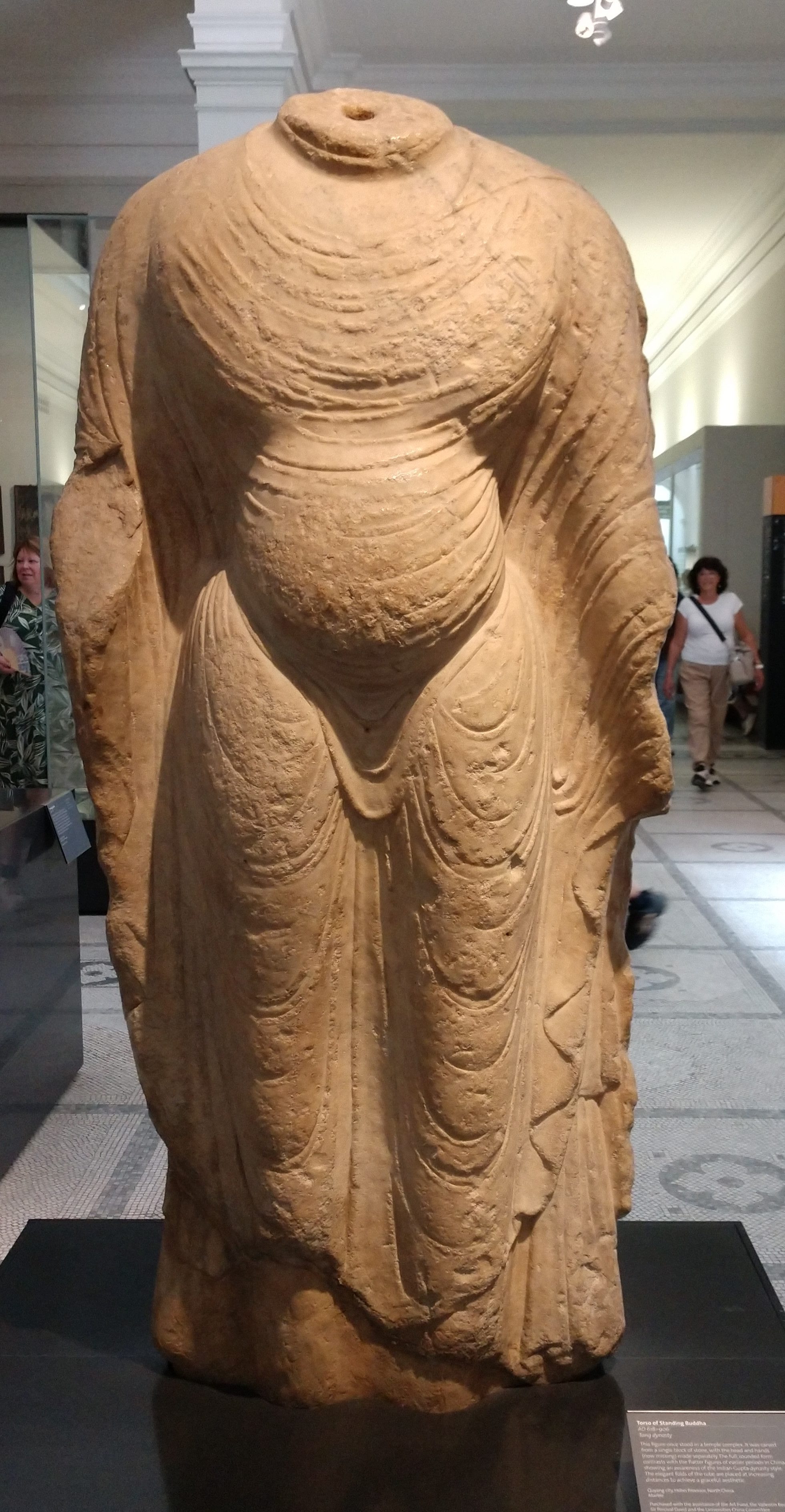
Opening Image: author photograph of Torso of Standing Buddha, AD 618-906, Tang Dynasty, Victoria and Albert Museum, London, UK

If Gender Ain’t Sex, What is it?

(The novel, E Unum Pluribus, is narrated by Jack Shirley, an office intern whose gender behavior doesn’t always fit the expectations common in contemporary Amero-European culture.  Anticipating that Jack’s character may arouse comment, this is one in a series of posts to share the author’s thoughts around those expectations. Caution: this one gets a bit long…)

A previous post* suggested, given that the vast majority of social interactions do not afford us the opportunity to know what reproductive cells any individual’s organs produce (the recent Presidential definition of ‘sex’), nor whether they have a penis or a vagina (the more common and time-tested way of differentiating the sexes) nor (in deference to current anti-trans sentiments) what their genitals may have looked like at the time of their birth (a particularly difficult standard to meet, in any normal social situation!), it is very rare that we actually and definitively know the sex of any person we may meet.

That post went on to comment that the common practice of calling some persons men and some women (as opposed to male and female) is really based not on sex but on gender, the wide range of visual, audible, or other cues that we presume to be consistent with the sex we cannot actually identify. 

Herewith, a (very) abbreviated list of some of the cues which are available in social contexts and so may be incorporated as we make our presumptions of sex (starting, for no critical reason, from top and running towards bottom):

Length of the hair on one’s head – and its style of cut, neatness/carelessness

Whether that hair is obviously bleached or colored

Whether it interferes with range of vision, or is artificially held in position (clips, spray…)

Pattern of visible hair loss (if any; though this can be obscured by corrective measures)

Earrings (none, one or two or more; fixed in place or changeable; size, shape, color, material…)

Size and shape of head

Ditto, of face

Ditto, of eyes

Ditto, of eyebrows and whether they appear to have been plucked, waxed or otherwise altered

Ditto, of nose

Ditto, of lips, and their color (whether natural, or artificial)

Wearing of cosmetics/make-up – how much, how ‘natural,’ dramatic – or plausibly deniable.

Presence, extent and appearance of body hair on face, legs, chest, arms, armpits, nostrils, ears, groin…and whether that is flaunted, hidden, styled, removed or simply never spoken about

Presence of tattoos – size, location, extent, content – as well as piercings or other body modifications

Noticeability of laryngeal prominence (‘Adam’s Apple’)

Pitch, tone, softness etc. of voice, not to mention word choice, emotional content of speech…

Width of shoulders (relative to chest, hips etc.)

Thickness of arms (is the person ‘pumped,’ ‘skinny,’ ‘flabby,’ or ‘undeveloped’…)

Size and/or slenderness of hands and fingers, visible veins on back of hands

How carefully fingernails are trimmed, filed and cleaned (or not!) and to what curvature

Presence of paint or polish on said fingernails

Convexity of the chest (flat, not flat, prominent; in near-infinite variations and degrees)

Color, fabric, pattern of whatever clothes cover the upper body (shirt, blouse, tunic, crop, tank…)

Size and location of fasteners on such clothes

Tailoring of such clothes (sleeve length and cuff style, collar style, cut full or fitted, cut short to expose midriff, or tailored long to cover hips; tucked or untucked….)

Types, amount, styles and weightiness of jewelry

Slenderness of waist, relative to other body parts

Location of waist (high, thanks to long legs and a short torso, or low due to short legs and long torso) though this is often disguised or manipulated high- or low-waisted clothes

Prominence, or not, of ‘belly’

Location and proportions of belly or abdominal bulk

Width of hips/butt relative to waist and shoulders.

Shape and ‘fullness’ of derriere (butt)

Wearing clothes that cover each leg separately (pants) or together (skirt, dress, robe, gown, toga, sarong, thobe, kilt, gho, dhoti, kimono, boubou, djellaba, shalwar kameez, etc.).

Whether footwear is traditionally functional, or whimsically decorative and ‘impractical’

Height of shoe heels (cowboy boots being an exception to the usual  interpretation of this)

Paint or polish on toe nails

And, abandoning the head-to-toe geography, a few more generalized gender distinguishers:

Dressed in clothes that look practical/durable/rugged, or obviously decorative (‘frivolous’)

Wearing an ‘outfit’ (meaning multiple items of the same fabric and color, or items carefully and obviously selected to create a nameable ‘look’)

(Other than a man’s business suit, which is very carefully regimented and strategized and certainly intended to convey a certain ‘look’ and image, but would never be called ‘an outfit’ by the sort of men who habitually don it)

Posture (shoulders or hips forward? head high or neck bent? spine straight or curved?)

Gait (long or short strides, quick or leisurely, bowlegged, pigeon-toed, bounding, ‘mincing,’ marching…)

How one sits or crosses one’s legs – a man-spread vs. an aspirin between the knees look

Default facial expression – open and welcoming, serious, wary, challenging, belligerent…

Engaged in an activity or occupation commonly thought of as manly or feminine, serious or frivolous, rowdy or refined, graceful or violent, ‘productive’ or ‘women’s work.’

Smelling sweetly of perfume/cologne

Or, less sweetly, of sweat, waste, food or beverage, poor hygiene or simple lack of the economic means to avoid odors

Exposing the flesh of one’s legs, arms, shoulders or more in any but an athletic situation (acceptable and even encouraged for females even in very formal settings, but highly unacceptable for males in those very same settings)

So? (you may well ask).

Clearly, that list can go on almost without end, but the above examples seem sufficient to illustrate that, as much as we regularly employ such cues to classify individuals as ‘a man’ or ‘a woman’ and also, very importantly, to critique individuals for not behaving ‘like a man’ or ‘like a woman,’ none of these cues are actually direct consequences of the form (or function) of a person’s reproductive organs. 

And, given the number of such cues, it is virtually impossible that any two individuals will exhibit exactly the same variation on every cue (except perhaps, identical twins dressing identically and acting identically as a prank; an exception which actually helps illustrate the validity of the rule in every other case).  Even uniformed personnel and incarcerated persons – or performers in a chorus line – who are required to dress uniformly and follow uniform rules for hair, jewelry, cosmetics, etc., are readily distinguished from one another by various gender cues.

Oh, and:

Many of these cues are exhibited and/or interpreted differently by individuals of different racial or ethnic heritage

Many of these cues are exhibited and/or interpreted differently by persons from different cultures, locales, native languages and even political leanings

Many of these cues are, or have been, interpreted differently by persons of different generations, or historical periods

Those statements are true despite the relatively slow pace of natural biological evolution giving assurance that the form and function of male and female sexual organs do not differ significantly from one heritage, culture or time period to another, so those differences of expression and interpretation cannot be dictated by what we say governs one’s sex.  Though expressions of gender cues may very well be chosen in conscious or subconscious effort to appear as one sex or the other; such choices would be entirely unnecessary if one’s actual sex was as apparent and binary as we are conditioned to presume.

Further, for each such cue, there exists a wide range of variance among males, and also a wide range of variance among females and one can readily identify persons who otherwise appear to be men, but whose expression of a particular cue falls within the range of variance exhibited by females for same. Conversely, one could readily identify persons who otherwise appear to be women, but whose expression of a particular cue falls within the range of variance exhibited by males.

For those reasons and more, identifying any number of ‘masculine’ or ‘feminine’ cues given out by any individual can, at best, influence one’s perception of the likelihood that that individual is male or female but none of these cues, by themselves or in combination, are actually reliable proof of any individual’s biological sex

To the extent any publicly available cues reveal anything at all about an individual, it is their gender, not their sex and given the number of possible cues and the variations in how each individual exhibits or interprets each of those cues over time, the reality is that there are not two genders – one exclusively manly and the other exclusively womanly and each fixed at birth and separate from the other – but as many genders as there are individuals.

(If not more, since one’s expressions of many such cues naturally varies from day to day and over a lifetime!)

Thus, ‘non-binary’ is far more than a woke label for some newly-invented identity group of persons who intentionally violate gender norms.

In the most basic sense, ‘non-binary’ is what all humans are.  It is part and parcel of being an individual.  Every one of us embodies, consciously or not, our own unique blend of gender cues and characteristics.  Acknowledging that, and allowing for it in our language, laws, polices and behaviors towards one another is a prerequisite to allowing life, liberty and the pursuit of happiness to all.

It’s time to slay the gender binary!

*Previous post: Humans Got Gender!  7/27/2026, https://nobodysays2025.substack.com/publish/post/203904286

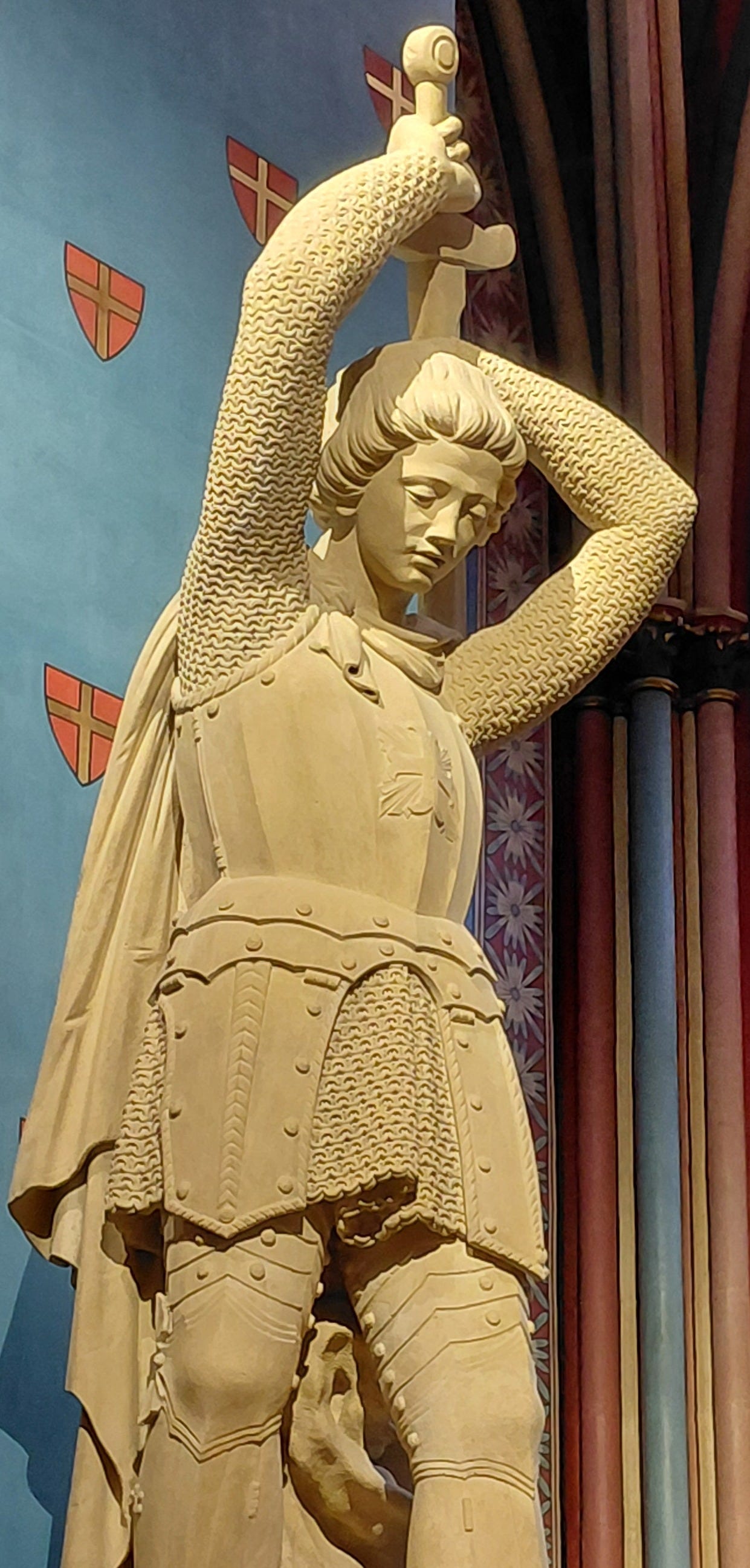
Image: author photograph of a statue of St. George, The Dragon Slayer, taken in the Cathedral of Notre Dame, Paris, France.

P. S. – E Unum Pluribus is a speculative fiction exploring one way in which our current ‘culture wars’ may bring an end to the U. S. A., and what might come in its wake. With a thrilling plot driven by politics and economics (as well as gender, class, language and even the origins of faith) the novel is currently being serialized online and anyone can read it, at no cost, by navigating to home page of this website E Unum Pluribus from the top menu, or via this link: https://robinandrew.net/2026/01/01/e-unum-pluribus/
Humans Got Gender!

(The new speculative fiction, E Unum Pluribus, is narrated by Jack Shirley, a bureaucratic intern whose behavior transcends gender expectations of present day Amero-European culture.  Anticipating that the character of Jack may generate comments, this and future posts will share some thoughts around those expectations.)

Look up ‘gender’ on the Internet these days and you may well encounter vehement statements to the effect that ‘gender does not exist’ or ‘there is no such thing as gender.’  What these claims seem to intend is that the concept of ‘gender’ in human beings is an imagined construct foisted on us by radical academics and activists to confuse or obscure what the commentator believes to be a real and eternal truth: that being ‘a man’ or ‘a woman’ is simply and absolutely a matter of one’s fixed and binary biological sex*. 

To that point, on the first day of his second term, Mr. Trump issued an Executive Order purporting to set the record straight on “Gender Ideology” and “Biological Truth**.”  Sex, as defined by the Order, is determined by the reproductive cells which one’s body may produce, which means it can be confirmed only by some fairly invasive medical examination and so is of no use in common daily life.  Even if we allow that the authors of that Order were just searching for a more legally-defensible way to avoid saying what they really meant – that any person who was born with an apparent penis is absolutely and forever ‘a man’ and anyone born with genitals that did not look like a penis is absolutely and forever ‘a woman’ – the same limitation is true. What sort of genitals a person carries – and even more, what their genitals looked like at birth! – is simply not determinable in any normal sort of public interaction. 

Despite that, we regularly refer to or address even total strangers as him or her, Mr., Miss, Mrs, Ms, Ma’am or even “hey Dude!”  Every time we do so, we are making assumptions based upon a variety of cues other than the form of their genitals or the reproductive cells which might issue therefrom.  What we do use in making those assumptions are a wide variety of stereotypes accumulated over the course of our lives.  A short list of attributes that can influence whether we identify an individual as man or woman might include the configuration of their garments (dress, skirt or pants; and if the latter, their fabric, colors, trim, tailoring and tightness), length and shape of one’s hairstyle (and the naturalness or artificiality of the hair’s cut, color and styling), bodily characteristics (height, bulk, proportions, muscular definition), carrying a purse in hand or a wallet in a pocket, use of cosmetics or scents (and which scent!), how they move (or throw a ball…), how they speak, what tasks they perform in the family, what outside occupation they do or do not have and even which emotions they readily express or how they express them.

Since none of those deciding factors actually involve knowledge of the person’s sexual organs/cells, the resulting assumptions about a person’s identity cannot be based upon their ‘sex’ as defined by Mr. Trump’s order and similar doctrines. For that reason, it is customary to refer to that complex of factors and the summary judgements based upon them as ‘gender’ and that is why conscientious conversation, writing or legislation uses different words for a person’s sex – ‘male,’ ‘female’ – than for public gender – ‘man, woman, boy, girl’.  Humans developed language because it facilitates useful communication and effective language around gender reflects the way we make assumptions, thereby serving the needs of speakers and listeners, writers and readers.

Human gender exists. If it did not, our everyday language wouldn’t employ gendered words and presumptions to address issues which are not actually sexual.  Future posts in this series will share more thoughts on some of those issues.

* Since these posts are about gender, not sex, they won’t delve into the scientifics of the latter.  Suffice to say, nothing here or which follows is intended to accept that the biological ‘sex’ of humans is as simple, absolute and binary as sometimes claimed.

** https://www.govinfo.gov/content/pkg/DCPD-202500135/html/DCPD-202500135.htm provides the text of Mr. Trump’s proclamation.

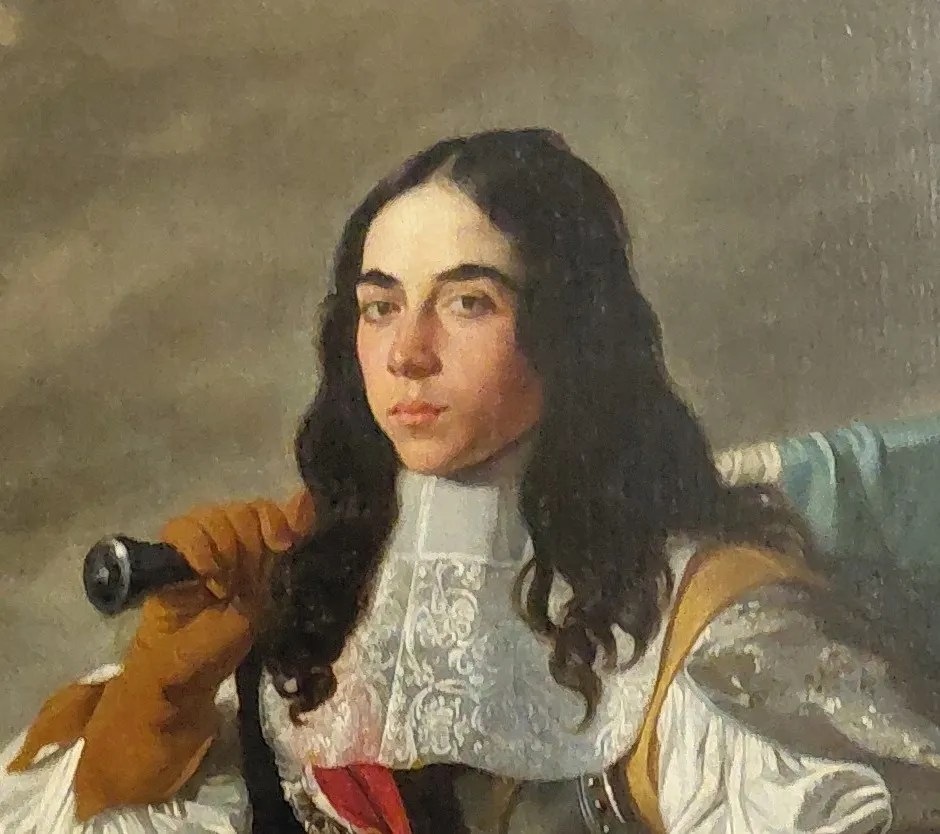
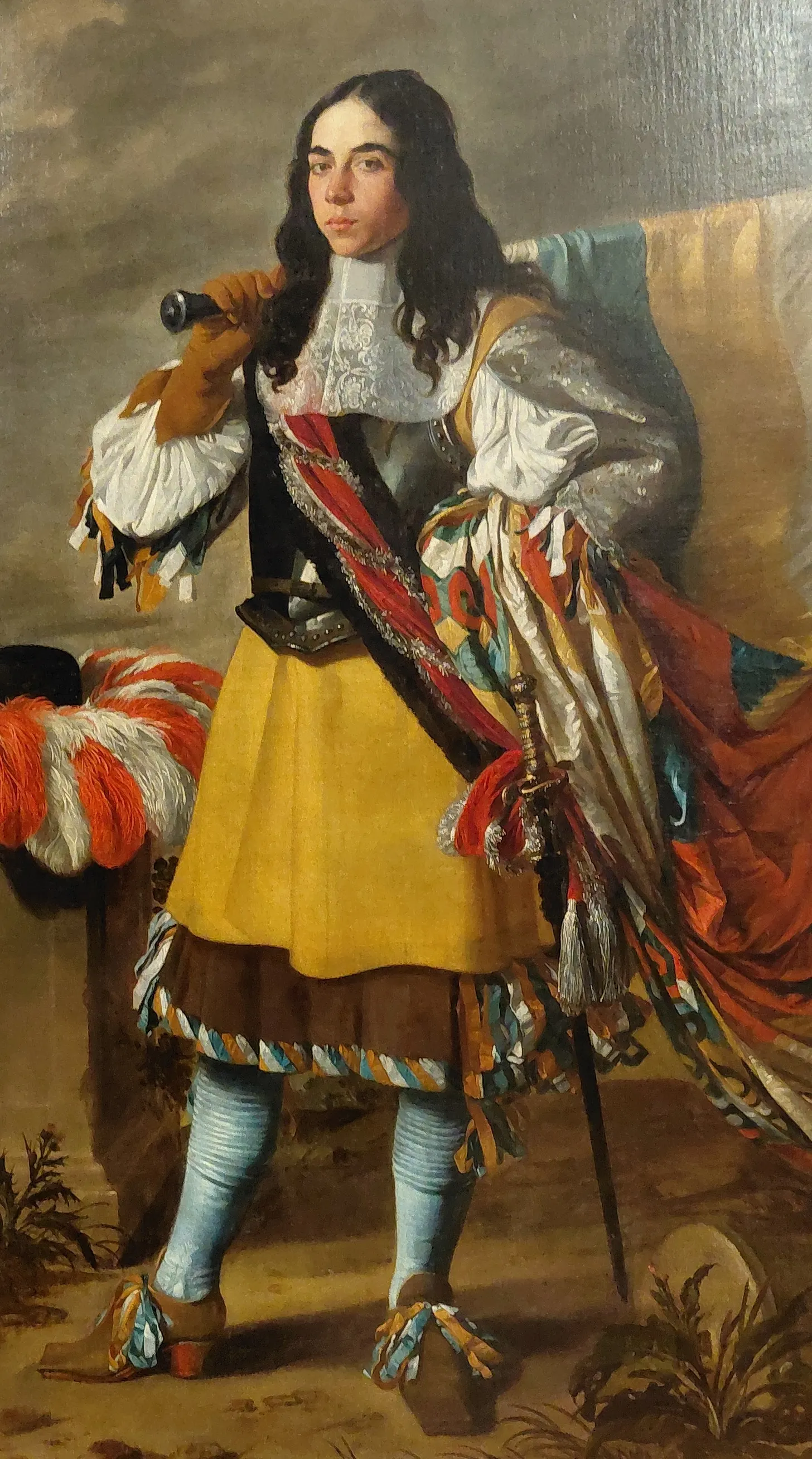
(Illustrations in this post taken from The Standard Bearer, an 1664 painting by Vigor Boucquet, in the collection of The Louvre, Paris.)

P. S. – E Unum Pluribus is a speculative fiction exploring one way in which the political overreach of our current leadership may bring an end to the U. S. A., and what might come in its wake.  With a thrilling plot driven by politics and economics (as well as gender, class, language and even the origins of faith) the novel is currently being serialized online and anyone can read it, at no cost, by returning to this website’s home page and selecting E Unum Pluribus from the top menu, or via this link: https://robinandrew.net/2026/01/01/e-unum-pluribus/
If you think this post has value, feel free to share it!

If you like what you read here at robinandrew.net, please consider subscribing – it’s totally free of charge!