
Tag Archives: evolution of language

e ain’t Woke – (You can’t diversify, equitize or inclusive-ize what you don’t first label).

Between a recent post emphasizing the distinction between a person’s ‘sex’ and that same person’s ‘gender’*, the earlier post entitled ‘e is an Enabler’**, and a few passages in the novel E Unum Pluribus, (currently being serialized online, for free***) it’s possible some readers might dismiss this site as just one more hotebed of Identity Politics; the tyranny of a woke liberal elite telling everyone else what to do and say and even think…

First off, labelling every person all the time as either a man/boy or a woman/girl and insisting that those labels are eternal, unchangeable and mutually exclusive – as our current Chief Executive attempted to due shortly after assuming office for the second time –  has got to be the most profound and ubiquitous instance of Identity Politics in history! 
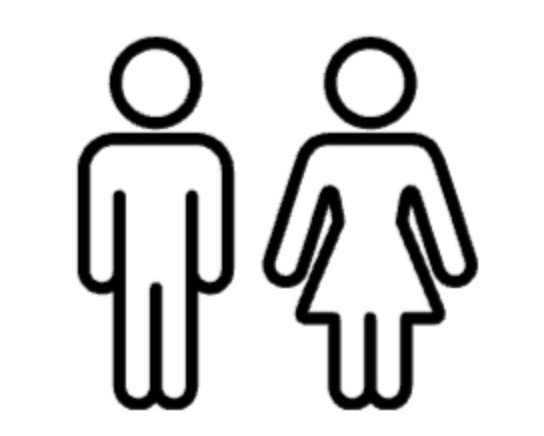
Across uncountable generations, geography and cultures, such gender identification has served as excuse to apportion rights differently to the genders (almost always to the detriment of women…), to justify unequal treatment (ditto), to write laws (wives classified as the property of husbands, women unable to inherit and restricted in travel, dress, voting, etc.) to justify unequal prosecution, judgement and sentencing for affronts against a man versus the same affront committed on a woman, and on and on.  On that basis alone, anyone who professes to believe in stamping out ‘diversity,’ ‘equity’ and ‘inclusion’ (DEI) because they result in unequal treatment on the basis of identity should be totally on board with using non-gendered language for all official purposes.

That last phrase, ‘official purposes,’ highlights another important point: nothing written here suggests or advocates that people stop using gendered pronouns entirely.  There are plenty of instances where ‘he’, ‘she,’ ‘him,’ her’ and all their derivatives are useful and convenient because the desired gender identity of a subject person is a known fact or has been made abundantly clear by the subject’s voluntary choices and acts.

True as that is, though, it is also true that there are instances where the gender self-identity of a subject is not readily determinable except by an observer applying their own stereotypes, prejudices or preconceptions. For those instances, the use of non-gendered pronouns (e, em eir and so on, or something similar) is a simple and effective way to avoid the ‘woke’-ness of sorting individuals into identity groups and treating them differently as consequence. 

Even as English-language speakers continue to use gendered language in many or even most instances, there is real freedom and justice to be gained by using non-gendered language when drafting laws and policies whose intent/content do not truly depend upon a person’s gender expression (which is very nearly all laws and policies, really).  And also, to use such non-gendered language whenever one does not yet know the gender self-image of a person or where a person has made clear that e does not choose to conform to the ‘gender’ stereotypes of others. This small addition to our quiver of words is actually a worthy way to avoid and reduce Identity Politics.

Using ‘e’ ain’t woke, it’s a path to more effective communication, an enabler of individual freedom and simply one tiny increment in the ongoing and perpetual evolution of perhaps the most useful tool we’ve inherited from generations before us: the English language.

*Humans Got Gender, https://robinandrew.net/2026/06/28/humans-got-gender/

**’e’ is an Enabler, https://robinandrew.net/2026/03/01/e-is-an-enabler/

*** E Unum Pluribus is speculative fiction, and a warning that states’ rights, religious nationalism and intentionally divisive political tactics may soon bring about the end of what George Washington termed the American nation’s “Great Experiment.”  Shining its light on what we stand to lose if we do not come together, what could rise in its place and what it would take to begin repairing the damage, this cry of alarm is currently being serialized online and is available to anyone, for free by navigating to the homepage of robinandrew.net and selecting E Unum Pluribus frmthe home page’s top menu, or via the following link:

Feel free to share this post as widely as you wish and, if youlike what you read here, please subscribe to robinandrew.net – it’s totally free!
Novel Words – fictional pronouns for the actual future.

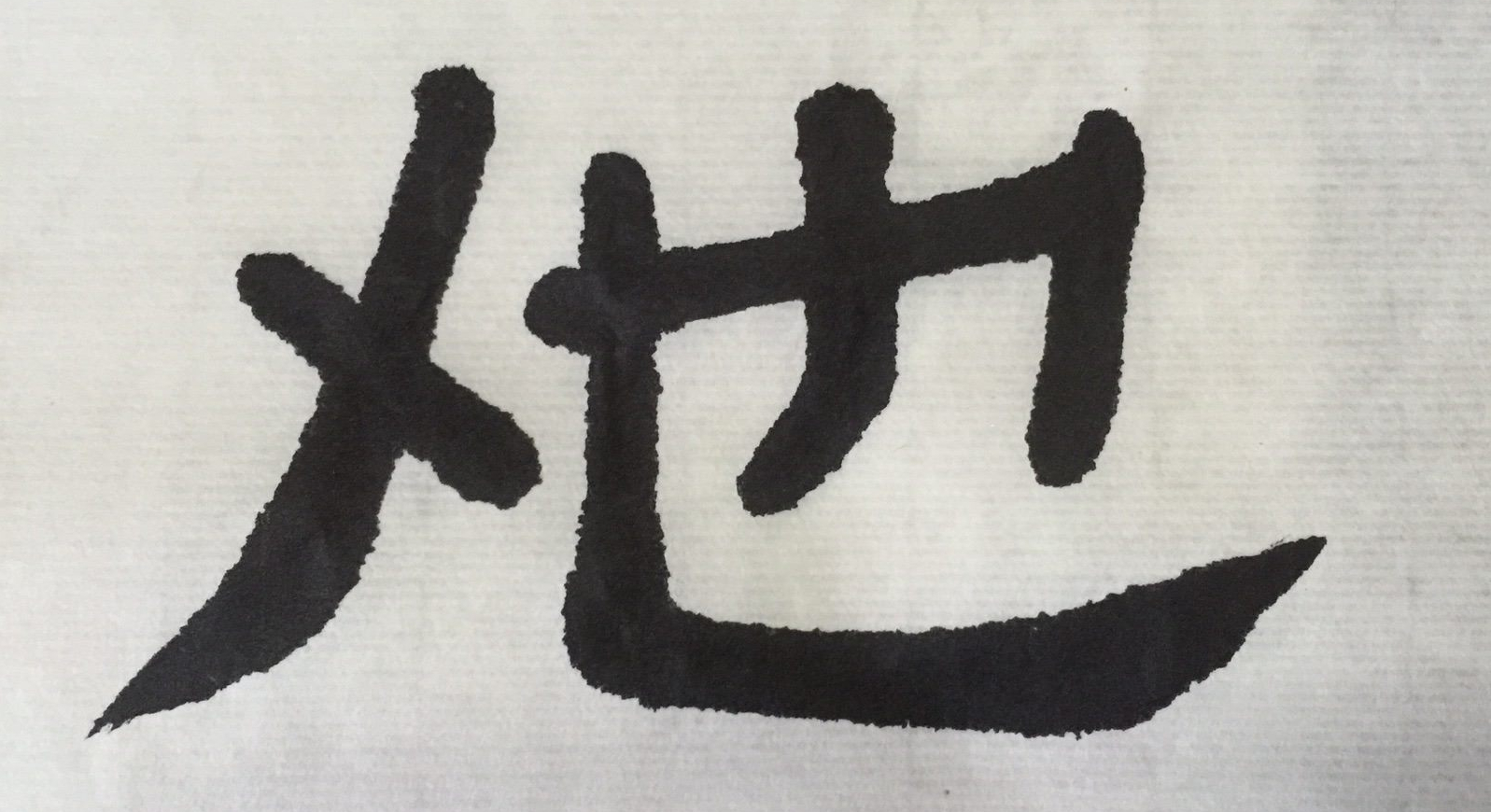
John McWhorter published an Opinion piece recently* about the evolution of pronouns, with particular attention to a new character gaining attention among users of the Mandarin language (X也, shown in image above, combines features of the characters for both he and she, rather as some persons do). Along similar lines, a new novel, E Unum Pluribus, speculates a future American city/state called Confluence in which government edict directs all official communications to employ non-gendered pronouns. The novel’s events make clear that Confluence’s government has plenty of faults and weaknesses, but this one of its policies merits some consideration.

For generations the convention in English was to use ‘he/him/his’ as default and inclusive of all, regardless of their sex/gender. Appropriately, that has now been perceived as favoring male identity over female; simultaneously reflecting historic inequality and perpetuating it. Replacing all those instances with ‘he or she,’ ‘his or her,’ etc. is hardly workable, especially in spoken communications, and still carries a hint of misogyny by placing one gender ahead of the other, whereas ‘she/he’ risks offending insecurities on the other side of the identity coin.

Recent efforts to innovate ‘they’ as a singular pronoun for persons who choose to declare themselves non-binary run aground first on its pre-existing function as plural, generating confusion where they intend clarity. That usage also seems to open the door to a trickle of additional new pronouns as various groups or orientations demand similar recognition; one need only read the snarky online critiques of how LGBT has grown to LBGTQIA2S+ to know that is not a path to tolerance so much as a guarantee of further friction. Worst, in this opinion, ‘they’ singular requires persons who prefer not to be stereotyped as either ‘he’ or ‘she’ to state that publicly, thereby outing themselves and very possibly inviting prejudice, at least at this point in our societal evolution.

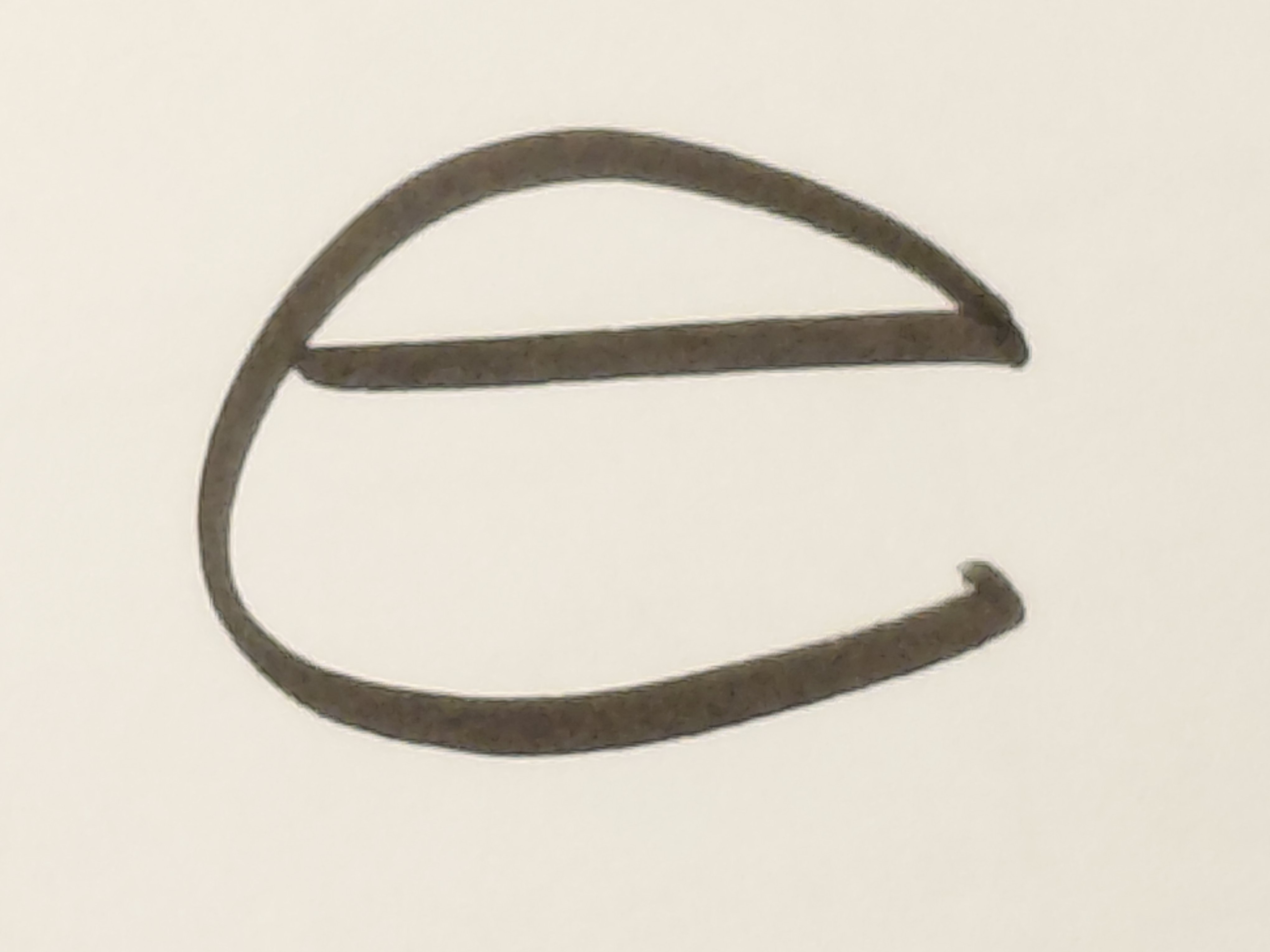
The fictional founders of Confluence have taken another approach; directing official communications to use ‘e/em/eir’ for all individuals. This treats everyone with equal respect and does not require the clunky ‘my pronouns are…’ , which can itself incite prejudices. The specific form, ‘e,” ‘em,’ and ‘eir’ are brief and efficient, similar enough to other pronouns that they quickly feel familiar but with sufficient difference to avoid confusion**.

By applying equally to all possible personal preferences ‘e’ equalizes all in one swoop while tacitly expressing the truth that for virtually all public or official interactions there is no proper reason to indicate what genitalia an individual bears or with whom they choose to become intimate. Those are – and should remain – irrelevant.

There’s nothing revolutionary here, by the way, modern English already has gender neutral pronouns – ‘they’ does not presume the gender of a group or any of its individuals. ‘It’ can be used for all objects – unlike French, say in which some nouns require feminine constructions and other nouns masculine, despite the objects having no actual sexual function or accoutrements. Most prominently, ‘I’ is the same for any individual regardless of sex, gender or other characteristic. It is really only in the second person singular that our language’s evolution has codified an unfortunate and outdated discrimination.

In the world of E Unum Pluribus, that governmental edict for official communications also does not mean ‘e’ is used by everyone all the time. Non-official conversations use gendered pronouns wherever a subject’s preference has become clear, sticking to gender-neutral when an individual’ presentation is itself gender neutral. As in real life, casual usage and common courtesy have the final word in how language evolves over time.

(For what it’s worth, future posts on this site may selectively incorporate ‘e/em’eir’ pronouns to explore just how functional they are – or are not.)

*“This Novel Word Speaks Volumes About How an Entire Language Works” N. Y. Times online edition, 2026-01-22

** E Unum Pluribus does not claim to have invented the ‘e/em/eir’ construct.  Variations on what are sometimes called ‘Spivak pronouns’ have been noted at least as far back as the late 19th-century.

P. S.: E Unum Pluribus is a tale of murder and conspiracy set a decade or so in our future in one of many small sovereignties sprung up in wake of the USA’s self-destruction. The novel explores multiple themes – language and gender, identity, guilt and even the origins of faith and belief – but speaks loudest in its depiction of how much we all stand to lose if we continue to retreat into factions which each act only for their own needs and interests.

The manuscript is available in six instalments, starting at:

If you like what you read here or at robinandrew.net, please share any posts as widely as possible – and consider subscribing: it’s totally free!