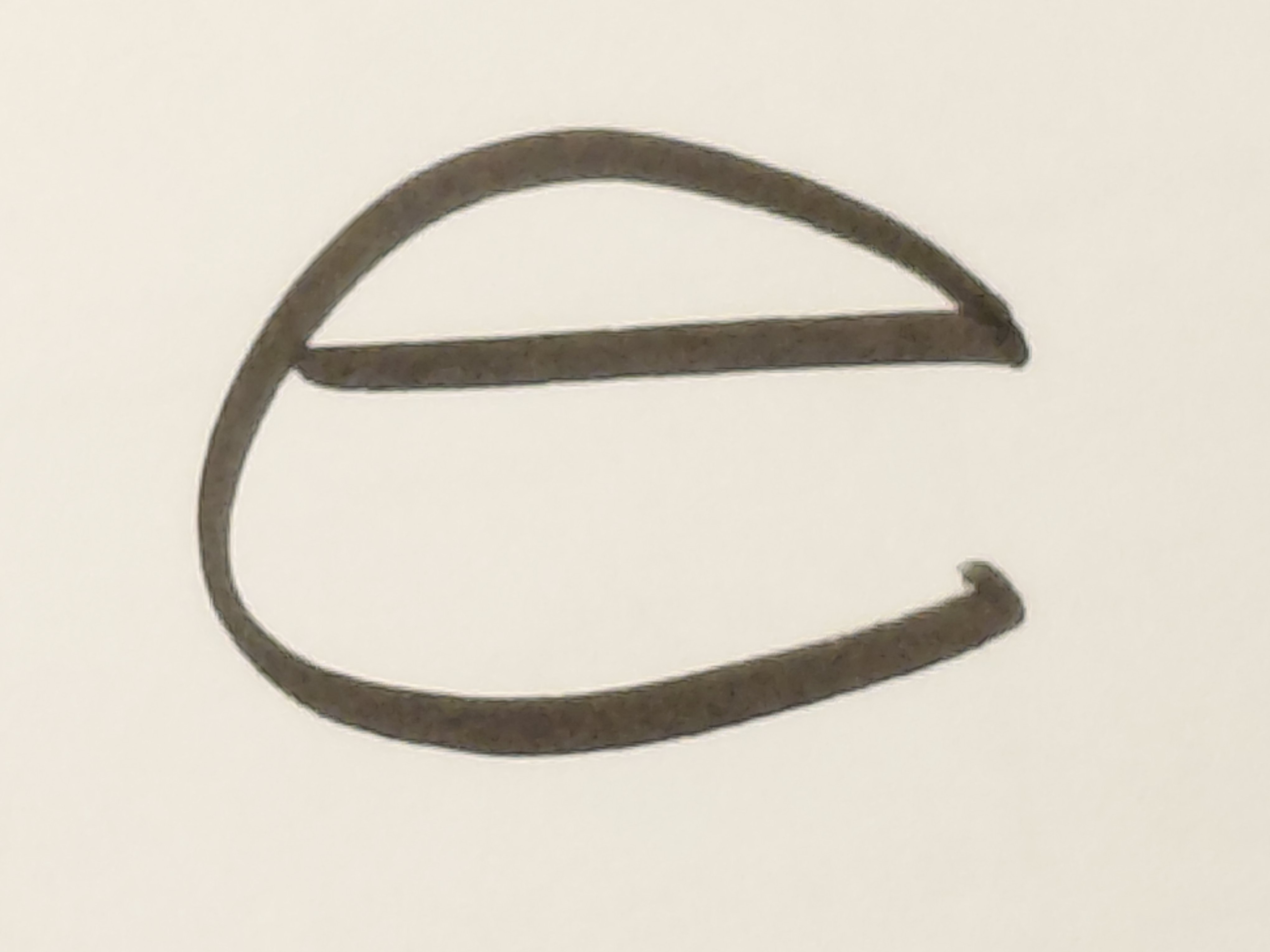
Between a recent post emphasizing the distinction between a person’s ‘sex’ and that same person’s ‘gender’*, the earlier post entitled ‘e is an Enabler’**, and a few passages in the novel E Unum Pluribus, (currently being serialized online, for free***) it’s possible some readers might dismiss this site as just one more hotebed of Identity Politics; the tyranny of a woke liberal elite telling everyone else what to do and say and even think…
First off, labelling every person all the time as either a man/boy or a woman/girl and insisting that those labels are eternal, unchangeable and mutually exclusive – as our current Chief Executive attempted to due shortly after assuming office for the second time – has got to be the most profound and ubiquitous instance of Identity Politics in history!

Across uncountable generations, geography and cultures, such gender identification has served as excuse to apportion rights differently to the genders (almost always to the detriment of women…), to justify unequal treatment (ditto), to write laws (wives classified as the property of husbands, women unable to inherit and restricted in travel, dress, voting, etc.) to justify unequal prosecution, judgement and sentencing for affronts against a man versus the same affront committed on a woman, and on and on. On that basis alone, anyone who professes to believe in stamping out ‘diversity,’ ‘equity’ and ‘inclusion’ (DEI) because they result in unequal treatment on the basis of identity should be totally on board with using non-gendered language for all official purposes.
That last phrase, ‘official purposes,’ highlights another important point: nothing written here suggests or advocates that people stop using gendered pronouns entirely. There are plenty of instances where ‘he’, ‘she,’ ‘him,’ her’ and all their derivatives are useful and convenient because the desired gender identity of a subject person is a known fact or has been made abundantly clear by the subject’s voluntary choices and acts.
True as that is, though, it is also true that there are instances where the gender self-identity of a subject is not readily determinable except by an observer applying their own stereotypes, prejudices or preconceptions. For those instances, the use of non-gendered pronouns (e, em eir and so on, or something similar) is a simple and effective way to avoid the ‘woke’-ness of sorting individuals into identity groups and treating them differently as consequence.
Even as English-language speakers continue to use gendered language in many or even most instances, there is real freedom and justice to be gained by using non-gendered language when drafting laws and policies whose intent/content do not truly depend upon a person’s gender expression (which is very nearly all laws and policies, really). And also, to use such non-gendered language whenever one does not yet know the gender self-image of a person or where a person has made clear that e does not choose to conform to the ‘gender’ stereotypes of others. This small addition to our quiver of words is actually a worthy way to avoid and reduce Identity Politics.
Using ‘e’ ain’t woke, it’s a path to more effective communication, an enabler of individual freedom and simply one tiny increment in the ongoing and perpetual evolution of perhaps the most useful tool we’ve inherited from generations before us: the English language.
*Humans Got Gender, https://robinandrew.net/2026/06/28/humans-got-gender/
**’e’ is an Enabler, https://robinandrew.net/2026/03/01/e-is-an-enabler/
*** E Unum Pluribus is speculative fiction, and a warning that states’ rights, religious nationalism and intentionally divisive political tactics may soon bring about the end of what George Washington termed the American nation’s “Great Experiment.” Shining its light on what we stand to lose if we do not come together, what could rise in its place and what it would take to begin repairing the damage, this cry of alarm is currently being serialized online and is available to anyone, for free by navigating to the homepage of robinandrew.net and selecting E Unum Pluribus frmthe home page’s top menu, or via the following link:
Feel free to share this post as widely as you wish and, if youlike what you read here, please subscribe to robinandrew.net – it’s totally free!