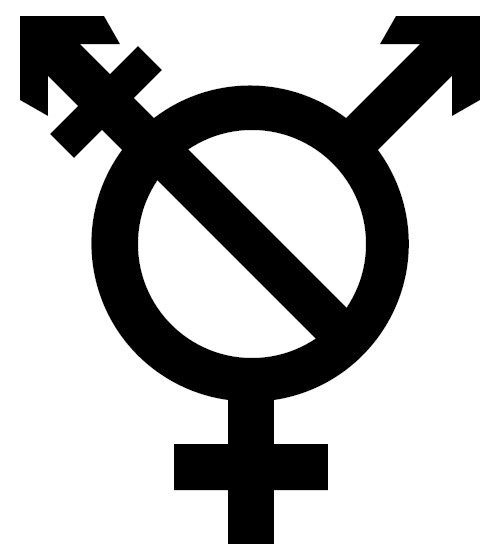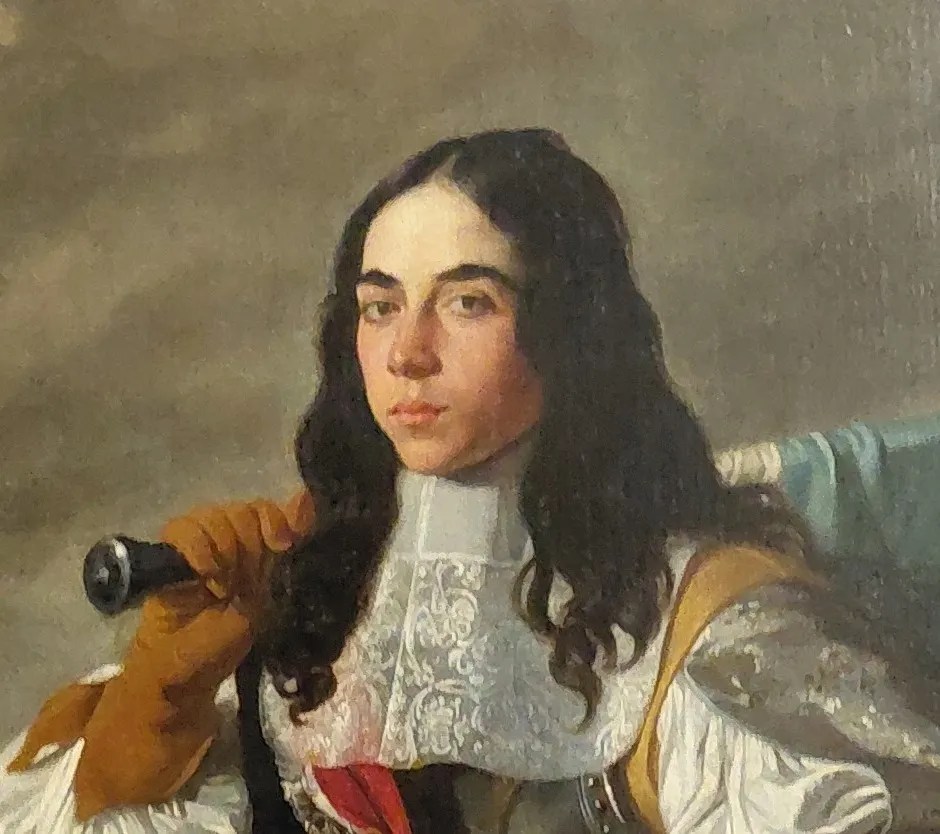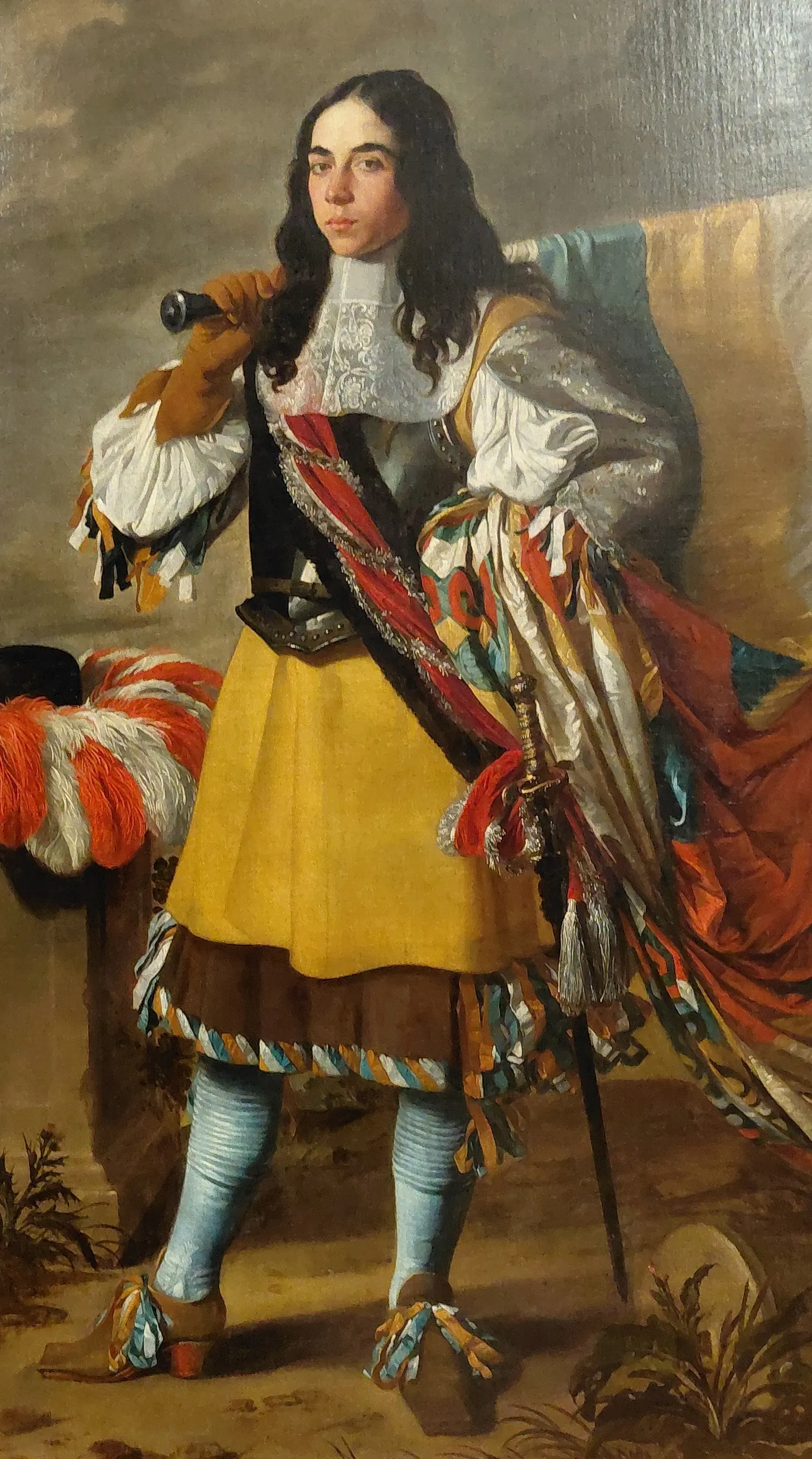
♀…♂…⚥…?!
Among the many slings and arrows tossed by counter-progressive voices these days are allegations that some amorphous ‘they’ of radical-liberal social engineers is “trying to make us all trans.” A particularly twisted component of those alarms are accusations that gender-care supporters and medical professionals are coercing young persons into irreversible medical interventions – defenseless young persons who supposedly would never have chosen such treatment on their own and will regret it for the rest of their lives. Without in any way accepting those arguments, one can still imagine that earlier posts suggesting use of gender-free pronouns run the risk of being classed as part of that same imagined conspiracy, so some response seems worthwhile.
Starting with: Literature, memoir, anthropological scholarship and legal references demonstrate there have long been individuals in many cultures who chose not to conform to the general consensus on how a woman or a man must look and behave. The fact that conservative religious commentators can find admonitions around gender ‘rules’ in a document as ancient as the Old Testament’s book of Deuteronomy makes clear that modern gender diversity does not need to be drummed up by any elitist cabal or progressive conspiracy; it is part of human nature.
As to whether there are more such nonconformers in the USA today than at any other time or in any other place, the truth is: no one knows! What can be reliably said is that, given the high price persons tend to pay for being open about such things, there are certainly more hidden figures today than the few who are brave enough to let themselves be known. And, given that the consequences of nonconformance have been even higher in many other times and places, there probably have been more such silent examples in those as well. With no way to document either half of the equation, then, it is pointless to argue what the trend has been, or even whether there is any trend.
If, despite that understanding, gender nonconformity seems more visible in twenty-first century America than elsewhere or when, that visibility is better taken as reflecting the high value our era places on variety, creativity, honesty and freedom of expression – characteristics widely recognized as crucial to the nation’s success in economics, justice, scholarship, technological innovation and other realms wherein it has consistently outperformed more orthodox and fundamentalist cultures. Nonconformity is, in other words, a positive, not a negative phenomenon.
All that said, it would certainly be undesirable for any person, young or old, to feel pressured into changing their appearance, activities or physiology, especially not through costly or invasive and occasionally dangerous medical interventions. To determine whether or not that is happening, we don’t need to search medical records or point accusing fingers at those who’ve made different choices than any of us might make. Not when, right in front of our eyes and ears is a language and a grammar that requires every person be repeatedly and continuously categorized in one (and only one) of two (and only two) distinct and mutually exclusive genders: be a woman or be a man, no alternatives considered. If there’s anything coercing young persons who are at all uncomfortable with the gendered behaviors to which their physiology is said to direct them, a prime suspect should be that language.
Of course, the fear of ridicule, intimidation, prosecution or bodily harm if ever their gender curiosity is detected are also powerful discouragements of experimentation. Even in this though binary language is not helping, as those fortunate enough to have a potential for passing as ‘the other’ gender may find it safer to change their identity completely from that of a woman to that of a man – or vice versa – than to risk inhabiting any unnamed and unrecognized region in between, even if that would be the highest expression of their true preferences. This is perhaps one way in which invasive measures may truly be the result of coercion – not by the medical establishment but by narrow minds insisting that gender is an either/or thing, that all aspects of one’s life should conform to one gender. By voices, in other words, who believe they have a right to police the personal expressions of others.
So, to those worried about gender affirming treatments: if you want to reduce the number of young people choosing to call themselves trans and maybe even seeking surgical treatment, please consider whether your gender assumptions get in the way of your acting respectfully toward all young persons, however they choose to look or live in the world. Maybe try imagining a world in which young males can be whatever variety of person each of them want to be (not whatever kind you happen to think is ‘a ‘real man’) and young females can each grow up to be whatever sort of person they wish to be (not necessarily the kind who end up on magazine covers or cooking three meals a day three hundred and sixty five days a year).
Is that belligerent? Defensive? Maybe; but the truth is that a world in which anyone can safely and openly inhabit whatever combination of ‘feminine’ or ‘masculine’ attributes best suit their inner nature is a world in which fewer persons will feel any pressure to totally switch from Column A to Column B. And a world in which gender-free pronouns provide a respectful way to communicate about persons who mix their own recipes is more conducive to individual freedom and to the common good than one in which every consideration must start by classifying every individual into one or the other of two rigid and unchangeable gender templates that very well may impede them from living happily and productively as the unique individual they truly are.
Which is why, if trans-wary observers truly wish to minimize pressure on young persons to make what they consider poor choices about their gender or biology, they should be right on board with use of gender-free pronouns as one small step to encourage variation with moderation, expression without extremism and exploration without irreversible commitment.
P. S. – E Unum Pluribus is a speculative fiction exploring one way in which our current ‘culture wars’ may bring an end to the U. S. A., and what might come in its place. With a thrilling plot driven by politics and economics (as well as gender, class, language, magic and even the origins of faith) the novel is currently being serialized online and anyone can read it, at no cost, by navigating to the home page of this website and selecting E Unum Pluribus from the top menu, or via this link: https://robinandrew.net/2026/01/01/e-unum-pluribus/
Please feel free to share this post however you wish!
And, if you like what you read here at robinandrew.net, please subscribe – it’s absolutely free!