Tag Archives: gender controversy

Slaying the Gender Binary – with E!

(The new novel, E Unum Pluribus, is narrated by Jack Shirley, an office intern whose gender behavior doesn’t always fit the expectations common in contemporary Amero-European culture.  Anticipating that Jack’s character may arouse comment, this is one in a series of posts sharing the author’s thoughts around those expectations.)

A previous post on this site* made the case that the best way to move beyond the simplistic convention of binary gender is not to start recognizing an array of new genders, each of which may desire its own names and terms – names and terms which could one day prove as dysfunctional as it would seem in this decade to call a group of people ‘beatniks’ because the males trim their beards into goatees and the females wear long, straight hair with blunt-cut bangs.

Rather than coming up with more ways to divide people from each other by slotting us into new groups, a more promising approach is to recognize and honor the deep truth that every individual is unique through use of gender-free nouns – person, human, individual – and gender-freeing pronouns as the initial and default assumption for all of us.

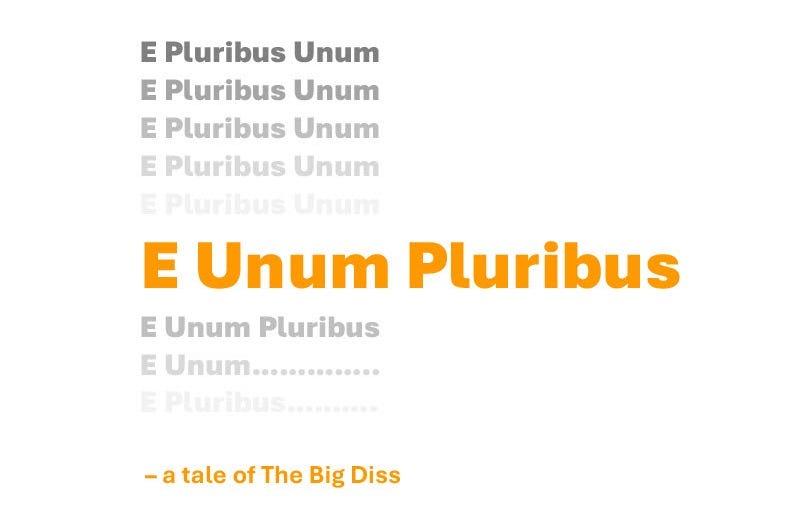
(I use the pronouns E, em and eir in my examples not because they are the only possibilities, but because I find them the most natural to speak.  I type the ‘E’ in upper case to make being referred to as ‘E’ feel every bit as respectful as referring to oneself using ‘I.’  Ultimately, of course, it is up to the entire community of English language users to decide what words become common, as it is with every other evolution of our shared language).

E is about everyone being an individual first and foremost, before they are a member of any group.

E means accepting that there will be some individuals who do not readily fit one’s own expectations for ‘man’ or ‘woman’ – or who actively choose not to aim for either of those expectations – and in those cases continuing to use gender-free language to facilitate respectful communication without any party feeling either dishonest or compelled against their principles.

E is about empowering every individual regardless of whether their appearance or behavior complies with anyone else’s idea of what they are ‘supposed to be.’  About treating persons equally regardless of how much they seem like us, or different from us.  About not assuming that the choices we make for ourselves would be better for them than their own choices. 

E is about treating all persons equally, regardless of their chromosomes, the reproductive cells their body puts out (or doesn’t), the secondary sex characteristics others see on them or how others may criticize those characteristics.

E isn’t about eliminating ‘man/men’ and ‘woman/women.’ It just means using those and their corresponding gendered pronouns only if/when it is clear that is how the individual in consideration wishes to be identified. 

E does nothing to prevent persons who wish to be recognized as ‘man’ or ‘women’ from using the multitude of possible cues to make that clear.  (Nor does it discourage persons making themselves recognizable as proud military veterans, as nerds or geeks or football fans or soccer moms; a prairie wife, Amish farmer, Orthodox Jew, Evangelical Christian, conservative, progressive, queer, jazzman, Deadhead or… the list goes on forever.) 

E is a reminder and a tool to treat any more specific identity as part of being an individual, a person, a human being; not a substitute.

E is for every one of us!  

*Previous post: Getting to Binary, https://robinandrew.net/2026/09/04/getting-to-binary/

P. S. – E Unum Pluribus is a speculative fiction exploring one way in which our current ‘culture wars’ may bring an end to the U. S. A., and what might come in its wake. With a thrilling plot driven by politics and economics (as well as gender, class, language and even the origins of faith) the novel is currently being serialized online and anyone can read it, at no cost, by navigating to thehome page of this website and selecting E Unum Pluribus from the top menu, or via this link: https://robinandrew.net/2026/01/01/e-unum-pluribus/

This post is public, so feel free to share it as widely as you like.

If you like what you read here at robinandrew.net, please subscribe – it’s absolutely free!
Humans Got Gender!

(The new speculative fiction, E Unum Pluribus, is narrated by Jack Shirley, a bureaucratic intern whose behavior transcends gender expectations of present day Amero-European culture.  Anticipating that the character of Jack may generate comments, this and future posts will share some thoughts around those expectations.)

Look up ‘gender’ on the Internet these days and you may well encounter vehement statements to the effect that ‘gender does not exist’ or ‘there is no such thing as gender.’  What these claims seem to intend is that the concept of ‘gender’ in human beings is an imagined construct foisted on us by radical academics and activists to confuse or obscure what the commentator believes to be a real and eternal truth: that being ‘a man’ or ‘a woman’ is simply and absolutely a matter of one’s fixed and binary biological sex*. 

To that point, on the first day of his second term, Mr. Trump issued an Executive Order purporting to set the record straight on “Gender Ideology” and “Biological Truth**.”  Sex, as defined by the Order, is determined by the reproductive cells which one’s body may produce, which means it can be confirmed only by some fairly invasive medical examination and so is of no use in common daily life.  Even if we allow that the authors of that Order were just searching for a more legally-defensible way to avoid saying what they really meant – that any person who was born with an apparent penis is absolutely and forever ‘a man’ and anyone born with genitals that did not look like a penis is absolutely and forever ‘a woman’ – the same limitation is true. What sort of genitals a person carries – and even more, what their genitals looked like at birth! – is simply not determinable in any normal sort of public interaction. 

Despite that, we regularly refer to or address even total strangers as him or her, Mr., Miss, Mrs, Ms, Ma’am or even “hey Dude!”  Every time we do so, we are making assumptions based upon a variety of cues other than the form of their genitals or the reproductive cells which might issue therefrom.  What we do use in making those assumptions are a wide variety of stereotypes accumulated over the course of our lives.  A short list of attributes that can influence whether we identify an individual as man or woman might include the configuration of their garments (dress, skirt or pants; and if the latter, their fabric, colors, trim, tailoring and tightness), length and shape of one’s hairstyle (and the naturalness or artificiality of the hair’s cut, color and styling), bodily characteristics (height, bulk, proportions, muscular definition), carrying a purse in hand or a wallet in a pocket, use of cosmetics or scents (and which scent!), how they move (or throw a ball…), how they speak, what tasks they perform in the family, what outside occupation they do or do not have and even which emotions they readily express or how they express them.

Since none of those deciding factors actually involve knowledge of the person’s sexual organs/cells, the resulting assumptions about a person’s identity cannot be based upon their ‘sex’ as defined by Mr. Trump’s order and similar doctrines. For that reason, it is customary to refer to that complex of factors and the summary judgements based upon them as ‘gender’ and that is why conscientious conversation, writing or legislation uses different words for a person’s sex – ‘male,’ ‘female’ – than for public gender – ‘man, woman, boy, girl’.  Humans developed language because it facilitates useful communication and effective language around gender reflects the way we make assumptions, thereby serving the needs of speakers and listeners, writers and readers.

Human gender exists. If it did not, our everyday language wouldn’t employ gendered words and presumptions to address issues which are not actually sexual.  Future posts in this series will share more thoughts on some of those issues.

* Since these posts are about gender, not sex, they won’t delve into the scientifics of the latter.  Suffice to say, nothing here or which follows is intended to accept that the biological ‘sex’ of humans is as simple, absolute and binary as sometimes claimed.

** https://www.govinfo.gov/content/pkg/DCPD-202500135/html/DCPD-202500135.htm provides the text of Mr. Trump’s proclamation.

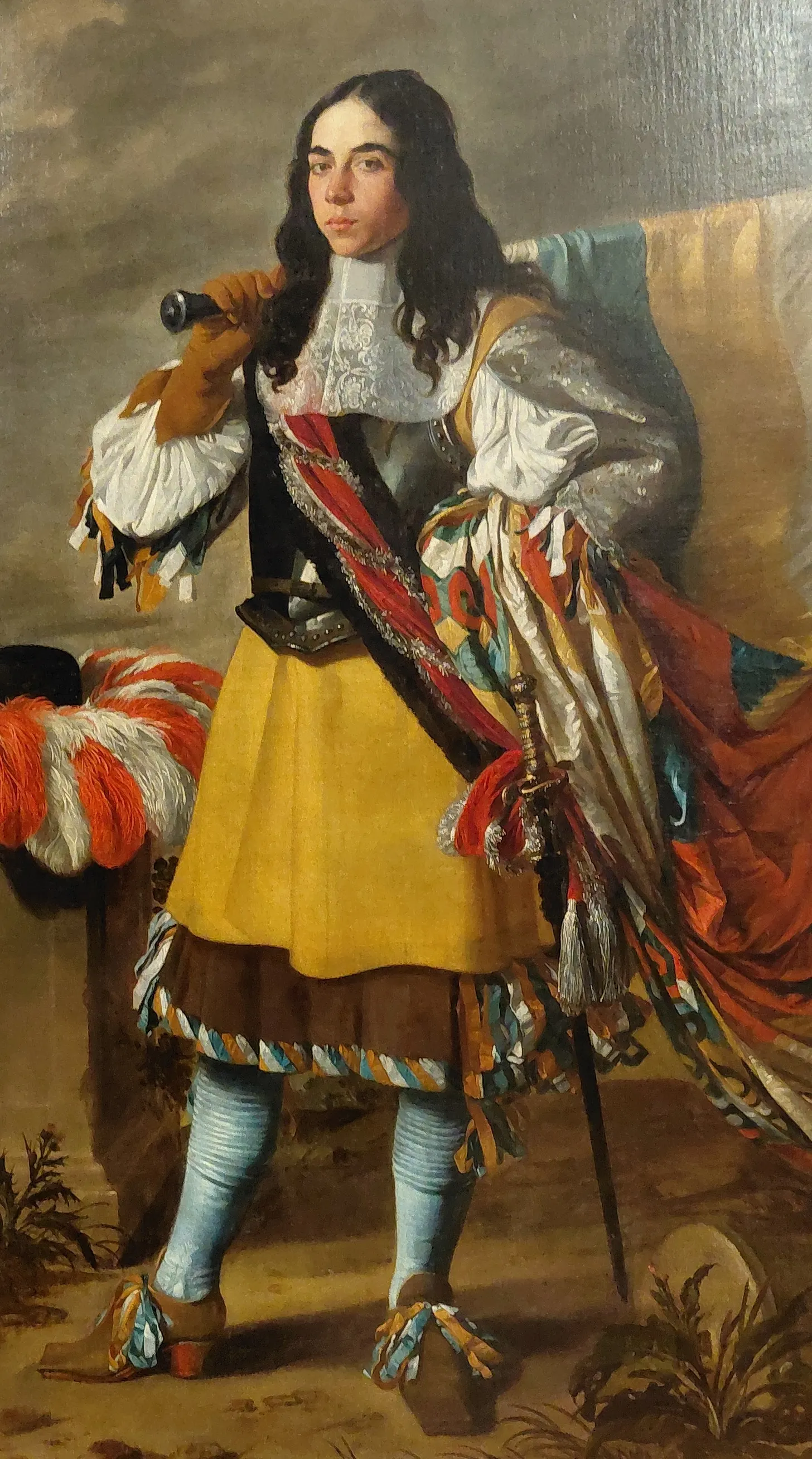
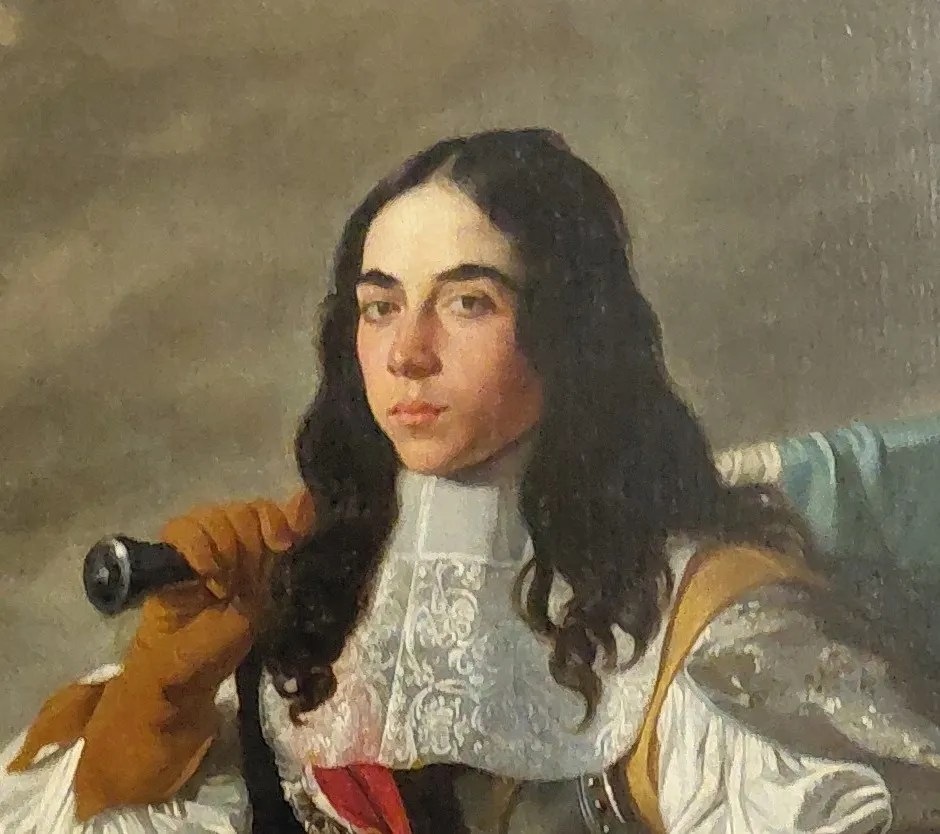
(Illustrations in this post taken from The Standard Bearer, an 1664 painting by Vigor Boucquet, in the collection of The Louvre, Paris.)

P. S. – E Unum Pluribus is a speculative fiction exploring one way in which the political overreach of our current leadership may bring an end to the U. S. A., and what might come in its wake.  With a thrilling plot driven by politics and economics (as well as gender, class, language and even the origins of faith) the novel is currently being serialized online and anyone can read it, at no cost, by returning to this website’s home page and selecting E Unum Pluribus from the top menu, or via this link: https://robinandrew.net/2026/01/01/e-unum-pluribus/

If you think this post has value, feel free to share it!

If you like what you read here at robinandrew.net, please consider subscribing – it’s totally free of charge!