Tag Archives: news

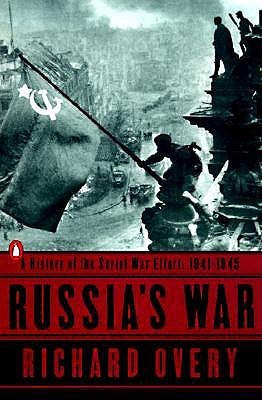
Russia’s War – A History of the Soviet War Effort: 1941 – 1945

Anyone surprised by the tenaciousness with which Ukrainians have been fighting their Russian invaders over the past four and a half years, or by how willing the Russian people have been to suffer sacrifices in service of their autocrat’s imperialistic escapade, could do worse than to read Richard Overy’s engrossing history. Written to accompany a ten-part televised documentary, the book is made compelling by its author’s extraordinary scholarship (an accomplished Professor at King’s College in London, this is his twelfth volume on the Second World War; its 35 pages of reference notes and 17 of bibliography are truly mind-boggling) and also by revelations made possible by the 1991 fall of the Soviet Union and resultant opening of previously-secret archives and previously-silenced voices and memoirs.

Overy rightly begins his tale prior to the actual fighting, recounting the machinations between Stalin and Hitler, two consummate conspirators each committed to securing as much power and protection as possible and both willing to undercut or double-cross anyone, even their closest associates and supporters, for that purpose. Two men also carrying deep hatred and mistrust for the other’s systems (industrialized nationalism versus world-communist socialism) even as they secretly held some common beliefs (racist hatred of Jews and other groups, resentment at not receiving what they considered their due from the European powers and, especially in Russia’s case, cross currents of superiority and inferiority between the urbanized and seafaring European nations and those more landlocked or of ‘questionable’ Asian origins).  Simmering in the aftermath of The Great War and the punitive geography imposed by its victors, these convictions made confrontation nearly inevitable.

Naturally, most of the story takes place during and following Hitler’s ill-advised overreach, Operation Barbarossa, which siphoned the majority of his forces away from Western Europe for what he envisioned as a very brief campaign to conquer a minimally trained and pre-industrial rabble spread sparsely over a primitive landscape.  The subsequent give and take of territory reiterate what America has since learned in places like Vietnam, Iraq and now Iran: that it is very nearly impossible for even a massively asymmetrical military force to defeat a population inured by history to hard work and sacrifice under harsh conditions, who know they will receive no quarter if conquered and so have nothing to lose by fighting to the death for every inch of land, who have for generations believed those lands to be both their home, their heritage and their inheritance, and who are both more familiar with and better adapted to the battleground than their aspiring usurpers.

That Josef Stalin cared not a whit about how many of his subjects died at his discretion is clearly another factor in the ultimate outcome.  The numbers of Soviet dead, wounded, missing, captured, imprisoned by their own countrymen or summarily executed by same are staggering, as are the numbers of combatants: time and again, we read of millions of men marching here and other millions over there, then half a million lost in this skirmish, or a million and a half in that campaign.  One wonders that there could even be that many men of fighting age in either nation; and then we read the extent to which women (already absolutely crucial to Russia’s industrialization), children and the elderly were progressively enlisted into the fighting – first by the Soviets to stop and then push back the Nazis, and later by the Nazis themselves in futile rear-guard actions once their ‘homeland’ came under its own invasion by the Soviet counter-force.

As to reports of the hideous brutality with which Soviet-led forces treated Germans and their sympathizers in the final stages of the war, Overy is neither dismissive nor quick to judge.  He chronicles their cruelties while also relating the earlier brutalities of Nazi forces (who were not all German, btw, but included many thousands impressed from conquered nations as well as others who claimed historic excuses for their treatment of Russians).  There were, in sum, sufficient hatreds, grudges, and unredressed grievances on all sides to ensure that no part of the war was gentlemanly and neither side innocent.  Given such blood-soaked soil in which to take root, the fact that the post war peace blossomed and largely held for 69 years (1945 to Russia’s 2014 invasion of Crimea) is all the more remarkable an achievement, and an indictment of our current leadership that so blithely squanders its benefits.

Having had all this history driven into the minds of both combatants’ descendants from childhood, it should surprise no one that the current Ukraine conflict has gone on as long as it has despite enormous costs.  And no surprise that this administration’s cocky amateur diplomats have been unable to produce their promised quick and easy end to its horrors.

Another issue on which Overy’s observations are particularly noteworthy: that it was not the D-Day invasion and subsequent drives of the Western Allies’ European campaign which caused Hitler’s defeat.  Given their late arrival on the scene, he argues, and the much smaller scale of their combined forces, the actions of American, British and associated troops served largely to distract Hitler and split his resources, hastening but not enabling the Nazi’s defeat, which had already become inevitable once the USSR had fully mobilized and industrialized, almost overnight.  One could, in fact, argue that the USA’s most important contribution to victory was the much earlier sharing of its industrial knowledge, technology, raw materials and factory output with the USSR through Lend/Lease and other programs.  An insight worth applying directly to our nation’s current debate over how and how much to support the Ukrainians in their battle with Stalin’s successor – we do not necessarily need to send our own troops in order to help ensure the success of their long and heroic struggle for freedom and self-determination.

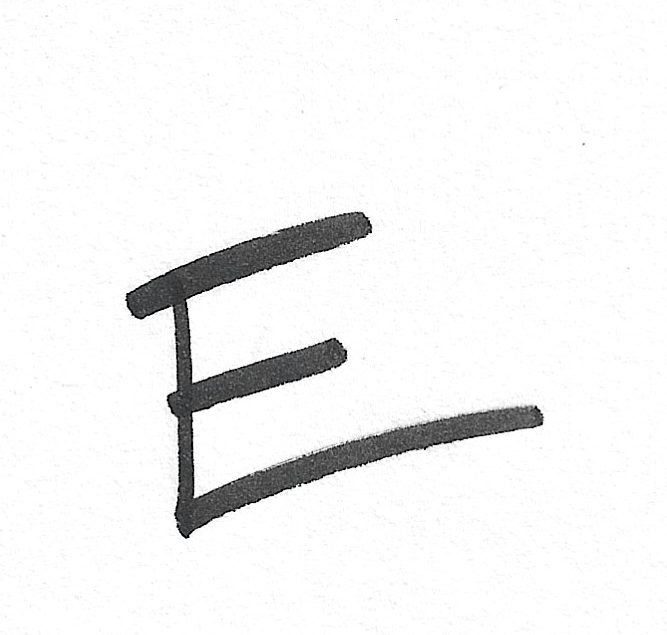
P.S. – speaking of the struggle for self-determination, E Unum Pluribus is a speculative fiction imagining a post USA world. 

Packed with intrigue and fueled by politics, economics and murder (as well as gender, class, language and even the origins of faith), E Unum Pluribus examines how much we stand to lose if we allow our differences to destroy this precious nation, and what might be required to begin repairing the damage if we do.  This thrilling novel is currently available in six online installments, totally for free, simply by navigating to this website’s home page and selecting E Unum Pluribus from the home page’s top menu, or via this link: https://robinandrew.net/2026/01/01/e-unum-pluribus/


The Girl Who Fell to Earth – a memoir, by Sophia Al-Maria

An eye-opening recollection of growing up Bedouin-American around the turn of the twenty-first century.  Daughter of the tenuous union between a blue-collar American rebel and a job-seeking illegal immigrant nominally from Qatar – but more truly of the Al-Dafira tribe, a nomadic Bedouin people historically accustomed to roaming a desolate chunk of sandscape alternately claimed and reclaimed by the shifting borders of multiple kingdoms and nations – Sophia (to her mother’s world) or Safya (to her father’s) is whipsawn between cultures, generations and technologies as she shuttles between Puyallup, Washington and the perpetual construction site necessitated by an Emirate’s leap from the twelfth-century to the twenty-first in a single bound.

Where other essays on the Gulf nations tend to emphasize their wealthy leaders or their Ferrari-driving, Vuitton-clutching, nouveaux-riche spouses and offspring, this one focuses on the shadow populations who live off their government subsidies, house-keep their boudoirs, roughneck their earthworks and oil platforms, and line the fringes of their ever-expanding metropoles with camel-hair shelters and goat pens fabricated from desiccated shrubberies and the gleanings of garbage piles.

Al-Maria is charming and entertaining as we see her garden-variety teen angsts inflated to monumental proportions by the economic marginality of both her families, the uncertain legal status of stateless nomads (or half-nomads who’ve had their passports stolen) and the challenges of learning Arabic, Islam, Americanism and independence simultaneously and with vanishingly few competent examples of mature adulthood to emulate.  That she succeeds in travelling back and forth several times and surviving assorted school systems to eventually enter the American University in Cairo and establish something of a career as writer and artist, is quite impressive.  Most of all, though, her tale is a reminder that family – even a wildly extended, chaotic and perennially impoverished family with few (legal) breadwinners – can provide children a crucial sense of belonging and acceptance even as the elders’ insistence on traditions and restrictions are driving those same children away.  The women, especially, of her Al-Dafira clan show resilience and flexibility in keeping their families and love alive and fed, despite what seem the best efforts of their men to destroy them.

Al-Maria’s Bedu relations, of course, represent only one of uncountably-many parallel worlds with whom we share our time and geography.  By allowing a mile’s walk in their sandals, The Girl Who Fell to Earth makes a generous plea for understanding of all the cultures and peoples around the world who do not live, speak or behave as mainstream Amero-European media and opinion so blithely presume they should.

A worthy use of space on the bookshelf!

P.S. – to learn about another parallel world, read E Unum Pluribus, a new speculative fiction imagining the end of the USA, and what may fester in its place. 

Packed with intrigue and fueled by politics, economics and murder (as well as gender, class, language and even the origins of faith), E Unum Pluribus examines how much we stand to lose if we allow our current culture wars to shatter this precious nation.  This thrilling novel is currently available in six online installments, totally for free, simply by navigating to the home page of this website and selecting E Unum Pluribus from the top menu, or via this link: https://robinandrew.net/2026/01/01/e-unum-pluribus/

Make America Grovel Already! (Nothing for Nothing Ain’t Nothing…)

To be clear: Russia’s release of hostage and U. S citizen Stephen Hubbard is a good thing. It is good and right that Mr. Hubbard is back on home soil and free once again. The story though, is far from what the Trump administration and its fanboys are trying to make it.

Mr. Putin is a ‘humanitarian,’ said Envoy Steve Witcoff who appears to have played a role in the exchange (the apt phrasing, since we cannot know what role he actually acted in this daytime drama, other than standing stage-side to praise the dictators on cue…). No, if Mr. Puttin were a humanitarian, he would never have allowed Mr. Hubbard to be arrested, unfairly tried and unjustly imprisoned. Release, at this late date, does not negate those prolonged inhumanities.

Mr. Trump, for his part in the charade, has said that the U. S. gave Russia nothing in exchange for this Russian gesture, comparing the event favorably to earlier prisoner releases negotiated by other administrations as he offered particular self-congratulation that there was no economic exchange involved; claims for which only a child should fall. Though separated by a few days (‘yes, Sir, Mr. President, Sir: that gives us plausible deniability, Sir’) this release is clearly a gimme for Mr. Trump’s recent capitulations to Putin – throwing him economic lifelines in the form of petro deals and sanctions relief and (apparently, though yet to be documented) limiting arms and intelligence flows to the Ukrainians heroically resisting the takeover of their democratic and capitalist nation by its authoritarian socio-fascist neighbor.

So, yes, let’s give Messrs. Trump and Witkoff credit for what their messing-about has actually achieved – not some great ‘’humanitarian’ move by Mr. Putin, not a diplomatic triumph at no cost to the USA, but an insignificant concession that cost Putin nothing (maybe even saved a bit on his prison budget!) in exchange for potentially monumental costs to Ukraine, to democratic aspirations throughout Europe and Asia and to the moral and political values for which the US government once stood. A bargain basement public relations coup for the outlaw regime posing the most acute current threat to world peace and freedom.

Way to go, Team MAGA,

the midterms are coming,

there’s no time to waste,

let’s Make America Grovel Already!

P. S. – E Unum Pluribus is a speculative fiction novel that imagines how intentionally divisive winner-take-all politics may soon bring about the end of what Washington called our “Great Experiment.” Shining a light on what we stand to lose,, what could rise in its place and how some survivors might attempt to repair the damage, this cry of warning is currently being serialized online and is available to anyone, for free, by navigating to the homepage of this website and selecting E Unum Pluribus from the top menu, or via the following link:https://robinandrew.net/2026/01/01/e-unum-pluribus/

This post is public, so feel free to share it as widely as you like.

If you appreciate what you read here at robinandrew.net, please subscribe – it’s totally free, always!

Slaying the Gender Binary – with E!

(The new novel, E Unum Pluribus, is narrated by Jack Shirley, an office intern whose gender behavior doesn’t always fit the expectations common in contemporary Amero-European culture.  Anticipating that Jack’s character may arouse comment, this is one in a series of posts sharing the author’s thoughts around those expectations.)

A previous post on this site* made the case that the best way to move beyond the simplistic convention of binary gender is not to start recognizing an array of new genders, each of which may desire its own names and terms – names and terms which could one day prove as dysfunctional as it would seem in this decade to call a group of people ‘beatniks’ because the males trim their beards into goatees and the females wear long, straight hair with blunt-cut bangs.

Rather than coming up with more ways to divide people from each other by slotting us into new groups, a more promising approach is to recognize and honor the deep truth that every individual is unique through use of gender-free nouns – person, human, individual – and gender-freeing pronouns as the initial and default assumption for all of us.

(I use the pronouns E, em and eir in my examples not because they are the only possibilities, but because I find them the most natural to speak.  I type the ‘E’ in upper case to make being referred to as ‘E’ feel every bit as respectful as referring to oneself using ‘I.’  Ultimately, of course, it is up to the entire community of English language users to decide what words become common, as it is with every other evolution of our shared language).

E is about everyone being an individual first and foremost, before they are a member of any group.

E means accepting that there will be some individuals who do not readily fit one’s own expectations for ‘man’ or ‘woman’ – or who actively choose not to aim for either of those expectations – and in those cases continuing to use gender-free language to facilitate respectful communication without any party feeling either dishonest or compelled against their principles.

E is about empowering every individual regardless of whether their appearance or behavior complies with anyone else’s idea of what they are ‘supposed to be.’  About treating persons equally regardless of how much they seem like us, or different from us.  About not assuming that the choices we make for ourselves would be better for them than their own choices. 

E is about treating all persons equally, regardless of their chromosomes, the reproductive cells their body puts out (or doesn’t), the secondary sex characteristics others see on them or how others may criticize those characteristics.

E isn’t about eliminating ‘man/men’ and ‘woman/women.’ It just means using those and their corresponding gendered pronouns only if/when it is clear that is how the individual in consideration wishes to be identified. 

E does nothing to prevent persons who wish to be recognized as ‘man’ or ‘women’ from using the multitude of possible cues to make that clear.  (Nor does it discourage persons making themselves recognizable as proud military veterans, as nerds or geeks or football fans or soccer moms; a prairie wife, Amish farmer, Orthodox Jew, Evangelical Christian, conservative, progressive, queer, jazzman, Deadhead or… the list goes on forever.) 

E is a reminder and a tool to treat any more specific identity as part of being an individual, a person, a human being; not a substitute.

E is for every one of us!  

*Previous post: Getting to Binary, https://robinandrew.net/2026/09/04/getting-to-binary/

P. S. – E Unum Pluribus is a speculative fiction exploring one way in which our current ‘culture wars’ may bring an end to the U. S. A., and what might come in its wake. With a thrilling plot driven by politics and economics (as well as gender, class, language and even the origins of faith) the novel is currently being serialized online and anyone can read it, at no cost, by navigating to thehome page of this website and selecting E Unum Pluribus from the top menu, or via this link: https://robinandrew.net/2026/01/01/e-unum-pluribus/

This post is public, so feel free to share it as widely as you like.

If you like what you read here at robinandrew.net, please subscribe – it’s absolutely free!

Wall Street Journey – an uber-capitalist’s eyes are opened, at last

BREAKING NEWS! Gerard Baker, ex Editor in Chief and now Editor at Large of the Wall Street Journal, in a recent Opinion piece in that paper*, has concluded that the current workings of the American financial and governing system are rigged in favor of wealthy citizens and institutions!

Duh-uh!

Throughout known history, starting even before the days of kings and empires, the vast majority of governments have had one overriding purpose: to preserve the power and wealth of their rulers.

From its founding, the USA was intended to be profoundly different: a representatively-democratic republic whose government would serve the interests of all its people. Today, after more than two centuries of striving, stumbling and revising toward that goal, it is clear to most observers that our economic and electoral systems – and especially the current administration’s twisted vision for them – have been perverted to a degree which threatens the very survival of our nation and legacy. The only thing newsworthy about Mr. Baker’s opinion is that it comes from such an entrenched member of the financial elite as himself.

For decades, people like Mr. Baker and institutions like the WSJ have decried progressive policies as governmental ‘transfers of wealth’ even as the record of income and asset distribution shows their prolonged application of ‘supply side’ and ‘market driven’ policies have been relentlessly transferring a vast portion of the nation’s wealth (and thus its power) away from the masses who live paycheck to paycheck and into the hands of the most wealthy few, the owners of corporate and property assets.

Tardy as Mr. Baker’s conversion is, it can yet serve a useful purpose by reminding us all that from now through November Third – and thereafter, at least through the crucial election of 2028 – thoughtful voters must support candidates who will work to dilute the power of corporations, proto-monopolies, venture capital, hedge funds and the ultra-wealthy. We must stop electing legislators who will promote anti-worker and anti-household policies in spite of the repeated and continuing failure of those policies to achieve their stated objectives.

(Remember: the real reason supply/market policies are perennially pushed and enacted by the power brokers is that they are actually achieving their unstated objectives: to ensure and increase the wealth and power of the already wealthy and powerful.)

P. S. – To explore a different way in which our current ‘winner take all’ politics may play out and just how extensive the resulting damage would be, read E Unum Pluribus. This new speculative fiction is offered as a cautionary tale, while there is still time to avoid anything like the events it imagines. E Unum Pluribus is currently being serialized online and anyone can read it, at no cost, by navigating to the the home page of this website and selecting E Unum Pluribus from the top menu, or via this link: https://robinandrew.net/2026/01/01/e-unum-pluribus/

*Link to Mr. Baker’s piece: https://www.wsj.com/opinion/how-to-cure-what-ails-american-capitalism-52d97161?utm_source=substack&utm_medium=email

**Special thanks to Robert Reich, without whose Substack I’d be unaware of Mr. Baker’s sudden conversion, seeing as how I am not normally a WSJ reader. See robertreich@substack.com, 2026-08-20, ‘Corporate America EXPOSED! (In the most unlikely place)’

This post is public so please share it as widely as you like.

If you appreciate what you read here at robinandrew.net, please subscribe. It’s free!

Humans Got Gender!

(The new speculative fiction, E Unum Pluribus, is narrated by Jack Shirley, a bureaucratic intern whose behavior transcends gender expectations of present day Amero-European culture.  Anticipating that the character of Jack may generate comments, this and future posts will share some thoughts around those expectations.)

Look up ‘gender’ on the Internet these days and you may well encounter vehement statements to the effect that ‘gender does not exist’ or ‘there is no such thing as gender.’  What these claims seem to intend is that the concept of ‘gender’ in human beings is an imagined construct foisted on us by radical academics and activists to confuse or obscure what the commentator believes to be a real and eternal truth: that being ‘a man’ or ‘a woman’ is simply and absolutely a matter of one’s fixed and binary biological sex*. 

To that point, on the first day of his second term, Mr. Trump issued an Executive Order purporting to set the record straight on “Gender Ideology” and “Biological Truth**.”  Sex, as defined by the Order, is determined by the reproductive cells which one’s body may produce, which means it can be confirmed only by some fairly invasive medical examination and so is of no use in common daily life.  Even if we allow that the authors of that Order were just searching for a more legally-defensible way to avoid saying what they really meant – that any person who was born with an apparent penis is absolutely and forever ‘a man’ and anyone born with genitals that did not look like a penis is absolutely and forever ‘a woman’ – the same limitation is true. What sort of genitals a person carries – and even more, what their genitals looked like at birth! – is simply not determinable in any normal sort of public interaction. 

Despite that, we regularly refer to or address even total strangers as him or her, Mr., Miss, Mrs, Ms, Ma’am or even “hey Dude!”  Every time we do so, we are making assumptions based upon a variety of cues other than the form of their genitals or the reproductive cells which might issue therefrom.  What we do use in making those assumptions are a wide variety of stereotypes accumulated over the course of our lives.  A short list of attributes that can influence whether we identify an individual as man or woman might include the configuration of their garments (dress, skirt or pants; and if the latter, their fabric, colors, trim, tailoring and tightness), length and shape of one’s hairstyle (and the naturalness or artificiality of the hair’s cut, color and styling), bodily characteristics (height, bulk, proportions, muscular definition), carrying a purse in hand or a wallet in a pocket, use of cosmetics or scents (and which scent!), how they move (or throw a ball…), how they speak, what tasks they perform in the family, what outside occupation they do or do not have and even which emotions they readily express or how they express them.

Since none of those deciding factors actually involve knowledge of the person’s sexual organs/cells, the resulting assumptions about a person’s identity cannot be based upon their ‘sex’ as defined by Mr. Trump’s order and similar doctrines. For that reason, it is customary to refer to that complex of factors and the summary judgements based upon them as ‘gender’ and that is why conscientious conversation, writing or legislation uses different words for a person’s sex – ‘male,’ ‘female’ – than for public gender – ‘man, woman, boy, girl’.  Humans developed language because it facilitates useful communication and effective language around gender reflects the way we make assumptions, thereby serving the needs of speakers and listeners, writers and readers.

Human gender exists. If it did not, our everyday language wouldn’t employ gendered words and presumptions to address issues which are not actually sexual.  Future posts in this series will share more thoughts on some of those issues.

* Since these posts are about gender, not sex, they won’t delve into the scientifics of the latter.  Suffice to say, nothing here or which follows is intended to accept that the biological ‘sex’ of humans is as simple, absolute and binary as sometimes claimed.

** https://www.govinfo.gov/content/pkg/DCPD-202500135/html/DCPD-202500135.htm provides the text of Mr. Trump’s proclamation.

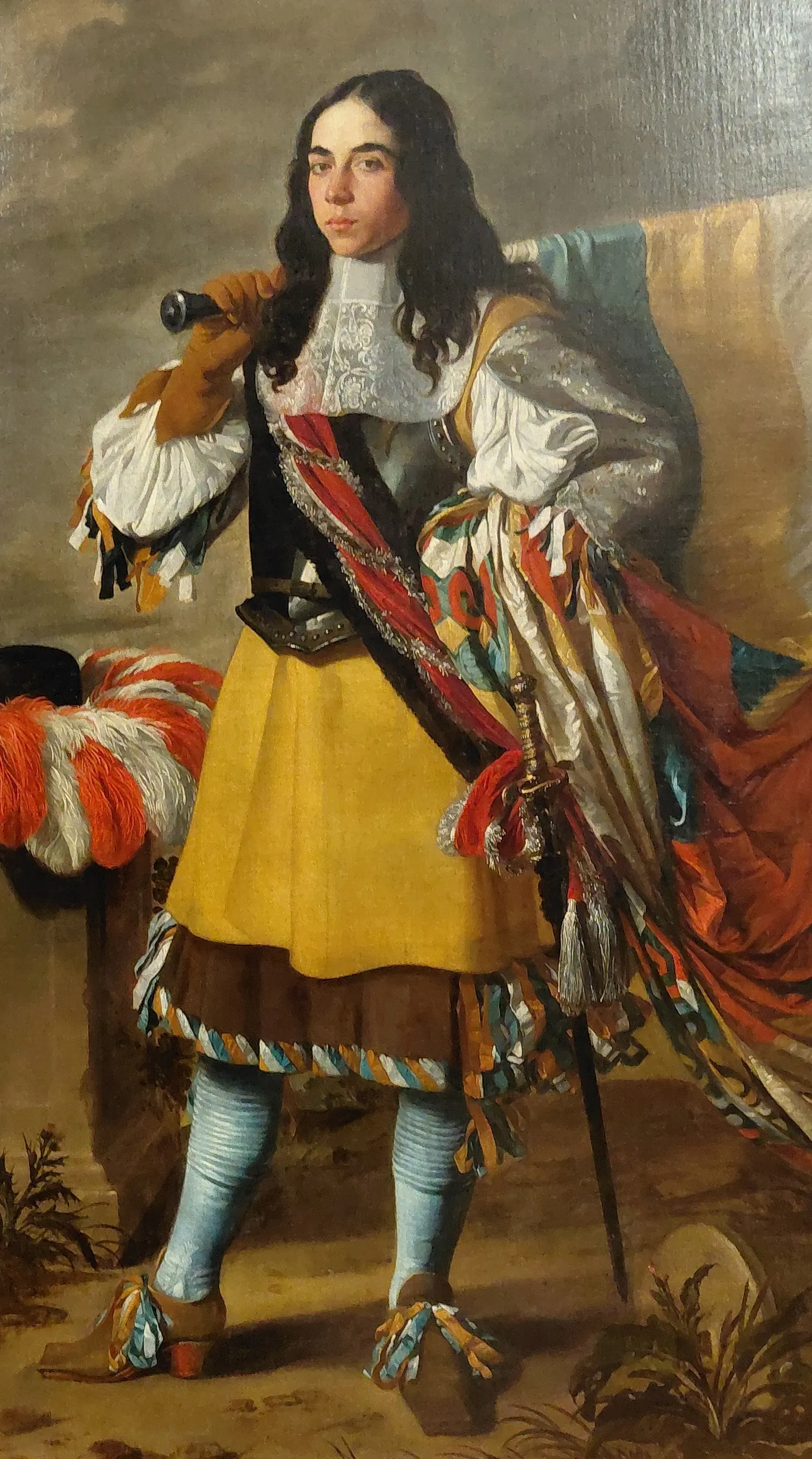
(Illustrations in this post taken from The Standard Bearer, an 1664 painting by Vigor Boucquet, in the collection of The Louvre, Paris.)

P. S. – E Unum Pluribus is a speculative fiction exploring one way in which the political overreach of our current leadership may bring an end to the U. S. A., and what might come in its wake.  With a thrilling plot driven by politics and economics (as well as gender, class, language and even the origins of faith) the novel is currently being serialized online and anyone can read it, at no cost, by returning to this website’s home page and selecting E Unum Pluribus from the top menu, or via this link: https://robinandrew.net/2026/01/01/e-unum-pluribus/

If you think this post has value, feel free to share it!

If you like what you read here at robinandrew.net, please consider subscribing – it’s totally free of charge!

That is not Democracy!

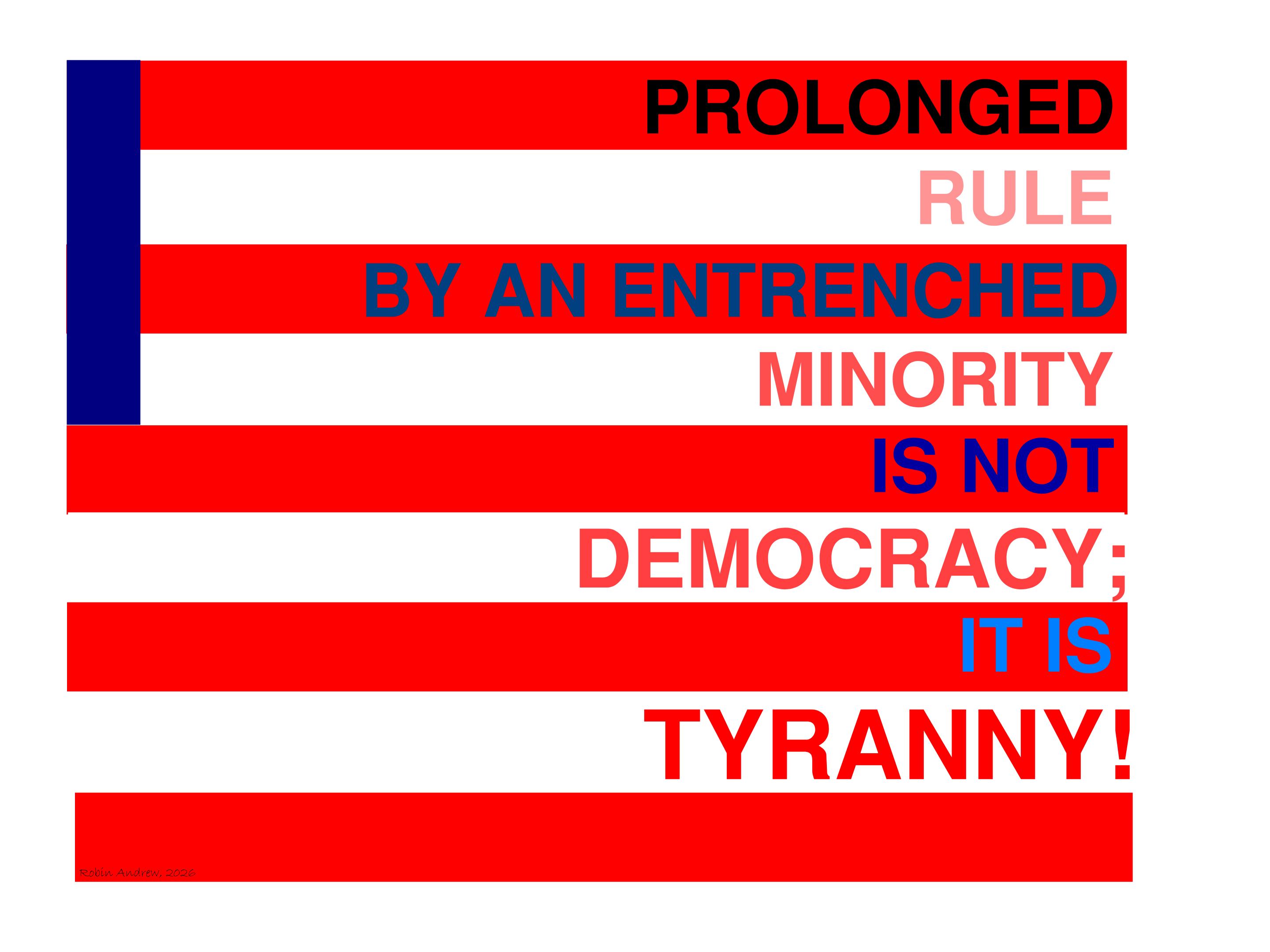
Word recently that the US Postal Service is attempting to take nationwide control over who can receive vote-by-mail ballots brought to mind an image begun back in 2020 but set aside when the 2020 Election suggested (prematurely, it turns out) that our nation’s red vs. blue fever had broken.

Viewed in conjunction with continuing efforts by ‘red’ states to gerrymander dissenting citizens into insignificance, this new tactic makes clear that Mr. Trump and his MAGAminions have abandoned any pretense of winning over the majority of Americans to their views and aim instead to silence all opposition in order to ensure perpetual Republican control of the Federal government.

No doubt some critics will point out that the U. S. has never been an absolute democracy, governed by plebiscite of every citizen on every issue, but a republic, or a representative democracy, or however they prefer to state it. All true, but however you characterize their hard-fought compromises, our founders and the imperfect Constitution they handed down to us certainly intended perpetual competition between varying points of view under accepted rules that allowed a naturally eterogenous polity to choose and change directions at set intervals.

Changing electoral rules in order to lock in a minority’s power are about as ‘un-American’ as anything can be and totally inconsistent with any ‘originalist’ reading of the documents.

Another point that quote leaves unspoken is that, notwithstanding Stephen Miller’s pompous pronouncements, tyranny never lasts. Throughout history, tyrants have trumpeted their power only to be brought down hard, whether through revolt of the tyrannized, invasion by outsiders jealous of their stolen wealth or by the sly knives of their own ambitious underlings.

That is small comfort though, as the longer tyranny reigns, the greater the burdens it inflicts upon the tyrannized. How much better our future and our children’s future will be if enough voters, including Republicans (of which I count myself one), will choose to foil MAGA’s takeover attempt in this year’s elections, and especially that of 2028!

This post is public, please share it as widely as you wish.

P. S. – E Unum Pluribus is a speculative fiction exploring one way in which power-hungry monomania could bring an end to the U. S. A. – and what sort of world might be left in its wake. With a thrilling plot driven by murder and conspiracy (as well as gender, class, language and even the origins of faith) the novel is currently being serialized online and anyone can read it, at no cost, by navigating to this website’s home page and selecting E Unum Pluribus from the top menu, or via this link: https://robinandrew.net/2026/01/01/e-unum-pluribus/

Big Plans, Big Questions

The Kingdom – of Saudi Arabia, that is – illuminates MAGA ambitions.

BBC online had a valuable article yesterday* about retrenchment on some of the megaprojects previously announced by the Saudi government and its de facto ruler, Crown Prince Mohammed bin Salman al Saud (MbS for ease).  Predictably, it has proven easier to commission breathtaking renderings, simulations and press releases than to execute incredible (literally, as it turns out) projects that challenge the limits of environment, resources, technology and economics.  Given that the USA’s current leadership so clearly aspires to emulate MbS and other autocrats down through history, this brought to mind their own Napoleonic building endeavors.

Mr. Trump likes to describe himself as a master developer, but considered on an international, or even a national scale, the projects his multiplicity of accounting entities have actualized are hardly ambitious.  Where others might develop an entire urban neighborhood (Hudson Yards, in New York for just one example of many) combining multiple uses, extensive civic infrastructure and multi-tiered approval processes open to public scrutiny, Trump branded properties seem to consist of single-tower condominiums (for the reliably lucrative luxury market), golf clubs (ditto) or hotels (ditto – and neither particularly large nor grand for today’s hospitality industry). Not to mention refurbishment and rebranding of existing properties or application of TRUMP identifiers to properties developed and/or managed by others.  Innovative solutions to thorny challenges; years of diligent project development and phased execution; navigating a complex mix of users, stakeholders, overseers and sophisticated lenders to meet the requirements of customers not predisposed to dispose of excess wealth?  Not so much.

All of which makes one wonder just how well thought out the current White House Ballroom project really is.  Aside from ballooning cost – $200 million at announcement, to $400 million supposedly raised at no taxpayer expense to now $1 billion discussed in a request for funding out of public pockets by his Republican congress – has his ever-changing design team really worked out the structural issues of spanning such a large space in a traditional architectural style and roof height clearly suited to short spans?  How about the issues of HVAC and acoustics for such a large space – with no evidence of supply pathways and registers, rooftop equipment/penthouse, cooling towers, boiler plant, exhaust and intake airways?  For that matter, is there adequate site space for parking, queuing, shipping and receiving to serve such a space, or trash and recycling for a top-quality food service operation of the magnitude described?  Site design, multi-discipline engineering and value engineering on a project such as this normally consumes months of work after selecting and assembling a large and well-coordinated team and nearly always requires adjustments to early visual design concepts.  Doing all that while earthwork and foundations are already being placed is a sure path to expensive over-design or even-more-expensive change orders during the procurement, construction and commissioning process. 

The projected 250 ft tall Arch de TRiUMPh is another very large question mark, regardless of what one thinks of its visual design or true promotional intent. 

Unlike a common hotel or condo building, such a behemoth will require bespoke geotech/structural engineering to support and stabilize its mass on the sedimentary soils likely present on such a riverine site.  The stated intent to have it designed and constructed by July of next year precludes proper attention to this and many other issues, leading one to anticipate significant changes, delays, overages or failure over time (‘Pisa’ comes to mind….).

All of which brings us to the ‘Trump Class Battleships’ announced with great fanfare earlier this year. 

Foregoing questions about the applicability of ‘Battleships’ to contemporary and future warfare (a really big forego according to commentators with insight into military matters) such a state-of-tomorrow’s-art weapon requires years of study and proof-of-concept testing, development of new technologies and systems and establishment of unique production facilities and supply chains.  Nothing in Mr. Trump’s behavior (or that of those serving his whims) suggests such an in-depth effort has been thought through. To the contrary, the public talk of how soon the first ship is to be built and commissioned suggests it has not. 

‘Waste fraud and abuse,’ the mantra of Mr. Trump’s now abandoned DOGE debacle, tends to be a self-actualizing cry – the louder one claims to be attacking that triumvirate of supposed sins, the more likely it is that one‘s own efforts will actually perpetrate them. The American public should thus be prepared to learn in future that these and other such grand projects are either cancelled, scaled back or revealed as boondoggles, their flaws predictably disowned by those who proposed and sold them. 

As Saudi megaprojects are going today, so shall this administration’s MAGAprojects go tomorrow.

P. S. – E Unum Pluribus is a speculative fiction exploring one way in which the parallel political overreach of our current leadership may bring an end to the U. S. A., and what might come in its wake.  With a thrilling plot driven by politics and economics (as well as gender, class, language and even the origins of faith) the novel is currently being serialized online and anyone can read it, at no cost, by navigating to the website robinandrew.net and selecting E Unum Pluribus from the home page’s top menu, or via this link: https://robinandrew.net/2026/01/01/e-unum-pluribus/
*‘How Saudi Arabia’s spending spree reached the end of the line,’ Sebastian Usher, BBC Global affairs correspondent, BBC online, 2026-05-24.

The Last Debate, Jim Lehrer

Lehrer, the late PBS anchorman, skewers his own profession in a tale of journalists run amok which, despite being over 30 years old, in many ways seems to reflect our current moment.

At opening, David Donald Meredith, a populist politician of little relevant qualifications or experience has just been polled as leading the Presidential election race on the strength of his racist, authoritarian, anti-elite, pro-religious and contra-constitutional rabble-rousing (sounds familiar…).  When several journalists are selected to question the two leading candidates during the one and only debate to which their respective campaign managers have agreed, they find themselves in an ethical dilemma: whether to act in a clinically objective manner and hope against all indications that the voters will recognize and select the one qualified candidate, or to use their position as moderators to skewer Meredith on a raft of unconfirmed accusations of bad and violent behavior and so ensure that a truly dangerous demagogue does not reach the White House.

Since the novel is told in the past tense, it is no spoiler to say the panel soon chooses the latter approach and so swings the election to Meredith’s oppponent. The remaining two thirds of the novel is spent recounting how they made that decision and the diligent effort it takes the narrator (an alt-universe tabloid-journalist version of Lehrer himself?), to document it for the narrative non-fiction book which The Last Debate pretends to be.  (Fwiw, with Meredith defeated, his opponent, the previously unimpressive Paul L. Green, turns out to be a pretty good Chief Executive, perhaps validating their risky choice and leaving only the credibility of the journalistic profession to die for what Lehrer clearly considers their sins.)

A few quibbles – since the outcome is disclosed so early, most of the book is occupied with details of the tabloid journalist’s work, unfortunately showing the reader just how tedious that can be.  Rather banal conversations are recounted line by line with neither enough individuality nor amusing detail to justify their length, especially since the plot structure has already taken much real drama out of them.  There are also troubling issues around names and pronouns.  Between the large cast of political characters and the questionable choice of having two women named Barbara interacting (and even sharing an apartment!), as well as a candidate whose last name invites confusion when used by itself (since Meredith is more familiar as a female first name) Lehrer is constantly identifying people by full first and last names to a degree that feels artificially formal and further impedes dramatic flow. 

A similar effect happens when the fictional first-person narrator must protecting the identity of a very famous informant, To avoid giving the clue of this persons sex/gender, Lehrer chooses to use “he/she,” “his/her”’ and similar clunky work-arounds which make the section feel more a bureaucratic document than the climax of a political thriller. (An excellent argument, BTW, for writers and speakers of the English language to adopt non-gendered pronouns as argued in the post ‘e is an Enabler’ which is available via this link:   https://robinandrew.net/2026/03/01/e-is-an-enabler/  or simply by going to robinandrew.net and scrolling down to the 03/01/26 post of that title.)

Overall, an imperfect but worthwhile read that today raises a very large question its author could not possibly have intended back when it was written and published: If Jim Lehrer could see the danger of a character like Meredith all the way back in 1995, how did so many of our fellow Americans end up falling for his doppelgänger in 2016 and 2024 and perhaps even thereafter…?

P. S. – ‘E Unum Pluribus’ is speculative fiction about a very different way in which America’s current political dramas may play out. With a thrilling plot driven by politics and economics as well as gender, class, language and even the origins of faith, the novel is currently being serialized online and anyone can read it, at no cost, by navigating to the home page of this website and selecting E Unum Pluribus from the top menu, or via this link: https://robinandrew.net/2026/01/01/e-unum-pluribus/

How Style Reveals Character

Heather Cox Richardson has a tasty piece this morning (see Letters From an American, on Substack) about the moment when Robert E. Lee surrendered the Confederate Army to U. S. Grant – Lee dressed in a brand new dress uniform, Grant in the worn and dirty private’s outfit he’d worn the day before, with scant insignia added to indicate his true rank. That instance of appearance as an indicator of the two men’s divergent characters, brought back to mind some thoughts I’d been working on not long ago, before they were (rightly) eclipsed by the chaos of our nation’s attack on Iran. Herewith:

Viewing the renderings of Mr. Trump’s replacement for the White House’s late East Wing, I’ve been surprised no one seems to be questioning the description of it as a “Ballroom.”

To these ears, the zeal and subterfuge with which The Donald is pursuing this particular bit of noncritical infrastructure suggests there is more at stake here than his enthusiasm for ballroom dancing and debutants (though the latter could be a factor…).

Administration PR pretends this cavern is vitally necessary for legitimate diplomatic events, but given Mr. Trump’s disdain for actual diplomats and his preference for small group strong-arming, that seems a stretch. More likely, the room’s programming will lean toward pseudo-events designed to flatter and reward loyal contributors to his continual fund-raising ventures (including, of course, the cost of this boondoggle itself) and to dangle the bait of future seating arrangements to extract still more contributions and concessions from others.

A means, in other words, for Mr. Trump and his chosen people to more-convincingly imitate the persons he obviously idolizes: the nation-owning monarchs and autocrats of the Middle East and elsewhere.

For that reason, I suggest we all just call this construction what it is – The Donald J. Trump Throne Room, at the Trump™ White House™.

On which note, does anyone really believe Mr. Trump will graciously depart what he is busily turning into the Presidential Palace – having finally gotten it redecorated to his taste – just because his current term expires? Having previously experienced the diminution of becoming an ‘ex-’ Chief Executive? Having in this term solidified his dominion over the rabble thanks to a compliant Supreme Court and supine Trumpublican Party? Having for his entire life scooted around every legal and moral constraint and gotten away with it all?

Note that Mr. Trump’s favorite head of state, Vladimir Putin, will have been in power for thirty years when his current term ends. The House of Saud has ruled its Kingdom for over ninety years (and a somewhat smaller realm for generations before that). China’s Xi Jinping is currently enjoying his third five-year term with no end in sight thanks to the 2018 elimination of the prior term limit on that office. Israel’s Netanyahu is over 18 years in control; Turkey’s Erdogan around 23 (Hungary’s Orban a mere 16). True, Napoleon Bonaparte lasted only 15, but Uncle Joe Stalin managed over 50…

On the turgid scale of those role models, a mere eight years in office would hardly rate inclusion. If, indeed, the style of Mr. Trump’s civic works is true indication of his character, we are in for a bumpy January 2029.

P. S. – E Unum Pluribus is a thrilling speculative fiction exploring one way in which a President’s attempt to overstay his welcome might affect our nation’s survival. It is currently being serialized online and you can read it, at no cost, starting at https://robinandrew.net/2026/01/01/e-unum-pluribus/