Tag Archives: Revolution

A Tale of Two Cities

A novel reflection of its time – and of ours!
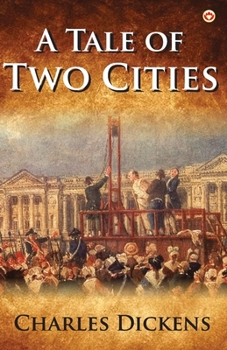
Ah, a ‘Classic.’  One of those volumes you pick up because, – well, because you were supposed to have read it long ago but didn’t and instead used the Classics Illustrated version to eke out a book report, and now that you’ve visited the cities where it takes place and the home of the author and are seeing history repeat itself every day all around you (and not in the good ways…).  Confession over, this just seemed like a good time to finally make the effort.

And an effort it is, given Dickens’ pacing – a simple statement by one of his characters may take a full page of text, or several.  There’s a frustrating prissiness, also, to the language: no one ever seems to say anything directly, they’re constantly alluding to the subject, circling around the point and adjectivizing till the cows come home too late for the ball.

Character development is fairly rudimentary here as well. The eventual hero, Sydney Carton, seems to have accepted himself from the start as a dishonorable failure, for no documented reason. That the others tolerate his sullen and self-pitying presence must be assumed to reflect their Good Christian Upbringing and duty of charity (granted, attorney Lorry also finds him a cheap and useful lackey).  Romantic lead Charles Darnay, clearly intended to be a decent man wrongly accused and sentenced, is little more than a cipher; too honorable to be credible and yet very happy to passively accept the good fortune others keep shoving his way.  Lovely Lucie Manette is given little to do but swoon and faint and stand by her man Darnay, while her father, “the Good Doctor” Manette, comes off as Mother Theresa in tweeds.  Perhaps the most fully conceived character is Ernest Defarge, Manette’s former servant and now wine merchant/revolutionary, whose dueling loyalties to his old master and to The Revolution cause him more internal conflict (and this reader more extended interest) than any of the others.  Ernest’s wife, the infamous Madame Defarge, is as bloodily single-minded as he is conflicted, making their odd coupling far more intriguing than Darney and Lucie’s butterflies-circling-round-the-head romance can ever be.

Dickens does paint a vivid picture of a nation tearing itself to pieces, effectively contrasting the arrogant inbred presumptuousness of French aristocracy with the abject poverty and hopelessness of the nation’s peasants and slumdwellers. That the aristocrats of his native Britain come off more sympathetically may be due to nationalist pride, or the fact that their system started working toward a semblance of equality nearly six hundred years before the start of the French eruption.  Either way, this is fiction with a social conscience and Dickens clearly hoped to educate his 1859 audience to the very real issues behind the headline excitement of guillotine and barricades. Dickens wrote this roughly 70 years after the Reign of Terror; George Orwell’s Down and Out in Paris and London came roughly sixty years after that and we are now about a hundred years after Orwell watching the rise of a new aristocracy fueled by private equity and technology monopolism suggest that neither France, nor once-great Britain nor the smoldering USA have learned much from Paris’ example.

Knowing all along how the story is going to end (thank you again, Classics Illustrated) does take away some drama its original audience would have experienced.  Even allowing that, the genteel way in which this tale circles to its last page, the very late injection of a poor damned damsel to ease Carton’s heart, and even Carton’s final oration amount more to a tailing-off than a climax. That the famous “It is a far, far better thing I do…” speech turns out to have been an unspoken exercise in self-praise colors its inspirational value with a heavy dose of narcissism; a coloration the more striking given that today’s most prominent nouveau-aristocrat makes daily display of the very same failing.

Charles Dickens is too long gone from this earth, and his place in literary history far to secure, for anything I say to harm his emotions, legacy or purse. In full expectation, then, that the world will forever rate A Tale of Two Cities a far, far better novel than any I may ever write, I’ll settle for confirming that it is a classic, but largely a period piece. Valuable more for what it shows of the era in which it was written and acclaimed – and perhaps as a nineteenth-century equivalent of today’s on-line influencer marketplace by having first been self-published in serial format – than for the actual experience of reading it.

P.S.speaking of serialization: the new speculative fiction, E Unum Pluribus, is currently available online, in six free installments.

Packed with intrigue and fueled by politics, economics and murder (as well as gender, class, language and even the origins of faith), E Unum Pluribus imagines how the USA’s current ‘culture wars’ may bring about its end, and what sort of institutions might rise from its rubble.  Anyone can read this novel totally for free simply by navigating to the home page of this website and selecting E Unum Pluribus from the top menu, or via this link: https://robinandrew.net/2026/01/01/e-unum-pluribus/

This post is public, so please share as widely as you wish.

If you like what youread here at robinandrew.net, please subscribe – it’s free!

Stronger Together

“… you can talk all you want about international niceties and everything else, but we live in a world…that is governed by strength, that is governed by force, that is governed by power. These are the iron laws of the world that have existed since the beginning of time.” 

Where commentator Leighton Woodhouse rightly sees those words of Trump-whisperer Stephen Miller as a retreat from Christian values*, they also suggest a tragic misread of our nation’s history.

As Ken Burns’ recent documentary, The American Revolution vividly reminds, the story of the USA has never been that of the strongest and most powerful singlehandedly dominating those around them.  Rather, the founding generations were wise enough to see that their thirteen colonies must work together- despite very significant differences around religion, economics, politics and, perhaps most profoundly, the pernicious institution of slavery – in order for any among them to have a hope of breaking free from British tyranny.

Once the colonists united – a unity as messy, tenuous and frustrating as any representative system tends to be – even their combined numbers and resources did not assure success; from its start, the colonial coalition actively sought the support of other nations.  Ultimately, after six long years of brutal fighting, it was direct French participation (along with the indirect assistance of other nations and peoples who further taxed the Britain’s resources by opposing it in other parts of the world), that enabled Washington’s forces to triumph at Yorktown, turning the tide of attrition and so winning our independence. 

Power, strength and force, yes, but born of compromise, cooperation and alliance; that is what allowed a band of ragged upstarts to defeat the British Empire, which was, at that time, the greatest exemplar of Mr. Miller’s professed ‘laws’ of existence.

Similarly, the decades which established America as a superpower were never about the U.S. going it alone, even if we were by some measures the most powerful single nation.  Both World Wars were won by alliances in which we participated, sometimes as leaders sometimes not (Russia’s defeat of Nazi forces on the Eastern Front set the stage for Hitler’s eventual defeat which was, until then, far from a certain outcome).  Nor was the Cold War ‘won’ by unilateral American action; we could not have strained the Soviet economy to the point of failure without the economic cooperation and military participation of our allies in Europe and elsewhere – including Japan and Germany, two one-time conquerors whose defeat in war was accomplished through force but whose rehabilitation and future contributions as allies were made possible by reason, cooperation and patient hard work.

Yes, the qualities Miller cites – strength force and power – play a role in life and international relations.  And yes, there are ruthless players in the world today against whom we must defend our nation and civilization.  But coming from a cadre dedicated to belligerent unilateralism, who have employed military force, willful brutality and a single-minded claim of their own superiority against not only other nations but many of their fellow citizens as well, his proclamation smacks not of wisdom but of hubris.   If he and his ilk won’t take the word of American history for that, let them consider how few of history’s most famous strong, forceful and powerful tyrants – Stalin, Mao, Pol Pot, Bismark, Napoleon, Alexander, Julius Caeser, et al – established or continued any institution which lasted nearly as long as the 250 years which our more measured nation celebrates this year.

Perhaps a dog-eat-dog America such as Mr. Miller envisions can temporarily proclaim itself a bigger fish by shrinking its pond to just the western hemisphere and consigning the rest of the world to their own fate.  But the USA is and always has been a part of the world and will eventually be affected by the fate of other nations.  If we wish truly to fulfill the promise of its founding, to honor that era’s sacrifices and to deserve the bounties we all continue to enjoy thanks to them, we must relearn the value of building alliances and collaborating with like-minded forces wherever they reside. 

America First has never been America Alone

(And if, as it sometimes seems, Mr. Miller’s and Mr. Trump’s real goal is to forge an alliance between the USA and Vladimir Putin’s Russia, one need only look at the quality of life, rule of law and economic vitality of Russia today to see where that road leads.)

*Donald Trump, Pagan King, by Leighton Woodhouse, New York Times online, 2026-01-11

P.S. – For another vision of how our current politics may play out, try E Unum Pluribus, currently available free of charge to Beta Test readers. Click the box below to access its first installment: 

I hope you will take a look, and even if you do not, please share this post with anyone who believes the written word can help to bring us together!

A free book? Why?

As the years 2016 to 2020 unfolded, I found myself preoccupied with a particular aspect of human history: that even the greatest empires, dynasties, governments and nations have each eventually ended and been replaced by…something else.  The ongoing self-segregation of Americans along various lines – urban/rural, elites/masses, investors/workers, digital/analog, etc – suggested our own nation’s end might come sooner than later, and not through some external conquest, virulent plague or invasion of space aliens, but our simple failure to appreciate the myriad benefits of remaining ‘United.’ 

Starting in 2021, those thoughts began to coalesce into a speculative fiction, structured as a tale of murder and conspiracy happening a decade or so in our future in one of many new sovereignties sprung up among the remains of the U. S. of A. The novel toys with other themes as well – of language and gender, identity, guilt and even the origins of faith and belief – but speaks loudest in its depiction of just how much we all stand to lose if we remain divided into factions which each act only for their own needs and interests.  

Writing the book took many months and once it seemed ready, the publishing industry proved impenetrable, even as the politics of disorder and division grew stronger.  By the end of 2025 it had become clear I must find another pathway to the public and so I offered the first installment in a post which can be reached via the following link:

That and all subsequent installments may also be accessed via the ‘E Unum Pluribus’ buttons in the top menu or the right-side Categories list of this website’s home page.

Maybe the novel will find an audience this way, maybe not, but regardless, if you believe in the message that we Americans must overcome our divisions and preserve the USA as a government of all the people, by all the people and for all the people – or if you simply support authors being heard without reliance upon the gatekeepers of corporate commercial publishing – please share this post and the above link as widely as possible.

Sincerely hoping the world of E Unum Pluribus turns out to have been a naïve exaggeration, and wishing this great nation the good fortune of avoiding it, I thank you,

Robin Andrew

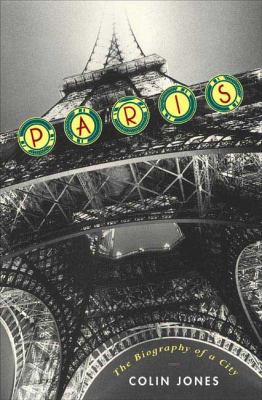
Paris – The Biography of a City, Colin Jones

Virtually a reference work, this self-confessed “Impossible history” of one of the world’s great cities comes buttressed by many pages of notes, a graduate level bibliographical guide, index, population table, modest number of illustrations, sequential maps showing the evolution of fortifications and boundaries, and even a list of the (major) buildings discussed.

For all that, the text itself is mostly quite readable, and manages to remain even-handed when discussing the political oscillations of the city’s fortunes.   Jones’s personal viewpoint is most glimpseable in the depth with which he discusses the impacts of the real estate marketplace and urban planning (a discipline for which nineteenth century Paris was something of an origin point and test case).  These, we hear, heavily influenced not only the visible face but also the economy, sociology and politics of the city, its surrounding suburbs (the banlieue), region and nation. The rise and growth of antiquarian/protectionist architectural sentiment is given an appropriate level of attention, since it is largely that movement and its successes which have bequeathed us today’s tourist and cultural mecca.

As for the aforementioned political oscillations, to one whose prejudices were shaped by the American education system within an Anglophile culture, Paris is eye-opening in relating the wave after wave of governments established, contested and washed away in favor of the next new or recycled concept.  From far back in the era of multiple kingdoms, principalities and ecclesiastical domains to contesting Empires of the middle ages to the early-modern era of Communes, communists, Republicans, Vichy capitulation and Republics (five, to date), it is amazing that anyone has been able to establish any stable business, institution or assets at all. A thought worth considering as the USA is going through its own populist spasm which may – at best – be followed by a future swing in some opposing direction.

One thing which does seem to have remained relatively consistent through Paris’ administrative history: even when the city and nation were not overtly socialist, their governments have always exercised far greater powers of eminent domain than we in the USA are accustomed to.  Some small justification, perhaps, for the disdain which some Americans profess toward anything ‘those Frenchies’ (or any Europeans for that matter), may have to say about social policy or virtues.   Reading about the centuries-long role Paris has played in nurturing the very idea of self-government by the polity though, makes that disdain seem more short-sighted than ever. 

Another significant takeaway: the wealth of literature generated in Paris’ Arrondissements over the centuries would require a lifetime of reading to consume and appreciate. Preferably in the original, since even my feeble attempt to learn French quickly convinced that its full nuance is unlikely to survive translation. One reason, perhaps that, Jones begins his introduction with a literary quote and analysis. In retrospect, this turns out to be a wholly appropriate entry point for what is as much a human story as a geographical one.  At every stage of its history, the promise of Paris has called to millions, to such a degree that its population has always been largely non-native, immigrants increasing its numbers even as low birth-rate, high mortality and the exodus of those unwilling or unable to meet its demands were constantly working to diminish them.

Fascinating even in its occasional excesses (just like its subject), Paris – The Biography of a City easily earns its space on the shelf.

(Note: published in 2004, this volume necessarily does not cover the City’s most recent decades.)