A novel reflection of its time – and of ours!
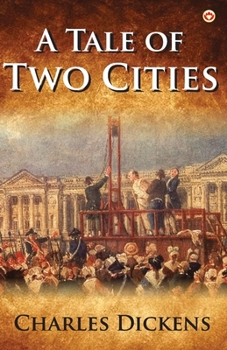
Ah, a ‘Classic.’ One of those volumes you pick up because, – well, because you were supposed to have read it long ago but didn’t and instead used the Classics Illustrated version to eke out a book report, and now that you’ve visited the cities where it takes place and the home of the author and are seeing history repeat itself every day all around you (and not in the good ways…). Confession over, this just seemed like a good time to finally make the effort.
And an effort it is, given Dickens’ pacing – a simple statement by one of his characters may take a full page of text, or several. There’s a frustrating prissiness, also, to the language: no one ever seems to say anything directly, they’re constantly alluding to the subject, circling around the point and adjectivizing till the cows come home too late for the ball.
Character development is fairly rudimentary here as well. The eventual hero, Sydney Carton, seems to have accepted himself from the start as a dishonorable failure, for no documented reason. That the others tolerate his sullen and self-pitying presence must be assumed to reflect their Good Christian Upbringing and duty of charity (granted, attorney Lorry also finds him a cheap and useful lackey). Romantic lead Charles Darnay, clearly intended to be a decent man wrongly accused and sentenced, is little more than a cipher; too honorable to be credible and yet very happy to passively accept the good fortune others keep shoving his way. Lovely Lucie Manette is given little to do but swoon and faint and stand by her man Darnay, while her father, “the Good Doctor” Manette, comes off as Mother Theresa in tweeds. Perhaps the most fully conceived character is Ernest Defarge, Manette’s former servant and now wine merchant/revolutionary, whose dueling loyalties to his old master and to The Revolution cause him more internal conflict (and this reader more extended interest) than any of the others. Ernest’s wife, the infamous Madame Defarge, is as bloodily single-minded as he is conflicted, making their odd coupling far more intriguing than Darney and Lucie’s butterflies-circling-round-the-head romance can ever be.
Dickens does paint a vivid picture of a nation tearing itself to pieces, effectively contrasting the arrogant inbred presumptuousness of French aristocracy with the abject poverty and hopelessness of the nation’s peasants and slumdwellers. That the aristocrats of his native Britain come off more sympathetically may be due to nationalist pride, or the fact that their system started working toward a semblance of equality nearly six hundred years before the start of the French eruption. Either way, this is fiction with a social conscience and Dickens clearly hoped to educate his 1859 audience to the very real issues behind the headline excitement of guillotine and barricades. Dickens wrote this roughly 70 years after the Reign of Terror; George Orwell’s Down and Out in Paris and London came roughly sixty years after that and we are now about a hundred years after Orwell watching the rise of a new aristocracy fueled by private equity and technology monopolism suggest that neither France, nor once-great Britain nor the smoldering USA have learned much from Paris’ example.
Knowing all along how the story is going to end (thank you again, Classics Illustrated) does take away some drama its original audience would have experienced. Even allowing that, the genteel way in which this tale circles to its last page, the very late injection of a poor damned damsel to ease Carton’s heart, and even Carton’s final oration amount more to a tailing-off than a climax. That the famous “It is a far, far better thing I do…” speech turns out to have been an unspoken exercise in self-praise colors its inspirational value with a heavy dose of narcissism; a coloration the more striking given that today’s most prominent nouveau-aristocrat makes daily display of the very same failing.
Charles Dickens is too long gone from this earth, and his place in literary history far to secure, for anything I say to harm his emotions, legacy or purse. In full expectation, then, that the world will forever rate A Tale of Two Cities a far, far better novel than any I may ever write, I’ll settle for confirming that it is a classic, but largely a period piece. Valuable more for what it shows of the era in which it was written and acclaimed – and perhaps as a nineteenth-century equivalent of today’s on-line influencer marketplace by having first been self-published in serial format – than for the actual experience of reading it.
P.S. – speaking of serialization: the new speculative fiction, E Unum Pluribus, is currently available online, in six free installments.
Packed with intrigue and fueled by politics, economics and murder (as well as gender, class, language and even the origins of faith), E Unum Pluribus imagines how the USA’s current ‘culture wars’ may bring about its end, and what sort of institutions might rise from its rubble. Anyone can read this novel totally for free simply by navigating to the home page of this website and selecting E Unum Pluribus from the top menu, or via this link: https://robinandrew.net/2026/01/01/e-unum-pluribus/
This post is public, so please share as widely as you wish.
If you like what youread here at robinandrew.net, please subscribe – it’s free!

