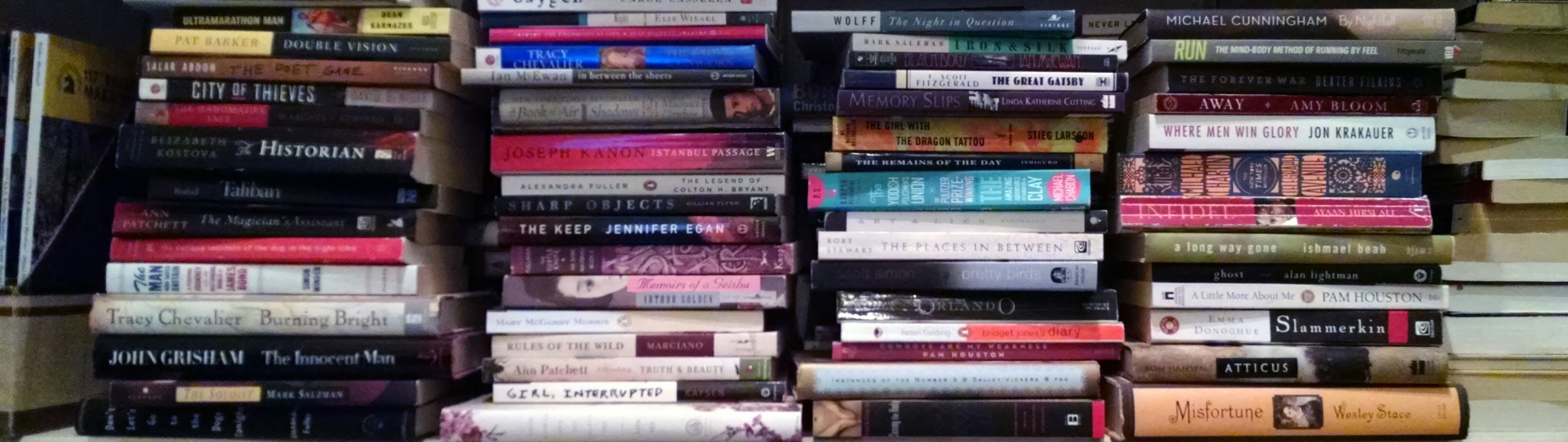

A book lover’s treasure, serendipitously encountered on the shelves of The Hermitage Bookshop – “Antiquarian Booksellers and Knowledge Dealers” – while in Denver, CO to assist a relative’s recuperation from surgery:
I’d long known that William Shakespeare’s works might well be unknown today if not for a rather random printing venture conceived years after his death, when I stumbled upon this nimble volume which fills out the story quite nicely – and in a conversational prose that often approaches ‘thriller’ style.
Starting with a sentimental impulse among the of last surviving few members of Will’s theater company, The King’s Men, to record their oeuvre, the story involves plenty of obscure figures (a struggling print shop, country squires squirrelling books away in molting mansions only for them to be sold off in box lots to another attic, wealthy diplomats, guilt-ridden industrialists, idiosyncratic scholars) and a few very well known (Dr. Johnson, for one, renowned author of A Dictionary of the English Language in 1755). Lucre is involved as well, competitive publishers rushing out their own versions to capitalize upon the success of that authorized by the original King’smen, their disputes leading to lawsuits over copyright in an era when that body of law was barely in its infancy. More recently, the arts of curation and restoration become involved and then violated, as some precious copies of the original folio have been dismembered into spare parts in order to elevate other copies in the marketplace. Even the history of Washington D. C’s famed Folger Shakespeare Library turns out to have wrinkles, as Mr. Folger is revealed to have been a less than perfect savior of cultural artifacts.
Credited on the book jacket as ‘an Assistant Professor of English,” Collins exhibits enormous knowledge spanning from 17th century printing and paper technology to 21st century Japanese collector culture. A 20+ page ‘Further readings’ section demonstrates he’s not making this stuff up and is, in its own way, a revelation as one realizes the quantity and variety of material written and preserved by generations of book nerds on this rather specific topic.
All in all, this is a highly enlightening and equally entertaining read for those who appreciate Shakespeare’s commanding position in the literature of the English language, or anyone else who loves books for their role in preserving and disseminating knowledge, and so making the world more comprehensible than it would otherwise be.
As you can probably tell, The Book of William has earned a place of prominence on our bookshelves!
(The Hermitage Bookshop, btw, is at least as great a find as this book. Carefully curated and lovingly presented, their inventory includes rare books and first editions to be sure, at prices from the hundreds into the thousands, but most of the generous shelf space is taken up with more accessible volumes (carefully curated for merit rather than best seller claims – this is not your airport newsstand selection…). Despite offering many books for under $20 (all hardback too, no softies need apply), they’ve weeded out anything abused or damaged and placed clear acetate sleeves over paper dust covers to preserve their eye appeal. Having stopped by ‘just to take a look,’ Jennifer and I each selected several volumes and could have added more if not for airline baggage weight limits. The shop’s Cherry Creek location – 290 Fillmore St., 303-388-6811- is readily accessible from anywhere in the Denver area and well worth a trip for any book lover visiting the Mile High City or its satellites. https://www.hermitagebooks.com )
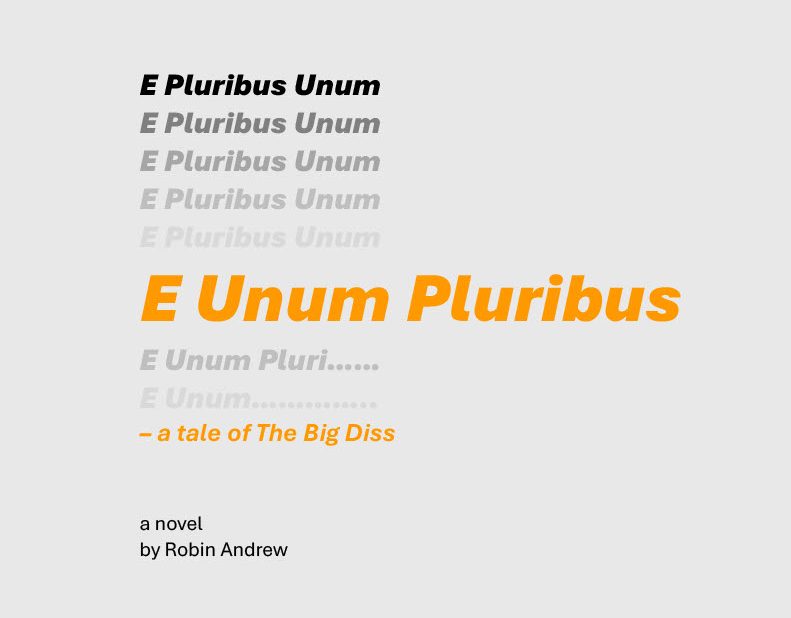
P.S. – speaking of books worth discovering, the new speculative fiction, E Unum Pluribus, is currently available online, in six free installments.
Packed with intrigue and fueled by politics, economics and murder (as well as gender, class, language, magic and even the origins of faith), E Unum Pluribus imagines how the USA’s current ‘culture wars’ may bring about its end, and what sort of states might rise from its rubble. Anyone can read this novel totally for free simply by navigating to the home page of this website and selecting E Unum Pluribus from the top menu, or via this link: https://robinandrew.net/2026/01/01/e-unum-pluribus/
Please feel free to share this post as you wish.
If you like what you read here at robinandrew.net, please subscribe, It’s free!

