
Tag Archives: Fiction

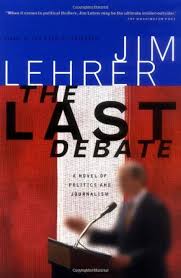
The Last Debate, Jim Lehrer

Lehrer, the late PBS anchorman, skewers his own profession in a tale of journalists run amok which, despite being over 30 years old, in many ways seems to reflect our current moment.

At opening, David Donald Meredith, a populist politician of little relevant qualifications or experience has just been polled as leading the Presidential election race on the strength of his racist, authoritarian, anti-elite, pro-religious and contra-constitutional rabble-rousing (sounds familiar…).  When several journalists are selected to question the two leading candidates during the one and only debate to which their respective campaign managers have agreed, they find themselves in an ethical dilemma: whether to act in a clinically objective manner and hope against all indications that the voters will recognize and select the one qualified candidate, or to use their position as moderators to skewer Meredith on a raft of unconfirmed accusations of bad and violent behavior and so ensure that a truly dangerous demagogue does not reach the White House.

Since the novel is told in the past tense, it is no spoiler to say the panel soon chooses the latter approach and so swings the election to Meredith’s oppponent. The remaining two thirds of the novel is spent recounting how they made that decision and the diligent effort it takes the narrator (an alt-universe tabloid-journalist version of Lehrer himself?), to document it for the narrative non-fiction book which The Last Debate pretends to be.  (Fwiw, with Meredith defeated, his opponent, the previously unimpressive Paul L. Green, turns out to be a pretty good Chief Executive, perhaps validating their risky choice and leaving only the credibility of the journalistic profession to die for what Lehrer clearly considers their sins.)

A few quibbles – since the outcome is disclosed so early, most of the book is occupied with details of the tabloid journalist’s work, unfortunately showing the reader just how tedious that can be.  Rather banal conversations are recounted line by line with neither enough individuality nor amusing detail to justify their length, especially since the plot structure has already taken much real drama out of them.  There are also troubling issues around names and pronouns.  Between the large cast of political characters and the questionable choice of having two women named Barbara interacting (and even sharing an apartment!), as well as a candidate whose last name invites confusion when used by itself (since Meredith is more familiar as a female first name) Lehrer is constantly identifying people by full first and last names to a degree that feels artificially formal and further impedes dramatic flow. 

A similar effect happens when the fictional first-person narrator must protecting the identity of a very famous informant, To avoid giving the clue of this persons sex/gender, Lehrer chooses to use “he/she,” “his/her”’ and similar clunky work-arounds which make the section feel more a bureaucratic document than the climax of a political thriller. (An excellent argument, BTW, for writers and speakers of the English language to adopt non-gendered pronouns as argued in the post ‘e is an Enabler’ which is available via this link:   https://robinandrew.net/2026/03/01/e-is-an-enabler/  or simply by going to robinandrew.net and scrolling down to the 03/01/26 post of that title.)

Overall, an imperfect but worthwhile read that today raises a very large question its author could not possibly have intended back when it was written and published: If Jim Lehrer could see the danger of a character like Meredith all the way back in 1995, how did so many of our fellow Americans end up falling for his doppelgänger in 2016 and 2024 and perhaps even thereafter…?

P. S. – ‘E Unum Pluribus’ is speculative fiction about a very different way in which America’s current political dramas may play out. With a thrilling plot driven by politics and economics as well as gender, class, language and even the origins of faith, the novel is currently being serialized online and anyone can read it, at no cost, by navigating to the home page of this website and selecting E Unum Pluribus from the top menu, or via this link: https://robinandrew.net/2026/01/01/e-unum-pluribus/

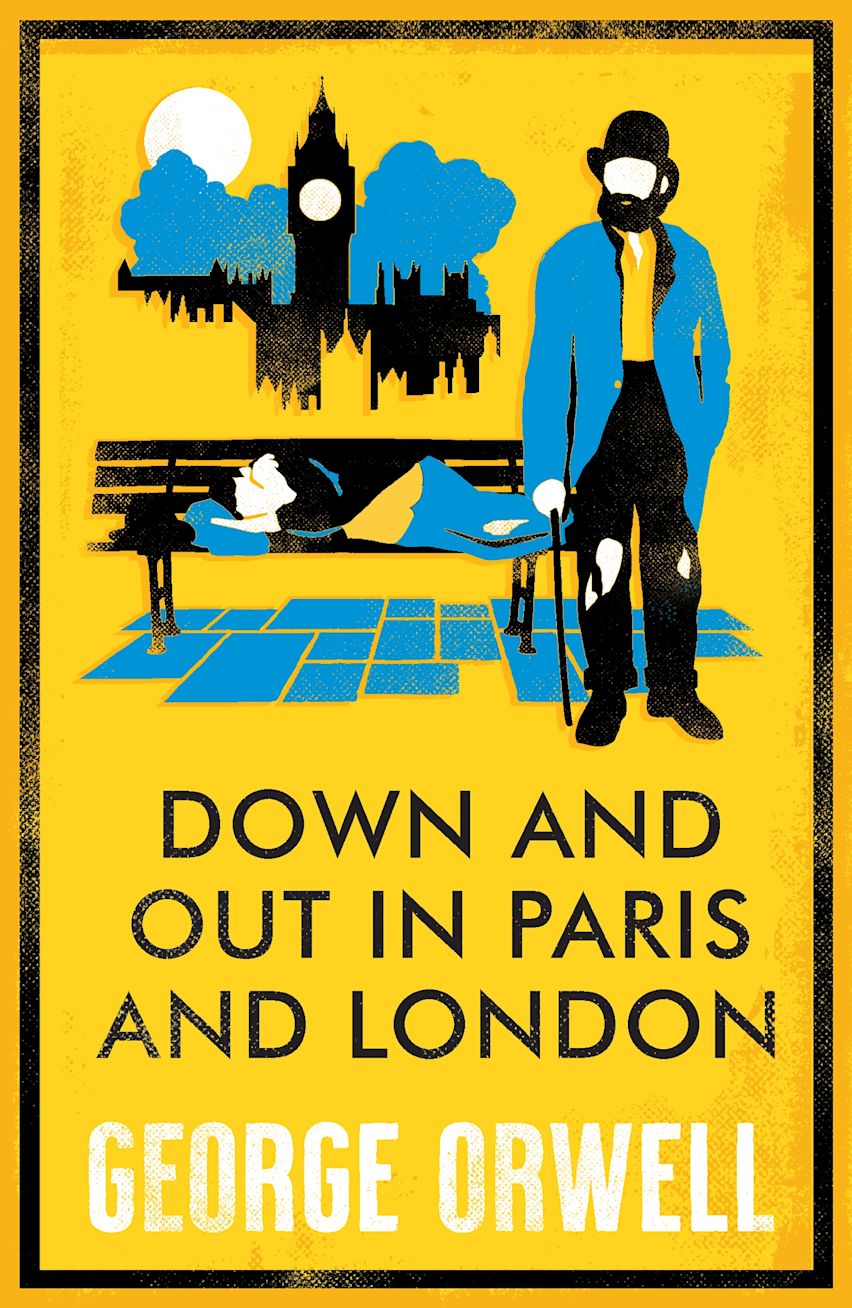
‘Down and Out in Paris and London,’ George Orwell’s 1933 Social Realism

Variously described as a novel and as a memoir presented as a novel, this brief volume certainly has the feel of hard-won experience.  With little preamble Orwell throws the reader into a squalid neighborhood of Paris circa 1930 where we experience the scramble for enough food to avoid starvation and a place to sleep – if one dare drift off while in intimate proximity to any number of strangers, swindlers, thieves, the deranged, the pious and the police. 

Visions of filth, sweat and stink dance in our heads as the narrator (who is in no way distinguished from what we know of the author himself) finds job, loses job, finds room, loses room, earns a few francs and spends all of them on barely enough bread, margarine, tea and tobacco to keep his body upright.  Along the way we are treated to character sketches of many sketchy characters, a few of whom have preserved hearts of something better than lead, another few of whom possess remarkably bright minds despite the grinding effects of their poverty and hopeless circumstances.

Despairing of his ‘opportunities’ in Paris, our guide is thrilled when an old acquaintance in London proffers a job as caretaker to an elderly invalid.  Loaned funds just sufficient for travel and a few days subsistence, he is soon in that great city, only to find the promised position has evaporated as the ‘tame imbecile’ and company have themselves left for the same continent he just abandoned. Now we follow our guide into the bowels of British social services and charities as he learns to navigate ‘the spike’ (a sort of municipal homeless shelter offering prison-like rules and conditions in exchange for horrible food and worse sleep abetted by a tracking system that keeps its customers constantly walking from town to town and so unavailable for any sort of work or betterment), church-run shelters (considered worse than the spike for their insistence on performative piety and the hypocrisy of their tenders), the Embankment (among the few places in London where one is allowed to sleep outdoors, but its benches, noise and Bobbies make sleep next to impossible) and commercial lodging houses (better accommodations, but prices out of reach for the truly destitute).

Given Orwell’s known Socialist leanings, it’s no surprise there’s a certain class consciousness to all this.  His conviction that nearly all the ‘idle’ poor would readily choose to work for their keep if there were jobs available seems a bit broad and naïve ( not to mention the number whose physical, intellectual or/and emotional disabilities and dis-aptitudes might make the unsuitable for hiring).  His modest proposal – group homes where the residents tend gardens which provide a portion of their food, thus requiring a lesser subsidy than the current system wherein they are virtually prohibited from working and earning because the feeble accommodations available will only accept the absolutely penniless – is probably even less likely of enactment today than it would have been in his time.

A painful read, reflecting what the least favored among us must endure simply to survive – but well worth revisiting as the current U. S. administration works to slice open our own social safety net and condemn millions of immigrants and citizens alike to conditions little better than what Orwell describes. (And sometimes worse, incarcerating non-citizens of no significant criminal history without legal process or recourse and even banishing some of them to whatever cutthroat minor state will take our tax money in exchange for receiving and disposing of them). 

P. S. – E Unum Pluribus is a speculative fiction shaped by the economic consequences of the USA’s present partisan divide.  It is currently being serialized online, for free, and you can read its first installment at: 

How Style Reveals Character

Heather Cox Richardson has a tasty piece this morning (see Letters From an American, on Substack) about the moment when Robert E. Lee surrendered the Confederate Army to U. S. Grant – Lee dressed in a brand new dress uniform, Grant in the worn and dirty private’s outfit he’d worn the day before, with scant insignia added to indicate his true rank. That instance of appearance as an indicator of the two men’s divergent characters, brought back to mind some thoughts I’d been working on not long ago, before they were (rightly) eclipsed by the chaos of our nation’s attack on Iran. Herewith:

Viewing the renderings of Mr. Trump’s replacement for the White House’s late East Wing, I’ve been surprised no one seems to be questioning the description of it as a “Ballroom.”

To these ears, the zeal and subterfuge with which The Donald is pursuing this particular bit of noncritical infrastructure suggests there is more at stake here than his enthusiasm for ballroom dancing and debutants (though the latter could be a factor…).

Administration PR pretends this cavern is vitally necessary for legitimate diplomatic events, but given Mr. Trump’s disdain for actual diplomats and his preference for small group strong-arming, that seems a stretch. More likely, the room’s programming will lean toward pseudo-events designed to flatter and reward loyal contributors to his continual fund-raising ventures (including, of course, the cost of this boondoggle itself) and to dangle the bait of future seating arrangements to extract still more contributions and concessions from others.

A means, in other words, for Mr. Trump and his chosen people to more-convincingly imitate the persons he obviously idolizes: the nation-owning monarchs and autocrats of the Middle East and elsewhere.

For that reason, I suggest we all just call this construction what it is – The Donald J. Trump Throne Room, at the Trump™ White House™.

On which note, does anyone really believe Mr. Trump will graciously depart what he is busily turning into the Presidential Palace – having finally gotten it redecorated to his taste – just because his current term expires? Having previously experienced the diminution of becoming an ‘ex-’ Chief Executive? Having in this term solidified his dominion over the rabble thanks to a compliant Supreme Court and supine Trumpublican Party? Having for his entire life scooted around every legal and moral constraint and gotten away with it all?

Note that Mr. Trump’s favorite head of state, Vladimir Putin, will have been in power for thirty years when his current term ends. The House of Saud has ruled its Kingdom for over ninety years (and a somewhat smaller realm for generations before that). China’s Xi Jinping is currently enjoying his third five-year term with no end in sight thanks to the 2018 elimination of the prior term limit on that office. Israel’s Netanyahu is over 18 years in control; Turkey’s Erdogan around 23 (Hungary’s Orban a mere 16). True, Napoleon Bonaparte lasted only 15, but Uncle Joe Stalin managed over 50…

On the turgid scale of those role models, a mere eight years in office would hardly rate inclusion. If, indeed, the style of Mr. Trump’s civic works is true indication of his character, we are in for a bumpy January 2029.

P. S. – E Unum Pluribus is a thrilling speculative fiction exploring one way in which a President’s attempt to overstay his welcome might affect our nation’s survival. It is currently being serialized online and you can read it, at no cost, starting at https://robinandrew.net/2026/01/01/e-unum-pluribus/
The Winter Soldier, Daniel Mason

A masterful work that rewards the stout-hearted reader.  Set in the Austro-Hungarian Empire during the First World War, the narrative vividly evokes the cold, hunger, pain and desolation of a nearly-forgotten military aid station serving the Russian front.  Despite having trained in the academics of medicine, Lucius Krzelewski, son of Polish aristocrat industrialists relocated to Vienna after their nation was absorbed into the Empire, is totally unprepared to help the maimed, sick, starved and addled soldiers for whom he is suddenly responsible.  Only the patience and wisdom of the station’s one nurse, Sister Margarete, allows him to fake it till he can make it.  All the while, the front lines advance and retreat, supplies are unpredictable and violence can erupt at any moment. 

Thrown together under such circumstances, it seems ordained by the god of literature that Lucius and Margarete will become attracted to one another, though it is only after a tragic episode involving Horvath, a patient suffering extreme mental distress for which Lucius feels he is close to achieving a breakthrough, that they are drawn to act on their attraction. And, in true romantic fashion, are soon separated, leading Lucius to spend the next several years trying to reunite with Margarete among the chaos first of war, then its aftermath. 

As the novel’s end approaches, it seems Mason is steering Lucius toward a joyous reunion with his loved one but then, in literally the last three pages, he flips the table and crafts an ending which replaces conventional confection with a much superior concoction of wisdom, insight and generosity.

(Spoiler alert:  Lucius himself christens the patient Horvath a “winter soldier,” but later, as his own troubling memories and nightmares – what we today might label PTSD – plague him and isolate him from the comfortable society to which he has returned, it seems he could as well be the titular character.  By story’s end though, one wonders if Margarete is not the true ‘winter soldier,’ the one who has campaigned longest, hardest, most courageously and most selflessly to ameliorate the damage war can do.  In fact, one can even frame this as a feminist novel; all those boastful arrogant males waging war for to salve their egos while, nearly unnoticed, women care endlessly for children, husbands, fathers, rulers, nations.  When we learn Margarete has birthed a child after the war, we are reminded that through all the deadly deprivation of that wilderness aid station, she was also managing her own monthly cycle – discretely, without modern ‘products,’ complaint, days off or even allowing her discomfort to show.  ‘The weaker sex,’ indeed.)

Throughout, Mason demonstrates an exhaustive knowledge of the period, its medicine (he is a physician himself, but a modern one….), warfare in a far-away corner of northeastern Europe, intricacies of the era’s railway network and more.  At times verging near to distraction, this detail ultimately gives his narrative the authenticity and credentials to hold the reader’s attention while he builds our emotional connection to Lucius and Margarete.

Again, masterful.  This is not a book for every reader, but for those willing to weather its painful realties, ample rewards await.  I’m holding on tightly to my copy of Daniel Mason’s The Winter Soldier.

P. S.: E Unum Pluribus is a new speculative fiction about a very different time and place and another government serving its own interests rather than those of its people.   The novel is currently being serialized digitally at no charge and you can be among the first to read it by navigating to this site’s home page and scrolling down to the post titled ‘E Unum Pluribus’ or just select the item of that same name in the top menu.  Any way you get there, it’s totally free!

If you like what you read here at robinandrew.net, feel free to share any posts as widely as possible. And consider subscribing, it’s totally free!

The Mission – The CIA in the 21st Century

Read this book!

Version 1.0.0

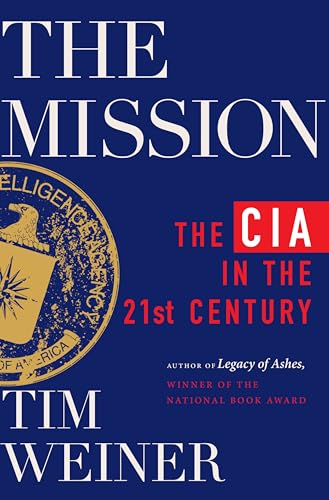
Admirably demonstrating the value of professional journalism, The Mission is factual, detailed, incisive and – despite being a nearly 400-page history of a government agency – thrilling. With more than one hundred participants interviewed, many verifiable sources and its most critical opinions credited to persons who clearly have both the knowledge and the background to deserve being heard, this is an authoritative accounting of a very complex subject. 

Having previously written Legacy of Ashes to chronicle the first 53 years of ‘The Agency,’ as the CIA is colloquially known, Weiner begins the new millennium on a downbeat, depicting an Agency whose capabilities were sadly ignored and unmaintained once the Soviet Union collapsed.  Deprived of the purpose and challenges which had pushed it to excellence (and sometimes overreach…) ever since it sprung from the seeds of WWII espionage to meet the needs of the old War, the CIA in 2000 was not held in great respect either inside the government or among the public. So little respected, we learn, that the shiny new Bush2 administration refused to listen when Director George Tenant presented substantial indications that Al Qaeda had something big planned, soon, and pleaded for authority to eliminate him before it could happen. To his great frustration, and the even greater losses of others, that plea was ignored – in early 2001!

Like a speed bump beneath all the smoke, dust and debris of the 9/11 attacks, political leadership quickly passed over their own failure to comprehend, instantly deciding The Agency was a great tool for what they conceived as their own brainstorm – the War on Terror.  That effort, which had already been one of the Agency’s areas of focus for decades, would become the public reason for much of its activity over the next 25 years. 

Using sourced quotations for section titles such as “We were all making it up as we went along,” “The U.S. didn’t want peace.  We wanted the war on terror,” and “We have to say Iraq has WMD,” Weiner quickly arrives at one of this central themes: a continual conflict between The Agency’s focus on providing the most useful and reliable information it can glean out of hostile environments versus politicians’ desire for sound bites to serve their pre-determined policies (at best) and (not infrequently) their emotional needs.  Unsurprisingly, CIA staffers from that era are harshly critical of the Bush2 administration and Weiner is cogent in describing how intelligence was ignored or actively misused in order to justify a doomed Iraq invasion to which the President and his team appear to have been fully committed from at least November 2001, if not earlier.

Even as The Agency is bent to serve debatable ends, Weiner gives us many tales of dedicated agents serving honorably; one standout being that of Tom Sylvester, who led a ten-person team into northern Iraq to prepare the ground for the Bush/Cheney invasion. An Arabic-speaking ex-Naval special forces operator, he took great personal risks to forge links with Kurdish forces, Sufi mystics and others, produced intelligence direct from Saddam’s highest ranks and closest advisors to guide invasion planning.  Sylvester would go on to lead the Agency’s clandestine services two decades later, under very different challenges.

Another eye-opening episode is related in Chapter Ten, ‘A Beautiful Operation.’  Having heard over many years that Pakistani scientist A. Q. Khan was known to have shopped nuclear weapons secrets around the world, I’d always been curious how he got away with it. Answer: he didn’t; at least not for long.  Weiner describes how, learning from a 1920’s sting played by the Soviet ‘Cheka’ spy agency against Russians who had fled the USSR, the CIA created their own front companies to do fake business with Khan, eventually penetrating his facilities and dealings sufficiently to have him arrested, tried and convicted. Moreover, where a quick drone strike could have eliminated Khan sooner but allowed his proliferation efforts to continue, their smart and patient approach allowed them to also roll up associates and customers, completely destroying his operation and drastically diminishing the danger of nuclear weapons getting into the hands of people like Muamar Gaddafi, and Osama Bin Laden.  A service to humanity that required the Agency’s characteristic willingness to use dishonest means in order to further admirable ends which, Weiner notes, is a fundamental and unavoidable characteristic of all espionage.  

The successful pursuit and eventual killing of Bin Laden is treated in detail of course, as are the waterboarding scandal and other episodes not so laudable.  As we approach 2016 though, the tone of this history changes considerably, from one of challenges and ambitions to one of dread and despair.  In both his narration and in the quotes he includes from various agency sources, Weiner makes clear just how little Mr. Trump understands or values the proper purposes of The Agency, and how far he and his allies have by now penetrated our nation’s intelligence agencies (and the FBI, as well).  Acting more like double agents than principled overseers, they are now focusing those resources to protect not the nation but their own political and financial interests.  With extensive attrition of experienced and qualified personnel and heavy thumbs laid on those who remain, every page increases the premonition that we are in for some oncoming catastrophe on the scale of 9/11 – or even greater.

The CIA has never been entirely a hero, nor an utter villain, but an institution of fallible human beings who are willing to serve as tool for those who make policy and direct its execution – the President, the Cabinet and, ultimately, the votes who put those officials in office.  Its many characters have included some cads but are mostly honorable patriots, willing to compromise their own safety, morality and maybe even a part of their souls in service of a greater public good – protecting us all from the worst of the world.

At times a tale of ignorance and human weaknesses, at others a triumph of courage and will, The Mission is important information for every American.  Please read it and share it with others!  (If you can’t buy the book, check a copy out from your local library; if you can’t read it all, just start at Chapter Twenty-One, which carries the catchy title ‘Face-eating baboons.’)  Democracy depends on informed voters!

P. S.: E Unum Pluribus is a new novel with its own take on where the pursuit of power for power’s sake may be leading our nation, and how even tragic events can spawn new possibilities for the future. It is currently being serialized digitally at no charge and you can be among the first to read its opening pages via this link:

If you prefer not to open links from unknown sources, just navigate to this site’s home page and scroll down to the post titled ‘E Unum Pluribus’ or select the item of that same name in the top menu.  Any way you get there, it’s totally free!

Stronger Together

“… you can talk all you want about international niceties and everything else, but we live in a world…that is governed by strength, that is governed by force, that is governed by power. These are the iron laws of the world that have existed since the beginning of time.” 

Where commentator Leighton Woodhouse rightly sees those words of Trump-whisperer Stephen Miller as a retreat from Christian values*, they also suggest a tragic misread of our nation’s history.

As Ken Burns’ recent documentary, The American Revolution vividly reminds, the story of the USA has never been that of the strongest and most powerful singlehandedly dominating those around them.  Rather, the founding generations were wise enough to see that their thirteen colonies must work together- despite very significant differences around religion, economics, politics and, perhaps most profoundly, the pernicious institution of slavery – in order for any among them to have a hope of breaking free from British tyranny.

Once the colonists united – a unity as messy, tenuous and frustrating as any representative system tends to be – even their combined numbers and resources did not assure success; from its start, the colonial coalition actively sought the support of other nations.  Ultimately, after six long years of brutal fighting, it was direct French participation (along with the indirect assistance of other nations and peoples who further taxed the Britain’s resources by opposing it in other parts of the world), that enabled Washington’s forces to triumph at Yorktown, turning the tide of attrition and so winning our independence. 

Power, strength and force, yes, but born of compromise, cooperation and alliance; that is what allowed a band of ragged upstarts to defeat the British Empire, which was, at that time, the greatest exemplar of Mr. Miller’s professed ‘laws’ of existence.

Similarly, the decades which established America as a superpower were never about the U.S. going it alone, even if we were by some measures the most powerful single nation.  Both World Wars were won by alliances in which we participated, sometimes as leaders sometimes not (Russia’s defeat of Nazi forces on the Eastern Front set the stage for Hitler’s eventual defeat which was, until then, far from a certain outcome).  Nor was the Cold War ‘won’ by unilateral American action; we could not have strained the Soviet economy to the point of failure without the economic cooperation and military participation of our allies in Europe and elsewhere – including Japan and Germany, two one-time conquerors whose defeat in war was accomplished through force but whose rehabilitation and future contributions as allies were made possible by reason, cooperation and patient hard work.

Yes, the qualities Miller cites – strength force and power – play a role in life and international relations.  And yes, there are ruthless players in the world today against whom we must defend our nation and civilization.  But coming from a cadre dedicated to belligerent unilateralism, who have employed military force, willful brutality and a single-minded claim of their own superiority against not only other nations but many of their fellow citizens as well, his proclamation smacks not of wisdom but of hubris.   If he and his ilk won’t take the word of American history for that, let them consider how few of history’s most famous strong, forceful and powerful tyrants – Stalin, Mao, Pol Pot, Bismark, Napoleon, Alexander, Julius Caeser, et al – established or continued any institution which lasted nearly as long as the 250 years which our more measured nation celebrates this year.

Perhaps a dog-eat-dog America such as Mr. Miller envisions can temporarily proclaim itself a bigger fish by shrinking its pond to just the western hemisphere and consigning the rest of the world to their own fate.  But the USA is and always has been a part of the world and will eventually be affected by the fate of other nations.  If we wish truly to fulfill the promise of its founding, to honor that era’s sacrifices and to deserve the bounties we all continue to enjoy thanks to them, we must relearn the value of building alliances and collaborating with like-minded forces wherever they reside. 

America First has never been America Alone

(And if, as it sometimes seems, Mr. Miller’s and Mr. Trump’s real goal is to forge an alliance between the USA and Vladimir Putin’s Russia, one need only look at the quality of life, rule of law and economic vitality of Russia today to see where that road leads.)

*Donald Trump, Pagan King, by Leighton Woodhouse, New York Times online, 2026-01-11

P.S. – For another vision of how our current politics may play out, try E Unum Pluribus, currently available free of charge to Beta Test readers. Click the box below to access its first installment: 

I hope you will take a look, and even if you do not, please share this post with anyone who believes the written word can help to bring us together!

Playground, by Richard Powers

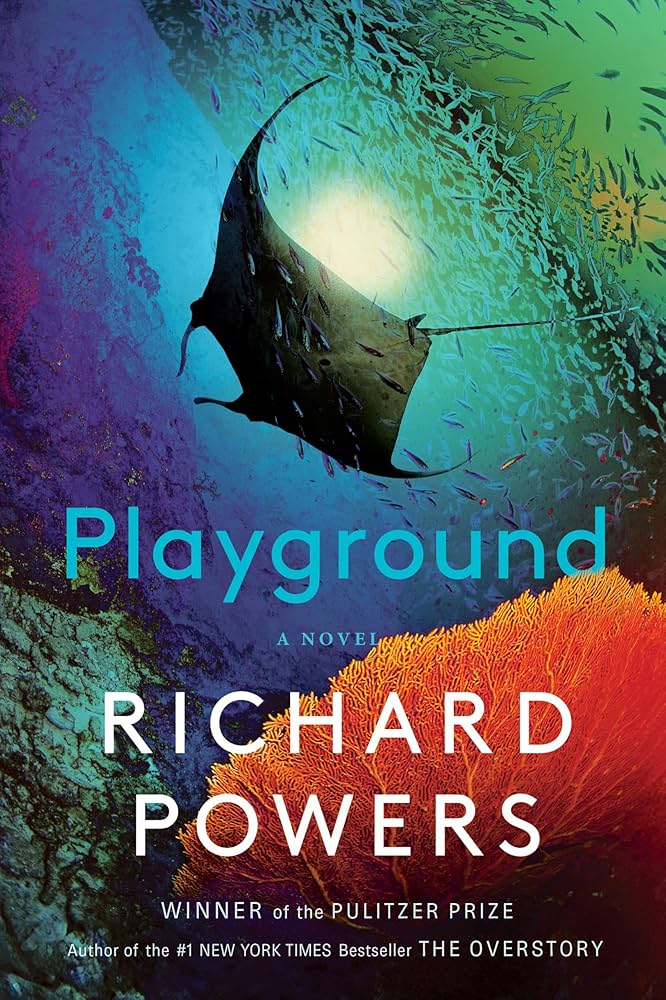
What Richard Powers’ The Overstory (2018) did for the astounding canopy of trees above our heads, Playground does for the super-abundance of seawaters that surround us. 

Part letter of appreciation, part eulogy, each novel employs intriguing characters to weave a scrim upon which to embroider an abundance of colorful facts and observations about the environment which gives those characters and all of us life, purpose and – if our eyes are at all open – a measure of sorrow for how carelessly we are diminishing our descendants’ futures.

Where The Overstory was structured around a tale of eco-warriors campaigning to stop forest destruction, here it is Silicon Valley’s takeover of our time and imaginations that drives the plot. Powers braids together the lives of a poet, an explorer, an artist and a social media software tycoon to create both compelling mystery and satisfying conclusion.  With thirteen previous novels to his credit, it should be no surprise the product feels mostly effortless and ordained.  What does startle though, is how the few moments which do feel effortful – when the wealth of scientific detail seems to veer into pedantry or showing-off – are cast in an entirely different light once it dawns on the reader just who has been narrating the story.  Suffice to say that that realization brings into focus yet another level of questions the novel is raising, about memory and knowledge, about fact versus fiction, brain vs. whatever, and about whether the answers to those questions will diminish the stories we read, hear and watch in future eras as greatly as we are currently diminishing our own and only habitat.

(As angry as Powers clearly is about our destruction of species and environment, he is wise enough to include reminders that nature itself will hardly notice our waste.  For as many species as we destroy and cry over, natural processes will someday create new ones.  Perhaps not as photogenic as the old or perhaps more so – nature has other things to worry about – but either way, new habitats will spring up and new species with them.  Long after mankind departs the scene in whatever fashion we do, natural processes will continue creating and embellishing, erring and correcting.  Only cosmic forces and events can end that process, and those will operate on their own scales regardless of human activities. It is only we and our descendants who will be injured by our carelessness; to the rest, we are irrelevant – as is whether we find that fact reassuring or insulting.)

Heartfelt, informative, moving and timely; the evidence of this outstanding novel suggests that individual human minds will continue to create entertaining and enlightening stories for many generations to come. 

One aspect of our future, at least, to which we can look forward with eagerness.

If you like what you read here or at robinandrew.net, please share any posts as widely as possible – and consider subscribing: it’s totally free!

P. S.: E Unum Pluribus is a new novel that explores multiple themes – language and gender, identity, guilt and even the origins of faith and belief – but speaks loudest in its vision of a post-USA future.

The manuscript is available in six instalments, starting at:

Novel Words – fictional pronouns for the actual future.

John McWhorter published an Opinion piece recently* about the evolution of pronouns, with particular attention to a new character gaining attention among users of the Mandarin language (X也, shown in image above, combines features of the characters for both he and she, rather as some persons do). Along similar lines, a new novel, E Unum Pluribus, speculates a future American city/state called Confluence in which government edict directs all official communications to employ non-gendered pronouns. The novel’s events make clear that Confluence’s government has plenty of faults and weaknesses, but this one of its policies merits some consideration.

For generations the convention in English was to use ‘he/him/his’ as default and inclusive of all, regardless of their sex/gender. Appropriately, that has now been perceived as favoring male identity over female; simultaneously reflecting historic inequality and perpetuating it. Replacing all those instances with ‘he or she,’ ‘his or her,’ etc. is hardly workable, especially in spoken communications, and still carries a hint of misogyny by placing one gender ahead of the other, whereas ‘she/he’ risks offending insecurities on the other side of the identity coin.

Recent efforts to innovate ‘they’ as a singular pronoun for persons who choose to declare themselves non-binary run aground first on its pre-existing function as plural, generating confusion where they intend clarity. That usage also seems to open the door to a trickle of additional new pronouns as various groups or orientations demand similar recognition; one need only read the snarky online critiques of how LGBT has grown to LBGTQIA2S+ to know that is not a path to tolerance so much as a guarantee of further friction. Worst, in this opinion, ‘they’ singular requires persons who prefer not to be stereotyped as either ‘he’ or ‘she’ to state that publicly, thereby outing themselves and very possibly inviting prejudice, at least at this point in our societal evolution.

The fictional founders of Confluence have taken another approach; directing official communications to use ‘e/em/eir’ for all individuals. This treats everyone with equal respect and does not require the clunky ‘my pronouns are…’ , which can itself incite prejudices. The specific form, ‘e,” ‘em,’ and ‘eir’ are brief and efficient, similar enough to other pronouns that they quickly feel familiar but with sufficient difference to avoid confusion**.

By applying equally to all possible personal preferences ‘e’ equalizes all in one swoop while tacitly expressing the truth that for virtually all public or official interactions there is no proper reason to indicate what genitalia an individual bears or with whom they choose to become intimate. Those are – and should remain – irrelevant.

There’s nothing revolutionary here, by the way, modern English already has gender neutral pronouns – ‘they’ does not presume the gender of a group or any of its individuals. ‘It’ can be used for all objects – unlike French, say in which some nouns require feminine constructions and other nouns masculine, despite the objects having no actual sexual function or accoutrements. Most prominently, ‘I’ is the same for any individual regardless of sex, gender or other characteristic. It is really only in the second person singular that our language’s evolution has codified an unfortunate and outdated discrimination.

In the world of E Unum Pluribus, that governmental edict for official communications also does not mean ‘e’ is used by everyone all the time. Non-official conversations use gendered pronouns wherever a subject’s preference has become clear, sticking to gender-neutral when an individual’ presentation is itself gender neutral. As in real life, casual usage and common courtesy have the final word in how language evolves over time.

(For what it’s worth, future posts on this site may selectively incorporate ‘e/em’eir’ pronouns to explore just how functional they are – or are not.)

*“This Novel Word Speaks Volumes About How an Entire Language Works” N. Y. Times online edition, 2026-01-22

** E Unum Pluribus does not claim to have invented the ‘e/em/eir’ construct.  Variations on what are sometimes called ‘Spivak pronouns’ have been noted at least as far back as the late 19th-century.

P. S.: E Unum Pluribus is a tale of murder and conspiracy set a decade or so in our future in one of many small sovereignties sprung up in wake of the USA’s self-destruction. The novel explores multiple themes – language and gender, identity, guilt and even the origins of faith and belief – but speaks loudest in its depiction of how much we all stand to lose if we continue to retreat into factions which each act only for their own needs and interests.

The manuscript is available in six instalments, starting at:

If you like what you read here or at robinandrew.net, please share any posts as widely as possible – and consider subscribing: it’s totally free!

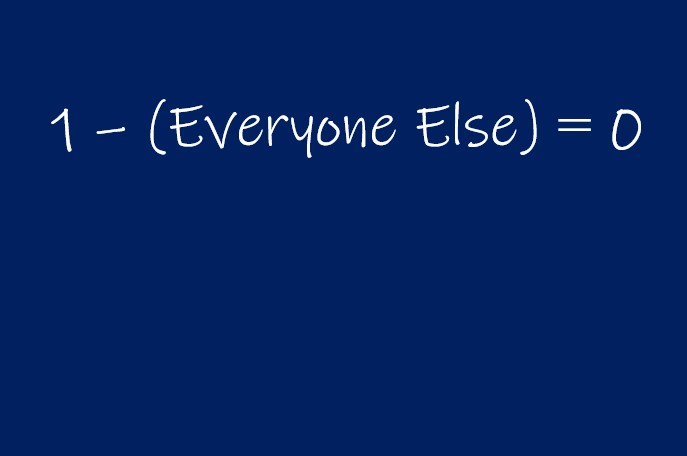
Change your party – change the future!

E Unum Pluribus – a tale of The Big Diss, imagines the United States of America dissolving into chaos because its elected representatives ceased to work together for the common good.  While the novel is fiction, its premise is plausible, which begs the question – what can an individual do to avoid such a tragic outcome?

Plenty of folks more knowledgeable than I have commented that we’ve all gotten so isolated into our own bubbles – republicans/democrats, conservatives/liberals, red states/blue states, urban/rural, blue collar/elitist; however one summarizes it – that it’s easy to dismiss everyone on ‘the other side’ as unreasonable, unapproachable, unsalvageable or worse. 

If (like me) you fear there is some truth to that description, and if (like me) you think forever encouraging division is a dead end – if you’ve ever felt the impulse to disagree when you’ve heard someone say the ‘X’ party is corrupt and they’re all a bunch of ‘z#fqt*^k!s,’ – how about switching your voter registration: to the X Party! 

WTF?

First off, once you switch, you will know for certain that there is at least one reasonable person in the X Party – one grain of sand to begin a beachfront of unification.

Second, you may (depending on your state) gain the opportunity to vote in the X party’s primary and improve the chances of their most reasonable candidate.  If enough of us do that, we could all have a better set of candidates to choose between in the actual election, instead of one we  cannot stomach and one we can support if we have to, but only by holding our collective noses.

Third, although there is no need for any else to know about your switch, should you ever hear someone thoughtlessly badmouthing either party, you might choose to respond by pointing out your agreement or disagreement “even though I’m a registered X!”  A single brick pulled out of a wall can improve communication between the two sides.

For whatever it’s worth: I switched to ‘the other party’ over a decade ago.  Since that time, I have found myself much more open to hearing ‘other party’ statements and proposals. I certainly do not dismiss all members of my new party out of hand – I am one of them, after all!  And I still do not always agree with their (our?) positions, but I feel obliged to at least listen, and much less resistance to acknowledging when a representative of my new party has proposed something worthwhile or productive.

Changing your party doesn’t mean voting for candidates you don’t support. It does mean choosing a future where each side is not so committed to smashing and trashing the other side that it’s virtually impossible to accomplish anything constructive. 

Government of the people, by the people and for the people should not be a cage-fight; it should be – and it can be – a mission in which we all share, together.