Category Archives: Books Worth Keeping

Plenty of books are worth reading once.
These selections are good enough that they deserve shelf space; to be remembered and referred to, and to cherish the prospect of one day experiencing them again.

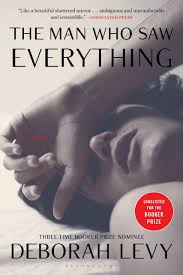
The Man Who Saw Everything, a Booker Prize long-listed novel by Deborah Levy

Blurb quotes on the Kindle edition and a few reviews I’ve found online say this novel is about history, totalitarianism, the nature of love.  A time-bending sort of post-modernist Zelig meets the Hallmark Channel.  Which is not what I found in the reading of it; not at all.

I do get the time-bending comment: with sections introduced by chapters titled London, September 1988, East Berlin, September 1988 and London, June 2016  but passages within each of those wherein protagonist Saul Adler seems not to know which time period he is in.  That effect is subtle though, until, in what we are given to believe is 1988, Saul says he noticed “a small, flat, rectangular object” lying in the road and, a few moments later, that “The object was speaking.  There was definitely a voice inside it…”  As confirmed later, we readers recognize that object as a cell phone; but not of any type that would have existed in 1988.

A few chapters later, while speaking with his lover Walter in Berlin and still in 1988, Saul foretells him of the fall of the Soviet Union, toppling of Berlin’s wall and collapse of the Soviet Union. Nowhere does Levy explain this prophecy as result of magic, time travel, or anything else.  The incident is just dryly related, and the reader left to puzzle.  Other anomalies follow, at first few and far between but then more frequent until, by the final chapters, Saul has clearly come unmoored from the present and is adrift among all the times he’s lived, and all their places and events.

One possible wink from the author: Jennifer’s highly regarded and financially successful art photography is described as being all about damage, distortion and breaking images into random parts and pieces – just as memory disrupts and rearranges our recall of the past.

Throughout, even as Saul’s language suggests he is narrating events in the present tense there seem to be jumps and skips between paragraphs, incidents, even lines. Descriptive passages tend toward the skeletal: rather than fulsome observations connected to a situation, we get tiny scraps of setting, one odd bit here, another unrelated and seemingly insignificant bit there.  Much the way old memories may consist only of whichever odd details lodged most deeply in the archive, rather than the organized observations one would consider worth noting while inside the situation.

Eventually, Saul is hospitalized and terminally ill (though no one ever identifies a specific malady) and we hear those around him patronizing, papering over his misidentification of doctors as characters from his past.  At which point it seems certain that Saul is suffering from dementia.  Which realization, considering those odd anomalies earlier on, led me to conclude with somewhat less certainty that the entire novel from start to finish consists of his dementia-altered memories. Initially these track somewhat closely with real events and linear time but later, as his illness progresses, the recollections become peppered with progressively more holes, more starts, stops and doubling back until, in the last, he jumbles every time and place and person together. ‘Seeing everything,’ as the title suggests, but all at once,. This  climaxes as Saul recalls/imagines himself crossing Abbey Road in a scene which has been recounted several times over the novel’s course, varying each time but always ending in an mid-road collision. In this final instance, Saul makes it all the way across the road and reaches out to take the outstretched hand of Luna, another lover from his youth who went missing in Berlin back in 1989 and never resurfaced.  Never, that is, until this last ‘crossing over’ moment of Saul’s addled (hence the surname Adler?) memory/imagining.

I have no direct knowledge what was the author’s intent; it’s quite possible that I’m misreading things altogether. I readily admit dryness and nonlinearity of this Booker Prize long-list honoree are not my native terrain; it may all be above my comprehension.  For this reader, though, the political or sociological commentary which others seem to find here feel peripheral, more context than theme.  What I do strongly connect to is the intensely personal portrait of a mind going to pieces due to some form of progressive age-related dementia.

If one is up for that, The Man Who Saw Everything has much to offer. 

P.S. – speaking of going to pieces, the new novel E Unum Pluribus, is currently available online, in six free installments.

Packed with intrigue and fueled by politics, economics and murder (as well as gender, class, language and even the origins of faith), E Unum Pluribus imagines how the USA’s current ‘culture wars’ may bring about its end, and the chaos of smaller sovereignties which might rise from ro replace it. 

Anyone can read this novel totally for free simply by navigating to the home page of this website and selecting E Unum Pluribus from the top menu, or via this link: https://robinandrew.net/2026/01/01/e-unum-pluribus/
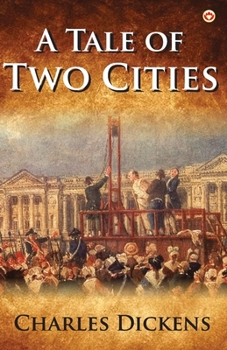
A Tale of Two Cities

A novel reflection of its time – and of ours!

Ah, a ‘Classic.’  One of those volumes you pick up because, – well, because you were supposed to have read it long ago but didn’t and instead used the Classics Illustrated version to eke out a book report, and now that you’ve visited the cities where it takes place and the home of the author and are seeing history repeat itself every day all around you (and not in the good ways…).  Confession over, this just seemed like a good time to finally make the effort.

And an effort it is, given Dickens’ pacing – a simple statement by one of his characters may take a full page of text, or several.  There’s a frustrating prissiness, also, to the language: no one ever seems to say anything directly, they’re constantly alluding to the subject, circling around the point and adjectivizing till the cows come home too late for the ball.

Character development is fairly rudimentary here as well. The eventual hero, Sydney Carton, seems to have accepted himself from the start as a dishonorable failure, for no documented reason. That the others tolerate his sullen and self-pitying presence must be assumed to reflect their Good Christian Upbringing and duty of charity (granted, attorney Lorry also finds him a cheap and useful lackey).  Romantic lead Charles Darnay, clearly intended to be a decent man wrongly accused and sentenced, is little more than a cipher; too honorable to be credible and yet very happy to passively accept the good fortune others keep shoving his way.  Lovely Lucie Manette is given little to do but swoon and faint and stand by her man Darnay, while her father, “the Good Doctor” Manette, comes off as Mother Theresa in tweeds.  Perhaps the most fully conceived character is Ernest Defarge, Manette’s former servant and now wine merchant/revolutionary, whose dueling loyalties to his old master and to The Revolution cause him more internal conflict (and this reader more extended interest) than any of the others.  Ernest’s wife, the infamous Madame Defarge, is as bloodily single-minded as he is conflicted, making their odd coupling far more intriguing than Darney and Lucie’s butterflies-circling-round-the-head romance can ever be.

Dickens does paint a vivid picture of a nation tearing itself to pieces, effectively contrasting the arrogant inbred presumptuousness of French aristocracy with the abject poverty and hopelessness of the nation’s peasants and slumdwellers. That the aristocrats of his native Britain come off more sympathetically may be due to nationalist pride, or the fact that their system started working toward a semblance of equality nearly six hundred years before the start of the French eruption.  Either way, this is fiction with a social conscience and Dickens clearly hoped to educate his 1859 audience to the very real issues behind the headline excitement of guillotine and barricades. Dickens wrote this roughly 70 years after the Reign of Terror; George Orwell’s Down and Out in Paris and London came roughly sixty years after that and we are now about a hundred years after Orwell watching the rise of a new aristocracy fueled by private equity and technology monopolism suggest that neither France, nor once-great Britain nor the smoldering USA have learned much from Paris’ example.

Knowing all along how the story is going to end (thank you again, Classics Illustrated) does take away some drama its original audience would have experienced.  Even allowing that, the genteel way in which this tale circles to its last page, the very late injection of a poor damned damsel to ease Carton’s heart, and even Carton’s final oration amount more to a tailing-off than a climax. That the famous “It is a far, far better thing I do…” speech turns out to have been an unspoken exercise in self-praise colors its inspirational value with a heavy dose of narcissism; a coloration the more striking given that today’s most prominent nouveau-aristocrat makes daily display of the very same failing.

Charles Dickens is too long gone from this earth, and his place in literary history far to secure, for anything I say to harm his emotions, legacy or purse. In full expectation, then, that the world will forever rate A Tale of Two Cities a far, far better novel than any I may ever write, I’ll settle for confirming that it is a classic, but largely a period piece. Valuable more for what it shows of the era in which it was written and acclaimed – and perhaps as a nineteenth-century equivalent of today’s on-line influencer marketplace by having first been self-published in serial format – than for the actual experience of reading it.

P.S.speaking of serialization: the new speculative fiction, E Unum Pluribus, is currently available online, in six free installments.

Packed with intrigue and fueled by politics, economics and murder (as well as gender, class, language and even the origins of faith), E Unum Pluribus imagines how the USA’s current ‘culture wars’ may bring about its end, and what sort of institutions might rise from its rubble.  Anyone can read this novel totally for free simply by navigating to the home page of this website and selecting E Unum Pluribus from the top menu, or via this link: https://robinandrew.net/2026/01/01/e-unum-pluribus/
This post is public, so please share as widely as you wish.

If you like what youread here at robinandrew.net, please subscribe – it’s free!

The Paris Bookseller

Version 1.0.0

Kerry Maher’s 2022 novel is a charming and enlightening fictionalized account of the pre-war incarnation of Shakespeare and Company, Sylvia Beach’s groundbreaking English-language bookstore in Paris’ legendary Left Bank community.  Not only do we experience the ‘Lost Generation’ of Hemingway, Fitzgerald et al from a female perspective, we also get to witness a literary drama as Beach and her shop become first in the world to publish James Joyce’s Ulysses after it was banned in the US – a satisfying achievement that is not without serious drawbacks, scars and regrets.  Joyce, we learn, was not an easy person to love and work with/for, eventually pushing Sylvia to drop him like a hot rock, though they did eventually regain a measured reproachment which serves as the novel’s climactic endpoint.  Only in an Author’s Note do we learn how Beach and her shop managed during WWII and the Nazi occupation: not well, but far less poorly than scores of millions of others.  Both survived: the store reopening under new ownership in a new location and Sylvia remaining with her long-time beloved Adrienne Monnier (founder and owner of the French-language bookshop from which Sylvia took her inspiration) but occupying herself after 1945 in other realms than bookselling.

Maher is a pleasant guide through all of this, dealing frankly with her characters’ excesses and loves, fairly with their foibles and respectfully but not hagiographically with their genius and achievements. Perhaps it is all that respect and fairness (arguably appropriate when dramatizing the lives of real persons), but the overall effect is something like a YA biography or a Hallmark Channel documentary; tamed and homogenized, even as it deals with same sex relationships (kudos to both subjects and author for going there).

Certainly a worthwhile read for those of us with an interest in literary history, Paris or early Twentieth Century social history and also a useful episode in the march of women toward full rights, autonomy and credit for their achievements in realms traditionally dominated by the male.

(Confession: after hearing Sylvia and many of her literary associates profess their great admiration for Ulysses – and for Joyce’s genius in general – I made what is at least my third attempt upon the great doorstop.  While I can readily gloss over the many references drawn from that generation’s better education in ‘The Classics,’ I was once again stymied by Joyce’s refusal to provide any guideposts – who is speaking now, what is actual and what a character’s inner thoughts, where are we in time, in place, in action and reaction?  One might soldier on through all that in a shorter piece that had initially dangled some hint of light at the end of the tunnel vision, but right from word one of an immense opus?  There are too many other good books I’ve not yet read and which better balance the reader’s experience against the author’s preoccupations. My loss, perhaps, but one I am willing to accept.)

P. S. – while the ‘obscenity’ controversy which nearly silenced Ulysses is one example of political overreach, the current resurgence of religious nationalism poses a far greater threat to freedom and enlightenment. E Unum Pluribus is a newspeculative fiction exploring how that movement may bring about the end of the USA, and soon.  Its thrilling plot is driven by politics and economics as well as gender, class, language and the origins of faith and provides a glimpse of the bright possibilities which sometime arise from even great tragedies.  The novel is currently being serialized online and anyone can read it, at no cost, by navigating to the Home Page of this website (robinandrew.net) and selecting E Unum Pluribus from that page’s top menu, or via this link: https://robinandrew.net/2026/01/01/e-unum-pluribus/

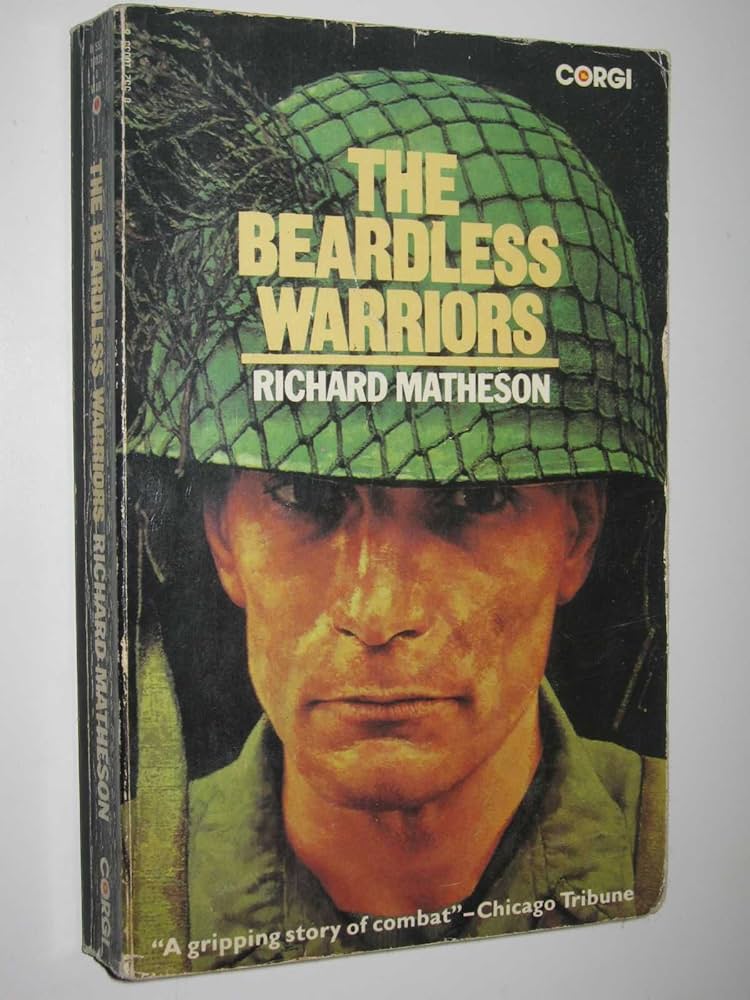
The Beardless Warriors, by Richard Matheson

Didn’t recognize the author by name when I saw this paperback on the ‘Free’ shelf, only later learned he was the author of ‘I Am Legend,’ ‘The Incredible Shrinking Man,’ and ‘What Dreams May Come;’ all successful popular novels also turned into movies.  No, what drew me in was that Matheson had been among the many eighteen-year-old reinforcement troops sent to join U. S. infantry units as they moved into German territory in December of 1945 – which puts him in spitting distance and time of my father, who was also eighteen when he reported for duty, was trained, shipped over and served in combat until being seriously injured on April 11,1945, less than a month before the end of fighting in Europe.  Matheson took fifteen years to get this ‘memoir in the form of a novel’ (my characterization) written and published, so nearly as many years as those reinforcements were granted before being committed to the battlefield, and the time was well spent.  Despite my having previously read several other battlefield memoir/history/fictions, this one elevated by an order of magnitude my attempts to imagine what that experience must have felt like. 

From the first sentence, Matheson tells his story almost breathlessly, plunging the reader directly into the experiences of one Everett Hackermeyer, a motherless child and nearly fatherless too, with little to live for and few tools to do so.  We see the confusion and futility of war from his perspective and feel the importance of his developing relationship with a much older (all of thirty-eight years-old!) Sergeant, a no-nonsense nuts and bolts leader who has learned and accepted the hard truth that no matter how well he performs, many men will die under his command.  As is often prominent in memoirs of Vietnam, we see how senseless the orders from on high appear to those who must follow them – war, for an infantryman, is not geopolitical or strategic, it is only struggle. At times it seems the only thing that changes from day to day is the rolling succession of squad members, as one after another are injured or killed, replaced (though not in the same numbers at this late stage) and their replacements in turn are inducted and ground up by the coincidence and accident of chaotic violence.

The novel’s action covers only a couple of weeks, all centered on moving a few short miles to take seemingly one unimportant town, which could have made for monotony, but Matheson is a champ at finding new and creative words to describe similar battle scenes and the dull and dyspeptic interludes between them.  Hackermeyer’s evolving knowledge and emotions also give each skirmish the specificity to feel new. Approaching novel’s end the author gives us a skirmish only slightly more significant than the preceding ones, but with personal incidents that make it satisfyingly climactic, even as the reader understands that the hell these men have been living will go on and on until the day that awful war ends, even if they are lucky enough to live to see it.

It has been said that the experience of being in combat cannot be communicated to those who have not lived it, and I don’t doubt that that is true. The Bearded Warriors though, makes more progress in that direction than anything else I’ve encountered, helping me to understand (now that it is years too late) what my father must have experienced and how it probably transformed the bright-eyed young man he had been into the tightly controlled and deeply insulated veteran I knew as I was growing up.

Surviving battle is not the same thing as coming through unscathed.

This novel is a definite keeper and deserves to be read by anyone who claims that fighting for even the most just cause is a path to glory.

P. S. – As America’s leaders seek drama and ‘glory’ in wars of their own creation, the thrilling speculative fiction E Unum Pluribus explores one way in which their winner-take-all governance may bring about the end of the USA – and how very much we stand to lose if we allow that. The novel is currently being serialized online and anyone can read it, for free, starting at https://robinandrew.net/2026/01/01/e-unum-pluribus/

(Those who are wary of unfamiliar links can access it just by going to robinandrew.net and clicking on E Unum Pluribus in the menu at top of the home page.) 

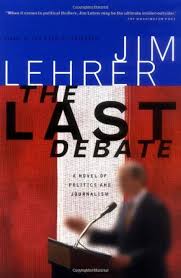
The Last Debate, Jim Lehrer

Lehrer, the late PBS anchorman, skewers his own profession in a tale of journalists run amok which, despite being over 30 years old, in many ways seems to reflect our current moment.

At opening, David Donald Meredith, a populist politician of little relevant qualifications or experience has just been polled as leading the Presidential election race on the strength of his racist, authoritarian, anti-elite, pro-religious and contra-constitutional rabble-rousing (sounds familiar…).  When several journalists are selected to question the two leading candidates during the one and only debate to which their respective campaign managers have agreed, they find themselves in an ethical dilemma: whether to act in a clinically objective manner and hope against all indications that the voters will recognize and select the one qualified candidate, or to use their position as moderators to skewer Meredith on a raft of unconfirmed accusations of bad and violent behavior and so ensure that a truly dangerous demagogue does not reach the White House.

Since the novel is told in the past tense, it is no spoiler to say the panel soon chooses the latter approach and so swings the election to Meredith’s oppponent. The remaining two thirds of the novel is spent recounting how they made that decision and the diligent effort it takes the narrator (an alt-universe tabloid-journalist version of Lehrer himself?), to document it for the narrative non-fiction book which The Last Debate pretends to be.  (Fwiw, with Meredith defeated, his opponent, the previously unimpressive Paul L. Green, turns out to be a pretty good Chief Executive, perhaps validating their risky choice and leaving only the credibility of the journalistic profession to die for what Lehrer clearly considers their sins.)

A few quibbles – since the outcome is disclosed so early, most of the book is occupied with details of the tabloid journalist’s work, unfortunately showing the reader just how tedious that can be.  Rather banal conversations are recounted line by line with neither enough individuality nor amusing detail to justify their length, especially since the plot structure has already taken much real drama out of them.  There are also troubling issues around names and pronouns.  Between the large cast of political characters and the questionable choice of having two women named Barbara interacting (and even sharing an apartment!), as well as a candidate whose last name invites confusion when used by itself (since Meredith is more familiar as a female first name) Lehrer is constantly identifying people by full first and last names to a degree that feels artificially formal and further impedes dramatic flow. 

A similar effect happens when the fictional first-person narrator must protecting the identity of a very famous informant, To avoid giving the clue of this persons sex/gender, Lehrer chooses to use “he/she,” “his/her”’ and similar clunky work-arounds which make the section feel more a bureaucratic document than the climax of a political thriller. (An excellent argument, BTW, for writers and speakers of the English language to adopt non-gendered pronouns as argued in the post ‘e is an Enabler’ which is available via this link:   https://robinandrew.net/2026/03/01/e-is-an-enabler/  or simply by going to robinandrew.net and scrolling down to the 03/01/26 post of that title.)

Overall, an imperfect but worthwhile read that today raises a very large question its author could not possibly have intended back when it was written and published: If Jim Lehrer could see the danger of a character like Meredith all the way back in 1995, how did so many of our fellow Americans end up falling for his doppelgänger in 2016 and 2024 and perhaps even thereafter…?

P. S. – ‘E Unum Pluribus’ is speculative fiction about a very different way in which America’s current political dramas may play out. With a thrilling plot driven by politics and economics as well as gender, class, language and even the origins of faith, the novel is currently being serialized online and anyone can read it, at no cost, by navigating to the home page of this website and selecting E Unum Pluribus from the top menu, or via this link: https://robinandrew.net/2026/01/01/e-unum-pluribus/
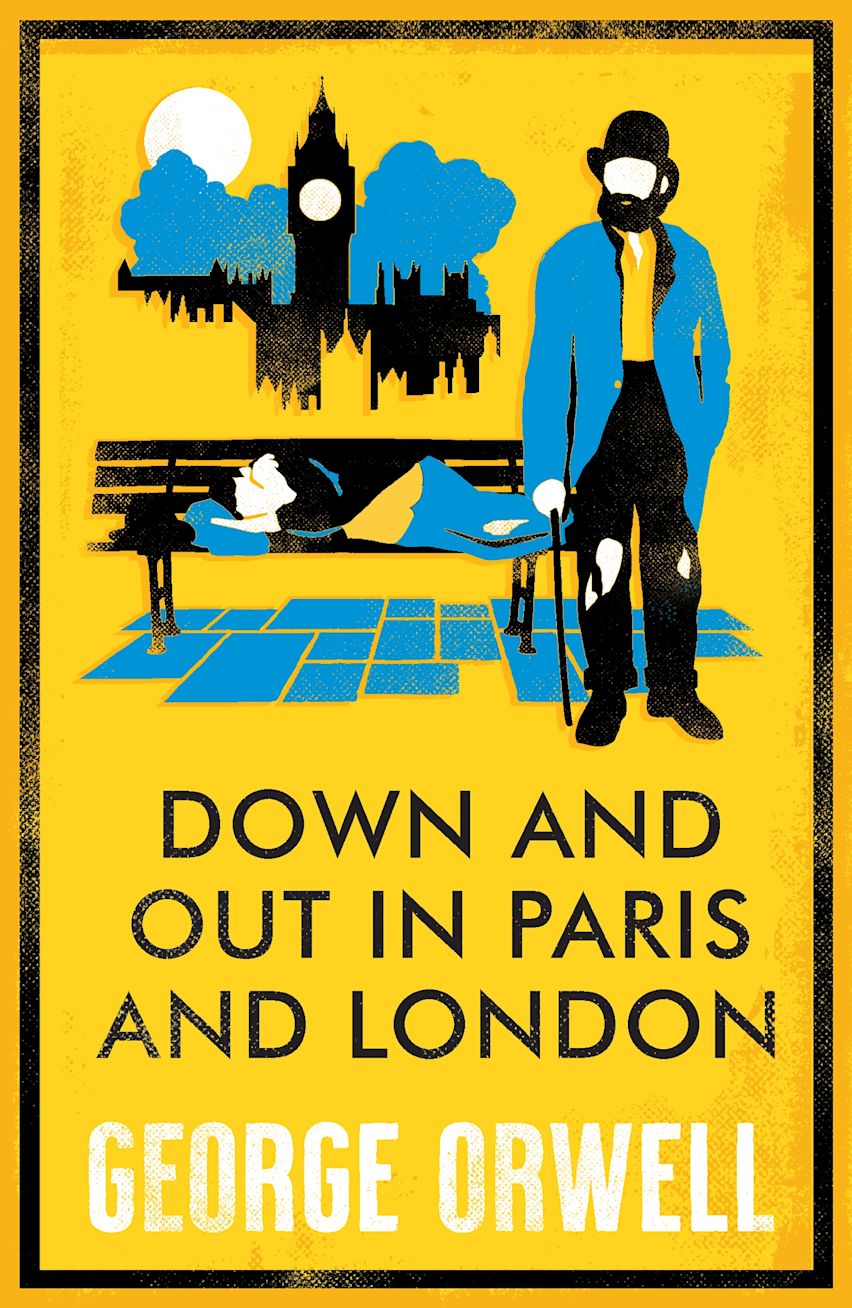
‘Down and Out in Paris and London,’ George Orwell’s 1933 Social Realism

Variously described as a novel and as a memoir presented as a novel, this brief volume certainly has the feel of hard-won experience.  With little preamble Orwell throws the reader into a squalid neighborhood of Paris circa 1930 where we experience the scramble for enough food to avoid starvation and a place to sleep – if one dare drift off while in intimate proximity to any number of strangers, swindlers, thieves, the deranged, the pious and the police. 

Visions of filth, sweat and stink dance in our heads as the narrator (who is in no way distinguished from what we know of the author himself) finds job, loses job, finds room, loses room, earns a few francs and spends all of them on barely enough bread, margarine, tea and tobacco to keep his body upright.  Along the way we are treated to character sketches of many sketchy characters, a few of whom have preserved hearts of something better than lead, another few of whom possess remarkably bright minds despite the grinding effects of their poverty and hopeless circumstances.

Despairing of his ‘opportunities’ in Paris, our guide is thrilled when an old acquaintance in London proffers a job as caretaker to an elderly invalid.  Loaned funds just sufficient for travel and a few days subsistence, he is soon in that great city, only to find the promised position has evaporated as the ‘tame imbecile’ and company have themselves left for the same continent he just abandoned. Now we follow our guide into the bowels of British social services and charities as he learns to navigate ‘the spike’ (a sort of municipal homeless shelter offering prison-like rules and conditions in exchange for horrible food and worse sleep abetted by a tracking system that keeps its customers constantly walking from town to town and so unavailable for any sort of work or betterment), church-run shelters (considered worse than the spike for their insistence on performative piety and the hypocrisy of their tenders), the Embankment (among the few places in London where one is allowed to sleep outdoors, but its benches, noise and Bobbies make sleep next to impossible) and commercial lodging houses (better accommodations, but prices out of reach for the truly destitute).

Given Orwell’s known Socialist leanings, it’s no surprise there’s a certain class consciousness to all this.  His conviction that nearly all the ‘idle’ poor would readily choose to work for their keep if there were jobs available seems a bit broad and naïve ( not to mention the number whose physical, intellectual or/and emotional disabilities and dis-aptitudes might make the unsuitable for hiring).  His modest proposal – group homes where the residents tend gardens which provide a portion of their food, thus requiring a lesser subsidy than the current system wherein they are virtually prohibited from working and earning because the feeble accommodations available will only accept the absolutely penniless – is probably even less likely of enactment today than it would have been in his time.

A painful read, reflecting what the least favored among us must endure simply to survive – but well worth revisiting as the current U. S. administration works to slice open our own social safety net and condemn millions of immigrants and citizens alike to conditions little better than what Orwell describes. (And sometimes worse, incarcerating non-citizens of no significant criminal history without legal process or recourse and even banishing some of them to whatever cutthroat minor state will take our tax money in exchange for receiving and disposing of them). 

P. S. – E Unum Pluribus is a speculative fiction shaped by the economic consequences of the USA’s present partisan divide.  It is currently being serialized online, for free, and you can read its first installment at: 

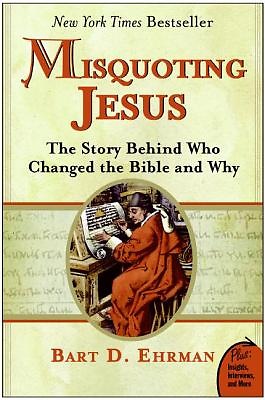
Misquoting Jesus, The Story Behind Who Changed the Bible and Why, by Bart D. Ehrman

To those who claim the Bible* is the unerring word of God delivered directly from his mouth, Ehrman, an academic whose career has been spent in study of these scriptures, offers a potent rejoinder.   

After a brief biographical summary making clear he is himself a committed Christian, Ehrman provides a layperson’s introduction to his discipline of Textual Criticism: the objective analysis of written documents and how their words came to be as they are. Seen through that lens, he explains, the scriptures we read today are demonstrably the product of countless scribes, translators and interpreters over two millennia, some of those persons known by name and reputation but most of them unknown except through the small fraction of their manuscripts which have survived.  Working often in isolation and in various languages of which each had their own varying level of fluency and comprehension, these pre-printing-press copyists produced an undeterminable number of individual handwritten manuscripts, of which time and circumstance allowed only a random selection of perhaps complete, partial and fragmentary examples (still numbering in the tens of thousands,) to survive and be further winnowed and selected by compilers for their use as the basis for all of today’s printed Bibles.  Recent digital collating and cross referencing of those surviving manuscripts have revealed them to contain hundreds of thousands of differences.  So much for any one version being the inerrant word of the deity.

Not surprisingly given the process, some of those differences appear due to simple human fallibility – i.e.: plain old mistakes.  Of the remainder, Ehrman attributes some to the fact that each scribe worked from a different selection of source materials, often fragmentary and often contradictory, so choices were made, differences repeated and passed down to the ages till they became considered ‘gospel’ (in the casual use of that term). Importantly though, other textual variations are seen as reflective of theological or societal debates and conflicts in the time and place a particular variant was created.  Anti-Jewish prejudice within the Christian movement, anti-Christian persecution in the wider community, pushback from earlier philosophical traditions, etc.; when scribes or their masters decided the scriptures needed ‘clarification’ to reflect what was currently considered ‘proper’ doctrine, changes were made. Thus, the ‘Misquoting’ of this book’s title. 

This recounting of process also reminds that, even according to the most doctrinaire recounting of their origin, the ‘Books’ making up what we now know as ‘The Bible’ were initially written as letters, sermons, essays or such, each for a specific audience or purpose.  Only after such initial use, were they distributed more widely and some preserved, though still individually.  Not until still more centuries had passed did various scholars gather some of those ‘books’ together for reference or sharing and still later did the one or another developing church hierarchy settle on the current (and still somewhat contested among Christianity’s many sects and scholars) selection and organization of ‘the’ Books of ‘The’ Bible.’ Even since then, the text has continued to be re-translated, and re-corrected to reflect evolution of our vernacular languages, evolving scholarship and even newly discovered source material (the oldest currently known extant manuscript was only discovered in the late nineteenth century and not made available for study for decades after that; others could turn up any day). No one, it becomes clear as one reads Ehrman’s book, can reliably demonstrate exactly what words were in the ‘original’ text of any ‘Book,’ much less the entire Bible.

Lest the reader think this is all about trifles – the mistranslation of some ancient Greek adjective, the degree of Jesus’ anger or impatience with one particularly beggar’s neediness, Ehrman’s later chapters include examples of major theological points which are presented differently in various early manuscripts and Bibles.  Whether Jesus is rightly considered to have remained a Jew throughout his life; whether he was a ‘normal’ mortal human who only later was ‘adopted’ to become the Son of God or an entirely paranormal being who came down and only pretended to be human; some of these discrepancies in the record go to the heart of important beliefs, including the entire ‘Holy Trinity’ construct. ** In these examples the stakes become more clear: conscientious believers look to the Bible for the most authoritative issues in their spiritual lives, but if the actual text to which they turn has been muddled and changed countless times, how reliable is any directive any particular reader believes they see in its text? 

Near his work’s end, Ehrman steps beyond strict analysis, ventures to wonder whether, if an all-knowing and all-powerful God had really set out a millennium or so ago to transmit his fixed and imperative words to humans, He would not have chosen to do so in some less malleable form (etched on tablets of hardest granite taller than the monoliths of Stonehenge perhaps, or carved into the face of some durable mountain ala Mt Rushmore, for my own examples). The fact that what we know as ‘The Bible’ has come down to us by such a fallible train of events, Ehrman seems by this point to take as evidence that not only was it not ‘written’ by God, it’s words were not individually and specifically inspired by him and so cannot be taken as ‘His’ final and literal word on any subject. 

This primary work of Christian literature, then, is the product of an extended and complex series of human choices about how to record their own human thoughts about Jesus, God and the world.  The words of specific persons who based them upon the words of generations of other persons about events of which they all learned from other persons, only a few of whom actually lived in the time of Jesus – and even fewer of whom actually heard or interacted with him.  Such a work is, despite those caveats, tremendously valuable as one piece of a complex history and philosophy, as a record of what the early Christians thought and as an illustration of timeless human nature.  Ehrman evinces no regret for having spent his career studying it, but rather a continuing fascination and awe at the complications encoded in this cornucopia of early writings, each with its own history and claims upon authority. 

Similarly, any reader – Christian or otherwise – who is willing to approach Misquoting Jesus in a spirit of intellectual curiosity will be well rewarded with new understanding of the very human aspects of its subject.  A valuable piece of scholarship.

P. S.: E Unum Pluribus is a speculative fiction about how this ‘Great Experiment’ we call the USA may self-destruct – soon.  Along the way, it suggests that even the new ‘Dark Age’ which may follow that collapse could harbor the seeds of some future enlightenment with its own new contributions to spirituality and belief systems. 

The novel is currently being serialized and anyone can read it, for free, starting at: https://robinandrew.net/2026/01/01/e-unum-pluribus/
*- the “Bible” as used in Ehrman’s book refers primarily to the New Testament, though many of the methodologies and concepts its author describes could readily be applied also to the even-more ancient texts of The Old Testament – and probably to many other texts which predate the era of mass-mechanical and electronic reproduction.

** In a particularly striking example, Ehrman cites John 17:15, in which the currently standard texts have Jesus pray to God “I do not ask that you keep them from the world, but that you keep them from the evil one.”  Looking back to a highly respected early source manuscript, Codex Vaticanus (fourth century CE), he finds the same verse reads simply “I do not ask that you keep them from the evil one.”  An entirely different prayer suggesting a drastically different image of Jesus’ personality and character as a teacher/spiritual guide.

The Winter Soldier, Daniel Mason

A masterful work that rewards the stout-hearted reader.  Set in the Austro-Hungarian Empire during the First World War, the narrative vividly evokes the cold, hunger, pain and desolation of a nearly-forgotten military aid station serving the Russian front.  Despite having trained in the academics of medicine, Lucius Krzelewski, son of Polish aristocrat industrialists relocated to Vienna after their nation was absorbed into the Empire, is totally unprepared to help the maimed, sick, starved and addled soldiers for whom he is suddenly responsible.  Only the patience and wisdom of the station’s one nurse, Sister Margarete, allows him to fake it till he can make it.  All the while, the front lines advance and retreat, supplies are unpredictable and violence can erupt at any moment. 

Thrown together under such circumstances, it seems ordained by the god of literature that Lucius and Margarete will become attracted to one another, though it is only after a tragic episode involving Horvath, a patient suffering extreme mental distress for which Lucius feels he is close to achieving a breakthrough, that they are drawn to act on their attraction. And, in true romantic fashion, are soon separated, leading Lucius to spend the next several years trying to reunite with Margarete among the chaos first of war, then its aftermath. 

As the novel’s end approaches, it seems Mason is steering Lucius toward a joyous reunion with his loved one but then, in literally the last three pages, he flips the table and crafts an ending which replaces conventional confection with a much superior concoction of wisdom, insight and generosity.

(Spoiler alert:  Lucius himself christens the patient Horvath a “winter soldier,” but later, as his own troubling memories and nightmares – what we today might label PTSD – plague him and isolate him from the comfortable society to which he has returned, it seems he could as well be the titular character.  By story’s end though, one wonders if Margarete is not the true ‘winter soldier,’ the one who has campaigned longest, hardest, most courageously and most selflessly to ameliorate the damage war can do.  In fact, one can even frame this as a feminist novel; all those boastful arrogant males waging war for to salve their egos while, nearly unnoticed, women care endlessly for children, husbands, fathers, rulers, nations.  When we learn Margarete has birthed a child after the war, we are reminded that through all the deadly deprivation of that wilderness aid station, she was also managing her own monthly cycle – discretely, without modern ‘products,’ complaint, days off or even allowing her discomfort to show.  ‘The weaker sex,’ indeed.)

Throughout, Mason demonstrates an exhaustive knowledge of the period, its medicine (he is a physician himself, but a modern one….), warfare in a far-away corner of northeastern Europe, intricacies of the era’s railway network and more.  At times verging near to distraction, this detail ultimately gives his narrative the authenticity and credentials to hold the reader’s attention while he builds our emotional connection to Lucius and Margarete.

Again, masterful.  This is not a book for every reader, but for those willing to weather its painful realties, ample rewards await.  I’m holding on tightly to my copy of Daniel Mason’s The Winter Soldier.

P. S.: E Unum Pluribus is a new speculative fiction about a very different time and place and another government serving its own interests rather than those of its people.   The novel is currently being serialized digitally at no charge and you can be among the first to read it by navigating to this site’s home page and scrolling down to the post titled ‘E Unum Pluribus’ or just select the item of that same name in the top menu.  Any way you get there, it’s totally free!

If you like what you read here at robinandrew.net, feel free to share any posts as widely as possible. And consider subscribing, it’s totally free!

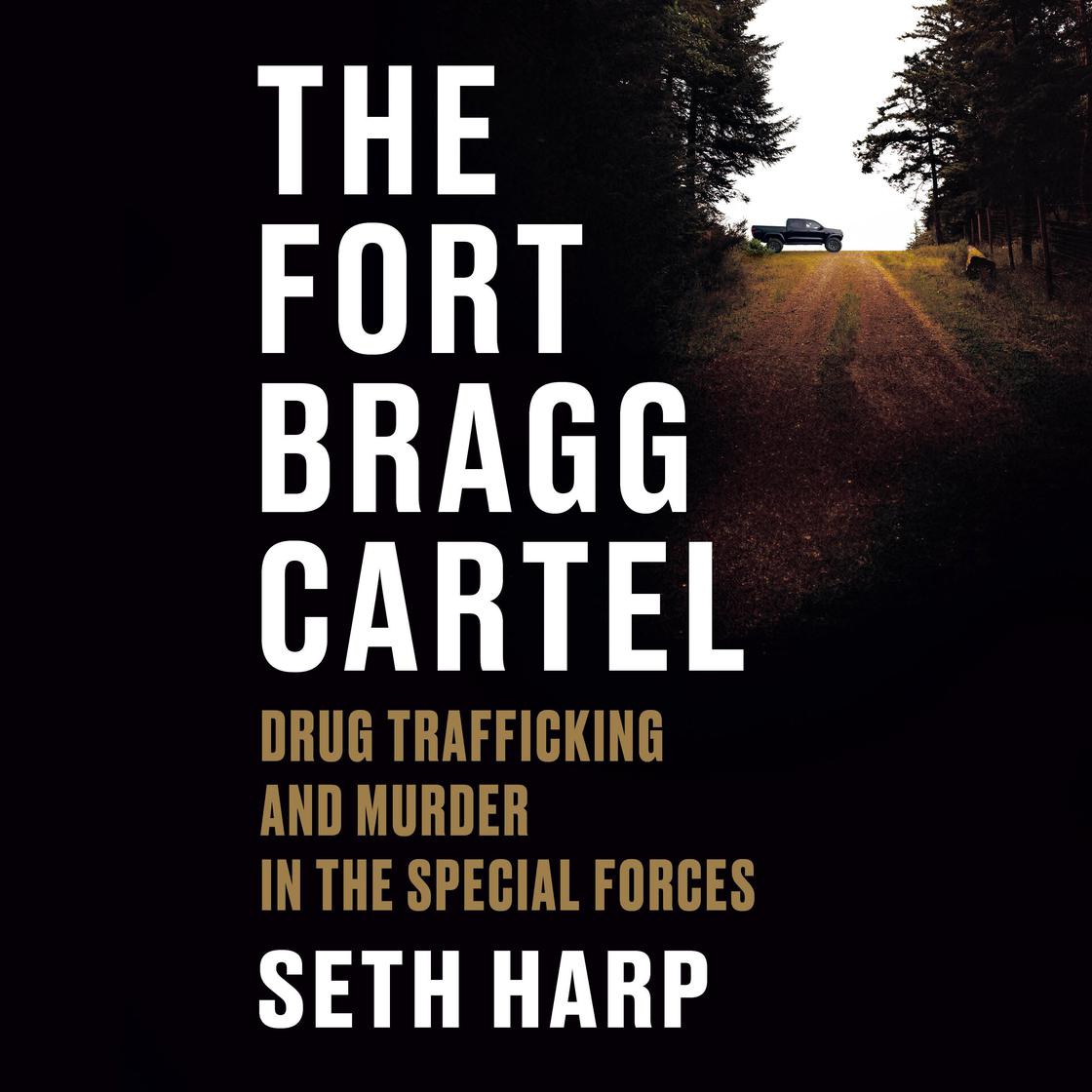
The Fort Bragg Cartel, by Seth Harp

Having recently read The Mission, Tim Weiner’s history of the 21st Century CIA, which naturally contains many references to our nation’s Special Forces, it felt appropriate to check out this more populist look at one aspect of those forces.

Based on his own reporting for Rolling Stone magazine and other outlets, Harp gives us an abundance of anecdote; the parade of murders, suicides and drug- and alcohol-fueled behaviors on or adjacent to the Fort is head-spinning.  He provides a substantial ‘Notes’ section as well, though, oddly, these notes are not called out in the text; one has to read them at the back of the book and then, if interested in a particular one, go to the page indicated and search for a key phrase to find the relevant text.  Then too, many of these notes are not attributions. Better than no back-up at all, but less than totally convincing and perilously like the growth pattern of social-media conspiracy theories; a self-referential circle of fingers all pointing to one another with no object at its center.  Regardless there is plenty of evidence here that things are not copasetic.

As its title suggests, the book contends that there has existed for many years some sort of organized smuggling operation centered on the Fort Bragg premises and that this operation is at least tolerated – if not actually headed – by unknown persons higher up in the chain of command than the various Special Forces operatives, support personnel and hangers-on who are directly involved in the book’s incidents.  The argument in favor of this contention is largely of the ‘it seems too likely to not be true’ variety.  At several dramatic points we hear about a thumb drive left behind by one of the murdered smugglers who claimed it documented crimes and criminals significant enough to act as his insurance policy – or to get him killed.  Supposedly still held in evidence by one of several law enforcement agencies which have themselves been repeatedly painted as shielding military miscreants out of ‘blue line’ solidarity with the ‘green line,’ the closest we get to a big reveal of the drive’s contents is when one source tells Harp it actually contains no data, though whether that is because the crucial data was erased by some double- or triple-agent in the ranks or because it never existed at all is left unresolved. In other words, a big nothing-burger.

Regardless whether or not the actual Cartel exists, it seems undeniable that armed forces by their profession accustom some of their members to use of force and violence.  That they groom some personnel, especially strength-proud young males, to believe themselves unbound by the moral and legal codes that constrain civilian life, and that these tendencies are strongest at the ‘tip of the spear,’ units like Rangers, Green Berets, Seals and Delta Force who are increasingly deployed to do the dirtiest ‘wet work’ of our national defense.  Over the decades those ranks have shifted from short term citizen-soldiers to longer-serving career professionals at the same time their assignments have moved farther from ‘regular’ infantry tactics to special operations – small scale infiltrations, espionage, resistance support, sabotage, assassinations and other covert acts sometimes difficult to distinguish from the tactics of the terrorists they now spend much of their time hunting – or from those of hard core criminality.  When soldiers are intensively selected and schooled for the attitudes required by that work, and that training is reinforced by months/years of ultra-high stress and pressure while surrounded by a culture that reveres and rewards self-reliance, cold-calculation and tolerance for brutality (while loosely dispensing powerful and addictive drugs to deal with the fallout), it should not surprise that some of those reflexes continue to direct behavior after their deployments are over or even after their careers have ended.

On the evidence in this book, military leadership cannot be trusted to thwart drug activity and the violence that accompanies it.  Nor can they be relied upon to care for those service persons affected by it, much less to protect service families and the rest of us from the dangers which a few operators – even some who served honorably and heroically – present.  As in so much lately, it is law enforcement agencies and the courts we must rely upon but unfortunately, if Harp’s reporting is accurate, the fraternal bond between military and the law sometimes precludes that, so we are left with a continuing tragedy of broken and deceased servicepersons, wives, families and communities. 

As if that were not enough, The Fort Bragg Cartel’s greatest revelation, to these eyes, is not about drug activities in the U. S. but in Afghanistan.  According to Harp’s reporting, prior to the U. S. invasion there the Taliban had, out of religious convictions, reduced poppy cultivation to near zero with corresponding impact on the flood of heroin and other drugs to users in ‘more developed’ nations.  By itself, a clearly desirable outcome.  Once the U. S. and its War on Terror allies took control though, cultivation began again due both to inattention (by U. S. leadership) and financial incentive (of those allied forces and perhaps also some of ‘our’ people).   Once the U. S. pulled out and the Taliban resumed control, the production of poppies and heroin was again shut down!  In Latin America as well, Harp reports, U. S. political objectives have sometimes led to cooperation and even support of narco-traffickers in exchange for their cooperation with U. S. political goals.  Not a pretty picture, and one further negative consequence of how the War on Terror has been prosecuted and profited off of.

Despite trending more toward the true crime genre than the academic history line, The Fort Bragg Cartel is a useful summary of events worth considering.  It raises worthwhile questions about our government’s role in the drug trade, and that makes it, at the end of the day, a Book Worth Keeping. 

P. S.: E Unum Pluribus is a new speculative fiction about another time, another place and another government serving its own interests rather than those of its people.   A draft of the novel is currently being serialized here at robinandrew.net and you can be among the first to read it, beginning with the post titled ‘E Unum Pluribus’ or by clicking on that same title in the home page’s Top Menu.

If you like what you read here or at robinandrew.net, please share any posts as widely as possible – and consider subscribing: it’s totally free!

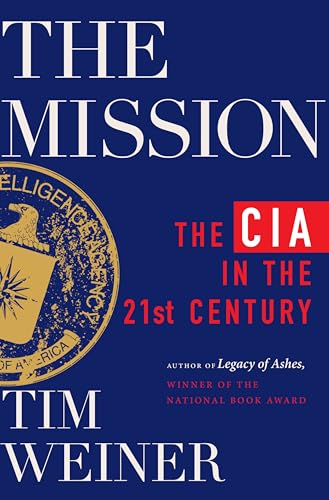
The Mission – The CIA in the 21st Century

Read this book!

Version 1.0.0

Admirably demonstrating the value of professional journalism, The Mission is factual, detailed, incisive and – despite being a nearly 400-page history of a government agency – thrilling. With more than one hundred participants interviewed, many verifiable sources and its most critical opinions credited to persons who clearly have both the knowledge and the background to deserve being heard, this is an authoritative accounting of a very complex subject. 

Having previously written Legacy of Ashes to chronicle the first 53 years of ‘The Agency,’ as the CIA is colloquially known, Weiner begins the new millennium on a downbeat, depicting an Agency whose capabilities were sadly ignored and unmaintained once the Soviet Union collapsed.  Deprived of the purpose and challenges which had pushed it to excellence (and sometimes overreach…) ever since it sprung from the seeds of WWII espionage to meet the needs of the old War, the CIA in 2000 was not held in great respect either inside the government or among the public. So little respected, we learn, that the shiny new Bush2 administration refused to listen when Director George Tenant presented substantial indications that Al Qaeda had something big planned, soon, and pleaded for authority to eliminate him before it could happen. To his great frustration, and the even greater losses of others, that plea was ignored – in early 2001!

Like a speed bump beneath all the smoke, dust and debris of the 9/11 attacks, political leadership quickly passed over their own failure to comprehend, instantly deciding The Agency was a great tool for what they conceived as their own brainstorm – the War on Terror.  That effort, which had already been one of the Agency’s areas of focus for decades, would become the public reason for much of its activity over the next 25 years. 

Using sourced quotations for section titles such as “We were all making it up as we went along,” “The U.S. didn’t want peace.  We wanted the war on terror,” and “We have to say Iraq has WMD,” Weiner quickly arrives at one of this central themes: a continual conflict between The Agency’s focus on providing the most useful and reliable information it can glean out of hostile environments versus politicians’ desire for sound bites to serve their pre-determined policies (at best) and (not infrequently) their emotional needs.  Unsurprisingly, CIA staffers from that era are harshly critical of the Bush2 administration and Weiner is cogent in describing how intelligence was ignored or actively misused in order to justify a doomed Iraq invasion to which the President and his team appear to have been fully committed from at least November 2001, if not earlier.

Even as The Agency is bent to serve debatable ends, Weiner gives us many tales of dedicated agents serving honorably; one standout being that of Tom Sylvester, who led a ten-person team into northern Iraq to prepare the ground for the Bush/Cheney invasion. An Arabic-speaking ex-Naval special forces operator, he took great personal risks to forge links with Kurdish forces, Sufi mystics and others, produced intelligence direct from Saddam’s highest ranks and closest advisors to guide invasion planning.  Sylvester would go on to lead the Agency’s clandestine services two decades later, under very different challenges.

Another eye-opening episode is related in Chapter Ten, ‘A Beautiful Operation.’  Having heard over many years that Pakistani scientist A. Q. Khan was known to have shopped nuclear weapons secrets around the world, I’d always been curious how he got away with it. Answer: he didn’t; at least not for long.  Weiner describes how, learning from a 1920’s sting played by the Soviet ‘Cheka’ spy agency against Russians who had fled the USSR, the CIA created their own front companies to do fake business with Khan, eventually penetrating his facilities and dealings sufficiently to have him arrested, tried and convicted. Moreover, where a quick drone strike could have eliminated Khan sooner but allowed his proliferation efforts to continue, their smart and patient approach allowed them to also roll up associates and customers, completely destroying his operation and drastically diminishing the danger of nuclear weapons getting into the hands of people like Muamar Gaddafi, and Osama Bin Laden.  A service to humanity that required the Agency’s characteristic willingness to use dishonest means in order to further admirable ends which, Weiner notes, is a fundamental and unavoidable characteristic of all espionage.  

The successful pursuit and eventual killing of Bin Laden is treated in detail of course, as are the waterboarding scandal and other episodes not so laudable.  As we approach 2016 though, the tone of this history changes considerably, from one of challenges and ambitions to one of dread and despair.  In both his narration and in the quotes he includes from various agency sources, Weiner makes clear just how little Mr. Trump understands or values the proper purposes of The Agency, and how far he and his allies have by now penetrated our nation’s intelligence agencies (and the FBI, as well).  Acting more like double agents than principled overseers, they are now focusing those resources to protect not the nation but their own political and financial interests.  With extensive attrition of experienced and qualified personnel and heavy thumbs laid on those who remain, every page increases the premonition that we are in for some oncoming catastrophe on the scale of 9/11 – or even greater.

The CIA has never been entirely a hero, nor an utter villain, but an institution of fallible human beings who are willing to serve as tool for those who make policy and direct its execution – the President, the Cabinet and, ultimately, the votes who put those officials in office.  Its many characters have included some cads but are mostly honorable patriots, willing to compromise their own safety, morality and maybe even a part of their souls in service of a greater public good – protecting us all from the worst of the world.

At times a tale of ignorance and human weaknesses, at others a triumph of courage and will, The Mission is important information for every American.  Please read it and share it with others!  (If you can’t buy the book, check a copy out from your local library; if you can’t read it all, just start at Chapter Twenty-One, which carries the catchy title ‘Face-eating baboons.’)  Democracy depends on informed voters!

P. S.: E Unum Pluribus is a new novel with its own take on where the pursuit of power for power’s sake may be leading our nation, and how even tragic events can spawn new possibilities for the future. It is currently being serialized digitally at no charge and you can be among the first to read its opening pages via this link:

If you prefer not to open links from unknown sources, just navigate to this site’s home page and scroll down to the post titled ‘E Unum Pluribus’ or select the item of that same name in the top menu.  Any way you get there, it’s totally free!