Tag Archives: words

‘They’ want to turn us all into transexuals!

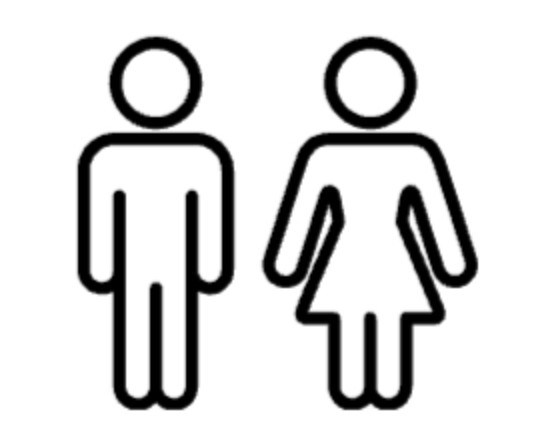
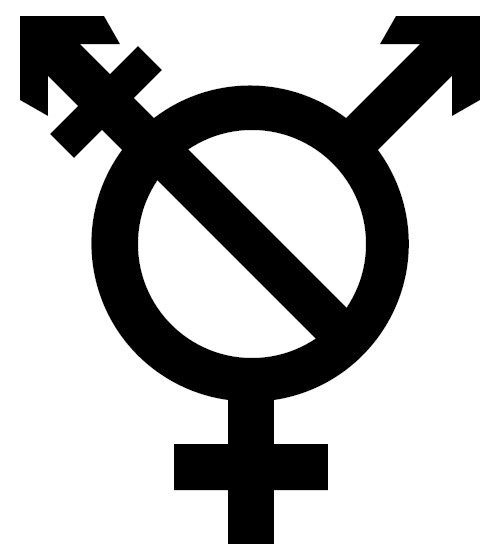
♀…♂…⚥…?!

Among the many slings and arrows tossed by counter-progressive voices these days are allegations that some amorphous ‘they’ of radical-liberal social engineers is “trying to make us all trans.”  A particularly twisted component of those alarms are accusations that gender-care supporters and medical professionals are coercing young persons into irreversible medical interventions – defenseless young persons who supposedly would never have chosen such treatment on their own and will regret it for the rest of their lives.   Without in any way accepting those arguments, one can still imagine that earlier posts suggesting use of gender-free pronouns run the risk of being classed as part of that same imagined conspiracy, so some response seems worthwhile.

Starting with: Literature, memoir, anthropological scholarship and legal references demonstrate there have long been individuals in many cultures who chose not to conform to the general consensus on how a woman or a man must look and behave.  The fact that conservative religious commentators can find admonitions around gender ‘rules’ in a document as ancient as the Old Testament’s book of Deuteronomy makes clear that modern gender diversity does not need to be drummed up by any elitist cabal or progressive conspiracy; it is part of human nature. 

As to whether there are more such nonconformers in the USA today than at any other time or in any other place, the truth is: no one knows!  What can be reliably said is that, given the high price persons tend to pay for being open about such things, there are certainly more hidden figures today than the few who are brave enough to let themselves be known. And, given that the consequences of nonconformance have been even higher in many other times and places, there probably have been more such silent examples in those as well.  With no way to document either half of the equation, then, it is pointless to argue what the trend has been, or even whether there is any trend.

If, despite that understanding, gender nonconformity seems more visible in twenty-first century America than elsewhere or when, that visibility is better taken as reflecting the high value our era places on variety, creativity, honesty and freedom of expression – characteristics widely recognized as crucial to the nation’s success in economics, justice, scholarship, technological innovation and other realms wherein it has consistently outperformed more orthodox and fundamentalist cultures.   Nonconformity is, in other words, a positive, not a negative phenomenon.

All that said, it would certainly be undesirable for any person, young or old, to feel pressured into changing their appearance, activities or physiology, especially not through costly or invasive and occasionally dangerous medical interventions.  To determine whether or not that is happening, we don’t need to search medical records or point accusing fingers at those who’ve made different choices than any of us might make.  Not when, right in front of our eyes and ears is a language and a grammar that requires every person be repeatedly and continuously categorized in one (and only one) of two (and only two) distinct and mutually exclusive genders: be a woman or be a man, no alternatives considered.  If there’s anything coercing young persons who are at all uncomfortable with the gendered behaviors to which their physiology is said to direct them, a prime suspect should be that language.

Of course, the fear of ridicule, intimidation, prosecution or bodily harm if ever their gender curiosity is detected are also powerful discouragements of experimentation. Even in this though binary language is not helping, as those fortunate enough to have a potential for passing as ‘the other’ gender may find it safer to change their identity completely from that of a woman to that of a man – or vice versa – than to risk inhabiting any unnamed and unrecognized region in between, even if that would be the highest expression of their true preferences.  This is perhaps one way in which invasive measures may truly be the result of coercion – not by the medical establishment but by narrow minds insisting that gender is an either/or thing, that all aspects of one’s life should conform to one gender. By voices, in other words, who believe they have a right to police the personal expressions of others.

So, to those worried about gender affirming treatments: if you want to reduce the number of young people choosing to call themselves trans and maybe even seeking surgical treatment, please consider whether your gender assumptions get in the way of your acting respectfully toward all young persons, however they choose to look or live in the world.  Maybe try imagining a world in which young males can be whatever variety of person each of them want to be (not whatever kind you happen to think is ‘a ‘real man’) and young females can each grow up to be whatever sort of person they wish to be (not necessarily the kind who end up on magazine covers or cooking three meals a day three hundred and sixty five days a year).

Is that belligerent? Defensive? Maybe; but the truth is that a world in which anyone can safely and openly inhabit whatever combination of ‘feminine’ or ‘masculine’ attributes best suit their inner nature is a world in which fewer persons will feel any pressure to totally switch from Column A to Column B.  And a world in which gender-free pronouns provide a respectful way to communicate about persons who mix their own recipes is more conducive to individual freedom and to the common good than one in which every consideration must start by classifying every individual into one or the other of two rigid and unchangeable gender templates that very well may impede them from living happily and productively as the unique individual they truly are.

Which is why, if trans-wary observers truly wish to minimize pressure on young persons to make what they consider poor choices about their gender or biology, they should be right on board with use of gender-free pronouns as one small step to encourage variation with moderation, expression without extremism and exploration without irreversible commitment.

P. S. – E Unum Pluribus is a speculative fiction exploring one way in which our current ‘culture wars’ may bring an end to the U. S. A., and what might come in its place. With a thrilling plot driven by politics and economics (as well as gender, class, language, magic and even the origins of faith) the novel is currently being serialized online and anyone can read it, at no cost, by navigating to the home page of this website and selecting E Unum Pluribus from the top menu, or via this link: https://robinandrew.net/2026/01/01/e-unum-pluribus/

Please feel free to share this post however you wish!

And, if you like what you read here at robinandrew.net, please subscribe – it’s absolutely free!
e ain’t Woke – (You can’t diversify, equitize or inclusive-ize what you don’t first label).

Between a recent post emphasizing the distinction between a person’s ‘sex’ and that same person’s ‘gender’*, the earlier post entitled ‘e is an Enabler’**, and a few passages in the novel E Unum Pluribus, (currently being serialized online, for free***) it’s possible some readers might dismiss this site as just one more hotebed of Identity Politics; the tyranny of a woke liberal elite telling everyone else what to do and say and even think…

First off, labelling every person all the time as either a man/boy or a woman/girl and insisting that those labels are eternal, unchangeable and mutually exclusive – as our current Chief Executive attempted to due shortly after assuming office for the second time –  has got to be the most profound and ubiquitous instance of Identity Politics in history! 

Across uncountable generations, geography and cultures, such gender identification has served as excuse to apportion rights differently to the genders (almost always to the detriment of women…), to justify unequal treatment (ditto), to write laws (wives classified as the property of husbands, women unable to inherit and restricted in travel, dress, voting, etc.) to justify unequal prosecution, judgement and sentencing for affronts against a man versus the same affront committed on a woman, and on and on.  On that basis alone, anyone who professes to believe in stamping out ‘diversity,’ ‘equity’ and ‘inclusion’ (DEI) because they result in unequal treatment on the basis of identity should be totally on board with using non-gendered language for all official purposes.

That last phrase, ‘official purposes,’ highlights another important point: nothing written here suggests or advocates that people stop using gendered pronouns entirely.  There are plenty of instances where ‘he’, ‘she,’ ‘him,’ her’ and all their derivatives are useful and convenient because the desired gender identity of a subject person is a known fact or has been made abundantly clear by the subject’s voluntary choices and acts.

True as that is, though, it is also true that there are instances where the gender self-identity of a subject is not readily determinable except by an observer applying their own stereotypes, prejudices or preconceptions. For those instances, the use of non-gendered pronouns (e, em eir and so on, or something similar) is a simple and effective way to avoid the ‘woke’-ness of sorting individuals into identity groups and treating them differently as consequence. 

Even as English-language speakers continue to use gendered language in many or even most instances, there is real freedom and justice to be gained by using non-gendered language when drafting laws and policies whose intent/content do not truly depend upon a person’s gender expression (which is very nearly all laws and policies, really).  And also, to use such non-gendered language whenever one does not yet know the gender self-image of a person or where a person has made clear that e does not choose to conform to the ‘gender’ stereotypes of others. This small addition to our quiver of words is actually a worthy way to avoid and reduce Identity Politics.

Using ‘e’ ain’t woke, it’s a path to more effective communication, an enabler of individual freedom and simply one tiny increment in the ongoing and perpetual evolution of perhaps the most useful tool we’ve inherited from generations before us: the English language.

*Humans Got Gender, https://robinandrew.net/2026/06/28/humans-got-gender/

**’e’ is an Enabler, https://robinandrew.net/2026/03/01/e-is-an-enabler/

*** E Unum Pluribus is speculative fiction, and a warning that states’ rights, religious nationalism and intentionally divisive political tactics may soon bring about the end of what George Washington termed the American nation’s “Great Experiment.”  Shining its light on what we stand to lose if we do not come together, what could rise in its place and what it would take to begin repairing the damage, this cry of alarm is currently being serialized online and is available to anyone, for free by navigating to the homepage of robinandrew.net and selecting E Unum Pluribus frmthe home page’s top menu, or via the following link:

Feel free to share this post as widely as you wish and, if youlike what you read here, please subscribe to robinandrew.net – it’s totally free!

Novel Words – fictional pronouns for the actual future.

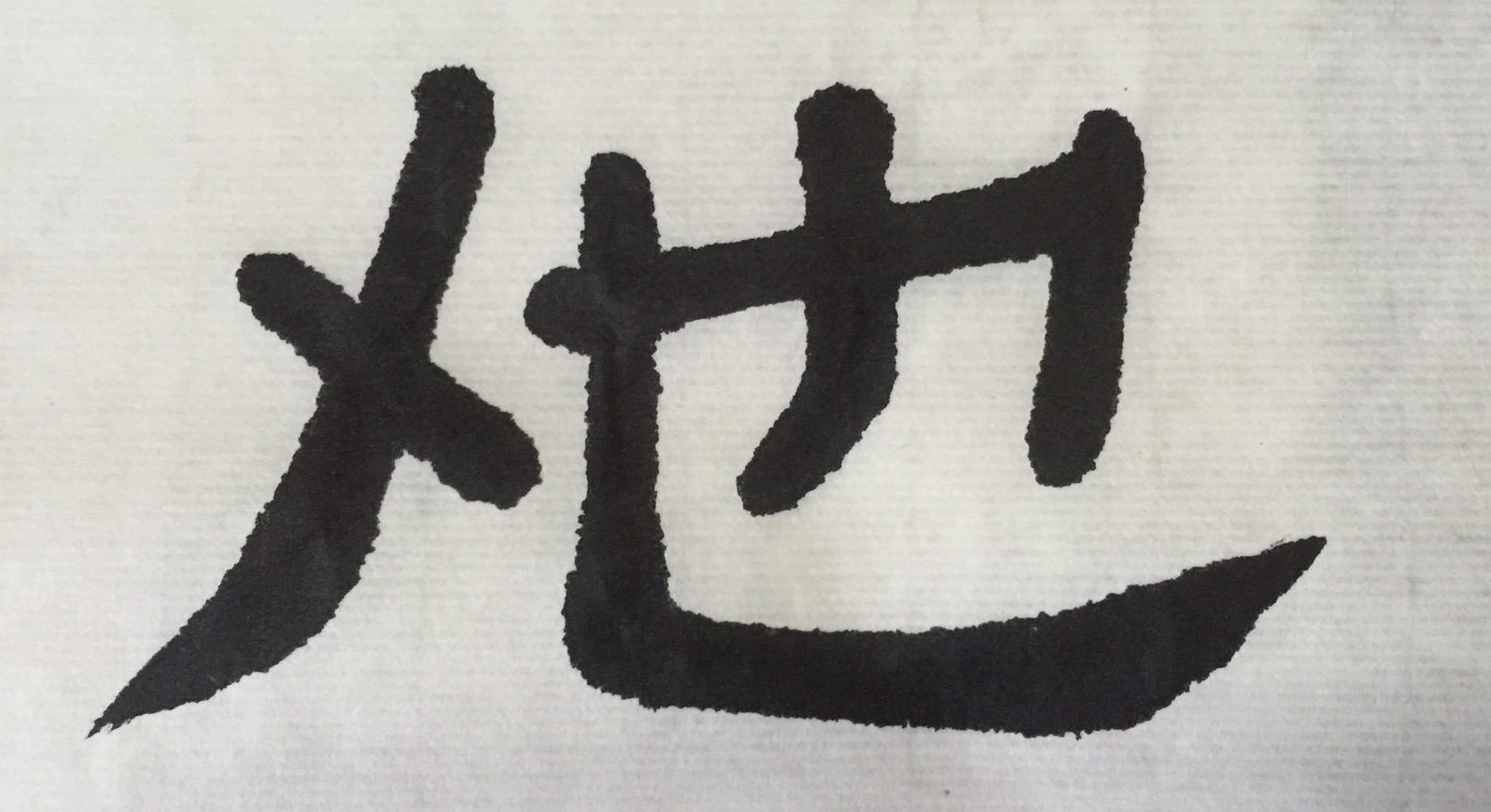
John McWhorter published an Opinion piece recently* about the evolution of pronouns, with particular attention to a new character gaining attention among users of the Mandarin language (X也, shown in image above, combines features of the characters for both he and she, rather as some persons do). Along similar lines, a new novel, E Unum Pluribus, speculates a future American city/state called Confluence in which government edict directs all official communications to employ non-gendered pronouns. The novel’s events make clear that Confluence’s government has plenty of faults and weaknesses, but this one of its policies merits some consideration.

For generations the convention in English was to use ‘he/him/his’ as default and inclusive of all, regardless of their sex/gender. Appropriately, that has now been perceived as favoring male identity over female; simultaneously reflecting historic inequality and perpetuating it. Replacing all those instances with ‘he or she,’ ‘his or her,’ etc. is hardly workable, especially in spoken communications, and still carries a hint of misogyny by placing one gender ahead of the other, whereas ‘she/he’ risks offending insecurities on the other side of the identity coin.

Recent efforts to innovate ‘they’ as a singular pronoun for persons who choose to declare themselves non-binary run aground first on its pre-existing function as plural, generating confusion where they intend clarity. That usage also seems to open the door to a trickle of additional new pronouns as various groups or orientations demand similar recognition; one need only read the snarky online critiques of how LGBT has grown to LBGTQIA2S+ to know that is not a path to tolerance so much as a guarantee of further friction. Worst, in this opinion, ‘they’ singular requires persons who prefer not to be stereotyped as either ‘he’ or ‘she’ to state that publicly, thereby outing themselves and very possibly inviting prejudice, at least at this point in our societal evolution.

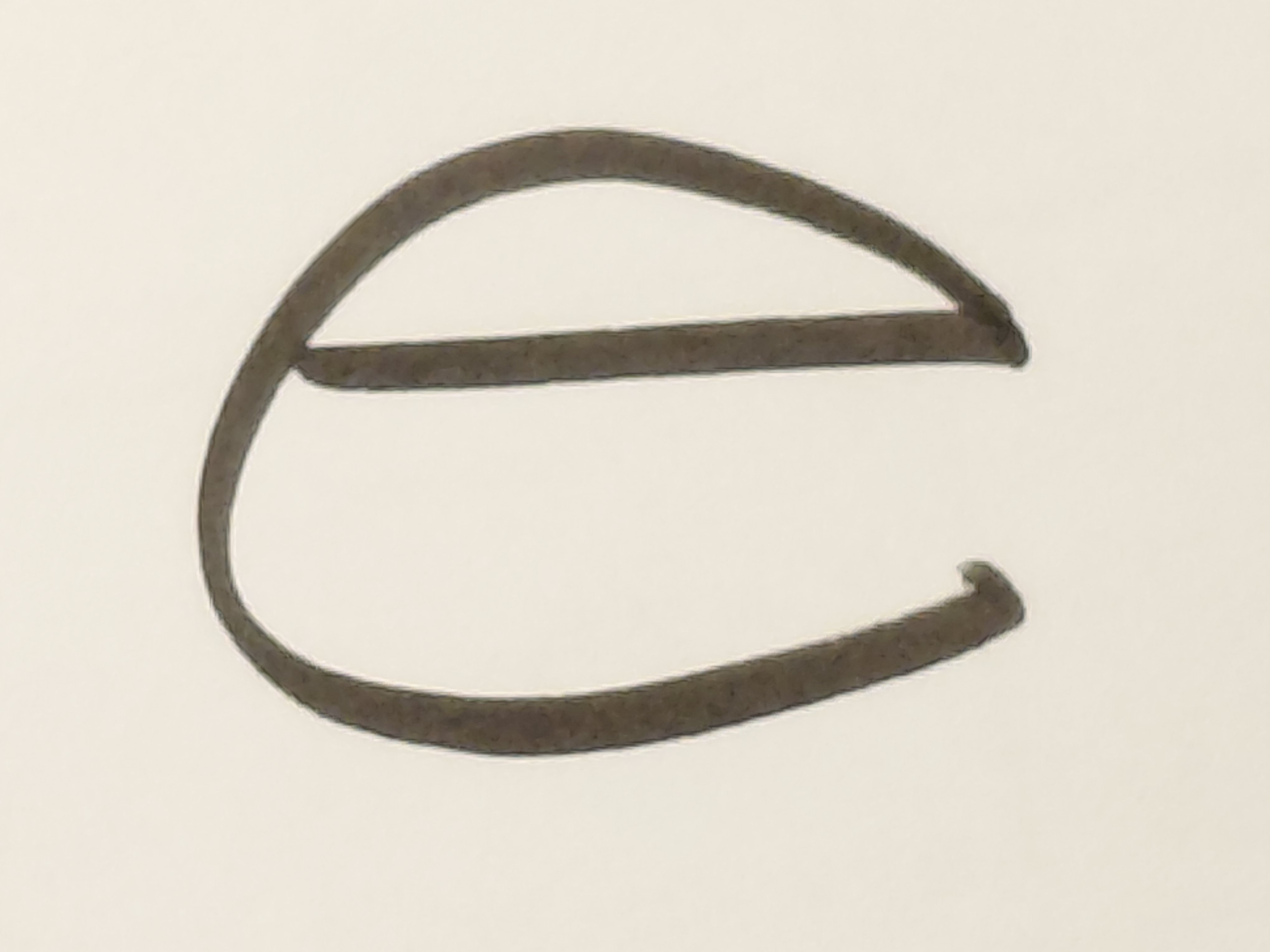
The fictional founders of Confluence have taken another approach; directing official communications to use ‘e/em/eir’ for all individuals. This treats everyone with equal respect and does not require the clunky ‘my pronouns are…’ , which can itself incite prejudices. The specific form, ‘e,” ‘em,’ and ‘eir’ are brief and efficient, similar enough to other pronouns that they quickly feel familiar but with sufficient difference to avoid confusion**.

By applying equally to all possible personal preferences ‘e’ equalizes all in one swoop while tacitly expressing the truth that for virtually all public or official interactions there is no proper reason to indicate what genitalia an individual bears or with whom they choose to become intimate. Those are – and should remain – irrelevant.

There’s nothing revolutionary here, by the way, modern English already has gender neutral pronouns – ‘they’ does not presume the gender of a group or any of its individuals. ‘It’ can be used for all objects – unlike French, say in which some nouns require feminine constructions and other nouns masculine, despite the objects having no actual sexual function or accoutrements. Most prominently, ‘I’ is the same for any individual regardless of sex, gender or other characteristic. It is really only in the second person singular that our language’s evolution has codified an unfortunate and outdated discrimination.

In the world of E Unum Pluribus, that governmental edict for official communications also does not mean ‘e’ is used by everyone all the time. Non-official conversations use gendered pronouns wherever a subject’s preference has become clear, sticking to gender-neutral when an individual’ presentation is itself gender neutral. As in real life, casual usage and common courtesy have the final word in how language evolves over time.

(For what it’s worth, future posts on this site may selectively incorporate ‘e/em’eir’ pronouns to explore just how functional they are – or are not.)

*“This Novel Word Speaks Volumes About How an Entire Language Works” N. Y. Times online edition, 2026-01-22

** E Unum Pluribus does not claim to have invented the ‘e/em/eir’ construct.  Variations on what are sometimes called ‘Spivak pronouns’ have been noted at least as far back as the late 19th-century.

P. S.: E Unum Pluribus is a tale of murder and conspiracy set a decade or so in our future in one of many small sovereignties sprung up in wake of the USA’s self-destruction. The novel explores multiple themes – language and gender, identity, guilt and even the origins of faith and belief – but speaks loudest in its depiction of how much we all stand to lose if we continue to retreat into factions which each act only for their own needs and interests.

The manuscript is available in six instalments, starting at:

If you like what you read here or at robinandrew.net, please share any posts as widely as possible – and consider subscribing: it’s totally free!