Tag Archives: Gender

If Gender Ain’t Sex, What is it?

(The novel, E Unum Pluribus, is narrated by Jack Shirley, an office intern whose gender behavior doesn’t always fit the expectations common in contemporary Amero-European culture.  Anticipating that Jack’s character may arouse comment, this is one in a series of posts to share the author’s thoughts around those expectations. Caution: this one gets a bit long…)

A previous post* suggested, given that the vast majority of social interactions do not afford us the opportunity to know what reproductive cells any individual’s organs produce (the recent Presidential definition of ‘sex’), nor whether they have a penis or a vagina (the more common and time-tested way of differentiating the sexes) nor (in deference to current anti-trans sentiments) what their genitals may have looked like at the time of their birth (a particularly difficult standard to meet, in any normal social situation!), it is very rare that we actually and definitively know the sex of any person we may meet.

That post went on to comment that the common practice of calling some persons men and some women (as opposed to male and female) is really based not on sex but on gender, the wide range of visual, audible, or other cues that we presume to be consistent with the sex we cannot actually identify. 

Herewith, a (very) abbreviated list of some of the cues which are available in social contexts and so may be incorporated as we make our presumptions of sex (starting, for no critical reason, from top and running towards bottom):

Length of the hair on one’s head – and its style of cut, neatness/carelessness

Whether that hair is obviously bleached or colored

Whether it interferes with range of vision, or is artificially held in position (clips, spray…)

Pattern of visible hair loss (if any; though this can be obscured by corrective measures)

Earrings (none, one or two or more; fixed in place or changeable; size, shape, color, material…)

Size and shape of head

Ditto, of face

Ditto, of eyes

Ditto, of eyebrows and whether they appear to have been plucked, waxed or otherwise altered

Ditto, of nose

Ditto, of lips, and their color (whether natural, or artificial)

Wearing of cosmetics/make-up – how much, how ‘natural,’ dramatic – or plausibly deniable.

Presence, extent and appearance of body hair on face, legs, chest, arms, armpits, nostrils, ears, groin…and whether that is flaunted, hidden, styled, removed or simply never spoken about

Presence of tattoos – size, location, extent, content – as well as piercings or other body modifications

Noticeability of laryngeal prominence (‘Adam’s Apple’)

Pitch, tone, softness etc. of voice, not to mention word choice, emotional content of speech…

Width of shoulders (relative to chest, hips etc.)

Thickness of arms (is the person ‘pumped,’ ‘skinny,’ ‘flabby,’ or ‘undeveloped’…)

Size and/or slenderness of hands and fingers, visible veins on back of hands

How carefully fingernails are trimmed, filed and cleaned (or not!) and to what curvature

Presence of paint or polish on said fingernails

Convexity of the chest (flat, not flat, prominent; in near-infinite variations and degrees)

Color, fabric, pattern of whatever clothes cover the upper body (shirt, blouse, tunic, crop, tank…)

Size and location of fasteners on such clothes

Tailoring of such clothes (sleeve length and cuff style, collar style, cut full or fitted, cut short to expose midriff, or tailored long to cover hips; tucked or untucked….)

Types, amount, styles and weightiness of jewelry

Slenderness of waist, relative to other body parts

Location of waist (high, thanks to long legs and a short torso, or low due to short legs and long torso) though this is often disguised or manipulated high- or low-waisted clothes

Prominence, or not, of ‘belly’

Location and proportions of belly or abdominal bulk

Width of hips/butt relative to waist and shoulders.

Shape and ‘fullness’ of derriere (butt)

Wearing clothes that cover each leg separately (pants) or together (skirt, dress, robe, gown, toga, sarong, thobe, kilt, gho, dhoti, kimono, boubou, djellaba, shalwar kameez, etc.).

Whether footwear is traditionally functional, or whimsically decorative and ‘impractical’

Height of shoe heels (cowboy boots being an exception to the usual  interpretation of this)

Paint or polish on toe nails

And, abandoning the head-to-toe geography, a few more generalized gender distinguishers:

Dressed in clothes that look practical/durable/rugged, or obviously decorative (‘frivolous’)

Wearing an ‘outfit’ (meaning multiple items of the same fabric and color, or items carefully and obviously selected to create a nameable ‘look’)

(Other than a man’s business suit, which is very carefully regimented and strategized and certainly intended to convey a certain ‘look’ and image, but would never be called ‘an outfit’ by the sort of men who habitually don it)

Posture (shoulders or hips forward? head high or neck bent? spine straight or curved?)

Gait (long or short strides, quick or leisurely, bowlegged, pigeon-toed, bounding, ‘mincing,’ marching…)

How one sits or crosses one’s legs – a man-spread vs. an aspirin between the knees look

Default facial expression – open and welcoming, serious, wary, challenging, belligerent…

Engaged in an activity or occupation commonly thought of as manly or feminine, serious or frivolous, rowdy or refined, graceful or violent, ‘productive’ or ‘women’s work.’

Smelling sweetly of perfume/cologne

Or, less sweetly, of sweat, waste, food or beverage, poor hygiene or simple lack of the economic means to avoid odors

Exposing the flesh of one’s legs, arms, shoulders or more in any but an athletic situation (acceptable and even encouraged for females even in very formal settings, but highly unacceptable for males in those very same settings)

So? (you may well ask).

Clearly, that list can go on almost without end, but the above examples seem sufficient to illustrate that, as much as we regularly employ such cues to classify individuals as ‘a man’ or ‘a woman’ and also, very importantly, to critique individuals for not behaving ‘like a man’ or ‘like a woman,’ none of these cues are actually direct consequences of the form (or function) of a person’s reproductive organs. 

And, given the number of such cues, it is virtually impossible that any two individuals will exhibit exactly the same variation on every cue (except perhaps, identical twins dressing identically and acting identically as a prank; an exception which actually helps illustrate the validity of the rule in every other case).  Even uniformed personnel and incarcerated persons – or performers in a chorus line – who are required to dress uniformly and follow uniform rules for hair, jewelry, cosmetics, etc., are readily distinguished from one another by various gender cues.

Oh, and:

Many of these cues are exhibited and/or interpreted differently by individuals of different racial or ethnic heritage

Many of these cues are exhibited and/or interpreted differently by persons from different cultures, locales, native languages and even political leanings

Many of these cues are, or have been, interpreted differently by persons of different generations, or historical periods

Those statements are true despite the relatively slow pace of natural biological evolution giving assurance that the form and function of male and female sexual organs do not differ significantly from one heritage, culture or time period to another, so those differences of expression and interpretation cannot be dictated by what we say governs one’s sex.  Though expressions of gender cues may very well be chosen in conscious or subconscious effort to appear as one sex or the other; such choices would be entirely unnecessary if one’s actual sex was as apparent and binary as we are conditioned to presume.

Further, for each such cue, there exists a wide range of variance among males, and also a wide range of variance among females and one can readily identify persons who otherwise appear to be men, but whose expression of a particular cue falls within the range of variance exhibited by females for same. Conversely, one could readily identify persons who otherwise appear to be women, but whose expression of a particular cue falls within the range of variance exhibited by males.

For those reasons and more, identifying any number of ‘masculine’ or ‘feminine’ cues given out by any individual can, at best, influence one’s perception of the likelihood that that individual is male or female but none of these cues, by themselves or in combination, are actually reliable proof of any individual’s biological sex

To the extent any publicly available cues reveal anything at all about an individual, it is their gender, not their sex and given the number of possible cues and the variations in how each individual exhibits or interprets each of those cues over time, the reality is that there are not two genders – one exclusively manly and the other exclusively womanly and each fixed at birth and separate from the other – but as many genders as there are individuals.

(If not more, since one’s expressions of many such cues naturally varies from day to day and over a lifetime!)

Thus, ‘non-binary’ is far more than a woke label for some newly-invented identity group of persons who intentionally violate gender norms.

In the most basic sense, ‘non-binary’ is what all humans are.  It is part and parcel of being an individual.  Every one of us embodies, consciously or not, our own unique blend of gender cues and characteristics.  Acknowledging that, and allowing for it in our language, laws, polices and behaviors towards one another is a prerequisite to allowing life, liberty and the pursuit of happiness to all.

It’s time to slay the gender binary!

*Previous post: Humans Got Gender!  7/27/2026, https://nobodysays2025.substack.com/publish/post/203904286

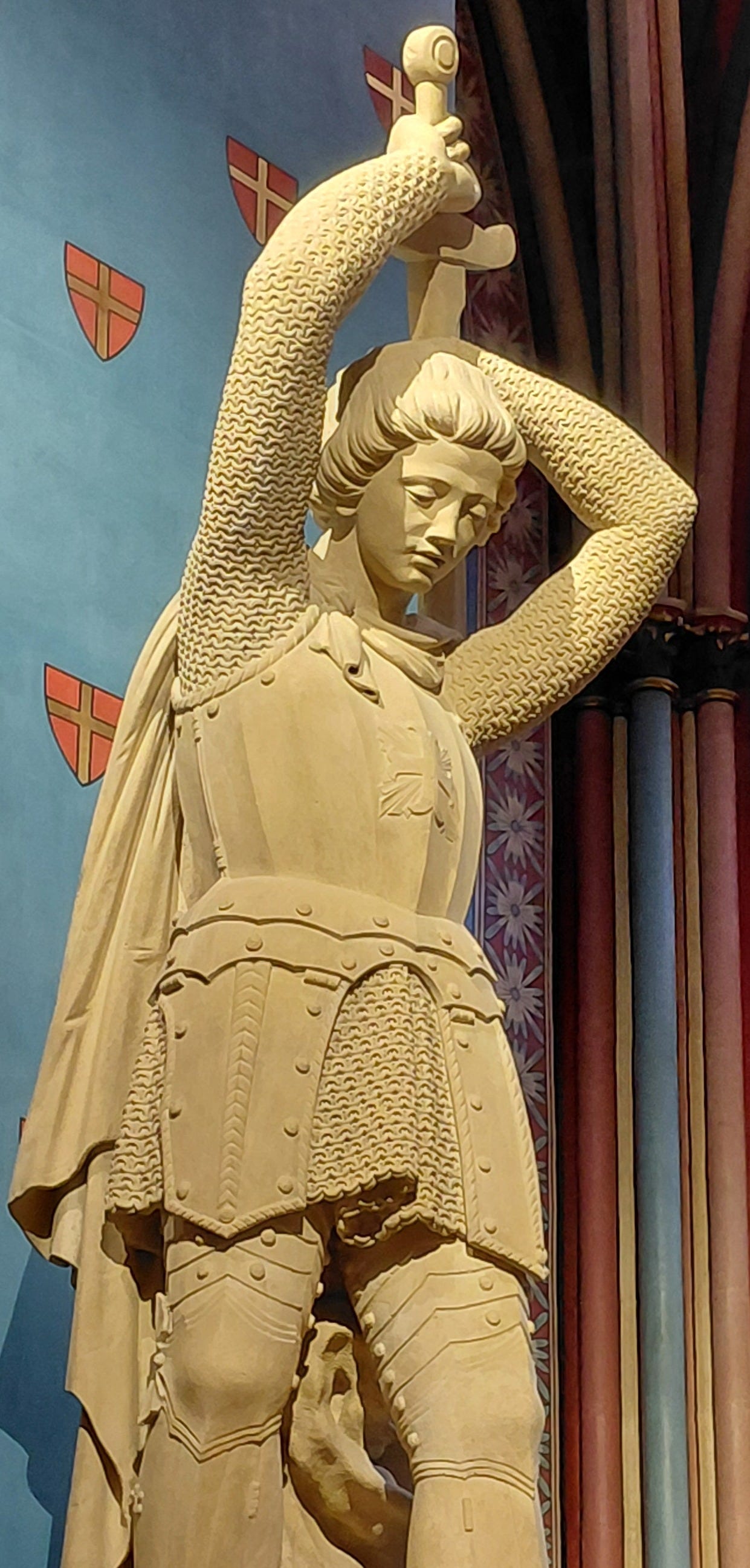
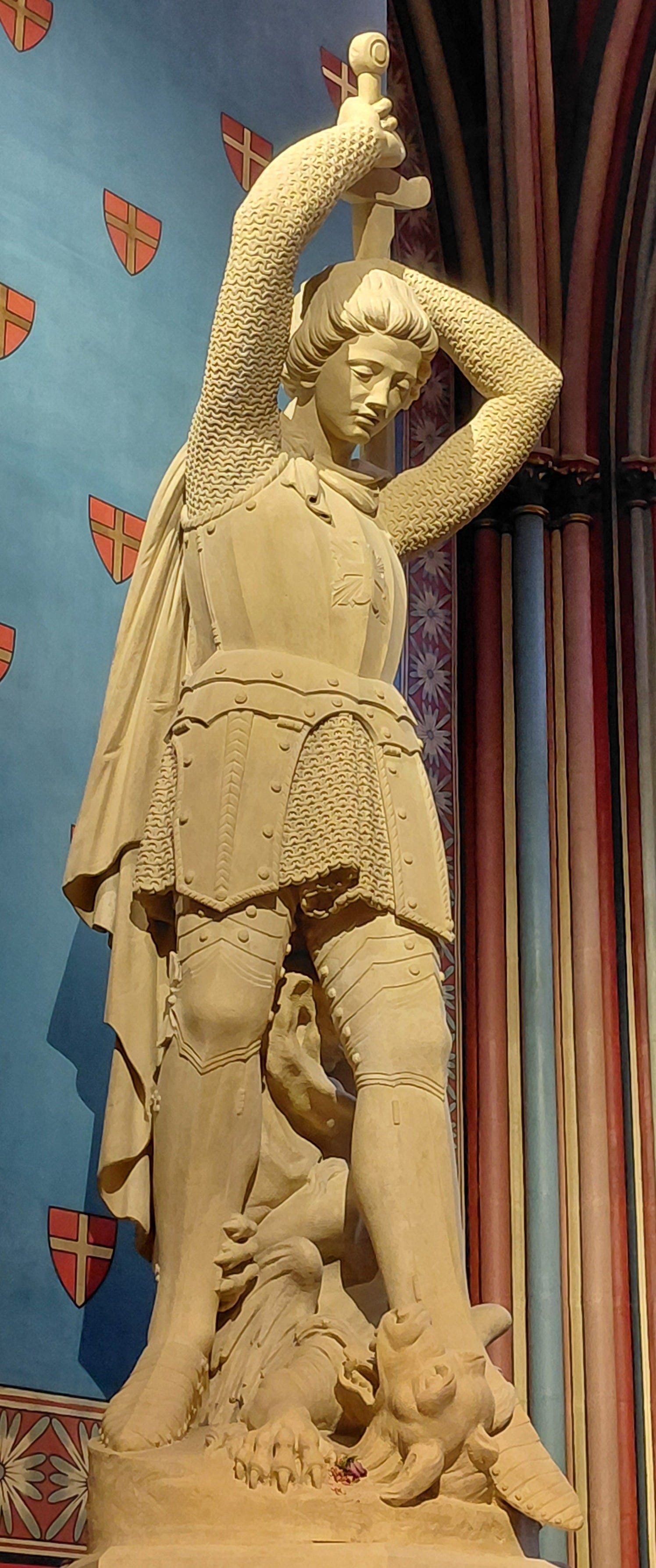
Image: author photograph of a statue of St. George, The Dragon Slayer, taken in the Cathedral of Notre Dame, Paris, France.

P. S. – E Unum Pluribus is a speculative fiction exploring one way in which our current ‘culture wars’ may bring an end to the U. S. A., and what might come in its wake. With a thrilling plot driven by politics and economics (as well as gender, class, language and even the origins of faith) the novel is currently being serialized online and anyone can read it, at no cost, by navigating to home page of this website E Unum Pluribus from the top menu, or via this link: https://robinandrew.net/2026/01/01/e-unum-pluribus/

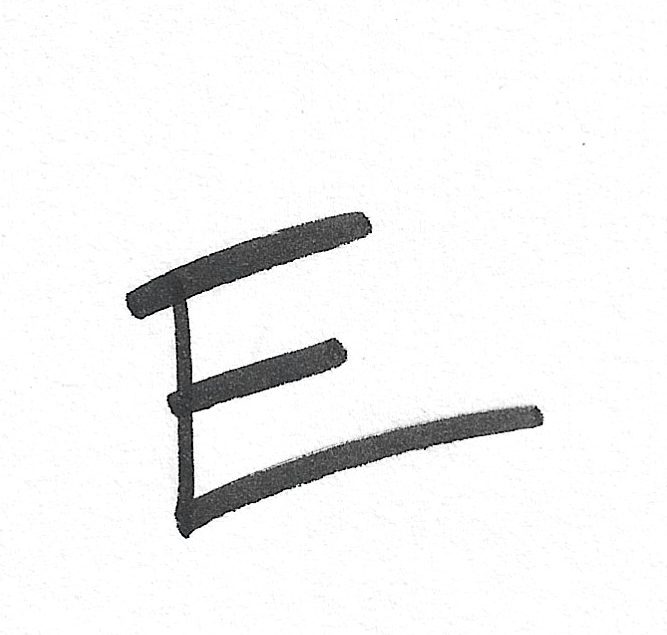
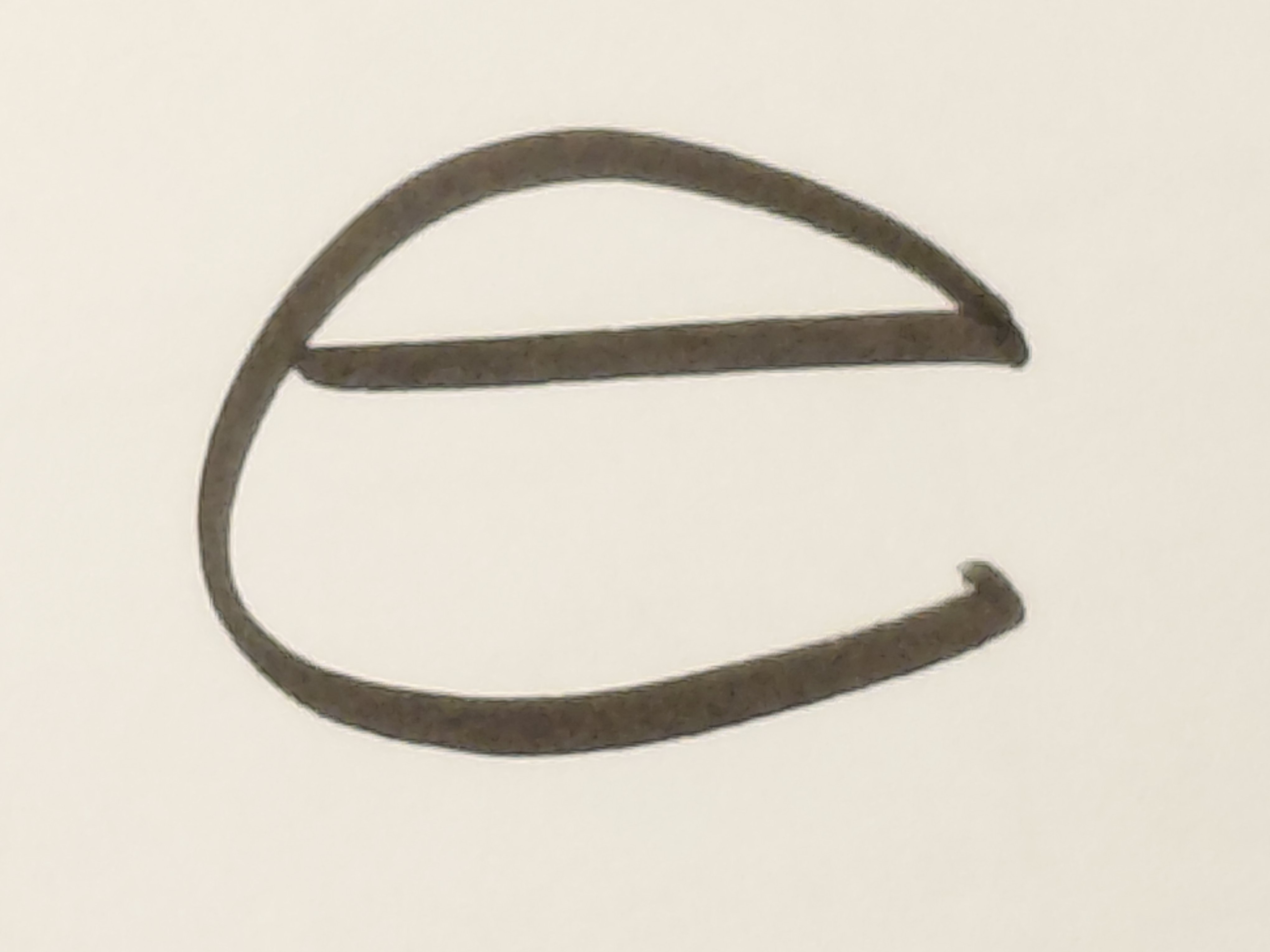
e ain’t Woke – (You can’t diversify, equitize or inclusive-ize what you don’t first label).

Between a recent post emphasizing the distinction between a person’s ‘sex’ and that same person’s ‘gender’*, the earlier post entitled ‘e is an Enabler’**, and a few passages in the novel E Unum Pluribus, (currently being serialized online, for free***) it’s possible some readers might dismiss this site as just one more hotebed of Identity Politics; the tyranny of a woke liberal elite telling everyone else what to do and say and even think…

First off, labelling every person all the time as either a man/boy or a woman/girl and insisting that those labels are eternal, unchangeable and mutually exclusive – as our current Chief Executive attempted to due shortly after assuming office for the second time –  has got to be the most profound and ubiquitous instance of Identity Politics in history! 

Across uncountable generations, geography and cultures, such gender identification has served as excuse to apportion rights differently to the genders (almost always to the detriment of women…), to justify unequal treatment (ditto), to write laws (wives classified as the property of husbands, women unable to inherit and restricted in travel, dress, voting, etc.) to justify unequal prosecution, judgement and sentencing for affronts against a man versus the same affront committed on a woman, and on and on.  On that basis alone, anyone who professes to believe in stamping out ‘diversity,’ ‘equity’ and ‘inclusion’ (DEI) because they result in unequal treatment on the basis of identity should be totally on board with using non-gendered language for all official purposes.

That last phrase, ‘official purposes,’ highlights another important point: nothing written here suggests or advocates that people stop using gendered pronouns entirely.  There are plenty of instances where ‘he’, ‘she,’ ‘him,’ her’ and all their derivatives are useful and convenient because the desired gender identity of a subject person is a known fact or has been made abundantly clear by the subject’s voluntary choices and acts.

True as that is, though, it is also true that there are instances where the gender self-identity of a subject is not readily determinable except by an observer applying their own stereotypes, prejudices or preconceptions. For those instances, the use of non-gendered pronouns (e, em eir and so on, or something similar) is a simple and effective way to avoid the ‘woke’-ness of sorting individuals into identity groups and treating them differently as consequence. 

Even as English-language speakers continue to use gendered language in many or even most instances, there is real freedom and justice to be gained by using non-gendered language when drafting laws and policies whose intent/content do not truly depend upon a person’s gender expression (which is very nearly all laws and policies, really).  And also, to use such non-gendered language whenever one does not yet know the gender self-image of a person or where a person has made clear that e does not choose to conform to the ‘gender’ stereotypes of others. This small addition to our quiver of words is actually a worthy way to avoid and reduce Identity Politics.

Using ‘e’ ain’t woke, it’s a path to more effective communication, an enabler of individual freedom and simply one tiny increment in the ongoing and perpetual evolution of perhaps the most useful tool we’ve inherited from generations before us: the English language.

*Humans Got Gender, https://robinandrew.net/2026/06/28/humans-got-gender/

**’e’ is an Enabler, https://robinandrew.net/2026/03/01/e-is-an-enabler/

*** E Unum Pluribus is speculative fiction, and a warning that states’ rights, religious nationalism and intentionally divisive political tactics may soon bring about the end of what George Washington termed the American nation’s “Great Experiment.”  Shining its light on what we stand to lose if we do not come together, what could rise in its place and what it would take to begin repairing the damage, this cry of alarm is currently being serialized online and is available to anyone, for free by navigating to the homepage of robinandrew.net and selecting E Unum Pluribus frmthe home page’s top menu, or via the following link:

Feel free to share this post as widely as you wish and, if youlike what you read here, please subscribe to robinandrew.net – it’s totally free!

Humans Got Gender!

(The new speculative fiction, E Unum Pluribus, is narrated by Jack Shirley, a bureaucratic intern whose behavior transcends gender expectations of present day Amero-European culture.  Anticipating that the character of Jack may generate comments, this and future posts will share some thoughts around those expectations.)

Look up ‘gender’ on the Internet these days and you may well encounter vehement statements to the effect that ‘gender does not exist’ or ‘there is no such thing as gender.’  What these claims seem to intend is that the concept of ‘gender’ in human beings is an imagined construct foisted on us by radical academics and activists to confuse or obscure what the commentator believes to be a real and eternal truth: that being ‘a man’ or ‘a woman’ is simply and absolutely a matter of one’s fixed and binary biological sex*. 

To that point, on the first day of his second term, Mr. Trump issued an Executive Order purporting to set the record straight on “Gender Ideology” and “Biological Truth**.”  Sex, as defined by the Order, is determined by the reproductive cells which one’s body may produce, which means it can be confirmed only by some fairly invasive medical examination and so is of no use in common daily life.  Even if we allow that the authors of that Order were just searching for a more legally-defensible way to avoid saying what they really meant – that any person who was born with an apparent penis is absolutely and forever ‘a man’ and anyone born with genitals that did not look like a penis is absolutely and forever ‘a woman’ – the same limitation is true. What sort of genitals a person carries – and even more, what their genitals looked like at birth! – is simply not determinable in any normal sort of public interaction. 

Despite that, we regularly refer to or address even total strangers as him or her, Mr., Miss, Mrs, Ms, Ma’am or even “hey Dude!”  Every time we do so, we are making assumptions based upon a variety of cues other than the form of their genitals or the reproductive cells which might issue therefrom.  What we do use in making those assumptions are a wide variety of stereotypes accumulated over the course of our lives.  A short list of attributes that can influence whether we identify an individual as man or woman might include the configuration of their garments (dress, skirt or pants; and if the latter, their fabric, colors, trim, tailoring and tightness), length and shape of one’s hairstyle (and the naturalness or artificiality of the hair’s cut, color and styling), bodily characteristics (height, bulk, proportions, muscular definition), carrying a purse in hand or a wallet in a pocket, use of cosmetics or scents (and which scent!), how they move (or throw a ball…), how they speak, what tasks they perform in the family, what outside occupation they do or do not have and even which emotions they readily express or how they express them.

Since none of those deciding factors actually involve knowledge of the person’s sexual organs/cells, the resulting assumptions about a person’s identity cannot be based upon their ‘sex’ as defined by Mr. Trump’s order and similar doctrines. For that reason, it is customary to refer to that complex of factors and the summary judgements based upon them as ‘gender’ and that is why conscientious conversation, writing or legislation uses different words for a person’s sex – ‘male,’ ‘female’ – than for public gender – ‘man, woman, boy, girl’.  Humans developed language because it facilitates useful communication and effective language around gender reflects the way we make assumptions, thereby serving the needs of speakers and listeners, writers and readers.

Human gender exists. If it did not, our everyday language wouldn’t employ gendered words and presumptions to address issues which are not actually sexual.  Future posts in this series will share more thoughts on some of those issues.

* Since these posts are about gender, not sex, they won’t delve into the scientifics of the latter.  Suffice to say, nothing here or which follows is intended to accept that the biological ‘sex’ of humans is as simple, absolute and binary as sometimes claimed.

** https://www.govinfo.gov/content/pkg/DCPD-202500135/html/DCPD-202500135.htm provides the text of Mr. Trump’s proclamation.

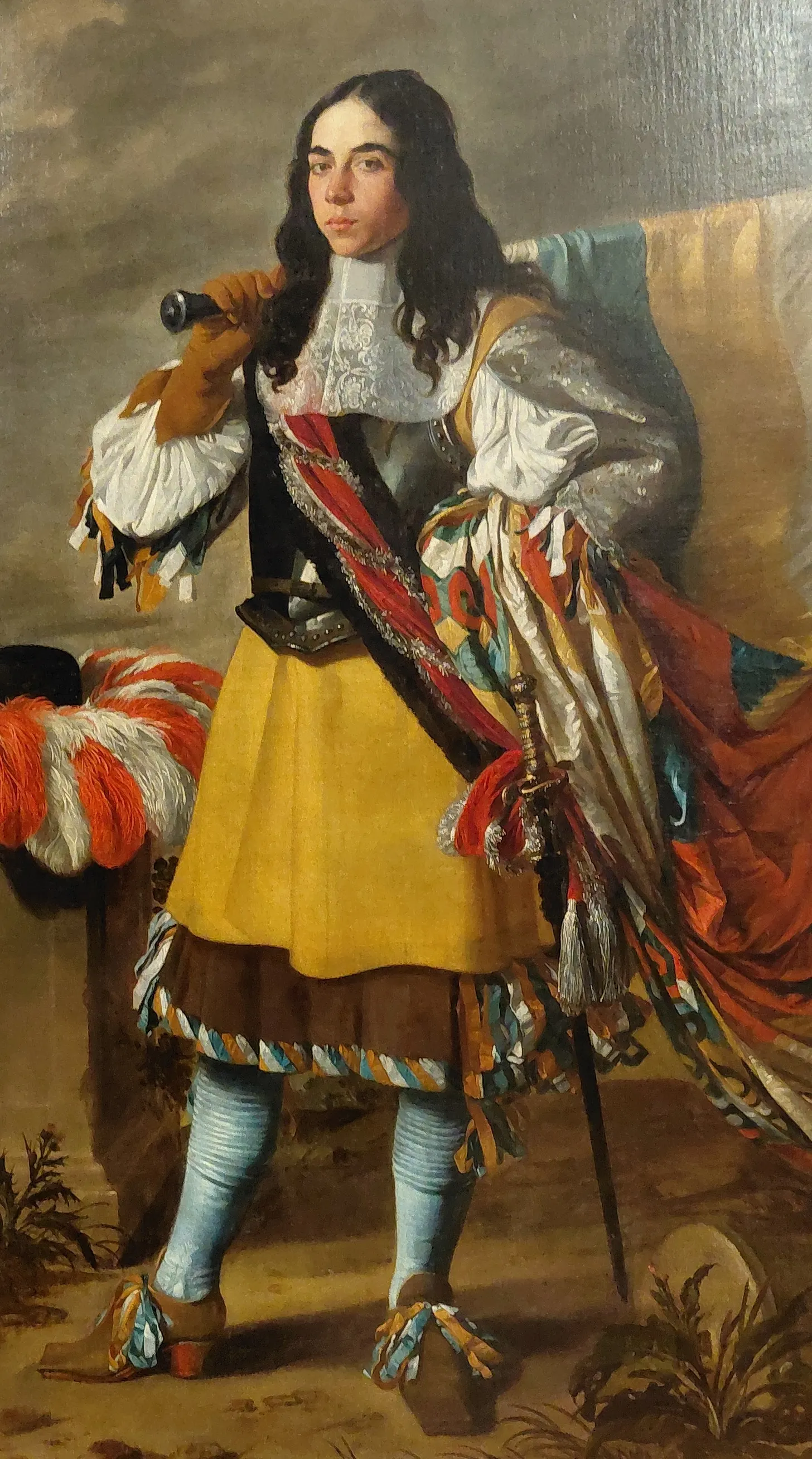
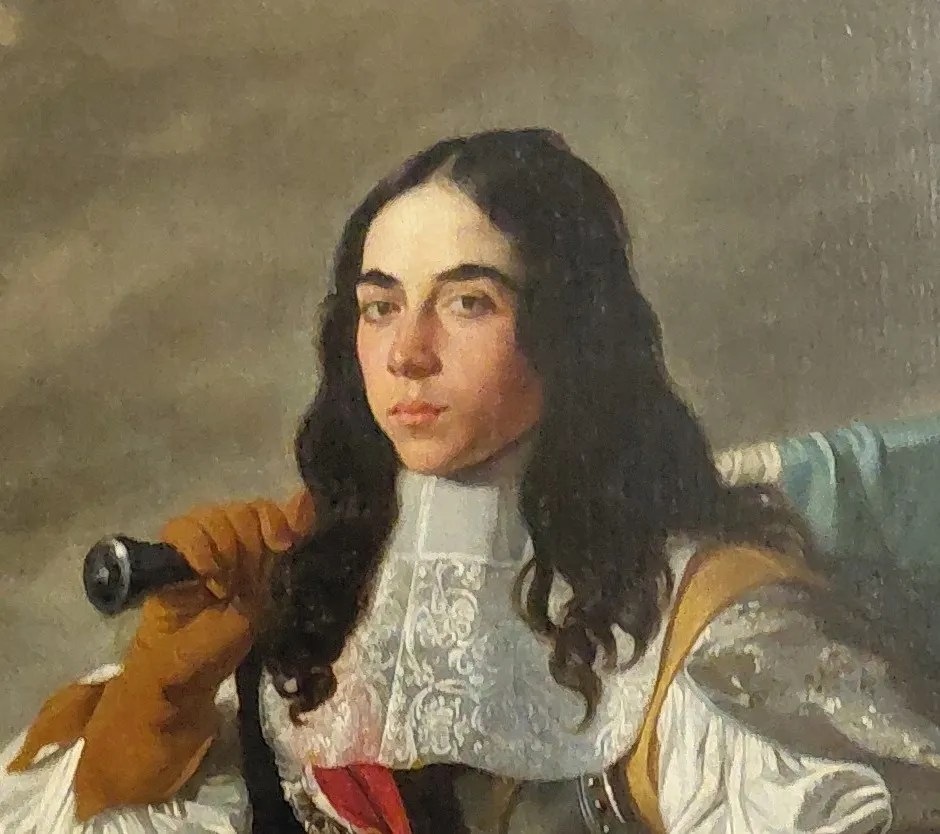
(Illustrations in this post taken from The Standard Bearer, an 1664 painting by Vigor Boucquet, in the collection of The Louvre, Paris.)

P. S. – E Unum Pluribus is a speculative fiction exploring one way in which the political overreach of our current leadership may bring an end to the U. S. A., and what might come in its wake.  With a thrilling plot driven by politics and economics (as well as gender, class, language and even the origins of faith) the novel is currently being serialized online and anyone can read it, at no cost, by returning to this website’s home page and selecting E Unum Pluribus from the top menu, or via this link: https://robinandrew.net/2026/01/01/e-unum-pluribus/
If you think this post has value, feel free to share it!

If you like what you read here at robinandrew.net, please consider subscribing – it’s totally free of charge!

‘e’ is an Enabler

(aka, Taking our genitalia off the table)

A previous post (‘Novel Words – fictional pronouns for the actual future.’ *) explored the concept of a non-gendered singular pronoun, ‘e’, to supplement our familiar ‘he’ and ‘she.’  Fortuitously, a recent article on the perils of AI suggested another way to frame the case.

With ‘he’ and ‘she’ as our English language’s only widely-accepted singular pronouns (‘they’ carrying the stain of wokeness upon its back in addition to its confusion with the plural and ‘it’ being generally received as an insult whether or not intended as such), alongside the predominant conversational practice of using gender terms (‘man’ and ‘woman’) as if they were synonymous with the bio-sexual (‘male‘ and ‘female’), any inquisitive consideration of gender is pre-emptively shipwrecked on the issue of whether each particular individual carries around a penis or a vagina. 

Thus, perhaps the simplest and most cogent reason to encourage the use of a gender free singular pronoun such as ‘e’: it enables us to discuss gender issues without the need to pin-down (ouch!) anyone’s genitalia. 

P. S.: E Unum Pluribus is a new speculative fiction with its own take on where the current culture wars may be leading our nation, and how even tragic events can spawn new possibilities for the future.    The novel is currently being serialized on this site and you can be among the first to read its opening pages in the post titled ‘E Unum Pluribus.’  

If you like what you read here at robinandrew.net, please share any posts as widely as possible – and consider subscribing: it’s totally free!

* https://robinandrew.net/2026/01/26/novel-words-fictional-pronouns-for-the-actual-future/

** ‘Open Ai is Making the Mistakes Facebook Made. I quit.’ Opinion section, N.Y. Times online edition, 2026-02-11   https://www.nytimes.com/2026/02/11/opinion/openai-ads-chatgpt.html

Novel Words – fictional pronouns for the actual future.

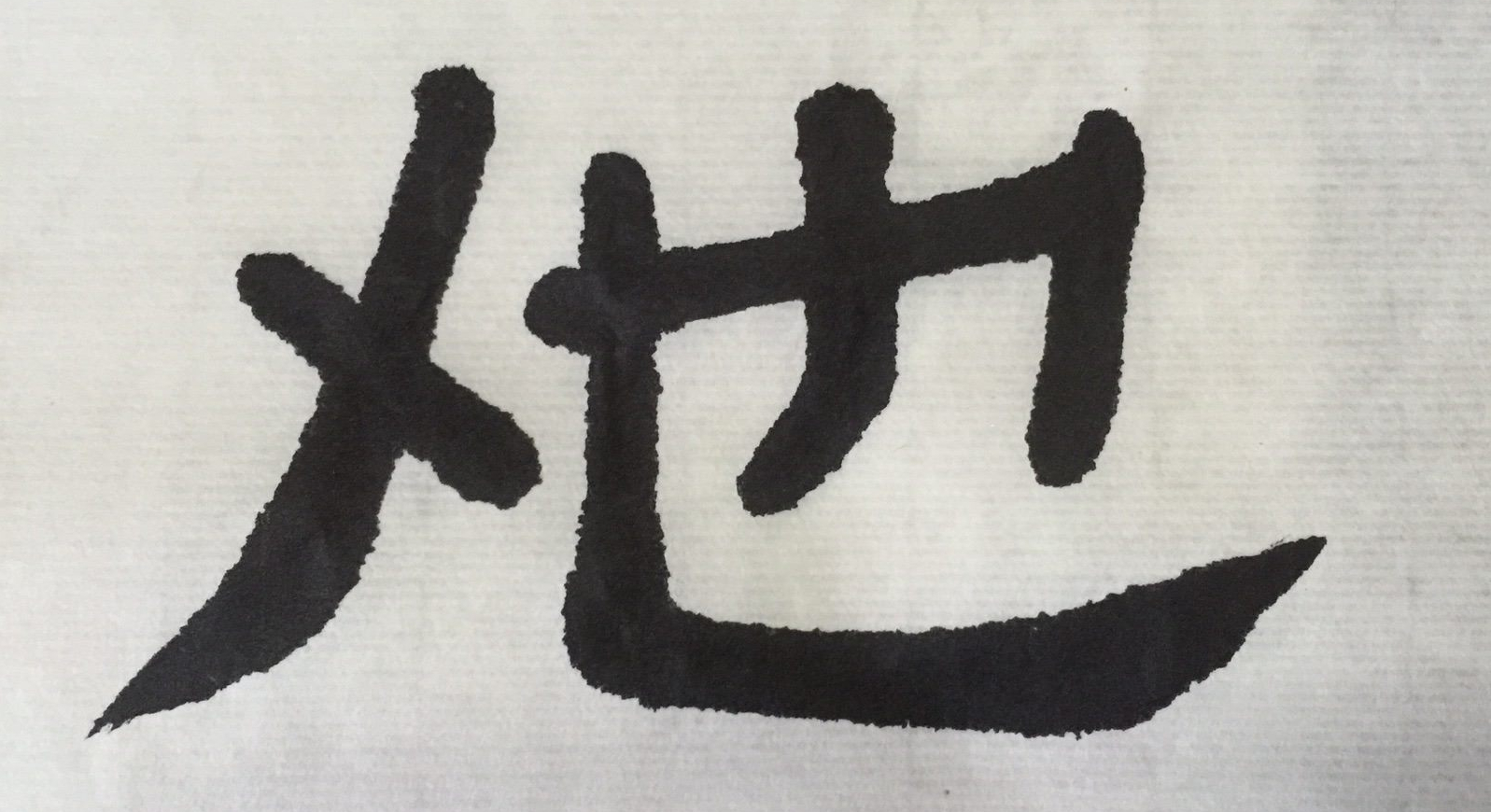
John McWhorter published an Opinion piece recently* about the evolution of pronouns, with particular attention to a new character gaining attention among users of the Mandarin language (X也, shown in image above, combines features of the characters for both he and she, rather as some persons do). Along similar lines, a new novel, E Unum Pluribus, speculates a future American city/state called Confluence in which government edict directs all official communications to employ non-gendered pronouns. The novel’s events make clear that Confluence’s government has plenty of faults and weaknesses, but this one of its policies merits some consideration.

For generations the convention in English was to use ‘he/him/his’ as default and inclusive of all, regardless of their sex/gender. Appropriately, that has now been perceived as favoring male identity over female; simultaneously reflecting historic inequality and perpetuating it. Replacing all those instances with ‘he or she,’ ‘his or her,’ etc. is hardly workable, especially in spoken communications, and still carries a hint of misogyny by placing one gender ahead of the other, whereas ‘she/he’ risks offending insecurities on the other side of the identity coin.

Recent efforts to innovate ‘they’ as a singular pronoun for persons who choose to declare themselves non-binary run aground first on its pre-existing function as plural, generating confusion where they intend clarity. That usage also seems to open the door to a trickle of additional new pronouns as various groups or orientations demand similar recognition; one need only read the snarky online critiques of how LGBT has grown to LBGTQIA2S+ to know that is not a path to tolerance so much as a guarantee of further friction. Worst, in this opinion, ‘they’ singular requires persons who prefer not to be stereotyped as either ‘he’ or ‘she’ to state that publicly, thereby outing themselves and very possibly inviting prejudice, at least at this point in our societal evolution.

The fictional founders of Confluence have taken another approach; directing official communications to use ‘e/em/eir’ for all individuals. This treats everyone with equal respect and does not require the clunky ‘my pronouns are…’ , which can itself incite prejudices. The specific form, ‘e,” ‘em,’ and ‘eir’ are brief and efficient, similar enough to other pronouns that they quickly feel familiar but with sufficient difference to avoid confusion**.

By applying equally to all possible personal preferences ‘e’ equalizes all in one swoop while tacitly expressing the truth that for virtually all public or official interactions there is no proper reason to indicate what genitalia an individual bears or with whom they choose to become intimate. Those are – and should remain – irrelevant.

There’s nothing revolutionary here, by the way, modern English already has gender neutral pronouns – ‘they’ does not presume the gender of a group or any of its individuals. ‘It’ can be used for all objects – unlike French, say in which some nouns require feminine constructions and other nouns masculine, despite the objects having no actual sexual function or accoutrements. Most prominently, ‘I’ is the same for any individual regardless of sex, gender or other characteristic. It is really only in the second person singular that our language’s evolution has codified an unfortunate and outdated discrimination.

In the world of E Unum Pluribus, that governmental edict for official communications also does not mean ‘e’ is used by everyone all the time. Non-official conversations use gendered pronouns wherever a subject’s preference has become clear, sticking to gender-neutral when an individual’ presentation is itself gender neutral. As in real life, casual usage and common courtesy have the final word in how language evolves over time.

(For what it’s worth, future posts on this site may selectively incorporate ‘e/em’eir’ pronouns to explore just how functional they are – or are not.)

*“This Novel Word Speaks Volumes About How an Entire Language Works” N. Y. Times online edition, 2026-01-22

** E Unum Pluribus does not claim to have invented the ‘e/em/eir’ construct.  Variations on what are sometimes called ‘Spivak pronouns’ have been noted at least as far back as the late 19th-century.

P. S.: E Unum Pluribus is a tale of murder and conspiracy set a decade or so in our future in one of many small sovereignties sprung up in wake of the USA’s self-destruction. The novel explores multiple themes – language and gender, identity, guilt and even the origins of faith and belief – but speaks loudest in its depiction of how much we all stand to lose if we continue to retreat into factions which each act only for their own needs and interests.

The manuscript is available in six instalments, starting at:

If you like what you read here or at robinandrew.net, please share any posts as widely as possible – and consider subscribing: it’s totally free!

E Unum Pluribus

Wondering where our nation’s increasingly divisive politics may lead us? E Unum Pluribus is a new novel which explores one very real possibility:

Amid feudal chaos following the USA’s collapse, one city-state seems promising, until an amateur’s murder investigation exposes its weaknesses and the conspiracies threatening to destroy it.

In order to receive community input, I’m serializing a Beta Test draft of E Unum Pluribus free of charge. (So I can track interest, the final installment may be posted only to subscribers, but even that subscription will be totally free of charge or obligation.) A .pdf of Installment One is included below and may also be downloaded for a more comfortable reading experience. Either way, you get to explore this new novel at absolutely no expense!


Succeeding installments are available at robinandrew.net by selecting the ‘E Unum Pluribus’ button in the home page’s top-menu.

In addition to posting the manuscript, I will be sharing thoughts about the novel’s themes and objectives in future posts on both this website and on Substack at nobodysays2025.substack.com

If you find E Unum Pluribus of interest – or if you simply support the concept of authors sharing their work without reliance upon commercial publishing corporations – please share this post as widely as possible.

Have a wonderful 2026!

Robin Andrew

Grok Gets an F – Grooming an AI Encyclopedia

According to reports*, Elon Musk’s new AI-generated online encyclopedia, Grokipedia, begins its entry for gender with: “Gender refers to the binary classification of humans as male or female based on biological sex…”

Wrong! Gender and sex are not the same things!

That Grok thinks they are**, indicates it has been ‘taught’ to parrot the opinions of its human creators.  Like a young child, it is not worldly or intelligent enough to think beyond what it has been told by its groomers and so sees the world through their blinders. 

For AI as with any other computative system, the value of output is highly dependent upon the quality of input.  The first law of computer science – ‘garbage in, garbage out’ – is worth keeping in mind as AI’s very human procreators inject their offspring into as many facets of our lives and world as they can, as quickly as possible, with no oversight and often without our consent or even our awareness. 

Knowledge is power, and ignorance posing as intelligence is an abuse of power, not a sign of the glorious and unadulterated progress which AI’s promoters claim to be offering to the world.

CAVEAT UTILITOR!

If you like this post, feel free to share it.

* This post refers to a report by Will Oremus and Faiz Siddiqui in the electronic edition of the Washington Post on 2025-10-27 titled “Elon Musk launches a Wikipedia rival that extols his own ‘vision’”

** In case there’s any question: ‘Male’ and ‘female’ are classifications of sex, which is about biology and can mean, depending on who is speaking, which chromosomes a person’s cells carry, which type of reproductive cells their body produces, which genitalia it exhibits, etc.   ‘Man’ and ‘woman’ can refer to various selections from a wide range of public behaviors, perceptions, expectations and putative rules which are loosely and collectively referred to as gender.  Sex and gender terms are sometimes congruent, sometimes not, but they are not the same things, as Grok seems to believe.

If you like what you see on this site,

please subscribe.

It’s absolutely free!