Ezra Klein‘s recent interview with Fareed Zakaria questioned what guiding principle progressives could possibly forward to compete with the divisive and belligerently-reactionary nationalism of the MAGA movement.
One simple answer is ‘Stonger Together.’ Ever since thirteen disparate Colonies chose to work together(and even sought French assistance) to win independence from the reigning world hegemon, right up through Allies defeat of the Axis in WWII and establishing the now-defunct post-war order, it has been unity with others which enabled us to succeed and thrive.
With a little luck and grace, DJT’s narcissistic recoil at any hint of cooperation will die with his political career and allow the US to begin rebuilding our credibility as a coalition member and even – in a few decades – as once again a leader.
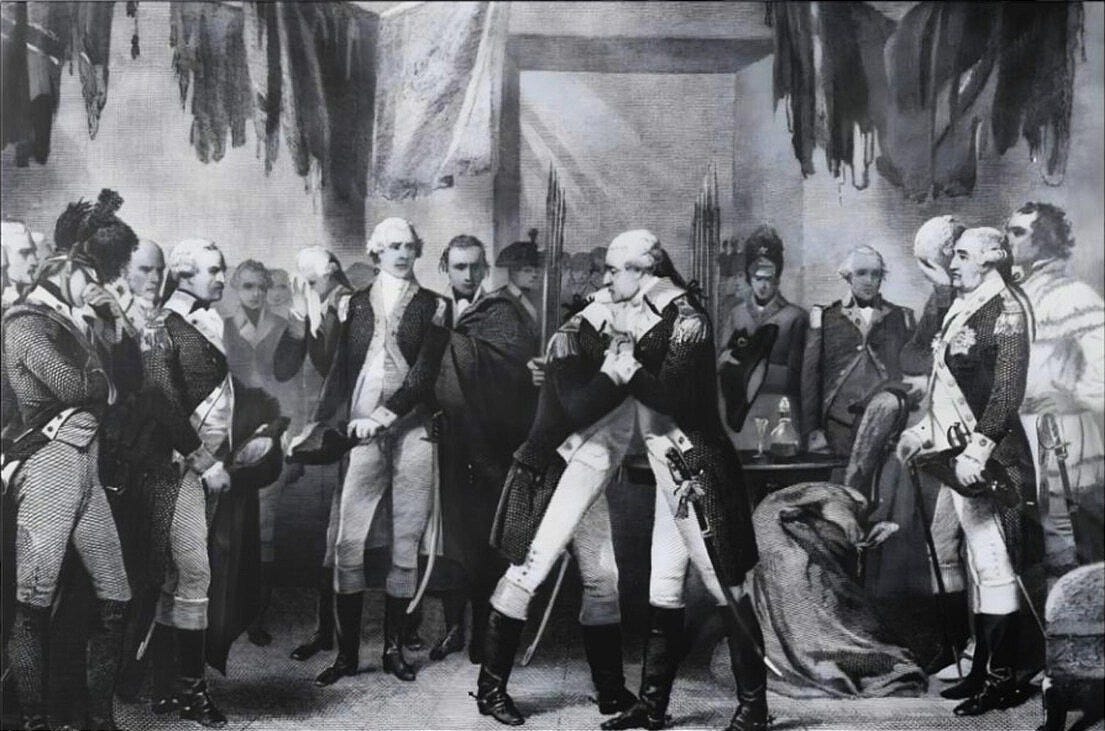
Heather Cox Richardson has a tasty piece this morning (see Letters From an American, on Substack) about the moment when Robert E. Lee surrendered the Confederate Army to U. S. Grant – Lee dressed in a brand new dress uniform, Grant in the worn and dirty private’s outfit he’d worn the day before, with scant insignia added to indicate his true rank. That instance of appearance as an indicator of the two men’s divergent characters, brought back to mind some thoughts I’d been working on not long ago, before they were (rightly) eclipsed by the chaos of our nation’s attack on Iran. Herewith:
Viewing the renderings of Mr. Trump’s replacement for the White House’s late East Wing, I’ve been surprised no one seems to be questioning the description of it as a “Ballroom.”
To these ears, the zeal and subterfuge with which The Donald is pursuing this particular bit of noncritical infrastructure suggests there is more at stake here than his enthusiasm for ballroom dancing and debutants (though the latter could be a factor…).
Administration PR pretends this cavern is vitally necessary for legitimate diplomatic events, but given Mr. Trump’s disdain for actual diplomats and his preference for small group strong-arming, that seems a stretch. More likely, the room’s programming will lean toward pseudo-events designed to flatter and reward loyal contributors to his continual fund-raising ventures (including, of course, the cost of this boondoggle itself) and to dangle the bait of future seating arrangements to extract still more contributions and concessions from others.
A means, in other words, for Mr. Trump and his chosen people to more-convincingly imitate the persons he obviously idolizes: the nation-owning monarchs and autocrats of the Middle East and elsewhere.
For that reason, I suggest we all just call this construction what it is – The Donald J. Trump Throne Room, at the Trump™ White House™.
On which note, does anyone really believe Mr. Trump will graciously depart what he is busily turning into the Presidential Palace – having finally gotten it redecorated to his taste – just because his current term expires? Having previously experienced the diminution of becoming an ‘ex-’ Chief Executive? Having in this term solidified his dominion over the rabble thanks to a compliant Supreme Court and supine Trumpublican Party? Having for his entire life scooted around every legal and moral constraint and gotten away with it all?
Note that Mr. Trump’s favorite head of state, Vladimir Putin, will have been in power for thirty years when his current term ends. The House of Saud has ruled its Kingdom for over ninety years (and a somewhat smaller realm for generations before that). China’s Xi Jinping is currently enjoying his third five-year term with no end in sight thanks to the 2018 elimination of the prior term limit on that office. Israel’s Netanyahu is over 18 years in control; Turkey’s Erdogan around 23 (Hungary’s Orban a mere 16). True, Napoleon Bonaparte lasted only 15, but Uncle Joe Stalin managed over 50…
On the turgid scale of those role models, a mere eight years in office would hardly rate inclusion. If, indeed, the style of Mr. Trump’s civic works is true indication of his character, we are in for a bumpy January 2029.
P. S. – E Unum Pluribus is a thrilling speculative fiction exploring one way in which a President’s attempt to overstay his welcome might affect our nation’s survival. It is currently being serialized online and you can read it, at no cost, starting at https://robinandrew.net/2026/01/01/e-unum-pluribus/
In a recent column titled ‘We Have Reached End Stage Polarization*,’ conservative Christian writer David French calls out the ill effects of fanning political disagreements into emotional hatred. “In the United States,” he writes at one point, “there should never be any such thing as a winner-takes-all electoral result.”
Well, today we live under an administration which disagrees; which is governing the nation as if they have taken full ownership of it and who treat other free nations as zero-sum competitors to be trampled on whenever circumstance provides cover.
E Unum Pluribus is a new speculative fiction exploring where such a politics may soon lead us. In the chaos of the USA’s dissolution, it finds deprivation, mystery, conspiracy and perhaps the first small signs of new beginnings. You can read it for free, starting at: https://robinandrew.net/2026/01/01/e-unum-pluribus/
A masterful work that rewards the stout-hearted reader. Set in the Austro-Hungarian Empire during the First World War, the narrative vividly evokes the cold, hunger, pain and desolation of a nearly-forgotten military aid station serving the Russian front. Despite having trained in the academics of medicine, Lucius Krzelewski, son of Polish aristocrat industrialists relocated to Vienna after their nation was absorbed into the Empire, is totally unprepared to help the maimed, sick, starved and addled soldiers for whom he is suddenly responsible. Only the patience and wisdom of the station’s one nurse, Sister Margarete, allows him to fake it till he can make it. All the while, the front lines advance and retreat, supplies are unpredictable and violence can erupt at any moment.
Thrown together under such circumstances, it seems ordained by the god of literature that Lucius and Margarete will become attracted to one another, though it is only after a tragic episode involving Horvath, a patient suffering extreme mental distress for which Lucius feels he is close to achieving a breakthrough, that they are drawn to act on their attraction. And, in true romantic fashion, are soon separated, leading Lucius to spend the next several years trying to reunite with Margarete among the chaos first of war, then its aftermath.
As the novel’s end approaches, it seems Mason is steering Lucius toward a joyous reunion with his loved one but then, in literally the last three pages, he flips the table and crafts an ending which replaces conventional confection with a much superior concoction of wisdom, insight and generosity.
(Spoiler alert: Lucius himself christens the patient Horvath a “winter soldier,” but later, as his own troubling memories and nightmares – what we today might label PTSD – plague him and isolate him from the comfortable society to which he has returned, it seems he could as well be the titular character. By story’s end though, one wonders if Margarete is not the true ‘winter soldier,’ the one who has campaigned longest, hardest, most courageously and most selflessly to ameliorate the damage war can do. In fact, one can even frame this as a feminist novel; all those boastful arrogant males waging war for to salve their egos while, nearly unnoticed, women care endlessly for children, husbands, fathers, rulers, nations. When we learn Margarete has birthed a child after the war, we are reminded that through all the deadly deprivation of that wilderness aid station, she was also managing her own monthly cycle – discretely, without modern ‘products,’ complaint, days off or even allowing her discomfort to show. ‘The weaker sex,’ indeed.)
Throughout, Mason demonstrates an exhaustive knowledge of the period, its medicine (he is a physician himself, but a modern one….), warfare in a far-away corner of northeastern Europe, intricacies of the era’s railway network and more. At times verging near to distraction, this detail ultimately gives his narrative the authenticity and credentials to hold the reader’s attention while he builds our emotional connection to Lucius and Margarete.
Again, masterful. This is not a book for every reader, but for those willing to weather its painful realties, ample rewards await. I’m holding on tightly to my copy of Daniel Mason’s The Winter Soldier.
P. S.: E Unum Pluribus is a new speculative fiction about a very different time and place and another government serving its own interests rather than those of its people. The novel is currently being serialized digitally at no charge and you can be among the first to read it by navigating to this site’s home page and scrolling down to the post titled ‘E Unum Pluribus’ or just select the item of that same name in the top menu. Any way you get there, it’s totally free!
If you like what you read here at robinandrew.net, feel free to share any posts as widely as possible. And consider subscribing, it’s totally free!
A previous post (‘Novel Words – fictional pronouns for the actual future.’ *) explored the concept of a non-gendered singular pronoun, ‘e’, to supplement our familiar ‘he’ and ‘she.’ Fortuitously, a recent article on the perils of AI suggested another way to frame the case.
With ‘he’ and ‘she’ as our English language’s only widely-accepted singular pronouns (‘they’ carrying the stain of wokeness upon its back in addition to its confusion with the plural and ‘it’ being generally received as an insult whether or not intended as such), alongside the predominant conversational practice of using gender terms (‘man’ and ‘woman’) as if they were synonymous with the bio-sexual (‘male‘ and ‘female’), any inquisitive consideration of gender is pre-emptively shipwrecked on the issue of whether each particular individual carries around a penis or a vagina.
Thus, perhaps the simplest and most cogent reason to encourage the use of a gender free singular pronoun such as ‘e’: it enables us to discuss gender issues without the need to pin-down (ouch!) anyone’s genitalia.
P. S.: E Unum Pluribus is a new speculative fiction with its own take on where the current culture wars may be leading our nation, and how even tragic events can spawn new possibilities for the future. The novel is currently being serialized on this site and you can be among the first to read its opening pages in the post titled ‘E Unum Pluribus.’
Having recently read The Mission, Tim Weiner’s history of the 21st Century CIA, which naturally contains many references to our nation’s Special Forces, it felt appropriate to check out this more populist look at one aspect of those forces.
Based on his own reporting for Rolling Stone magazine and other outlets, Harp gives us an abundance of anecdote; the parade of murders, suicides and drug- and alcohol-fueled behaviors on or adjacent to the Fort is head-spinning. He provides a substantial ‘Notes’ section as well, though, oddly, these notes are not called out in the text; one has to read them at the back of the book and then, if interested in a particular one, go to the page indicated and search for a key phrase to find the relevant text. Then too, many of these notes are not attributions. Better than no back-up at all, but less than totally convincing and perilously like the growth pattern of social-media conspiracy theories; a self-referential circle of fingers all pointing to one another with no object at its center. Regardless there is plenty of evidence here that things are not copasetic.
As its title suggests, the book contends that there has existed for many years some sort of organized smuggling operation centered on the Fort Bragg premises and that this operation is at least tolerated – if not actually headed – by unknown persons higher up in the chain of command than the various Special Forces operatives, support personnel and hangers-on who are directly involved in the book’s incidents. The argument in favor of this contention is largely of the ‘it seems too likely to not be true’ variety. At several dramatic points we hear about a thumb drive left behind by one of the murdered smugglers who claimed it documented crimes and criminals significant enough to act as his insurance policy – or to get him killed. Supposedly still held in evidence by one of several law enforcement agencies which have themselves been repeatedly painted as shielding military miscreants out of ‘blue line’ solidarity with the ‘green line,’ the closest we get to a big reveal of the drive’s contents is when one source tells Harp it actually contains no data, though whether that is because the crucial data was erased by some double- or triple-agent in the ranks or because it never existed at all is left unresolved. In other words, a big nothing-burger.
Regardless whether or not the actual Cartel exists, it seems undeniable that armed forces by their profession accustom some of their members to use of force and violence. That they groom some personnel, especially strength-proud young males, to believe themselves unbound by the moral and legal codes that constrain civilian life, and that these tendencies are strongest at the ‘tip of the spear,’ units like Rangers, Green Berets, Seals and Delta Force who are increasingly deployed to do the dirtiest ‘wet work’ of our national defense. Over the decades those ranks have shifted from short term citizen-soldiers to longer-serving career professionals at the same time their assignments have moved farther from ‘regular’ infantry tactics to special operations – small scale infiltrations, espionage, resistance support, sabotage, assassinations and other covert acts sometimes difficult to distinguish from the tactics of the terrorists they now spend much of their time hunting – or from those of hard core criminality. When soldiers are intensively selected and schooled for the attitudes required by that work, and that training is reinforced by months/years of ultra-high stress and pressure while surrounded by a culture that reveres and rewards self-reliance, cold-calculation and tolerance for brutality (while loosely dispensing powerful and addictive drugs to deal with the fallout), it should not surprise that some of those reflexes continue to direct behavior after their deployments are over or even after their careers have ended.
On the evidence in this book, military leadership cannot be trusted to thwart drug activity and the violence that accompanies it. Nor can they be relied upon to care for those service persons affected by it, much less to protect service families and the rest of us from the dangers which a few operators – even some who served honorably and heroically – present. As in so much lately, it is law enforcement agencies and the courts we must rely upon but unfortunately, if Harp’s reporting is accurate, the fraternal bond between military and the law sometimes precludes that, so we are left with a continuing tragedy of broken and deceased servicepersons, wives, families and communities.
As if that were not enough, The Fort Bragg Cartel’s greatest revelation, to these eyes, is not about drug activities in the U. S. but in Afghanistan. According to Harp’s reporting, prior to the U. S. invasion there the Taliban had, out of religious convictions, reduced poppy cultivation to near zero with corresponding impact on the flood of heroin and other drugs to users in ‘more developed’ nations. By itself, a clearly desirable outcome. Once the U. S. and its War on Terror allies took control though, cultivation began again due both to inattention (by U. S. leadership) and financial incentive (of those allied forces and perhaps also some of ‘our’ people). Once the U. S. pulled out and the Taliban resumed control, the production of poppies and heroin was again shut down! In Latin America as well, Harp reports, U. S. political objectives have sometimes led to cooperation and even support of narco-traffickers in exchange for their cooperation with U. S. political goals. Not a pretty picture, and one further negative consequence of how the War on Terror has been prosecuted and profited off of.
Despite trending more toward the true crime genre than the academic history line, The Fort Bragg Cartel is a useful summary of events worth considering. It raises worthwhile questions about our government’s role in the drug trade, and that makes it, at the end of the day, a Book Worth Keeping.
P. S.: E Unum Pluribus is a new speculative fiction about another time, another place and another government serving its own interests rather than those of its people. A draft of the novel is currently being serialized here at robinandrew.net and you can be among the first to read it, beginning with the post titled ‘E Unum Pluribus’ or by clicking on that same title in the home page’s Top Menu.
If you like what you read here or at robinandrew.net, please share any posts as widely as possible – and consider subscribing: it’s totally free!
Admirably demonstrating the value of professional journalism, The Mission is factual, detailed, incisive and – despite being a nearly 400-page history of a government agency – thrilling. With more than one hundred participants interviewed, many verifiable sources and its most critical opinions credited to persons who clearly have both the knowledge and the background to deserve being heard, this is an authoritative accounting of a very complex subject.
Having previously written Legacy of Ashes to chronicle the first 53 years of ‘The Agency,’ as the CIA is colloquially known, Weiner begins the new millennium on a downbeat, depicting an Agency whose capabilities were sadly ignored and unmaintained once the Soviet Union collapsed. Deprived of the purpose and challenges which had pushed it to excellence (and sometimes overreach…) ever since it sprung from the seeds of WWII espionage to meet the needs of the old War, the CIA in 2000 was not held in great respect either inside the government or among the public. So little respected, we learn, that the shiny new Bush2 administration refused to listen when Director George Tenant presented substantial indications that Al Qaeda had something big planned, soon, and pleaded for authority to eliminate him before it could happen. To his great frustration, and the even greater losses of others, that plea was ignored – in early 2001!
Like a speed bump beneath all the smoke, dust and debris of the 9/11 attacks, political leadership quickly passed over their own failure to comprehend, instantly deciding The Agency was a great tool for what they conceived as their own brainstorm – the War on Terror. That effort, which had already been one of the Agency’s areas of focus for decades, would become the public reason for much of its activity over the next 25 years.
Using sourced quotations for section titles such as “We were all making it up as we went along,” “The U.S. didn’t want peace. We wanted the war on terror,” and “We have to say Iraq has WMD,” Weiner quickly arrives at one of this central themes: a continual conflict between The Agency’s focus on providing the most useful and reliable information it can glean out of hostile environments versus politicians’ desire for sound bites to serve their pre-determined policies (at best) and (not infrequently) their emotional needs. Unsurprisingly, CIA staffers from that era are harshly critical of the Bush2 administration and Weiner is cogent in describing how intelligence was ignored or actively misused in order to justify a doomed Iraq invasion to which the President and his team appear to have been fully committed from at least November 2001, if not earlier.
Even as The Agency is bent to serve debatable ends, Weiner gives us many tales of dedicated agents serving honorably; one standout being that of Tom Sylvester, who led a ten-person team into northern Iraq to prepare the ground for the Bush/Cheney invasion. An Arabic-speaking ex-Naval special forces operator, he took great personal risks to forge links with Kurdish forces, Sufi mystics and others, produced intelligence direct from Saddam’s highest ranks and closest advisors to guide invasion planning. Sylvester would go on to lead the Agency’s clandestine services two decades later, under very different challenges.
Another eye-opening episode is related in Chapter Ten, ‘A Beautiful Operation.’ Having heard over many years that Pakistani scientist A. Q. Khan was known to have shopped nuclear weapons secrets around the world, I’d always been curious how he got away with it. Answer: he didn’t; at least not for long. Weiner describes how, learning from a 1920’s sting played by the Soviet ‘Cheka’ spy agency against Russians who had fled the USSR, the CIA created their own front companies to do fake business with Khan, eventually penetrating his facilities and dealings sufficiently to have him arrested, tried and convicted. Moreover, where a quick drone strike could have eliminated Khan sooner but allowed his proliferation efforts to continue, their smart and patient approach allowed them to also roll up associates and customers, completely destroying his operation and drastically diminishing the danger of nuclear weapons getting into the hands of people like Muamar Gaddafi, and Osama Bin Laden. A service to humanity that required the Agency’s characteristic willingness to use dishonest means in order to further admirable ends which, Weiner notes, is a fundamental and unavoidable characteristic of all espionage.
The successful pursuit and eventual killing of Bin Laden is treated in detail of course, as are the waterboarding scandal and other episodes not so laudable. As we approach 2016 though, the tone of this history changes considerably, from one of challenges and ambitions to one of dread and despair. In both his narration and in the quotes he includes from various agency sources, Weiner makes clear just how little Mr. Trump understands or values the proper purposes of The Agency, and how far he and his allies have by now penetrated our nation’s intelligence agencies (and the FBI, as well). Acting more like double agents than principled overseers, they are now focusing those resources to protect not the nation but their own political and financial interests. With extensive attrition of experienced and qualified personnel and heavy thumbs laid on those who remain, every page increases the premonition that we are in for some oncoming catastrophe on the scale of 9/11 – or even greater.
The CIA has never been entirely a hero, nor an utter villain, but an institution of fallible human beings who are willing to serve as tool for those who make policy and direct its execution – the President, the Cabinet and, ultimately, the votes who put those officials in office. Its many characters have included some cads but are mostly honorable patriots, willing to compromise their own safety, morality and maybe even a part of their souls in service of a greater public good – protecting us all from the worst of the world.
At times a tale of ignorance and human weaknesses, at others a triumph of courage and will, The Mission is important information for every American. Please read it and share it with others! (If you can’t buy the book, check a copy out from your local library; if you can’t read it all, just start at Chapter Twenty-One, which carries the catchy title ‘Face-eating baboons.’) Democracy depends on informed voters!
P. S.: E Unum Pluribus is a new novel with its own take on where the pursuit of power for power’s sake may be leading our nation, and how even tragic events can spawn new possibilities for the future. It is currently being serialized digitally at no charge and you can be among the first to read its opening pages via this link:
If you prefer not to open links from unknown sources, just navigate to this site’s home page and scroll down to the post titled ‘E Unum Pluribus’ or select the item of that same name in the top menu. Any way you get there, it’s totally free!
“… you can talk all you want about international niceties and everything else, but we live in a world…that is governed by strength, that is governed by force, that is governed by power. These are the iron laws of the world that have existed since the beginning of time.”
Where commentator Leighton Woodhouse rightly sees those words of Trump-whisperer Stephen Miller as a retreat from Christian values*, they also suggest a tragic misread of our nation’s history.
As Ken Burns’ recent documentary, The American Revolution vividly reminds, the story of the USA has never been that of the strongest and most powerful singlehandedly dominating those around them. Rather, the founding generations were wise enough to see that their thirteen colonies must work together- despite very significant differences around religion, economics, politics and, perhaps most profoundly, the pernicious institution of slavery – in order for any among them to have a hope of breaking free from British tyranny.
Once the colonists united – a unity as messy, tenuous and frustrating as any representative system tends to be – even their combined numbers and resources did not assure success; from its start, the colonial coalition actively sought the support of other nations. Ultimately, after six long years of brutal fighting, it was direct French participation (along with the indirect assistance of other nations and peoples who further taxed the Britain’s resources by opposing it in other parts of the world), that enabled Washington’s forces to triumph at Yorktown, turning the tide of attrition and so winning our independence.
Power, strength and force, yes, but born of compromise, cooperation and alliance; that is what allowed a band of ragged upstarts to defeat the British Empire, which was, at that time, the greatest exemplar of Mr. Miller’s professed ‘laws’ of existence.
Similarly, the decades which established America as a superpower were never about the U.S. going it alone, even if we were by some measures the most powerful single nation. Both World Wars were won by alliances in which we participated, sometimes as leaders sometimes not (Russia’s defeat of Nazi forces on the Eastern Front set the stage for Hitler’s eventual defeat which was, until then, far from a certain outcome). Nor was the Cold War ‘won’ by unilateral American action; we could not have strained the Soviet economy to the point of failure without the economic cooperation and military participation of our allies in Europe and elsewhere – including Japan and Germany, two one-time conquerors whose defeat in war was accomplished through force but whose rehabilitation and future contributions as allies were made possible by reason, cooperation and patient hard work.
Yes, the qualities Miller cites – strength force and power – play a role in life and international relations. And yes, there are ruthless players in the world today against whom we must defend our nation and civilization. But coming from a cadre dedicated to belligerent unilateralism, who have employed military force, willful brutality and a single-minded claim of their own superiority against not only other nations but many of their fellow citizens as well, his proclamation smacks not of wisdom but of hubris. If he and his ilk won’t take the word of American history for that, let them consider how few of history’s most famous strong, forceful and powerful tyrants – Stalin, Mao, Pol Pot, Bismark, Napoleon, Alexander, Julius Caeser, et al – established or continued any institution which lasted nearly as long as the 250 years which our more measured nation celebrates this year.
Perhaps a dog-eat-dog America such as Mr. Miller envisions can temporarily proclaim itself a bigger fish by shrinking its pond to just the western hemisphere and consigning the rest of the world to their own fate. But the USA is and always has been a part of the world and will eventually be affected by the fate of other nations. If we wish truly to fulfill the promise of its founding, to honor that era’s sacrifices and to deserve the bounties we all continue to enjoy thanks to them, we must relearn the value of building alliances and collaborating with like-minded forces wherever they reside.
America First has never been America Alone
(And if, as it sometimes seems, Mr. Miller’s and Mr. Trump’s real goal is to forge an alliance between the USA and Vladimir Putin’s Russia, one need only look at the quality of life, rule of law and economic vitality of Russia today to see where that road leads.)
*Donald Trump, Pagan King, by Leighton Woodhouse, New York Times online, 2026-01-11
P.S. – For another vision of how our current politics may play out, try E Unum Pluribus, currently available free of charge to Beta Test readers. Click the box below to access its first installment:
What Richard Powers’ The Overstory (2018) did for the astounding canopy of trees above our heads, Playground does for the super-abundance of seawaters that surround us.
Part letter of appreciation, part eulogy, each novel employs intriguing characters to weave a scrim upon which to embroider an abundance of colorful facts and observations about the environment which gives those characters and all of us life, purpose and – if our eyes are at all open – a measure of sorrow for how carelessly we are diminishing our descendants’ futures.
Where The Overstory was structured around a tale of eco-warriors campaigning to stop forest destruction, here it is Silicon Valley’s takeover of our time and imaginations that drives the plot. Powers braids together the lives of a poet, an explorer, an artist and a social media software tycoon to create both compelling mystery and satisfying conclusion. With thirteen previous novels to his credit, it should be no surprise the product feels mostly effortless and ordained. What does startle though, is how the few moments which do feel effortful – when the wealth of scientific detail seems to veer into pedantry or showing-off – are cast in an entirely different light once it dawns on the reader just who has been narrating the story. Suffice to say that that realization brings into focus yet another level of questions the novel is raising, about memory and knowledge, about fact versus fiction, brain vs. whatever, and about whether the answers to those questions will diminish the stories we read, hear and watch in future eras as greatly as we are currently diminishing our own and only habitat.
(As angry as Powers clearly is about our destruction of species and environment, he is wise enough to include reminders that nature itself will hardly notice our waste. For as many species as we destroy and cry over, natural processes will someday create new ones. Perhaps not as photogenic as the old or perhaps more so – nature has other things to worry about – but either way, new habitats will spring up and new species with them. Long after mankind departs the scene in whatever fashion we do, natural processes will continue creating and embellishing, erring and correcting. Only cosmic forces and events can end that process, and those will operate on their own scales regardless of human activities. It is only we and our descendants who will be injured by our carelessness; to the rest, we are irrelevant – as is whether we find that fact reassuring or insulting.)
Heartfelt, informative, moving and timely; the evidence of this outstanding novel suggests that individual human minds will continue to create entertaining and enlightening stories for many generations to come.
One aspect of our future, at least, to which we can look forward with eagerness.
If you like what you read here or at robinandrew.net, please share any posts as widely as possible – and consider subscribing: it’s totally free!
P. S.: E Unum Pluribus is a new novel that explores multiple themes – language and gender, identity, guilt and even the origins of faith and belief – but speaks loudest in its vision of a post-USA future.
The manuscript is available in six instalments, starting at:
As the years 2016 to 2020 unfolded, I found myself preoccupied with a particular aspect of human history: that even the greatest empires, dynasties, governments and nations have each eventually ended and been replaced by…something else. The ongoing self-segregation of Americans along various lines – urban/rural, elites/masses, investors/workers, digital/analog, etc – suggested our own nation’s end might come sooner than later, and not through some external conquest, virulent plague or invasion of space aliens, but our simple failure to appreciate the myriad benefits of remaining ‘United.’
Starting in 2021, those thoughts began to coalesce into a speculative fiction, structured as a tale of murder and conspiracy happening a decade or so in our future in one of many new sovereignties sprung up among the remains of the U. S. of A. The novel toys with other themes as well – of language and gender, identity, guilt and even the origins of faith and belief – but speaks loudest in its depiction of just how much we all stand to lose if we remain divided into factions which each act only for their own needs and interests.
Writing the book took many months and once it seemed ready, the publishing industry proved impenetrable, even as the politics of disorder and division grew stronger. By the end of 2025 it had become clear I must find another pathway to the public and so I offered the first installment in a post which can be reached via the following link:
That and all subsequent installments may also be accessed via the ‘E Unum Pluribus’ buttons in the top menu or the right-side Categories list of this website’s home page.
Maybe the novel will find an audience this way, maybe not, but regardless, if you believe in the message that we Americans must overcome our divisions and preserve the USA as a government of all the people, by all the people and for all the people – or if you simply support authors being heard without reliance upon the gatekeepers of corporate commercial publishing – please share this post and the above link as widely as possible.
Sincerely hoping the world of E Unum Pluribus turns out to have been a naïve exaggeration, and wishing this great nation the good fortune of avoiding it, I thank you,