Tag Archives: Poverty

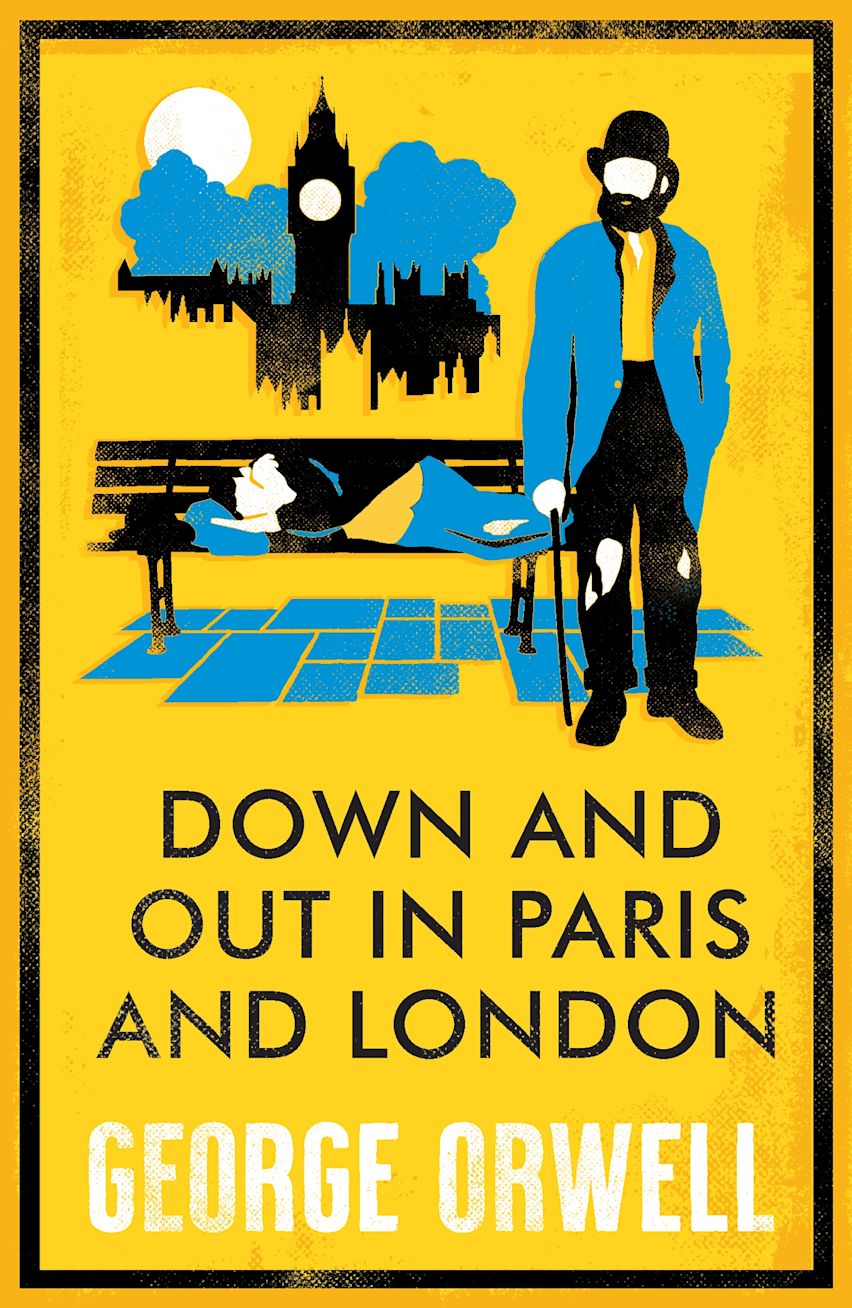
‘Down and Out in Paris and London,’ George Orwell’s 1933 Social Realism

Variously described as a novel and as a memoir presented as a novel, this brief volume certainly has the feel of hard-won experience.  With little preamble Orwell throws the reader into a squalid neighborhood of Paris circa 1930 where we experience the scramble for enough food to avoid starvation and a place to sleep – if one dare drift off while in intimate proximity to any number of strangers, swindlers, thieves, the deranged, the pious and the police. 

Visions of filth, sweat and stink dance in our heads as the narrator (who is in no way distinguished from what we know of the author himself) finds job, loses job, finds room, loses room, earns a few francs and spends all of them on barely enough bread, margarine, tea and tobacco to keep his body upright.  Along the way we are treated to character sketches of many sketchy characters, a few of whom have preserved hearts of something better than lead, another few of whom possess remarkably bright minds despite the grinding effects of their poverty and hopeless circumstances.

Despairing of his ‘opportunities’ in Paris, our guide is thrilled when an old acquaintance in London proffers a job as caretaker to an elderly invalid.  Loaned funds just sufficient for travel and a few days subsistence, he is soon in that great city, only to find the promised position has evaporated as the ‘tame imbecile’ and company have themselves left for the same continent he just abandoned. Now we follow our guide into the bowels of British social services and charities as he learns to navigate ‘the spike’ (a sort of municipal homeless shelter offering prison-like rules and conditions in exchange for horrible food and worse sleep abetted by a tracking system that keeps its customers constantly walking from town to town and so unavailable for any sort of work or betterment), church-run shelters (considered worse than the spike for their insistence on performative piety and the hypocrisy of their tenders), the Embankment (among the few places in London where one is allowed to sleep outdoors, but its benches, noise and Bobbies make sleep next to impossible) and commercial lodging houses (better accommodations, but prices out of reach for the truly destitute).

Given Orwell’s known Socialist leanings, it’s no surprise there’s a certain class consciousness to all this.  His conviction that nearly all the ‘idle’ poor would readily choose to work for their keep if there were jobs available seems a bit broad and naïve ( not to mention the number whose physical, intellectual or/and emotional disabilities and dis-aptitudes might make the unsuitable for hiring).  His modest proposal – group homes where the residents tend gardens which provide a portion of their food, thus requiring a lesser subsidy than the current system wherein they are virtually prohibited from working and earning because the feeble accommodations available will only accept the absolutely penniless – is probably even less likely of enactment today than it would have been in his time.

A painful read, reflecting what the least favored among us must endure simply to survive – but well worth revisiting as the current U. S. administration works to slice open our own social safety net and condemn millions of immigrants and citizens alike to conditions little better than what Orwell describes. (And sometimes worse, incarcerating non-citizens of no significant criminal history without legal process or recourse and even banishing some of them to whatever cutthroat minor state will take our tax money in exchange for receiving and disposing of them). 

P. S. – E Unum Pluribus is a speculative fiction shaped by the economic consequences of the USA’s present partisan divide.  It is currently being serialized online, for free, and you can read its first installment at: 
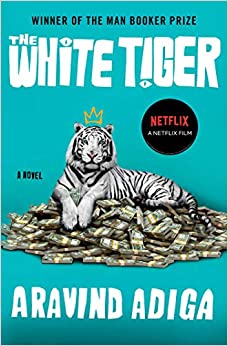
The White Tiger, Aravind Adiga

Darkly humorous, this Booker Prize-winner plays with our desire to believe its hero is actually a decent man despite his early admissions of guilt. When, late in the tale, his crime becomes clear (the ‘unreliable narrator’ turns out to have been entirely reliable), we are challenged to decide whether we condemn or forgive him, given the greater evil of the world in which he is required to survive, and in which we all play a part, regardless of how remotely.

Set among the impoverished majority of early 2000s India, The WhiteTiger can be read as a primer for those unfamiliar with that society, but they are also clearly an abstract for the hundreds of millions in similar straits in other nations around the world (“the colossal underclass,” as Adiga is quoted describing them on one website).  Insufficient resources, insufficient opportunity, insufficient education, insufficient justice; all these contribute to Balram Halwai’s ruthless take on survival.  That ruthlessness though, armors a soft heart – his anger takes forever to rise, his violence is not enjoyed, but endured for what it will achieve.  Even when he grudgingly admits to condemning his family back in the village of Laxmangharh, his reasoning is more amoral rather than immoral – he takes no pleasure in their fate, but rates it only incrementally worse than that to which they had already been condemned by birth: a few more decades of poor, ignorant backwater toil before the death which eventually comes for us all.  The same ‘cage’, as he describes it, from which he has so narrowly escaped.

That metaphor of the white tiger (a creature, we are told, of which there is only one born in an entire generation) works on multiple levels.  Not only are the poor caged as truly as animals in a zoo, so too is there little value in being a unique individual -beautiful, talented or valued in any way – if one must still live one’s life in a cage with nothing to do but eat sleep and procreate.  And when Balram kills and steals from his employer Ashok in order to escape, one is challenged to judge those acts any less natural (and neutral) than a tiger who, finding its cage door left open (the novel’s ‘red bag’ on the car seat…), might well kill and consume its keeper on its way out of the zoo.  Not out of perversity or evil, but simply as an act of survival – kill or be killed, eat or be eaten. 

In a brief author interview appended to the e-book edition, Adiga vouches for the reality of his settings and the corruption he describes.  This is fiction but not speculative fiction; poverty and oppression such as this really exist, and those with certain strengths or intellect may well be driven to extremes such as Balram’s in order to feel they have escaped it – even if, to these middle-class American eyes, his upward step seems a very small one.  All those heavily-accented voices on unsolicited phone calls, those poorly-worded spam e-mails and destructive malware episodes we hear about on the evening news – this novel educates us as to why anyone would spend their hours in what we are so quick to dismiss as criminal activities.  They are, perhaps, just surviving in the best way they can find.   

Amid such bleakness, it is very fortunate that both author and character bear an abundance of wry humor. Naming Ashok’s American-born wife ‘Pinky Madam’, is one inspired example, the comic self-aggrandizement of Balram delivering his entire memoir in a series of late-night monologues directed to the soon-to-visit Premier of China is another.  An abundance of such touches ensure that that this bleak message is not bleak in the telling.

A unique and eye-opening prize-winner well worthy of its award, and a useful reminder of how undeservedly-fortunate we of  ‘the first world’ really are.