Tag Archives: reviews

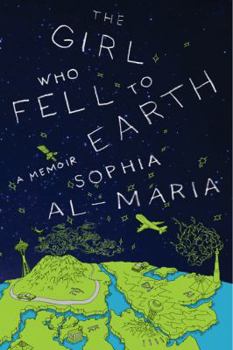
The Girl Who Fell to Earth – a memoir, by Sophia Al-Maria

An eye-opening recollection of growing up Bedouin-American around the turn of the twenty-first century.  Daughter of the tenuous union between a blue-collar American rebel and a job-seeking illegal immigrant nominally from Qatar – but more truly of the Al-Dafira tribe, a nomadic Bedouin people historically accustomed to roaming a desolate chunk of sandscape alternately claimed and reclaimed by the shifting borders of multiple kingdoms and nations – Sophia (to her mother’s world) or Safya (to her father’s) is whipsawn between cultures, generations and technologies as she shuttles between Puyallup, Washington and the perpetual construction site necessitated by an Emirate’s leap from the twelfth-century to the twenty-first in a single bound.

Where other essays on the Gulf nations tend to emphasize their wealthy leaders or their Ferrari-driving, Vuitton-clutching, nouveaux-riche spouses and offspring, this one focuses on the shadow populations who live off their government subsidies, house-keep their boudoirs, roughneck their earthworks and oil platforms, and line the fringes of their ever-expanding metropoles with camel-hair shelters and goat pens fabricated from desiccated shrubberies and the gleanings of garbage piles.

Al-Maria is charming and entertaining as we see her garden-variety teen angsts inflated to monumental proportions by the economic marginality of both her families, the uncertain legal status of stateless nomads (or half-nomads who’ve had their passports stolen) and the challenges of learning Arabic, Islam, Americanism and independence simultaneously and with vanishingly few competent examples of mature adulthood to emulate.  That she succeeds in travelling back and forth several times and surviving assorted school systems to eventually enter the American University in Cairo and establish something of a career as writer and artist, is quite impressive.  Most of all, though, her tale is a reminder that family – even a wildly extended, chaotic and perennially impoverished family with few (legal) breadwinners – can provide children a crucial sense of belonging and acceptance even as the elders’ insistence on traditions and restrictions are driving those same children away.  The women, especially, of her Al-Dafira clan show resilience and flexibility in keeping their families and love alive and fed, despite what seem the best efforts of their men to destroy them.

Al-Maria’s Bedu relations, of course, represent only one of uncountably-many parallel worlds with whom we share our time and geography.  By allowing a mile’s walk in their sandals, The Girl Who Fell to Earth makes a generous plea for understanding of all the cultures and peoples around the world who do not live, speak or behave as mainstream Amero-European media and opinion so blithely presume they should.

A worthy use of space on the bookshelf!

P.S. – to learn about another parallel world, read E Unum Pluribus, a new speculative fiction imagining the end of the USA, and what may fester in its place. 

Packed with intrigue and fueled by politics, economics and murder (as well as gender, class, language and even the origins of faith), E Unum Pluribus examines how much we stand to lose if we allow our current culture wars to shatter this precious nation.  This thrilling novel is currently available in six online installments, totally for free, simply by navigating to the home page of this website and selecting E Unum Pluribus from the top menu, or via this link: https://robinandrew.net/2026/01/01/e-unum-pluribus/
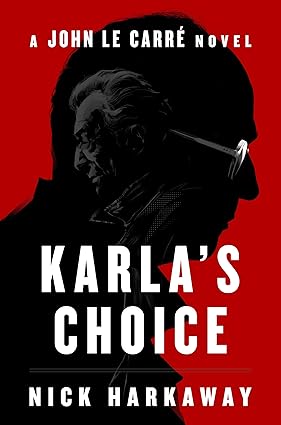
Karla’s Choice, Nick Harkaway

Picked this up less than fully convinced that a John Le Carre novel sans Le Carre was really needed.  Fact it was penned by the master’s son, Nick Harkaway, made it somewhat more promising than the various Ian Fleming-less Bond retreads by unrelated followers (of whom Harkaway is one, the admirable William Boyd another).  Was encouraged before the start by a statement in the Author’s Note that “There were always supposed to be more Smiley books.”  LeCarre’s having graciously left ten years of blank foolscap between The Spy Who Came in From the Cold and Tinker Tailor Soldier Spy also suggested room for this insertion.

From the start, what I found was encouraging, gliding along quite happily to the familiar rhythms and contexts of LeCarre’s world as scored and conducted by Harkaway (who has the benefit of having actually been present and somewhat privy to his father’s creative processes).   A pleasant enough experience, but not eye-opening – until somewhere around 80% of the way through – stop reading here if you don’t want to spoil the experience for yourself…

Just as I’d begun to worry this might be all retread, Susannah, the naive civilian whose cry for help initially set the entire story into motion, despairs at Smiley’s apparent lack of principle and crosses the Iron Curtain into Hungary (at the time a Communist autocracy tightly leashed to the Soviet Union) to commandeer his mission for herself.  Though believable based upon her earlier actions and personal history, this impulsive act nonetheless flips us into another plot entirely, as Smiley and his professionals must improvise in hopes of catching up with her.  Then, just as I’d accepted that and begun to anticipate the excitement it must generate, Harkaway switched form entirely – stopping the clock to preview various character’s future reminiscences on whether Smiley’d had no idea this was coming and was now in totally reactive mode, or had anticipated and accepted Susannah’s action as inevitable and gone with the flow or had, in fact, callously conceived, arranged and ensured such a dangerous act in order to achieve his own ends at the probabl cost of her innocent life.  By dancing a follow-spot rapidly over Smiley’s talent, skill and commitment even as it highlights several canonic characters’ own abilities and relationship to the master, Harkaway makes clear that moral principle, guilt and regret are the true subjects of the novel, assuming LeCarre’s mantle very nicely, thank you. 

Minutes later (in reading time, that is) we’re back into thriller form, watching as George discovers he has been made and is being tailed, and then as this unassuming ‘little man’ deals brilliantly with the challenges (including a car chase with Smiley at the wheel – never thought we’d see that!).  These scenes are virtuosic for both character and author, and from there it is a race to a signature LeCarre finish: bloodshed held off-screen, morality front and center and more than a hint of anticlimax, until Harkaway surgically exposes just what values and choices lay behind the various participants’ actions. Despite the infamous Karla (through-line villain of the entire Smiley oeuvre) having appeared very sparingly and with minimal back story, it turns out that his ‘choice’ is indeed the true point of this novel.  Not to mention a worthy gift to the fans in how it adds color and insight to Le Carre’s own chronologically-later volumes. Very nicely done!

Credit where credit is due:  I read this in e-book form – one of the more benevolent byproducts of our evolving digital hegemony.  An e-book I had borrowed online from a public, i.e. ‘government funded’ (cue the sinister theme music) library – one of those many liberal-culture institutions from which our marginally-elected leaders are currently scrambling to rescue us.  Had downloaded it in moments and for free – another benefit of the ‘mommy state’ imposed upon us by the ‘deep state’ which is now being shredded in favor of absolute free-market fundamentalism. Who knew we had so much to lose?  Anyone with eyes…

Having thus tested the waters and found them delicious, I’ll now be purchasing a hard-copy of Karla’s Choice so as to compensate author and industry for conspiring to make such an entertaining and worthwhile title available.

Kköszönöm mindenkinek – ’Thank you everyone.’