Tag Archives: language

‘They’ want to turn us all into transexuals!

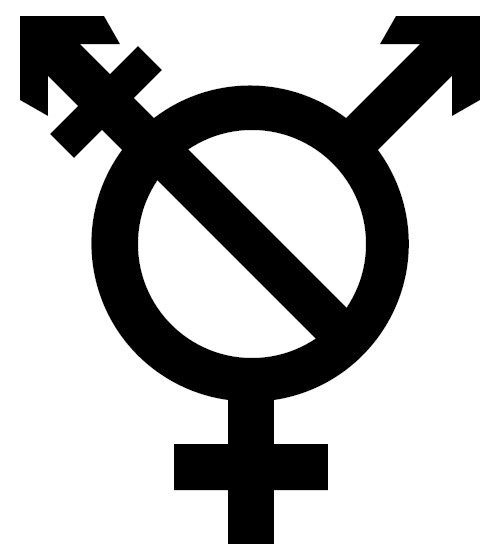
♀…♂…⚥…?!

Among the many slings and arrows tossed by counter-progressive voices these days are allegations that some amorphous ‘they’ of radical-liberal social engineers is “trying to make us all trans.”  A particularly twisted component of those alarms are accusations that gender-care supporters and medical professionals are coercing young persons into irreversible medical interventions – defenseless young persons who supposedly would never have chosen such treatment on their own and will regret it for the rest of their lives.   Without in any way accepting those arguments, one can still imagine that earlier posts suggesting use of gender-free pronouns run the risk of being classed as part of that same imagined conspiracy, so some response seems worthwhile.

Starting with: Literature, memoir, anthropological scholarship and legal references demonstrate there have long been individuals in many cultures who chose not to conform to the general consensus on how a woman or a man must look and behave.  The fact that conservative religious commentators can find admonitions around gender ‘rules’ in a document as ancient as the Old Testament’s book of Deuteronomy makes clear that modern gender diversity does not need to be drummed up by any elitist cabal or progressive conspiracy; it is part of human nature. 

As to whether there are more such nonconformers in the USA today than at any other time or in any other place, the truth is: no one knows!  What can be reliably said is that, given the high price persons tend to pay for being open about such things, there are certainly more hidden figures today than the few who are brave enough to let themselves be known. And, given that the consequences of nonconformance have been even higher in many other times and places, there probably have been more such silent examples in those as well.  With no way to document either half of the equation, then, it is pointless to argue what the trend has been, or even whether there is any trend.

If, despite that understanding, gender nonconformity seems more visible in twenty-first century America than elsewhere or when, that visibility is better taken as reflecting the high value our era places on variety, creativity, honesty and freedom of expression – characteristics widely recognized as crucial to the nation’s success in economics, justice, scholarship, technological innovation and other realms wherein it has consistently outperformed more orthodox and fundamentalist cultures.   Nonconformity is, in other words, a positive, not a negative phenomenon.

All that said, it would certainly be undesirable for any person, young or old, to feel pressured into changing their appearance, activities or physiology, especially not through costly or invasive and occasionally dangerous medical interventions.  To determine whether or not that is happening, we don’t need to search medical records or point accusing fingers at those who’ve made different choices than any of us might make.  Not when, right in front of our eyes and ears is a language and a grammar that requires every person be repeatedly and continuously categorized in one (and only one) of two (and only two) distinct and mutually exclusive genders: be a woman or be a man, no alternatives considered.  If there’s anything coercing young persons who are at all uncomfortable with the gendered behaviors to which their physiology is said to direct them, a prime suspect should be that language.

Of course, the fear of ridicule, intimidation, prosecution or bodily harm if ever their gender curiosity is detected are also powerful discouragements of experimentation. Even in this though binary language is not helping, as those fortunate enough to have a potential for passing as ‘the other’ gender may find it safer to change their identity completely from that of a woman to that of a man – or vice versa – than to risk inhabiting any unnamed and unrecognized region in between, even if that would be the highest expression of their true preferences.  This is perhaps one way in which invasive measures may truly be the result of coercion – not by the medical establishment but by narrow minds insisting that gender is an either/or thing, that all aspects of one’s life should conform to one gender. By voices, in other words, who believe they have a right to police the personal expressions of others.

So, to those worried about gender affirming treatments: if you want to reduce the number of young people choosing to call themselves trans and maybe even seeking surgical treatment, please consider whether your gender assumptions get in the way of your acting respectfully toward all young persons, however they choose to look or live in the world.  Maybe try imagining a world in which young males can be whatever variety of person each of them want to be (not whatever kind you happen to think is ‘a ‘real man’) and young females can each grow up to be whatever sort of person they wish to be (not necessarily the kind who end up on magazine covers or cooking three meals a day three hundred and sixty five days a year).

Is that belligerent? Defensive? Maybe; but the truth is that a world in which anyone can safely and openly inhabit whatever combination of ‘feminine’ or ‘masculine’ attributes best suit their inner nature is a world in which fewer persons will feel any pressure to totally switch from Column A to Column B.  And a world in which gender-free pronouns provide a respectful way to communicate about persons who mix their own recipes is more conducive to individual freedom and to the common good than one in which every consideration must start by classifying every individual into one or the other of two rigid and unchangeable gender templates that very well may impede them from living happily and productively as the unique individual they truly are.

Which is why, if trans-wary observers truly wish to minimize pressure on young persons to make what they consider poor choices about their gender or biology, they should be right on board with use of gender-free pronouns as one small step to encourage variation with moderation, expression without extremism and exploration without irreversible commitment.

P. S. – E Unum Pluribus is a speculative fiction exploring one way in which our current ‘culture wars’ may bring an end to the U. S. A., and what might come in its place. With a thrilling plot driven by politics and economics (as well as gender, class, language, magic and even the origins of faith) the novel is currently being serialized online and anyone can read it, at no cost, by navigating to the home page of this website and selecting E Unum Pluribus from the top menu, or via this link: https://robinandrew.net/2026/01/01/e-unum-pluribus/

Please feel free to share this post however you wish!

And, if you like what you read here at robinandrew.net, please subscribe – it’s absolutely free!
What’s Wrong with ‘They’?

(The novel, E Unum Pluribus, is narrated by Jack Shirley, an office intern whose gender behavior doesn’t always fit the expectations common in contemporary Amero-European culture.  Anticipating that Jack’s character may arouse comment, this is one in a series of posts sharing the author’s thoughts around those expectations.)

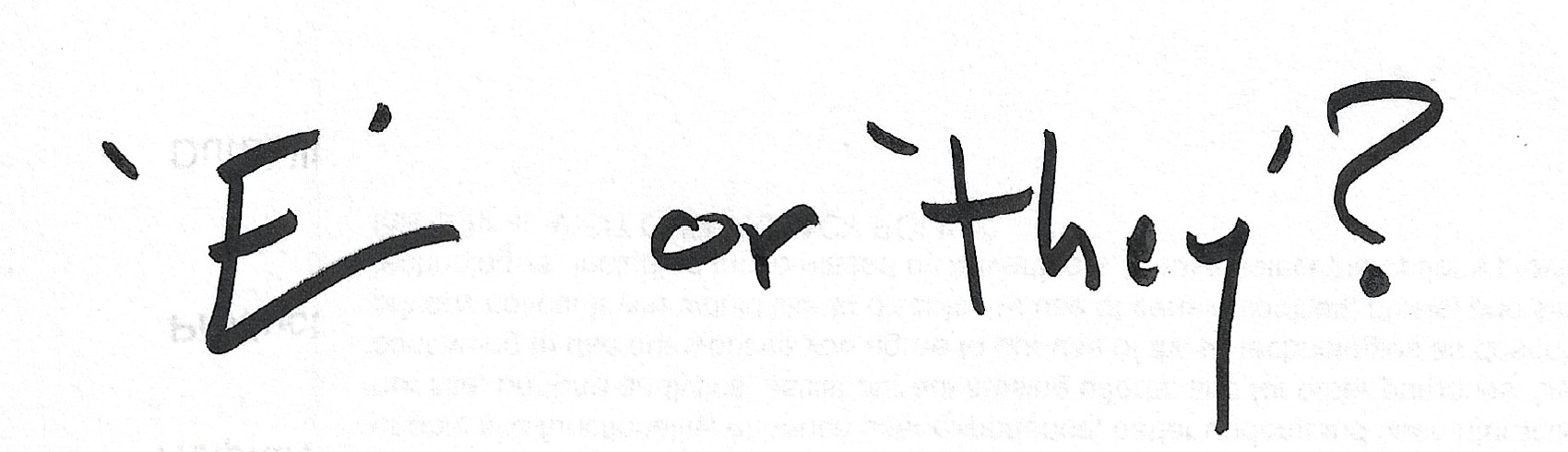
Earlier posts about gender-free pronouns (E, em, eir, or similar) probably invite the question: at a moment when English language users are starting to be comfortable with ‘they/them/their’ as singular pronouns for nonbinary persons; why not just accept that as progress and move on? A few thoughts:

Some English language verbs are formed differently when applied to a singular subject than to a plural one. Chris is a single person, so he or she ‘has’ red hair, but if we’re considering more than one person, they ‘have’ red hair. So, if I’m using a singular they/them because I happen to know that Chris identifies as nonbinary, do I say ‘they has red hair’? Feels pretty odd, to these ears. Similarly, if Taylor is a woman, she ‘was’ late; if Taylor is a man, he ‘was’ late, but if Talyor is nonbinary, is it ‘they was late’ or ‘they were late’? Either way feels wrong. On the other hand, adopting a non-gendered singular pronoun like ‘E’ allows it to form verbs the same ways as any other singular pronoun: he writes, she writes, E writes . Done.

Even more basic than forming verbs is the confusion inherent in dual-purposing pronouns that we’ve long understood as plural so that now they (sometimes) refer to (some) single persons while (most of the time) they are still plural. When discussing a group of people, for example, if you say ‘and then they…,’ does that ‘they’ refer to an action by the entire group, or to the same action by one non-binary individual in the group? There’s no good way to tell.

That plurality question also points up a more profound issue with using ‘they, them’ as singular pronouns for only those individuals who see themselves as non-binary: it is requires that those individuals declare themselves NB in the first place. A declaration which, depending on when and where it is made, may well open the person to criticism, social rejection, pressure for medical or psychological treatment of a perceived ‘disorder’ (as if perfect order were the natural state of any personality!) or even legal proceedings. At the least, it implies that being non-binary is to be, in some way, ‘other.’ Not typical, not ordinary like ‘a man’ or ‘a woman.’ Adn further, to certain points of view, questionable, suspect, abnormal, or even ‘perverted.’

And no, it doesn’t help that using ‘they/them’ for any single nonbinary person suggests that being nonbinary means you’ve got a more pluralistic inner nature than others: some halfway defined, half-realized man/woman hybridization thing going on, or multiple-personalities even. When actually, the greatest benefit of some individuals’ having had the courage to violate binary gender stereotypes is its potential to free all of us. To nudge us into realizing that there are not just two different (and mutually exclusive!) ways to be human, but as many different and overlapping ways as there are human beings.

Using gender-free pronouns as default for all persons makes it easier to speak of, comprehend and accept each individual for who E truly is, without first having to sort em into one or the other of two – and only two – rigid verbal boxes. And, better still, without judging em on how well we think they do or do not fit whatever definition anybody believes each of those boxes require. On this day. In this community. Or state. or Country, or… You get the idea.

Gender-free language better reflects the complexity and uniqueness of every person than limited use of jury-rigged singular ‘they/them’ pronouns can ever do. Making it the default language wherever gender or sex are not actually relevant (i.e: the great majority of public communications) is neither progressive nor conservative nor woke; it’s just clear, accurate and functional language.

Which is, after all, the best kind.

P. S. – E Unum Pluribus is a speculative fiction exploring one way in which our current ‘culture wars’ may bring an end to the U. S. A., and what may rise in its wake. With a thrilling plot driven by politics and economics (as well as gender, class, language and even the origins of faith) the novel is currently being serialized online and anyone can read it, at no cost, by navigating to the home page of this website and selecting E Unum Pluribus from the top menu, or via this link: https://robinandrew.net/2026/01/01/e-unum-pluribus/

Slaying the Gender Binary – with E!

(The new novel, E Unum Pluribus, is narrated by Jack Shirley, an office intern whose gender behavior doesn’t always fit the expectations common in contemporary Amero-European culture.  Anticipating that Jack’s character may arouse comment, this is one in a series of posts sharing the author’s thoughts around those expectations.)

A previous post on this site* made the case that the best way to move beyond the simplistic convention of binary gender is not to start recognizing an array of new genders, each of which may desire its own names and terms – names and terms which could one day prove as dysfunctional as it would seem in this decade to call a group of people ‘beatniks’ because the males trim their beards into goatees and the females wear long, straight hair with blunt-cut bangs.

Rather than coming up with more ways to divide people from each other by slotting us into new groups, a more promising approach is to recognize and honor the deep truth that every individual is unique through use of gender-free nouns – person, human, individual – and gender-freeing pronouns as the initial and default assumption for all of us.

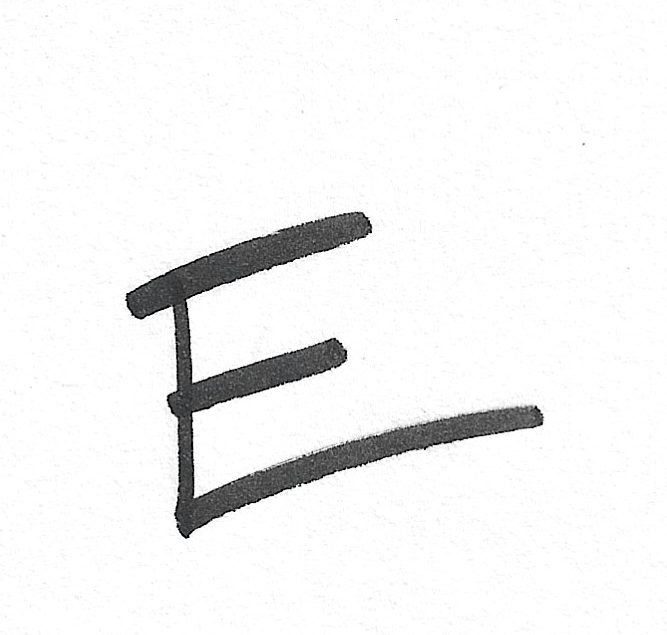
(I use the pronouns E, em and eir in my examples not because they are the only possibilities, but because I find them the most natural to speak.  I type the ‘E’ in upper case to make being referred to as ‘E’ feel every bit as respectful as referring to oneself using ‘I.’  Ultimately, of course, it is up to the entire community of English language users to decide what words become common, as it is with every other evolution of our shared language).

E is about everyone being an individual first and foremost, before they are a member of any group.

E means accepting that there will be some individuals who do not readily fit one’s own expectations for ‘man’ or ‘woman’ – or who actively choose not to aim for either of those expectations – and in those cases continuing to use gender-free language to facilitate respectful communication without any party feeling either dishonest or compelled against their principles.

E is about empowering every individual regardless of whether their appearance or behavior complies with anyone else’s idea of what they are ‘supposed to be.’  About treating persons equally regardless of how much they seem like us, or different from us.  About not assuming that the choices we make for ourselves would be better for them than their own choices. 

E is about treating all persons equally, regardless of their chromosomes, the reproductive cells their body puts out (or doesn’t), the secondary sex characteristics others see on them or how others may criticize those characteristics.

E isn’t about eliminating ‘man/men’ and ‘woman/women.’ It just means using those and their corresponding gendered pronouns only if/when it is clear that is how the individual in consideration wishes to be identified. 

E does nothing to prevent persons who wish to be recognized as ‘man’ or ‘women’ from using the multitude of possible cues to make that clear.  (Nor does it discourage persons making themselves recognizable as proud military veterans, as nerds or geeks or football fans or soccer moms; a prairie wife, Amish farmer, Orthodox Jew, Evangelical Christian, conservative, progressive, queer, jazzman, Deadhead or… the list goes on forever.) 

E is a reminder and a tool to treat any more specific identity as part of being an individual, a person, a human being; not a substitute.

E is for every one of us!  

*Previous post: Getting to Binary, https://robinandrew.net/2026/09/04/getting-to-binary/

P. S. – E Unum Pluribus is a speculative fiction exploring one way in which our current ‘culture wars’ may bring an end to the U. S. A., and what might come in its wake. With a thrilling plot driven by politics and economics (as well as gender, class, language and even the origins of faith) the novel is currently being serialized online and anyone can read it, at no cost, by navigating to thehome page of this website and selecting E Unum Pluribus from the top menu, or via this link: https://robinandrew.net/2026/01/01/e-unum-pluribus/

This post is public, so feel free to share it as widely as you like.

If you like what you read here at robinandrew.net, please subscribe – it’s absolutely free!