Tag Archives: Artificial Intelligence

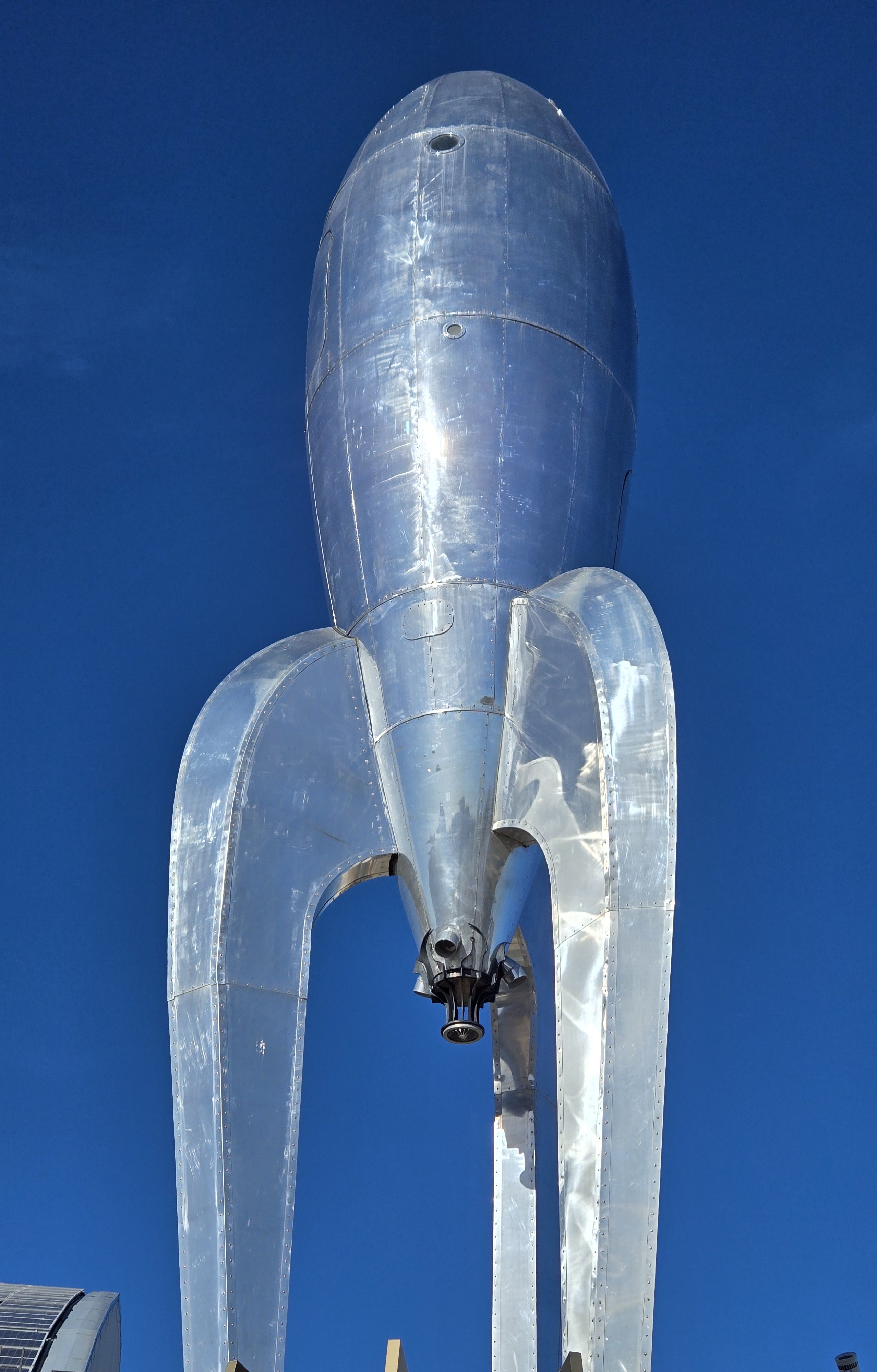
Humanity’s Survival Hinges Not on Outer Space, But on ‘Our Space’

Naomi Klein and Astra Taylor had a piece in the Guardian recently* regarding the obsession among our Billionaire Boys Club with shipping humans off to colonize outer space. The same trend toward maximal manspreading came up a few days later in a NY Times piece by Michelle Goldberg**.

Now, there’s nothing inherently wrong with wanting to be part of something as ground-breaking as off-planet settlement would be. No shame either, in pining to experience a greater extent of our universe than our earthly perch affords – who wouldn’t love to have taken that “One small step for man, one giant leap for mankind” (even if one imagines improving the wording just a touch)?

But really, not many sapiens are ever going to voluntarily commit to open-ended confinement in a tight cannister with the likes of Elon Musk, Peter Thiel, Sam Altman and Jeff Bezos. Crewed, in all likelihood, by the same sort of self-infatuated ketaminers who staffed-up Mr. Musk’s short-lived Doge blow-out… All for the privilege of living regimented lives in close quarters designed, by necessity, for maximum functionality with minimum resources.

Those hardy souls who are interested in signing on would do well to seriously ponder Fermi’s Paradox, which goes something like this: given that current scientific knowledge allows us to calculate the truly astronomical number of galaxies, star systems and orbiting bodies which are out there, and that earth sciences continue to expand the range of hostile conditions under which earthly life can exist, there must surely be innumerable opportunities for life to have developed on other worlds, so why is it we’ve still never encountered any evidence of it other than here on our own little blue ball?

The best answer I’ve encountered lies at the heart of Kim Stanley Robinson’s marvelous novel Aurora*** when his narrator considers how intimately and perilously the intelligent life we do know of is suited to exactly that environment in which it evolved. Robinson’s short answer to Fermi’s question is that by the time a species gets clever and knowledgeable enough to try living elsewhere, it is also clever and knowledgeable enough to realize it is better off staying home.

Which brings us to what really struck me in reading those Guardian and Times opinion pieces: when was the last time we heard any of today’s tech titans or AI impregnators voice appreciation for the glory of our natural world? Given more than enough resources to spend their lives in Earth’s most awe-inspiring environments, environments which would be impossible to recreate with even their absurd resources, it seems our over-lords choose instead to cocoon themselves in nine-figure superyachts, carbon-spewing private jets, high-rise apartments or gated acreage hermetically sealed off from the noxious byproducts of their own industries.

It’s enough to make one pine for the days of Teddy Roosevelt – a wealthy elitist with plenty of faults but who at least retained the innocence to appreciate the wonders all around him. Or anyone else with sufficient wisdom to recognize that billions of years of growth and change have modelled us humans to succeed brilliantly in this particular and unique habitat, and the humility to realize we must care for that habitat, in something like the natural state to which our organism is so fatally suited, if we are to have any hope of saving ourselves or our descendants.

Space exploration is a worthwhile endeavor which pays many dividends, but in no way should it be a substitute for, or impediment to, preserving our current star base so it may continue to nurture all our billions of heirs, not just the very privileged few who will ever have the opportunity to head out toward other stars.

*’The end times fascists are plotting their escape from our world. Our mission is clear’, Naomi Klein and Astra Taylor, The Guardian, 2026-09-13

**’Why Tech Oligarchs Are Willing to Risk Apocalypse,’ Michelle Goldberg, New York Times, 2026-09-12

***Aurora, a novel, by Kim Stanley Robinson, copyright 2015 by Kim Stanley Robinson – ideas paraphrased here, in respect of copyright – seek out the original and read it, it’s better!

P. S. – E Unum Pluribus is a speculative fiction exploring one way in which our current leaders’ obsessive pursuit of wealth and power may bring an end to the U. S. A., and what sort of world might arise in its wake.

With a thrilling plot driven by politics and economics (as well as gender, class, language and even the origins of faith) the novel is currently being serialized online and anyone can read it, at no cost, by navigating to the home page of this website and selecting E Unum Pluribus from the top menu, or via this link: https://robinandrew.net/2026/01/01/e-unum-pluribus/
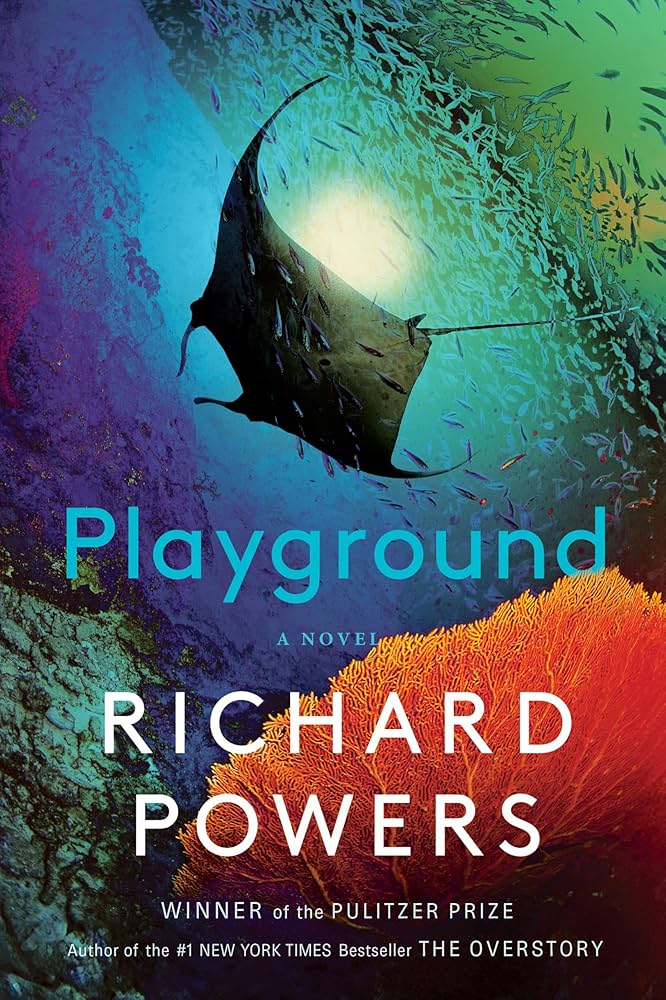
Playground, by Richard Powers

What Richard Powers’ The Overstory (2018) did for the astounding canopy of trees above our heads, Playground does for the super-abundance of seawaters that surround us. 

Part letter of appreciation, part eulogy, each novel employs intriguing characters to weave a scrim upon which to embroider an abundance of colorful facts and observations about the environment which gives those characters and all of us life, purpose and – if our eyes are at all open – a measure of sorrow for how carelessly we are diminishing our descendants’ futures.

Where The Overstory was structured around a tale of eco-warriors campaigning to stop forest destruction, here it is Silicon Valley’s takeover of our time and imaginations that drives the plot. Powers braids together the lives of a poet, an explorer, an artist and a social media software tycoon to create both compelling mystery and satisfying conclusion.  With thirteen previous novels to his credit, it should be no surprise the product feels mostly effortless and ordained.  What does startle though, is how the few moments which do feel effortful – when the wealth of scientific detail seems to veer into pedantry or showing-off – are cast in an entirely different light once it dawns on the reader just who has been narrating the story.  Suffice to say that that realization brings into focus yet another level of questions the novel is raising, about memory and knowledge, about fact versus fiction, brain vs. whatever, and about whether the answers to those questions will diminish the stories we read, hear and watch in future eras as greatly as we are currently diminishing our own and only habitat.

(As angry as Powers clearly is about our destruction of species and environment, he is wise enough to include reminders that nature itself will hardly notice our waste.  For as many species as we destroy and cry over, natural processes will someday create new ones.  Perhaps not as photogenic as the old or perhaps more so – nature has other things to worry about – but either way, new habitats will spring up and new species with them.  Long after mankind departs the scene in whatever fashion we do, natural processes will continue creating and embellishing, erring and correcting.  Only cosmic forces and events can end that process, and those will operate on their own scales regardless of human activities. It is only we and our descendants who will be injured by our carelessness; to the rest, we are irrelevant – as is whether we find that fact reassuring or insulting.)

Heartfelt, informative, moving and timely; the evidence of this outstanding novel suggests that individual human minds will continue to create entertaining and enlightening stories for many generations to come. 

One aspect of our future, at least, to which we can look forward with eagerness.

If you like what you read here or at robinandrew.net, please share any posts as widely as possible – and consider subscribing: it’s totally free!

P. S.: E Unum Pluribus is a new novel that explores multiple themes – language and gender, identity, guilt and even the origins of faith and belief – but speaks loudest in its vision of a post-USA future.

The manuscript is available in six instalments, starting at:

Grok Gets an F – Grooming an AI Encyclopedia

According to reports*, Elon Musk’s new AI-generated online encyclopedia, Grokipedia, begins its entry for gender with: “Gender refers to the binary classification of humans as male or female based on biological sex…”

Wrong! Gender and sex are not the same things!

That Grok thinks they are**, indicates it has been ‘taught’ to parrot the opinions of its human creators.  Like a young child, it is not worldly or intelligent enough to think beyond what it has been told by its groomers and so sees the world through their blinders. 

For AI as with any other computative system, the value of output is highly dependent upon the quality of input.  The first law of computer science – ‘garbage in, garbage out’ – is worth keeping in mind as AI’s very human procreators inject their offspring into as many facets of our lives and world as they can, as quickly as possible, with no oversight and often without our consent or even our awareness. 

Knowledge is power, and ignorance posing as intelligence is an abuse of power, not a sign of the glorious and unadulterated progress which AI’s promoters claim to be offering to the world.

CAVEAT UTILITOR!

If you like this post, feel free to share it.

* This post refers to a report by Will Oremus and Faiz Siddiqui in the electronic edition of the Washington Post on 2025-10-27 titled “Elon Musk launches a Wikipedia rival that extols his own ‘vision’”

** In case there’s any question: ‘Male’ and ‘female’ are classifications of sex, which is about biology and can mean, depending on who is speaking, which chromosomes a person’s cells carry, which type of reproductive cells their body produces, which genitalia it exhibits, etc.   ‘Man’ and ‘woman’ can refer to various selections from a wide range of public behaviors, perceptions, expectations and putative rules which are loosely and collectively referred to as gender.  Sex and gender terms are sometimes congruent, sometimes not, but they are not the same things, as Grok seems to believe.

If you like what you see on this site,

please subscribe.

It’s absolutely free!

Fran Kiss Stein – a Love Story, Jeanette Winterson

Winterson, whom I’ve encountered previously as a writer of contemporary fiction and memoir, here delves into history, of both the usual sort – events of the past – and the less usual – events yet to come. Her anchor is the artistic journey and personal tragedy of Mary Shelley, daughter of Mary Wollstonecraft, a social-activist author clearly ahead of her time. And of her daughter’s time as well, since the mother died in childbirth. That early loss shapes the younger woman’s mind and thoughts as she wanders in exile with the poets Percy Bysshe Shelley (her husband) and his friend Lord Byron, and their entourage. The portions of the book narrated in Mary’s dreamlike musings are compelling and exciting, in some ways the most so of the novel.

That worthy story is interwoven with those of a transman doctor named Ry and Victor Stein, a scientist living in Manchester (where Winterson actually teaches…) as he attempts an advance in electronic intelligence which is every bit as audacious as the one in Shelley’s landmark novel, Frankenstein, or the New Prometheus.   This portion of the novel reads more like a sci-fi thriller, Blade Runner for the TED Talk crowd. Oh, and just for good measure, those ample threads are braided with that of a mysterious refugee who claims to be the doctor of Shelley’s novel – on the run to escape his own creation before being imprisoned as a madman – but seems in the end to be actually a figment of someone’s – or perhaps even everyone’s – imagination. Yes, this plot seems to require a lot of hyphenation, and I haven’t even mentioned the story line involving intelligent sex-bots and a lovely Mormon!

That somewhat confounding recipe, though, cooks up a hearty stock, which Winterson then seasons with flavors of gender and culture, of mysticism, humanism and dogmatism, of art, science, culture and anthropology, urbanism and – well, the list seems endless, as the fictional ingredients are embellished by the wider reputation and known-history of the actual characters she has re-imagined. Even as one reads, there comes the thought that this book will demand a second reading, just as any decent painting merits more than a single viewing. There is more here than first meets the eye, which has always been part of the fun with Winterson.

One of the most affecting passages comes near the end, as Mary considers the plight of Byron’s daughter, the mathematical prodigy, Ada Lovelace:

“And I recalled our locked-in days on Lake Geneva, impounded by rain, and Byron and Polidori explaining to me why the male principle is more active than the female principle.

Neither man seemed to consider that being refused an education, being legally the property of a male relative, whether father, husband or brother, having no rights to vote, and no money of her own once married, and being barred from every profession except governess or nurse, and refused every employment except mother wife or skivvy, and wearing a costume that makes walking or riding impossible, might limit the active principle of a female.”

For this reader, that passage embodies Winterson’s signature; a blend of anger, insight and empathy that shines light where light is needed.

(And yes, one assumes Winterson must appreciate the irony that Byron’s somewhat notorious daughter should share a surname with Linda Lovelace, a twentieth-century porn star of broad notoriety. One wonders in fact, if a young Linda Boreman was aware of Ada’s history of escapades and it was that which led her to adopt the surname for her artistic persona. Oh yes, and wouldn’t it be wonderful if Tracy Chevalier or Emma Donaghue were to write an account of the life of Ada Lovelace, who certainly deserves one? “Doctor Livingstone, I’m thinking this river extends farther to the interior than first it seemed…”).

Always worthwhile, Winterson has once again rewarded her readers quite amply.

