Ezra Klein‘s recent interview with Fareed Zakaria questioned what guiding principle progressives could possibly forward to compete with the divisive and belligerently-reactionary nationalism of the MAGA movement.
One simple answer is ‘Stonger Together.’ Ever since thirteen disparate Colonies chose to work together(and even sought French assistance) to win independence from the reigning world hegemon, right up through Allies defeat of the Axis in WWII and establishing the now-defunct post-war order, it has been unity with others which enabled us to succeed and thrive.
With a little luck and grace, DJT’s narcissistic recoil at any hint of cooperation will die with his political career and allow the US to begin rebuilding our credibility as a coalition member and even – in a few decades – as once again a leader.
Heather Cox Richardson has a tasty piece this morning (see Letters From an American, on Substack) about the moment when Robert E. Lee surrendered the Confederate Army to U. S. Grant – Lee dressed in a brand new dress uniform, Grant in the worn and dirty private’s outfit he’d worn the day before, with scant insignia added to indicate his true rank. That instance of appearance as an indicator of the two men’s divergent characters, brought back to mind some thoughts I’d been working on not long ago, before they were (rightly) eclipsed by the chaos of our nation’s attack on Iran. Herewith:
Viewing the renderings of Mr. Trump’s replacement for the White House’s late East Wing, I’ve been surprised no one seems to be questioning the description of it as a “Ballroom.”
To these ears, the zeal and subterfuge with which The Donald is pursuing this particular bit of noncritical infrastructure suggests there is more at stake here than his enthusiasm for ballroom dancing and debutants (though the latter could be a factor…).
Administration PR pretends this cavern is vitally necessary for legitimate diplomatic events, but given Mr. Trump’s disdain for actual diplomats and his preference for small group strong-arming, that seems a stretch. More likely, the room’s programming will lean toward pseudo-events designed to flatter and reward loyal contributors to his continual fund-raising ventures (including, of course, the cost of this boondoggle itself) and to dangle the bait of future seating arrangements to extract still more contributions and concessions from others.
A means, in other words, for Mr. Trump and his chosen people to more-convincingly imitate the persons he obviously idolizes: the nation-owning monarchs and autocrats of the Middle East and elsewhere.
For that reason, I suggest we all just call this construction what it is – The Donald J. Trump Throne Room, at the Trump™ White House™.
On which note, does anyone really believe Mr. Trump will graciously depart what he is busily turning into the Presidential Palace – having finally gotten it redecorated to his taste – just because his current term expires? Having previously experienced the diminution of becoming an ‘ex-’ Chief Executive? Having in this term solidified his dominion over the rabble thanks to a compliant Supreme Court and supine Trumpublican Party? Having for his entire life scooted around every legal and moral constraint and gotten away with it all?
Note that Mr. Trump’s favorite head of state, Vladimir Putin, will have been in power for thirty years when his current term ends. The House of Saud has ruled its Kingdom for over ninety years (and a somewhat smaller realm for generations before that). China’s Xi Jinping is currently enjoying his third five-year term with no end in sight thanks to the 2018 elimination of the prior term limit on that office. Israel’s Netanyahu is over 18 years in control; Turkey’s Erdogan around 23 (Hungary’s Orban a mere 16). True, Napoleon Bonaparte lasted only 15, but Uncle Joe Stalin managed over 50…
On the turgid scale of those role models, a mere eight years in office would hardly rate inclusion. If, indeed, the style of Mr. Trump’s civic works is true indication of his character, we are in for a bumpy January 2029.
P. S. – E Unum Pluribus is a thrilling speculative fiction exploring one way in which a President’s attempt to overstay his welcome might affect our nation’s survival. It is currently being serialized online and you can read it, at no cost, starting at https://robinandrew.net/2026/01/01/e-unum-pluribus/
In a recent column titled ‘We Have Reached End Stage Polarization*,’ conservative Christian writer David French calls out the ill effects of fanning political disagreements into emotional hatred. “In the United States,” he writes at one point, “there should never be any such thing as a winner-takes-all electoral result.”
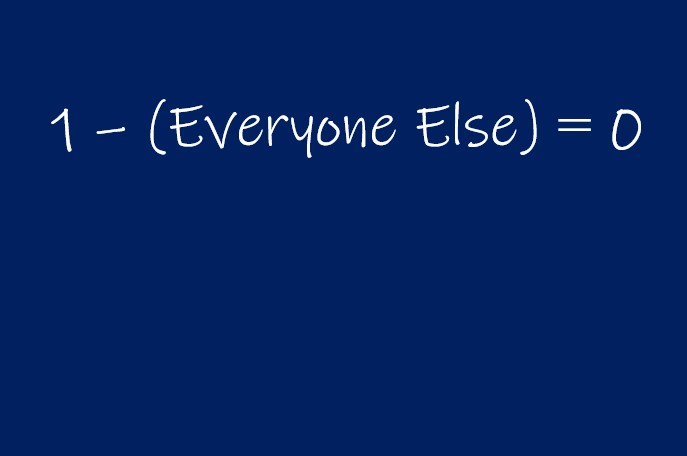
Well, today we live under an administration which disagrees; which is governing the nation as if they have taken full ownership of it and who treat other free nations as zero-sum competitors to be trampled on whenever circumstance provides cover.
E Unum Pluribus is a new speculative fiction exploring where such a politics may soon lead us. In the chaos of the USA’s dissolution, it finds deprivation, mystery, conspiracy and perhaps the first small signs of new beginnings. You can read it for free, starting at: https://robinandrew.net/2026/01/01/e-unum-pluribus/
A previous post (‘Novel Words – fictional pronouns for the actual future.’ *) explored the concept of a non-gendered singular pronoun, ‘e’, to supplement our familiar ‘he’ and ‘she.’ Fortuitously, a recent article on the perils of AI suggested another way to frame the case.
With ‘he’ and ‘she’ as our English language’s only widely-accepted singular pronouns (‘they’ carrying the stain of wokeness upon its back in addition to its confusion with the plural and ‘it’ being generally received as an insult whether or not intended as such), alongside the predominant conversational practice of using gender terms (‘man’ and ‘woman’) as if they were synonymous with the bio-sexual (‘male‘ and ‘female’), any inquisitive consideration of gender is pre-emptively shipwrecked on the issue of whether each particular individual carries around a penis or a vagina.
Thus, perhaps the simplest and most cogent reason to encourage the use of a gender free singular pronoun such as ‘e’: it enables us to discuss gender issues without the need to pin-down (ouch!) anyone’s genitalia.
P. S.: E Unum Pluribus is a new speculative fiction with its own take on where the current culture wars may be leading our nation, and how even tragic events can spawn new possibilities for the future. The novel is currently being serialized on this site and you can be among the first to read its opening pages in the post titled ‘E Unum Pluribus.’
“… you can talk all you want about international niceties and everything else, but we live in a world…that is governed by strength, that is governed by force, that is governed by power. These are the iron laws of the world that have existed since the beginning of time.”
Where commentator Leighton Woodhouse rightly sees those words of Trump-whisperer Stephen Miller as a retreat from Christian values*, they also suggest a tragic misread of our nation’s history.
As Ken Burns’ recent documentary, The American Revolution vividly reminds, the story of the USA has never been that of the strongest and most powerful singlehandedly dominating those around them. Rather, the founding generations were wise enough to see that their thirteen colonies must work together- despite very significant differences around religion, economics, politics and, perhaps most profoundly, the pernicious institution of slavery – in order for any among them to have a hope of breaking free from British tyranny.
Once the colonists united – a unity as messy, tenuous and frustrating as any representative system tends to be – even their combined numbers and resources did not assure success; from its start, the colonial coalition actively sought the support of other nations. Ultimately, after six long years of brutal fighting, it was direct French participation (along with the indirect assistance of other nations and peoples who further taxed the Britain’s resources by opposing it in other parts of the world), that enabled Washington’s forces to triumph at Yorktown, turning the tide of attrition and so winning our independence.
Power, strength and force, yes, but born of compromise, cooperation and alliance; that is what allowed a band of ragged upstarts to defeat the British Empire, which was, at that time, the greatest exemplar of Mr. Miller’s professed ‘laws’ of existence.
Similarly, the decades which established America as a superpower were never about the U.S. going it alone, even if we were by some measures the most powerful single nation. Both World Wars were won by alliances in which we participated, sometimes as leaders sometimes not (Russia’s defeat of Nazi forces on the Eastern Front set the stage for Hitler’s eventual defeat which was, until then, far from a certain outcome). Nor was the Cold War ‘won’ by unilateral American action; we could not have strained the Soviet economy to the point of failure without the economic cooperation and military participation of our allies in Europe and elsewhere – including Japan and Germany, two one-time conquerors whose defeat in war was accomplished through force but whose rehabilitation and future contributions as allies were made possible by reason, cooperation and patient hard work.
Yes, the qualities Miller cites – strength force and power – play a role in life and international relations. And yes, there are ruthless players in the world today against whom we must defend our nation and civilization. But coming from a cadre dedicated to belligerent unilateralism, who have employed military force, willful brutality and a single-minded claim of their own superiority against not only other nations but many of their fellow citizens as well, his proclamation smacks not of wisdom but of hubris. If he and his ilk won’t take the word of American history for that, let them consider how few of history’s most famous strong, forceful and powerful tyrants – Stalin, Mao, Pol Pot, Bismark, Napoleon, Alexander, Julius Caeser, et al – established or continued any institution which lasted nearly as long as the 250 years which our more measured nation celebrates this year.
Perhaps a dog-eat-dog America such as Mr. Miller envisions can temporarily proclaim itself a bigger fish by shrinking its pond to just the western hemisphere and consigning the rest of the world to their own fate. But the USA is and always has been a part of the world and will eventually be affected by the fate of other nations. If we wish truly to fulfill the promise of its founding, to honor that era’s sacrifices and to deserve the bounties we all continue to enjoy thanks to them, we must relearn the value of building alliances and collaborating with like-minded forces wherever they reside.
America First has never been America Alone
(And if, as it sometimes seems, Mr. Miller’s and Mr. Trump’s real goal is to forge an alliance between the USA and Vladimir Putin’s Russia, one need only look at the quality of life, rule of law and economic vitality of Russia today to see where that road leads.)
*Donald Trump, Pagan King, by Leighton Woodhouse, New York Times online, 2026-01-11
P.S. – For another vision of how our current politics may play out, try E Unum Pluribus, currently available free of charge to Beta Test readers. Click the box below to access its first installment:
John McWhorter published an Opinion piece recently* about the evolution of pronouns, with particular attention to a new character gaining attention among users of the Mandarin language (X也, shown in image above, combines features of the characters for both he and she, rather as some persons do). Along similar lines, a new novel, E Unum Pluribus, speculates a future American city/state called Confluence in which government edict directs all official communications to employ non-gendered pronouns. The novel’s events make clear that Confluence’s government has plenty of faults and weaknesses, but this one of its policies merits some consideration.
For generations the convention in English was to use ‘he/him/his’ as default and inclusive of all, regardless of their sex/gender. Appropriately, that has now been perceived as favoring male identity over female; simultaneously reflecting historic inequality and perpetuating it. Replacing all those instances with ‘he or she,’ ‘his or her,’ etc. is hardly workable, especially in spoken communications, and still carries a hint of misogyny by placing one gender ahead of the other, whereas ‘she/he’ risks offending insecurities on the other side of the identity coin.
Recent efforts to innovate ‘they’ as a singular pronoun for persons who choose to declare themselves non-binary run aground first on its pre-existing function as plural, generating confusion where they intend clarity. That usage also seems to open the door to a trickle of additional new pronouns as various groups or orientations demand similar recognition; one need only read the snarky online critiques of how LGBT has grown to LBGTQIA2S+ to know that is not a path to tolerance so much as a guarantee of further friction. Worst, in this opinion, ‘they’ singular requires persons who prefer not to be stereotyped as either ‘he’ or ‘she’ to state that publicly, thereby outing themselves and very possibly inviting prejudice, at least at this point in our societal evolution.
The fictional founders of Confluence have taken another approach; directing official communications to use ‘e/em/eir’ for all individuals. This treats everyone with equal respect and does not require the clunky ‘my pronouns are…’ , which can itself incite prejudices. The specific form, ‘e,” ‘em,’ and ‘eir’ are brief and efficient, similar enough to other pronouns that they quickly feel familiar but with sufficient difference to avoid confusion**.
By applying equally to all possible personal preferences ‘e’ equalizes all in one swoop while tacitly expressing the truth that for virtually all public or official interactions there is no proper reason to indicate what genitalia an individual bears or with whom they choose to become intimate. Those are – and should remain – irrelevant.
There’s nothing revolutionary here, by the way, modern English already has gender neutral pronouns – ‘they’ does not presume the gender of a group or any of its individuals. ‘It’ can be used for all objects – unlike French, say in which some nouns require feminine constructions and other nouns masculine, despite the objects having no actual sexual function or accoutrements. Most prominently, ‘I’ is the same for any individual regardless of sex, gender or other characteristic. It is really only in the second person singular that our language’s evolution has codified an unfortunate and outdated discrimination.
In the world of E Unum Pluribus, that governmental edict for official communications also does not mean ‘e’ is used by everyone all the time. Non-official conversations use gendered pronouns wherever a subject’s preference has become clear, sticking to gender-neutral when an individual’ presentation is itself gender neutral. As in real life, casual usage and common courtesy have the final word in how language evolves over time.
(For what it’s worth, future posts on this site may selectively incorporate ‘e/em’eir’ pronouns to explore just how functional they are – or are not.)
*“This Novel Word Speaks Volumes About How an Entire Language Works” N. Y. Times online edition, 2026-01-22
** E Unum Pluribus does not claim to have invented the ‘e/em/eir’ construct. Variations on what are sometimes called ‘Spivak pronouns’ have been noted at least as far back as the late 19th-century.
P. S.: E Unum Pluribus is a tale of murder and conspiracy set a decade or so in our future in one of many small sovereignties sprung up in wake of the USA’s self-destruction. The novel explores multiple themes – language and gender, identity, guilt and even the origins of faith and belief – but speaks loudest in its depiction of how much we all stand to lose if we continue to retreat into factions which each act only for their own needs and interests.
The manuscript is available in six instalments, starting at:
As the years 2016 to 2020 unfolded, I found myself preoccupied with a particular aspect of human history: that even the greatest empires, dynasties, governments and nations have each eventually ended and been replaced by…something else. The ongoing self-segregation of Americans along various lines – urban/rural, elites/masses, investors/workers, digital/analog, etc – suggested our own nation’s end might come sooner than later, and not through some external conquest, virulent plague or invasion of space aliens, but our simple failure to appreciate the myriad benefits of remaining ‘United.’
Starting in 2021, those thoughts began to coalesce into a speculative fiction, structured as a tale of murder and conspiracy happening a decade or so in our future in one of many new sovereignties sprung up among the remains of the U. S. of A. The novel toys with other themes as well – of language and gender, identity, guilt and even the origins of faith and belief – but speaks loudest in its depiction of just how much we all stand to lose if we remain divided into factions which each act only for their own needs and interests.
Writing the book took many months and once it seemed ready, the publishing industry proved impenetrable, even as the politics of disorder and division grew stronger. By the end of 2025 it had become clear I must find another pathway to the public and so I offered the first installment in a post which can be reached via the following link:
That and all subsequent installments may also be accessed via the ‘E Unum Pluribus’ buttons in the top menu or the right-side Categories list of this website’s home page.
Maybe the novel will find an audience this way, maybe not, but regardless, if you believe in the message that we Americans must overcome our divisions and preserve the USA as a government of all the people, by all the people and for all the people – or if you simply support authors being heard without reliance upon the gatekeepers of corporate commercial publishing – please share this post and the above link as widely as possible.
Sincerely hoping the world of E Unum Pluribus turns out to have been a naïve exaggeration, and wishing this great nation the good fortune of avoiding it, I thank you,
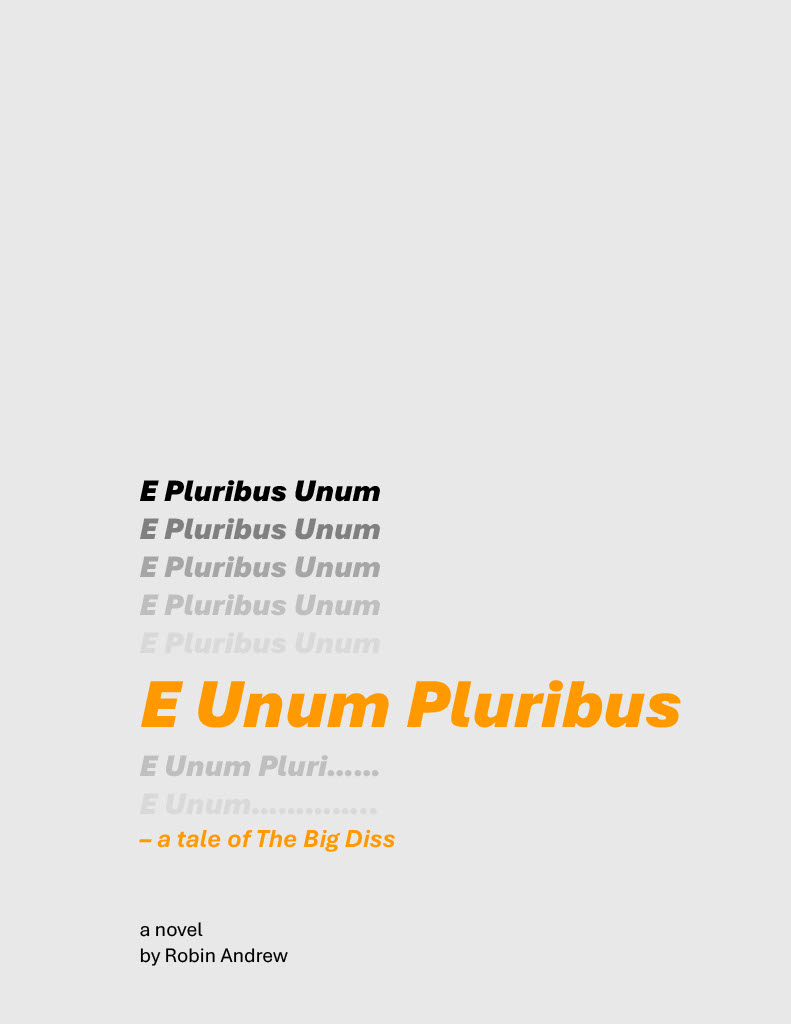
E Unum Pluribus – a tale of The Big Diss, imagines the United States of America dissolving into chaos because its elected representatives ceased to work together for the common good. While the novel is fiction, its premise is plausible, which begs the question – what can an individual do to avoid such a tragic outcome?
Plenty of folks more knowledgeable than I have commented that we’ve all gotten so isolated into our own bubbles – republicans/democrats, conservatives/liberals, red states/blue states, urban/rural, blue collar/elitist; however one summarizes it – that it’s easy to dismiss everyone on ‘the other side’ as unreasonable, unapproachable, unsalvageable or worse.
If (like me) you fear there is some truth to that description, and if (like me) you think forever encouraging division is a dead end – if you’ve ever felt the impulse to disagree when you’ve heard someone say the ‘X’ party is corrupt and they’re all a bunch of ‘z#fqt*^k!s,’ – how about switching your voter registration: to the X Party!
WTF?
First off, once you switch, you will know for certain that there is at least one reasonable person in the X Party – one grain of sand to begin a beachfront of unification.
Second, you may (depending on your state) gain the opportunity to vote in the X party’s primary and improve the chances of their most reasonable candidate. If enough of us do that, we could all have a better set of candidates to choose between in the actual election, instead of one we cannot stomach and one we can support if we have to, but only by holding our collective noses.
Third, although there is no need for any else to know about your switch, should you ever hear someone thoughtlessly badmouthing either party, you might choose to respond by pointing out your agreement or disagreement “even though I’m a registered X!” A single brick pulled out of a wall can improve communication between the two sides.
For whatever it’s worth: I switched to ‘the other party’ over a decade ago. Since that time, I have found myself much more open to hearing ‘other party’ statements and proposals. I certainly do not dismiss all members of my new party out of hand – I am one of them, after all! And I still do not always agree with their (our?) positions, but I feel obliged to at least listen, and much less resistance to acknowledging when a representative of my new party has proposed something worthwhile or productive.
Changing your party doesn’t mean voting for candidates you don’t support. It does mean choosing a future where each side is not so committed to smashing and trashing the other side that it’s virtually impossible to accomplish anything constructive.
Government of the people, by the people and for the people should not be a cage-fight; it should be – and it can be – a mission in which we all share, together.
By now many observers have noted Mr. Trump’s tendency to accuse his detractors of whatever sin he himself is engaged in. Those observations suggest some thoughts around the Great Replacement Theory which, in Trumpian usage, holds that Democrats are intentionally perverting democracy by opening our sacred borders to untold millions of immigrants (who just coincidentally tend to be black, brown and/or from ‘shithole’ countries not part of the Anglo-European heritage which we are now being told defines true Americans).
Thought number one: acknowledging that Mr. Trump won the election in 2024 and so is legitimately occupying the Oval Office, he still received fewer than half the votes cast,* an inconvenient truth which makes one wonder if perhaps there is a hidden thread connecting several of his administration’s current priorities.
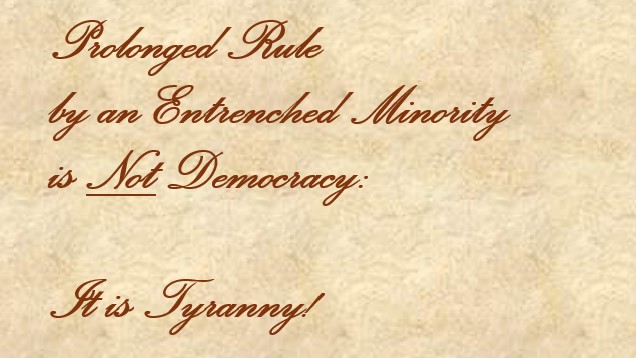
To whit: contrary to the populist image their leader loves to act out, he and any thoughtful members of his court must be aware that theirs is a minority faction and so will never be able to hold power by democratic means. Unable even to rely upon their slender majorities in Congress to do their bidding, they know they cannot govern by legislation (as the Constitution intends) but must rely almost exclusively on Executive Orders, Presidential Determinations, Proclamations, administrative directives by their chosen technocrats, petty prosecutions and the like – despite the dubious validity or effectiveness of many such.
Second, since he and they are unwilling to adjust their policies to the beliefs of the voting majority, they choose instead to speak and act as if the voting majority itself is invalid, tilted toward ‘radical’ outcomes by the presence of millions of non-citizen immigrants. If – goes the fantasy they imply to their base – the administration can eliminate enough of those ‘illegals’ through holding-camps, deportation, self-deportation, remigration or whatever other terms they come up with next, then the voters who are left will constitute their dream of a majority MAGA electorate. That hope energizes their base and recruits enforcers for ICE and other agencies, but unfortunately for MAGA, their inability to produce any credible evidence of voting by non-citizens in numbers that would make any difference in any election at any level demonstrates the fallacy of such hope. Illegal immigrants have never swung actual voting so even their complete extermination would not affect any future outcome. The pro-Trump minority is not democratically viable* and his power can only be ensured by non-democratic means.
Which explains the Administration’s doubling-down on tactics to frustrate the democratic will. Demands for state gerrymandering, discouragingly cumbersome voter ID requirements, restrictions on drop-boxes, voting locations, hours or mail-in options, false accusations of voting machine irregularities, placement of threatening ‘monitors’ at election sites, these and many other strategies are designed to deter enough voters to ensure MAGA victories whether or not the majority of eligible voters want them or, in the worst case, to provide excuses to override the true verdict when it proves they do not.
One can even interpret MAGA’s recent call for Americans to have more children as a supply side complement to these strategies. Refuse to naturalize any but the wealthy and pale at the same time the MAGA faithful produce more and more purebred American babies (who will, presumably, be groomed by their parents to vote the ruling party’s ticket from birth) and they might just turn their minority into a real majority – in twenty or thirty years.
All this can be seen as one more indication we’re lost on a dark and very slippery slope or, looked at from another angle, it may give a sliver of hope. Since the people he is tossing out the door were never part of the majority who voted against him, Mr. Trump’s epic cleansing will do nothing to change his minority status. In fact, if the callousness and brutality of it repels even a few of his past followers, it will actually drive his share of future vote tallies lower. In which case, the majority of the American electorate may one day reject Mr. Trump’s imperium by a large enough margin that not even doomed third-party candidates and the misrepresentative calculus of the Electoral College will be enough to save him.
Here’s hoping that whenever that day comes, there is still a nation left to rebuild!
*Of the three elections in which Donald J. Trump has ever competed, he has never won a majority of the votes cast. If that is any sort of mandate, it is a mandate against Mr. Trump, not for him. The fact that he was elected in 2016 reflected just how unsuited our present Electoral College structure is to today’s electorate, in which the population disparity between large states and small ones is more than five times as wide as it was at the time the Constitution was being developed, yet each of those states still gets an equal two Senate-related votes. The fact he was elected in 2024 despite not winning a majority is its own indictment of an election process held captive to two ossified major parties which cannot possibly represent the true diversity of their electorate.
Like this post? Feel free to share it.
Appreciate what you read here, please subscribe – it’s free!
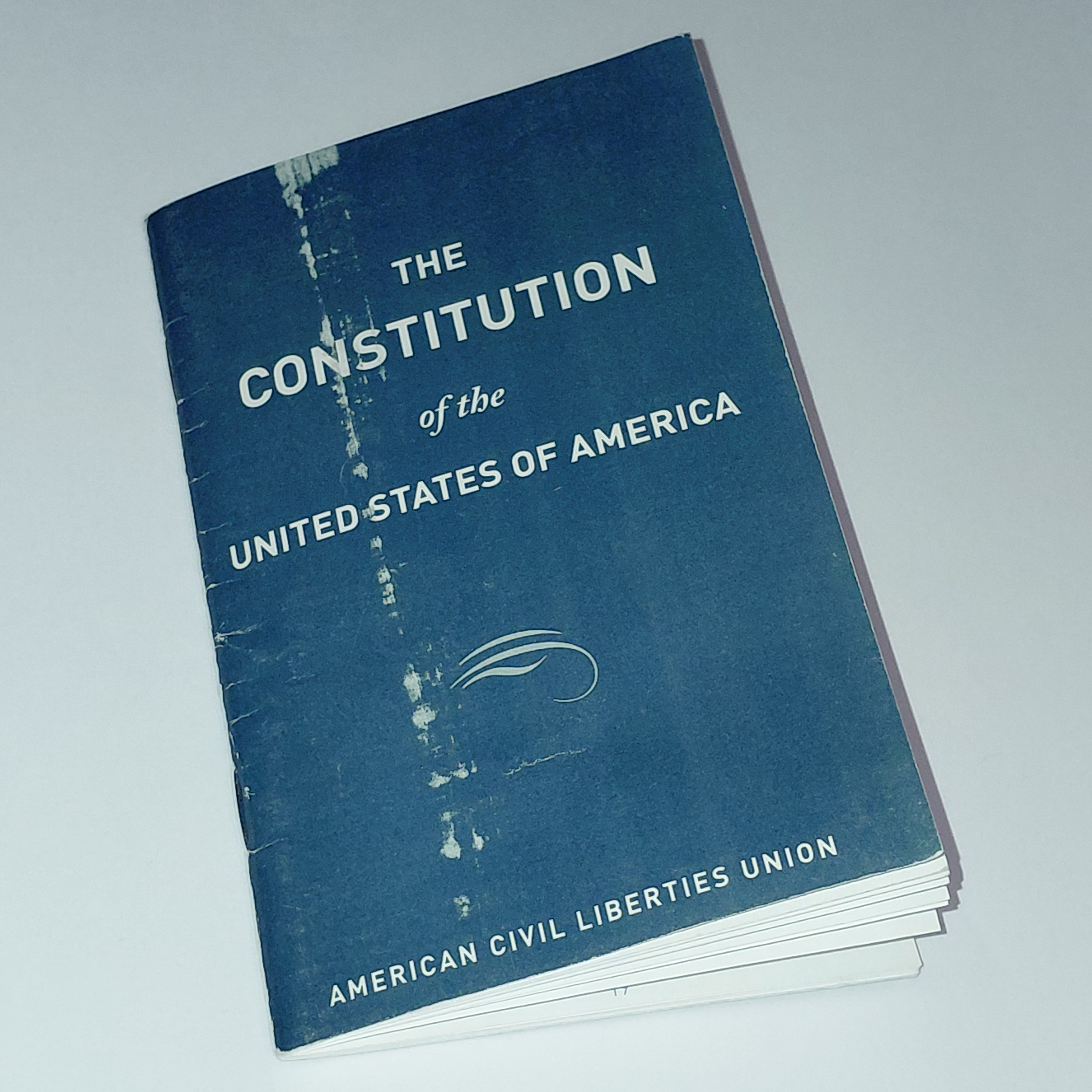
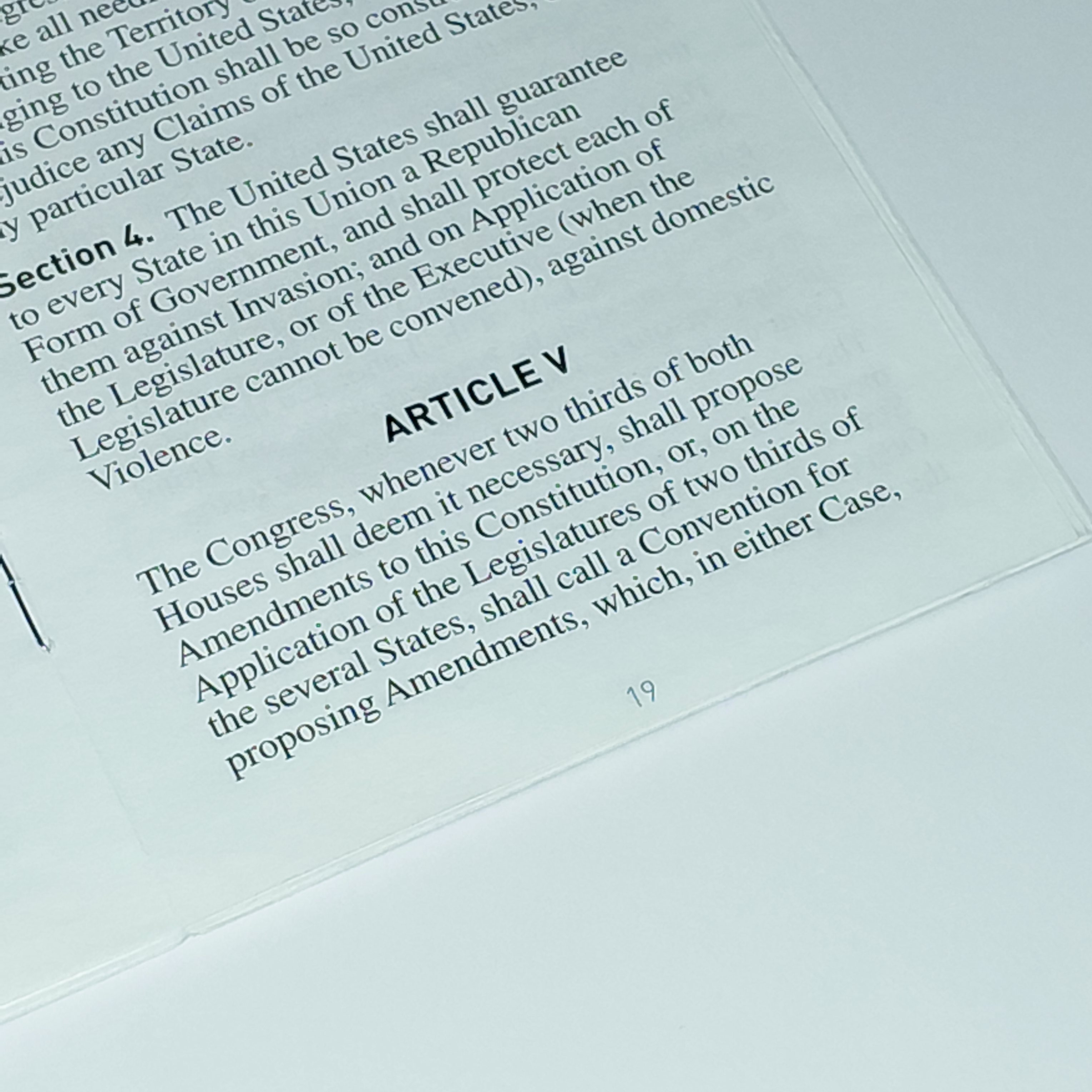
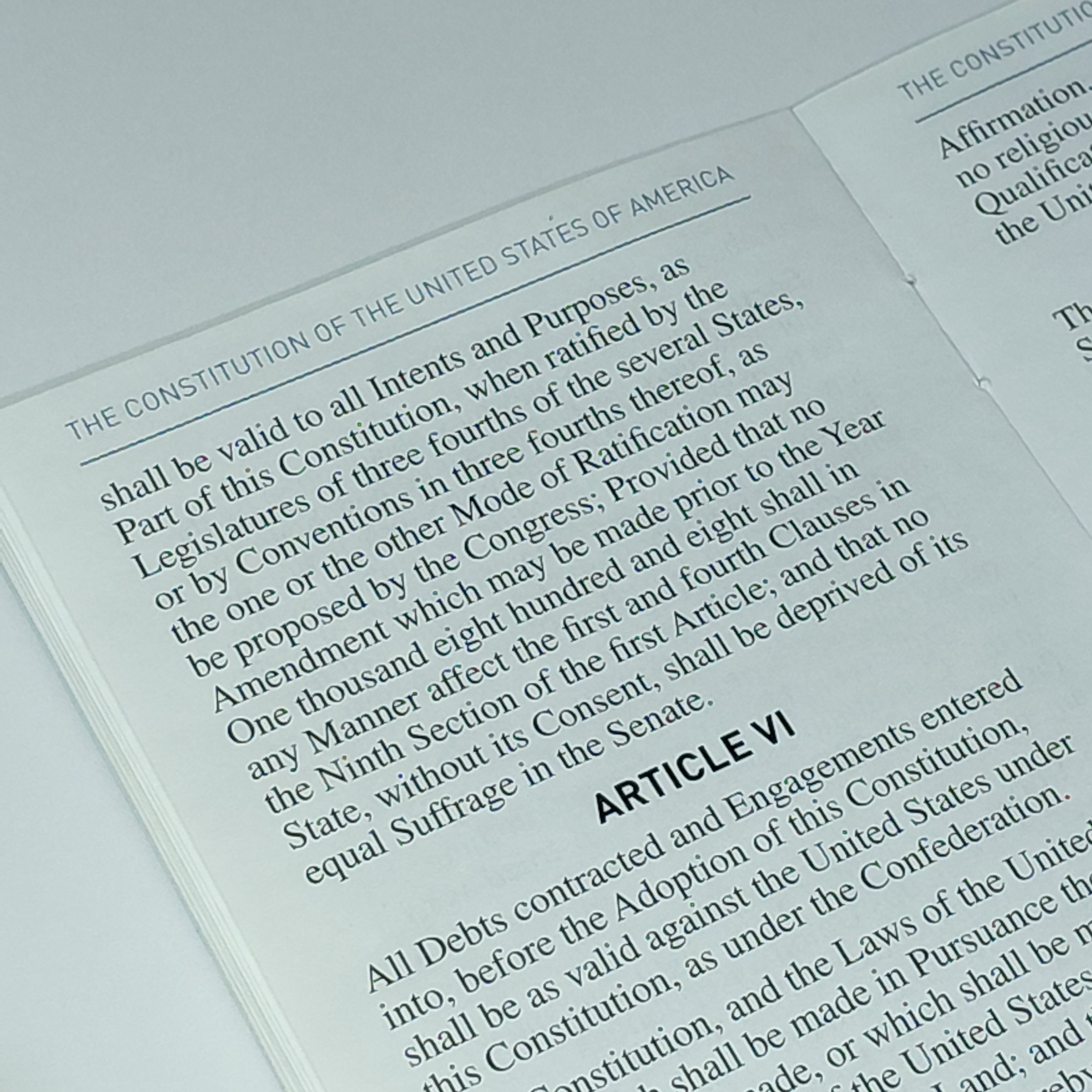
Saw an excellent opinion piece recently about the history of Amendments to the U. S. Constitution, starting with the fact that the document’s authors fully intended it to be revised – the Amendment process is written in, after all (Article V) – and running up through our fifty-plus-year drought of amendments since the 1970’s. It can certainly be argued whether our current divisiveness and the dysfunctionality of Congress are one reason we’ve had no Amendments recently, or one result of that, but the phenomena are certainly related to one another.
Well-thought-through and widely-accepted new Amendments could allow our nation’s founding document to grow and adapt to conditions which have changed dramatically, including: a population which has gone from about four million peeps in 1790 to some 330 million in 2020; a mix of states which has gone from 13 small, young and rural ones to 50 with wildly varied histories, populations and urban/rural characters; multiple technological and cultural revolutions; and an international context the Founders might well struggle to recognize.
Given all that, here are a few modest proposals to be considered when the time seems right
Free the Courts: we’ve all been taught that the Federal government has three branches -the Legislative, the Executive and the Judicial (perhaps equal, perhaps not, depending…) and that this configuration ensures checks and balances on the power of each, thereby protecting the system and our freedoms. Current events are making clear that the Judicial branch is not really an effective check or balance so long as the Chief Executive appoints (even with Legislative approval required) and can fire (at will and whim) the Attorney General, thus allowing that Executive to direct and weild the enormous power of the Department of Justice as he or she wishes. A new Constitutional Convention, or a renewed and less-rigidly divided and more collaborative Congress would do well to consider an Amendment to remedy this by making Justice independent of the Executive branch and the Attorney General an elected office with a four year term, perhaps voted upon in Presidential off-years, and no longer a member of the President’s Cabinet (though still with other rights and privileges of Cabinet level responsibility and authority).
While we’re at it: how about also solidifying the makeup of the Supreme Court by fixing it’s number (rather than leaving it vulnerable to change by some future legislature) and specifying a limited term for justices (so the Court better reflects gradual changes in society and culture) with staggered start dates (so no one President/term gets to appoint more justices than another (whether by random happenstance or by McConnel-esque abuses of Congress’s approval authority). Those changes would work against the politicization some believe we are experiencing with the current Court. And, since we’re talking pie in the sky, maybe even consider requiring each Justice as they take their seat to designate a successor who will fill out the rest of their term should they die, be incapacitated or simply exhausted before it runs out (thus avoiding any lucky President – or violent actor – taking advantage of such an event to pack the court with their preferred jurists).
Speaking of elections: one aggravator of our recent discord has been the ascent of Presidents to office without receiving even the barest majority of the votes cast (not to mention those who did not even receive a plurality!). More than just casting doubt upon a leader’s legitimacy, this has led too many citizens to conclude that their votes are not worth casting. A constitutionally-mandated two-stage election would address this issue, with as many candidates/parties running in the first stage as wish to and then just the two top vote getters participating in a run-off election to decide who will hold the office. That format would ensure the winner receives a majority of votes, while also offering an unmistakable indicator of just how strong or weak is their mandate. It might also diminish the stranglehold of two-party politics, since a third-party or independent candidate need only defeat one of the two major parties to reach the runoff (and have a legitimate chance at the White House), rather than having to surpass both of them from a standing start as under the current system. Whatever expense or delay is incurred by this two-stage process might have ruled it out back in the founders’ days of carriage rides and snail mail but would be entirely manageable in today’s electronic age.
(Debating and reaching agreement on issues like those might even serve as a warm-up so said Congress or Convention could address the stalemate between small and large states with an amendment that retires or at least updates the Electoral College so Presidential Elections would more fairly deal with the enormous disparities in populations relative to Senatorial votes.)
Obviously, tons of other ideas for amendment are out there and more will quickly arise if the ball ever gets rolling, but those above seem to this writer to be top of the list. The time is ripe for us to use the tool those wise heads passed down to us in order that their legacy may be improved and sustained for many more generations!
P. S. – This post was inspired in part by “Amend It!” written by Jill Lepore and appearing in the print and online editions of The Atlantic, October 2025. Neither M. Lepore nor The Atlantic have any connection to this post or site, nor are either in any way responsible for its content.
If you find this post of interest,
please feel free to share it with others.
If you like what you find here at robinandrew.net,









 RobinAndrew