
Tag Archives: E Pluribus Unum

Stronger Together

“… you can talk all you want about international niceties and everything else, but we live in a world…that is governed by strength, that is governed by force, that is governed by power. These are the iron laws of the world that have existed since the beginning of time.” 

Where commentator Leighton Woodhouse rightly sees those words of Trump-whisperer Stephen Miller as a retreat from Christian values*, they also suggest a tragic misread of our nation’s history.

As Ken Burns’ recent documentary, The American Revolution vividly reminds, the story of the USA has never been that of the strongest and most powerful singlehandedly dominating those around them.  Rather, the founding generations were wise enough to see that their thirteen colonies must work together- despite very significant differences around religion, economics, politics and, perhaps most profoundly, the pernicious institution of slavery – in order for any among them to have a hope of breaking free from British tyranny.

Once the colonists united – a unity as messy, tenuous and frustrating as any representative system tends to be – even their combined numbers and resources did not assure success; from its start, the colonial coalition actively sought the support of other nations.  Ultimately, after six long years of brutal fighting, it was direct French participation (along with the indirect assistance of other nations and peoples who further taxed the Britain’s resources by opposing it in other parts of the world), that enabled Washington’s forces to triumph at Yorktown, turning the tide of attrition and so winning our independence. 

Power, strength and force, yes, but born of compromise, cooperation and alliance; that is what allowed a band of ragged upstarts to defeat the British Empire, which was, at that time, the greatest exemplar of Mr. Miller’s professed ‘laws’ of existence.

Similarly, the decades which established America as a superpower were never about the U.S. going it alone, even if we were by some measures the most powerful single nation.  Both World Wars were won by alliances in which we participated, sometimes as leaders sometimes not (Russia’s defeat of Nazi forces on the Eastern Front set the stage for Hitler’s eventual defeat which was, until then, far from a certain outcome).  Nor was the Cold War ‘won’ by unilateral American action; we could not have strained the Soviet economy to the point of failure without the economic cooperation and military participation of our allies in Europe and elsewhere – including Japan and Germany, two one-time conquerors whose defeat in war was accomplished through force but whose rehabilitation and future contributions as allies were made possible by reason, cooperation and patient hard work.

Yes, the qualities Miller cites – strength force and power – play a role in life and international relations.  And yes, there are ruthless players in the world today against whom we must defend our nation and civilization.  But coming from a cadre dedicated to belligerent unilateralism, who have employed military force, willful brutality and a single-minded claim of their own superiority against not only other nations but many of their fellow citizens as well, his proclamation smacks not of wisdom but of hubris.   If he and his ilk won’t take the word of American history for that, let them consider how few of history’s most famous strong, forceful and powerful tyrants – Stalin, Mao, Pol Pot, Bismark, Napoleon, Alexander, Julius Caeser, et al – established or continued any institution which lasted nearly as long as the 250 years which our more measured nation celebrates this year.

Perhaps a dog-eat-dog America such as Mr. Miller envisions can temporarily proclaim itself a bigger fish by shrinking its pond to just the western hemisphere and consigning the rest of the world to their own fate.  But the USA is and always has been a part of the world and will eventually be affected by the fate of other nations.  If we wish truly to fulfill the promise of its founding, to honor that era’s sacrifices and to deserve the bounties we all continue to enjoy thanks to them, we must relearn the value of building alliances and collaborating with like-minded forces wherever they reside. 

America First has never been America Alone

(And if, as it sometimes seems, Mr. Miller’s and Mr. Trump’s real goal is to forge an alliance between the USA and Vladimir Putin’s Russia, one need only look at the quality of life, rule of law and economic vitality of Russia today to see where that road leads.)

*Donald Trump, Pagan King, by Leighton Woodhouse, New York Times online, 2026-01-11

P.S. – For another vision of how our current politics may play out, try E Unum Pluribus, currently available free of charge to Beta Test readers. Click the box below to access its first installment: 

I hope you will take a look, and even if you do not, please share this post with anyone who believes the written word can help to bring us together!


Novel Words – fictional pronouns for the actual future.

John McWhorter published an Opinion piece recently* about the evolution of pronouns, with particular attention to a new character gaining attention among users of the Mandarin language (X也, shown in image above, combines features of the characters for both he and she, rather as some persons do). Along similar lines, a new novel, E Unum Pluribus, speculates a future American city/state called Confluence in which government edict directs all official communications to employ non-gendered pronouns. The novel’s events make clear that Confluence’s government has plenty of faults and weaknesses, but this one of its policies merits some consideration.

For generations the convention in English was to use ‘he/him/his’ as default and inclusive of all, regardless of their sex/gender. Appropriately, that has now been perceived as favoring male identity over female; simultaneously reflecting historic inequality and perpetuating it. Replacing all those instances with ‘he or she,’ ‘his or her,’ etc. is hardly workable, especially in spoken communications, and still carries a hint of misogyny by placing one gender ahead of the other, whereas ‘she/he’ risks offending insecurities on the other side of the identity coin.

Recent efforts to innovate ‘they’ as a singular pronoun for persons who choose to declare themselves non-binary run aground first on its pre-existing function as plural, generating confusion where they intend clarity. That usage also seems to open the door to a trickle of additional new pronouns as various groups or orientations demand similar recognition; one need only read the snarky online critiques of how LGBT has grown to LBGTQIA2S+ to know that is not a path to tolerance so much as a guarantee of further friction. Worst, in this opinion, ‘they’ singular requires persons who prefer not to be stereotyped as either ‘he’ or ‘she’ to state that publicly, thereby outing themselves and very possibly inviting prejudice, at least at this point in our societal evolution.

The fictional founders of Confluence have taken another approach; directing official communications to use ‘e/em/eir’ for all individuals. This treats everyone with equal respect and does not require the clunky ‘my pronouns are…’ , which can itself incite prejudices. The specific form, ‘e,” ‘em,’ and ‘eir’ are brief and efficient, similar enough to other pronouns that they quickly feel familiar but with sufficient difference to avoid confusion**.

By applying equally to all possible personal preferences ‘e’ equalizes all in one swoop while tacitly expressing the truth that for virtually all public or official interactions there is no proper reason to indicate what genitalia an individual bears or with whom they choose to become intimate. Those are – and should remain – irrelevant.

There’s nothing revolutionary here, by the way, modern English already has gender neutral pronouns – ‘they’ does not presume the gender of a group or any of its individuals. ‘It’ can be used for all objects – unlike French, say in which some nouns require feminine constructions and other nouns masculine, despite the objects having no actual sexual function or accoutrements. Most prominently, ‘I’ is the same for any individual regardless of sex, gender or other characteristic. It is really only in the second person singular that our language’s evolution has codified an unfortunate and outdated discrimination.

In the world of E Unum Pluribus, that governmental edict for official communications also does not mean ‘e’ is used by everyone all the time. Non-official conversations use gendered pronouns wherever a subject’s preference has become clear, sticking to gender-neutral when an individual’ presentation is itself gender neutral. As in real life, casual usage and common courtesy have the final word in how language evolves over time.

(For what it’s worth, future posts on this site may selectively incorporate ‘e/em’eir’ pronouns to explore just how functional they are – or are not.)

*“This Novel Word Speaks Volumes About How an Entire Language Works” N. Y. Times online edition, 2026-01-22

** E Unum Pluribus does not claim to have invented the ‘e/em/eir’ construct.  Variations on what are sometimes called ‘Spivak pronouns’ have been noted at least as far back as the late 19th-century.

P. S.: E Unum Pluribus is a tale of murder and conspiracy set a decade or so in our future in one of many small sovereignties sprung up in wake of the USA’s self-destruction. The novel explores multiple themes – language and gender, identity, guilt and even the origins of faith and belief – but speaks loudest in its depiction of how much we all stand to lose if we continue to retreat into factions which each act only for their own needs and interests.

The manuscript is available in six instalments, starting at:

If you like what you read here or at robinandrew.net, please share any posts as widely as possible – and consider subscribing: it’s totally free!

Change your party – change the future!

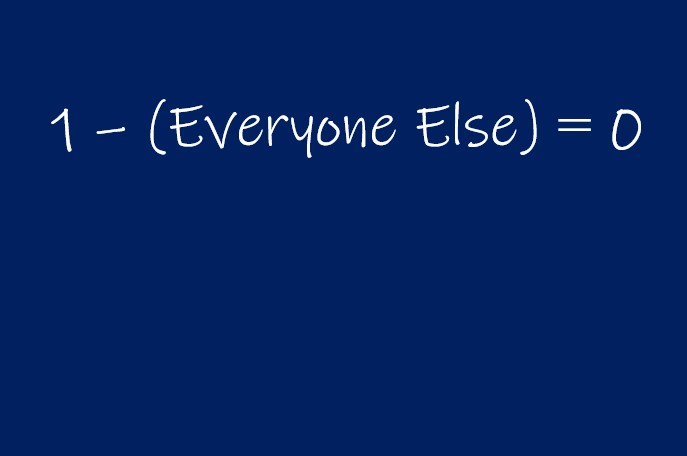
E Unum Pluribus – a tale of The Big Diss, imagines the United States of America dissolving into chaos because its elected representatives ceased to work together for the common good.  While the novel is fiction, its premise is plausible, which begs the question – what can an individual do to avoid such a tragic outcome?

Plenty of folks more knowledgeable than I have commented that we’ve all gotten so isolated into our own bubbles – republicans/democrats, conservatives/liberals, red states/blue states, urban/rural, blue collar/elitist; however one summarizes it – that it’s easy to dismiss everyone on ‘the other side’ as unreasonable, unapproachable, unsalvageable or worse. 

If (like me) you fear there is some truth to that description, and if (like me) you think forever encouraging division is a dead end – if you’ve ever felt the impulse to disagree when you’ve heard someone say the ‘X’ party is corrupt and they’re all a bunch of ‘z#fqt*^k!s,’ – how about switching your voter registration: to the X Party! 

WTF?

First off, once you switch, you will know for certain that there is at least one reasonable person in the X Party – one grain of sand to begin a beachfront of unification.

Second, you may (depending on your state) gain the opportunity to vote in the X party’s primary and improve the chances of their most reasonable candidate.  If enough of us do that, we could all have a better set of candidates to choose between in the actual election, instead of one we  cannot stomach and one we can support if we have to, but only by holding our collective noses.

Third, although there is no need for any else to know about your switch, should you ever hear someone thoughtlessly badmouthing either party, you might choose to respond by pointing out your agreement or disagreement “even though I’m a registered X!”  A single brick pulled out of a wall can improve communication between the two sides.

For whatever it’s worth: I switched to ‘the other party’ over a decade ago.  Since that time, I have found myself much more open to hearing ‘other party’ statements and proposals. I certainly do not dismiss all members of my new party out of hand – I am one of them, after all!  And I still do not always agree with their (our?) positions, but I feel obliged to at least listen, and much less resistance to acknowledging when a representative of my new party has proposed something worthwhile or productive.

Changing your party doesn’t mean voting for candidates you don’t support. It does mean choosing a future where each side is not so committed to smashing and trashing the other side that it’s virtually impossible to accomplish anything constructive. 

Government of the people, by the people and for the people should not be a cage-fight; it should be – and it can be – a mission in which we all share, together.