Category Archives: E Unum Pluribus – a novel in installments

Novel Words – fictional pronouns for the actual future?

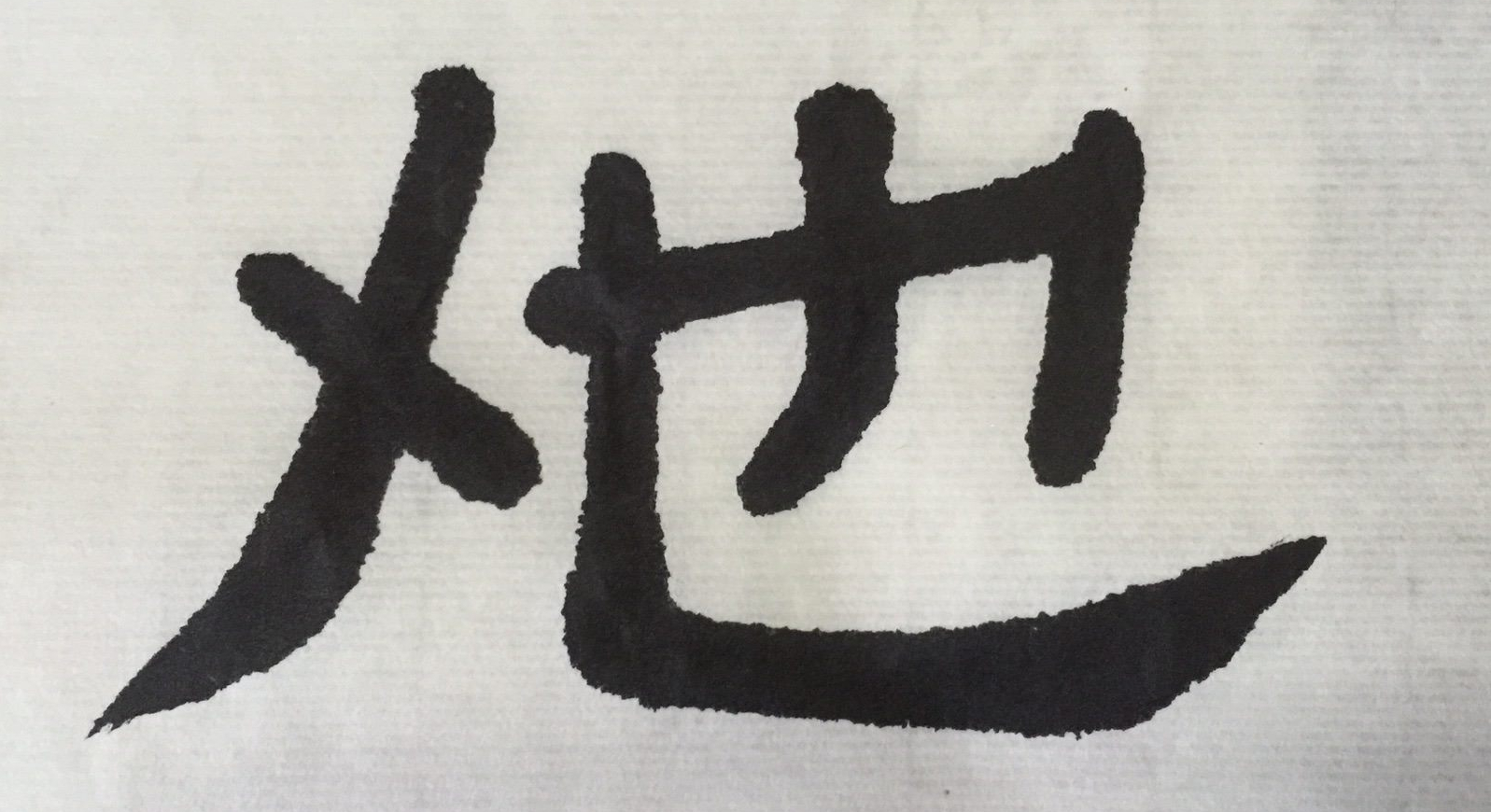
John McWhorter published an Opinion piece recently* about the evolution of pronouns, with particular attention to a new character gaining attention among users of the Mandarin language. Along similar lines, a new novel, E Unum Pluribus, speculates a future American city/state called Confluence in which government edict directs all official communications to employ non-gendered pronouns. The novel’s events make clear that Confluence’s government has plenty of faults and weaknesses, but this one of its policies merits some consideration.

For generations the convention in English was to use ‘he/him/his’ as default and inclusive of all, regardless of their sex/gender. Appropriately, that has now been perceived as favoring male identity over female; simultaneously reflecting historic inequality and perpetuating it. Replacing all those instances with ‘he or she,’ ‘his or her,’ etc. is hardly workable, especially in spoken communications, and still carries a hint of misogyny by placing one gender ahead of the other, whereas ‘she/he’ risks offending insecurities on the other side of the identity coin.

Recent efforts to innovate ‘they’ as a singular pronoun for persons who choose to declare themselves non-binary run aground first on its pre-existing function as plural, generating confusion where they intend clarity. That usage also seems to open the door to a trickle of additional new pronouns as various groups or orientations demand similar recognition; one need only read the snarky online critiques of how LGBT has grown to LBGTQIA2S+ to know that is not a path to tolerance so much as a guarantee of further friction. Worst, in this opinion, ‘they’ singular requires persons who prefer not to be stereotyped as either ‘he’ or ‘she’ to state that publicly, thereby outing themselves and very possibly inviting prejudice, at least at this point in our societal evolution.

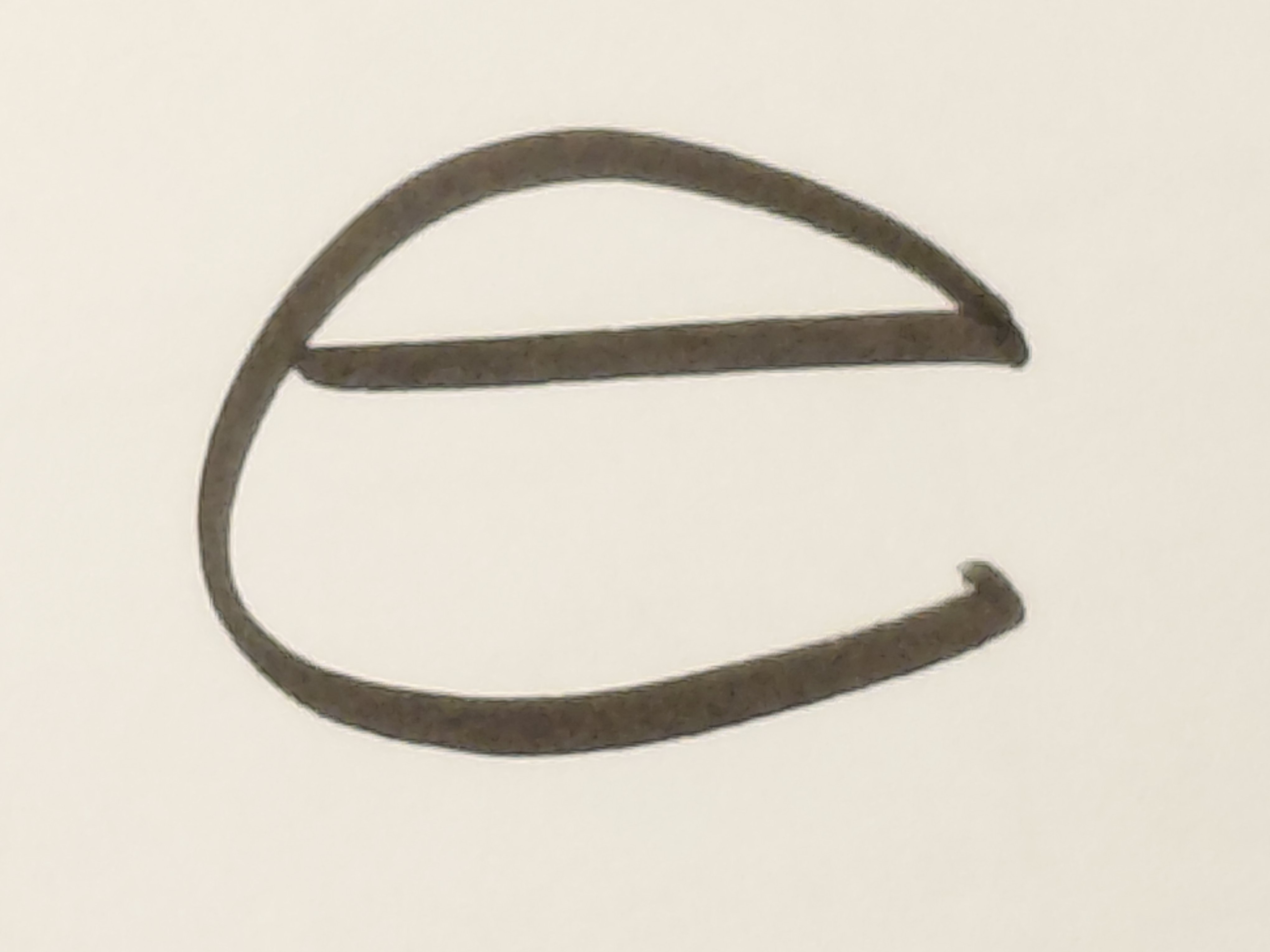
The fictional founders of Confluence have taken another approach; directing official communications to use ‘e/em/eir’ for all individuals. This treats everyone with equal respect and does not require the clunky ‘my pronouns are…’ , which can itself incite prejudices. The specific form, ‘e,” ‘em,’ and ‘eir’ are brief and efficient, similar enough to other pronouns that they quickly feel familiar but with sufficient difference to avoid confusion**.

By applying equally to all possible personal preferences ‘e’ equalizes all in one swoop while tacitly expressing the truth that for virtually all public or official interactions there is no proper reason to indicate what genitalia an individual bears or with whom they choose to become intimate. Those are – and should remain – irrelevant.

There’s nothing revolutionary here, by the way, modern English already has gender neutral pronouns – ‘they’ does not presume the gender of a group or any of its individuals. ‘It’ can be used for all objects – unlike French, say in which some nouns require feminine constructions and other nouns masculine, despite the objects having no actual sexual function or accoutrements. Most prominently, ‘I’ is the same for any individual regardless of sex, gender or other characteristic. It is really only in the second person singular that our language’s evolution has codified an unfortunate and outdated discrimination.

In the world of E Unum Pluribus, that governmental edict for official communications also does not mean ‘e’ is used by everyone all the time. Non-official conversations use gendered pronouns wherever a subject’s preference has become clear and stick to gender-neutral when an individual’ p[resentationis itself gender neutral. As in real life, casual usage and common courtesy have the final word in how language evolves over time.
(For what it’s worth, future posts on this site may selectively incorporate ‘e/em’eir’ pronouns to explore just how functional they are – or are not.)

*“This Novel Word Speaks Volumes About How an Entire Language Works” N. Y. Times online edition, 2026-01-22

** E Unum Pluribus does not claim to have invented the ‘e/em/eir’ construct.  Variations on what are sometimes called ‘Spivak pronouns’ have been noted at least as far back as the late 19th-century.

P. S.: E Unum Pluribus is a tale of murder and conspiracy set a decade or so in our future in one of many small sovereignties sprung up in wake of the USA’s self-destruction. The novel explores multiple themes – language and gender, identity, guilt and even the origins of faith and belief – but speaks loudest in its depiction of how much we all stand to lose if we continue to retreat into factions which each act only for their own needs and interests.

The manuscript is available in six instalments, starting at:

If you like what you read here or at robinandrew.net, please share any posts as widely as possible – and consider subscribing: it’s totally free!
A free book? Why?

As the years 2016 to 2020 unfolded, I found myself preoccupied with a particular aspect of human history: that even the greatest empires, dynasties, governments and nations have each eventually ended and been replaced by…something else.  The ongoing self-segregation of Americans along various lines – urban/rural, elites/masses, investors/workers, digital/analog, etc – suggested our own nation’s end might come sooner than later, and not through some external conquest, virulent plague or invasion of space aliens, but our simple failure to appreciate the myriad benefits of remaining ‘United.’ 

Starting in 2021, those thoughts began to coalesce into a speculative fiction, structured as a tale of murder and conspiracy happening a decade or so in our future in one of many new sovereignties sprung up among the remains of the U. S. of A. The novel toys with other themes as well – of language and gender, identity, guilt and even the origins of faith and belief – but speaks loudest in its depiction of just how much we all stand to lose if we remain divided into factions which each act only for their own needs and interests.  

Writing the book took many months and once it seemed ready, the publishing industry proved impenetrable, even as the politics of disorder and division grew stronger.  By the end of 2025 it had become clear I must find another pathway to the public and so I offered the first installment in a post which can be reached via the following link:

That and all subsequent installments may also be accessed via the ‘E Unum Pluribus’ buttons in the top menu or the right-side Categories list of this website’s home page.

Maybe the novel will find an audience this way, maybe not, but regardless, if you believe in the message that we Americans must overcome our divisions and preserve the USA as a government of all the people, by all the people and for all the people – or if you simply support authors being heard without reliance upon the gatekeepers of corporate commercial publishing – please share this post and the above link as widely as possible.

Sincerely hoping the world of E Unum Pluribus turns out to have been a naïve exaggeration, and wishing this great nation the good fortune of avoiding it, I thank you,

Robin Andrew

Change your party – change the future!

E Unum Pluribus – a tale of The Big Diss, imagines the United States of America dissolving into chaos because its elected representatives ceased to work together for the common good.  While the novel is fiction, its premise is plausible, which begs the question – what can an individual do to avoid such a tragic outcome?

Plenty of folks more knowledgeable than I have commented that we’ve all gotten so isolated into our own bubbles – republicans/democrats, conservatives/liberals, red states/blue states, urban/rural, blue collar/elitist; however one summarizes it – that it’s easy to dismiss everyone on ‘the other side’ as unreasonable, unapproachable, unsalvageable or worse. 

If (like me) you fear there is some truth to that description, and if (like me) you think forever encouraging division is a dead end – if you’ve ever felt the impulse to disagree when you’ve heard someone say the ‘X’ party is corrupt and they’re all a bunch of ‘z#fqt*^k!s,’ – how about switching your voter registration: to the X Party! 

WTF?

First off, once you switch, you will know for certain that there is at least one reasonable person in the X Party – one grain of sand to begin a beachfront of unification.

Second, you may (depending on your state) gain the opportunity to vote in the X party’s primary and improve the chances of their most reasonable candidate.  If enough of us do that, we could all have a better set of candidates to choose between in the actual election, instead of one we  cannot stomach and one we can support if we have to, but only by holding our collective noses.

Third, although there is no need for any else to know about your switch, should you ever hear someone thoughtlessly badmouthing either party, you might choose to respond by pointing out your agreement or disagreement “even though I’m a registered X!”  A single brick pulled out of a wall can improve communication between the two sides.

For whatever it’s worth: I switched to ‘the other party’ over a decade ago.  Since that time, I have found myself much more open to hearing ‘other party’ statements and proposals. I certainly do not dismiss all members of my new party out of hand – I am one of them, after all!  And I still do not always agree with their (our?) positions, but I feel obliged to at least listen, and much less resistance to acknowledging when a representative of my new party has proposed something worthwhile or productive.

Changing your party doesn’t mean voting for candidates you don’t support. It does mean choosing a future where each side is not so committed to smashing and trashing the other side that it’s virtually impossible to accomplish anything constructive. 

Government of the people, by the people and for the people should not be a cage-fight; it should be – and it can be – a mission in which we all share, together.

E Unum Pluribus

Wondering where our nation’s increasingly divisive politics may lead us? E Unum Pluribus is a new novel which explores one very real possibility:

Amid feudal chaos following the USA’s collapse, one city-state seems promising, until an amateur’s murder investigation exposes its weaknesses and the conspiracies threatening to destroy it.

In order to receive community input, I’m serializing a Beta Test draft of E Unum Pluribus free of charge. (So I can track interest, the final installment may be posted only to subscribers, but even that subscription will be totally free of charge or obligation.) A .pdf of Installment One is included below and may also be downloaded for a more comfortable reading experience. Either way, you get to explore this new novel at absolutely no expense!


Succeeding installments are available at robinandrew.net by selecting the ‘E Unum Pluribus’ button in the home page’s top-menu.

In addition to posting the manuscript, I will be sharing thoughts about the novel’s themes and objectives in future posts on both this website and on Substack at nobodysays2025.substack.com

If you find E Unum Pluribus of interest – or if you simply support the concept of authors sharing their work without reliance upon commercial publishing corporations – please share this post as widely as possible.

Have a wonderful 2026!

Robin Andrew