Tag Archives: Politics

One Ring to Rule Them All – The Breathtaking Cynicism (and Naivete) of Trump v. United States

It is over a year since the Supreme Court issued their 6-3 ruling on Docket no. 23-939, Donald J. Trump versus the United States of America, which ruling granted the President immunity from Federal prosecution for virtually any acts while in office.

No such immunity having been written in the Constitution, their reasoning (originalism be damned) seems to have been that the fear of prosecution would be an undue distraction from the office’s duties and that the fear of such prosecution would impede a President from taking actions he otherwise believed necessary or justified. 

This ruling was cynical first in that it assumed a person who had sought and won the highest office in the land would value his own fate (political, financial or otherwise) more highly than the proper execution of that office.   Sadly, in the opinion of some observers, they have already been proven correct on that count.

The ruling was cynical second in assuming that even such a self-interested person, upon achieving the office whose responsibilities include selecting the head of its Department of Justice would not have sufficient faith in his appointees and the legal system they administer to rely upon that system to issue proper verdicts in the event he was subjected to improper prosecution. In this, the Court disregarded the basic conservative rationale that the possibility of prosecution provides a necessary and effective deterrent to illegal behavior. In this respect, their cynicism has freed the incumbent to act with total disregard of credible legal justification.

Third, and most cynical of all, is that the Justices did not themselves have sufficient faith in the American legal system, of which they are the figurehead, to use their position, prestige and ruling to assure the President that he could rely upon that system for protection.  Every other person in every U. S. jurisdiction lives every day of their lives knowing they could be prosecuted for something of which they do not believe they are guilty, and every one of us has no choice but to trust in the legal system to protect us.  And yet, our Supreme Court deemed it unwise to ask the holder of the highest public trust to do the same?  Breathtakingly cynical, and shameful.

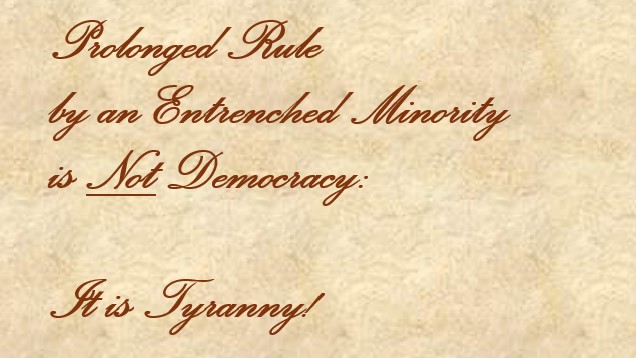
Those thoughts were on my mind at the time the ruling came out, and I considered posting them, but sadly, did not get around to it.  Now, as Mr. Trump’s second term reveals its true form, it is clear that ruling was not only cynical, but at the same time equally naive.  By freeing the President from any accountability other than impeachment (the highest hurdle in the legal system and one which has not once taken effect, in nearly 250 years), the court’s ruling has encouraged him to act as he pleases, including to persecute with impunity anyone he chooses.

Moreover, in doing so while also leaving in place his virtually unlimited power to pardon, the Court allows him to hand a ‘Get out of Jail Free’ card to anyone who does his bidding.  Far from protecting the nation, this greatly encourages improper acts of any sort by anyone who believes they can maintain the President’s favor.  In the few short months of this administration, we can already see this effect at work; that the Court’s majority did not foresee this outcome but instead enabled and encouraged it, exhibits breathtaking naivete, at the least. 

The result of these twin privileges, one clear in our Constitution and the other added to it by the recent decision, is that the chief executive may now act out his every whim, without fear of legal restraint for him or his followers.

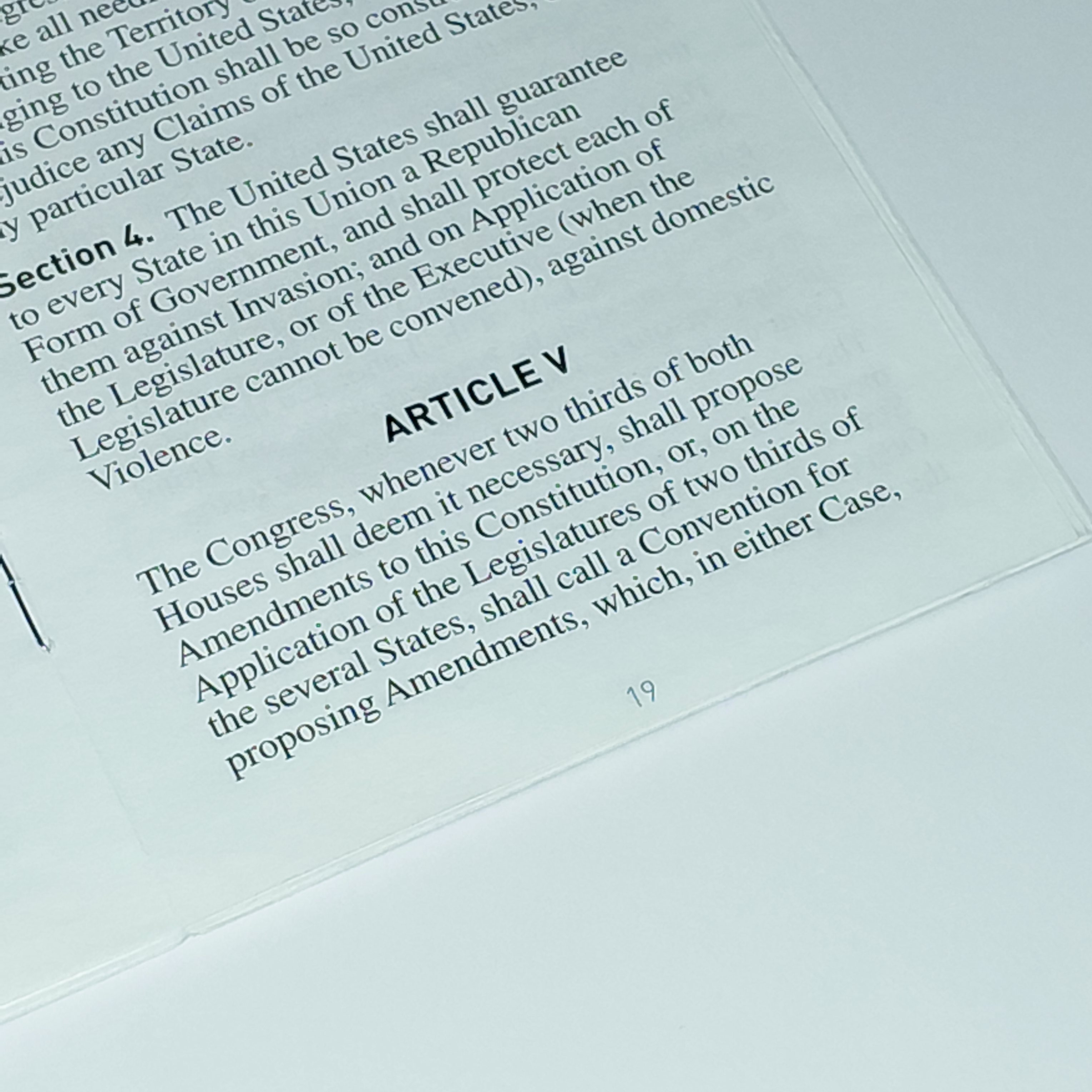
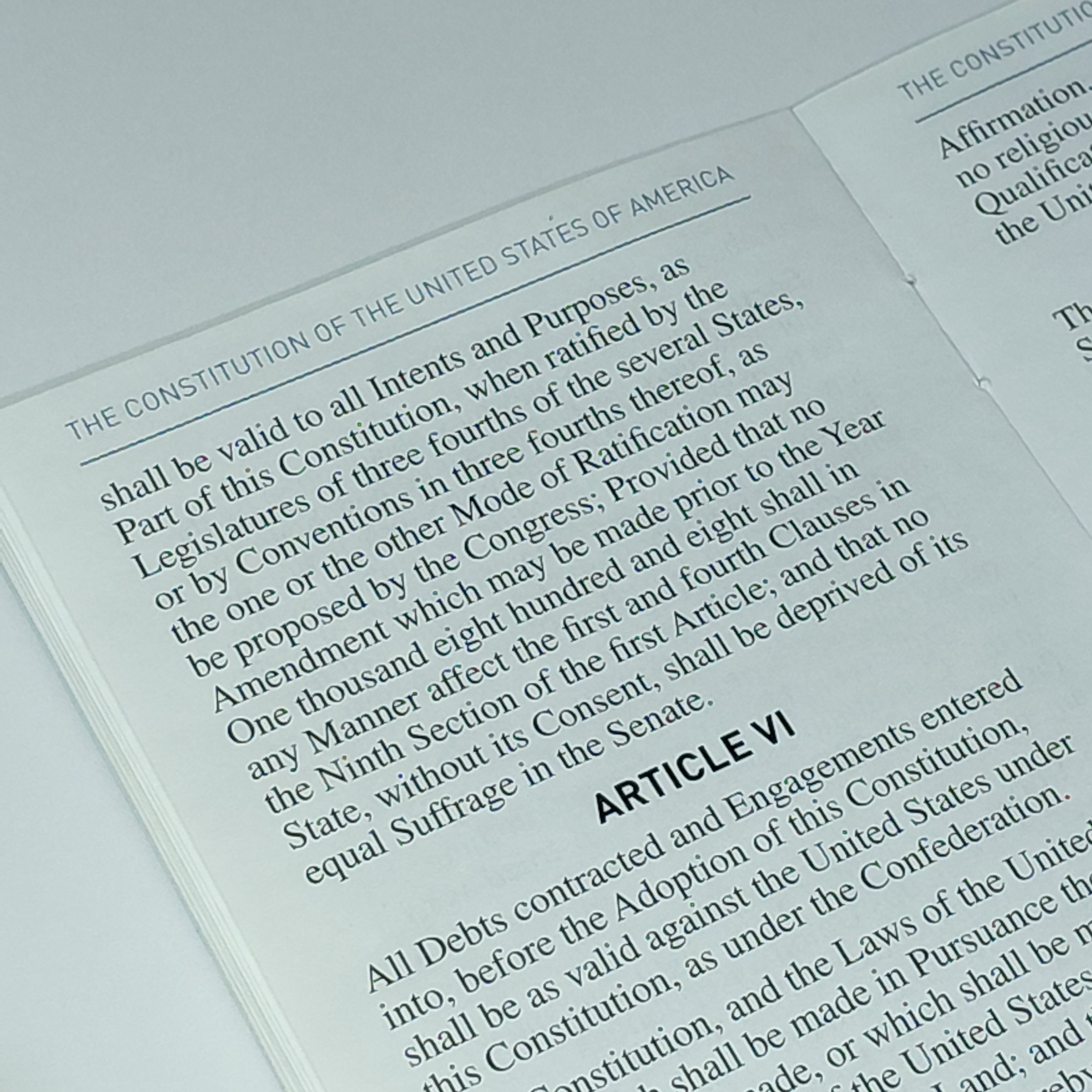
If this was the ‘original intent’ of the authors of the Constitution, then that document is not at all what generations of us have been taught to believe it was.  If that was not the original intent, then shame be on the authors of the Court’s opinion in the case so very aptly named: Donald J. Trump versus the United States.

U-flying-O’s!

Started yesterday on the front porch, breathing in the scent of fresh rain – our first in several months – and reading about the Executive’s use of our armed forces to summarily execute a boatload of what it claims (without substantiation) were ‘terrorists’ because they were transporting drugs headed (again, without substantiation) to consumers in our nation.  This despite the Constitution’s clear directive that it is Congress, not the Executive, who has the authority to commit the nation to war.

At the same time, we have clear statistical indicators that the economy is heading downward and the budget deficit upward despite the supposed magic bullet of a massive tax increase – in the form of tariffs – being arbitrarily imposed on the masses (us all) without Congressional authorization, and an upcoming deadline to pass a funding bill in order to avoid another government shutdown with all that that implies.

Not to mention extortionate prosecutions of news, educational, scientific and legal institutions for the sin of exposing the Executive’s actions to logic, fact and the laws by which all the rest of us must abide.

So it was of interest, scanning headlines before heading inside for another cuppa, to see that Congress was, at that very moment, using the People’s time, facilities and dollars for a hearing on whether or not the military is hiding evidence regarding UFOs.

Can there be any better illustration that this Congress has abdicated its role in governing the nation, than this – that with so many intensely real and vitally urgent issues of authority, accountability and simply doing their jobs, our representatives are pursuing rumors about U-flying-Os!

P. S. – That day ended with news of the killing of activist and influencer Charlie Kirk.   Terrible news; a tragic destruction of life and an unjustified act of pointless violence, regardless of his or anyone else’s political opinions.  Here’s hoping the killer is quickly apprehended and brought to justice to discourage any others from similar acts.

Dark at the Crossing, Elliot Ackerman

Ackerman, takes a risk here, venturing into the mind of an Iraqi-American attempting to join the Syrian resistance to Bashar Al Assad’s brutal regime.   Published in 2017, this may have just predated the current literary judgement that any such attempt at empathetic fiction constitutes an unjustifiable act of appropriation.  For this reader, the complexity he portrays in both the would-be fighter and the rest of his cast – all but one of whom are also of Middle Eastern nationalities and ethnicities – justifies the premise.  No, this is not the novel a native Iraqi or Syrian might have written, but neither is it an opportunistic rip-off spawned in ignorance.  Ackerman’s record as a journalist and as a Marine (decorated for actions during tours of duty in both Iraq and Afghanistan) gives him enough credibility, in my view. Besides, his writing of his book in no way prevents anyone of other background from crafting their own. (That he gets published and someone else might not is more properly a comment on the nature of the publishing industry/market than on the right of any author to spend their days following their own visions.)

Moving past all that, Dark at the Crossing presents a convincing and valuable portrait of the desperation endemic to a wartime refugee movement – boys living on handouts along the side of a highway, families hoping to subsist on what they can grow from a single envelope of seeds, a mother’s love warped beyond repair by the unmanageable violence of urban insurrection, lives casually dispatched by blasé warriors barely out of adolescence and under no close command.

More deeply, this dramatic and eventful story is concerned with the question of why men fight such wars.  Yes, there are individuals or moments in which the desire to topple an illegitimate regime is clear and pure, but often the motives are more muddled. Revenge against previous cruelties and atrocities is a deep strain, the need to be active in one’s fate rather than a passive victim seems another.  Also, and perhaps wrapping around all those, is the need to become part of something which feels simply too large to ignore: when your entire world is burning, is there not a moral obligation to pick up a bucket, no matter how small?  Is that not actually an act of love – for those who might be saved today, tomorrow, next year or next decade?

In that, the novel recalls Chris Hedges’ War is a Force That Gives Us Meaning (though Ackerman does not judge such a search for meaning nearly as harshly), and also John Krakauer’s Where Men Win Glory (despite a perspective which could hardly be more different, its depiction of the personal cost such impulses can exact raises similar issues).

For raising and considering such questions, Dark at the Crossing is more than worthy of the time it takes to read and the fraction of an inch it now occupies on my shelf.

How to Get Filthy Rich in Rising Asia, Mohsin Hamid

Version 1.0.0

Posing as satire of the Western world’s self-help book genre, this clever volume starts out strong (“Look, unless you’re writing one, a self-help book is an oxymoron.  You read a self-help book so someone who isn’t yourself can help you, that someone being the author.”) and finishes even stronger.  There is a stretch about three quarters through its slender 220 pages that treads close to familiar crime and corruption thriller terrain, but happily that is only a dalliance, employed by Hamid to bring his protagonist down to earth and set up the final chapters wherein we realize what sort of wealth is really being promoted here, and in what way this book truly proposes to help its readers help themselves.

Along the way, we get a glimpse of what life is like for many hundreds of millions across the globe.  A lesson given greater impact by being written in the second person, casting the reader as protagonist (“The whites of your eyes are yellow, a consequence of spiking bilirubin levels in your blood.”) This choice is particularly effective at impressing readers from prosperous northwestern-quadrisphere cultures (such as myself) with the realities of life for those who indirectly support our affluence (“The virus affecting you is called hepatitis E. Its typical mode of transmission is fecal-oral.  Yum.”)  Later, when a different range of emotions arise among characters in circumstances superficially different from our (my) own, this second-person setting makes plain the conclusion that we are all the same underneath, no matter how different our economics make us seem at first glance.

Lest this sound like a civics lesson, I want to emphasize that the writing throughout is full of wry insight and humor.  To that, the final chapters add great warmth and sympathy for the human condition and an understanding of love, aging and the grace with which those can be faced – when complex and imperfect beings rise to their best potential.  An unexpected and very welcome reward at the end of a brisk and entertaining trip.

Ultra-impressive work by Hamid, who is fast becoming a favorite author.  Originally from Pakistan, he has dual English citizenship, degrees from Princeton and Harvard Law and experiences in the worlds of corporate law and McKinsey consulting to complement his South Asian frame of reference. Author of five novels so far and at least one work of non-fiction (Discontent and its Civilizations: Despatches from Lahore, New York and London, 2014), his is a voice which deserves to be heard, and widely.

Paris Undercover

Version 1.0.0

Paris Undercover – A Wartime Story of courage, Friendship and Betrayal, Matthew Goodman (2025)

At times inspiring, at others horrific, this is an impressive example of historical scholarship and its value in setting the record straight – as opposed to its all too prevalent effect of skewing history to the writer’s preferences.

In the midst of WWII the Etta Shiber’s purported memoir Paris-Underground is published in New York describing the exploits of herself and Kitty Bonnefous, two female resistance workers in Nazi-occupied France.  How that book came about, how much it was fact and how much fiction, and what were the effects its publication, are this current book’s subjects.

Part One of this volume gives us a factual record of the women’s actual lives and actions, up through Etta’s capture trial and imprisonment by the Nazis, thru her eventual release and arrival in New York. (At least I believe this is the factual version.  Given what follows, I do wish Goodman gave us a more explicit assurance to that effect.  In particular, his choice to open with the moment of Etta’s arrival in New York and then backtrack to their exploits confused me when, in Part Two, he informed us that is the way in which Etta’s book was structured.)

Readers looking for a pleasant and inspiring book could perhaps stop right here, and be somewhat satisfied.

Part Two is Goodman’s account of how Etta’s book came to be, how it was or was not written and by whom (there are differing accounts), and the impacts it had on her life..(This is where Goodman details that book’s departures from fact, and where I became a bit confused as to whether what I’d previously read was the true facts, or a replaying of the wartime book’s fabrications.  Perhaps a more diligent reader would not experience any confusion, but I did). What does seem clear though, is that Paul Winkler, himself a Jewish refugee from France, had the leading role as publisher and assembler and probably came out farther ahead financially than anyone else did.  Certainly the book sold well, and Etta Shriber did not get much for it.  What is also clear is that the book’s publication would certainly cause the Nazis to revisit Kitty’s case with even more sadistic vigor than before, likely with deadly consequences for her and others.

By the end of this section, one is angry with Winkler and others, but mostly on the edge of one’s seat, impatient to learn where Kitty has been imprisoned how she has fared while this profit-oriented sideshow was taking place in the safety of North America.  An excellent demonstration of how even a nonfiction book can be structured to maximize its suspense.

Part Three: Into the Night and Fog is the crux of Goodman’s work, a detailed account of Kitty’s imprisonment and mistreatment, the effect of Etta’s book on her such, the terrible  privations she and other prisoners of the Nazis had to endure to survive and even after being ‘freed’ by Soviet troops and, at long last, Kitty’s eventual return to the land of the living, where she lived to very nearly 80 years of age, at last enjoying some comforts and peaceful pleasures despite the debilitating effects of her ordeal.

(Given the chaos and destruction endemic to wartime, especially the end of a World War, it is amazing that Goodman is able to reconstruct this period in such detail and anecdote.  Since the overall purpose of the current volume is to expose the fabrications of Etta’s earlier book, it would have been worthwhile for him to address head on how he is able to be so comprehensive and how he avoided inserting his own imaginings in it, though the extensive Acknowledgements, Notes and Bibliography do help in this regard.)

As with other accounts of wars and particularly the Nazi Reich, one comes away from Paris Underground near despair at the eagerness of some men (and a few women, too) to inflict unnecessary pain and agony on other humans.  And, at the same time, amazed at the ability of many humans to survive mistreatment and hardships that would seem, if described in the abstract, unendurable.

A compelling and thoroughly worthwhile read, but not pleasant, and not for the faint of heart.

 The Netanyahus: An account of a Minor and Ultimately Even Negligible Episode in the History of a Very Famous Family, Joshua Cohen

Started reading this in the mistaken belief that it was non-fiction and was immediately put off by the narrator’s (and, I assumed, author’s) arrogant attitudes and artificial style of speech. Once I realized it was fiction, those became crucial elements of the narrator’s character and the entire story, rather than obstacles.  A chastising lesson in the difference between forms and the expectations they set up in a reader – and the responsibility of the reader to know what sort of a book e is opening up!

That said, this impressive novel is not without its challenges.  Cohen is knowledgeable and compelling on Jewish culture and Zionist history and politics. His “Credits” make clear this is based on a real incident involving real individuals; the literary critic and educator Harold Bloom, whom Cohen knew well in his last years and on whom he loosely bases his narrator, Ruben Blum; Benzion Netanyahu, a Polish born scholar of medieval Judaism and activist for the creation of the State of Israel – and the father of Israel’s current strongman, Benjamin ‘Bibi’ Netanyahu (who appears briefly, as a child); and, to a lesser but critical degree, Benzion’s father/Bibi’s grandfather, Nathan Mileikowsky, a Russian born activist, Rabbi and author.  The incident – Benjamin showing up at Blum’s university for an interview with his wife and children unexpectedly and chaotically in tow – is also real, though to what degree is up for debate.

The first half of the novel is serious to the verge of textbook, if a bit satirical, showing us the attitudes of Blum and the surrounding culture (nineteen fifties/sixties backwaters US academia) toward Jews.   One note that struck this reader was how closely the described intentions of Zionist theorists appear to confirm the contentions of Rashid Khalidi’s The Hundred Years’ War on Palestine, which I had begun prior to reading Cohen’s book and am still working my way through (it’s dense).  In this view, it has always been the intent of core Zionists to possess not just what the UN mandated, but all of what have been called, at one time or another, Palestinian territories (reduced today, through a rolling mix of annexations, wartime seizures and occupations, to Gaza and The West Bank – minus the many Israeli settlements already inserted within those boundaries).  The Balfour Declaration and subsequent legalistic measures to enact some sharing of those lands between Israel and the ‘non-Jewish residents’ (to avoid taking a side by describing them as ‘Palestinians’), which I naively believed bestowed a solid legality to the nation, have never been fully accepted by the more ardent Zionists.  Rather, they acceded to these grudgingly and only as temporary accommodations for short term benefits, with always the hope and/or intention that eventually the nation would take by force what it could not win politically.  That even the Balfour Declaration came about only because Zionists and settlers (who were mostly recent arrivals, rather than having been resident prior to the early 20th Century and Zionist movement) backed the British and other nations into conceding it through raids, sabotage and what some have called terrorism, foreshadowed this long-term belligerence.

The novel’s tone changes dramatically in its second portion, as the Netanyahus (or Yahus, as Blum comes to call them, in one of the author’s most amusing bits) arrive and what had been an academic exercise turns into a slapstick comedy of poor manners, poorer parenting, arrogant presumptiveness, cliché infighting between spouses and barbed daggers at academics in general.  For this reader, who finds nearly all ‘comic’ writing an oxymoron, that sectionis less successful and somewhat overextended.

The Netanuyahus is saved in part by the aforementioned orientation on Zionist history and in another part by the insight it provides into the making of one future Prime Minister.

To wit: if the actual Bibi Netanyahu comes from such stock as these fictional father and grandfather, then there seems no way in hell or heaven that he will ever honestly support the idea of a Palestinian state.  Coupled with his actions so far since the tragedy of October 7, 2023, this leads one to conclude there will be no other outcome of the present Israeli/Palestinian conflict than Israel’s elimination of the Palestinians as a people or political entity and the integration of all previously Palestinian-controlled lands into an increasingly theocratic, increasingly Orthodox and bindingly-Jewish state of Isreal. 

Benzion’s scholarly opinion that this tragedy is a result of Medieval Iberia’s choice to maximize economic advantage by portraying Judaism as a race rather than a religion makes it more tragic, not less.  History and religion are not so far apart as some of Cohen’s characters would like them to be.

An impressively erudite novel, depressingly timely.

P. S. – As Cohen tells us, the literal meaning in Hebrew of ‘Netanyahu,’ the surname which Benzion chose to replace his father’s (‘Mileikowsky’) is “gift of God.”  This suggests that the attitude of supreme arrogance and entitlement which Cohen portrays in the character modeled upon Benzion is likely very true to its original.

P. P. S. – Early on, Cohen depicts the anti-progressive bent of conservative strains in Jewish and early Zionist thought.  This reader was struck hard by the similarity of that reactionary and absolutist world view with that of America’s present-day nuovo-populists and MAGA fundamentalists.  One more reason for our Mr. Trump and his fundamentalist Christian supporters to side so strongly with Mr. Netanyahu’s Israeli policies, if their shared paternalism, avarice, brutality and need to perform Alpha Male masculinity were not sufficient.

Doublespeak Becomes our National Language

The events of January 6, 2021, wherein thousands overran security at the U. S. Capitol Building, directly and violently assaulted security forces then broke into and vandalized that pre-eminent Federal facility, all while threatening bodily harm and even death to the elected representatives doing the nation’s business there, did not require the then-President to take any action and were actually “a day of love,” in Mr. Trump’s words or “a normal tourist visit,” in those of Georgia Representative Andrew Clyde.

But:

The events of the last few days in Los Angeles, wherein crowds gathered in predominantly peaceful demonstrations, are “a rebellion or danger of a rebellion against the U. S. government”– the standard set by 10 U. S. C. 12406 of the Code on Armed Services which the administration has abused to justify creating a national crisis by deploying Federalized National Guard and active duty Marine troops – despite urgent assurances by both local and state authorities that there was no need to do so.

Doublespeak, George Orwell’s prescient creation, is alive and active in the words of those who now govern our nation.

(There’s no excuse for throwing rocks or anything else at police forces. No excuse for looting or vandalism either, but such criminal offenses are properly and regularly addressed by civil law enforcement forces. Assembling in public to voice and demonstrate common feelings about events in one’s community is neither rebellion nor incursion but a right guaranteed to all in the U. S. by our Constitution, our laws and abundant examples in our nation’s glorious history.

Mr. Trump, who famously declared “I love wars,” who tried to declare himself, “a wartime president” back in 2020, and is eagerly anticipating his opportunity to preside over a grand military pageant, made a tactical mistake by predicating his current reign on avoiding foreign wars. To escape this bind, it seems, he has decided it is in his political and economic interest to find himself a domestic war. Stones thrown in LA are merely the pretext for this latest escalation of his own aggrandizement.)

“Good night and good luck,” indeed.

Autocracy Now!? – a personal opinion

Following Mr. Trump’s second ascension to the Oval Office, Op Ed pages were flush with pundit pieces pondering whether our nation might be slipping toward autocracy.

Now, less than 10% thru the man’s political resurrection, the verdict seems clear. Since January 20th, 2025, we’ve:

Watched Mr. Trump invite elected leaders of sovereign nations to the White House on pretense of official business only to then enact staged humiliations (complete with laughably inaccurate accusations despite his having the entire resources of the Federal Government at his disposal to provide accurate information), all to generate “…great television…” in his perpetual self-promotion campaign.

Cringed at his lazy and feckless use of social media (“Vladimir, STOP!”), to ‘negotiate’ international disputes on which turn the lives and fates of millions, no doubt provoking scathing contempt among the hardened dictators who simply ignore his maunderings as they go about their bloody business.

Witnessed him elevate minor entertainment personalities to positions of real power despite their lack of relevant experience, and begun to see the damage their recklessness is inflicting both at home and abroad.

Cringed as his craven ‘spokespersons’ dodge, divert and dissemble to suggest his public pronouncements do not mean what their words plainly say and that reality is whatever their Don says it is, rather than what we perceive with our own eyes, ears and reason.

Seen him predicate foreign policy not on the basis of any lasting principle, nor of the Nation’s interests, but of his own need to appear ‘strong’ and to ingratiate himself with the most brutal and paternalistic figures on the world stage, currying their favor and reveling in the pomp and praise and gilded royal treatment they gladly dispense as a cheap price for neutering our nation’s hard-won soft power.

Observed him repurposing the Justice Department into a tool for personal vendetta, while neutering the rule of law wherever else it suits him through pardons, elimination of oversight and simply ignoring any statute, decision, precedent or custom he does not choose to follow.

In short, the question those Op Eds asked has already been answered: As of this writing and for all practical purposes, governance of the United States is no longer enacted by Congress, nor administered by the various Federal agencies and offices, nor constrained by the rule of law.

Those functions have, instead, been subverted to the whims of a single person whose overriding goal is to elevate his self-image above even the office of the Presidency while simultaneously feeding his obsessive greed and coagulating power in his name alone.

The autocracy is here, and it is U.S.

(The current questions are: how long will it last, and how badly will it end?)

Red Notice, Bill Browder

Naïve American-born (but later a British citizen) investment banker stumbles upon vast opportunities in post-Soviet Russia, makes a fortune for himself and his hedge-fund clients, then runs afoul of Putin’s thuggish cronies, with tragic consequences, especially for one of his Russian attorneys, who is imprisoned, tortured and beaten to death.

Coming from a background of self-importance, Browder’s brief youthful rebellion is followed by a dive into the hyper-establishment world of investment banking.  It is from that platform he learns the post-Soviet Russian government has given every citizen a voucher to invest in their newly-privatizing economy – a laudable goal, on its surface. Realizing that most citizens have no idea how to benefit from this historic opportunity, Browder organizes the means necessary for himself and other non-Russian investors to buy up those vouchers and benefits, instead.

Perhaps not surprisingly, there are Russians who resent this.  Not, the ordinary citizens, who have made at least a tiny gain by selling him vouchers they believe to be worthless, but rather the local sharks, who resent not being able to gobble up this bonanza themselves.  When they, with the help of corrupt police and courts, begin stealing from Browder’s organization and, even more tellingly, from their own government (and thus its citizens) Browder, being a good child of American idealism, tries to use the rule of law to stop them.  The majority of the text, and its drama, concern this white-hat intrigue, and the death of Russian attorney Sergei Magnitsky, whose only sin was believing to the end in the myth of his nation’s legal system.

This is a compelling tale, worthy of LeCarre or Green, and Browder tells it pretty well for a first-timer (no other pen is credited…).  While one can almost hear the author swearing not to aggrandize his own role, though, he does come off as…well…a crusader for justice.  A jet-setting lifestyle, financed by taking advantage of the same lax government which cultivated Russia’s oligarchs and oligarchy, is hardly a stable perch from which to condemn others, but the degree of corruption and cruelty he uncovers makes such criticism seem rather a quibble. 

The real hero here, as Browder frequently and forcefully reminds us, is Sergei Magnitsky, attorney, husband and father, who risks all for the truth, and pays the ultimate price, his last weeks recounted here with justified horror and sympathy.  It is to Browder’s credit that he then pursued the only form of justice available; the Magnitsky act by which the USA (and later several other nations) put Russa on the public stage and on record as a criminal conspiracy dressed up in nation’s clothing.  (Browder appears also to have taken financial care of Magnitsky’s family after his death, another stand-up move.)

The events of this book took place in the aughts, the first decade or so of Vladimir Putin’s presidency.   As the autocrat now wreaks his havoc on Ukraine, Red Notice (not to be confused with the movie or another novel of the same title, btw) is more valuable than ever for its glimpse behind the curtain, confirming that his tyranny is no recent development, but the true measure of the man, evil rooted and growing for many years.   All the way back to his KGB days in the old Soviet Union, in fact.  Clearly, there is no hope Putin will ever change his ways, and no wisdom in ever believing anything he spouts about agreements, cooperation, the rule of law or any alternative to simple brute force and self-service.  Fair warning to the next president who believes he has seen the Russian’s soul in his eye (43), or finds in him a friendly bro’ with whom to shoot the breeze – with no witnesses and no notes taken (45).

Pass this one around; people deserve to know.

The Death of Politics, Peter Wehner

Subtitled ‘How to Heal our Frayed Republic After Trump,’ this comes from a former speechwriter to Ronald Reagan, protégé of Wm. Bennet and official in both Bush administrations.  Credentials which would have made him a credible conservative and Republican in earlier years, but not today, as he would likely be labeled a RINO for calling out the willfully-ignorant behavior of the current administration and its enablers. Call it out he does though, beginning with a brief history of the term ‘politics’ (the affairs of the City, to the ancient Greeks) and progressing to analyze what has led to such contempt for the actual hard work of governing and for those persons who commit themselves to an honest effort to get it right. The ‘death’ to which the title refers is more an assassination, by those who’ve given up hope of getting anything right through diligence and have turned instead to destruction, or who’ve seized on past dysfunction as an opportunity to advance for their own agendas/celebrity through claiming to hold the magic wand that will make it all better, effortlessly.

Wehner presents himself also as a Christian, and includes a chapter on Politics and Faith, which will probably prevent the loudest current voices in that realm from hearing his arguments either, as he has no truck with their support for Trump. Religion is, in the author’s view, a necessary component of a decent life and an integral basis for ‘Politics’ with a capital ‘P.’ Agree or disagree with that (I disagree…) but it is refreshing to hear one of such beliefs who is not fooled by Trump’s charade of piety for the sake of votes.

All that goes down very well with this reader; Wehner seems knowledgeable and reasonable (except his defense of the invasion of Iraq, but that is more of an afterthought, something he seems to feel needs defense for sake of his overall credibility).  Unfortunately though, his prescription for ‘healing’ the situation is minimal; basically an exhortation for us all to be more rational, more committed and to work harder. There is precious little specific advice on how to get the nearly-half of the populace that voted for and still supports Trump to change their behavior. Except perhaps to wait out the generational shift which is in progress, until enough of us old white males have died off to allow the rest of you to return the nation to some level of reason and endeavor – if it survives the wait.