Tag Archives: Our future

‘Farewell to the Troops’?  Don’t bet on it!

Heather Cox Richardson used her newsletter on this year’s Flag Day to remind us all just how tenuous was the Continental Army’s 1783 victory over the larger and more established British forces. Her comments on General George Washington’s leadership bring up another momentous and improbable triumph which was crucial to our nation’s founding: Washington’s choice a few months later to voluntarily resign his leadership of the army and with it the near-certain opportunity to have reigned as autocrat over the territories he had done so much to free from Kingly rule. 
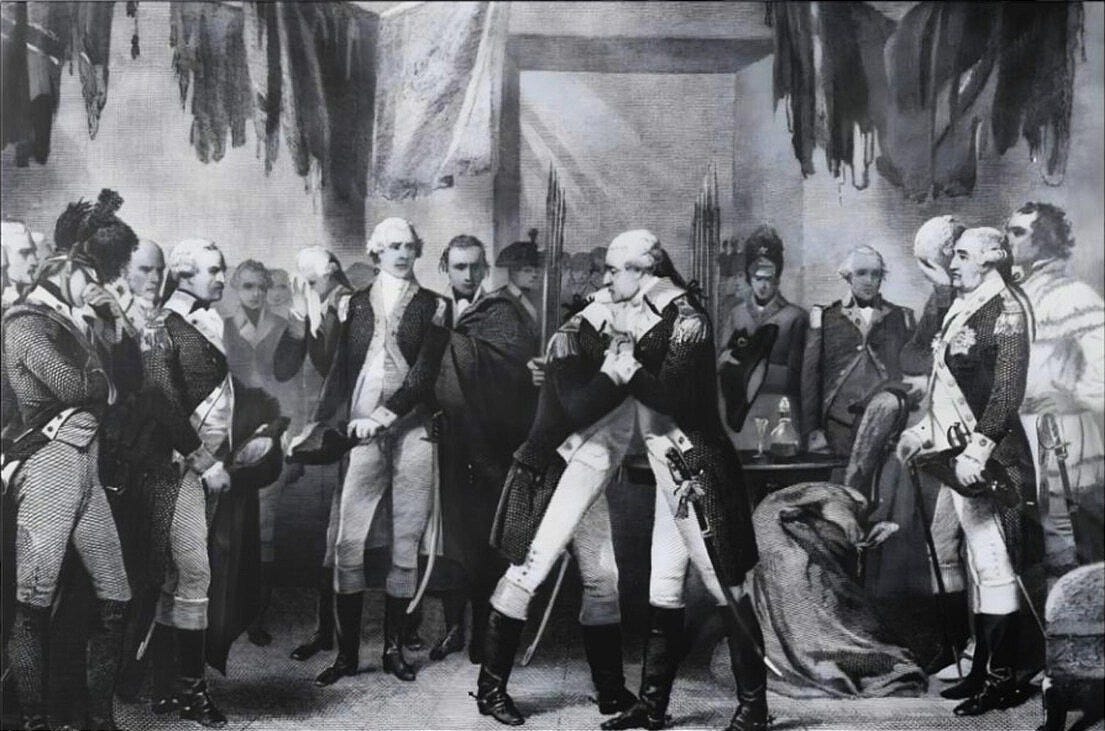
By that act of humility and principle, he granted the newly-ex colonies critical time to mature into what the USA has been – imperfectly but earnestly – until very recently: a nation of the people, governed for the people by the people’s chosen representatives.

Many watching today fear we shall not see such a transition to representative rule when the current administration’s tenure ends in January 2029.  A man who has deceptively denied the results of one election and appeared to encourage his followers attempt to overthrow its result, who seems to regularly ignore the rule of law and aggrandizes his own birthday through a grotesquerie of brutality, defacing a landmark of which he is at most temporary steward, is unlikely to accept even the clearest electoral defeat with graciousness, humility or respect for tradition, law and Constitution. 

Such a man cannot be trusted to follow in the footsteps of one like General – later, President – George Washington. 

E Unum Pluribus is a speculative fiction exploring one way in which a President’s determination to hold onto power might play out and just how extensive the resulting damage might be.  The novel was written and is offered as a cautionary tale, while there is still time to avoid anything like the events it imagines. 

To those ends, E Unum Pluribus is currently being serialized online and anyone can read it, at no cost, by navigating to the home page of this website and selecting E Unum Pluribus from the page’s top menu, or via this link: https://robinandrew.net/2026/01/01/e-unum-pluribus/
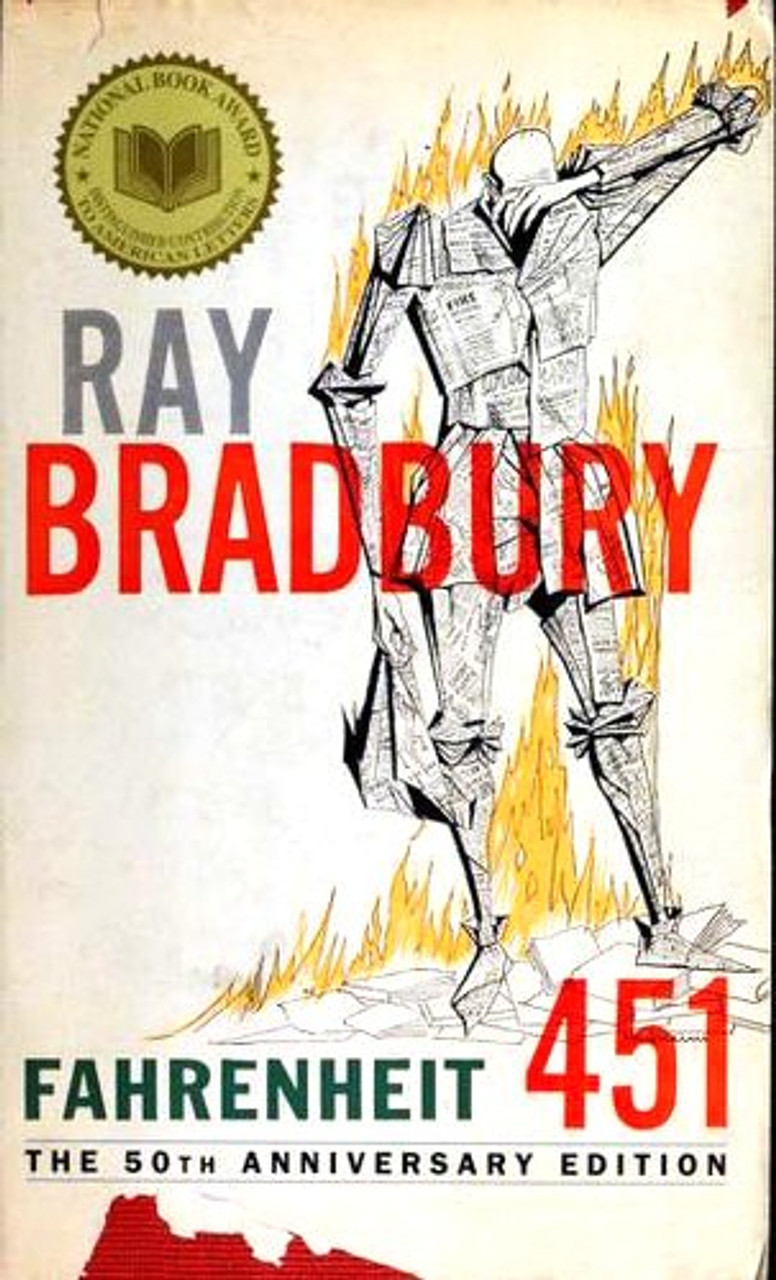
Fahrenheit 451, Ray Bradbury

Like a 75-year-old car, Bradbury’s most lauded novel feels a bit clunky compared to the sleek and smooth commodity fiction churned out by today’s industrial publishing conglomerates.  As with any mode of transportation though, where a book takes you is more important than the vehicle itself, and Fahrenheit 451 offers a ride through the very territory over which our nation is currently circling. Pretty amazing for a story first anthologized in 1950 and expanded into this short novel in 1953!

Minds colonized by omnipresent ‘entertainment’ media pretending to provide viewers with a ‘reality’ more acceptable than their own; lives lived in bubbles of class and clique; an authoritarian government ginning up perpetual wars as excuse to police every facet of its citizen’s lives; new technologies immediately harnessed to enforce all of the above – Bradbury’s fears for his characters’ ‘future’ are amazingly close to today’s realities. 

In an afterword and coda written later (1982 and 1979, respectively), Bradbury makes clear that he traces all those developments to his fictional culture’s rejection of the written word.  Books there are viewed as corrupting distractions.  Not content with discouraging or banning individual volumes on the basis of specific content, this regime fears all books because they record, preserve and encourage independent thought.  The very possession of any book has been declared a major criminal act and the once laudable community symbol of the Firefighter has been perverted into a new role as government book burner (and incidental executioner of bibliophiles).

So here we are seventy-five years later, with citizens pressuring their libraries and schools to dispose of any books hinting at truths those particular citizens don’t appreciate; a juvenile Secretary of ‘War’ decreeing which slanted versions of history, philosophy and the social sciences may be read or discussed in the military’s colleges and academies as the White House extorts even private universities to teach to the President’s personal prejudices.  Meanwhile, surveys confirm that fewer and fewer and fewer persons are reading any books by choice, preferring instead to have information spoon-fed into their brains via profit-tailored algorithms curating content for their profit-driven mass electronica. In spooky parallel to Bradbury’s Firemen cum Fire-setters, the current administration has given control of many federal agencies to fanatical minions who despise those agencies’ statutory functions, wishing instead to destroy or pervert them by flipping them from protecting the environment or civil rights, for example, to opening the former to plunder by political contributors and restricting the latter’s protections to only those who bow down to the MAGA movement in all its glory and gory ambition (while sporting an appearance that comports to Mr. Trump’s old-Hollywood vision of how true Americans are supposed to look).

Despite some age-appropriate road wear and rust in its wheel-wells, Bradbury’s Fahrenheit 451 is no junker, but a precious classic vehicle for waking up the masses, every bit as timely today as when its rubber first hit the road.  It deserves to be read or reread as widely as possible, so more citizens will see what is happening and do what they can to stop it.

P. S. – Along with Orwell’s 1984, and Animal Farm, Vonnegut’s Slaughterhouse-Five, Huxley’s Brave New World, Anthony Burgess’ A Clockwork Orange and others from the mid-Twentieth, this novel has helped to shape the fears and ideals of multiple generations.  Margaret Atwood’s The Handmaid’s Tale, Cormac McCarthy’s The Road, Emily St. John Mandel’s Station Eleven and Octavia E. Butler’s Parable of the Sower are notable among many other recent and creditable volumes with similar aspirations of enlightenment and warning.  Now more than ever, all such books deserve to be read and shared.

Like this book or this post? Please Share it!

Interested in what you read on this site – please subscribe. It’s free!