Tag Archives: Mystery

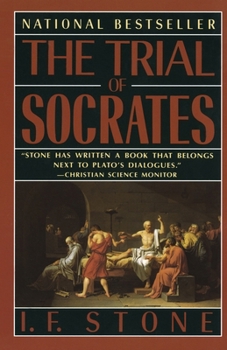
Free Speech on Trial? I. F. Stone’s ‘The Trial of Socrates’

Isidor Feinstein Stone was widely known and read as a liberal/socialist leaning journalist and newsletter writer from the 1930’s to the ‘80’s.  His introduction to the paperback edition of this book suggests it was the product of a late in life desire to move away from investigating current injustices and stake a claim to something timeless. 

In that, Stone acquits himself admirably, analyzing the works of Plato, Aristotle, Euripides, Xenophon and others like a professor of the Classics, along the way citing a wealth of references both primary and secondary, some of which seem quite obscure.  His commentary on specific words of Ancient Greek – their origins and multiple usages and especially the implications of how they’ve been translated (or mistranslated) over the ages – suggests an ability to read the original Greek language sources, which is impressive in one whose Wikipedia entry records only that he dropped out of the University of Pennsylvania

Greatest take away for this unschooled reader is to reframe Socrates from a revered name in the pantheon of Athens’ great philosophers into a rather disreputable rascal; a gadfly and rabble-rouser accused of corrupting the state’s youth by arguing the efficacy of oligarchic tyranny at a moment when such evils had very recently taken advantage of democracy’s natural disorder to seize power for themselves – twice! – and stood eager to do so again at any time.  Also, as Stone puts it, a man who habitually and resolutely argued the negative side of every issue without ever offering a single positive value to which he would actually commit.  This, in Stone’s view, is the real reason Socrates seemed to actively seek and welcome his death sentence (at an age when he could otherwise look forward only to sickness and decline) and turned his own death into a performance calculated to seal his place in posterity.  As likely as it was that a defense on the grounds of free speech might have saved his life (the last chapters of the book analyze this in extravagant detail), Socrates would not demean himself by pleading a principle against which he had previously argued with all his eloquence.  Even more, he seemed purposely to alienate his judges so as to be sure they would not honor their own and their City’s principles by freeing him on those same grounds.

Which last leads into the second lesson of this author’s analysis. An ardent supporter himself of the right to speak freely, Stone reminds the reader that such a right has very rarely been the policy of any government or governing system.  Even among the Golden Age Greeks it was a niche freedom, always tempered by its applicability only to those accredited for a specific body or forum, or only those of wealth and privilege, only those meeting citizenship requirements, only those owning property, only those not owned as slaves or reviled as foreigners or uncivilized – the list goes on.  That freedom of speech was not a universal value even among those greats in that great time and place is a very valuable reminder for those of us living in this one (U.S. A, 2025)

Certainly worthwhile to read and know, Stone’s analytics in The Trial of Socrates feel repetitive and over-argued; one imagines the same points could have been made in an essay rather than a book. But then, an essay about such a scholarly subject would never have achieved the visibility and stickiness this stand-alone book has (much less been deemed a ‘NATIONAL BESTSELLER’ as the paperback jacket proudly proclaims). Pulling Socrates off his pedestal at the same time it raises the U. S. First Amendment’s guarantee of Free Speech up onto one of its own is pretty good work for a small volume (247 pages plus Notes) by the college-dropout son of an immigrant shop owner? Achievements well worthy of a space on the shelf.

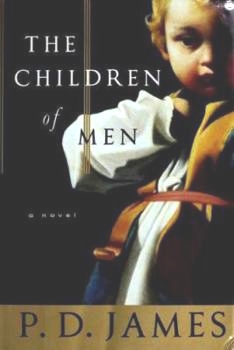
The Children of Men, P. D. James

A Timely Commentary on current events – written nearly thirty-five years ago!

Grabbed this off a neighborhood free-books shelf on basis of the author’s familiar name and work; was surprised to find in place of the expected tea and class-system detective story a speculative political fiction written decades ago yet uncannily timely in its themes.  James* has always been a reliable commentor on the British government and governing class – she spent thirty years in the civil service after all (or rather, before being able to write all her more familiar titles) – but that has previously seemed incidental to the solving of mysteries.  Here, it is the main point.

Though first published in 1992, the novel is set in 2021 with a sci-fi sounding premise – that 25 years earlier it had become unavoidably obvious that all human males in the world had become infertile.  With the birth rate crashing in months to absolute zero, all of humanity was suddenly forced to comprehend the existential doom of universal aging, disability and death without the consolation of watching younger generations grow to replace them.  We are then given to understand how this resulted in apathy and lawlessness, perfect conditions for the rise of a fascistic strongman named ‘Xan’ (reference to Alexander ‘The Great,’ I’d guess).  Our guide through what follows is Dr. Theodore (Theo) Faron, an Oxford historian with a mythologically-tragic reason for retreating from public life but who was also a childhood friend of Xan and, until recently, an advisor to him in his autocratic reign.  When Theo is approached by a band of laughably incompetent would-be revolutionaries, the first half of the novel is set in motion. The second half (spoiler alert) is brought about by the discovery that Julian, a (female, despite the name) member of that conspiracy for whom Theo immediately begins to develop romantic feelings, is pregnant, a monumental event which suggests she and her child have the potential to save humanity from its dire fate.  From that development James builds a compelling thriller addressing moral questions of ends and means, guilt and forgiveness, God or not God and the temptation which even the most honorable person may experience when offered the chance to exercise power over others for what they believe to be good or necessary ends.

Xan’s resemblance to the current U. S. President is striking, and the arguments for his usurpation of total control over English life track almost perfectly with MAGA’s claims of necessity: societal disorder, citizens lost in despair and apathy, crises requiring responses more immediate than any deliberative process could manage, the purportedly inherent weakness and fecklessness of all so-called democratic processes.  The effects too, are symmetrical – arbitrary laws and judgement, scapegoating of immigrants and other ‘others,’ curtailment of individuals’ rights under brutal policing and cruel incarceration and an invasive security state to ensure those who have seized power get to hold it indefinitely.

All of this, James handles with intelligence and generosity (if sometimes overmuch time spent on the exact physiognomy of a face, niceties of vegetation, quality of sunlight or sky and the furnishings of various interiors; the one aspect in which the novel feels rooted in the author’s generation and previous genre).  Theo is a modest and honorable foil for Xan, who is himself allowed sufficient rope to make a moral case for his usurpation.  Their ultimate confrontation is well-scripted if a bit forced and the final decision which results from it is of Sophoclean magnitude and weight.

Among many impressively crafted moments is one where Theo, acting out of necessity to secure resources for the imminent birth of Julian’s child, discovers in himself the potential to enjoy violating norms and forcing others to his will, even to the edge of brutality.  Not only a worthy observation on human nature, this new self-knowledge plants a seed which allows the novel’s final moments and message to ring true.

Schooled by a difficult life, James may have honed her skills in the trenches of genre fiction, but The Children of Men affirms her a true literary artist.  It deserves to be revisited for that reason alone, and especially so in this moment, when its fictional time period has arrived and is turning out strikingly similarly, in some important respects, to what she imagined nearly thirty five years before.

*Officially: Phyllis Dorothy James White, Baroness James of Holland Park!

Note: There is also a somewhat loose film adaption by the same title, credited to five writers and directed by Alfonso Cuaron (Harry Potter and the Prisoner of Azkaban) with Clive Owen portraying Theo.  The film received critical acclaim, numerous award nominations and a few wins, as well as positions on various “Top” lists, but did poorly at the box office).

Feel free to share this post if you like.

If you appreciate what you find on this site, please subscribe – it’s totally free!

A Word to Aspiring Writers – The Marvelous Elizabeth Strout

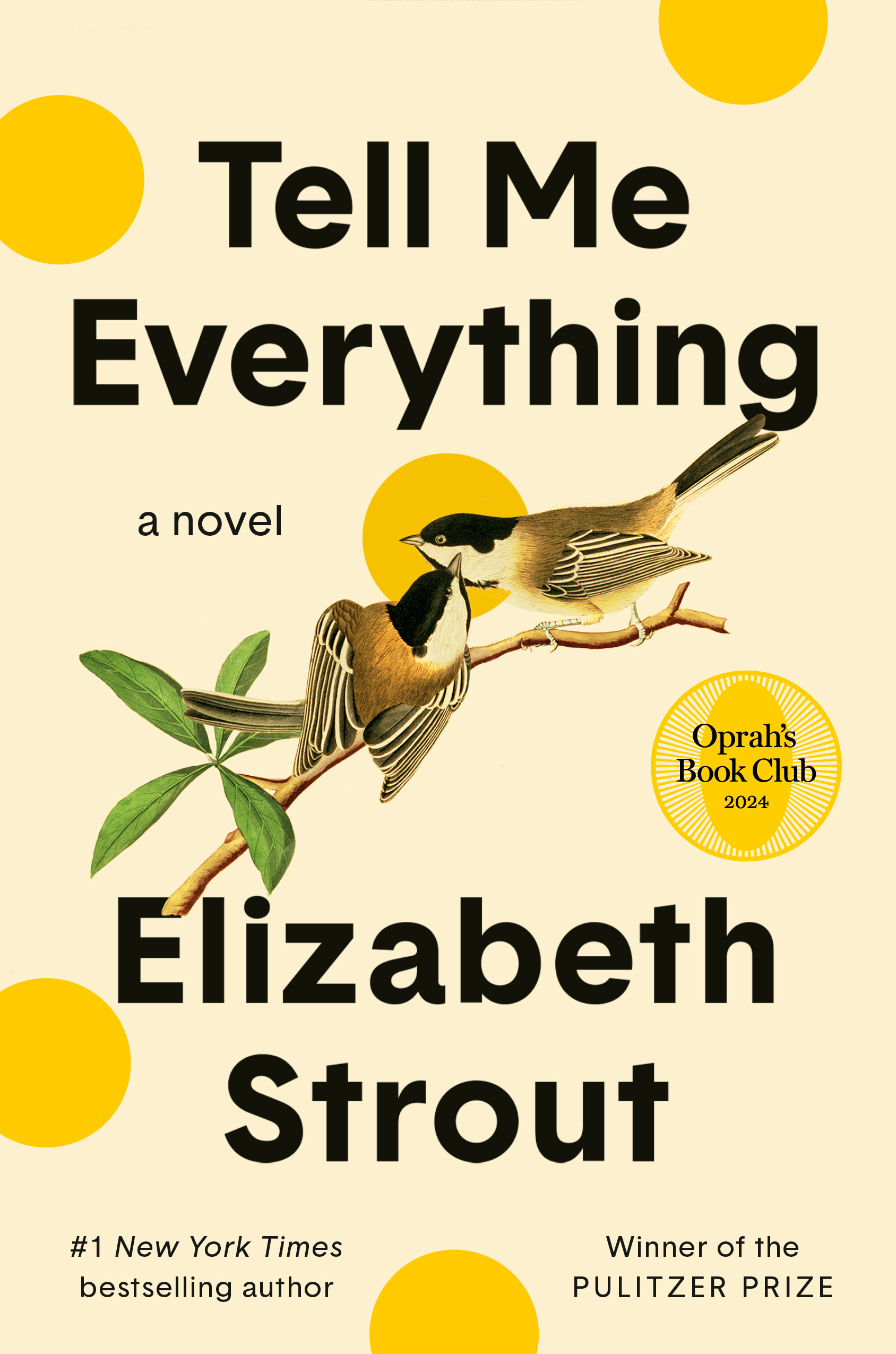
Normally, these ‘Books Worth Keeping’ posts focus on a single work recently encountered and found (in one necessarily limited and idiosyncratic opinion) to be worth remembering and sharing.  This time around, although I’m spurred by a specific book (“Tell Me Everything”), the subject is its author.

In this reader’s view, anyone who aspires to be a writer would do well to read Elizabeth Strout’s novels and consider deeply what she does and how she does it.  Under the guise of limited lives in a limited setting, Strout illuminates the unlimited breadth and variety of what it is to be human. Out of deceptively ‘ordinary’ situations and circumstances, she mines complexity and contradiction (apologies to Robert Venturi for stealing your phrase) as her utterly believable characters struggle to understand themselves and the selves of those with whom they live, die and, especially, love.

Many other authors and books* are similarly revealing and rewarding, but few are as consistently insightful, illuminating and uplifting. 

Elizabeth Strout’s works are a treasure.

*Mary McGary Morris’s A Dangerous Woman, Clare Messud’s The Woman Upstairs, and Michael Dorris’ A Yellow Raft in Blue Water come quickly to mind, as do the works of Emma Donoghue, Kate Atkinson, William Boyd, Ian McEwan and… Thankfully, the list goes on and on.

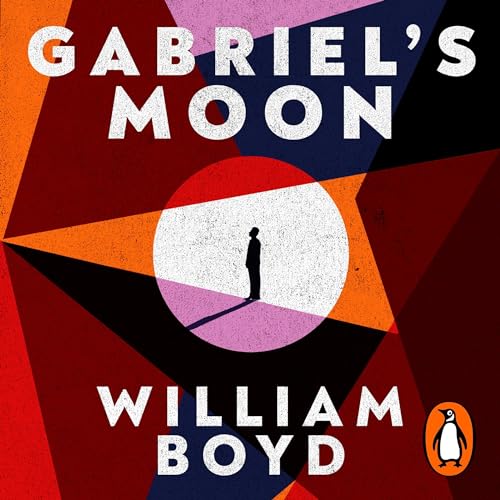
Gabriel’s Moon – William Boyd ventures into George Smiley territory

Boyd’s eighteenth novel expands his collection of espionage stores – along with Restless, Waiting for Sunrise and Solo (his Bond installment).  This time out, we are very much in Le Carre territory; 1960’s Britain and Europe, Soviet machinations, MI6 blundering its upper-class way through a maze of deceptions and counter-deceptions.  Boyd makes excellent work of this all, with vivid settings and interesting personalities.  His conclusion is fittingly tragic and portentous, while leaving plenty of room for possible sequel(s).

Small quibble in that the prose her is sometimes overabundant and studiously colorful.  May well be a gesture toward that of the main character, travel writer Gabriel Dax, who is teased by his controller  (and one time lover) Faith Green for purpling to excess. A bit distracting but tolerable, as there is real wonder and appreciation of the world’s many pleasures.  Dax’s alcohol consumption is another striking aspect, we seem to proceed directly from one cocktail to then next bottle of wine to brandy to the next morning’s pick me up.  How the man remains vertical is a mystery.  Possibly intended as period correctness, (along with the relentless smoking and cover art which recalls title sequences of the early Bond films) but again, a bit distracting.

There’s also a large gap in the story’s wrap-up – Gabriel has learned some facts about the fire which killed his mother (facts we already knew as that event was the novel’s opening scene) and while the explanation has helped his insomnia and angst, for the reader it feels incomplete.  Nor is the fact that his father died in a plane crash in Persia while working for BP.  Given that Gabriel’s older brother Sefton is a bent diplomat and the secrets lurking elsewhere, one must wonder if that death was a cover for more espionage, but Gabriel never seems to imagine that, much less pursue it. Perhaps that too is being saved for future installments?

All in all, a very creditable and enjoyable addition to the genre and to the author’s estimable collection.   

(Oh – sure enough, while fact checking for this summary I happened upon a Wikipedia note characterizing this as the first volume of a planned trilogy, with the second due for publication in 2025.  Definitely something to look forward to.)

A Taste for Death, P. D. James

The so called “Queen of Crime” strikes a chord for Jennifer and I as this page-turner is set in and about London’s Paddington and Holland Park neighborhoods, locales quite familiar and ear to our own hearts.  Aside from that, it is a very capable example of the genre – full of pretentious aristocrats dragging out a lifestyle which mostly died a century ago, struggling wage-slaves navigating the drear of a stagnant British economy and bureaucracy, everyday murders with creepily daft suspects and perpetrators and nearly everyone searching for someone to hold onto, whether sexually or just emotionally.

At 500 pages in paperback, A Taste for Death allows one to escape to James’ world for a satisfyingly-long time, and generally holds the attention well.  Her Adam Dalgliesh is a comfortable mentor to both subordinates and the reader, his character established long ago in other novels, so the heat is more upon Inspector Kate Miskin and Chief Inspector John Massingham to provide somewhere to hang our sympathies.  This we can do, as Kate has satisfying vulnerabilities and baggage, while Massingham plays the cad and insensitive throwback. 

James follows formula to a degree, but throws in twists and turns.  One – a sudden fainting spell of young Darrell – seems arbitrarily concocted to avoid a brutality which might have been too much, but then another – the novel’s final death – is just the opposite; an even-greater brutality which shocks, reminding us there is a price for hanging about with murder and making clear the author’s desire to give us something more than drawing room theater.

James was 66 by this writing (1986) but shows considerable energy and enterprise in both the volume and originality of the work; sufficient to nudge the boundaries of the murder-mystery genre without any risk to her place in its top tier of practitioners.  I’ll be reading more of here when I need a comfortable escape from the truly-murderous present.

(Intriguing note, the author spent decades working in law enforcement and government positions but is also, officially, ‘Baroness James of Holland Park,’ so whether her characters are embodying or lamenting the existence of their nation’s baggage of nobility and class, it seems she is speaking from experience.)

Deacon King Kong, James McBride

The author of The Good Lord Bird and other works takes us on an expedition into Walter Mosley territory – and a rewarding expedition it is. Set in 1969 Brooklyn under the administration of Mayor John Lindsay, it is also a picture of a neighborhood in transition, from the stickball, ring-a-levio and neighborly numbers-games of its elderly characters’ remembered childhoods, to the heroin-fueled entrepreneurialism of insatiably-greedy young drug-lords and mafia wanna-bes.

As in The Good Lord Bird, McBride revels in dialect and anecdote.  The language is casual and unlearned, full of nicknames, asides, put-downs and epithets that would be verboten in contemporary conversation. The characters too, emphasize what a different world it was back then – the oldsters on whom the action centers being uniformly quirky, folksy and stout of heart.  The young and rising who bedevil them are nearly as uniform in their vulgarity, thoughtlessness and despicability. It is telling too, that the one young man who redeems himself does so though the unlikely route of minor league baseball, a throwback ambition if ever there was one.  (Having grown up not too far away from this place and time, though infinitely far from its hardships, I can recall the reverence with which the ‘national pastime’ was held in those days and parts, and the phantom hope it offered, of escape from all that is unholy).

Race is, of course, a (the?) major theme here, how the ‘coloreds’ moved in after the docks died and the Italians moved on to more fertile ground; how blacks and whites existed in separate virtual civilizations veneered upon the same streets.  How Irish cops had been part of the glue holding it all together, till the stakes grew too high (thank you, drug money) and forced everyone to choose a side and hold it with their life.  How irrelevant most of the white man’s world and morality is to those kept down by them, and how, in this telling, a few resilient souls can even manage to bridge the divides and find a better life on their own terms.  (An aging cop, for example, finds happiness with the daughter of an Italian mobster, whose wife years ago ensured the family’s future by purchasing a Bronx bagel shop with the imprisoned goombah’s cash stash, allowing McBride to opine that you don’t need to be Jewish to make a kosher killing in New York.)

Deacon King Kong’s crime-scene of a plot aims for a sort of urban picaresque, with an old drunk named Sportcoat as through-line, humankind’s earliest art object (the Venus of Willendorf) as its MacGuffin and several oddball romances to give it color and warmth.  Despite frequent descents into over-long conversational riffs, there is enough mystery and eventfulness to carry it along, and the eventual resolution is plenty satisfying so long as one does not look to closely.  Goodness triumphs to a far greater degree than the undercurrents have suggested it should, and the characters for whom one has been taught to root end up – for the most part – intact and even improved in their circumstances.

All in all, a joyful love song for a lost culture (if it is to be believed; I am certainly not one who would know) and for the importance of community over easy assumptions, easy money and taking the easy way out. 

(and no, that did not start out as a reference to Mosely’s Easy Rawlins character, but may as well end there…)

The Feral Detective, Jonathan Lethem

 A contemporary noir, loosely-framed by the protagonist’s despair at the election of the ‘orange monster’ and the economic and cultural divides it reflects, but also deeply embedded in broader 21 st century dislocation and despair.

Intriguingly, Lethem tells the tale thru the voice of Phoebe Siegler, a refugee from the urban entertainment/media complex, rather than Charles Heist (what a surname choice that is!), his idiosyncratic detective. This allows for more thoughtfully-analytic observations by the character, and a more literate tone than would the latter. It also makes for some brave writing, as Lethem voices Phoebe’s sexual longings and encounters with Charles. One would love to know what female readers feel about his level of success, but to me it rang true, if perhaps a bit enhanced by what a man hopes a woman is seeing. Lethem also finds something new in the L A area by choosing for his locations the little-known towns of Upland and Clarement; the resort hermitage of Mt. Baldy (a personal touchstone, having driven, hiked and skied there) and the Mohave Desert just over the mountains from the big city. The tenuous economics of these locales, and the multitudinous opportunity for misfits to isolate themselves resemble the same raw ingredients which Southern writers have long mined from their home turf, but being still part of LA makes for a freshness and perhaps a more accessible connection to readers not of the sub-Mason Dixon world. Interesting and engaging, but I’m not hungry to read another installment, if indeed this is the start of a series (a possibility suggested by the ending, but inconsistent with Lethem’s intellectual adventurousness, nor his career path and to date).

Sweet Tooth, Ian McEwan

McEwan still has the power to surprise; to anticipate what his reader will be thinking and make hay of it.

All through this I wondered at the reason behind his writing in Serena’s first person and what sort of personal whimsy or predilection might be behind it. That he (she ) wonders if there might be a hint of gender issues in Tom Haley’s writing (and persona) led me to wonder (not for the first time) just the same about McEwan. Then here she comes in the final epistle to toy again with the theme, but now from Tom’s point of view,and at the same time, reveal the he (McEwan) has, all the time, been writing in Tom’s persona as he (Tom) attempts to write from Serena’s point of view! Almost more fun in the diagram than in the execution, still, McEwan’s Serena is mostly credible ( and where not, one can grant that it is just Tom’s failure, not McEwan’s). Interesting and just kinky enough to add spice.

No masterpiece, but a fun spy story with more human insight and value then any but the best of its genre.