Tag Archives: MAGA

MAGA’s Great Replacement Fantasy (Delusions of the popu-lost)

By now many observers have noted Mr. Trump’s tendency to accuse his detractors of whatever sin he himself is engaged in. Those observations suggest some thoughts around the Great Replacement Theory which, in Trumpian usage, holds that Democrats are intentionally perverting democracy by opening our sacred borders to untold millions of immigrants (who just coincidentally tend to be black, brown and/or from ‘shithole’ countries not part of the Anglo-European heritage which we are now being told defines true Americans).

Thought number one: acknowledging that Mr. Trump won the election in 2024 and so is legitimately occupying the Oval Office, he still received fewer than half the votes cast,* an inconvenient truth which makes one wonder if perhaps there is a hidden thread connecting several of his administration’s current priorities.

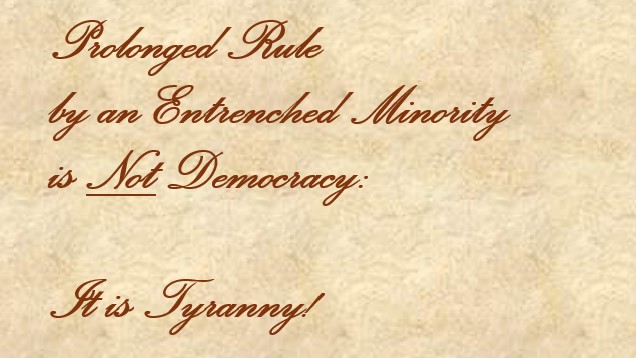
To whit: contrary to the populist image their leader loves to act out, he and any thoughtful members of his court must be aware that theirs is a minority faction and so will never be able to hold power by democratic means. Unable even to rely upon their slender majorities in Congress to do their bidding, they know they cannot govern by legislation (as the Constitution intends) but must rely almost exclusively on Executive Orders, Presidential Determinations, Proclamations, administrative directives by their chosen technocrats, petty prosecutions and the like – despite the dubious validity or effectiveness of many such.

Second, since he and they are unwilling to adjust their policies to the beliefs of the voting majority, they choose instead to speak and act as if the voting majority itself is invalid, tilted toward ‘radical’ outcomes by the presence of millions of non-citizen immigrants. If – goes the fantasy they imply to their base – the administration can eliminate enough of those ‘illegals’ through holding-camps, deportation, self-deportation, remigration or whatever other terms they come up with next, then the voters who are left will constitute their dream of a majority MAGA electorate. That hope energizes their base and recruits enforcers for ICE and other agencies, but unfortunately for MAGA, their inability to produce any credible evidence of voting by non-citizens in numbers that would make any difference in any election at any level demonstrates the fallacy of such hope. Illegal immigrants have never swung actual voting so even their complete extermination would not affect any future outcome. The pro-Trump minority is not democratically viable* and his power can only be ensured by non-democratic means.

Which explains the Administration’s doubling-down on tactics to frustrate the democratic will. Demands for state gerrymandering, discouragingly cumbersome voter ID requirements, restrictions on drop-boxes, voting locations, hours or mail-in options, false accusations of voting machine irregularities, placement of threatening ‘monitors’ at election sites, these and many other strategies are designed to deter enough voters to ensure MAGA victories whether or not the majority of eligible voters want them or, in the worst case, to provide excuses to override the true verdict when it proves they do not.

One can even interpret MAGA’s recent call for Americans to have more children as a supply side complement to these strategies. Refuse to naturalize any but the wealthy and pale at the same time the MAGA faithful produce more and more purebred American babies (who will, presumably, be groomed by their parents to vote the ruling party’s ticket from birth) and they might just turn their minority into a real majority – in twenty or thirty years.

All this can be seen as one more indication we’re lost on a dark and very slippery slope or, looked at from another angle, it may give a sliver of hope. Since the people he is tossing out the door were never part of the majority who voted against him, Mr. Trump’s epic cleansing will do nothing to change his minority status. In fact, if the callousness and brutality of it repels even a few of his past followers, it will actually drive his share of future vote tallies lower. In which case, the majority of the American electorate may one day reject Mr. Trump’s imperium by a large enough margin that not even doomed third-party candidates and the misrepresentative calculus of the Electoral College will be enough to save him.

Here’s hoping that whenever that day comes, there is still a nation left to rebuild!

*Of the three elections in which Donald J. Trump has ever competed, he has never won a majority of the votes cast. If that is any sort of mandate, it is a mandate against Mr. Trump, not for him. The fact that he was elected in 2016 reflected just how unsuited our present Electoral College structure is to today’s electorate, in which the population disparity between large states and small ones is more than five times as wide as it was at the time the Constitution was being developed, yet each of those states still gets an equal two Senate-related votes. The fact he was elected in 2024 despite not winning a majority is its own indictment of an election process held captive to two ossified major parties which cannot possibly represent the true diversity of their electorate.

Like this post? Feel free to share it.

Appreciate what you read here, please subscribe – it’s free!

Ripe for Amendment?

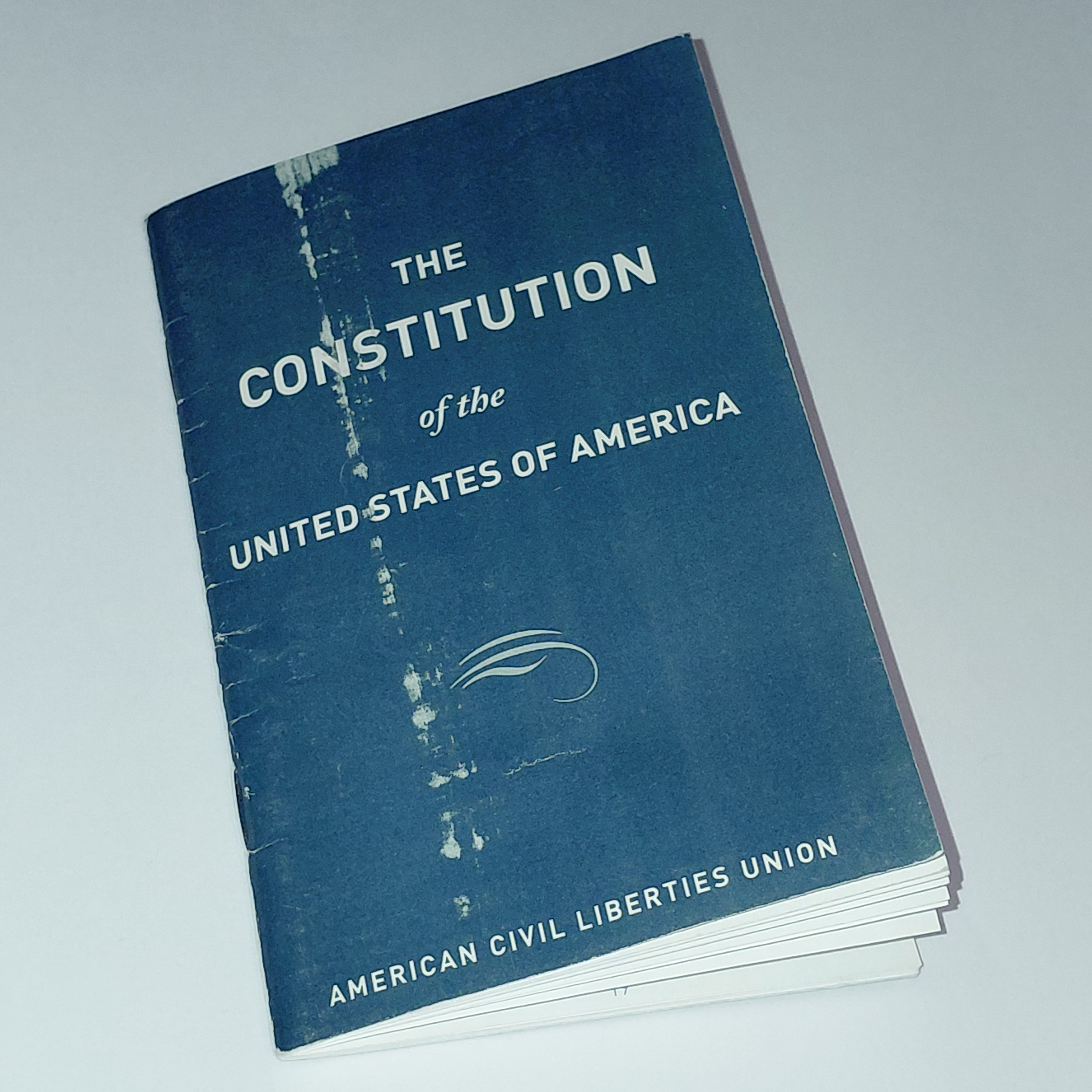
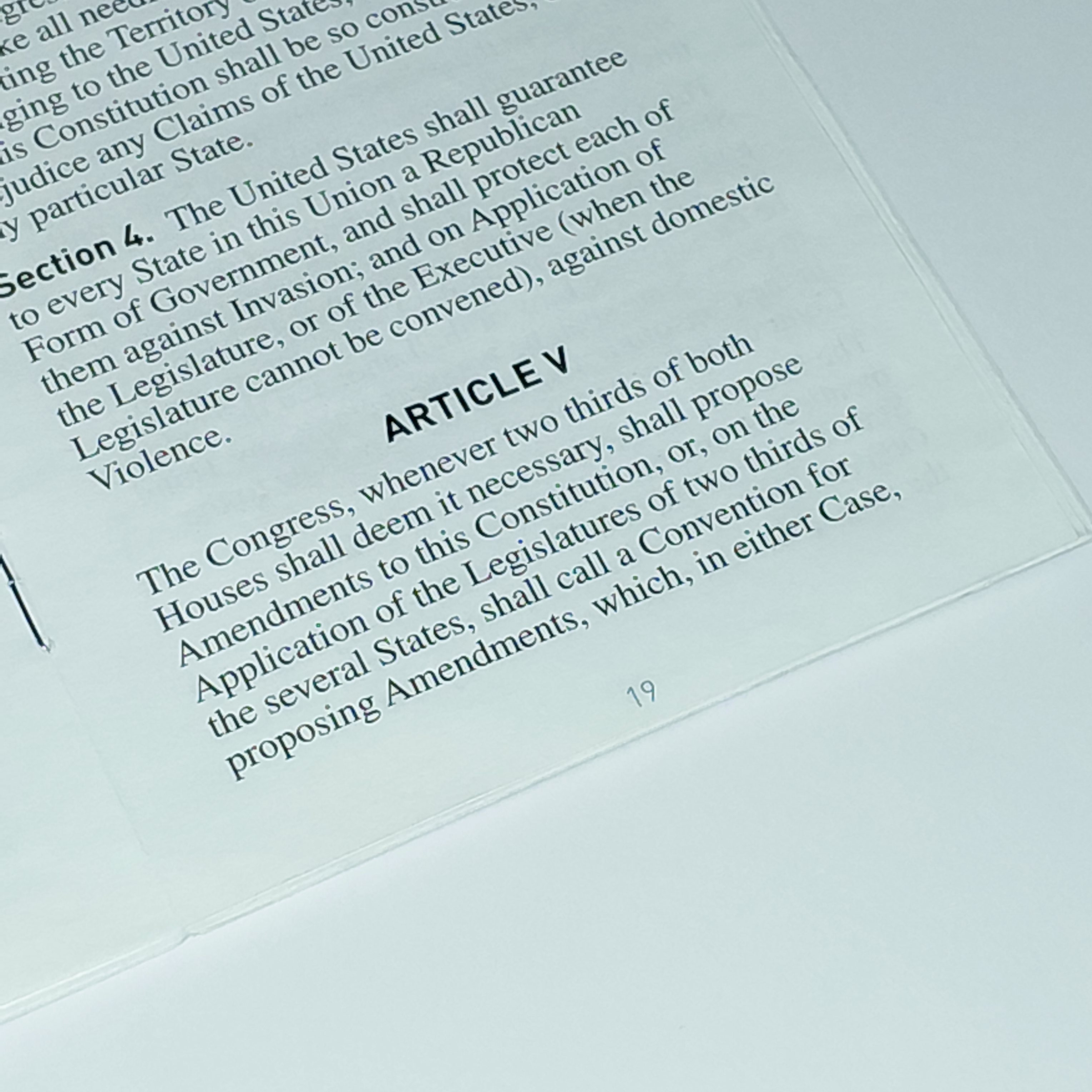
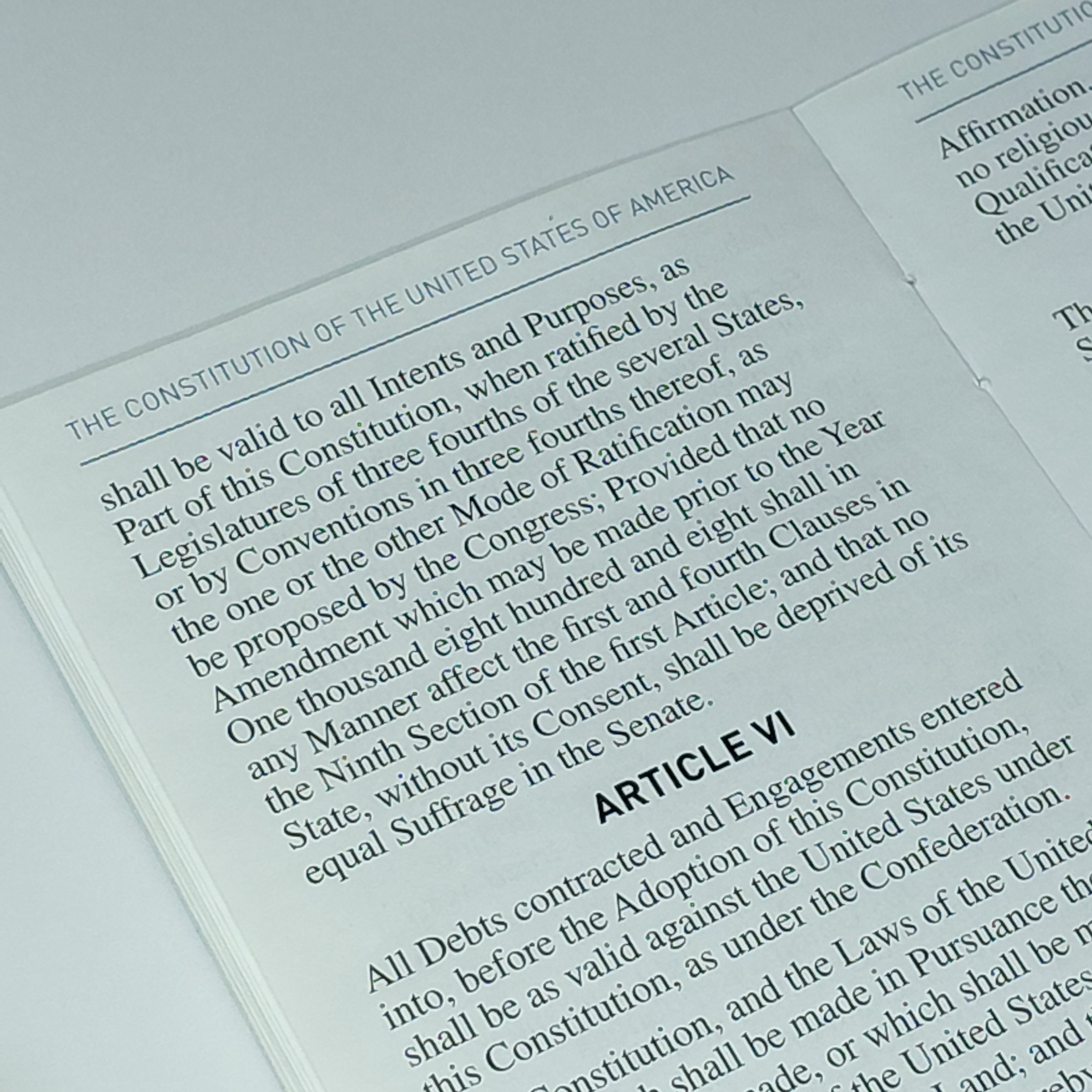
Saw an excellent opinion piece recently about the history of Amendments to the U. S. Constitution, starting with the fact that the document’s authors fully intended it to be revised – the Amendment process is written in, after all (Article V) – and running up through our fifty-plus-year drought of amendments since the 1970’s.   It can certainly be argued whether our current divisiveness and the dysfunctionality of Congress are one reason we’ve had no Amendments recently, or one result of that, but the phenomena are certainly related to one another.

Well-thought-through and widely-accepted new Amendments could allow our nation’s founding document to grow and adapt to conditions which have changed dramatically, including: a population which has gone from about four million peeps in 1790 to some 330 million in 2020; a mix of states which has gone from 13 small, young and rural ones to 50 with wildly varied histories, populations and urban/rural characters; multiple technological and cultural revolutions; and an international context the Founders might well struggle to recognize. 

Given all that, here are a few modest proposals to be considered when the time seems right

Free the Courts:  we’ve all been taught that the Federal government has three branches -the Legislative, the Executive and the Judicial (perhaps equal, perhaps not, depending…) and that this configuration ensures checks and balances on the power of each, thereby protecting the system and our freedoms.  Current events are making clear that the Judicial branch is not really an effective check or balance so long as the Chief Executive appoints (even with Legislative approval required) and can fire (at will and whim) the Attorney General, thus allowing that Executive to direct and weild the enormous power of the Department of Justice as he or she wishes.  A new Constitutional Convention, or a renewed and less-rigidly divided and more collaborative Congress would do well to consider an Amendment to remedy this by making Justice independent of the Executive branch and the Attorney General an elected office with a four year term, perhaps voted upon in Presidential off-years, and no longer a member of the President’s Cabinet (though still with other rights and privileges of Cabinet level responsibility and authority). 

While we’re at it: how about also solidifying the makeup of the Supreme Court by fixing it’s number (rather than leaving it vulnerable to change by some future legislature) and specifying a limited term for justices (so the Court better reflects gradual changes in society and culture) with staggered start dates (so no one President/term gets to appoint more justices than another (whether by random happenstance or by McConnel-esque abuses of Congress’s approval authority). Those changes would work against the politicization some believe we are experiencing with the current Court.  And, since we’re talking pie in the sky, maybe even consider requiring each Justice as they take their seat to designate a successor who will fill out the rest of their term should they die, be incapacitated or simply exhausted before it runs out (thus avoiding any lucky President – or violent actor – taking advantage of such an event to pack the court with their preferred jurists).

Speaking of elections: one aggravator of our recent discord has been the ascent of Presidents to office without receiving even the barest majority of the votes cast (not to mention those who did not even receive a plurality!).  More than just casting doubt upon a leader’s legitimacy, this has led too many citizens to conclude that their votes are not worth casting.  A constitutionally-mandated two-stage election would address this issue, with as many candidates/parties running in the first stage as wish to and then just the two top vote getters participating in a run-off election to decide who will hold the office.   That format would ensure the winner receives a majority of votes, while also offering an unmistakable indicator of just how strong or weak is their mandate. It might also diminish the stranglehold of two-party politics, since a third-party or independent candidate need only defeat one of the two major parties to reach the runoff (and have a legitimate chance at the White House), rather than having to surpass both of them from a standing start as under the current system.  Whatever expense or delay is incurred by this two-stage process might have ruled it out back in the founders’ days of carriage rides and snail mail but would be entirely manageable in today’s electronic age.

(Debating and reaching agreement on issues like those might even serve as a warm-up so said Congress or Convention could address the stalemate between small and large states with an amendment that retires or at least updates the Electoral College so Presidential Elections would more fairly deal with the enormous disparities in populations relative to Senatorial votes.)

Obviously, tons of other ideas for amendment are out there and more will quickly arise if the ball ever gets rolling, but those above seem to this writer to be top of the list.   The time is ripe for us to use the tool those wise heads passed down to us in order that their legacy may be improved and sustained for many more generations!

P. S. – This post was inspired in part by “Amend It!” written by Jill Lepore and appearing in the print and online editions of The Atlantic, October 2025.  Neither M. Lepore nor The Atlantic have any connection to this post or site, nor are either in any way responsible for its content.

If you find this post of interest,

please feel free to share it with others.

If you like what you find here at robinandrew.net,

please subscribe – it’s free!

Fahrenheit 451, Ray Bradbury

Like a 75-year-old car, Bradbury’s most lauded novel feels a bit clunky compared to the sleek and smooth commodity fiction churned out by today’s industrial publishing conglomerates.  As with any mode of transportation though, where a book takes you is more important than the vehicle itself, and Fahrenheit 451 offers a ride through the very territory over which our nation is currently circling. Pretty amazing for a story first anthologized in 1950 and expanded into this short novel in 1953!

Minds colonized by omnipresent ‘entertainment’ media pretending to provide viewers with a ‘reality’ more acceptable than their own; lives lived in bubbles of class and clique; an authoritarian government ginning up perpetual wars as excuse to police every facet of its citizen’s lives; new technologies immediately harnessed to enforce all of the above – Bradbury’s fears for his characters’ ‘future’ are amazingly close to today’s realities. 

In an afterword and coda written later (1982 and 1979, respectively), Bradbury makes clear that he traces all those developments to his fictional culture’s rejection of the written word.  Books there are viewed as corrupting distractions.  Not content with discouraging or banning individual volumes on the basis of specific content, this regime fears all books because they record, preserve and encourage independent thought.  The very possession of any book has been declared a major criminal act and the once laudable community symbol of the Firefighter has been perverted into a new role as government book burner (and incidental executioner of bibliophiles).

So here we are seventy-five years later, with citizens pressuring their libraries and schools to dispose of any books hinting at truths those particular citizens don’t appreciate; a juvenile Secretary of ‘War’ decreeing which slanted versions of history, philosophy and the social sciences may be read or discussed in the military’s colleges and academies as the White House extorts even private universities to teach to the President’s personal prejudices.  Meanwhile, surveys confirm that fewer and fewer and fewer persons are reading any books by choice, preferring instead to have information spoon-fed into their brains via profit-tailored algorithms curating content for their profit-driven mass electronica. In spooky parallel to Bradbury’s Firemen cum Fire-setters, the current administration has given control of many federal agencies to fanatical minions who despise those agencies’ statutory functions, wishing instead to destroy or pervert them by flipping them from protecting the environment or civil rights, for example, to opening the former to plunder by political contributors and restricting the latter’s protections to only those who bow down to the MAGA movement in all its glory and gory ambition (while sporting an appearance that comports to Mr. Trump’s old-Hollywood vision of how true Americans are supposed to look).

Despite some age-appropriate road wear and rust in its wheel-wells, Bradbury’s Fahrenheit 451 is no junker, but a precious classic vehicle for waking up the masses, every bit as timely today as when its rubber first hit the road.  It deserves to be read or reread as widely as possible, so more citizens will see what is happening and do what they can to stop it.

P. S. – Along with Orwell’s 1984, and Animal Farm, Vonnegut’s Slaughterhouse-Five, Huxley’s Brave New World, Anthony Burgess’ A Clockwork Orange and others from the mid-Twentieth, this novel has helped to shape the fears and ideals of multiple generations.  Margaret Atwood’s The Handmaid’s Tale, Cormac McCarthy’s The Road, Emily St. John Mandel’s Station Eleven and Octavia E. Butler’s Parable of the Sower are notable among many other recent and creditable volumes with similar aspirations of enlightenment and warning.  Now more than ever, all such books deserve to be read and shared.

Like this book or this post? Please Share it!

Interested in what you read on this site – please subscribe. It’s free!

Grok Gets an F – Grooming an AI Encyclopedia

According to reports*, Elon Musk’s new AI-generated online encyclopedia, Grokipedia, begins its entry for gender with: “Gender refers to the binary classification of humans as male or female based on biological sex…”

Wrong! Gender and sex are not the same things!

That Grok thinks they are**, indicates it has been ‘taught’ to parrot the opinions of its human creators.  Like a young child, it is not worldly or intelligent enough to think beyond what it has been told by its groomers and so sees the world through their blinders. 

For AI as with any other computative system, the value of output is highly dependent upon the quality of input.  The first law of computer science – ‘garbage in, garbage out’ – is worth keeping in mind as AI’s very human procreators inject their offspring into as many facets of our lives and world as they can, as quickly as possible, with no oversight and often without our consent or even our awareness. 

Knowledge is power, and ignorance posing as intelligence is an abuse of power, not a sign of the glorious and unadulterated progress which AI’s promoters claim to be offering to the world.

CAVEAT UTILITOR!

If you like this post, feel free to share it.

* This post refers to a report by Will Oremus and Faiz Siddiqui in the electronic edition of the Washington Post on 2025-10-27 titled “Elon Musk launches a Wikipedia rival that extols his own ‘vision’”

** In case there’s any question: ‘Male’ and ‘female’ are classifications of sex, which is about biology and can mean, depending on who is speaking, which chromosomes a person’s cells carry, which type of reproductive cells their body produces, which genitalia it exhibits, etc.   ‘Man’ and ‘woman’ can refer to various selections from a wide range of public behaviors, perceptions, expectations and putative rules which are loosely and collectively referred to as gender.  Sex and gender terms are sometimes congruent, sometimes not, but they are not the same things, as Grok seems to believe.

If you like what you see on this site,

please subscribe.

It’s absolutely free!

Tell Us How to Live!

A free people will always be a diverse people, so a free nation must always be a diverse nation.

Ross Douthat, during a recent interview* advocating a more prominent role for religion in American culture and politics, argued that progressivism fails because “You need something else on the horizon…So that we can live in a specific way that we are supposed to live.”

This argument might carry more weight if there existed some single voice calling all humanity by some clear and direct method (simultaneously taking over every video screen on the planet in its owner’s first language perhaps, to steal an example from fiction) with specific instructions on how we are supposed to live.

In real life though, there is no such singular directive.  A Roman Catholic might point to The Bible – but what he’d actually be pointing to would be a specific reading and selections from its scriptures which themselves have evolved from loosely-documented source materials translated from one arcane language to another by men of less than perfect knowledge, their translations and interpretations fought over, compromised upon and codified over two thousand years by a man-made (literally – no significant women’s voices having been allowed) bureaucracy not always unconcerned with its own survival and wellbeing. 

An Eastern Orthodox voice might agree with Roman Catholic doctrine on some aspects of the good life, but disagree on others; a follower of the Russian Orthodox church could have differences with one or both.  A Southern Baptist or any of dozens of other denominations who also see themselves also as Christians and reference the same scriptures would have even further varied ideas of how to live.  An Orthodox Jew or observant Muslim from the Holy Land would certainly have strongly differences with any of those, despite their faiths springing from some of the same roots and looking to some of the same sources.  A Buddhist, a Sikh, a Hindu, or a believer in any of the multitude of less populous or just less publicized denominations, sects, or faiths (of which I am too ignorant to list them all), might find very little to agree upon in Mr. Douthat’s ordained ‘how we are supposed to live’ directive. 

So long as whatever spiritual entity which may be out there watching over humanity chooses to speak in obscure language and to only a few of us at any given time or place, persons of sincere faith and goodness are going to disagree – honestly, deeply and righteously – about how those with whom they share the planet are “supposed to live.”   

History records countless instances where embedding religious beliefs in governance have led to unequal treatment, religious persecution, economic damages, societal upheavals, violence, killing and right on up to the brutality of total warfare; all in the name of one or another party’s conception of “the way we are supposed to live.”  Even in realms which claimed their populace were of a single faith, differences and resulting tragedies have not been erased – and often become all the more brutal to those in the minority.  That such injustices may be somewhat less prevalent in our ‘modern’ era than before that is more a matter of incremental progress toward accepting differences than of the species having settled on a single religion.

If, then, one hopes to maintain a government ‘for the people,’ one of its primary principles must be to recognize the diversity (which is not an expletive, btw, as some wish to use it these days) of our beliefs and not enforce the views of any one faith on others who do not share them.  To tolerate and actually protect the freedom of each to worship and live as they wish, so far as their actions do not constrain the freedoms of others.

For any extensive society to live in real and lasting peace, it must look elsewhere than any religion for its common rules on how to live.  That is what the USA has attempted to do (with sometimes greater and sometimes less success) for over 250 years.  Others have tried as well, again with greater or lesser success, but generally more promise than those which have chosen theocracy.   Rather than giving up on that effort and moving toward some declaration of national religious identity, we and our descendants will be better served by recommitting to pluralism and to working together, allowing those of all faiths (including no religion or God) the freedom to live their own prescription to the greatest extent possible without it preventing others from living theirs.

Nationalizing any religious identity, no matter how watered down or camouflaged by clever marketing or promoted by obviously insincere lip-servers, is not the answer.

(* “Ezra Klein is Worried – But Not About a Radicalized Left,” New York Times, September 18, 2025)

Image: The Hagia Sophia, Istanbul, Turkiye, has been a place of worship for both Christians and Muslims over the centuries. Photo by author.

If you like this post, feel free to share it.

If you like what you see on this site, please subscribe, it’s free!
Paris – The Biography of a City, Colin Jones

Virtually a reference work, this self-confessed “Impossible history” of one of the world’s great cities comes buttressed by many pages of notes, a graduate level bibliographical guide, index, population table, modest number of illustrations, sequential maps showing the evolution of fortifications and boundaries, and even a list of the (major) buildings discussed.

For all that, the text itself is mostly quite readable, and manages to remain even-handed when discussing the political oscillations of the city’s fortunes.   Jones’s personal viewpoint is most glimpseable in the depth with which he discusses the impacts of the real estate marketplace and urban planning (a discipline for which nineteenth century Paris was something of an origin point and test case).  These, we hear, heavily influenced not only the visible face but also the economy, sociology and politics of the city, its surrounding suburbs (the banlieue), region and nation. The rise and growth of antiquarian/protectionist architectural sentiment is given an appropriate level of attention, since it is largely that movement and its successes which have bequeathed us today’s tourist and cultural mecca.

As for the aforementioned political oscillations, to one whose prejudices were shaped by the American education system within an Anglophile culture, Paris is eye-opening in relating the wave after wave of governments established, contested and washed away in favor of the next new or recycled concept.  From far back in the era of multiple kingdoms, principalities and ecclesiastical domains to contesting Empires of the middle ages to the early-modern era of Communes, communists, Republicans, Vichy capitulation and Republics (five, to date), it is amazing that anyone has been able to establish any stable business, institution or assets at all. A thought worth considering as the USA is going through its own populist spasm which may – at best – be followed by a future swing in some opposing direction.

One thing which does seem to have remained relatively consistent through Paris’ administrative history: even when the city and nation were not overtly socialist, their governments have always exercised far greater powers of eminent domain than we in the USA are accustomed to.  Some small justification, perhaps, for the disdain which some Americans profess toward anything ‘those Frenchies’ (or any Europeans for that matter), may have to say about social policy or virtues.   Reading about the centuries-long role Paris has played in nurturing the very idea of self-government by the polity though, makes that disdain seem more short-sighted than ever. 

Another significant takeaway: the wealth of literature generated in Paris’ Arrondissements over the centuries would require a lifetime of reading to consume and appreciate. Preferably in the original, since even my feeble attempt to learn French quickly convinced that its full nuance is unlikely to survive translation. One reason, perhaps that, Jones begins his introduction with a literary quote and analysis. In retrospect, this turns out to be a wholly appropriate entry point for what is as much a human story as a geographical one.  At every stage of its history, the promise of Paris has called to millions, to such a degree that its population has always been largely non-native, immigrants increasing its numbers even as low birth-rate, high mortality and the exodus of those unwilling or unable to meet its demands were constantly working to diminish them.

Fascinating even in its occasional excesses (just like its subject), Paris – The Biography of a City easily earns its space on the shelf.

(Note: published in 2004, this volume necessarily does not cover the City’s most recent decades.)