
A masterful work that rewards the stout-hearted reader. Set in the Austro-Hungarian Empire during the First World War, the narrative vividly evokes the cold, hunger, pain and desolation of a nearly-forgotten military aid station serving the Russian front. Despite having trained in the academics of medicine, Lucius Krzelewski, son of Polish aristocrat industrialists relocated to Vienna after their nation was absorbed into the Empire, is totally unprepared to help the maimed, sick, starved and addled soldiers for whom he is suddenly responsible. Only the patience and wisdom of the station’s one nurse, Sister Margarete, allows him to fake it till he can make it. All the while, the front lines advance and retreat, supplies are unpredictable and violence can erupt at any moment.
Thrown together under such circumstances, it seems ordained by the god of literature that Lucius and Margarete will become attracted to one another, though it is only after a tragic episode involving Horvath, a patient suffering extreme mental distress for which Lucius feels he is close to achieving a breakthrough, that they are drawn to act on their attraction. And, in true romantic fashion, are soon separated, leading Lucius to spend the next several years trying to reunite with Margarete among the chaos first of war, then its aftermath.
As the novel’s end approaches, it seems Mason is steering Lucius toward a joyous reunion with his loved one but then, in literally the last three pages, he flips the table and crafts an ending which replaces conventional confection with a much superior concoction of wisdom, insight and generosity.
(Spoiler alert: Lucius himself christens the patient Horvath a “winter soldier,” but later, as his own troubling memories and nightmares – what we today might label PTSD – plague him and isolate him from the comfortable society to which he has returned, it seems he could as well be the titular character. By story’s end though, one wonders if Margarete is not the true ‘winter soldier,’ the one who has campaigned longest, hardest, most courageously and most selflessly to ameliorate the damage war can do. In fact, one can even frame this as a feminist novel; all those boastful arrogant males waging war for to salve their egos while, nearly unnoticed, women care endlessly for children, husbands, fathers, rulers, nations. When we learn Margarete has birthed a child after the war, we are reminded that through all the deadly deprivation of that wilderness aid station, she was also managing her own monthly cycle – discretely, without modern ‘products,’ complaint, days off or even allowing her discomfort to show. ‘The weaker sex,’ indeed.)
Throughout, Mason demonstrates an exhaustive knowledge of the period, its medicine (he is a physician himself, but a modern one….), warfare in a far-away corner of northeastern Europe, intricacies of the era’s railway network and more. At times verging near to distraction, this detail ultimately gives his narrative the authenticity and credentials to hold the reader’s attention while he builds our emotional connection to Lucius and Margarete.
Again, masterful. This is not a book for every reader, but for those willing to weather its painful realties, ample rewards await. I’m holding on tightly to my copy of Daniel Mason’s The Winter Soldier.
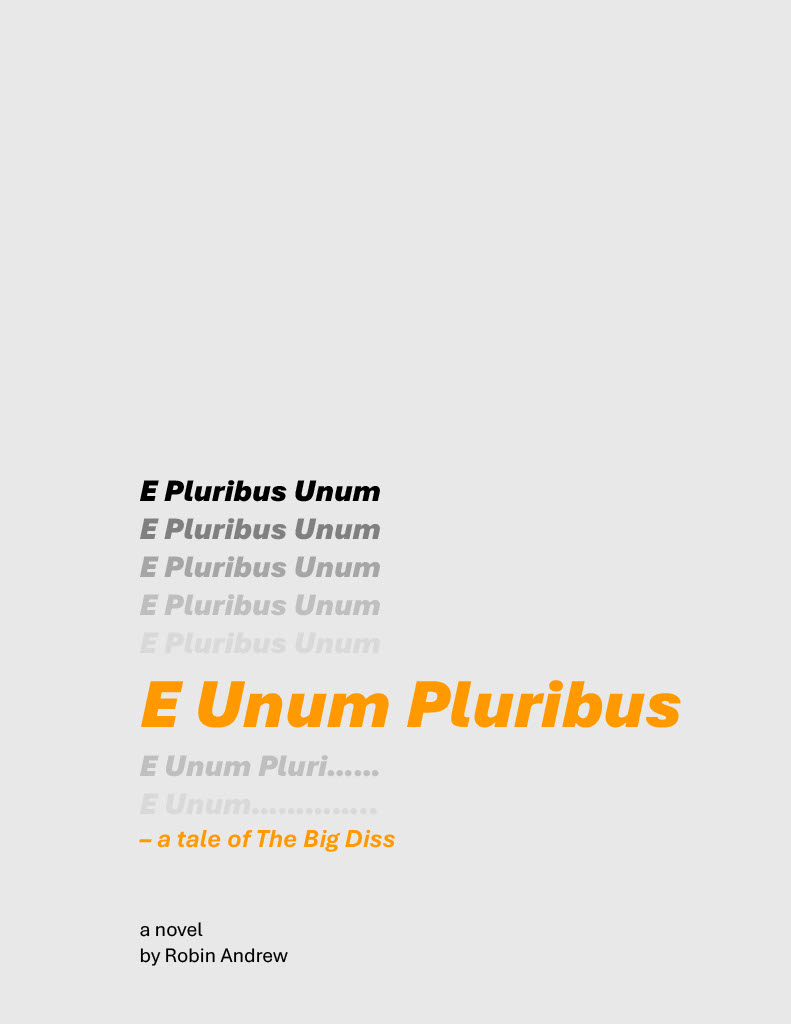
P. S.: E Unum Pluribus is a new speculative fiction about a very different time and place and another government serving its own interests rather than those of its people. The novel is currently being serialized digitally at no charge and you can be among the first to read it by navigating to this site’s home page and scrolling down to the post titled ‘E Unum Pluribus’ or just select the item of that same name in the top menu. Any way you get there, it’s totally free!
If you like what you read here at robinandrew.net, feel free to share any posts as widely as possible. And consider subscribing, it’s totally free!


 RobinAndrew