In a recent column titled ‘We Have Reached End Stage Polarization*,’ conservative Christian writer David French calls out the ill effects of fanning political disagreements into emotional hatred. “In the United States,” he writes at one point, “there should never be any such thing as a winner-takes-all electoral result.”
Well, today we live under an administration which disagrees; which is governing the nation as if they have taken full ownership of it and who treat other free nations as zero-sum competitors to be trampled on whenever circumstance provides cover.
E Unum Pluribus is a new speculative fiction exploring where such a politics may soon lead us. In the chaos of the USA’s dissolution, it finds deprivation, mystery, conspiracy and perhaps the first small signs of new beginnings. You can read it for free, starting at: https://robinandrew.net/2026/01/01/e-unum-pluribus/
Having recently read The Mission, Tim Weiner’s history of the 21st Century CIA, which naturally contains many references to our nation’s Special Forces, it felt appropriate to check out this more populist look at one aspect of those forces.
Based on his own reporting for Rolling Stone magazine and other outlets, Harp gives us an abundance of anecdote; the parade of murders, suicides and drug- and alcohol-fueled behaviors on or adjacent to the Fort is head-spinning. He provides a substantial ‘Notes’ section as well, though, oddly, these notes are not called out in the text; one has to read them at the back of the book and then, if interested in a particular one, go to the page indicated and search for a key phrase to find the relevant text. Then too, many of these notes are not attributions. Better than no back-up at all, but less than totally convincing and perilously like the growth pattern of social-media conspiracy theories; a self-referential circle of fingers all pointing to one another with no object at its center. Regardless there is plenty of evidence here that things are not copasetic.
As its title suggests, the book contends that there has existed for many years some sort of organized smuggling operation centered on the Fort Bragg premises and that this operation is at least tolerated – if not actually headed – by unknown persons higher up in the chain of command than the various Special Forces operatives, support personnel and hangers-on who are directly involved in the book’s incidents. The argument in favor of this contention is largely of the ‘it seems too likely to not be true’ variety. At several dramatic points we hear about a thumb drive left behind by one of the murdered smugglers who claimed it documented crimes and criminals significant enough to act as his insurance policy – or to get him killed. Supposedly still held in evidence by one of several law enforcement agencies which have themselves been repeatedly painted as shielding military miscreants out of ‘blue line’ solidarity with the ‘green line,’ the closest we get to a big reveal of the drive’s contents is when one source tells Harp it actually contains no data, though whether that is because the crucial data was erased by some double- or triple-agent in the ranks or because it never existed at all is left unresolved. In other words, a big nothing-burger.
Regardless whether or not the actual Cartel exists, it seems undeniable that armed forces by their profession accustom some of their members to use of force and violence. That they groom some personnel, especially strength-proud young males, to believe themselves unbound by the moral and legal codes that constrain civilian life, and that these tendencies are strongest at the ‘tip of the spear,’ units like Rangers, Green Berets, Seals and Delta Force who are increasingly deployed to do the dirtiest ‘wet work’ of our national defense. Over the decades those ranks have shifted from short term citizen-soldiers to longer-serving career professionals at the same time their assignments have moved farther from ‘regular’ infantry tactics to special operations – small scale infiltrations, espionage, resistance support, sabotage, assassinations and other covert acts sometimes difficult to distinguish from the tactics of the terrorists they now spend much of their time hunting – or from those of hard core criminality. When soldiers are intensively selected and schooled for the attitudes required by that work, and that training is reinforced by months/years of ultra-high stress and pressure while surrounded by a culture that reveres and rewards self-reliance, cold-calculation and tolerance for brutality (while loosely dispensing powerful and addictive drugs to deal with the fallout), it should not surprise that some of those reflexes continue to direct behavior after their deployments are over or even after their careers have ended.
On the evidence in this book, military leadership cannot be trusted to thwart drug activity and the violence that accompanies it. Nor can they be relied upon to care for those service persons affected by it, much less to protect service families and the rest of us from the dangers which a few operators – even some who served honorably and heroically – present. As in so much lately, it is law enforcement agencies and the courts we must rely upon but unfortunately, if Harp’s reporting is accurate, the fraternal bond between military and the law sometimes precludes that, so we are left with a continuing tragedy of broken and deceased servicepersons, wives, families and communities.
As if that were not enough, The Fort Bragg Cartel’s greatest revelation, to these eyes, is not about drug activities in the U. S. but in Afghanistan. According to Harp’s reporting, prior to the U. S. invasion there the Taliban had, out of religious convictions, reduced poppy cultivation to near zero with corresponding impact on the flood of heroin and other drugs to users in ‘more developed’ nations. By itself, a clearly desirable outcome. Once the U. S. and its War on Terror allies took control though, cultivation began again due both to inattention (by U. S. leadership) and financial incentive (of those allied forces and perhaps also some of ‘our’ people). Once the U. S. pulled out and the Taliban resumed control, the production of poppies and heroin was again shut down! In Latin America as well, Harp reports, U. S. political objectives have sometimes led to cooperation and even support of narco-traffickers in exchange for their cooperation with U. S. political goals. Not a pretty picture, and one further negative consequence of how the War on Terror has been prosecuted and profited off of.
Despite trending more toward the true crime genre than the academic history line, The Fort Bragg Cartel is a useful summary of events worth considering. It raises worthwhile questions about our government’s role in the drug trade, and that makes it, at the end of the day, a Book Worth Keeping.
P. S.: E Unum Pluribus is a new speculative fiction about another time, another place and another government serving its own interests rather than those of its people. A draft of the novel is currently being serialized here at robinandrew.net and you can be among the first to read it, beginning with the post titled ‘E Unum Pluribus’ or by clicking on that same title in the home page’s Top Menu.
If you like what you read here or at robinandrew.net, please share any posts as widely as possible – and consider subscribing: it’s totally free!
“… you can talk all you want about international niceties and everything else, but we live in a world…that is governed by strength, that is governed by force, that is governed by power. These are the iron laws of the world that have existed since the beginning of time.”
Where commentator Leighton Woodhouse rightly sees those words of Trump-whisperer Stephen Miller as a retreat from Christian values*, they also suggest a tragic misread of our nation’s history.
As Ken Burns’ recent documentary, The American Revolution vividly reminds, the story of the USA has never been that of the strongest and most powerful singlehandedly dominating those around them. Rather, the founding generations were wise enough to see that their thirteen colonies must work together- despite very significant differences around religion, economics, politics and, perhaps most profoundly, the pernicious institution of slavery – in order for any among them to have a hope of breaking free from British tyranny.
Once the colonists united – a unity as messy, tenuous and frustrating as any representative system tends to be – even their combined numbers and resources did not assure success; from its start, the colonial coalition actively sought the support of other nations. Ultimately, after six long years of brutal fighting, it was direct French participation (along with the indirect assistance of other nations and peoples who further taxed the Britain’s resources by opposing it in other parts of the world), that enabled Washington’s forces to triumph at Yorktown, turning the tide of attrition and so winning our independence.
Power, strength and force, yes, but born of compromise, cooperation and alliance; that is what allowed a band of ragged upstarts to defeat the British Empire, which was, at that time, the greatest exemplar of Mr. Miller’s professed ‘laws’ of existence.
Similarly, the decades which established America as a superpower were never about the U.S. going it alone, even if we were by some measures the most powerful single nation. Both World Wars were won by alliances in which we participated, sometimes as leaders sometimes not (Russia’s defeat of Nazi forces on the Eastern Front set the stage for Hitler’s eventual defeat which was, until then, far from a certain outcome). Nor was the Cold War ‘won’ by unilateral American action; we could not have strained the Soviet economy to the point of failure without the economic cooperation and military participation of our allies in Europe and elsewhere – including Japan and Germany, two one-time conquerors whose defeat in war was accomplished through force but whose rehabilitation and future contributions as allies were made possible by reason, cooperation and patient hard work.
Yes, the qualities Miller cites – strength force and power – play a role in life and international relations. And yes, there are ruthless players in the world today against whom we must defend our nation and civilization. But coming from a cadre dedicated to belligerent unilateralism, who have employed military force, willful brutality and a single-minded claim of their own superiority against not only other nations but many of their fellow citizens as well, his proclamation smacks not of wisdom but of hubris. If he and his ilk won’t take the word of American history for that, let them consider how few of history’s most famous strong, forceful and powerful tyrants – Stalin, Mao, Pol Pot, Bismark, Napoleon, Alexander, Julius Caeser, et al – established or continued any institution which lasted nearly as long as the 250 years which our more measured nation celebrates this year.
Perhaps a dog-eat-dog America such as Mr. Miller envisions can temporarily proclaim itself a bigger fish by shrinking its pond to just the western hemisphere and consigning the rest of the world to their own fate. But the USA is and always has been a part of the world and will eventually be affected by the fate of other nations. If we wish truly to fulfill the promise of its founding, to honor that era’s sacrifices and to deserve the bounties we all continue to enjoy thanks to them, we must relearn the value of building alliances and collaborating with like-minded forces wherever they reside.
America First has never been America Alone
(And if, as it sometimes seems, Mr. Miller’s and Mr. Trump’s real goal is to forge an alliance between the USA and Vladimir Putin’s Russia, one need only look at the quality of life, rule of law and economic vitality of Russia today to see where that road leads.)
*Donald Trump, Pagan King, by Leighton Woodhouse, New York Times online, 2026-01-11
P.S. – For another vision of how our current politics may play out, try E Unum Pluribus, currently available free of charge to Beta Test readers. Click the box below to access its first installment:
E Unum Pluribus – a tale of The Big Diss, imagines the United States of America dissolving into chaos because its elected representatives ceased to work together for the common good. While the novel is fiction, its premise is plausible, which begs the question – what can an individual do to avoid such a tragic outcome?
Plenty of folks more knowledgeable than I have commented that we’ve all gotten so isolated into our own bubbles – republicans/democrats, conservatives/liberals, red states/blue states, urban/rural, blue collar/elitist; however one summarizes it – that it’s easy to dismiss everyone on ‘the other side’ as unreasonable, unapproachable, unsalvageable or worse.
If (like me) you fear there is some truth to that description, and if (like me) you think forever encouraging division is a dead end – if you’ve ever felt the impulse to disagree when you’ve heard someone say the ‘X’ party is corrupt and they’re all a bunch of ‘z#fqt*^k!s,’ – how about switching your voter registration: to the X Party!
WTF?
First off, once you switch, you will know for certain that there is at least one reasonable person in the X Party – one grain of sand to begin a beachfront of unification.
Second, you may (depending on your state) gain the opportunity to vote in the X party’s primary and improve the chances of their most reasonable candidate. If enough of us do that, we could all have a better set of candidates to choose between in the actual election, instead of one we cannot stomach and one we can support if we have to, but only by holding our collective noses.
Third, although there is no need for any else to know about your switch, should you ever hear someone thoughtlessly badmouthing either party, you might choose to respond by pointing out your agreement or disagreement “even though I’m a registered X!” A single brick pulled out of a wall can improve communication between the two sides.
For whatever it’s worth: I switched to ‘the other party’ over a decade ago. Since that time, I have found myself much more open to hearing ‘other party’ statements and proposals. I certainly do not dismiss all members of my new party out of hand – I am one of them, after all! And I still do not always agree with their (our?) positions, but I feel obliged to at least listen, and much less resistance to acknowledging when a representative of my new party has proposed something worthwhile or productive.
Changing your party doesn’t mean voting for candidates you don’t support. It does mean choosing a future where each side is not so committed to smashing and trashing the other side that it’s virtually impossible to accomplish anything constructive.
Government of the people, by the people and for the people should not be a cage-fight; it should be – and it can be – a mission in which we all share, together.
Wondering where our nation’s increasingly divisive politics may lead us? E Unum Pluribus is a new novel which explores one very real possibility:
Amid feudal chaos following the USA’s collapse, one city-state seems promising, until an amateur’s murder investigation exposes its weaknesses and the conspiracies threatening to destroy it.
In order to receive community input, I’m serializing a Beta Test draft of E Unum Pluribus free of charge. (So I can track interest, the final installment may be posted only to subscribers, but even that subscription will be totally free of charge or obligation.) A .pdf of Installment One is included below and may also be downloaded for a more comfortable reading experience. Either way, you get to explore this new novel at absolutely no expense!
Succeeding installments are available at robinandrew.net by selecting the ‘E Unum Pluribus’ button in the home page’s top-menu.
In addition to posting the manuscript, I will be sharing thoughts about the novel’s themes and objectives in future posts on both this website and on Substack at nobodysays2025.substack.com
If you find E Unum Pluribus of interest – or if you simply support the concept of authors sharing their work without reliance upon commercial publishing corporations – please share this post as widely as possible.
By now many observers have noted Mr. Trump’s tendency to accuse his detractors of whatever sin he himself is engaged in. Those observations suggest some thoughts around the Great Replacement Theory which, in Trumpian usage, holds that Democrats are intentionally perverting democracy by opening our sacred borders to untold millions of immigrants (who just coincidentally tend to be black, brown and/or from ‘shithole’ countries not part of the Anglo-European heritage which we are now being told defines true Americans).
Thought number one: acknowledging that Mr. Trump won the election in 2024 and so is legitimately occupying the Oval Office, he still received fewer than half the votes cast,* an inconvenient truth which makes one wonder if perhaps there is a hidden thread connecting several of his administration’s current priorities.
To whit: contrary to the populist image their leader loves to act out, he and any thoughtful members of his court must be aware that theirs is a minority faction and so will never be able to hold power by democratic means. Unable even to rely upon their slender majorities in Congress to do their bidding, they know they cannot govern by legislation (as the Constitution intends) but must rely almost exclusively on Executive Orders, Presidential Determinations, Proclamations, administrative directives by their chosen technocrats, petty prosecutions and the like – despite the dubious validity or effectiveness of many such.
Second, since he and they are unwilling to adjust their policies to the beliefs of the voting majority, they choose instead to speak and act as if the voting majority itself is invalid, tilted toward ‘radical’ outcomes by the presence of millions of non-citizen immigrants. If – goes the fantasy they imply to their base – the administration can eliminate enough of those ‘illegals’ through holding-camps, deportation, self-deportation, remigration or whatever other terms they come up with next, then the voters who are left will constitute their dream of a majority MAGA electorate. That hope energizes their base and recruits enforcers for ICE and other agencies, but unfortunately for MAGA, their inability to produce any credible evidence of voting by non-citizens in numbers that would make any difference in any election at any level demonstrates the fallacy of such hope. Illegal immigrants have never swung actual voting so even their complete extermination would not affect any future outcome. The pro-Trump minority is not democratically viable* and his power can only be ensured by non-democratic means.
Which explains the Administration’s doubling-down on tactics to frustrate the democratic will. Demands for state gerrymandering, discouragingly cumbersome voter ID requirements, restrictions on drop-boxes, voting locations, hours or mail-in options, false accusations of voting machine irregularities, placement of threatening ‘monitors’ at election sites, these and many other strategies are designed to deter enough voters to ensure MAGA victories whether or not the majority of eligible voters want them or, in the worst case, to provide excuses to override the true verdict when it proves they do not.
One can even interpret MAGA’s recent call for Americans to have more children as a supply side complement to these strategies. Refuse to naturalize any but the wealthy and pale at the same time the MAGA faithful produce more and more purebred American babies (who will, presumably, be groomed by their parents to vote the ruling party’s ticket from birth) and they might just turn their minority into a real majority – in twenty or thirty years.
All this can be seen as one more indication we’re lost on a dark and very slippery slope or, looked at from another angle, it may give a sliver of hope. Since the people he is tossing out the door were never part of the majority who voted against him, Mr. Trump’s epic cleansing will do nothing to change his minority status. In fact, if the callousness and brutality of it repels even a few of his past followers, it will actually drive his share of future vote tallies lower. In which case, the majority of the American electorate may one day reject Mr. Trump’s imperium by a large enough margin that not even doomed third-party candidates and the misrepresentative calculus of the Electoral College will be enough to save him.
Here’s hoping that whenever that day comes, there is still a nation left to rebuild!
*Of the three elections in which Donald J. Trump has ever competed, he has never won a majority of the votes cast. If that is any sort of mandate, it is a mandate against Mr. Trump, not for him. The fact that he was elected in 2016 reflected just how unsuited our present Electoral College structure is to today’s electorate, in which the population disparity between large states and small ones is more than five times as wide as it was at the time the Constitution was being developed, yet each of those states still gets an equal two Senate-related votes. The fact he was elected in 2024 despite not winning a majority is its own indictment of an election process held captive to two ossified major parties which cannot possibly represent the true diversity of their electorate.
Like this post? Feel free to share it.
Appreciate what you read here, please subscribe – it’s free!
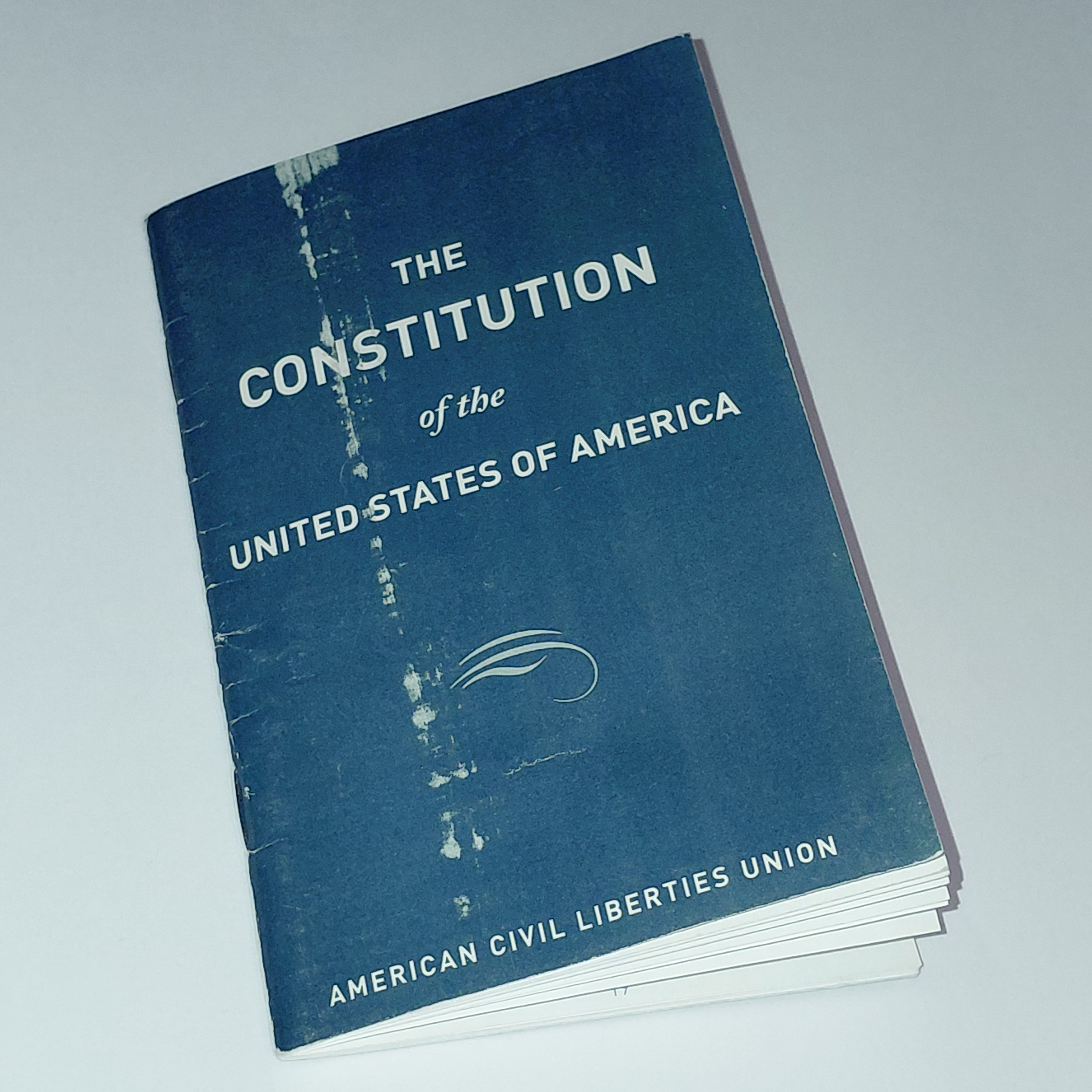
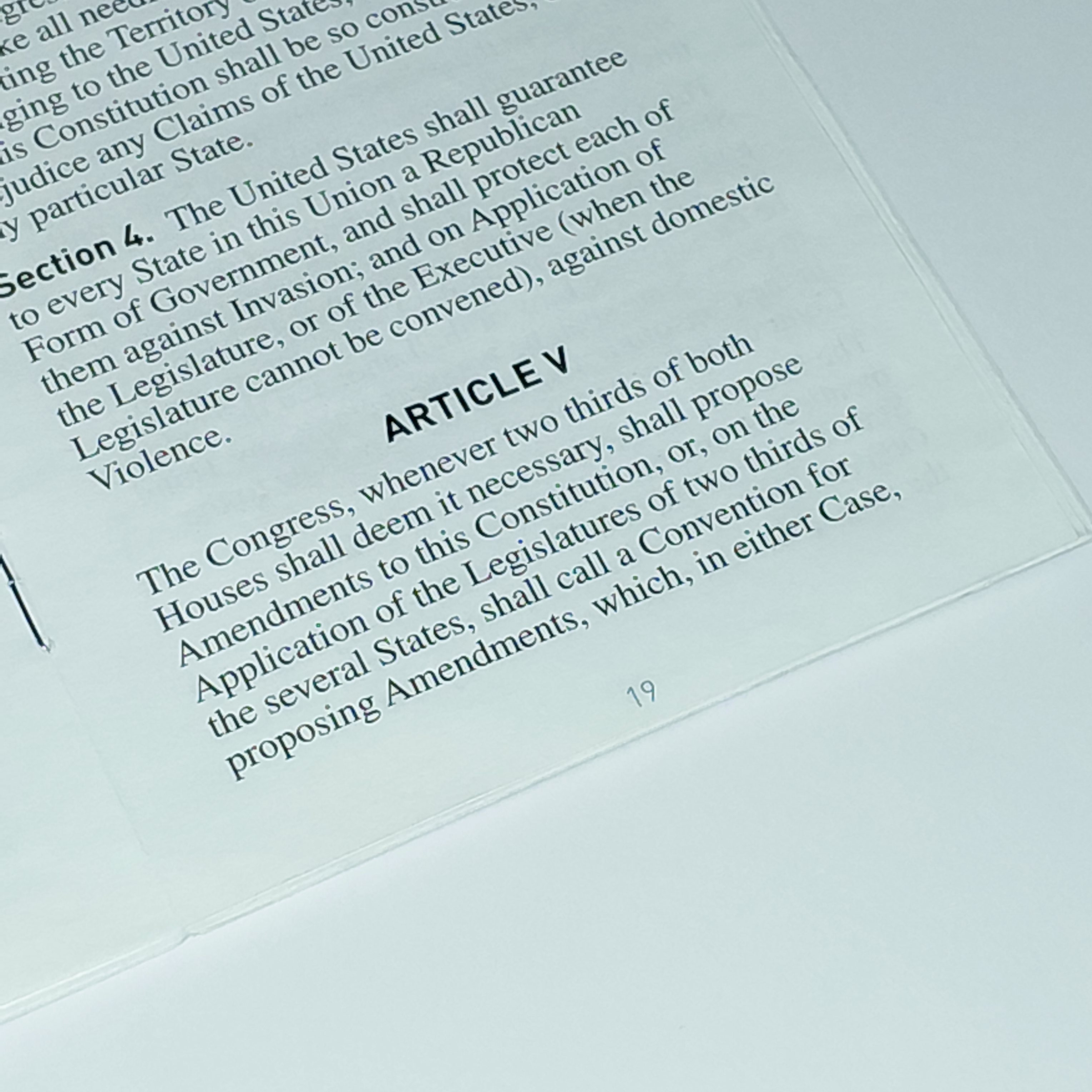
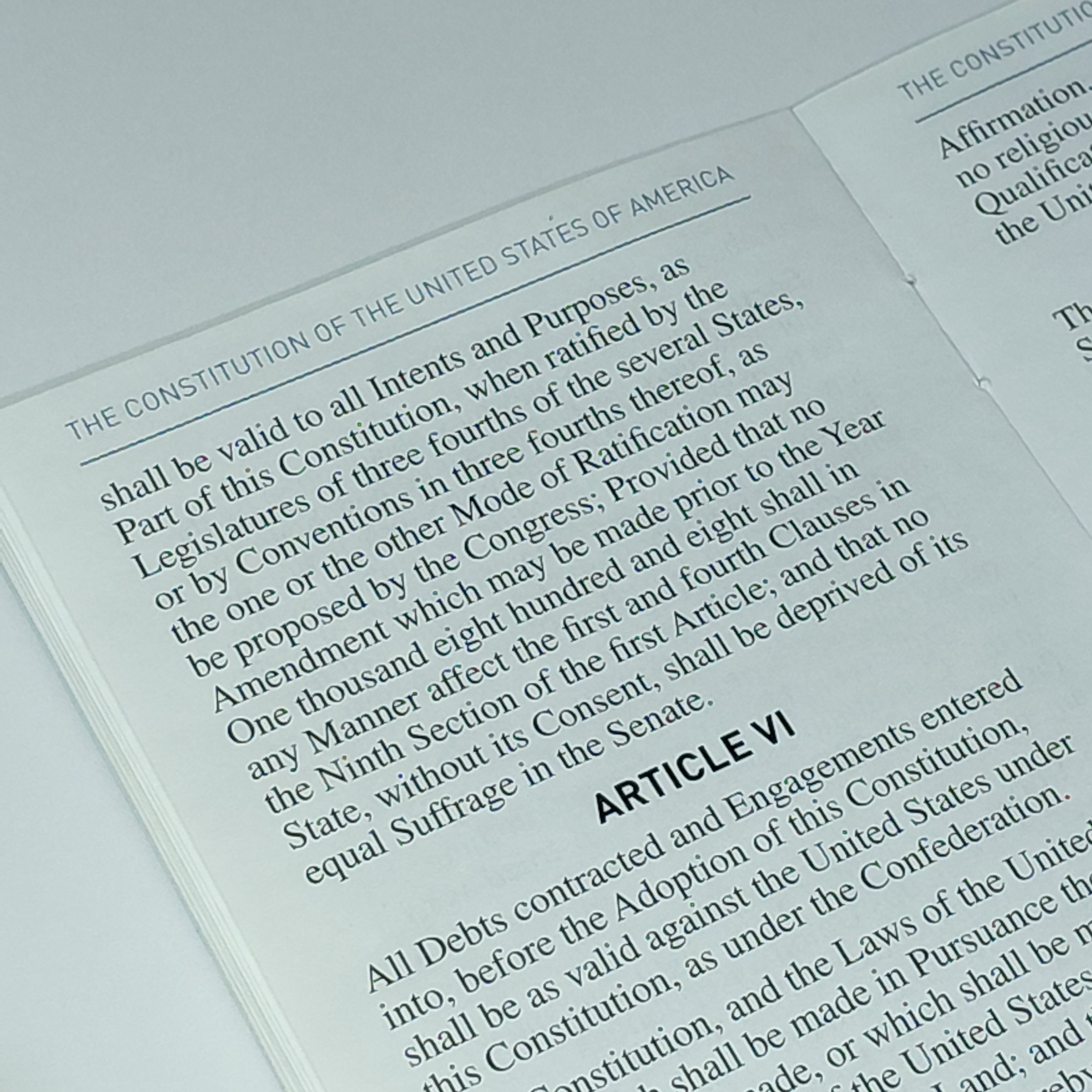
Saw an excellent opinion piece recently about the history of Amendments to the U. S. Constitution, starting with the fact that the document’s authors fully intended it to be revised – the Amendment process is written in, after all (Article V) – and running up through our fifty-plus-year drought of amendments since the 1970’s. It can certainly be argued whether our current divisiveness and the dysfunctionality of Congress are one reason we’ve had no Amendments recently, or one result of that, but the phenomena are certainly related to one another.
Well-thought-through and widely-accepted new Amendments could allow our nation’s founding document to grow and adapt to conditions which have changed dramatically, including: a population which has gone from about four million peeps in 1790 to some 330 million in 2020; a mix of states which has gone from 13 small, young and rural ones to 50 with wildly varied histories, populations and urban/rural characters; multiple technological and cultural revolutions; and an international context the Founders might well struggle to recognize.
Given all that, here are a few modest proposals to be considered when the time seems right
Free the Courts: we’ve all been taught that the Federal government has three branches -the Legislative, the Executive and the Judicial (perhaps equal, perhaps not, depending…) and that this configuration ensures checks and balances on the power of each, thereby protecting the system and our freedoms. Current events are making clear that the Judicial branch is not really an effective check or balance so long as the Chief Executive appoints (even with Legislative approval required) and can fire (at will and whim) the Attorney General, thus allowing that Executive to direct and weild the enormous power of the Department of Justice as he or she wishes. A new Constitutional Convention, or a renewed and less-rigidly divided and more collaborative Congress would do well to consider an Amendment to remedy this by making Justice independent of the Executive branch and the Attorney General an elected office with a four year term, perhaps voted upon in Presidential off-years, and no longer a member of the President’s Cabinet (though still with other rights and privileges of Cabinet level responsibility and authority).
While we’re at it: how about also solidifying the makeup of the Supreme Court by fixing it’s number (rather than leaving it vulnerable to change by some future legislature) and specifying a limited term for justices (so the Court better reflects gradual changes in society and culture) with staggered start dates (so no one President/term gets to appoint more justices than another (whether by random happenstance or by McConnel-esque abuses of Congress’s approval authority). Those changes would work against the politicization some believe we are experiencing with the current Court. And, since we’re talking pie in the sky, maybe even consider requiring each Justice as they take their seat to designate a successor who will fill out the rest of their term should they die, be incapacitated or simply exhausted before it runs out (thus avoiding any lucky President – or violent actor – taking advantage of such an event to pack the court with their preferred jurists).
Speaking of elections: one aggravator of our recent discord has been the ascent of Presidents to office without receiving even the barest majority of the votes cast (not to mention those who did not even receive a plurality!). More than just casting doubt upon a leader’s legitimacy, this has led too many citizens to conclude that their votes are not worth casting. A constitutionally-mandated two-stage election would address this issue, with as many candidates/parties running in the first stage as wish to and then just the two top vote getters participating in a run-off election to decide who will hold the office. That format would ensure the winner receives a majority of votes, while also offering an unmistakable indicator of just how strong or weak is their mandate. It might also diminish the stranglehold of two-party politics, since a third-party or independent candidate need only defeat one of the two major parties to reach the runoff (and have a legitimate chance at the White House), rather than having to surpass both of them from a standing start as under the current system. Whatever expense or delay is incurred by this two-stage process might have ruled it out back in the founders’ days of carriage rides and snail mail but would be entirely manageable in today’s electronic age.
(Debating and reaching agreement on issues like those might even serve as a warm-up so said Congress or Convention could address the stalemate between small and large states with an amendment that retires or at least updates the Electoral College so Presidential Elections would more fairly deal with the enormous disparities in populations relative to Senatorial votes.)
Obviously, tons of other ideas for amendment are out there and more will quickly arise if the ball ever gets rolling, but those above seem to this writer to be top of the list. The time is ripe for us to use the tool those wise heads passed down to us in order that their legacy may be improved and sustained for many more generations!
P. S. – This post was inspired in part by “Amend It!” written by Jill Lepore and appearing in the print and online editions of The Atlantic, October 2025. Neither M. Lepore nor The Atlantic have any connection to this post or site, nor are either in any way responsible for its content.
If you find this post of interest,
please feel free to share it with others.
If you like what you find here at robinandrew.net,
It’s certainly too late to be first in citing Mr. Trump’s brazen demolition of the White House’s East Wing as a perfect encapsulation of what this administration is currently doing to our nation; plenty of commentators have already made that connection.
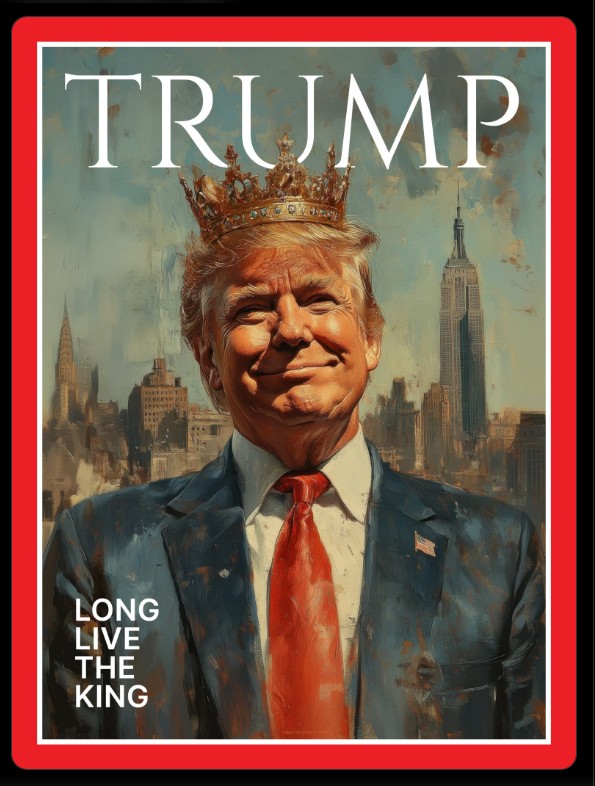
It’s even past time to point out that his childish posting of a meme depicting himself as King in a crown, piloting a fighter jet to dump a stream of what appears to be manure on crowds of Americans is an honest indication of the man’s arrogance, an utter embarrassment to any thoughtful U. S. citizen and a terrible message to anyone around the world who might still hope our nation and its system of government represent anything decent or thoughtful.
What is timely is to note that between excesses like those plus persistent obsequiousness toward Vladimir Putin, overselling of his achievements around the Israeli/Hamas cease fire, careless acceptance of Doge’s destruction and the current government shutdown, callous badmouthing of one of the largest peaceful demonstrations in U. S. history as “whacked out” “radical left lunatics” who “are not representative of the people of our country” (emphasis added), farcically ignoring or evading a plethora of laws and judgements, his gratuitous pardon of the execrable George Santos among so many others and now his astonishingly self-serving proposal to have the Justice Department pay hundreds of millions of taxpayer dollars to himself to soothe his bruised ego, Mr. Trump is very close to transforming the U. S. Government into one more personal asset he has acquired and can play with as he wishes.
It is abundantly clear by now that the Judicial branch can neither act quickly enough to prevent this disaster nor does it have any real power to limit Mr. Trump’s impulsive actions, since the Supreme Court neutered the branch with its ruling in Trump. V. United States.
As for elections, the progress being made at the State level in gerrymandering and limiting access to the polls make it frighteningly plausible that many legitimate votes will have been made irrelevant by November of 2028, allowing Mr. Trump or his successors to retain power for the foreseeable future regardless whether or not a plurality of eligible voters wish it.
It’s not too late, though, to plead with those Republican legislators who hold the majority in Congress to recognize and admit what we are witnessing – the eradication of conscientious leadership and the elimination of any accountability for the nation’s Chief Executive (and through his Pardon power, anyone else who curries his favor or feeds his greed). Not too late to reinstate the balance of power intended by our Constitution, if Republicans are willing to look past partisan marketing and act wisely to oppose the worst of his excesses.
And, finally,it is most emphatically not too late to plead for Republican voters to use the 2026 election to clear away any legislators who will not credibly commit to executing Congress’ responsibilities, rather than rubber stamping Mr. Trump’s every impulse of every moment. This plea is aimed not at those Republicans who cannot imagine themselves ever disagreeing with him on anything, but at the great number of Republicans who still sincerely believe in thoughtful leadership and representative democracy, in a nation that values all of its citizens equally and respects their rights equally, including the right to disagree with an office holder.
It is up to those Republican voters (of which I count myself one), to first nominate and then elect Senators and Representatives who will insist that Congress fulfill its role, including to make the nation’s laws, to levy appropriate taxes and decide how they will be spent, to declare (or not!) wars and – potentially – to use the only power which remains, the power of Impeachment, to ensure that the entire Executive branch follow the Constitution and “take care that the Laws be faithfully executed” in all the myriad aspects that that clearly demands. “Faithfully,” that is, not by disregarding legitimate court rulings, not by handpicking attorneys and prosecutors who will spout disingenuous rationalizations to delay judgements indefinitely, and not by trying to conceal what is really going on beneath a flood of winking, smirking and distractions.
If those voters and their chosen representatives can bring themselves to see the light, it may not be too lateto preserve what Benjamin Franklin said in 1787 he had just witnessed being created:
“A republic, if you can keep it.”
*Frequently credited to Yankees coach Yogi Berra in the 1973 baseball season, at least one source says this quip is the result of a slow-motion game of Telephone, as a similar but less catchy comment was progressively distorted from one media report to another until politician Joe Lieberman erroneously cited the current language, in 1982.
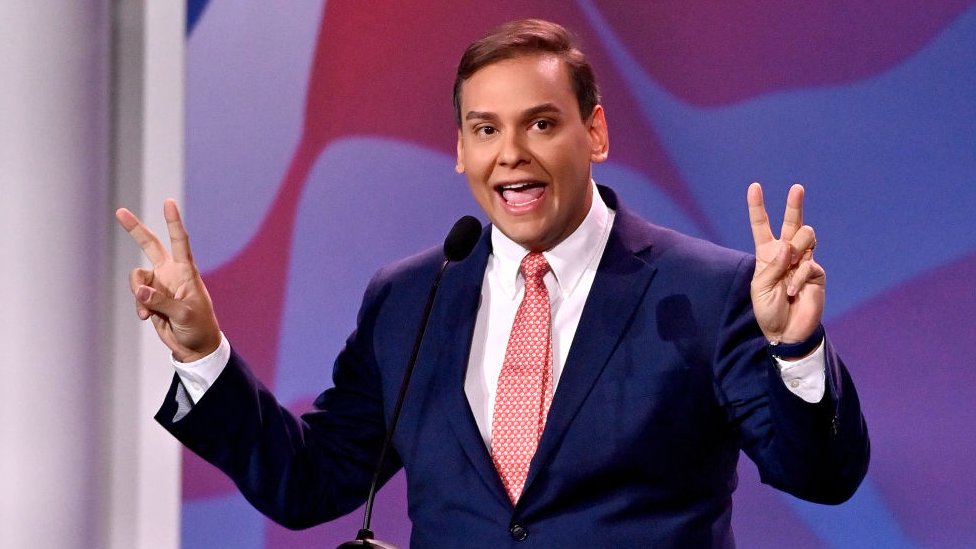
We learned yesterday that Mr. Trump has commuted the sentence of George Santos, the ex-congressman rightly convicted of fraud and identity theft. No reasonable explanation has been given for letting this criminal off after having served only a few months of a multi-year sentence with Mr. Trump’s wishes for “Good luck…” and “… a great life!”
Our executive has no concern, apparently, for the luck and lives of the people and organizations who now have absolutely zero chance of collecting the restitution due to them by judgement of the court which convicted Mr. Santos.
It is possible, perhaps, that Mr. Trump truly believes Santos “has been horribly mistreated…” and awarded this commutation to a political supporter for no reasons other than his love of justice and his compassion for the wronged. If so, let him demonstrate it by paying equal attention to the case of Subramanyam “Subu” Vedam, who was recently released from custody after serving 43 years in prison for a murder which reports say it is now clear he did not commit. Rather than being allowed to enjoy his “Good luck” and look forward to a “great life,” he was immediately taken into custody by ICE and placed in crude detention while they process him for deportation, based upon a drug offence to which he reportedly confessed as part of a plea deal; an offence which even if it has any validity, is entirely overshadowed by the exemplary behavior he displayed during 43 years of wrongful imprisonment..
If George Santos has been “horribly mistreated” in serving three months for multiple crimes which were obvious and adjudicated in full, how much more deserving of compassion is Mr. Vedam?
Mr. Trump, please demonstrate your thoughtful and compassionate nature by commuting his charges and allowing him to spend his remaining years with his family rather than in a nation thousands of miles away from them and to which he has virtually no connection. Or, if that is too heavy a lift, at the very least direct your Attorney General to initiate a full examination of Mr. Vedam’s treatment with even a fraction of the zeal she has exhibited in prosecuting your political opponents.
It is over a year since the Supreme Court issued their 6-3 ruling on Docket no. 23-939, Donald J. Trump versus the United States of America, which ruling granted the President immunity from Federal prosecution for virtually any acts while in office.
No such immunity having been written in the Constitution, their reasoning (originalism be damned) seems to have been that the fear of prosecution would be an undue distraction from the office’s duties and that the fear of such prosecution would impede a President from taking actions he otherwise believed necessary or justified.
This ruling was cynical first in that it assumed a person who had sought and won the highest office in the land would value his own fate (political, financial or otherwise) more highly than the proper execution of that office. Sadly, in the opinion of some observers, they have already been proven correct on that count.
The ruling was cynical second in assuming that even such a self-interested person, upon achieving the office whose responsibilities include selecting the head of its Department of Justice would not have sufficient faith in his appointees and the legal system they administer to rely upon that system to issue proper verdicts in the event he was subjected to improper prosecution. In this, the Court disregarded the basic conservative rationale that the possibility of prosecution provides a necessary and effective deterrent to illegal behavior. In this respect, their cynicism has freed the incumbent to act with total disregard of credible legal justification.
Third, and most cynical of all, is that the Justices did not themselves have sufficient faith in the American legal system, of which they are the figurehead, to use their position, prestige and ruling to assure the President that he could rely upon that system for protection. Every other person in every U. S. jurisdiction lives every day of their lives knowing they could be prosecuted for something of which they do not believe they are guilty, and every one of us has no choice but to trust in the legal system to protect us. And yet, our Supreme Court deemed it unwise to ask the holder of the highest public trust to do the same? Breathtakingly cynical, and shameful.
Those thoughts were on my mind at the time the ruling came out, and I considered posting them, but sadly, did not get around to it. Now, as Mr. Trump’s second term reveals its true form, it is clear that ruling was not only cynical, but at the same time equally naive. By freeing the President from any accountability other than impeachment (the highest hurdle in the legal system and one which has not once taken effect, in nearly 250 years), the court’s ruling has encouraged him to act as he pleases, including to persecute with impunity anyone he chooses.
Moreover, in doing so while also leaving in place his virtually unlimited power to pardon, the Court allows him to hand a ‘Get out of Jail Free’ card to anyone who does his bidding. Far from protecting the nation, this greatly encourages improper acts of any sort by anyone who believes they can maintain the President’s favor. In the few short months of this administration, we can already see this effect at work; that the Court’s majority did not foresee this outcome but instead enabled and encouraged it, exhibits breathtaking naivete, at the least.
The result of these twin privileges, one clear in our Constitution and the other added to it by the recent decision, is that the chief executive may now act out his every whim, without fear of legal restraint for him or his followers.
If this was the ‘original intent’ of the authors of the Constitution, then that document is not at all what generations of us have been taught to believe it was. If that was not the original intent, then shame be on the authors of the Court’s opinion in the case so very aptly named: Donald J. Trump versus the United States.







 RobinAndrew