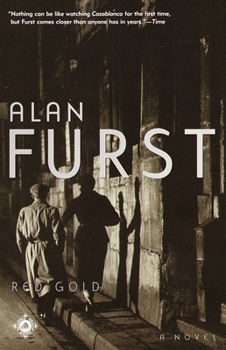
Fahrenheit 451, Ray Bradbury

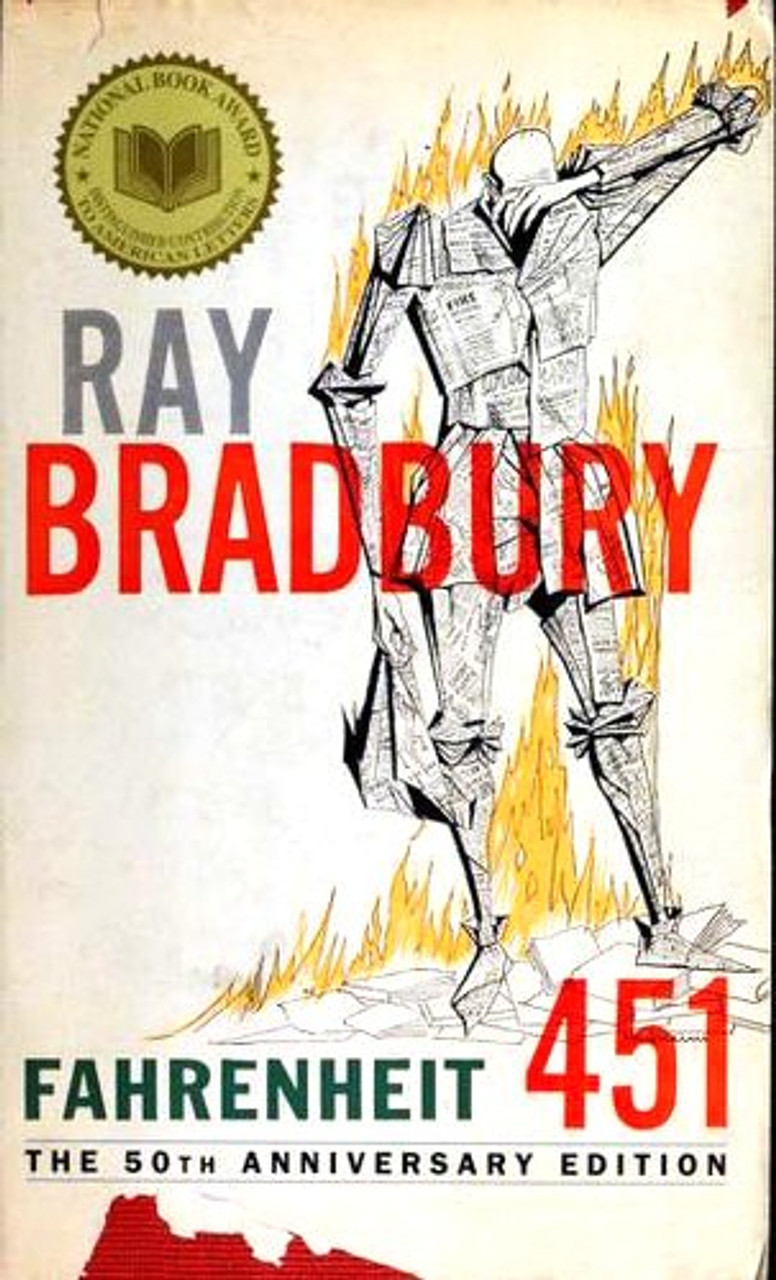
Like a 75-year-old car, Bradbury’s most lauded novel feels a bit clunky compared to the sleek and smooth commodity fiction churned out by today’s industrial publishing conglomerates.  As with any mode of transportation though, where a book takes you is more important than the vehicle itself, and Fahrenheit 451 offers a ride through the very territory over which our nation is currently circling. Pretty amazing for a story first anthologized in 1950 and expanded into this short novel in 1953!

Minds colonized by omnipresent ‘entertainment’ media pretending to provide viewers with a ‘reality’ more acceptable than their own; lives lived in bubbles of class and clique; an authoritarian government ginning up perpetual wars as excuse to police every facet of its citizen’s lives; new technologies immediately harnessed to enforce all of the above – Bradbury’s fears for his characters’ ‘future’ are amazingly close to today’s realities. 

In an afterword and coda written later (1982 and 1979, respectively), Bradbury makes clear that he traces all those developments to his fictional culture’s rejection of the written word.  Books there are viewed as corrupting distractions.  Not content with discouraging or banning individual volumes on the basis of specific content, this regime fears all books because they record, preserve and encourage independent thought.  The very possession of any book has been declared a major criminal act and the once laudable community symbol of the Firefighter has been perverted into a new role as government book burner (and incidental executioner of bibliophiles).

So here we are seventy-five years later, with citizens pressuring their libraries and schools to dispose of any books hinting at truths those particular citizens don’t appreciate; a juvenile Secretary of ‘War’ decreeing which slanted versions of history, philosophy and the social sciences may be read or discussed in the military’s colleges and academies as the White House extorts even private universities to teach to the President’s personal prejudices.  Meanwhile, surveys confirm that fewer and fewer and fewer persons are reading any books by choice, preferring instead to have information spoon-fed into their brains via profit-tailored algorithms curating content for their profit-driven mass electronica. In spooky parallel to Bradbury’s Firemen cum Fire-setters, the current administration has given control of many federal agencies to fanatical minions who despise those agencies’ statutory functions, wishing instead to destroy or pervert them by flipping them from protecting the environment or civil rights, for example, to opening the former to plunder by political contributors and restricting the latter’s protections to only those who bow down to the MAGA movement in all its glory and gory ambition (while sporting an appearance that comports to Mr. Trump’s old-Hollywood vision of how true Americans are supposed to look).

Despite some age-appropriate road wear and rust in its wheel-wells, Bradbury’s Fahrenheit 451 is no junker, but a precious classic vehicle for waking up the masses, every bit as timely today as when its rubber first hit the road.  It deserves to be read or reread as widely as possible, so more citizens will see what is happening and do what they can to stop it.

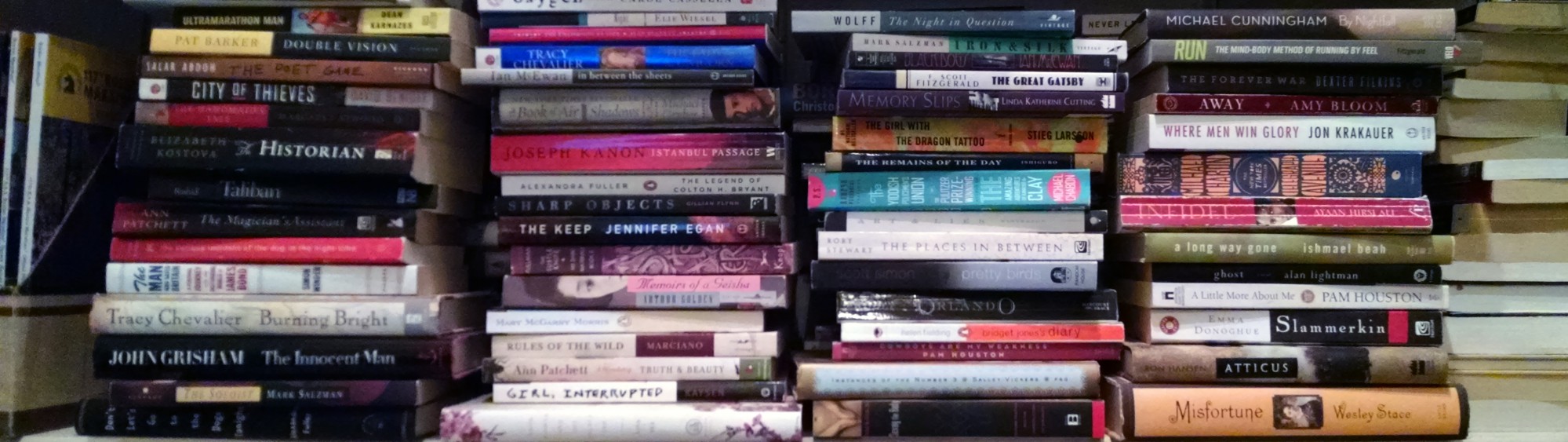
P. S. – Along with Orwell’s 1984, and Animal Farm, Vonnegut’s Slaughterhouse-Five, Huxley’s Brave New World, Anthony Burgess’ A Clockwork Orange and others from the mid-Twentieth, this novel has helped to shape the fears and ideals of multiple generations.  Margaret Atwood’s The Handmaid’s Tale, Cormac McCarthy’s The Road, Emily St. John Mandel’s Station Eleven and Octavia E. Butler’s Parable of the Sower are notable among many other recent and creditable volumes with similar aspirations of enlightenment and warning.  Now more than ever, all such books deserve to be read and shared.

Like this book or this post? Please Share it!

Interested in what you read on this site – please subscribe. It’s free!

Grok Gets an F – Grooming an AI Encyclopedia

According to reports*, Elon Musk’s new AI-generated online encyclopedia, Grokipedia, begins its entry for gender with: “Gender refers to the binary classification of humans as male or female based on biological sex…”

Wrong! Gender and sex are not the same things!

That Grok thinks they are**, indicates it has been ‘taught’ to parrot the opinions of its human creators.  Like a young child, it is not worldly or intelligent enough to think beyond what it has been told by its groomers and so sees the world through their blinders. 

For AI as with any other computative system, the value of output is highly dependent upon the quality of input.  The first law of computer science – ‘garbage in, garbage out’ – is worth keeping in mind as AI’s very human procreators inject their offspring into as many facets of our lives and world as they can, as quickly as possible, with no oversight and often without our consent or even our awareness. 

Knowledge is power, and ignorance posing as intelligence is an abuse of power, not a sign of the glorious and unadulterated progress which AI’s promoters claim to be offering to the world.

CAVEAT UTILITOR!

If you like this post, feel free to share it.

* This post refers to a report by Will Oremus and Faiz Siddiqui in the electronic edition of the Washington Post on 2025-10-27 titled “Elon Musk launches a Wikipedia rival that extols his own ‘vision’”

** In case there’s any question: ‘Male’ and ‘female’ are classifications of sex, which is about biology and can mean, depending on who is speaking, which chromosomes a person’s cells carry, which type of reproductive cells their body produces, which genitalia it exhibits, etc.   ‘Man’ and ‘woman’ can refer to various selections from a wide range of public behaviors, perceptions, expectations and putative rules which are loosely and collectively referred to as gender.  Sex and gender terms are sometimes congruent, sometimes not, but they are not the same things, as Grok seems to believe.

If you like what you see on this site,

please subscribe.

It’s absolutely free!

Tell Me Everything, Elizabeth Strout

Reliably kind and astute, Strout is a treasure, mining small town Maine for evidence of the human condition; what it takes to survive childhood, adulting, family, romance, loss and the passage of time.

In this installment, we are reunited with aging versions of Lucy Barton, Olive Kitteridge and other characters from earlier Strout novels as they continue the messy business of life. The tale is structured around an unlikely relationship between Lucy, the oddball outsider and Olive, the life-long local and gossip coming to grips with the shrinking world of retired widowhood.

The stories Olive tells to Lucy (and others we glean along the way) eventually coalesce around one theme – they are all about secrets.  Bits of information perhaps insignificant, perhaps life-changing, which characters have kept from spouses, siblings, neighbors and often, sometimes for very long times, from themselves. 

Partway through what seems a familiar journey, Strout drops in a murder mystery, something readers of her earlier novels may find incongruous, even disconcerting.  That sort of drama is not her usual cup of tea. Characteristically though, the mystery develops gently and organically, out of seemingly small bits of character and behavior. For a time, it even seems to have drifted from the author’s attention, then is brought back into focus by other events before being solved well short of the novel’s end. Rather than the book’s raison d’être, then, we understand even murder as one more instance of secrets kept, or not.  More dramatic than most, but the same animal underneath its skin of violence.

Thus the title, Tell Me Everything, is really a misdirection: No healthy happy person actually tells ‘everything.’  And, if one does try to do so, they’d best be prepared for serious consequences. Sometimes, the path most conducive to happiness, the path of love and caring, may actually lead through the difficult decision to not tell everything, but to live with our secrets and let others live without having to confront them.

Simple insight on a complex reality. Sad and humorous, depressing and reassuring, life changing, life affirming, unremarkable and unavoidable and – in the right hands – captivating and moving.

Another gem from the lapidary mind of Elizabeth Strout.  May she live and write forever.

It’s Not Too Late!

It Ain’t Over Till It’s Over*

It’s certainly too late to be first in citing Mr. Trump’s brazen demolition of the White House’s East Wing as a perfect encapsulation of what this administration is currently doing to our nation; plenty of commentators have already made that connection. 

It’s even past time to point out that his childish posting of a meme depicting himself as King in a crown, piloting a fighter jet to dump a stream of what appears to be manure on crowds of Americans is an honest indication of the man’s arrogance, an utter embarrassment to any thoughtful U. S. citizen and a terrible message to anyone around the world who might still hope our nation and its system of government represent anything decent or thoughtful.

What is timely is to note that between excesses like those plus persistent obsequiousness toward Vladimir Putin, overselling of his achievements around the Israeli/Hamas cease fire, careless acceptance of Doge’s destruction and the current government shutdown, callous badmouthing of one of the largest peaceful demonstrations in U. S. history as “whacked out” “radical left lunatics” who “are not representative of the people of our country” (emphasis added), farcically ignoring or evading a plethora of laws and judgements, his gratuitous pardon of the execrable George Santos among so many others and now his astonishingly self-serving proposal to have the Justice Department pay hundreds of millions of taxpayer dollars to himself to soothe his bruised ego, Mr. Trump is very close to transforming the U. S. Government into one more personal asset he has acquired and can play with as he wishes.

It is abundantly clear by now that the Judicial branch can neither act quickly enough to prevent this disaster nor does it have any real power to limit Mr. Trump’s impulsive actions, since the Supreme Court neutered the branch with its ruling in Trump. V. United States.

As for elections, the progress being made at the State level in gerrymandering and limiting access to the polls make it frighteningly plausible that many legitimate votes will have been made irrelevant by November of 2028, allowing Mr. Trump or his successors to retain power for the foreseeable future regardless whether or not a plurality of eligible voters wish it.

It’s not too late, though, to plead with those Republican legislators who hold the majority in Congress to recognize and admit what we are witnessing – the eradication of conscientious leadership and the elimination of any accountability for the nation’s Chief Executive (and through his Pardon power, anyone else who curries his favor or feeds his greed).  Not too late to reinstate the balance of power intended by our Constitution, if Republicans are willing to look past partisan marketing and act wisely to oppose the worst of his excesses. 

And, finally, it is most emphatically not too late to plead for Republican voters to use the 2026 election to clear away any legislators who will not credibly commit to executing Congress’ responsibilities, rather than rubber stamping Mr. Trump’s every impulse of every moment.  This plea is aimed not at those Republicans who cannot imagine themselves ever disagreeing with him on anything, but at the great number of Republicans who still sincerely believe in thoughtful leadership and representative democracy, in a nation that values all of its citizens equally and respects their rights equally, including the right to disagree with an office holder. 

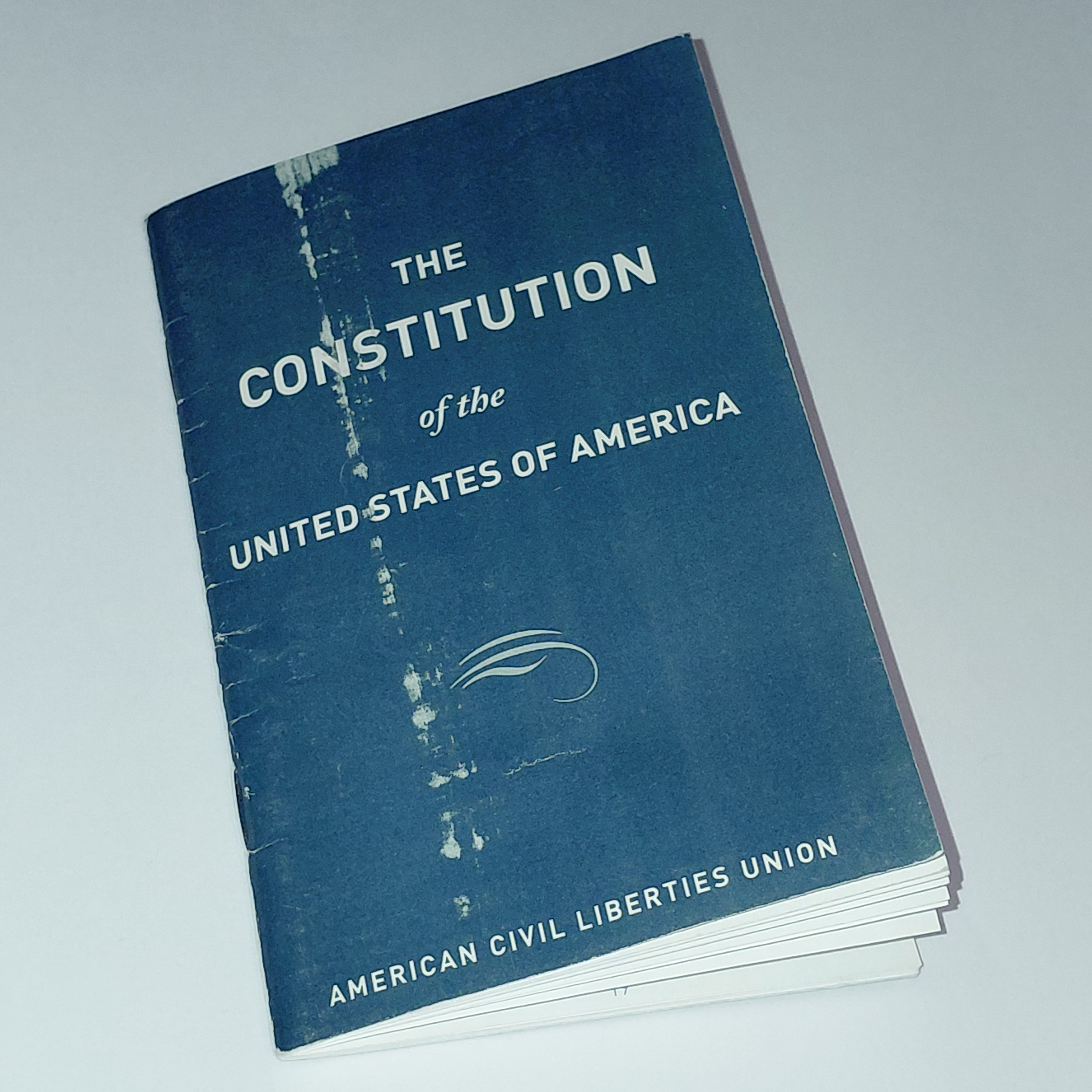
It is up to those Republican voters (of which I count myself one), to first nominate and then elect Senators and Representatives who will insist that Congress fulfill its role, including to make the nation’s laws, to levy appropriate taxes and decide how they will be spent, to declare (or not!) wars and – potentially – to use the only power which remains, the power of Impeachment, to ensure that the entire Executive branch follow the Constitution and “take care that the Laws be faithfully executed” in all the myriad aspects that that clearly demands. “Faithfully,” that is, not by disregarding legitimate court rulings, not by handpicking attorneys and prosecutors who will spout disingenuous rationalizations to delay judgements indefinitely, and not by trying to conceal what is really going on beneath a flood of winking, smirking and distractions.

If those voters and their chosen representatives can bring themselves to see the light, it may not be too late to preserve what Benjamin Franklin said in 1787 he had just witnessed being created:

“A republic, if you can keep it.”

*Frequently credited to Yankees coach Yogi Berra in the 1973 baseball season, at least one source says this quip is the result of a slow-motion game of Telephone, as a similar but less catchy comment was progressively distorted from one media report to another until politician Joe Lieberman erroneously cited the current language, in 1982.

The Children of Men, P. D. James

A Timely Commentary on current events – written nearly thirty-five years ago!

Grabbed this off a neighborhood free-books shelf on basis of the author’s familiar name and work; was surprised to find in place of the expected tea and class-system detective story a speculative political fiction written decades ago yet uncannily timely in its themes.  James* has always been a reliable commentor on the British government and governing class – she spent thirty years in the civil service after all (or rather, before being able to write all her more familiar titles) – but that has previously seemed incidental to the solving of mysteries.  Here, it is the main point.

Though first published in 1992, the novel is set in 2021 with a sci-fi sounding premise – that 25 years earlier it had become unavoidably obvious that all human males in the world had become infertile.  With the birth rate crashing in months to absolute zero, all of humanity was suddenly forced to comprehend the existential doom of universal aging, disability and death without the consolation of watching younger generations grow to replace them.  We are then given to understand how this resulted in apathy and lawlessness, perfect conditions for the rise of a fascistic strongman named ‘Xan’ (reference to Alexander ‘The Great,’ I’d guess).  Our guide through what follows is Dr. Theodore (Theo) Faron, an Oxford historian with a mythologically-tragic reason for retreating from public life but who was also a childhood friend of Xan and, until recently, an advisor to him in his autocratic reign.  When Theo is approached by a band of laughably incompetent would-be revolutionaries, the first half of the novel is set in motion. The second half (spoiler alert) is brought about by the discovery that Julian, a (female, despite the name) member of that conspiracy for whom Theo immediately begins to develop romantic feelings, is pregnant, a monumental event which suggests she and her child have the potential to save humanity from its dire fate.  From that development James builds a compelling thriller addressing moral questions of ends and means, guilt and forgiveness, God or not God and the temptation which even the most honorable person may experience when offered the chance to exercise power over others for what they believe to be good or necessary ends.

Xan’s resemblance to the current U. S. President is striking, and the arguments for his usurpation of total control over English life track almost perfectly with MAGA’s claims of necessity: societal disorder, citizens lost in despair and apathy, crises requiring responses more immediate than any deliberative process could manage, the purportedly inherent weakness and fecklessness of all so-called democratic processes.  The effects too, are symmetrical – arbitrary laws and judgement, scapegoating of immigrants and other ‘others,’ curtailment of individuals’ rights under brutal policing and cruel incarceration and an invasive security state to ensure those who have seized power get to hold it indefinitely.

All of this, James handles with intelligence and generosity (if sometimes overmuch time spent on the exact physiognomy of a face, niceties of vegetation, quality of sunlight or sky and the furnishings of various interiors; the one aspect in which the novel feels rooted in the author’s generation and previous genre).  Theo is a modest and honorable foil for Xan, who is himself allowed sufficient rope to make a moral case for his usurpation.  Their ultimate confrontation is well-scripted if a bit forced and the final decision which results from it is of Sophoclean magnitude and weight.

Among many impressively crafted moments is one where Theo, acting out of necessity to secure resources for the imminent birth of Julian’s child, discovers in himself the potential to enjoy violating norms and forcing others to his will, even to the edge of brutality.  Not only a worthy observation on human nature, this new self-knowledge plants a seed which allows the novel’s final moments and message to ring true.

Schooled by a difficult life, James may have honed her skills in the trenches of genre fiction, but The Children of Men affirms her a true literary artist.  It deserves to be revisited for that reason alone, and especially so in this moment, when its fictional time period has arrived and is turning out strikingly similarly, in some important respects, to what she imagined nearly thirty five years before.

*Officially: Phyllis Dorothy James White, Baroness James of Holland Park!

Note: There is also a somewhat loose film adaption by the same title, credited to five writers and directed by Alfonso Cuaron (Harry Potter and the Prisoner of Azkaban) with Clive Owen portraying Theo.  The film received critical acclaim, numerous award nominations and a few wins, as well as positions on various “Top” lists, but did poorly at the box office).

Feel free to share this post if you like.

If you appreciate what you find on this site, please subscribe – it’s totally free!

Tell Us How to Live!

A free people will always be a diverse people, so a free nation must always be a diverse nation.

Ross Douthat, during a recent interview* advocating a more prominent role for religion in American culture and politics, argued that progressivism fails because “You need something else on the horizon…So that we can live in a specific way that we are supposed to live.”

This argument might carry more weight if there existed some single voice calling all humanity by some clear and direct method (simultaneously taking over every video screen on the planet in its owner’s first language perhaps, to steal an example from fiction) with specific instructions on how we are supposed to live.

In real life though, there is no such singular directive.  A Roman Catholic might point to The Bible – but what he’d actually be pointing to would be a specific reading and selections from its scriptures which themselves have evolved from loosely-documented source materials translated from one arcane language to another by men of less than perfect knowledge, their translations and interpretations fought over, compromised upon and codified over two thousand years by a man-made (literally – no significant women’s voices having been allowed) bureaucracy not always unconcerned with its own survival and wellbeing. 

An Eastern Orthodox voice might agree with Roman Catholic doctrine on some aspects of the good life, but disagree on others; a follower of the Russian Orthodox church could have differences with one or both.  A Southern Baptist or any of dozens of other denominations who also see themselves also as Christians and reference the same scriptures would have even further varied ideas of how to live.  An Orthodox Jew or observant Muslim from the Holy Land would certainly have strongly differences with any of those, despite their faiths springing from some of the same roots and looking to some of the same sources.  A Buddhist, a Sikh, a Hindu, or a believer in any of the multitude of less populous or just less publicized denominations, sects, or faiths (of which I am too ignorant to list them all), might find very little to agree upon in Mr. Douthat’s ordained ‘how we are supposed to live’ directive. 

So long as whatever spiritual entity which may be out there watching over humanity chooses to speak in obscure language and to only a few of us at any given time or place, persons of sincere faith and goodness are going to disagree – honestly, deeply and righteously – about how those with whom they share the planet are “supposed to live.”   

History records countless instances where embedding religious beliefs in governance have led to unequal treatment, religious persecution, economic damages, societal upheavals, violence, killing and right on up to the brutality of total warfare; all in the name of one or another party’s conception of “the way we are supposed to live.”  Even in realms which claimed their populace were of a single faith, differences and resulting tragedies have not been erased – and often become all the more brutal to those in the minority.  That such injustices may be somewhat less prevalent in our ‘modern’ era than before that is more a matter of incremental progress toward accepting differences than of the species having settled on a single religion.

If, then, one hopes to maintain a government ‘for the people,’ one of its primary principles must be to recognize the diversity (which is not an expletive, btw, as some wish to use it these days) of our beliefs and not enforce the views of any one faith on others who do not share them.  To tolerate and actually protect the freedom of each to worship and live as they wish, so far as their actions do not constrain the freedoms of others.

For any extensive society to live in real and lasting peace, it must look elsewhere than any religion for its common rules on how to live.  That is what the USA has attempted to do (with sometimes greater and sometimes less success) for over 250 years.  Others have tried as well, again with greater or lesser success, but generally more promise than those which have chosen theocracy.   Rather than giving up on that effort and moving toward some declaration of national religious identity, we and our descendants will be better served by recommitting to pluralism and to working together, allowing those of all faiths (including no religion or God) the freedom to live their own prescription to the greatest extent possible without it preventing others from living theirs.

Nationalizing any religious identity, no matter how watered down or camouflaged by clever marketing or promoted by obviously insincere lip-servers, is not the answer.

(* “Ezra Klein is Worried – But Not About a Radicalized Left,” New York Times, September 18, 2025)

Image: The Hagia Sophia, Istanbul, Turkiye, has been a place of worship for both Christians and Muslims over the centuries. Photo by author.

If you like this post, feel free to share it.

If you like what you see on this site, please subscribe, it’s free!

Paris – The Biography of a City, Colin Jones

Virtually a reference work, this self-confessed “Impossible history” of one of the world’s great cities comes buttressed by many pages of notes, a graduate level bibliographical guide, index, population table, modest number of illustrations, sequential maps showing the evolution of fortifications and boundaries, and even a list of the (major) buildings discussed.

For all that, the text itself is mostly quite readable, and manages to remain even-handed when discussing the political oscillations of the city’s fortunes.   Jones’s personal viewpoint is most glimpseable in the depth with which he discusses the impacts of the real estate marketplace and urban planning (a discipline for which nineteenth century Paris was something of an origin point and test case).  These, we hear, heavily influenced not only the visible face but also the economy, sociology and politics of the city, its surrounding suburbs (the banlieue), region and nation. The rise and growth of antiquarian/protectionist architectural sentiment is given an appropriate level of attention, since it is largely that movement and its successes which have bequeathed us today’s tourist and cultural mecca.

As for the aforementioned political oscillations, to one whose prejudices were shaped by the American education system within an Anglophile culture, Paris is eye-opening in relating the wave after wave of governments established, contested and washed away in favor of the next new or recycled concept.  From far back in the era of multiple kingdoms, principalities and ecclesiastical domains to contesting Empires of the middle ages to the early-modern era of Communes, communists, Republicans, Vichy capitulation and Republics (five, to date), it is amazing that anyone has been able to establish any stable business, institution or assets at all. A thought worth considering as the USA is going through its own populist spasm which may – at best – be followed by a future swing in some opposing direction.

One thing which does seem to have remained relatively consistent through Paris’ administrative history: even when the city and nation were not overtly socialist, their governments have always exercised far greater powers of eminent domain than we in the USA are accustomed to.  Some small justification, perhaps, for the disdain which some Americans profess toward anything ‘those Frenchies’ (or any Europeans for that matter), may have to say about social policy or virtues.   Reading about the centuries-long role Paris has played in nurturing the very idea of self-government by the polity though, makes that disdain seem more short-sighted than ever. 

Another significant takeaway: the wealth of literature generated in Paris’ Arrondissements over the centuries would require a lifetime of reading to consume and appreciate. Preferably in the original, since even my feeble attempt to learn French quickly convinced that its full nuance is unlikely to survive translation. One reason, perhaps that, Jones begins his introduction with a literary quote and analysis. In retrospect, this turns out to be a wholly appropriate entry point for what is as much a human story as a geographical one.  At every stage of its history, the promise of Paris has called to millions, to such a degree that its population has always been largely non-native, immigrants increasing its numbers even as low birth-rate, high mortality and the exodus of those unwilling or unable to meet its demands were constantly working to diminish them.

Fascinating even in its occasional excesses (just like its subject), Paris – The Biography of a City easily earns its space on the shelf.

(Note: published in 2004, this volume necessarily does not cover the City’s most recent decades.)

Pardon Who, Mr. Trump?!

We learned yesterday that Mr. Trump has commuted the sentence of George Santos, the ex-congressman rightly convicted of fraud and identity theft. No reasonable explanation has been given for letting this criminal off after having served only a few months of a multi-year sentence with Mr. Trump’s wishes for “Good luck…” and “… a great life!”

Our executive has no concern, apparently, for the luck and lives of the people and organizations who now have absolutely zero chance of collecting the restitution due to them by judgement of the court which convicted Mr. Santos.

It is possible, perhaps, that Mr. Trump truly believes Santos “has been horribly mistreated…” and awarded this commutation to a political supporter for no reasons other than his love of justice and his compassion for the wronged. If so, let him demonstrate it by paying equal attention to the case of Subramanyam “Subu” Vedam, who was recently released from custody after serving 43 years in prison for a murder which reports say it is now clear he did not commit. Rather than being allowed to enjoy his “Good luck” and look forward to a “great life,” he was immediately taken into custody by ICE and placed in crude detention while they process him for deportation, based upon a drug offence to which he reportedly confessed as part of a plea deal; an offence which even if it has any validity, is entirely overshadowed by the exemplary behavior he displayed during 43 years of wrongful imprisonment..

If George Santos has been “horribly mistreated” in serving three months for multiple crimes which were obvious and adjudicated in full, how much more deserving of compassion is Mr. Vedam?

Mr. Trump, please demonstrate your thoughtful and compassionate nature by commuting his charges and allowing him to spend his remaining years with his family rather than in a nation thousands of miles away from them and to which he has virtually no connection. Or, if that is too heavy a lift, at the very least direct your Attorney General to initiate a full examination of Mr. Vedam’s treatment with even a fraction of the zeal she has exhibited in prosecuting your political opponents.

Show us your true colors, Mr. Trump!

Please share this Post

to bring more attention to Mr. Vedam’s

plight.

And, if you appreciate what you see on this site,

please subscribe – it’s absolutely free!

Share

The Golden Road – How Ancient India Transformed the World, William Dalrymple

It’s long been a curiosity to me that The Buddha lived and preached in the lands which we know as India, but the populace of that region today are mostly Hindu followers (with significant minorities of Muslims, Sikhs, and other less-publicized faiths).  Conversely, Buddhism is mostly associated in the modern mind with lands beyond India: Tibet, China, Japan, Thailand, the other southeast Asian nations… And then, of course, there is Indonesia, a massively populated sleeper nation (in the ‘Western’ view) which I have read holds more Muslims than the entire Middle East! And BTW, how come Marco Polo’s fabled Silk Road doesn’t show up on any maps except those created to illustrate editions of his dubiously sourced travel memoir?

William Dalrymple, a Scottish-born historian living in Delhi, is eager to explain it all to us, beginning with a valuable Introduction that quickly spells out several themes.  First, it demolishes the myth of ancient overland trade routes.  In this telling, sea-borne trade was far more effective at moving goods – one ship able to carry many times the load of a donkey or camel and at the same time less vulnerable to the myriad possibly-hostile territories through which a long land route must pass between origin and destination.  Add to that the reliable seasonal reversing of monsoon winds in the seas around India and you have a situation ripe for cross-culture pollination. Something I’d begun to consider recently through reading and viewing about Rome, its connections with Egypt, and recent archaeological work at Red sea ports which has yielded much evidence of sustained trade with India’s Western coast (via the Gulf of Aden and Arabian Sea).

As impressive as this dispersion is, it is hardly the end of the Golden Road’s story.  Even as Buddhist missionaries (itself a new concept this small mind) were carrying their faith to the east where various rulers of ‘Chinese’ states endorsed it to various degrees, Mongols sweeping down from the north and Macedonians from the west were bringing other traditions to India, fracturing its Buddhist establishment and driving many back to the emotional refuge of the Vedic/Hindu tradition with its abundance of attractive gods and goddesses and the reassurance of the Brahmin caste system. (I know I am garbling these distinctions, it takes a scholar like Dalrymple to keep them straight, if even he can, so please forgive me.) Mix in the eventual arrival of Western Europeans and Christianity and one begins to see what a melting pot (to appropriate one of our local phrases) the Indian Peninsula has become.

Through it all, Dalrymple’s central objective is to remind us that wherever armies go, religion goes with them, and wherever religions go, other knowledge goes too.  In astronomy, mathematics, medicine and other realms, residents of India were making momentous discoveries long before Europe or even China.  Citing various early writings (most of them previously unknown, to me) he traces the origins of this scholarship and its dispersal through the various centers of study and libraries of texts it generated.  Only when Islamic scholars brought those ideas and texts to the Middle East (Baghdad, etc.) and from there to the Iberian Peninsula (the Moors, as we tend to call them, thanks to Mr. Shakespeare), was it translated into Greek, Latin, Italian, German, etc. and thus available to fertilize the so-called Enlightenment which we like to think of as the foundation of our contemporary culture.

Dalrymple is an awesomely erudite guide to all this, his analysis of artwork in this or that cave in this or that obscure (to me) region of India is amazing, if sometimes overfilling.  For those interested in the premise but not able to work through a 500 page tome, just reading the Introduction will give the basic premise.  For those with time though, the depth and detail makes the case more convincing and imparts a vision of the rhythmic dance – the ebbing and flowing on a scale of centuries – which was required for this dance of cultures to bring us the world we know today.

At a time when the (supposedly) Enlightenment-based world order we have known and respected for generations seems in danger of self-destructing, it is appropriate to be reminded that we would never have gotten this far if not for the blossoming and dying of countless other orders.  And also, it must be admitted, the clashes, conquests and destruction of kingdoms, nations and empires on multiple continents, over multiple millennia.  No human creation lasts forever, but the best fruits of each can contribute to what comes next – though we may need to suffer a lot of wasted time, resources and lives before we get there.

Thank you, Mr. Dalrymple.

One Ring to Rule Them All – The Breathtaking Cynicism (and Naivete) of Trump v. United States

It is over a year since the Supreme Court issued their 6-3 ruling on Docket no. 23-939, Donald J. Trump versus the United States of America, which ruling granted the President immunity from Federal prosecution for virtually any acts while in office.

No such immunity having been written in the Constitution, their reasoning (originalism be damned) seems to have been that the fear of prosecution would be an undue distraction from the office’s duties and that the fear of such prosecution would impede a President from taking actions he otherwise believed necessary or justified. 

This ruling was cynical first in that it assumed a person who had sought and won the highest office in the land would value his own fate (political, financial or otherwise) more highly than the proper execution of that office.   Sadly, in the opinion of some observers, they have already been proven correct on that count.

The ruling was cynical second in assuming that even such a self-interested person, upon achieving the office whose responsibilities include selecting the head of its Department of Justice would not have sufficient faith in his appointees and the legal system they administer to rely upon that system to issue proper verdicts in the event he was subjected to improper prosecution. In this, the Court disregarded the basic conservative rationale that the possibility of prosecution provides a necessary and effective deterrent to illegal behavior. In this respect, their cynicism has freed the incumbent to act with total disregard of credible legal justification.

Third, and most cynical of all, is that the Justices did not themselves have sufficient faith in the American legal system, of which they are the figurehead, to use their position, prestige and ruling to assure the President that he could rely upon that system for protection.  Every other person in every U. S. jurisdiction lives every day of their lives knowing they could be prosecuted for something of which they do not believe they are guilty, and every one of us has no choice but to trust in the legal system to protect us.  And yet, our Supreme Court deemed it unwise to ask the holder of the highest public trust to do the same?  Breathtakingly cynical, and shameful.

Those thoughts were on my mind at the time the ruling came out, and I considered posting them, but sadly, did not get around to it.  Now, as Mr. Trump’s second term reveals its true form, it is clear that ruling was not only cynical, but at the same time equally naive.  By freeing the President from any accountability other than impeachment (the highest hurdle in the legal system and one which has not once taken effect, in nearly 250 years), the court’s ruling has encouraged him to act as he pleases, including to persecute with impunity anyone he chooses.

Moreover, in doing so while also leaving in place his virtually unlimited power to pardon, the Court allows him to hand a ‘Get out of Jail Free’ card to anyone who does his bidding.  Far from protecting the nation, this greatly encourages improper acts of any sort by anyone who believes they can maintain the President’s favor.  In the few short months of this administration, we can already see this effect at work; that the Court’s majority did not foresee this outcome but instead enabled and encouraged it, exhibits breathtaking naivete, at the least. 

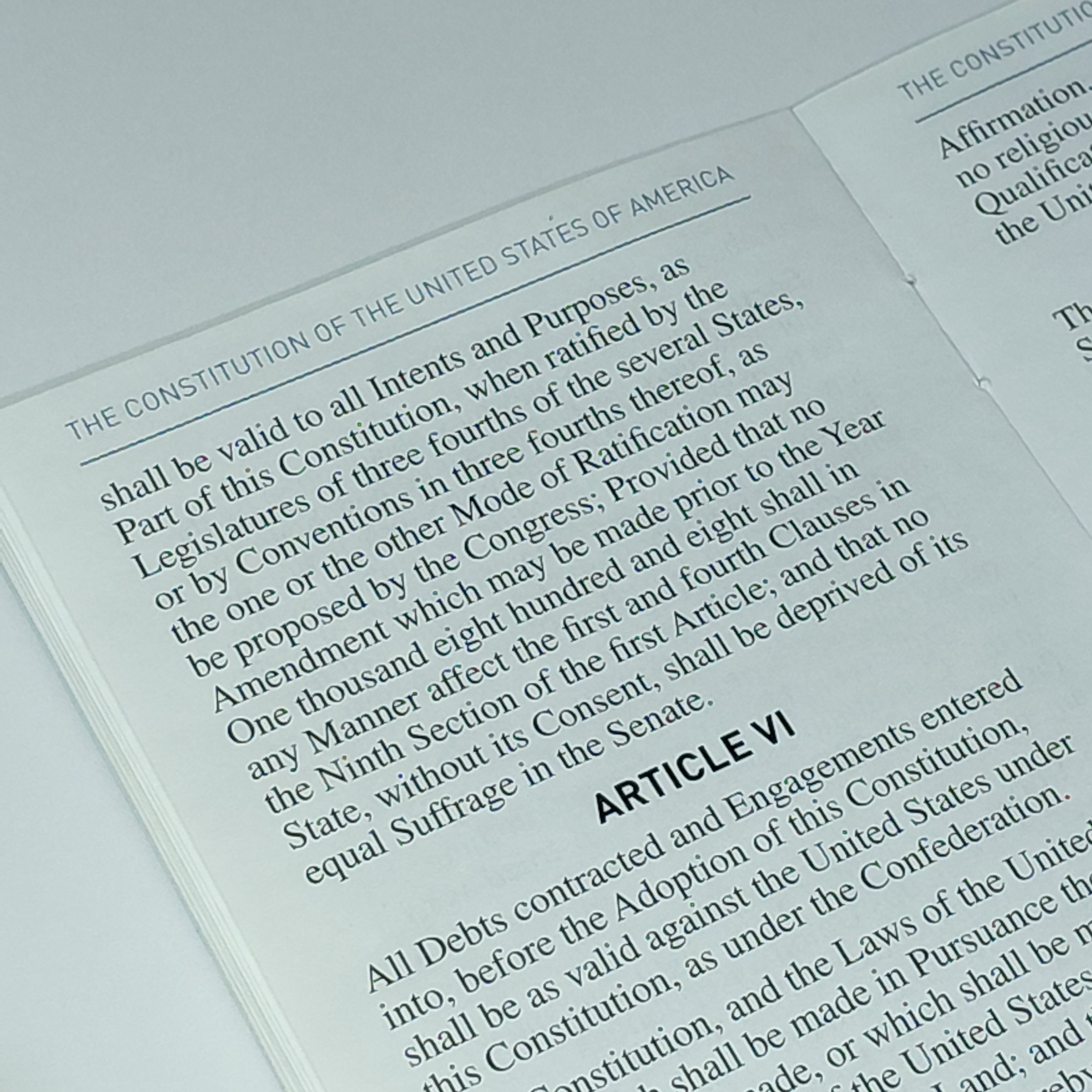
The result of these twin privileges, one clear in our Constitution and the other added to it by the recent decision, is that the chief executive may now act out his every whim, without fear of legal restraint for him or his followers.

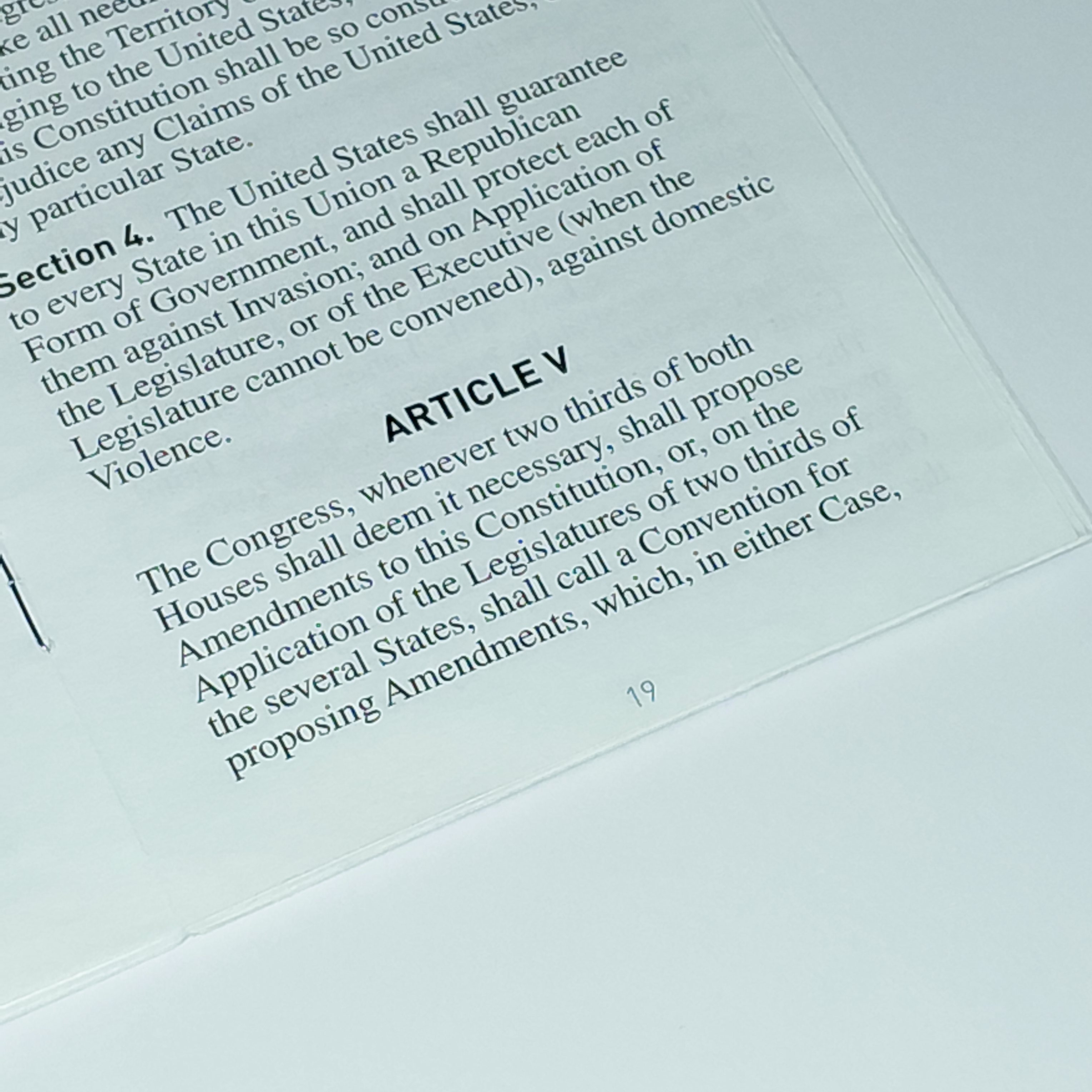
If this was the ‘original intent’ of the authors of the Constitution, then that document is not at all what generations of us have been taught to believe it was.  If that was not the original intent, then shame be on the authors of the Court’s opinion in the case so very aptly named: Donald J. Trump versus the United States.