Author Archives: robinandrew0804

Unknown's avatar

About robinandrew0804

Robin Andrew is my pen name; I’m a runner, a writer, and a parent, from a small town in central Colorado. As a youngster, my biggest athletic aspiration was to not be the last person picked when teams were chosen for games. Since taking up running for stress relief (right about the time our kids entered their teen years - go figure) and fun, I’ve run fifteen marathons and dozens of other events, on both pavement and trails. This site is my way of sharing the joy and sense of accomplishment I’ve found in simply putting feet into motion, plus a few other bits and pieces of what I find interesting and worth caring about.

Tell Us How to Live!

A free people will always be a diverse people, so a free nation must always be a diverse nation.

Ross Douthat, during a recent interview* advocating a more prominent role for religion in American culture and politics, argued that progressivism fails because “You need something else on the horizon…So that we can live in a specific way that we are supposed to live.”

This argument might carry more weight if there existed some single voice calling all humanity by some clear and direct method (simultaneously taking over every video screen on the planet in its owner’s first language perhaps, to steal an example from fiction) with specific instructions on how we are supposed to live.

In real life though, there is no such singular directive.  A Roman Catholic might point to The Bible – but what he’d actually be pointing to would be a specific reading and selections from its scriptures which themselves have evolved from loosely-documented source materials translated from one arcane language to another by men of less than perfect knowledge, their translations and interpretations fought over, compromised upon and codified over two thousand years by a man-made (literally – no significant women’s voices having been allowed) bureaucracy not always unconcerned with its own survival and wellbeing. 

An Eastern Orthodox voice might agree with Roman Catholic doctrine on some aspects of the good life, but disagree on others; a follower of the Russian Orthodox church could have differences with one or both.  A Southern Baptist or any of dozens of other denominations who also see themselves also as Christians and reference the same scriptures would have even further varied ideas of how to live.  An Orthodox Jew or observant Muslim from the Holy Land would certainly have strongly differences with any of those, despite their faiths springing from some of the same roots and looking to some of the same sources.  A Buddhist, a Sikh, a Hindu, or a believer in any of the multitude of less populous or just less publicized denominations, sects, or faiths (of which I am too ignorant to list them all), might find very little to agree upon in Mr. Douthat’s ordained ‘how we are supposed to live’ directive. 

So long as whatever spiritual entity which may be out there watching over humanity chooses to speak in obscure language and to only a few of us at any given time or place, persons of sincere faith and goodness are going to disagree – honestly, deeply and righteously – about how those with whom they share the planet are “supposed to live.”   

History records countless instances where embedding religious beliefs in governance have led to unequal treatment, religious persecution, economic damages, societal upheavals, violence, killing and right on up to the brutality of total warfare; all in the name of one or another party’s conception of “the way we are supposed to live.”  Even in realms which claimed their populace were of a single faith, differences and resulting tragedies have not been erased – and often become all the more brutal to those in the minority.  That such injustices may be somewhat less prevalent in our ‘modern’ era than before that is more a matter of incremental progress toward accepting differences than of the species having settled on a single religion.

If, then, one hopes to maintain a government ‘for the people,’ one of its primary principles must be to recognize the diversity (which is not an expletive, btw, as some wish to use it these days) of our beliefs and not enforce the views of any one faith on others who do not share them.  To tolerate and actually protect the freedom of each to worship and live as they wish, so far as their actions do not constrain the freedoms of others.

For any extensive society to live in real and lasting peace, it must look elsewhere than any religion for its common rules on how to live.  That is what the USA has attempted to do (with sometimes greater and sometimes less success) for over 250 years.  Others have tried as well, again with greater or lesser success, but generally more promise than those which have chosen theocracy.   Rather than giving up on that effort and moving toward some declaration of national religious identity, we and our descendants will be better served by recommitting to pluralism and to working together, allowing those of all faiths (including no religion or God) the freedom to live their own prescription to the greatest extent possible without it preventing others from living theirs.

Nationalizing any religious identity, no matter how watered down or camouflaged by clever marketing or promoted by obviously insincere lip-servers, is not the answer.

(* “Ezra Klein is Worried – But Not About a Radicalized Left,” New York Times, September 18, 2025)

Image: The Hagia Sophia, Istanbul, Turkiye, has been a place of worship for both Christians and Muslims over the centuries. Photo by author.

If you like this post, feel free to share it.

If you like what you see on this site, please subscribe, it’s free!

Paris – The Biography of a City, Colin Jones

Virtually a reference work, this self-confessed “Impossible history” of one of the world’s great cities comes buttressed by many pages of notes, a graduate level bibliographical guide, index, population table, modest number of illustrations, sequential maps showing the evolution of fortifications and boundaries, and even a list of the (major) buildings discussed.

For all that, the text itself is mostly quite readable, and manages to remain even-handed when discussing the political oscillations of the city’s fortunes.   Jones’s personal viewpoint is most glimpseable in the depth with which he discusses the impacts of the real estate marketplace and urban planning (a discipline for which nineteenth century Paris was something of an origin point and test case).  These, we hear, heavily influenced not only the visible face but also the economy, sociology and politics of the city, its surrounding suburbs (the banlieue), region and nation. The rise and growth of antiquarian/protectionist architectural sentiment is given an appropriate level of attention, since it is largely that movement and its successes which have bequeathed us today’s tourist and cultural mecca.

As for the aforementioned political oscillations, to one whose prejudices were shaped by the American education system within an Anglophile culture, Paris is eye-opening in relating the wave after wave of governments established, contested and washed away in favor of the next new or recycled concept.  From far back in the era of multiple kingdoms, principalities and ecclesiastical domains to contesting Empires of the middle ages to the early-modern era of Communes, communists, Republicans, Vichy capitulation and Republics (five, to date), it is amazing that anyone has been able to establish any stable business, institution or assets at all. A thought worth considering as the USA is going through its own populist spasm which may – at best – be followed by a future swing in some opposing direction.

One thing which does seem to have remained relatively consistent through Paris’ administrative history: even when the city and nation were not overtly socialist, their governments have always exercised far greater powers of eminent domain than we in the USA are accustomed to.  Some small justification, perhaps, for the disdain which some Americans profess toward anything ‘those Frenchies’ (or any Europeans for that matter), may have to say about social policy or virtues.   Reading about the centuries-long role Paris has played in nurturing the very idea of self-government by the polity though, makes that disdain seem more short-sighted than ever. 

Another significant takeaway: the wealth of literature generated in Paris’ Arrondissements over the centuries would require a lifetime of reading to consume and appreciate. Preferably in the original, since even my feeble attempt to learn French quickly convinced that its full nuance is unlikely to survive translation. One reason, perhaps that, Jones begins his introduction with a literary quote and analysis. In retrospect, this turns out to be a wholly appropriate entry point for what is as much a human story as a geographical one.  At every stage of its history, the promise of Paris has called to millions, to such a degree that its population has always been largely non-native, immigrants increasing its numbers even as low birth-rate, high mortality and the exodus of those unwilling or unable to meet its demands were constantly working to diminish them.

Fascinating even in its occasional excesses (just like its subject), Paris – The Biography of a City easily earns its space on the shelf.

(Note: published in 2004, this volume necessarily does not cover the City’s most recent decades.)

Pardon Who, Mr. Trump?!

We learned yesterday that Mr. Trump has commuted the sentence of George Santos, the ex-congressman rightly convicted of fraud and identity theft. No reasonable explanation has been given for letting this criminal off after having served only a few months of a multi-year sentence with Mr. Trump’s wishes for “Good luck…” and “… a great life!”

Our executive has no concern, apparently, for the luck and lives of the people and organizations who now have absolutely zero chance of collecting the restitution due to them by judgement of the court which convicted Mr. Santos.

It is possible, perhaps, that Mr. Trump truly believes Santos “has been horribly mistreated…” and awarded this commutation to a political supporter for no reasons other than his love of justice and his compassion for the wronged. If so, let him demonstrate it by paying equal attention to the case of Subramanyam “Subu” Vedam, who was recently released from custody after serving 43 years in prison for a murder reports say it is now clear he did not commit. Rather than being allowed to enjoy his “Good luck” and look forward to a “great life,” he was immediately taken into custody by ICE and placed in crude detention while they process him for deportation, based upon a drug offence to which he reportedly confessed as part of a plea deal; an offence which even if has any truth, is entirely overshadowed by the exemplary behavior he displayed during 43 years of wrongful imprisonment..

If George Santos has been “horribly mistreated” in serving three months for multiple crimes which were obvious and adjudicated in full, how much more deserving of compassion is Mr. Vedam?

Mr. Trump, please demonstrate your thoughtful and compassionate nature by commuting his charges and allowing him to spend his remaining years with his family rather than in a nation thousands of miles away from them and to which he has virtually no connection. Or, if that is too heavy a lift, at the very least direct your Attorney General to initiate a full examination of Mr. Vedam’s treatment with even a fraction of the zeal she has exhibited in prosecuting your political opponents.

Show us your true colors, Mr. Trump!

Please share this Post

to bring more attention to Mr. Vedam’s

plight.

And, if you appreciate what you see on this site,

please subscribe – it’s absolutely free!

Share

The Golden Road – How Ancient India Transformed the World, William Dalrymple

It’s long been a curiosity to me that The Buddha lived and preached in the lands which we know as India, but the populace of that region today are mostly Hindu followers (with significant minorities of Muslims, Sikhs, and other less-publicized faiths).  Conversely, Buddhism is mostly associated in the modern mind with lands beyond India: Tibet, China, Japan, Thailand, the other southeast Asian nations… And then, of course, there is Indonesia, a massively populated sleeper nation (in the ‘Western’ view) which I have read holds more Muslims than the entire Middle East! And BTW, how come Marco Polo’s fabled Silk Road doesn’t show up on any maps except those created to illustrate editions of his dubiously sourced travel memoir?

William Dalrymple, a Scottish-born historian living in Delhi, is eager to explain it all to us, beginning with a valuable Introduction that quickly spells out several themes.  First, it demolishes the myth of ancient overland trade routes.  In this telling, sea-borne trade was far more effective at moving goods – one ship able to carry many times the load of a donkey or camel and at the same time less vulnerable to the myriad possibly-hostile territories through which a long land route must pass between origin and destination.  Add to that the reliable seasonal reversing of monsoon winds in the seas around India and you have a situation ripe for cross-culture pollination. Something I’d begun to consider recently through reading and viewing about Rome, its connections with Egypt, and recent archaeological work at Red sea ports which has yielded much evidence of sustained trade with India’s Western coast (via the Gulf of Aden and Arabian Sea).

As impressive as this dispersion is, it is hardly the end of the Golden Road’s story.  Even as Buddhist missionaries (itself a new concept this small mind) were carrying their faith to the east where various rulers of ‘Chinese’ states endorsed it to various degrees, Mongols sweeping down from the north and Macedonians from the west were bringing other traditions to India, fracturing its Buddhist establishment and driving many back to the emotional refuge of the Vedic/Hindu tradition with its abundance of attractive gods and goddesses and the reassurance of the Brahmin caste system. (I know I am garbling these distinctions, it takes a scholar like Dalrymple to keep them straight, if even he can, so please forgive me.) Mix in the eventual arrival of Western Europeans and Christianity and one begins to see what a melting pot (to appropriate one of our local phrases) the Indian Peninsula has become.

Through it all, Dalrymple’s central objective is to remind us that wherever armies go, religion goes with them, and wherever religions go, other knowledge goes too.  In astronomy, mathematics, medicine and other realms, residents of India were making momentous discoveries long before Europe or even China.  Citing various early writings (most of them previously unknown, to me) he traces the origins of this scholarship and its dispersal through the various centers of study and libraries of texts it generated.  Only when Islamic scholars brought those ideas and texts to the Middle East (Baghdad, etc.) and from there to the Iberian Peninsula (the Moors, as we tend to call them, thanks to Mr. Shakespeare), was it translated into Greek, Latin, Italian, German, etc. and thus available to fertilize the so-called Enlightenment which we like to think of as the foundation of our contemporary culture.

Dalrymple is an awesomely erudite guide to all this, his analysis of artwork in this or that cave in this or that obscure (to me) region of India is amazing, if sometimes overfilling.  For those interested in the premise but not able to work through a 500 page tome, just reading the Introduction will give the basic premise.  For those with time though, the depth and detail makes the case more convincing and imparts a vision of the rhythmic dance – the ebbing and flowing on a scale of centuries – which was required for this dance of cultures to bring us the world we know today.

At a time when the (supposedly) Enlightenment-based world order we have known and respected for generations seems in danger of self-destructing, it is appropriate to be reminded that we would never have gotten this far if not for the blossoming and dying of countless other orders.  And also, it must be admitted, the clashes, conquests and destruction of kingdoms, nations and empires on multiple continents, over multiple millennia.  No human creation lasts forever, but the best fruits of each can contribute to what comes next – though we may need to suffer a lot of wasted time, resources and lives before we get there.

Thank you, Mr. Dalrymple.

One Ring to Rule Them All – The Breathtaking Cynicism (and Naivete) of Trump v. United States

It is over a year since the Supreme Court issued their 6-3 ruling on Docket no. 23-939, Donald J. Trump versus the United States of America, which ruling granted the President immunity from Federal prosecution for virtually any acts while in office.

No such immunity having been written in the Constitution, their reasoning (originalism be damned) seems to have been that the fear of prosecution would be an undue distraction from the office’s duties and that the fear of such prosecution would impede a President from taking actions he otherwise believed necessary or justified. 

This ruling was cynical first in that it assumed a person who had sought and won the highest office in the land would value his own fate (political, financial or otherwise) more highly than the proper execution of that office.   Sadly, in the opinion of some observers, they have already been proven correct on that count.

The ruling was cynical second in assuming that even such a self-interested person, upon achieving the office whose responsibilities include selecting the head of its Department of Justice would not have sufficient faith in his appointees and the legal system they administer to rely upon that system to issue proper verdicts in the event he was subjected to improper prosecution. In this, the Court disregarded the basic conservative rationale that the possibility of prosecution provides a necessary and effective deterrent to illegal behavior. In this respect, their cynicism has freed the incumbent to act with total disregard of credible legal justification.

Third, and most cynical of all, is that the Justices did not themselves have sufficient faith in the American legal system, of which they are the figurehead, to use their position, prestige and ruling to assure the President that he could rely upon that system for protection.  Every other person in every U. S. jurisdiction lives every day of their lives knowing they could be prosecuted for something of which they do not believe they are guilty, and every one of us has no choice but to trust in the legal system to protect us.  And yet, our Supreme Court deemed it unwise to ask the holder of the highest public trust to do the same?  Breathtakingly cynical, and shameful.

Those thoughts were on my mind at the time the ruling came out, and I considered posting them, but sadly, did not get around to it.  Now, as Mr. Trump’s second term reveals its true form, it is clear that ruling was not only cynical, but at the same time equally naive.  By freeing the President from any accountability other than impeachment (the highest hurdle in the legal system and one which has not once taken effect, in nearly 250 years), the court’s ruling has encouraged him to act as he pleases, including to persecute with impunity anyone he chooses.

Moreover, in doing so while also leaving in place his virtually unlimited power to pardon, the Court allows him to hand a ‘Get out of Jail Free’ card to anyone who does his bidding.  Far from protecting the nation, this greatly encourages improper acts of any sort by anyone who believes they can maintain the President’s favor.  In the few short months of this administration, we can already see this effect at work; that the Court’s majority did not foresee this outcome but instead enabled and encouraged it, exhibits breathtaking naivete, at the least. 

The result of these twin privileges, one clear in our Constitution and the other added to it by the recent decision, is that the chief executive may now act out his every whim, without fear of legal restraint for him or his followers.

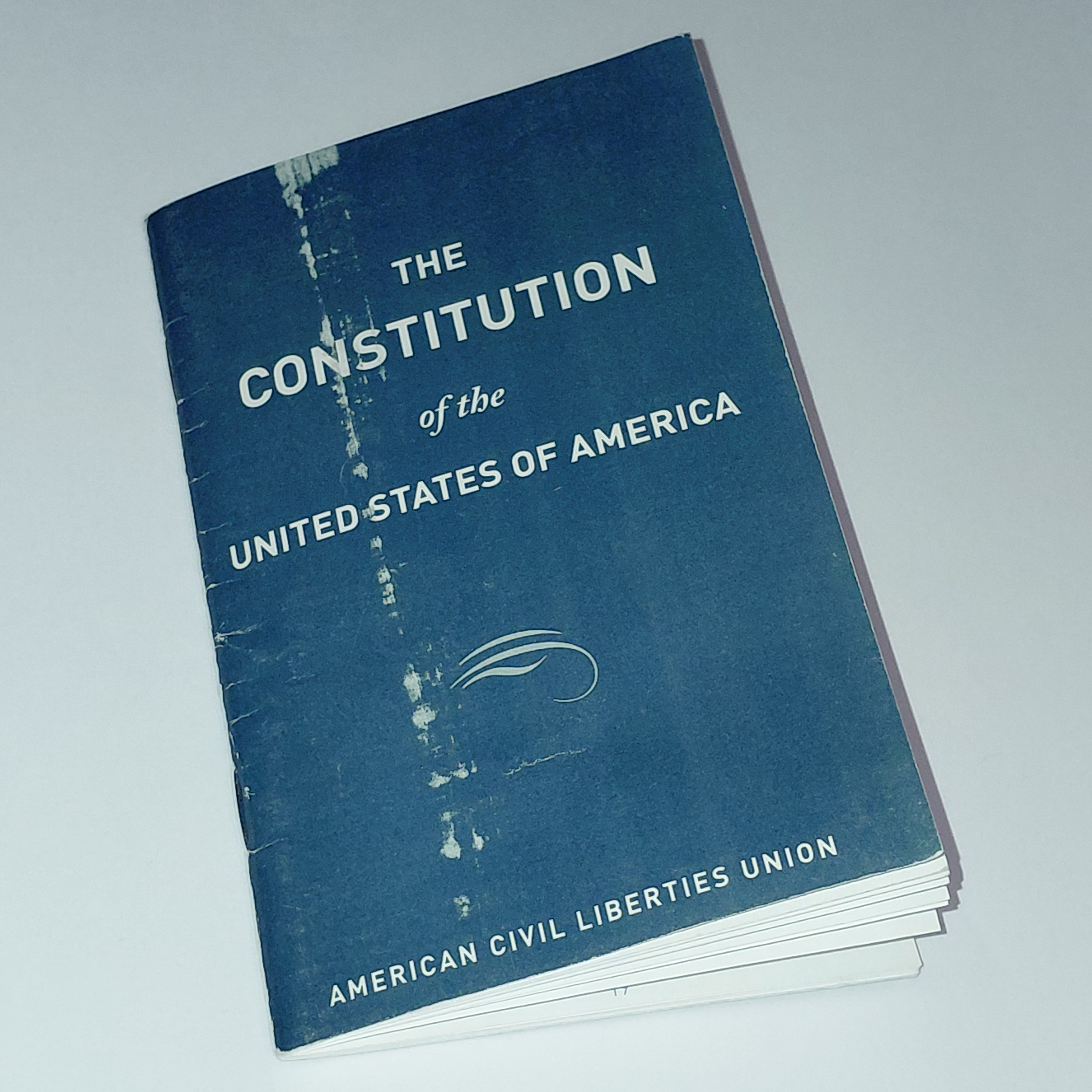
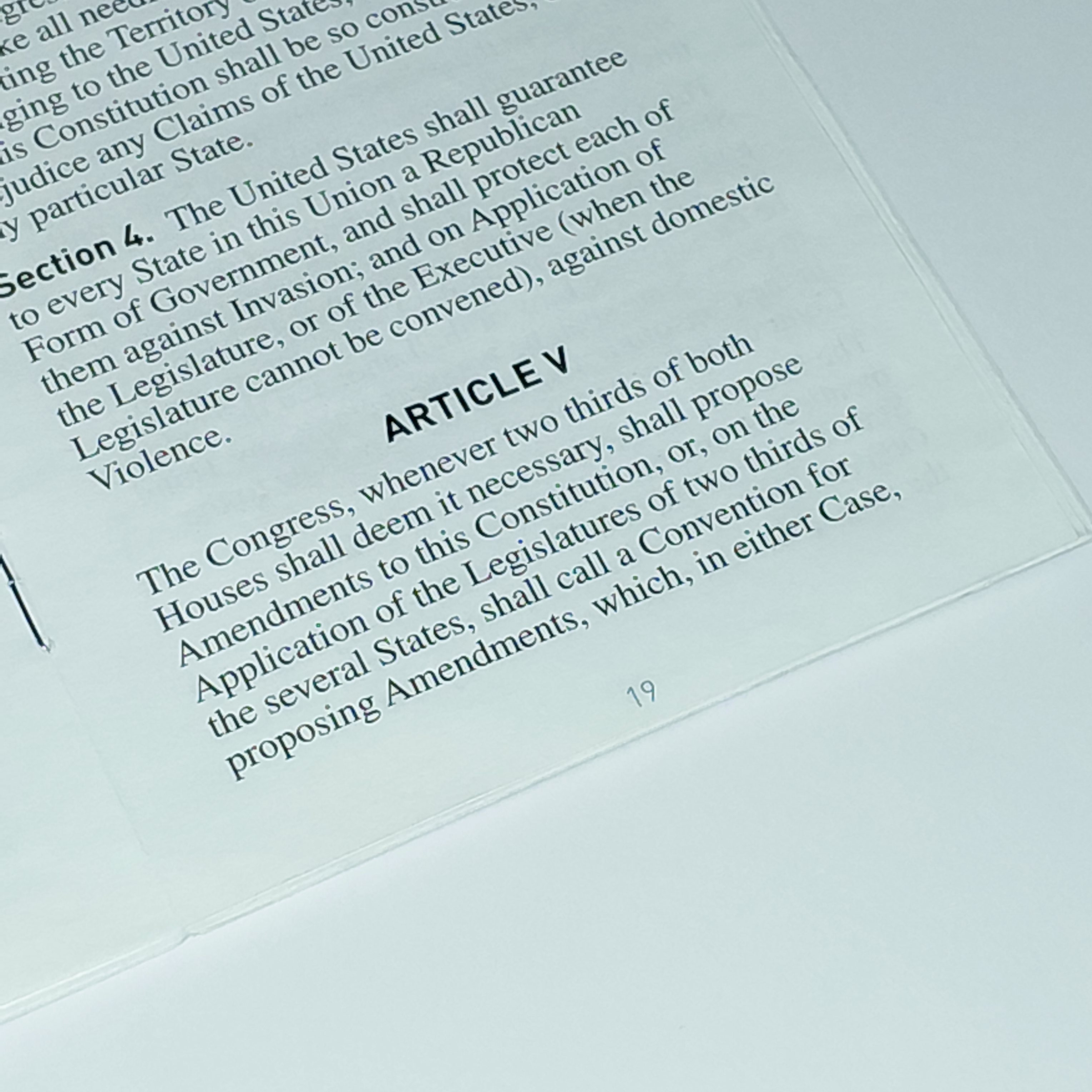
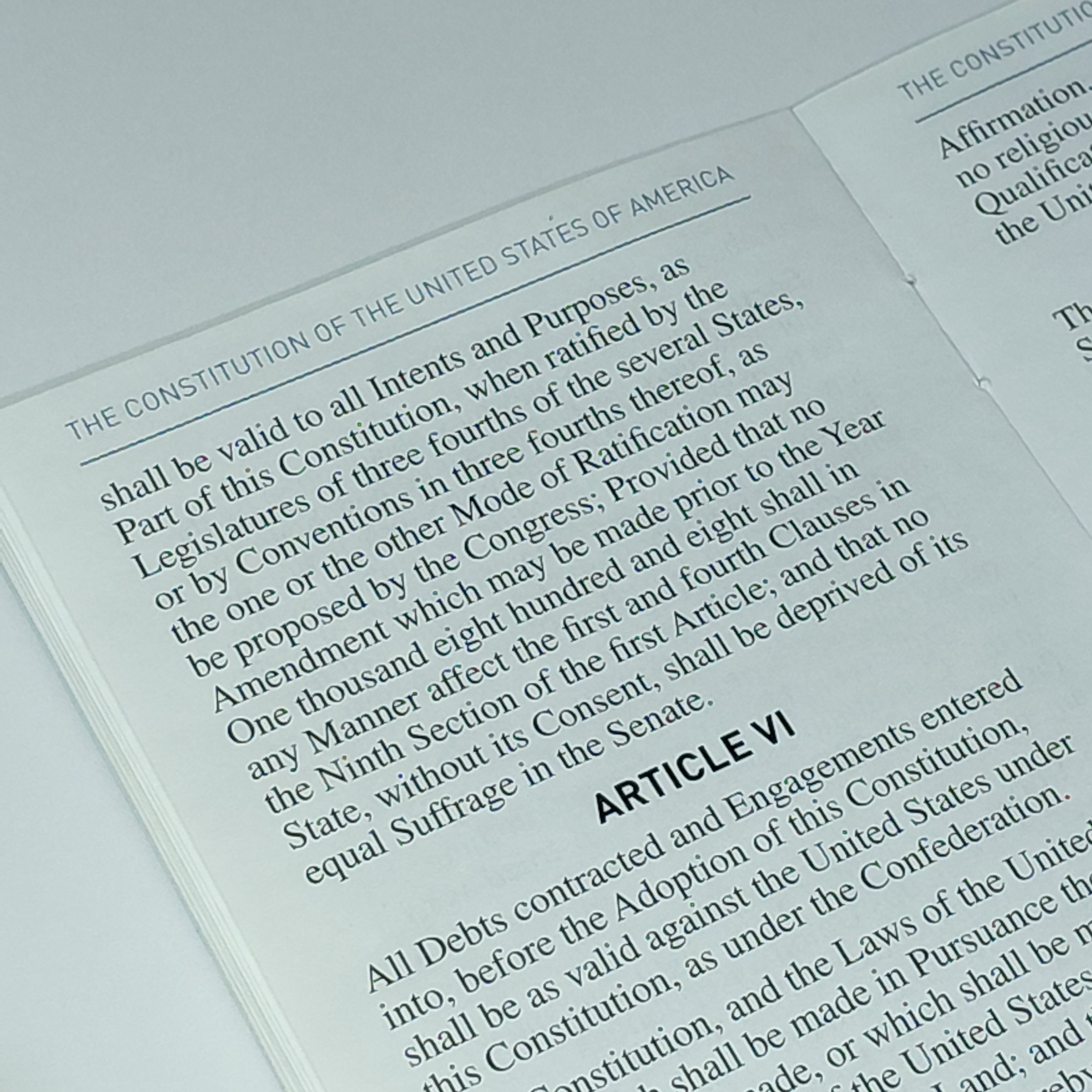
If this was the ‘original intent’ of the authors of the Constitution, then that document is not at all what generations of us have been taught to believe it was.  If that was not the original intent, then shame be on the authors of the Court’s opinion in the case so very aptly named: Donald J. Trump versus the United States.

A Word to Aspiring Writers – The Marvelous Elizabeth Strout

Normally, these ‘Books Worth Keeping’ posts focus on a single work recently encountered and found (in one necessarily limited and idiosyncratic opinion) to be worth remembering and sharing.  This time around, although I’m spurred by a specific book (“Tell Me Everything”), the subject is its author.

In this reader’s view, anyone who aspires to be a writer would do well to read Elizabeth Strout’s novels and consider deeply what she does and how she does it.  Under the guise of limited lives in a limited setting, Strout illuminates the unlimited breadth and variety of what it is to be human. Out of deceptively ‘ordinary’ situations and circumstances, she mines complexity and contradiction (apologies to Robert Venturi for stealing your phrase) as her utterly believable characters struggle to understand themselves and the selves of those with whom they live, die and, especially, love.

Many other authors and books* are similarly revealing and rewarding, but few are as consistently insightful, illuminating and uplifting. 

Elizabeth Strout’s works are a treasure.

*Mary McGary Morris’s A Dangerous Woman, Clare Messud’s The Woman Upstairs, and Michael Dorris’ A Yellow Raft in Blue Water come quickly to mind, as do the works of Emma Donoghue, Kate Atkinson, William Boyd, Ian McEwan and… Thankfully, the list goes on and on.

Still Life, Sarah Winman

The romantic novel as still life painting – an unlikely assortment of exquisitely-rendered events (the objects) carefully arranged for maximum effect (starting with Evelyn and Dorothy in 1944, then moving forward in jumps and fits, then returning to Evelyn in 1901), the entire assemblage framed by the city of Florence in all its history and culture and gastronomic variety. 

When I search the text for ‘still life’ I find reference to all the still life paintings Evelyn inherited; thought by some to be no more than decorations, to her they are the grail, which seems perhaps a comment on the genre as a female space. Another instance, also, in which she, having become an art professor, theorizes on the genre’s power as coming from, not in spite of, the seeming triviality of individual objects or domestic situations which actually contain specific phrases of the overall painting’s meaning and purpose.  How it freezes time, raises up the contributions of those who provide for others (as opposed to the ‘movers and shakers’). And a final instance of the two words together in the passage  “…Empty bowls.  Rotting fruit.  Passing time.  But still life in all its beauty and complexity…” thus making clear the author’s multiple intents: still life as a genre of painting, life as a collection of individuals interacting and connecting as do the objects in a still life painting, an account rendered in the manner of a still life painting and, ultimately, that ‘life’ is still ‘life,’ whether one is old, or disappointed, grieving or alone or has serendipitously found what they’ve been looking for all along.

(Worth noting the large number gay characters; more than would be expected solely because of the novel’s interest in art, literature and other creative pursuits.  Clearly the result of many decisions by the author, who herself came out in the 1980s, and a welcome reminder that human variety is not a product of the late twentieth century.  Noted also that not quite all the hetero relationships in the book are constrictive, doomed and/or abusive, but the tally certainly trends in that direction.)

_______

Eight months after reading this novel and recording the notes above, I came across the title again and was not certain whether or not I had read it.  Reading my notes at this remove, I’m struck by how interesting and satisfactory they make the book sound and yet I did not recall it (sincere apologies, M. Winman). Entire reason I started writing notes like these was the hope of no longer doing that… 

Is it time, perhaps, to slow down and not consume so many books but rather to savor the few?  But what other way to find those few, given that recommendations and reviews are so unreliable?  And isn’t that dilemma just what life itself is all about?  One has to experience its entirety – the exciting and the tedious, the success and failure, the love and the rejection, the yin and the yang and the black and the white and the good, the bad and the ugly – in order to learn what is truly astonishing and beautiful and we wish we had done a better job of savoring and holding onto – what will be so difficult to say goodbye to when one finally shuffles off.

Maybe it’s simply time for me to re-read some of those books which a first read confirmed to be worthwhile. 

Like Sarah Winman’s Still Life.

U-flying-O’s!

Started yesterday on the front porch, breathing in the scent of fresh rain – our first in several months – and reading about the Executive’s use of our armed forces to summarily execute a boatload of what it claims (without substantiation) were ‘terrorists’ because they were transporting drugs headed (again, without substantiation) to consumers in our nation.  This despite the Constitution’s clear directive that it is Congress, not the Executive, who has the authority to commit the nation to war.

At the same time, we have clear statistical indicators that the economy is heading downward and the budget deficit upward despite the supposed magic bullet of a massive tax increase – in the form of tariffs – being arbitrarily imposed on the masses (us all) without Congressional authorization, and an upcoming deadline to pass a funding bill in order to avoid another government shutdown with all that that implies.

Not to mention extortionate prosecutions of news, educational, scientific and legal institutions for the sin of exposing the Executive’s actions to logic, fact and the laws by which all the rest of us must abide.

So it was of interest, scanning headlines before heading inside for another cuppa, to see that Congress was, at that very moment, using the People’s time, facilities and dollars for a hearing on whether or not the military is hiding evidence regarding UFOs.

Can there be any better illustration that this Congress has abdicated its role in governing the nation, than this – that with so many intensely real and vitally urgent issues of authority, accountability and simply doing their jobs, our representatives are pursuing rumors about U-flying-Os!

P. S. – That day ended with news of the killing of activist and influencer Charlie Kirk.   Terrible news; a tragic destruction of life and an unjustified act of pointless violence, regardless of his or anyone else’s political opinions.  Here’s hoping the killer is quickly apprehended and brought to justice to discourage any others from similar acts.

Thank you, Washington Post!

Just yesterday I read Clare Malone’s All the Billionaire’s Men (New Yorker, 2025-05-26) reviewing Jeff Bezo’s stewardship of the Washington Post. The article raised worthwhile concerns about his commitment to the paper’s independence and integrity, his apparent capitulations to Mr. Trump and his MAGA illusion (epitomized by Amazon’s $40m licensing deal for a puff documentary about Mrs. Trump), and implicitly, whether the Post could continue to be a beacon against darkness. Serious issues to this subscriber and daily reader (online) of the Post.

Today, the Post published Karen DeYoung’s and Cate Brown’s exclusive reporting (contributed to by Heva Farouk Mahfouz) headlined ‘Gaza postwar plan envisions ‘voluntary’ relocation of entire population‘ revealing a well-developed draft of one truly atrocious postwar plan for Gaza which the administration appears to be considering with great favor.

There’s much to be said about such a venal land grab, right now however, I’d like to thank the Washington Post newsroom, staff, editors and – assuming its Ownership continues to support such journalism – Mr. Bezos. As our government bends to the whim of a single autocrat, with policies developed in secret sessions among unelected plotters – when they do not spring fully formed from the ruler’s daydreams alone – we the people depend on committed and professional journalists to reveal what is really going on.

Thank you, Karen DeYoung, Cate Brown, Heva Farouk Mahfouz, the entire Washington Post staff and editorship and you too, Mr. Bezos, for keeping the lights on.

Robin Andrew

Dark at the Crossing, Elliot Ackerman

Ackerman, takes a risk here, venturing into the mind of an Iraqi-American attempting to join the Syrian resistance to Bashar Al Assad’s brutal regime.   Published in 2017, this may have just predated the current literary judgement that any such attempt at empathetic fiction constitutes an unjustifiable act of appropriation.  For this reader, the complexity he portrays in both the would-be fighter and the rest of his cast – all but one of whom are also of Middle Eastern nationalities and ethnicities – justifies the premise.  No, this is not the novel a native Iraqi or Syrian might have written, but neither is it an opportunistic rip-off spawned in ignorance.  Ackerman’s record as a journalist and as a Marine (decorated for actions during tours of duty in both Iraq and Afghanistan) gives him enough credibility, in my view. Besides, his writing of his book in no way prevents anyone of other background from crafting their own. (That he gets published and someone else might not is more properly a comment on the nature of the publishing industry/market than on the right of any author to spend their days following their own visions.)

Moving past all that, Dark at the Crossing presents a convincing and valuable portrait of the desperation endemic to a wartime refugee movement – boys living on handouts along the side of a highway, families hoping to subsist on what they can grow from a single envelope of seeds, a mother’s love warped beyond repair by the unmanageable violence of urban insurrection, lives casually dispatched by blasé warriors barely out of adolescence and under no close command.

More deeply, this dramatic and eventful story is concerned with the question of why men fight such wars.  Yes, there are individuals or moments in which the desire to topple an illegitimate regime is clear and pure, but often the motives are more muddled. Revenge against previous cruelties and atrocities is a deep strain, the need to be active in one’s fate rather than a passive victim seems another.  Also, and perhaps wrapping around all those, is the need to become part of something which feels simply too large to ignore: when your entire world is burning, is there not a moral obligation to pick up a bucket, no matter how small?  Is that not actually an act of love – for those who might be saved today, tomorrow, next year or next decade?

In that, the novel recalls Chris Hedges’ War is a Force That Gives Us Meaning (though Ackerman does not judge such a search for meaning nearly as harshly), and also John Krakauer’s Where Men Win Glory (despite a perspective which could hardly be more different, its depiction of the personal cost such impulses can exact raises similar issues).

For raising and considering such questions, Dark at the Crossing is more than worthy of the time it takes to read and the fraction of an inch it now occupies on my shelf.