Tag Archives: Autocracy

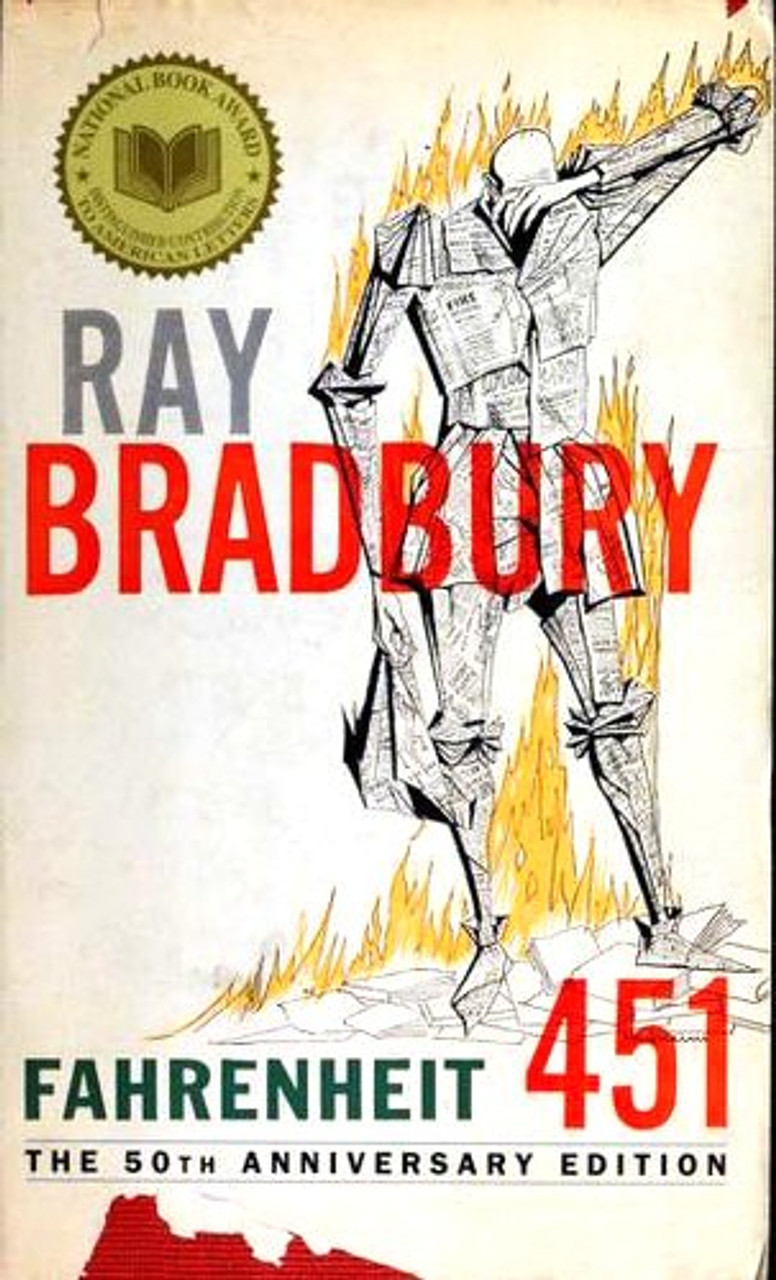
Fahrenheit 451, Ray Bradbury

Like a 75-year-old car, Bradbury’s most lauded novel feels a bit clunky compared to the sleek and smooth commodity fiction churned out by today’s industrial publishing conglomerates.  As with any mode of transportation though, where a book takes you is more important than the vehicle itself, and Fahrenheit 451 offers a ride through the very territory over which our nation is currently circling. Pretty amazing for a story first anthologized in 1950 and expanded into this short novel in 1953!

Minds colonized by omnipresent ‘entertainment’ media pretending to provide viewers with a ‘reality’ more acceptable than their own; lives lived in bubbles of class and clique; an authoritarian government ginning up perpetual wars as excuse to police every facet of its citizen’s lives; new technologies immediately harnessed to enforce all of the above – Bradbury’s fears for his characters’ ‘future’ are amazingly close to today’s realities. 

In an afterword and coda written later (1982 and 1979, respectively), Bradbury makes clear that he traces all those developments to his fictional culture’s rejection of the written word.  Books there are viewed as corrupting distractions.  Not content with discouraging or banning individual volumes on the basis of specific content, this regime fears all books because they record, preserve and encourage independent thought.  The very possession of any book has been declared a major criminal act and the once laudable community symbol of the Firefighter has been perverted into a new role as government book burner (and incidental executioner of bibliophiles).

So here we are seventy-five years later, with citizens pressuring their libraries and schools to dispose of any books hinting at truths those particular citizens don’t appreciate; a juvenile Secretary of ‘War’ decreeing which slanted versions of history, philosophy and the social sciences may be read or discussed in the military’s colleges and academies as the White House extorts even private universities to teach to the President’s personal prejudices.  Meanwhile, surveys confirm that fewer and fewer and fewer persons are reading any books by choice, preferring instead to have information spoon-fed into their brains via profit-tailored algorithms curating content for their profit-driven mass electronica. In spooky parallel to Bradbury’s Firemen cum Fire-setters, the current administration has given control of many federal agencies to fanatical minions who despise those agencies’ statutory functions, wishing instead to destroy or pervert them by flipping them from protecting the environment or civil rights, for example, to opening the former to plunder by political contributors and restricting the latter’s protections to only those who bow down to the MAGA movement in all its glory and gory ambition (while sporting an appearance that comports to Mr. Trump’s old-Hollywood vision of how true Americans are supposed to look).

Despite some age-appropriate road wear and rust in its wheel-wells, Bradbury’s Fahrenheit 451 is no junker, but a precious classic vehicle for waking up the masses, every bit as timely today as when its rubber first hit the road.  It deserves to be read or reread as widely as possible, so more citizens will see what is happening and do what they can to stop it.

P. S. – Along with Orwell’s 1984, and Animal Farm, Vonnegut’s Slaughterhouse-Five, Huxley’s Brave New World, Anthony Burgess’ A Clockwork Orange and others from the mid-Twentieth, this novel has helped to shape the fears and ideals of multiple generations.  Margaret Atwood’s The Handmaid’s Tale, Cormac McCarthy’s The Road, Emily St. John Mandel’s Station Eleven and Octavia E. Butler’s Parable of the Sower are notable among many other recent and creditable volumes with similar aspirations of enlightenment and warning.  Now more than ever, all such books deserve to be read and shared.

Like this book or this post? Please Share it!

Interested in what you read on this site – please subscribe. It’s free!
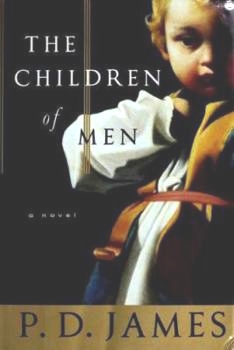
The Children of Men, P. D. James

A Timely Commentary on current events – written nearly thirty-five years ago!

Grabbed this off a neighborhood free-books shelf on basis of the author’s familiar name and work; was surprised to find in place of the expected tea and class-system detective story a speculative political fiction written decades ago yet uncannily timely in its themes.  James* has always been a reliable commentor on the British government and governing class – she spent thirty years in the civil service after all (or rather, before being able to write all her more familiar titles) – but that has previously seemed incidental to the solving of mysteries.  Here, it is the main point.

Though first published in 1992, the novel is set in 2021 with a sci-fi sounding premise – that 25 years earlier it had become unavoidably obvious that all human males in the world had become infertile.  With the birth rate crashing in months to absolute zero, all of humanity was suddenly forced to comprehend the existential doom of universal aging, disability and death without the consolation of watching younger generations grow to replace them.  We are then given to understand how this resulted in apathy and lawlessness, perfect conditions for the rise of a fascistic strongman named ‘Xan’ (reference to Alexander ‘The Great,’ I’d guess).  Our guide through what follows is Dr. Theodore (Theo) Faron, an Oxford historian with a mythologically-tragic reason for retreating from public life but who was also a childhood friend of Xan and, until recently, an advisor to him in his autocratic reign.  When Theo is approached by a band of laughably incompetent would-be revolutionaries, the first half of the novel is set in motion. The second half (spoiler alert) is brought about by the discovery that Julian, a (female, despite the name) member of that conspiracy for whom Theo immediately begins to develop romantic feelings, is pregnant, a monumental event which suggests she and her child have the potential to save humanity from its dire fate.  From that development James builds a compelling thriller addressing moral questions of ends and means, guilt and forgiveness, God or not God and the temptation which even the most honorable person may experience when offered the chance to exercise power over others for what they believe to be good or necessary ends.

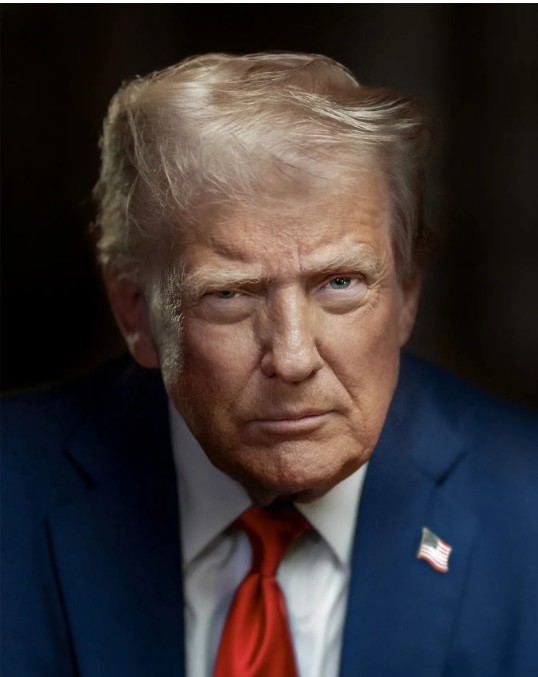
Xan’s resemblance to the current U. S. President is striking, and the arguments for his usurpation of total control over English life track almost perfectly with MAGA’s claims of necessity: societal disorder, citizens lost in despair and apathy, crises requiring responses more immediate than any deliberative process could manage, the purportedly inherent weakness and fecklessness of all so-called democratic processes.  The effects too, are symmetrical – arbitrary laws and judgement, scapegoating of immigrants and other ‘others,’ curtailment of individuals’ rights under brutal policing and cruel incarceration and an invasive security state to ensure those who have seized power get to hold it indefinitely.

All of this, James handles with intelligence and generosity (if sometimes overmuch time spent on the exact physiognomy of a face, niceties of vegetation, quality of sunlight or sky and the furnishings of various interiors; the one aspect in which the novel feels rooted in the author’s generation and previous genre).  Theo is a modest and honorable foil for Xan, who is himself allowed sufficient rope to make a moral case for his usurpation.  Their ultimate confrontation is well-scripted if a bit forced and the final decision which results from it is of Sophoclean magnitude and weight.

Among many impressively crafted moments is one where Theo, acting out of necessity to secure resources for the imminent birth of Julian’s child, discovers in himself the potential to enjoy violating norms and forcing others to his will, even to the edge of brutality.  Not only a worthy observation on human nature, this new self-knowledge plants a seed which allows the novel’s final moments and message to ring true.

Schooled by a difficult life, James may have honed her skills in the trenches of genre fiction, but The Children of Men affirms her a true literary artist.  It deserves to be revisited for that reason alone, and especially so in this moment, when its fictional time period has arrived and is turning out strikingly similarly, in some important respects, to what she imagined nearly thirty five years before.

*Officially: Phyllis Dorothy James White, Baroness James of Holland Park!

Note: There is also a somewhat loose film adaption by the same title, credited to five writers and directed by Alfonso Cuaron (Harry Potter and the Prisoner of Azkaban) with Clive Owen portraying Theo.  The film received critical acclaim, numerous award nominations and a few wins, as well as positions on various “Top” lists, but did poorly at the box office).

Feel free to share this post if you like.

If you appreciate what you find on this site, please subscribe – it’s totally free!

Autocracy Now!? – a personal opinion

Following Mr. Trump’s second ascension to the Oval Office, Op Ed pages were flush with pundit pieces pondering whether our nation might be slipping toward autocracy.

Now, less than 10% thru the man’s political resurrection, the verdict seems clear. Since January 20th, 2025, we’ve:

Watched Mr. Trump invite elected leaders of sovereign nations to the White House on pretense of official business only to then enact staged humiliations (complete with laughably inaccurate accusations despite his having the entire resources of the Federal Government at his disposal to provide accurate information), all to generate “…great television…” in his perpetual self-promotion campaign.

Cringed at his lazy and feckless use of social media (“Vladimir, STOP!”), to ‘negotiate’ international disputes on which turn the lives and fates of millions, no doubt provoking scathing contempt among the hardened dictators who simply ignore his maunderings as they go about their bloody business.

Witnessed him elevate minor entertainment personalities to positions of real power despite their lack of relevant experience, and begun to see the damage their recklessness is inflicting both at home and abroad.

Cringed as his craven ‘spokespersons’ dodge, divert and dissemble to suggest his public pronouncements do not mean what their words plainly say and that reality is whatever their Don says it is, rather than what we perceive with our own eyes, ears and reason.

Seen him predicate foreign policy not on the basis of any lasting principle, nor of the Nation’s interests, but of his own need to appear ‘strong’ and to ingratiate himself with the most brutal and paternalistic figures on the world stage, currying their favor and reveling in the pomp and praise and gilded royal treatment they gladly dispense as a cheap price for neutering our nation’s hard-won soft power.

Observed him repurposing the Justice Department into a tool for personal vendetta, while neutering the rule of law wherever else it suits him through pardons, elimination of oversight and simply ignoring any statute, decision, precedent or custom he does not choose to follow.

In short, the question those Op Eds asked has already been answered: As of this writing and for all practical purposes, governance of the United States is no longer enacted by Congress, nor administered by the various Federal agencies and offices, nor constrained by the rule of law.

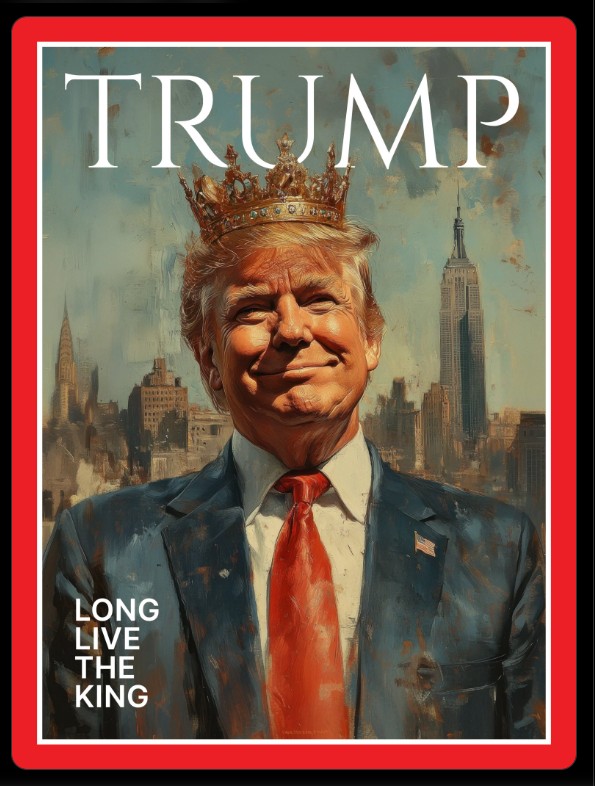
Those functions have, instead, been subverted to the whims of a single person whose overriding goal is to elevate his self-image above even the office of the Presidency while simultaneously feeding his obsessive greed and coagulating power in his name alone.

The autocracy is here, and it is U.S.

(The current questions are: how long will it last, and how badly will it end?)