Wondering where our nation’s increasingly divisive politics may lead us? E Unum Pluribus is a new novel which explores one very real possibility:
Amid feudal chaos following the USA’s collapse, one city-state seems promising, until an amateur’s murder investigation exposes its weaknesses and the conspiracies threatening to destroy it.
In order to receive community input, I’m serializing a Beta Test draft of E Unum Pluribus free of charge. (So I can track interest, the final installment may be posted only to subscribers, but even that subscription will be totally free of charge or obligation.) A .pdf of Installment One is included below and may also be downloaded for a more comfortable reading experience. Either way, you get to explore this new novel at absolutely no expense!
Succeeding installments are available at robinandrew.net by selecting the ‘E Unum Pluribus’ button in the home page’s top-menu.
In addition to posting the manuscript, I will be sharing thoughts about the novel’s themes and objectives in future posts on both this website and on Substack at nobodysays2025.substack.com
If you find E Unum Pluribus of interest – or if you simply support the concept of authors sharing their work without reliance upon commercial publishing corporations – please share this post as widely as possible.
By now many observers have noted Mr. Trump’s tendency to accuse his detractors of whatever sin he himself is engaged in. Those observations suggest some thoughts around the Great Replacement Theory which, in Trumpian usage, holds that Democrats are intentionally perverting democracy by opening our sacred borders to untold millions of immigrants (who just coincidentally tend to be black, brown and/or from ‘shithole’ countries not part of the Anglo-European heritage which we are now being told defines true Americans).
Thought number one: acknowledging that Mr. Trump won the election in 2024 and so is legitimately occupying the Oval Office, he still received fewer than half the votes cast,* an inconvenient truth which makes one wonder if perhaps there is a hidden thread connecting several of his administration’s current priorities.
To whit: contrary to the populist image their leader loves to act out, he and any thoughtful members of his court must be aware that theirs is a minority faction and so will never be able to hold power by democratic means. Unable even to rely upon their slender majorities in Congress to do their bidding, they know they cannot govern by legislation (as the Constitution intends) but must rely almost exclusively on Executive Orders, Presidential Determinations, Proclamations, administrative directives by their chosen technocrats, petty prosecutions and the like – despite the dubious validity or effectiveness of many such.
Second, since he and they are unwilling to adjust their policies to the beliefs of the voting majority, they choose instead to speak and act as if the voting majority itself is invalid, tilted toward ‘radical’ outcomes by the presence of millions of non-citizen immigrants. If – goes the fantasy they imply to their base – the administration can eliminate enough of those ‘illegals’ through holding-camps, deportation, self-deportation, remigration or whatever other terms they come up with next, then the voters who are left will constitute their dream of a majority MAGA electorate. That hope energizes their base and recruits enforcers for ICE and other agencies, but unfortunately for MAGA, their inability to produce any credible evidence of voting by non-citizens in numbers that would make any difference in any election at any level demonstrates the fallacy of such hope. Illegal immigrants have never swung actual voting so even their complete extermination would not affect any future outcome. The pro-Trump minority is not democratically viable* and his power can only be ensured by non-democratic means.
Which explains the Administration’s doubling-down on tactics to frustrate the democratic will. Demands for state gerrymandering, discouragingly cumbersome voter ID requirements, restrictions on drop-boxes, voting locations, hours or mail-in options, false accusations of voting machine irregularities, placement of threatening ‘monitors’ at election sites, these and many other strategies are designed to deter enough voters to ensure MAGA victories whether or not the majority of eligible voters want them or, in the worst case, to provide excuses to override the true verdict when it proves they do not.
One can even interpret MAGA’s recent call for Americans to have more children as a supply side complement to these strategies. Refuse to naturalize any but the wealthy and pale at the same time the MAGA faithful produce more and more purebred American babies (who will, presumably, be groomed by their parents to vote the ruling party’s ticket from birth) and they might just turn their minority into a real majority – in twenty or thirty years.
All this can be seen as one more indication we’re lost on a dark and very slippery slope or, looked at from another angle, it may give a sliver of hope. Since the people he is tossing out the door were never part of the majority who voted against him, Mr. Trump’s epic cleansing will do nothing to change his minority status. In fact, if the callousness and brutality of it repels even a few of his past followers, it will actually drive his share of future vote tallies lower. In which case, the majority of the American electorate may one day reject Mr. Trump’s imperium by a large enough margin that not even doomed third-party candidates and the misrepresentative calculus of the Electoral College will be enough to save him.
Here’s hoping that whenever that day comes, there is still a nation left to rebuild!
*Of the three elections in which Donald J. Trump has ever competed, he has never won a majority of the votes cast. If that is any sort of mandate, it is a mandate against Mr. Trump, not for him. The fact that he was elected in 2016 reflected just how unsuited our present Electoral College structure is to today’s electorate, in which the population disparity between large states and small ones is more than five times as wide as it was at the time the Constitution was being developed, yet each of those states still gets an equal two Senate-related votes. The fact he was elected in 2024 despite not winning a majority is its own indictment of an election process held captive to two ossified major parties which cannot possibly represent the true diversity of their electorate.
Like this post? Feel free to share it.
Appreciate what you read here, please subscribe – it’s free!
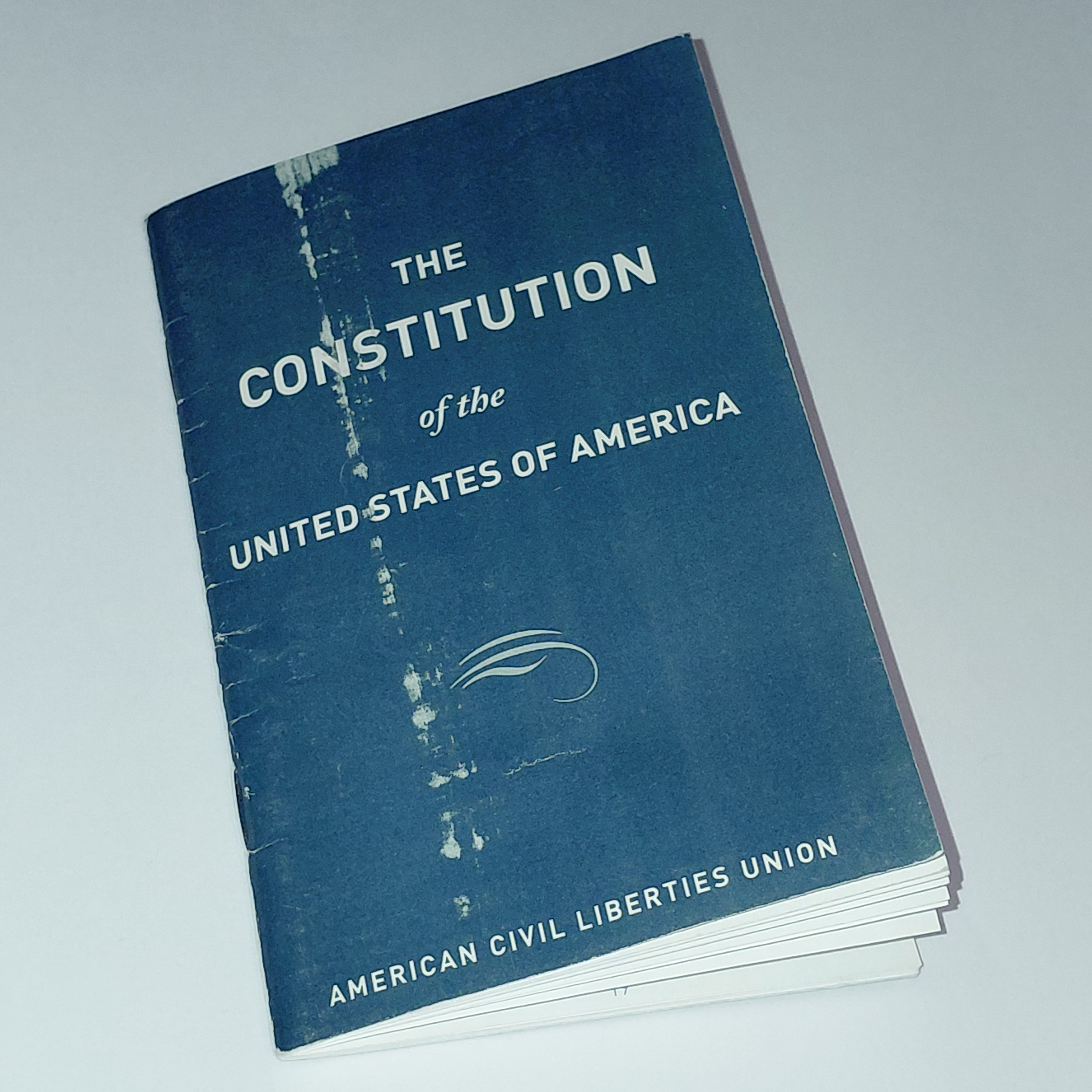
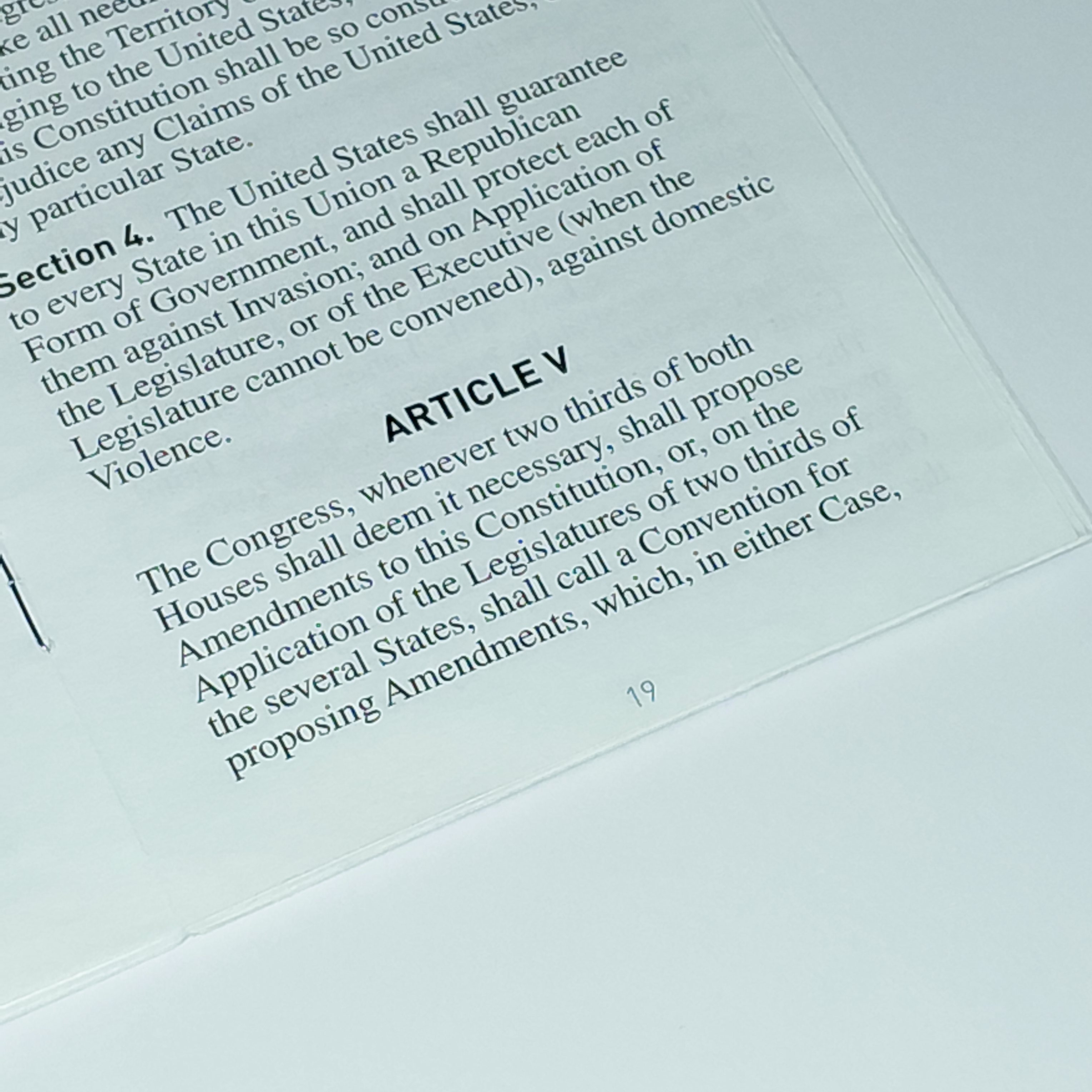
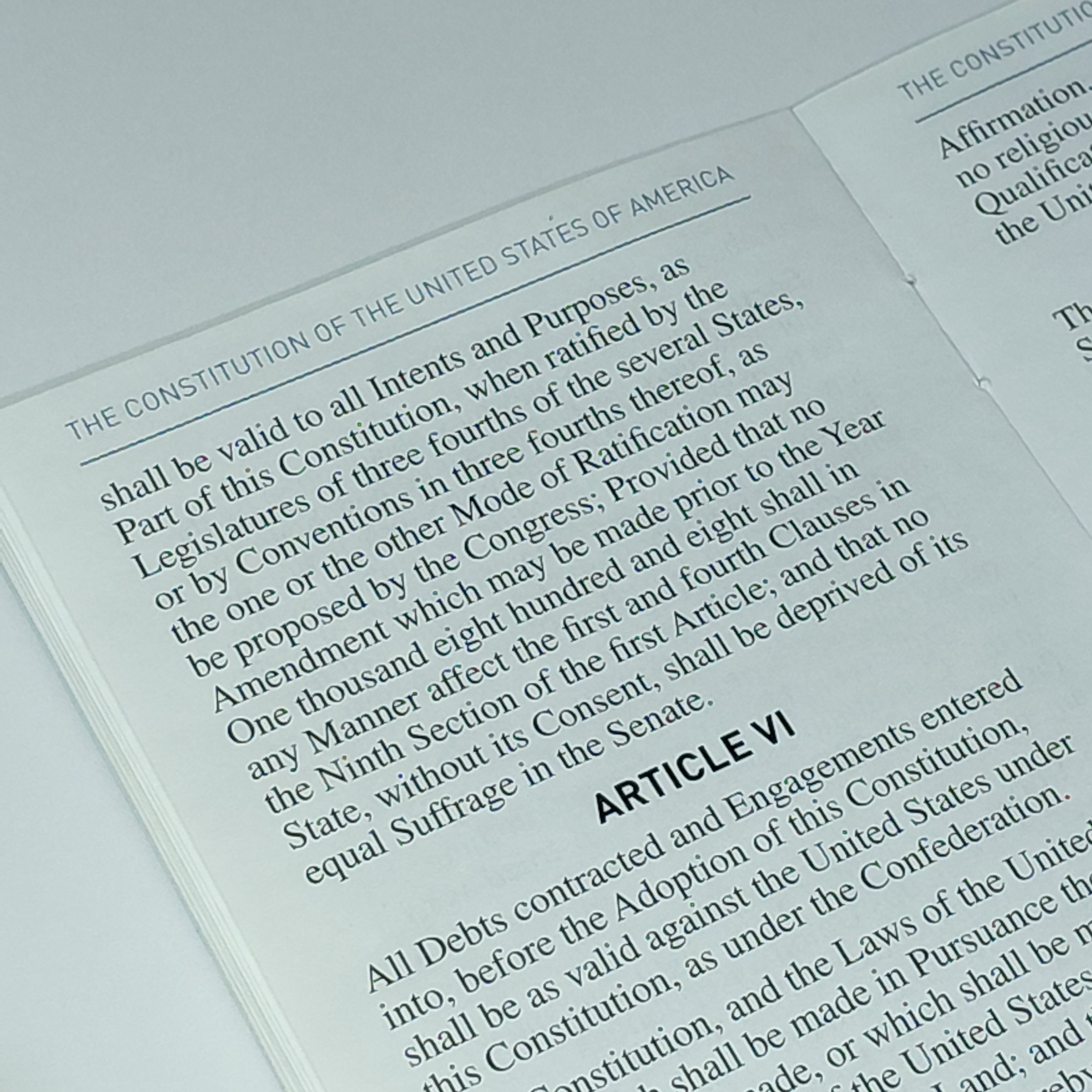
Saw an excellent opinion piece recently about the history of Amendments to the U. S. Constitution, starting with the fact that the document’s authors fully intended it to be revised – the Amendment process is written in, after all (Article V) – and running up through our fifty-plus-year drought of amendments since the 1970’s. It can certainly be argued whether our current divisiveness and the dysfunctionality of Congress are one reason we’ve had no Amendments recently, or one result of that, but the phenomena are certainly related to one another.
Well-thought-through and widely-accepted new Amendments could allow our nation’s founding document to grow and adapt to conditions which have changed dramatically, including: a population which has gone from about four million peeps in 1790 to some 330 million in 2020; a mix of states which has gone from 13 small, young and rural ones to 50 with wildly varied histories, populations and urban/rural characters; multiple technological and cultural revolutions; and an international context the Founders might well struggle to recognize.
Given all that, here are a few modest proposals to be considered when the time seems right
Free the Courts: we’ve all been taught that the Federal government has three branches -the Legislative, the Executive and the Judicial (perhaps equal, perhaps not, depending…) and that this configuration ensures checks and balances on the power of each, thereby protecting the system and our freedoms. Current events are making clear that the Judicial branch is not really an effective check or balance so long as the Chief Executive appoints (even with Legislative approval required) and can fire (at will and whim) the Attorney General, thus allowing that Executive to direct and weild the enormous power of the Department of Justice as he or she wishes. A new Constitutional Convention, or a renewed and less-rigidly divided and more collaborative Congress would do well to consider an Amendment to remedy this by making Justice independent of the Executive branch and the Attorney General an elected office with a four year term, perhaps voted upon in Presidential off-years, and no longer a member of the President’s Cabinet (though still with other rights and privileges of Cabinet level responsibility and authority).
While we’re at it: how about also solidifying the makeup of the Supreme Court by fixing it’s number (rather than leaving it vulnerable to change by some future legislature) and specifying a limited term for justices (so the Court better reflects gradual changes in society and culture) with staggered start dates (so no one President/term gets to appoint more justices than another (whether by random happenstance or by McConnel-esque abuses of Congress’s approval authority). Those changes would work against the politicization some believe we are experiencing with the current Court. And, since we’re talking pie in the sky, maybe even consider requiring each Justice as they take their seat to designate a successor who will fill out the rest of their term should they die, be incapacitated or simply exhausted before it runs out (thus avoiding any lucky President – or violent actor – taking advantage of such an event to pack the court with their preferred jurists).
Speaking of elections: one aggravator of our recent discord has been the ascent of Presidents to office without receiving even the barest majority of the votes cast (not to mention those who did not even receive a plurality!). More than just casting doubt upon a leader’s legitimacy, this has led too many citizens to conclude that their votes are not worth casting. A constitutionally-mandated two-stage election would address this issue, with as many candidates/parties running in the first stage as wish to and then just the two top vote getters participating in a run-off election to decide who will hold the office. That format would ensure the winner receives a majority of votes, while also offering an unmistakable indicator of just how strong or weak is their mandate. It might also diminish the stranglehold of two-party politics, since a third-party or independent candidate need only defeat one of the two major parties to reach the runoff (and have a legitimate chance at the White House), rather than having to surpass both of them from a standing start as under the current system. Whatever expense or delay is incurred by this two-stage process might have ruled it out back in the founders’ days of carriage rides and snail mail but would be entirely manageable in today’s electronic age.
(Debating and reaching agreement on issues like those might even serve as a warm-up so said Congress or Convention could address the stalemate between small and large states with an amendment that retires or at least updates the Electoral College so Presidential Elections would more fairly deal with the enormous disparities in populations relative to Senatorial votes.)
Obviously, tons of other ideas for amendment are out there and more will quickly arise if the ball ever gets rolling, but those above seem to this writer to be top of the list. The time is ripe for us to use the tool those wise heads passed down to us in order that their legacy may be improved and sustained for many more generations!
P. S. – This post was inspired in part by “Amend It!” written by Jill Lepore and appearing in the print and online editions of The Atlantic, October 2025. Neither M. Lepore nor The Atlantic have any connection to this post or site, nor are either in any way responsible for its content.
If you find this post of interest,
please feel free to share it with others.
If you like what you find here at robinandrew.net,
It’s long been a curiosity to me that The Buddha lived and preached in the lands which we know as India, but the populace of that region today are mostly Hindu followers (with significant minorities of Muslims, Sikhs, and other less-publicized faiths). Conversely, Buddhism is mostly associated in the modern mind with lands beyond India: Tibet, China, Japan, Thailand, the other southeast Asian nations… And then, of course, there is Indonesia, a massively populated sleeper nation (in the ‘Western’ view) which I have read holds more Muslims than the entire Middle East! And BTW, how come Marco Polo’s fabled Silk Road doesn’t show up on any maps except those created to illustrate editions of his dubiously sourced travel memoir?
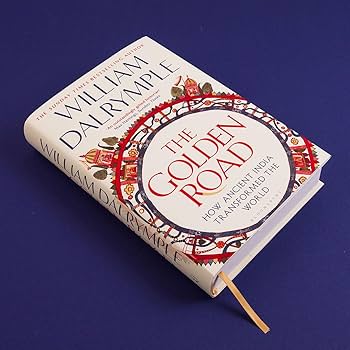
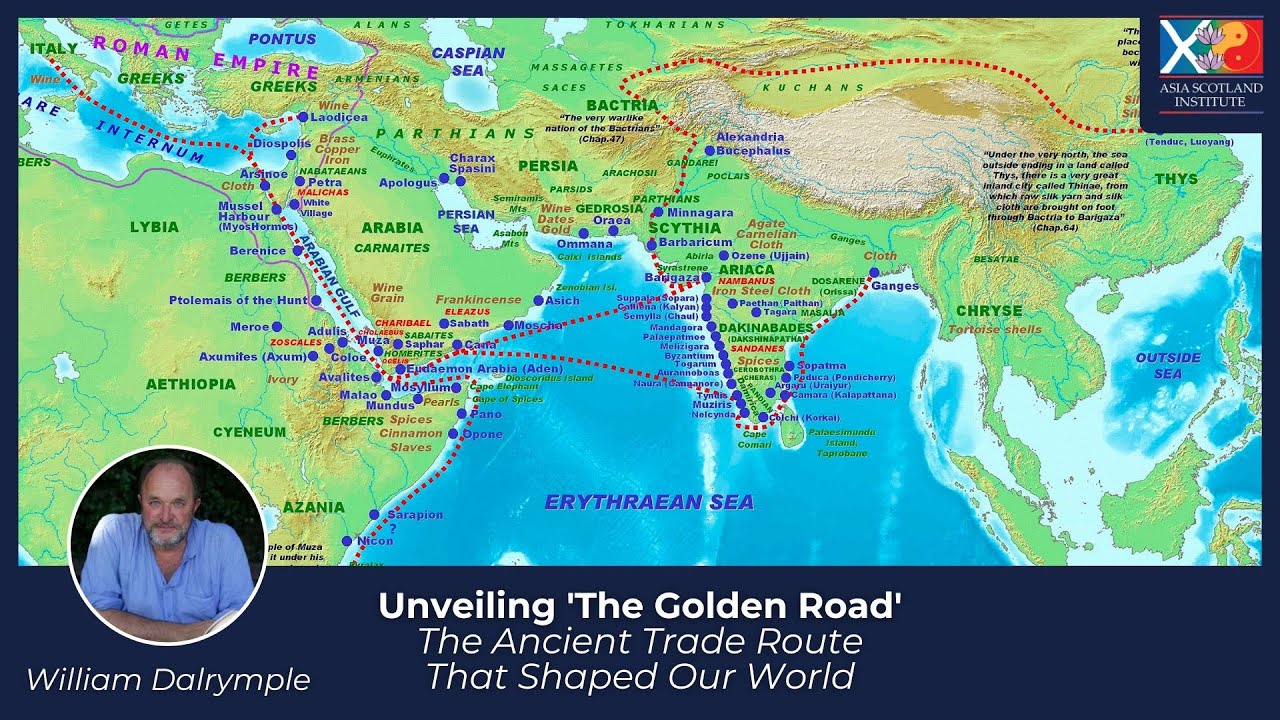
William Dalrymple, a Scottish-born historian living in Delhi, is eager to explain it all to us, beginning with a valuable Introduction that quickly spells out several themes. First, it demolishes the myth of ancient overland trade routes. In this telling, sea-borne trade was far more effective at moving goods – one ship able to carry many times the load of a donkey or camel and at the same time less vulnerable to the myriad possibly-hostile territories through which a long land route must pass between origin and destination. Add to that the reliable seasonal reversing of monsoon winds in the seas around India and you have a situation ripe for cross-culture pollination. Something I’d begun to consider recently through reading and viewing about Rome, its connections with Egypt, and recent archaeological work at Red sea ports which has yielded much evidence of sustained trade with India’s Western coast (via the Gulf of Aden and Arabian Sea).
As impressive as this dispersion is, it is hardly the end of the Golden Road’s story. Even as Buddhist missionaries (itself a new concept this small mind) were carrying their faith to the east where various rulers of ‘Chinese’ states endorsed it to various degrees, Mongols sweeping down from the north and Macedonians from the west were bringing other traditions to India, fracturing its Buddhist establishment and driving many back to the emotional refuge of the Vedic/Hindu tradition with its abundance of attractive gods and goddesses and the reassurance of the Brahmin caste system. (I know I am garbling these distinctions, it takes a scholar like Dalrymple to keep them straight, if even he can, so please forgive me.) Mix in the eventual arrival of Western Europeans and Christianity and one begins to see what a melting pot (to appropriate one of our local phrases) the Indian Peninsula has become.
Through it all, Dalrymple’s central objective is to remind us that wherever armies go, religion goes with them, and wherever religions go, other knowledge goes too. In astronomy, mathematics, medicine and other realms, residents of India were making momentous discoveries long before Europe or even China. Citing various early writings (most of them previously unknown, to me) he traces the origins of this scholarship and its dispersal through the various centers of study and libraries of texts it generated. Only when Islamic scholars brought those ideas and texts to the Middle East (Baghdad, etc.) and from there to the Iberian Peninsula (the Moors, as we tend to call them, thanks to Mr. Shakespeare), was it translated into Greek, Latin, Italian, German, etc. and thus available to fertilize the so-called Enlightenment which we like to think of as the foundation of our contemporary culture.
Dalrymple is an awesomely erudite guide to all this, his analysis of artwork in this or that cave in this or that obscure (to me) region of India is amazing, if sometimes overfilling. For those interested in the premise but not able to work through a 500 page tome, just reading the Introduction will give the basic premise. For those with time though, the depth and detail makes the case more convincing and imparts a vision of the rhythmic dance – the ebbing and flowing on a scale of centuries – which was required for this dance of cultures to bring us the world we know today.
At a time when the (supposedly) Enlightenment-based world order we have known and respected for generations seems in danger of self-destructing, it is appropriate to be reminded that we would never have gotten this far if not for the blossoming and dying of countless other orders. And also, it must be admitted, the clashes, conquests and destruction of kingdoms, nations and empires on multiple continents, over multiple millennia. No human creation lasts forever, but the best fruits of each can contribute to what comes next – though we may need to suffer a lot of wasted time, resources and lives before we get there.
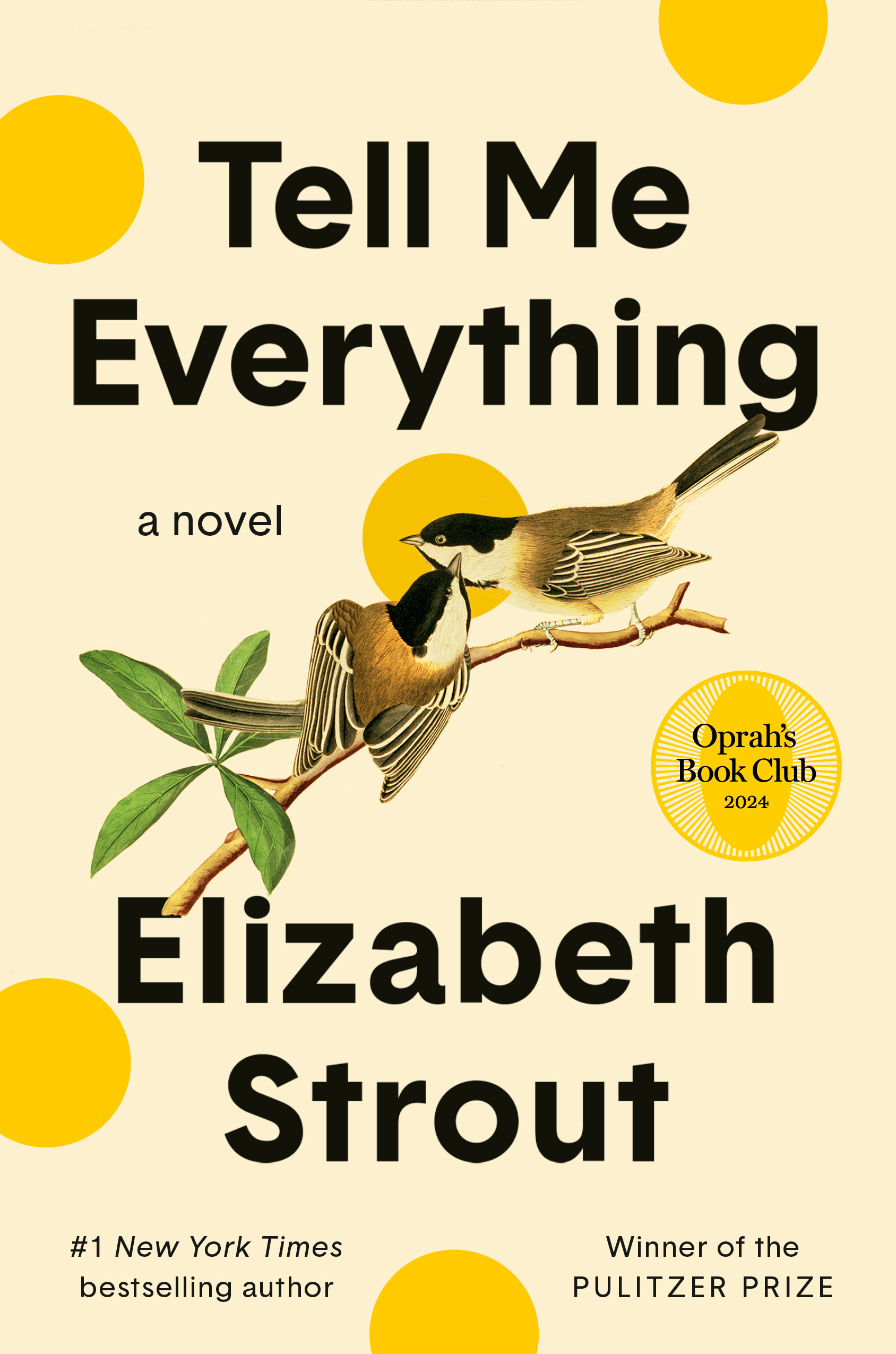
Normally, these ‘Books Worth Keeping’ posts focus on a single work recently encountered and found (in one necessarily limited and idiosyncratic opinion) to be worth remembering and sharing. This time around, although I’m spurred by a specific book (“Tell Me Everything”), the subject is its author.
In this reader’s view, anyone who aspires to be a writer would do well to read Elizabeth Strout’s novels and consider deeply what she does and how she does it. Under the guise of limited lives in a limited setting, Strout illuminates the unlimited breadth and variety of what it is to be human. Out of deceptively ‘ordinary’ situations and circumstances, she mines complexity and contradiction (apologies to Robert Venturi for stealing your phrase) as her utterly believable characters struggle to understand themselves and the selves of those with whom they live, die and, especially, love.
Many other authors and books* are similarly revealing and rewarding, but few are as consistently insightful, illuminating and uplifting.
Elizabeth Strout’s works are a treasure.
*Mary McGary Morris’s A Dangerous Woman, Clare Messud’s The Woman Upstairs, and Michael Dorris’ A Yellow Raft in Blue Water come quickly to mind, as do the works of Emma Donoghue, Kate Atkinson, William Boyd, Ian McEwan and… Thankfully, the list goes on and on.
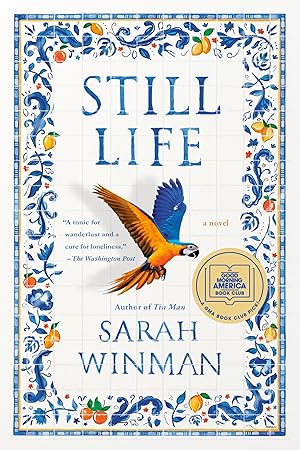
The romantic novel as still life painting – an unlikely assortment of exquisitely-rendered events (the objects) carefully arranged for maximum effect (starting with Evelyn and Dorothy in 1944, then moving forward in jumps and fits, then returning to Evelyn in 1901), the entire assemblage framed by the city of Florence in all its history and culture and gastronomic variety.
When I search the text for ‘still life’ I find reference to all the still life paintings Evelyn inherited; thought by some to be no more than decorations, to her they are the grail, which seems perhaps a comment on the genre as a female space. Another instance, also, in which she, having become an art professor, theorizes on the genre’s power as coming from, not in spite of, the seeming triviality of individual objects or domestic situations which actually contain specific phrases of the overall painting’s meaning and purpose. How it freezes time, raises up the contributions of those who provide for others (as opposed to the ‘movers and shakers’). And a final instance of the two words together in the passage “…Empty bowls. Rotting fruit. Passing time. But still life in all its beauty and complexity…” thus making clear the author’s multiple intents: still life as a genre of painting, life as a collection of individuals interacting and connecting as do the objects in a still life painting, an account rendered in the manner of a still life painting and, ultimately, that ‘life’ is still ‘life,’ whether one is old, or disappointed, grieving or alone or has serendipitously found what they’ve been looking for all along.
(Worth noting the large number gay characters; more than would be expected solely because of the novel’s interest in art, literature and other creative pursuits. Clearly the result of many decisions by the author, who herself came out in the 1980s, and a welcome reminder that human variety is not a product of the late twentieth century. Noted also that not quite all the hetero relationships in the book are constrictive, doomed and/or abusive, but the tally certainly trends in that direction.)
_______
Eight months after reading this novel and recording the notes above, I came across the title again and was not certain whether or not I had read it. Reading my notes at this remove, I’m struck by how interesting and satisfactory they make the book sound and yet I did not recall it (sincere apologies, M. Winman). Entire reason I started writing notes like these was the hope of no longer doing that…
Is it time, perhaps, to slow down and not consume so many books but rather to savor the few? But what other way to find those few, given that recommendations and reviews are so unreliable? And isn’t that dilemma just what life itself is all about? One has to experience its entirety – the exciting and the tedious, the success and failure, the love and the rejection, the yin and the yang and the black and the white and the good, the bad and the ugly – in order to learn what is truly astonishing and beautiful and we wish we had done a better job of savoring and holding onto – what will be so difficult to say goodbye to when one finally shuffles off.
Maybe it’s simply time for me to re-read some of those books which a first read confirmed to be worthwhile.
Just yesterday I read Clare Malone’s All the Billionaire’s Men (New Yorker, 2025-05-26) reviewing Jeff Bezo’s stewardship of the Washington Post. The article raised worthwhile concerns about his commitment to the paper’s independence and integrity, his apparent capitulations to Mr. Trump and his MAGA illusion (epitomized by Amazon’s $40m licensing deal for a puff documentary about Mrs. Trump), and implicitly, whether the Post could continue to be a beacon against darkness. Serious issues to this subscriber and daily reader (online) of the Post.
Today, the Post published Karen DeYoung’s and Cate Brown’s exclusive reporting (contributed to by Heva Farouk Mahfouz) headlined ‘Gaza postwar plan envisions ‘voluntary’ relocation of entire population‘ revealing a well-developed draft of one truly atrocious postwar plan for Gaza which the administration appears to be considering with great favor.
There’s much to be said about such a venal land grab, right now however, I’d like to thank the Washington Post newsroom, staff, editors and – assuming its Ownership continues to support such journalism – Mr. Bezos. As our government bends to the whim of a single autocrat, with policies developed in secret sessions among unelected plotters – when they do not spring fully formed from the ruler’s daydreams alone – we the people depend on committed and professional journalists to reveal what is really going on.
Thank you, Karen DeYoung, Cate Brown, Heva Farouk Mahfouz, the entire Washington Post staff and editorship and you too, Mr. Bezos, for keeping the lights on.
Following Mr. Trump’s second ascension to the Oval Office, Op Ed pages were flush with pundit pieces pondering whether our nation might be slipping toward autocracy.
Now, less than 10% thru the man’s political resurrection, the verdict seems clear. Since January 20th, 2025, we’ve:
Watched Mr. Trump invite elected leaders of sovereign nations to the White House on pretense of official business only to then enact staged humiliations (complete with laughably inaccurate accusations despite his having the entire resources of the Federal Government at his disposal to provide accurate information), all to generate “…great television…” in his perpetual self-promotion campaign.
Cringed at his lazy and feckless use of social media (“Vladimir, STOP!”), to ‘negotiate’ international disputes on which turn the lives and fates of millions, no doubt provoking scathing contempt among the hardened dictators who simply ignore his maunderings as they go about their bloody business.
Witnessed him elevate minor entertainment personalities to positions of real power despite their lack of relevant experience, and begun to see the damage their recklessness is inflicting both at home and abroad.
Cringed as his craven ‘spokespersons’ dodge, divert and dissemble to suggest his public pronouncements do not mean what their words plainly say and that reality is whatever their Don says it is, rather than what we perceive with our own eyes, ears and reason.
Seen him predicate foreign policy not on the basis of any lasting principle, nor of the Nation’s interests, but of his own need to appear ‘strong’ and to ingratiate himself with the most brutal and paternalistic figures on the world stage, currying their favor and reveling in the pomp and praise and gilded royal treatment they gladly dispense as a cheap price for neutering our nation’s hard-won soft power.
Observed him repurposing the Justice Department into a tool for personal vendetta, while neutering the rule of law wherever else it suits him through pardons, elimination of oversight and simply ignoring any statute, decision, precedent or custom he does not choose to follow.
In short, the question those Op Eds asked has already been answered: As of this writing and for all practical purposes, governance of the United States is no longer enacted by Congress, nor administered by the various Federal agencies and offices, nor constrained by the rule of law.
Those functions have, instead, been subverted to the whims of a single person whose overriding goal is to elevate his self-image above even the office of the Presidency while simultaneously feeding his obsessive greed and coagulating power in his name alone.
The autocracy is here, and it is U.S.
(The current questions are: how long will it last, and how badly will it end?)
Boyd’s eighteenth novel expands his collection of espionage stores – along with Restless, Waiting for Sunrise and Solo (his Bond installment). This time out, we are very much in Le Carre territory; 1960’s Britain and Europe, Soviet machinations, MI6 blundering its upper-class way through a maze of deceptions and counter-deceptions. Boyd makes excellent work of this all, with vivid settings and interesting personalities. His conclusion is fittingly tragic and portentous, while leaving plenty of room for possible sequel(s).
Small quibble in that the prose her is sometimes overabundant and studiously colorful. May well be a gesture toward that of the main character, travel writer Gabriel Dax, who is teased by his controller (and one time lover) Faith Green for purpling to excess. A bit distracting but tolerable, as there is real wonder and appreciation of the world’s many pleasures. Dax’s alcohol consumption is another striking aspect, we seem to proceed directly from one cocktail to then next bottle of wine to brandy to the next morning’s pick me up. How the man remains vertical is a mystery. Possibly intended as period correctness, (along with the relentless smoking and cover art which recalls title sequences of the early Bond films) but again, a bit distracting.
There’s also a large gap in the story’s wrap-up – Gabriel has learned some facts about the fire which killed his mother (facts we already knew as that event was the novel’s opening scene) and while the explanation has helped his insomnia and angst, for the reader it feels incomplete. Nor is the fact that his father died in a plane crash in Persia while working for BP. Given that Gabriel’s older brother Sefton is a bent diplomat and the secrets lurking elsewhere, one must wonder if that death was a cover for more espionage, but Gabriel never seems to imagine that, much less pursue it. Perhaps that too is being saved for future installments?
All in all, a very creditable and enjoyable addition to the genre and to the author’s estimable collection.
(Oh – sure enough, while fact checking for this summary I happened upon a Wikipedia note characterizing this as the first volume of a planned trilogy, with the second due for publication in 2025. Definitely something to look forward to.)
It’s a new year and a new world, which means it’s time to try something new!
Starting a few days ago, I’ve begun posting thoughts, opinions and appreciations on Substack under the title “Nobody Says.” There will be running posts soon as well, plus whatever else suits my fancy or sticks in my craw.



 RobinAndrew