Category Archives: Uncategorized

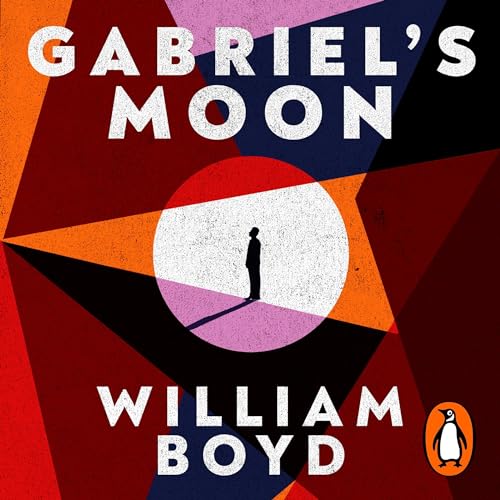
Gabriel’s Moon – William Boyd ventures into George Smiley territory

Boyd’s eighteenth novel expands his collection of espionage stores – along with Restless, Waiting for Sunrise and Solo (his Bond installment).  This time out, we are very much in Le Carre territory; 1960’s Britain and Europe, Soviet machinations, MI6 blundering its upper-class way through a maze of deceptions and counter-deceptions.  Boyd makes excellent work of this all, with vivid settings and interesting personalities.  His conclusion is fittingly tragic and portentous, while leaving plenty of room for possible sequel(s).

Small quibble in that the prose her is sometimes overabundant and studiously colorful.  May well be a gesture toward that of the main character, travel writer Gabriel Dax, who is teased by his controller  (and one time lover) Faith Green for purpling to excess. A bit distracting but tolerable, as there is real wonder and appreciation of the world’s many pleasures.  Dax’s alcohol consumption is another striking aspect, we seem to proceed directly from one cocktail to then next bottle of wine to brandy to the next morning’s pick me up.  How the man remains vertical is a mystery.  Possibly intended as period correctness, (along with the relentless smoking and cover art which recalls title sequences of the early Bond films) but again, a bit distracting.

There’s also a large gap in the story’s wrap-up – Gabriel has learned some facts about the fire which killed his mother (facts we already knew as that event was the novel’s opening scene) and while the explanation has helped his insomnia and angst, for the reader it feels incomplete.  Nor is the fact that his father died in a plane crash in Persia while working for BP.  Given that Gabriel’s older brother Sefton is a bent diplomat and the secrets lurking elsewhere, one must wonder if that death was a cover for more espionage, but Gabriel never seems to imagine that, much less pursue it. Perhaps that too is being saved for future installments?

All in all, a very creditable and enjoyable addition to the genre and to the author’s estimable collection.   

(Oh – sure enough, while fact checking for this summary I happened upon a Wikipedia note characterizing this as the first volume of a planned trilogy, with the second due for publication in 2025.  Definitely something to look forward to.)

We’re Moving to Substack!

It’s a new year and a new world, which means it’s time to try something new!

Starting a few days ago, I’ve begun posting thoughts, opinions and appreciations on Substack under the title “Nobody Says.” There will be running posts soon as well, plus whatever else suits my fancy or sticks in my craw.

Hope to see you there,

Robin Andrew

Enlightenment Now, Stephen Pinker

Thick with statistics, charts and graphs, this is nonetheless a smooth and enjoyable read, not least because it tells such a palatable story: that humankind has made great progress over the past centuries, especially those since the start of The Enlightenment (roughly 1730 to 1800, give or take a few lifetimes).

Attacking first our flawed habits of perception and thought, then some of the pessimistic myths those have spawned, Pinker makes a convincing case that life for the vast majority of humans is considerably better today than in any earlier era.  And further, that these positive changes have resulted from identifiable strategies employed by humans over time, in light of which he suggests – though not without caution – there is strong possibility of continued progress if only we, as a species and a community, will continue to employ those strategies, which he identifies as Reason, Science, Humanism and Progress.

(A single example from personal experience: during my childhood Polio was, even in privileged middle class USA, a serious threat.  I sat next to children in class who’d been stricken seemingly at random, suffering permanent disability, disfigurement and limitation of their potential and well-being.  In less than a single lifetime, that terrible disease has been very nearly eradicated – to the extent that many people living today don’t even know what it is – and therefore the miracle of its eradication (literally scores of millions of crippling cases avoided) has no emotional impact, is totally lost in concern over other, often lesser, ailments (dry eyes syndrome anyone? Or hair loss?  Any  condition that is solved by Botox…) which still remain.  This is the sort of mental bias – focusing on the problems left to solve and ignoring all the ones which have already been solved – that Pinker rightly identifies as shaping our pessimism and fears.  And worst, leading some voices to claim there is no point in even trying to progress.)

Pinker wisely avoids any direct reference to Trump and Trumpism until late in his thesis, but it must be clear to any earnest reader long before the name arises that the phenomenon is in direct opposition to all the book espouses.  Fortunately, the breadth of the case made is sufficient to suggest we will eventually self-correct – barring some catastrophic accident or act of impulse.

An immensely valuable book. So good that, after reading it on a library loan (in late 2019), I purchased a hard copy to have on the table and refer to in future.  Now Jennifer is reading that copy and equally impressed.

In a time of such upheaval and so much fear, I can think of few books more worth reading, sharing and keeping close at hand.

Do Androids Dream of Electric Sheep, Phillip K. Dick

Held up as a classic of sci-fi, and part of Dick’s canon, this brief dystopian cops & killers tale inspired the film Blade Runner (and its sequel), so seemed like a must-read.   Published in 1968 it was, like all of Dick’s work, more pulp than lit, which shows in the writing; sometimes clumsy,  sometimes cliché, but occasionally quite thoughtful  An example of the latter comes about 75% of the way in, as Rachael, an android whose model-line has been carefully designed to generate sexual desire in wet-blooded males (Dick’s repeated appreciations of ‘small high breasts’ and an almost boyishly-androgenous physique are curious, but apparently appeal broadly-enough to have found their way into the movie), latches on to a bounty hunter’s qualms about terminating something so potentially loveable – and begins to use them against him.

That, it turns out, points us to Dick’s real interest here. Forget the totalitarianism and environmental destruction (though those are valid themes and forward looking for 1968, if not exactly prescient).  What he’s really chewing on are our notions of identity and what makes a life worthy of value.  How artificially-intelligent must an android be before it starts to resent being viewed as an object or tool, and how human-like can it be before the continuation of its operating ‘life’ justifies the same price as a ‘real’ (i. e., organic, non-manufactured) life.  A license to kill, in this case, soon turns into a license to doubt. 

The comparisons are greatly aided by Dick’s postulation of Earth as a dying planet, from which nearly all humans have departed except those too damaged to earn a flight out.  Denigrated as a lesser caste, the lives of these radiation-damaged ‘chickenheads’ are limited, dull and dreary; hardly more rewarding or free than those of the androids they manufacture to serve the off -world elite.  The return of several renegade androids presents a threat to the few fully-functioning humans who have remained behind to keep the remnants of industry in operating order – Rick Deckard being one of them.  Poor and depressed, with a wife addicted to artificial emotions fed out of an electronic box, he seems qualified for the detective part of his task, but quickly out of his depth with the moral issues to come. 

That these humans have turned pet-ownership into a fetish and status indicator adds another twist to their prejudice.  Decker and his neighbors will scrimp and borrow to spend a fortune on almost any animal, whether real or simulated – to salve their thirst for companionship and belonging, yet they deny any hint of those same values to androids who have been manufactured in their own image.  And speaking of values, Dick gives his humans a pseudo religion, the cult of Wilbur Mercer, apparently created by their leadership to provide the lesser populace with distracting illusions of purpose and salvation – this society which creates artificial animals, artificial humans, and artificial environments on other planets has also manufactured an artificial religion, designed to specifications.  Not a stretch at all

How much humanity can you put into a machine before it deserves the same rights as its creators, and how far can we dehumanize our fellow beings before their value drops beneath that of their creations; especially when one realizes there is no big ‘C’ Creator out there to insist the two are inherently different?  Questions we may need to begin answering quite soon, the way things are going.

Christine Falls, Benjamin Black

Irish literary figure and Booker Prize winner John Banville adopts a pen name to begin a mystery series centered on Dublin pathologist Quirke. (I finished the novel unsure whether that is first name or last, nor of what is the other to go with it. Could be my lack of retention, or could be author’s intent to create one more bit of mystery which he can  choose to reveal for greater impact at some later date, ala Inspector ‘Morse’).

Black or Banville, there is still an impressive attention to framing detail; sometimes to excess.  Inventive descriptions as well, though some are less apt if you stop to picture what the words actually mean, rather than just listening to their melody in quick reading.  His characters too, are interesting enough in the moment, but not a little typecast if examined at all closely.  Still, their motivations are considered and valid, their conflicts and difficult choices are well-applied to drive dialogue if not plot, and all of it is much more real than, say, a Hammett, a King or a Fleming would do.

This is 1950’s Ireland too, and perhaps those stereotypes were more pervasive and real in that time and place. Surely Banville knows much better than I, so we roll with it.  What begins rather slowly builds a fair degree of tension and becomes, by the second half, a stay-up-late-to-finish-it experience, with little of the hangover that comes from having been manipulated or toyed with.  There’s also very little resort to gore, gunplay or car chases, though plenty of bar scenes, cigarette fondling and coffee/tea/wine drinking to give the impression of far more action than really occurs. Like most mysteries, it’s really all about distressed and disaffected people talking – and not talking – to one another about events which happened in the past or offscreen.

All in all, a very credible diversion, even if Quirke is not yet someone I’d really like to spend time with.  Worth a go at the second in the series though, to see where it all is headed, as this author is far too skilled to settle for just piling up the bodies and counting coup of capital crimes solved. 

A Taste for Death, P. D. James

The so called “Queen of Crime” strikes a chord for Jennifer and I as this page-turner is set in and about London’s Paddington and Holland Park neighborhoods, locales quite familiar and ear to our own hearts.  Aside from that, it is a very capable example of the genre – full of pretentious aristocrats dragging out a lifestyle which mostly died a century ago, struggling wage-slaves navigating the drear of a stagnant British economy and bureaucracy, everyday murders with creepily daft suspects and perpetrators and nearly everyone searching for someone to hold onto, whether sexually or just emotionally.

At 500 pages in paperback, A Taste for Death allows one to escape to James’ world for a satisfyingly-long time, and generally holds the attention well.  Her Adam Dalgliesh is a comfortable mentor to both subordinates and the reader, his character established long ago in other novels, so the heat is more upon Inspector Kate Miskin and Chief Inspector John Massingham to provide somewhere to hang our sympathies.  This we can do, as Kate has satisfying vulnerabilities and baggage, while Massingham plays the cad and insensitive throwback. 

James follows formula to a degree, but throws in twists and turns.  One – a sudden fainting spell of young Darrell – seems arbitrarily concocted to avoid a brutality which might have been too much, but then another – the novel’s final death – is just the opposite; an even-greater brutality which shocks, reminding us there is a price for hanging about with murder and making clear the author’s desire to give us something more than drawing room theater.

James was 66 by this writing (1986) but shows considerable energy and enterprise in both the volume and originality of the work; sufficient to nudge the boundaries of the murder-mystery genre without any risk to her place in its top tier of practitioners.  I’ll be reading more of here when I need a comfortable escape from the truly-murderous present.

(Intriguing note, the author spent decades working in law enforcement and government positions but is also, officially, ‘Baroness James of Holland Park,’ so whether her characters are embodying or lamenting the existence of their nation’s baggage of nobility and class, it seems she is speaking from experience.)

The Three Body Problem

Geek fiction of the sci/poli sort. Set within the landscape of China’s autocratic-socialist movements and brigades, this first of a three volume series considers the possibility of ‘First Contact’ with alien life as a matter of existential fear and conviction. Fear, on the one hand, that an advanced civilization will take over and obliterate us,  and conviction, on the other, that we ourselves have devolved so much we’ve become a malignancy on the earth and the universe – or, to quote a current political figure about an invasion of a different sort – “what have you got to lose?”

Liu is a citizen and resident of the PRC, not an ethnic Chinese educated or residing in the west, which may explain why the events and rhythm of the book feel so plodding and academic; one suspects they reflect expectations and tastes shaped by decades of bureaucratic media and arts.   His detailed and historicist attention to the physics behind the story is informative, but similarly derails a central tenet of what one normally expects in a popular novel – drama. Add to that characters whose individuality is expressed only in the very narrow and internalized manner allowed by their society’s emphasis on conformity, obedience and reticence, and you end up with something rather challenging to get through, despite what seems a fluid translation from the original Mandarin.

Still, Liu is intelligent, knowledgeable and original, so one is very curious to see where it all will go (as well as whether the pace will pick up in future volumes). Maybe worth the time…

The Feral Detective, Jonathan Lethem

 A contemporary noir, loosely-framed by the protagonist’s despair at the election of the ‘orange monster’ and the economic and cultural divides it reflects, but also deeply embedded in broader 21 st century dislocation and despair.

Intriguingly, Lethem tells the tale thru the voice of Phoebe Siegler, a refugee from the urban entertainment/media complex, rather than Charles Heist (what a surname choice that is!), his idiosyncratic detective. This allows for more thoughtfully-analytic observations by the character, and a more literate tone than would the latter. It also makes for some brave writing, as Lethem voices Phoebe’s sexual longings and encounters with Charles. One would love to know what female readers feel about his level of success, but to me it rang true, if perhaps a bit enhanced by what a man hopes a woman is seeing. Lethem also finds something new in the L A area by choosing for his locations the little-known towns of Upland and Clarement; the resort hermitage of Mt. Baldy (a personal touchstone, having driven, hiked and skied there) and the Mohave Desert just over the mountains from the big city. The tenuous economics of these locales, and the multitudinous opportunity for misfits to isolate themselves resemble the same raw ingredients which Southern writers have long mined from their home turf, but being still part of LA makes for a freshness and perhaps a more accessible connection to readers not of the sub-Mason Dixon world. Interesting and engaging, but I’m not hungry to read another installment, if indeed this is the start of a series (a possibility suggested by the ending, but inconsistent with Lethem’s intellectual adventurousness, nor his career path and to date).

The Canterbury Tales, Geoffrey Chaucer, A Retelling by Peter Ackroyd

A back-cover quite, credited to The Observer newspaper, notes that this “will surely become a vital crib for generations of students to come,” and this reader agrees entirely. Ackroyd’s lucid and fluid contemporary-language version is certainly the only way I would have gotten through this artifact; deciphering even just the chapter titles in the original Old-English is enough to tell me I’d never have made it.

As with many other ‘classics,’ one of the main values derived from reading Chaucer’s tales has been to glimpse inside the minds and thoughts of that earlier time.   What preoccupied the literate Londoner in the fourteenth century? Marriage, power, religion and the appetites for sex, food and drink, it seems, and in approximately that order.

Another obvious value of this volume is for its role in the early evolution of literature, acting as bridge between millennia of oral legends, folk tales, fables and religious parables, allegories and sermons and the later arrival of personal stories, those concerned with particular individuals who may be neither hero nor villain, maiden nor slut, but unique and messily-realistic combinations and contrasts of opposites. We see here a transitional stage between the archetypes within the tales (nearly every knight is appallingly-brave and virtuous, nearly every young woman is the most beautiful, chaste and compliant in her land) and the beginnings of dramatic characterization in the diverse and earthy travelers who tell them.

Even with Ackroyd as intermediary though, Chaucer is not an easy read. Many of the tales feel pointless, several redundant, and a couple seem to have been just cut off in mid-telling – leaving one to wonder whether some pages have been lost to history, or is that perhaps evidence of just how new and unself-conscious the infant art of fiction-writing was at the time (and prior to invention of that indispensable tool, the Editor). The religious paeans are also off-putting; tedious paragraphs and pages of dedication to the Holy Mother, or protestations of one’s faith, all the way down to Chaucer’s own ‘Retractions,’ which is not, as modern minds expect, a rescinding of what he has written earlier, but a ‘retraction’ in the sense of pulling away; taking his leave while beseeching the reader, ‘for the mercy of God, to pray for me…’ and so on. Pronouncing all that he has written, to be sinful and without merit, the author protests that despite having taken the pains to record and clearly enjoy these sinful tails, he is actually the most pious of men.

A remarkable piece of cultural history, presented in a generous and helpful manner by this modern retelling; truly the “crib” this reader need to ever become familiar with this oft-cited relic.

Post-Locomotion Libations, or Things That Work, of the Liquid Variety

Spring is notorious for variable weather, and as the weather changes, the choice of post-race hydration may need to do the same. FWIW, herewith are three faves:

Cold weather often means starting out in lots of layers, stripping them off as you start to sweat, then staggering around steaming into the chill air as you cool down.   Unfortunately, it’s difficult to know exactly when to start putting those damp layers back on; way too easy to find oneself suddenly on the edge of hypothermic as the body furnace shuts down and  running clothes turn into cold compresses. Years ago a post-race exposition featured giant vats of hot soup being ladled out by residents of a nearby native American reservation (thank you, first residents), and boy did that hit the spot! Ever since, my cold weather apres is a cup of soup and the most convenient is Lipton Cup-a-Soup.

lipton

Yeah, it ain’t my Brooklyn Grandma’s recipe, but it’s hot and salty (electrolytes anyone?), with just enough fat and carbs to start recharging the ol’ blood stream. And all it takes is a packet, a cup and hot water. I’ve even made it up with hot tap water, in a pinch.  All the better when consumed while soaking in a toasty hot tub!

The onset of spring’s warmer weather though, can quickly send some of us to the fridge for a post-race beer instead. On the surface it seems like a great idea – water-based for hydration, loaded with carbohydrates, and that refrigerated chill helps cool an overheated core, if either the weather or your performance has been hot enough to make that an issue. However…a little research reveals that alcohol is a diuretic, so consuming it tends to make the body shed liquid, right when you need to re-hydrate. Solution? Non-alcoholic beer; and lucky for us, there are plenty on the market these days, including the prototypical O’Doul’s, copies from big brewers like Busch and Coors, along with smaller brands like Kaliber (from the makers of Guiness), Paulaner, St. Pauli and a host of craft breweries (a quick web search came up with over twenty varieties). My favorite so far is Heineken’s 0.0.

heineken


Properly chilled, I doubt I could till it from the regular variety (at least not until I’d consumed enough to feel the buzz, or lack thereof, that is). Drinking responsibly never tasted so good!

Neither of those float your boat? For the best all-round post-race toss-down, how about chocolate milk? Taken cold or hot, depending on the time of year, it’s got liquid for hydration, carbs to replenish what you’ve been burning and protein to get the muscles started on their exercise-induced regeneration. Ending your run at a remote trailhead, or a parking lot far from a refrigerator or convenience store? In our part of the country, Horizon sells these nifty single-serving cartons that do not need to be refrigerated until opened!

horizon

For above-freezing days in the winter, I park one of these in the shade beneath my car before a run, and it’s nicely chilled when I get back. Other times, toss one in a cooler with some ice (and maybe one of those Heinekens, just in case). If you’re feeling social, prep that cooler with several bevvies and set yourself up at the finish line or trailhead with two lawn chairs – some great post-run acquaintances have sprung up from no more effort than that.

Whatever post-run potation you prefer…drink up; you’ve earned it!