Author Archives: robinandrew0804

Unknown's avatar

About robinandrew0804

Robin Andrew is my pen name; I’m a runner, a writer, and a parent, from a small town in central Colorado. As a youngster, my biggest athletic aspiration was to not be the last person picked when teams were chosen for games. Since taking up running for stress relief (right about the time our kids entered their teen years - go figure) and fun, I’ve run fifteen marathons and dozens of other events, on both pavement and trails. This site is my way of sharing the joy and sense of accomplishment I’ve found in simply putting feet into motion, plus a few other bits and pieces of what I find interesting and worth caring about.

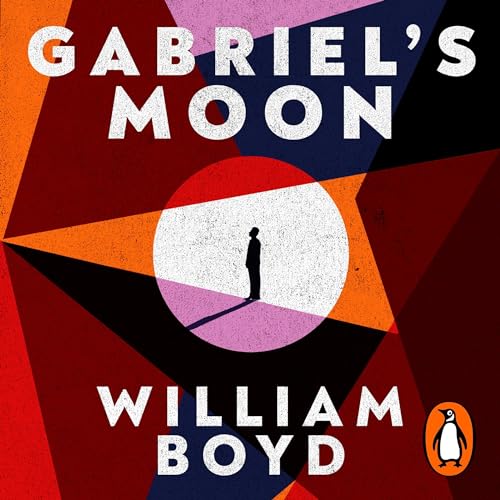
Gabriel’s Moon – William Boyd ventures into George Smiley territory

Boyd’s eighteenth novel expands his collection of espionage stores – along with Restless, Waiting for Sunrise and Solo (his Bond installment).  This time out, we are very much in Le Carre territory; 1960’s Britain and Europe, Soviet machinations, MI6 blundering its upper-class way through a maze of deceptions and counter-deceptions.  Boyd makes excellent work of this all, with vivid settings and interesting personalities.  His conclusion is fittingly tragic and portentous, while leaving plenty of room for possible sequel(s).

Small quibble in that the prose her is sometimes overabundant and studiously colorful.  May well be a gesture toward that of the main character, travel writer Gabriel Dax, who is teased by his controller  (and one time lover) Faith Green for purpling to excess. A bit distracting but tolerable, as there is real wonder and appreciation of the world’s many pleasures.  Dax’s alcohol consumption is another striking aspect, we seem to proceed directly from one cocktail to then next bottle of wine to brandy to the next morning’s pick me up.  How the man remains vertical is a mystery.  Possibly intended as period correctness, (along with the relentless smoking and cover art which recalls title sequences of the early Bond films) but again, a bit distracting.

There’s also a large gap in the story’s wrap-up – Gabriel has learned some facts about the fire which killed his mother (facts we already knew as that event was the novel’s opening scene) and while the explanation has helped his insomnia and angst, for the reader it feels incomplete.  Nor is the fact that his father died in a plane crash in Persia while working for BP.  Given that Gabriel’s older brother Sefton is a bent diplomat and the secrets lurking elsewhere, one must wonder if that death was a cover for more espionage, but Gabriel never seems to imagine that, much less pursue it. Perhaps that too is being saved for future installments?

All in all, a very creditable and enjoyable addition to the genre and to the author’s estimable collection.   

(Oh – sure enough, while fact checking for this summary I happened upon a Wikipedia note characterizing this as the first volume of a planned trilogy, with the second due for publication in 2025.  Definitely something to look forward to.)

Karla’s Choice, Nick Harkaway

Picked this up less than fully convinced that a John Le Carre novel sans Le Carre was really needed.  Fact it was penned by the master’s son, Nick Harkaway, made it somewhat more promising than the various Ian Fleming-less Bond retreads by unrelated followers (of whom Harkaway is one, the admirable William Boyd another).  Was encouraged before the start by a statement in the Author’s Note that “There were always supposed to be more Smiley books.”  LeCarre’s having graciously left ten years of blank foolscap between The Spy Who Came in From the Cold and Tinker Tailor Soldier Spy also suggested room for this insertion.

From the start, what I found was encouraging, gliding along quite happily to the familiar rhythms and contexts of LeCarre’s world as scored and conducted by Harkaway (who has the benefit of having actually been present and somewhat privy to his father’s creative processes).   A pleasant enough experience, but not eye-opening – until somewhere around 80% of the way through – stop reading here if you don’t want to spoil the experience for yourself…

Just as I’d begun to worry this might be all retread, Susannah, the naive civilian whose cry for help initially set the entire story into motion, despairs at Smiley’s apparent lack of principle and crosses the Iron Curtain into Hungary (at the time a Communist autocracy tightly leashed to the Soviet Union) to commandeer his mission for herself.  Though believable based upon her earlier actions and personal history, this impulsive act nonetheless flips us into another plot entirely, as Smiley and his professionals must improvise in hopes of catching up with her.  Then, just as I’d accepted that and begun to anticipate the excitement it must generate, Harkaway switched form entirely – stopping the clock to preview various character’s future reminiscences on whether Smiley’d had no idea this was coming and was now in totally reactive mode, or had anticipated and accepted Susannah’s action as inevitable and gone with the flow or had, in fact, callously conceived, arranged and ensured such a dangerous act in order to achieve his own ends at the probabl cost of her innocent life.  By dancing a follow-spot rapidly over Smiley’s talent, skill and commitment even as it highlights several canonic characters’ own abilities and relationship to the master, Harkaway makes clear that moral principle, guilt and regret are the true subjects of the novel, assuming LeCarre’s mantle very nicely, thank you. 

Minutes later (in reading time, that is) we’re back into thriller form, watching as George discovers he has been made and is being tailed, and then as this unassuming ‘little man’ deals brilliantly with the challenges (including a car chase with Smiley at the wheel – never thought we’d see that!).  These scenes are virtuosic for both character and author, and from there it is a race to a signature LeCarre finish: bloodshed held off-screen, morality front and center and more than a hint of anticlimax, until Harkaway surgically exposes just what values and choices lay behind the various participants’ actions. Despite the infamous Karla (through-line villain of the entire Smiley oeuvre) having appeared very sparingly and with minimal back story, it turns out that his ‘choice’ is indeed the true point of this novel.  Not to mention a worthy gift to the fans in how it adds color and insight to Le Carre’s own chronologically-later volumes. Very nicely done!

Credit where credit is due:  I read this in e-book form – one of the more benevolent byproducts of our evolving digital hegemony.  An e-book I had borrowed online from a public, i.e. ‘government funded’ (cue the sinister theme music) library – one of those many liberal-culture institutions from which our marginally-elected leaders are currently scrambling to rescue us.  Had downloaded it in moments and for free – another benefit of the ‘mommy state’ imposed upon us by the ‘deep state’ which is now being shredded in favor of absolute free-market fundamentalism. Who knew we had so much to lose?  Anyone with eyes…

Having thus tested the waters and found them delicious, I’ll now be purchasing a hard-copy of Karla’s Choice so as to compensate author and industry for conspiring to make such an entertaining and worthwhile title available.

Kköszönöm mindenkinek – ’Thank you everyone.’

The Crisis is Upon Us!

To all those pundits still talking of the courts reigning in Mr. Trump, or of a ‘possible’ constitutional crisis ‘ahead’:

Fugeddabout it!

An administration led by the ‘world’s greatest negotiator,’ who claimed he could end two overseas wars easily, cannot get a single unjustly imprisoned man released from the country with which they previously negotiated an agreement to remit him?

This is an obvious refusal to comply with the courts, shrouded in the weak and passive-aggressive excuses of snickering adolescence.

The constitutional crisis is here, folks, right before our eyes!

(First posted as a Substack Note, 2025-04-13)

We’re Moving to Substack!

It’s a new year and a new world, which means it’s time to try something new!

Starting a few days ago, I’ve begun posting thoughts, opinions and appreciations on Substack under the title “Nobody Says.” There will be running posts soon as well, plus whatever else suits my fancy or sticks in my craw.

Hope to see you there,

Robin Andrew

Demon Copperhead, Barbara Kingsolver

Kudos to the 2023 Pulitzer Prize Board for a totally worthy selection.  Kingsolver ticks a literary box by channeling Dickens and his David Copperfield without crass imitation, a societal significance box by addressing child poverty, abuse and the epidemic of rural drug use (especially opioid addiction, calling out some of the companies and their owners by name) and the readership box by creating a captivating and moving tale featuring flawed but valuable characters of realistic human color and complexity in an interesting land- and culture-scape.

The opening chapter or two induced a little hissy fit in this reader – knee-jerk objection to spending time with a self-destructive junky single mother and a narrator who seemed, at first, kind of stereotypically hillbilly.  The prize award was helpful then, inducing me to power through to where it began to dawn on my urban elitist New York-raised mind that the mother was not going to be our companion all the way through, the child/narrator quite a bit more self-aware than my prejudices first supposed, and the hillbilly voice (along with my dismissive reaction to it) was central to the moral view of the novel. Just as it is best not to judge political speech on the speaker’s accent, neither should the reader allow Demon’s voice, which cements him into his milieu, to obscure his story.

Kingsolver’s craft extends also to the novel’s plotting, following Demon’s trials and tribulations for long enough to make the reader feel his despair and self-doubt while every now and then throwing us the lifeline of a gentle soul or a positive experience before descending again into the long, slow slide.  By the time his fate takes its most significant downward turn (page 333 of 546) we are fully invested and watch the slow-motion pileup with horror until around 508 when a ray of sunshine begins to probe the rotted-out shutters of doom.  Even then, we’re on pins and needles till very nearly the end, hoping against hope that he will find it in himself to succeed and when he does, in the final twenty pages, the payoff brought tears to these eyes. 

I gather some readers have said that happy ending (one should say tentatively happy, having been reminded in the preceding pages of the regression statistics on addiction treatment) feels false and not credible, after all that came before, and it would certainly be possible for an author to have ended this story on the downbeat of despair.  Possible, but not as rewarding and not as true to the model’s modus operandi. Dickens too was writing to entertain a wide public and so needed to grant them the satisfaction of a good story with a rewarding culmination even as he fed them the unvarnished truths he believed they needed to hear.  His legacy over the intervening 175 years is sufficient to suggest that he, and now Kingsolver, made the correct choice in that.

As a writer one can well imagine the fun Kingsolver must have had transcribing character names into the nicknaming vernacular of mountain folk: David Copperfield to Demon Copperhead, James Steerforth to Fast Forward, Uriah Heap to U-Haul, etc.  While Mr. Micawber made a modest move to Mr. McCobb, the author seems to have hewn closer to model the more admirable the cast member:  Aunt Betsey gets the slimmest change of spelling as Aunt Betsy, the Peggety family becomes the Peggot clan and Dora morphs into Dori, still trying her young husband’s patience and love just as much despite the different vowel and dying an early tragic death as well.  Demon’s other romantic interest retains her original name, Agnes, despite being referred to throughout as Angus (for reasons the novel explains).  A further twist is necessary for her father, who in Dickens is Dr. Strong.  Since the physician in that part of the story will turn out to be a villain whose neglectful care and wrong-headed prescriptions start Demon on his steepest and deepest slide, Kingsolver names him Dr. Ward (as in ‘ward of,’ perhaps?) while Agnes’ father and Demon’s putative rescuer becomes the high school football team’s Coach Winfield – as in ‘win on the field,’ perpetuating Dickens’ own custom of punacious character names.  

Another interesting bit of craft regards how reticent the cover quotes and inside flap summary are (at least in the hardcover edition I read).  A potential reader would never know from them what a harrowing story they are in for.  One suspects that was a calculated choice, aiming for potential readers to be drawn in by Kingsolver’s previous commercial successes and the Pulitzer award so they would read far enough to become emotionally invested before seriously questioning whether or not to continue.

One could say a lot more, but I’ll just leave it that Demon Copperhead has already taken a prominent spot on the shelf so I’ll frequently glimpse its spine and be reminded that highly satisfying and truly worthwhile fiction is still possible – even in this age of internet, AI and attention spans measured in microseconds.

Another Side of Bob Dylan, Victor Maymudes (Co-written and Edited by Jacob Maymudes)

Subtitled ‘A Personal History on the Road and off the Tracks,’ and found by happenstance in a used-book store, this is a bit of marketing, in that it’s real subject is not Dylan at all, but Victor Maymudes, a longtime roadie and tour manager for Dylan, who spoke much of the text into a tape recorder in anticipation of a memoir he did not live to write.  Son Jacob (intriguing note: Dylan also has a son by that name) found the tapes after nearly every other possession or memento of his father had been destroyed in a fire, and put together this volume out of loyalty, respect and love.  Intertwining his own recollections, he added also quite a bit of explanation regarding the drifting apart that separated Maymudes from Dylan for years, how they came back together and how they fell-out again, more deeply and permanently, superficially due to business issues touching upon Jacob and his sister, but really thanks to Dylan’s own mercurial and dictatorial personality.  End result, the title is a deliberate misdirection but – as no doubt intended – induced me to pick up and read a book I’d likely not have been interested in if it had been titled more accurately.

Part rock/pop music hagiography, part social history of the sixties, part family paean, what resulted is an oddity but worth the reading.  Maymudes is interesting and unique, his journey intermittently exciting and at other times reflective.  The glimpses of Dylan depict savantic brilliance within the realm of music and songwriting coupled with a chilling inability to understand, consider or forgive those close to him.    As if, being so successful on his own terms at the one or two things he believes matter, he can barely spare a moment or a thought for anyone who is not equally blessed.  This seems confirmed by scenes of his collaboration with other musicians whom Dylan found satisfactory to his craft’s needs and so deigned to treat in a more-humane manner.

A dual portrait then, of two very different characters, their colorful journey and the tragic end of their always-unequal friendship over misunderstandings and slights that by rights should have been, given Dylan’s extraordinary wealth and independence, inconsequential.  Obscure and oddball, but definitely worth holding onto once you’ve come across it.

(Another note: Treehorn Books, Santa Rosa CA, is all a paper-hound could ask for.  Narrow aisles, shelves piled high, well-categorized and welcoming.  Stopped in for the first time to see if they had any G. B. Shaw for a birthday gift and found the perfect Collected Prose; inches thick, hard cover, great condition including library-style plastic over the dust-cover.   I will be back…)

Red Notice, Bill Browder

Naïve American-born (but later a British citizen) investment banker stumbles upon vast opportunities in post-Soviet Russia, makes a fortune for himself and his hedge-fund clients, then runs afoul of Putin’s thuggish cronies, with tragic consequences, especially for one of his Russian attorneys, who is imprisoned, tortured and beaten to death.

Coming from a background of self-importance, Browder’s brief youthful rebellion is followed by a dive into the hyper-establishment world of investment banking.  It is from that platform he learns the post-Soviet Russian government has given every citizen a voucher to invest in their newly-privatizing economy – a laudable goal, on its surface. Realizing that most citizens have no idea how to benefit from this historic opportunity, Browder organizes the means necessary for himself and other non-Russian investors to buy up those vouchers and benefits, instead.

Perhaps not surprisingly, there are Russians who resent this.  Not, the ordinary citizens, who have made at least a tiny gain by selling him vouchers they believe to be worthless, but rather the local sharks, who resent not being able to gobble up this bonanza themselves.  When they, with the help of corrupt police and courts, begin stealing from Browder’s organization and, even more tellingly, from their own government (and thus its citizens) Browder, being a good child of American idealism, tries to use the rule of law to stop them.  The majority of the text, and its drama, concern this white-hat intrigue, and the death of Russian attorney Sergei Magnitsky, whose only sin was believing to the end in the myth of his nation’s legal system.

This is a compelling tale, worthy of LeCarre or Green, and Browder tells it pretty well for a first-timer (no other pen is credited…).  While one can almost hear the author swearing not to aggrandize his own role, though, he does come off as…well…a crusader for justice.  A jet-setting lifestyle, financed by taking advantage of the same lax government which cultivated Russia’s oligarchs and oligarchy, is hardly a stable perch from which to condemn others, but the degree of corruption and cruelty he uncovers makes such criticism seem rather a quibble. 

The real hero here, as Browder frequently and forcefully reminds us, is Sergei Magnitsky, attorney, husband and father, who risks all for the truth, and pays the ultimate price, his last weeks recounted here with justified horror and sympathy.  It is to Browder’s credit that he then pursued the only form of justice available; the Magnitsky act by which the USA (and later several other nations) put Russa on the public stage and on record as a criminal conspiracy dressed up in nation’s clothing.  (Browder appears also to have taken financial care of Magnitsky’s family after his death, another stand-up move.)

The events of this book took place in the aughts, the first decade or so of Vladimir Putin’s presidency.   As the autocrat now wreaks his havoc on Ukraine, Red Notice (not to be confused with the movie or another novel of the same title, btw) is more valuable than ever for its glimpse behind the curtain, confirming that his tyranny is no recent development, but the true measure of the man, evil rooted and growing for many years.   All the way back to his KGB days in the old Soviet Union, in fact.  Clearly, there is no hope Putin will ever change his ways, and no wisdom in ever believing anything he spouts about agreements, cooperation, the rule of law or any alternative to simple brute force and self-service.  Fair warning to the next president who believes he has seen the Russian’s soul in his eye (43), or finds in him a friendly bro’ with whom to shoot the breeze – with no witnesses and no notes taken (45).

Pass this one around; people deserve to know.

The Well of Loneliness, Radclyffe Hall

Among the earliest novelistic depictions of homosexual love and life, Hall’s book movingly expresses the solitary pain of living out a prohibited nature. Her protagonist, Stephen Gordon, enters this life a contradiction – christened with the name of the male child she is not – and ends it in the same way – professing love for one woman in order to free the other woman she truly loves to live a more conventional life – the very conventional life for which Stephen has longed since adolescence but can never have.

That conclusion may sound melodramatic, and it bears a bit of that taste, but the tale in its entirety is far more individual and nuanced than any melodrama.  It is, given the date of  publication (1928) , an amazingly deep and subtle reflection of what living a secret can do to a person; the isolation, doubt and self-destructiveness which it may often engender. More than just a woman who loves women, Gordon’s inner life, expressed through third person narration, seems more truly that of the transgendered; wishing with all her heart to live the sort of life her father had, and which those who happen to be born male may take for granted.

Noteworthy also is Hall’s depiction of louche Paris nightlife among the ‘inverts,’ that crowd of homosexuals, lesbians, gender transcenders and others who seek out one another’s company in the few establishments which tolerate them, and where many take refuge in reflexive excess.  This is not a pretty picture, but one of desperation and degradation – and exploitation, as at least one proprietor carefully records his customers’ identities for future exploitation. Other episodes reflect the democratizing effect of war, wherein women are briefly allowed to take on less-gendered roles, and the impact of snobbery and societal rejection, how friends become enemies the moment one’s secret is exposed. One gets the feeling these scenes are written from personal experience, or at leas those of the author’s close acquaintances.

In what seems a typical pretense of fiction from this period, Stephen’s dilemma is one of personal fulfillment rather than survival; being born into substantial wealth, she travels and writes and publishes for personal reasons only. Working for a living is never an issue, thus insulating her from the even greater impacts some of her other gay friends suffer (an artist couple are movingly depicted as they struggle, starve and die, one of illness, the other of suicide borne of despair).

As easy as it might seem to call this an historical curiosity, believing that things are much better now, one must remember thatthat is at most true only of some ‘liberal’ cultures; in many places and cultures around the world (and even here in much of the good ‘ol USA) repression is still the norm.  In truth, The Well of Loneliness is very much as timely today as it was a hundred years ago.

Why We Sleep – Unlocking the Power of Sleep and Dreams, Walker, Mathew, PhD

An in-depth summary of current knowledge on the subject, by a researcher and sleep-geek unafraid to sound like a prophet in the wilderness.  His central creed is the imperative of 7 to 9 hours of sleep for every adult (more for children, varying by age), of an early to bed early to rise schedule that aligns with the sun’s presence and, most diabolically, of later school start times that would allow developing brains the early-morning REM sleep which data prove are critical to their ability to learn and, even more, to complete the complex brain-development necessary to achieve a healthy adult personality and abilities.

The many research citations go a long way to convince, as they also amaze with the cleverness of researchers, finding ways to determine what goes on during sleep, in minds that are, by definition, in no condition to report it.  Brain wave analysis is an obvious technical aid, but the comparison experiments he relates – involving specific sorts of lessons and challenges presented before and following specific extents of specific types of sleep – are more surprising. As is just the simple revelation that there are so many stages of sleep, each with its own character and purpose. 

A subject as broad as this naturally demands a polymath, and Walker is enough of one to cite pharmacology and chemistry in support of his arguments, literature regarding the origins of our long held illusions and more literature to show that humans have known at least some of this for generations, we’ve just allowed other priorities to blind us to what our bodies are screaming.  If we are to rise to the many challenges we humans create for ourselves ( politics, wars, climate change, social change, pandemics and general pandemonium, to name just a few), we’d do well to follow his advice.

Saving his most potent Jeremiad for last, the author addresses sleep aids, crying out against profitable products that make no effort to treat underlying conditions, but rather, simply sedate the user into a simulacrum of sleep with none of its functions.  If my own experience with Ambien during a week of all-nighters and 12-hour jet lag had not already been enough to turn me off of the stuff, this book certainly would.

Deserves to be more widely read.  And followed, though one holds out little help for that, in this age of pods, pads, tablets, laptops and streaming, screening, screaming masses.

Sleep well!

On ‘We Aren’t in Vegas Anymore’

Ross Douthat of the NYT had an interesting column this AM, ostensibly about the value of taking social policies only to some rational balancing point of benefits and risks, rather than insisting upon one extreme ( total prohibition) or the other ( total laissez-faire permission). While his argument made great sense, it deserves to be expanded, particularly in relation to some of the issues often associated with what is lumped together as the political ‘right.’

What Douthat says about the inevitability of some gambling always existing, and therefor the preferability of reasonable limits and regulation rather than either total prohibition or complete lack of regulation – bet anywhere, anytime, on anything, at any stakes – is well taken. He neglected, though, the logical extension of this argument to some very comparable similar issues; prostitution, for example, or abortion, both of which have been around at least since biblical times despite every effort to universalize their prohibition.

Even positive issues such as freedom of speech are most-effectively handled by a society and legality which do not permit their most extreme expressions (yelling fire in a football stadium being the classic one; intentional libel for financial gain another, or defending one’s castle with a bank of automated machine-gun emplacements). Yet another salient reference would be to freedom of religion, where the reasonable desire to worship without persecution has been stretched into the supposed-right to run businesses and corporations in ways that discriminate and limit the freedom of their employees or their customers. The Citizens United campaign finance decision suggests this list could go on, and on.

What Mr. Douthat was actually – and correctly – warning of is the danger of fundamentalism in any realm.

Whether coming from the supposed ‘left’ (permitting pornography, legalizing marijuana) or the ‘right’ (striking down Roe v. Wade, refusing to put a same-sex statuette on top of a wedding cake), taking any social proposition to its logical extreme is never a good way to make law or public policy, especially in an aspiring democracy which aims to cultivate internal peace and comity.