Tag Archives: religion

E Unum Pluribus

Wondering where our nation’s increasingly divisive politics may lead us? E Unum Pluribus is a new novel which explores one very real possibility:

Amid feudal chaos following the USA’s collapse, one city-state seems promising, until an amateur’s murder investigation exposes its weaknesses and the conspiracies threatening to destroy it.

In order to receive community input, I’m serializing a Beta Test draft of E Unum Pluribus free of charge. (So I can track interest, the final installment may be posted only to subscribers, but even that subscription will be totally free of charge or obligation.) A .pdf of Installment One is included below and may also be downloaded for a more comfortable reading experience. Either way, you get to explore this new novel at absolutely no expense!

In addition to posting further installments, I will be sharing thoughts about the novel’s themes and objectives in future posts on both this website and on Substack at nobodysays2025.substack.com

If you find E Unum Pluribus of interest – or if you simply support the concept of authors sharing their work without reliance upon commercial publishing corporations – please share this post as widely as possible.

Have a wonderful 2026!

Robin Andrew

Parable of the Sower – Octavia E. Butler’s 1993 Vison for Today’s Tommorrow

Following up recent rereading’s of Orwell’s 1984 and Bradbury’s Fahrenheit 451 I saw this speculative novel recommended for its prescience and found that characterization to be spot on. Writing back in 1993, Butler describes a Southern California that could believably result from just a few more years pursuit of our nation’s current course.  Widespread poverty thanks to an politicians who own power over actual governance, violence and destruction by a populace fragmented and distrustful of one another, worldwide ecological disasters, misuse of new technology for profit and oppression, legal and police powers used not to protect the rights of all but to entrench the power of the few and, overlaying all that, a portion of the populace turning to reactionary religious movements in hope of refuge.  A decidedly dystopian take on our situation, but very convincing and valuable as an eye-opener.  That it is set in our exact time (July 2024 – October 2027) despite having been written over thirty years before is almost spooky to one first reading it today.

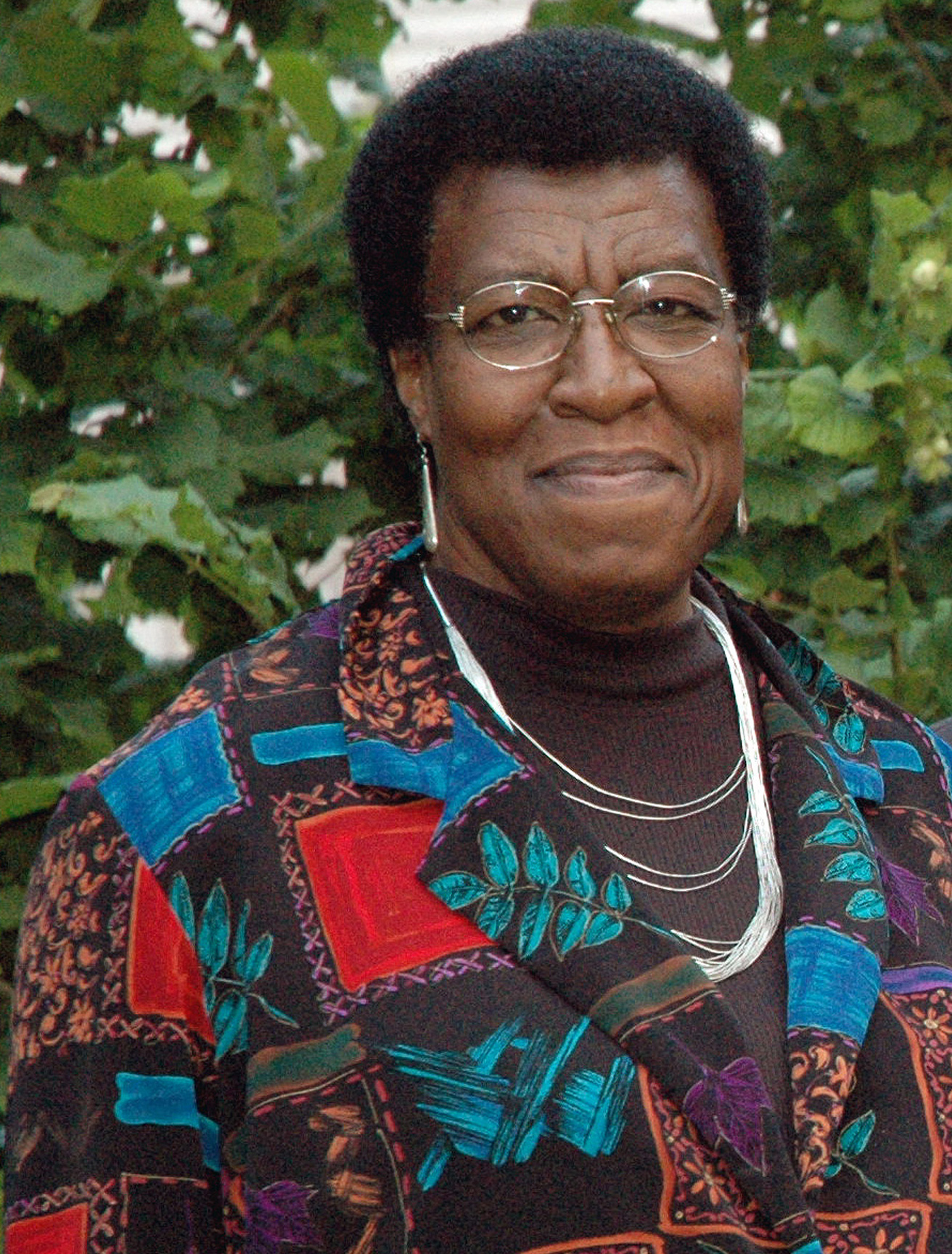
Butler (born 1947, died 2006) was a pioneer: at a time when it was striking to find either a Black person or a female making a name writing science fiction she was both, going on to win Hugo, Locus and Nebula awards as well as a MacArthur Fellowship grant.  This first of her works that I have read (there will be more) is partly shaped by her ethnicity, featuring a mixed race band of refugees and touching repeatedly on how race has shaped them, has affected their fortunes and is still affecting them despite the near total collapse of nearly every other social structure. 

Not content to cover that weighty ground, Butler also puts forth a religious theme, with protagonist Lauren Oya Olamina (which surname we learn is from the Yoruba region of Nigeria) the daughter of an Evangelical preacher. Lauren is in the process of devising a faith of her own, which she calls Earthseed in reflection of its vision of destiny – the expansion of Earth’s humanity to live among the stars and spread their ‘ seed’ throughout the universe.  Lauren’s coming to grips with that calling and beginning the process of dissemination is the true theme of the novel, all the others serve to set the conditions and inform the necessity of her doing so.

Butler’s writing is immediate and colorful yet quick and concise, her plotting is complex without falling into the sort of techno traps that affect much Sci-fi.  Resultingly, the Parable of the Sower is a work of literature which uses its genre as vehicle, not a commercial work safely exploiting a comfortable niche. A sequel, Parable of the Talents (1998) presents a further step in Laruen’s and Earthseed’s journey, culminating in departure of their first space craft on a colonizing mission.  That having been Butler’s final published novel, it is sad to consider how she might have continued the tale, had she not struggled with depression and writer’s block before passing away in 2006, at the too-young age of 58.  

Very glad to have encountered both book and author, and highly recommend them to any readers interested in where our politics are leading the USA, exploring the canon of science fiction, alternatives to mainstream religion or just curious about where human society may be headed – in both the near and the far terms.

Tell Us How to Live!

A free people will always be a diverse people, so a free nation must always be a diverse nation.

Ross Douthat, during a recent interview* advocating a more prominent role for religion in American culture and politics, argued that progressivism fails because “You need something else on the horizon…So that we can live in a specific way that we are supposed to live.”

This argument might carry more weight if there existed some single voice calling all humanity by some clear and direct method (simultaneously taking over every video screen on the planet in its owner’s first language perhaps, to steal an example from fiction) with specific instructions on how we are supposed to live.

In real life though, there is no such singular directive.  A Roman Catholic might point to The Bible – but what he’d actually be pointing to would be a specific reading and selections from its scriptures which themselves have evolved from loosely-documented source materials translated from one arcane language to another by men of less than perfect knowledge, their translations and interpretations fought over, compromised upon and codified over two thousand years by a man-made (literally – no significant women’s voices having been allowed) bureaucracy not always unconcerned with its own survival and wellbeing. 

An Eastern Orthodox voice might agree with Roman Catholic doctrine on some aspects of the good life, but disagree on others; a follower of the Russian Orthodox church could have differences with one or both.  A Southern Baptist or any of dozens of other denominations who also see themselves also as Christians and reference the same scriptures would have even further varied ideas of how to live.  An Orthodox Jew or observant Muslim from the Holy Land would certainly have strongly differences with any of those, despite their faiths springing from some of the same roots and looking to some of the same sources.  A Buddhist, a Sikh, a Hindu, or a believer in any of the multitude of less populous or just less publicized denominations, sects, or faiths (of which I am too ignorant to list them all), might find very little to agree upon in Mr. Douthat’s ordained ‘how we are supposed to live’ directive. 

So long as whatever spiritual entity which may be out there watching over humanity chooses to speak in obscure language and to only a few of us at any given time or place, persons of sincere faith and goodness are going to disagree – honestly, deeply and righteously – about how those with whom they share the planet are “supposed to live.”   

History records countless instances where embedding religious beliefs in governance have led to unequal treatment, religious persecution, economic damages, societal upheavals, violence, killing and right on up to the brutality of total warfare; all in the name of one or another party’s conception of “the way we are supposed to live.”  Even in realms which claimed their populace were of a single faith, differences and resulting tragedies have not been erased – and often become all the more brutal to those in the minority.  That such injustices may be somewhat less prevalent in our ‘modern’ era than before that is more a matter of incremental progress toward accepting differences than of the species having settled on a single religion.

If, then, one hopes to maintain a government ‘for the people,’ one of its primary principles must be to recognize the diversity (which is not an expletive, btw, as some wish to use it these days) of our beliefs and not enforce the views of any one faith on others who do not share them.  To tolerate and actually protect the freedom of each to worship and live as they wish, so far as their actions do not constrain the freedoms of others.

For any extensive society to live in real and lasting peace, it must look elsewhere than any religion for its common rules on how to live.  That is what the USA has attempted to do (with sometimes greater and sometimes less success) for over 250 years.  Others have tried as well, again with greater or lesser success, but generally more promise than those which have chosen theocracy.   Rather than giving up on that effort and moving toward some declaration of national religious identity, we and our descendants will be better served by recommitting to pluralism and to working together, allowing those of all faiths (including no religion or God) the freedom to live their own prescription to the greatest extent possible without it preventing others from living theirs.

Nationalizing any religious identity, no matter how watered down or camouflaged by clever marketing or promoted by obviously insincere lip-servers, is not the answer.

(* “Ezra Klein is Worried – But Not About a Radicalized Left,” New York Times, September 18, 2025)

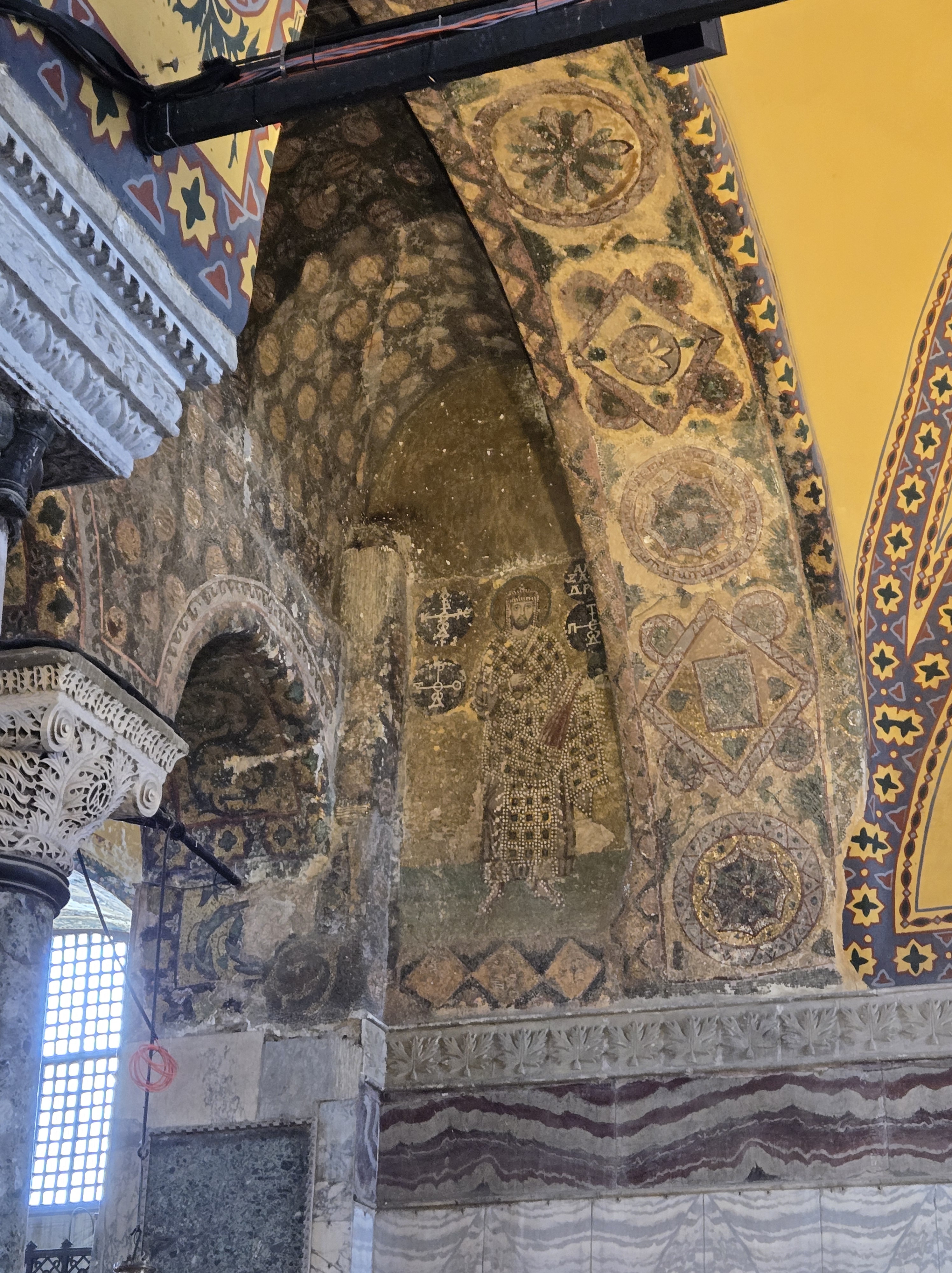
Image: The Hagia Sophia, Istanbul, Turkiye, has been a place of worship for both Christians and Muslims over the centuries. Photo by author.

If you like this post, feel free to share it.

If you like what you see on this site, please subscribe, it’s free!
The Golden Road – How Ancient India Transformed the World, William Dalrymple

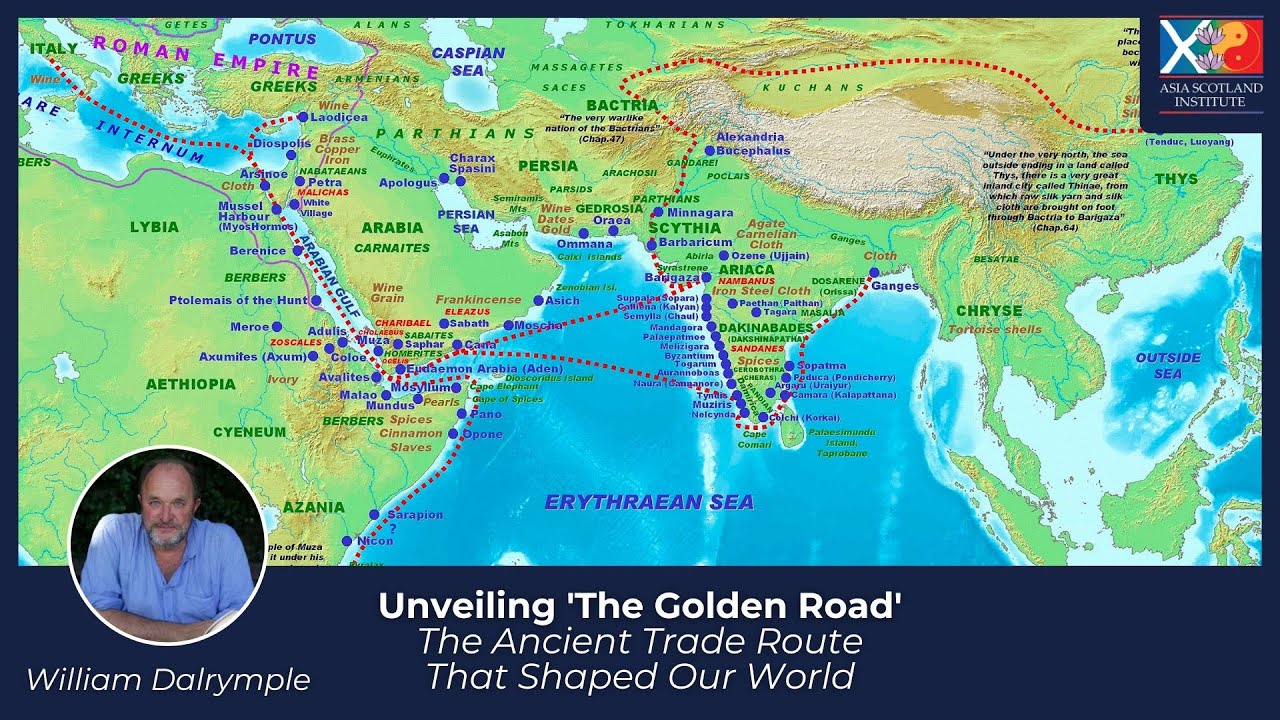
It’s long been a curiosity to me that The Buddha lived and preached in the lands which we know as India, but the populace of that region today are mostly Hindu followers (with significant minorities of Muslims, Sikhs, and other less-publicized faiths).  Conversely, Buddhism is mostly associated in the modern mind with lands beyond India: Tibet, China, Japan, Thailand, the other southeast Asian nations… And then, of course, there is Indonesia, a massively populated sleeper nation (in the ‘Western’ view) which I have read holds more Muslims than the entire Middle East! And BTW, how come Marco Polo’s fabled Silk Road doesn’t show up on any maps except those created to illustrate editions of his dubiously sourced travel memoir?

William Dalrymple, a Scottish-born historian living in Delhi, is eager to explain it all to us, beginning with a valuable Introduction that quickly spells out several themes.  First, it demolishes the myth of ancient overland trade routes.  In this telling, sea-borne trade was far more effective at moving goods – one ship able to carry many times the load of a donkey or camel and at the same time less vulnerable to the myriad possibly-hostile territories through which a long land route must pass between origin and destination.  Add to that the reliable seasonal reversing of monsoon winds in the seas around India and you have a situation ripe for cross-culture pollination. Something I’d begun to consider recently through reading and viewing about Rome, its connections with Egypt, and recent archaeological work at Red sea ports which has yielded much evidence of sustained trade with India’s Western coast (via the Gulf of Aden and Arabian Sea).

As impressive as this dispersion is, it is hardly the end of the Golden Road’s story.  Even as Buddhist missionaries (itself a new concept this small mind) were carrying their faith to the east where various rulers of ‘Chinese’ states endorsed it to various degrees, Mongols sweeping down from the north and Macedonians from the west were bringing other traditions to India, fracturing its Buddhist establishment and driving many back to the emotional refuge of the Vedic/Hindu tradition with its abundance of attractive gods and goddesses and the reassurance of the Brahmin caste system. (I know I am garbling these distinctions, it takes a scholar like Dalrymple to keep them straight, if even he can, so please forgive me.) Mix in the eventual arrival of Western Europeans and Christianity and one begins to see what a melting pot (to appropriate one of our local phrases) the Indian Peninsula has become.

Through it all, Dalrymple’s central objective is to remind us that wherever armies go, religion goes with them, and wherever religions go, other knowledge goes too.  In astronomy, mathematics, medicine and other realms, residents of India were making momentous discoveries long before Europe or even China.  Citing various early writings (most of them previously unknown, to me) he traces the origins of this scholarship and its dispersal through the various centers of study and libraries of texts it generated.  Only when Islamic scholars brought those ideas and texts to the Middle East (Baghdad, etc.) and from there to the Iberian Peninsula (the Moors, as we tend to call them, thanks to Mr. Shakespeare), was it translated into Greek, Latin, Italian, German, etc. and thus available to fertilize the so-called Enlightenment which we like to think of as the foundation of our contemporary culture.

Dalrymple is an awesomely erudite guide to all this, his analysis of artwork in this or that cave in this or that obscure (to me) region of India is amazing, if sometimes overfilling.  For those interested in the premise but not able to work through a 500 page tome, just reading the Introduction will give the basic premise.  For those with time though, the depth and detail makes the case more convincing and imparts a vision of the rhythmic dance – the ebbing and flowing on a scale of centuries – which was required for this dance of cultures to bring us the world we know today.

At a time when the (supposedly) Enlightenment-based world order we have known and respected for generations seems in danger of self-destructing, it is appropriate to be reminded that we would never have gotten this far if not for the blossoming and dying of countless other orders.  And also, it must be admitted, the clashes, conquests and destruction of kingdoms, nations and empires on multiple continents, over multiple millennia.  No human creation lasts forever, but the best fruits of each can contribute to what comes next – though we may need to suffer a lot of wasted time, resources and lives before we get there.

Thank you, Mr. Dalrymple.

The Bookseller of Kabul, Asne Seierstad

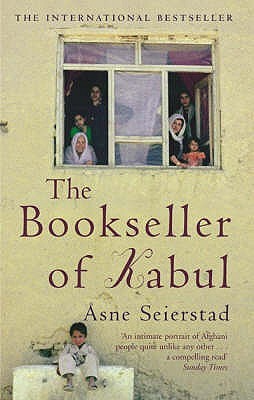
Social anthropology which reads as well as good fiction, Seierstad’s book provides a valuable glimpse into lives which could be centuries removed from contemporary US culture.  Despite Sultan Khan’s love of books and hope for a freer Afghan culture, his idea of gender roles – and that of nearly everyone else we meet here – is medieval at best.  Women are seen as chattel, servants and baby-makers with no rights, no autonomy; virtually no ‘selves’.  This is the most heartbreaking aspect of the Khan family’s story, but far from the only one.

Poverty is another focus of Seierstad’s, as illustrated in the sub-story of a carpenter, trying to support his extended family on small wages.  That he turns to theft is condemnable but not difficult to understand or sympathize with.  One ends up taking small relief that he is at least not mutilated under Sharia law, but is the destitution of his family really any less-cruel a punishment? An apt reminder that economic opportunity is a bedrock freedom somewhere down there with freedom of speech and thought.

Literature often shines a light on our own lives, asking us to question them, and reading this book is such a case.  Are the poor and disadvantaged of our own time and place any less confined than those of early-aughts Kabul?  Are the women of that Texas religious compound, that Utah plural-marriage household, that Bronx tenement or Brooklyn Hassidic neighborhood any less limited? Well, yes, actually; though industrialized western societies have far to go, these Afghans have farther.  One can only hope that exposure to some good points of a more ‘modern’ culture will gradually erode the stultifying lid which encloses their lives.

Those thoughts were put down in 2008, when it was still marginally-possible to hope that a new US administration could salvage something out of the chaos wrought by our invasion of this battleground nation.  Transcribing them now, one is struck by the continuing tragedy that whatever progress any segments of Afghan society may have made in the ensuing dozen years of Western politico-military involvement there is as precarious as ever, what with the Taliban resurgent, a Faustian bargain for peace in the offing and pluralistic, liberal societies battling for survival around the world, even to the halls of the US Capitol bldg.   “The price of Liberty is eternal vigilance,” runs a line widely attributed to Thomas Jefferson (though the historians at Monticello deny it).  The line is true enough, but worth remembering is that the operative word there is ‘vigilance,’ not ‘war.’  And that the sentiment might even be improved by replacing that with some other intellectual posture, such as ‘objectivity’, ‘questioning’ or ‘critical thought,’ even if that would cost some of its bold, heroic ring.

(That the real-life bookseller – whose name Seierstad had obscured in hopes of protecting his family’s privacy – later rejected her portrayal and very-publicly fought the author in Norwegian court, only to lose, lends yet another layer of complexity and sadness to the entire business)

And the beat goes on.

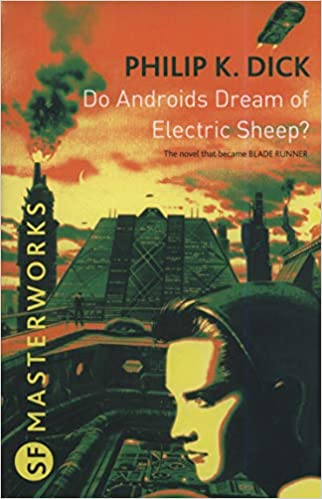
Do Androids Dream of Electric Sheep, Phillip K. Dick

Held up as a classic of sci-fi, and part of Dick’s canon, this brief dystopian cops & killers tale inspired the film Blade Runner (and its sequel), so seemed like a must-read.   Published in 1968 it was, like all of Dick’s work, more pulp than lit, which shows in the writing; sometimes clumsy,  sometimes cliché, but occasionally quite thoughtful  An example of the latter comes about 75% of the way in, as Rachael, an android whose model-line has been carefully designed to generate sexual desire in wet-blooded males (Dick’s repeated appreciations of ‘small high breasts’ and an almost boyishly-androgenous physique are curious, but apparently appeal broadly-enough to have found their way into the movie), latches on to a bounty hunter’s qualms about terminating something so potentially loveable – and begins to use them against him.

That, it turns out, points us to Dick’s real interest here. Forget the totalitarianism and environmental destruction (though those are valid themes and forward looking for 1968, if not exactly prescient).  What he’s really chewing on are our notions of identity and what makes a life worthy of value.  How artificially-intelligent must an android be before it starts to resent being viewed as an object or tool, and how human-like can it be before the continuation of its operating ‘life’ justifies the same price as a ‘real’ (i. e., organic, non-manufactured) life.  A license to kill, in this case, soon turns into a license to doubt. 

The comparisons are greatly aided by Dick’s postulation of Earth as a dying planet, from which nearly all humans have departed except those too damaged to earn a flight out.  Denigrated as a lesser caste, the lives of these radiation-damaged ‘chickenheads’ are limited, dull and dreary; hardly more rewarding or free than those of the androids they manufacture to serve the off -world elite.  The return of several renegade androids presents a threat to the few fully-functioning humans who have remained behind to keep the remnants of industry in operating order – Rick Deckard being one of them.  Poor and depressed, with a wife addicted to artificial emotions fed out of an electronic box, he seems qualified for the detective part of his task, but quickly out of his depth with the moral issues to come. 

That these humans have turned pet-ownership into a fetish and status indicator adds another twist to their prejudice.  Decker and his neighbors will scrimp and borrow to spend a fortune on almost any animal, whether real or simulated – to salve their thirst for companionship and belonging, yet they deny any hint of those same values to androids who have been manufactured in their own image.  And speaking of values, Dick gives his humans a pseudo religion, the cult of Wilbur Mercer, apparently created by their leadership to provide the lesser populace with distracting illusions of purpose and salvation – this society which creates artificial animals, artificial humans, and artificial environments on other planets has also manufactured an artificial religion, designed to specifications.  Not a stretch at all

How much humanity can you put into a machine before it deserves the same rights as its creators, and how far can we dehumanize our fellow beings before their value drops beneath that of their creations; especially when one realizes there is no big ‘C’ Creator out there to insist the two are inherently different?  Questions we may need to begin answering quite soon, the way things are going.