Tag Archives: Paris

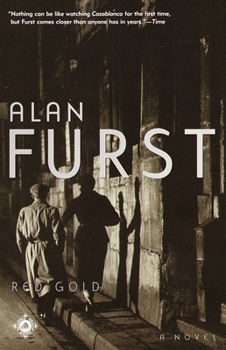
Red Gold, Alan Furst

Through half a dozen novels I’ve read since 2014, Furst has never disappointed.  In a deceptively quiet voice he portrays the complexity of life in situations too often cartooned as ‘dramatic’, ‘heroic,’ or ‘epic.’  Heroes are not sprung from the loins of goddesses, he shows us, but grown from the soil of ordinariness, seeded by terrible circumstances, watered by relationships with other decent human beings and nourished by the force of life itself as they seek the paths which will allow them to go on for another day, a week or if they are very lucky, even longer.

For Red Gold, we travel in the company of one Jean Casson, a Parisian film producer trying to survive under the Nazi occupation.  Having once been picked up by German intelligence and escaped their clutches, he must now hide in plain sight, growing a mustache and dressing poorly as he adopts a false in hopes of not being recognized contacts from his old life.  Learning to watch in every direction at every moment Casson, who is himself no socialist, drifts into contact with Communist resistance fighters, directed and bankrolled by the Soviet Union.  They in turn find his character and connections useful, loosely employing him as liaison to other factions – free French disruptors, conflicted Vichy collaborators and anti-Communist nationalists partially directed and intermittently supported by the Allies’ military for their own ends.  All of these, and also the Nazis, of course, are quite willing to sacrifice any individual at any time, if it serves their particular ‘greater purpose.’

As always, Furst paints a convincing and absorbing picture of life under occupation: the drabness, the cold, shortages and unexpected moments of plenty.  Casson’s inner voice is witty enough to entertain and resourceful enough to keep him and the reader out of the worst trouble, at the same time he manages to find enough minimalist romance to leaven the despair.  These characters have no foreknowledge of how the war will turn out; at any moment this depressing moment in history may take their life and so define it – a tragedy deeper and more painful than the destructive result of any brilliant explosion or dramatic car chase.

Life goes on, even under the heavy hand of war, and as much as some persons may fight for glory or principle, what most really want is simply to keep on living, with perhaps a bit of food, a sip of drink, a smoke or a hint of love to make it worth the effort.

Definitely an author to return to, and with around fifteen novels focused on the war years in Europe (published between 1988 and 2019 and collectively referred to as ‘The Night Soldiers series’) there’s plenty of opportunity to keep Alan Furst on the shelf.

(Note: Furst’s The World at Night (1996) shares a common plot and protagonist with Red Gold, so other readers may benefit from reading that volume first.  His three earliest novels, published in ’76, ’80 and ’81, concern drugs and crime in the U. S.  I’ve not sampled them but hope one day to do so).

My own latest novel is currently being serialized on this site. You can read the first installment in the recent post titled E Unum Pluribus.

If you like what you read here at robinandrew.net, please share any posts as widely as possible, and consider subscribing – it’s totally free!
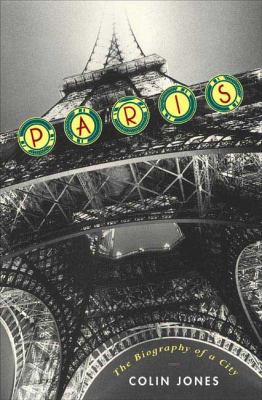
Paris – The Biography of a City, Colin Jones

Virtually a reference work, this self-confessed “Impossible history” of one of the world’s great cities comes buttressed by many pages of notes, a graduate level bibliographical guide, index, population table, modest number of illustrations, sequential maps showing the evolution of fortifications and boundaries, and even a list of the (major) buildings discussed.

For all that, the text itself is mostly quite readable, and manages to remain even-handed when discussing the political oscillations of the city’s fortunes.   Jones’s personal viewpoint is most glimpseable in the depth with which he discusses the impacts of the real estate marketplace and urban planning (a discipline for which nineteenth century Paris was something of an origin point and test case).  These, we hear, heavily influenced not only the visible face but also the economy, sociology and politics of the city, its surrounding suburbs (the banlieue), region and nation. The rise and growth of antiquarian/protectionist architectural sentiment is given an appropriate level of attention, since it is largely that movement and its successes which have bequeathed us today’s tourist and cultural mecca.

As for the aforementioned political oscillations, to one whose prejudices were shaped by the American education system within an Anglophile culture, Paris is eye-opening in relating the wave after wave of governments established, contested and washed away in favor of the next new or recycled concept.  From far back in the era of multiple kingdoms, principalities and ecclesiastical domains to contesting Empires of the middle ages to the early-modern era of Communes, communists, Republicans, Vichy capitulation and Republics (five, to date), it is amazing that anyone has been able to establish any stable business, institution or assets at all. A thought worth considering as the USA is going through its own populist spasm which may – at best – be followed by a future swing in some opposing direction.

One thing which does seem to have remained relatively consistent through Paris’ administrative history: even when the city and nation were not overtly socialist, their governments have always exercised far greater powers of eminent domain than we in the USA are accustomed to.  Some small justification, perhaps, for the disdain which some Americans profess toward anything ‘those Frenchies’ (or any Europeans for that matter), may have to say about social policy or virtues.   Reading about the centuries-long role Paris has played in nurturing the very idea of self-government by the polity though, makes that disdain seem more short-sighted than ever. 

Another significant takeaway: the wealth of literature generated in Paris’ Arrondissements over the centuries would require a lifetime of reading to consume and appreciate. Preferably in the original, since even my feeble attempt to learn French quickly convinced that its full nuance is unlikely to survive translation. One reason, perhaps that, Jones begins his introduction with a literary quote and analysis. In retrospect, this turns out to be a wholly appropriate entry point for what is as much a human story as a geographical one.  At every stage of its history, the promise of Paris has called to millions, to such a degree that its population has always been largely non-native, immigrants increasing its numbers even as low birth-rate, high mortality and the exodus of those unwilling or unable to meet its demands were constantly working to diminish them.

Fascinating even in its occasional excesses (just like its subject), Paris – The Biography of a City easily earns its space on the shelf.

(Note: published in 2004, this volume necessarily does not cover the City’s most recent decades.)