Tag Archives: history

One Ring to Rule Them All – The Breathtaking Cynicism (and Naivete) of Trump v. United States

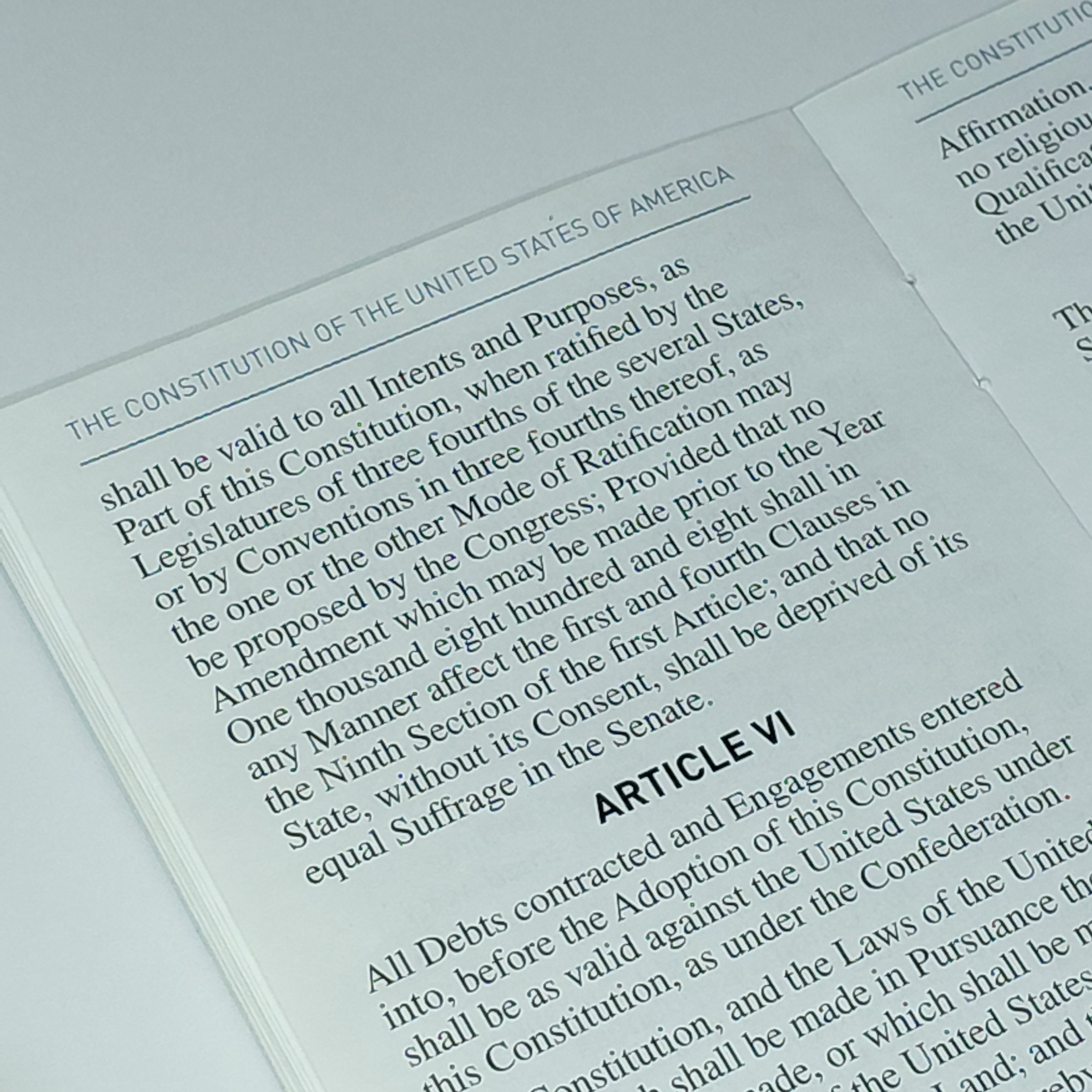
It is over a year since the Supreme Court issued their 6-3 ruling on Docket no. 23-939, Donald J. Trump versus the United States of America, which ruling granted the President immunity from Federal prosecution for virtually any acts while in office.

No such immunity having been written in the Constitution, their reasoning (originalism be damned) seems to have been that the fear of prosecution would be an undue distraction from the office’s duties and that the fear of such prosecution would impede a President from taking actions he otherwise believed necessary or justified. 

This ruling was cynical first in that it assumed a person who had sought and won the highest office in the land would value his own fate (political, financial or otherwise) more highly than the proper execution of that office.   Sadly, in the opinion of some observers, they have already been proven correct on that count.

The ruling was cynical second in assuming that even such a self-interested person, upon achieving the office whose responsibilities include selecting the head of its Department of Justice would not have sufficient faith in his appointees and the legal system they administer to rely upon that system to issue proper verdicts in the event he was subjected to improper prosecution. In this, the Court disregarded the basic conservative rationale that the possibility of prosecution provides a necessary and effective deterrent to illegal behavior. In this respect, their cynicism has freed the incumbent to act with total disregard of credible legal justification.

Third, and most cynical of all, is that the Justices did not themselves have sufficient faith in the American legal system, of which they are the figurehead, to use their position, prestige and ruling to assure the President that he could rely upon that system for protection.  Every other person in every U. S. jurisdiction lives every day of their lives knowing they could be prosecuted for something of which they do not believe they are guilty, and every one of us has no choice but to trust in the legal system to protect us.  And yet, our Supreme Court deemed it unwise to ask the holder of the highest public trust to do the same?  Breathtakingly cynical, and shameful.

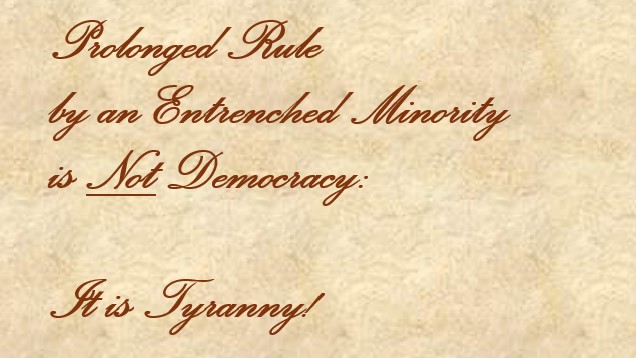
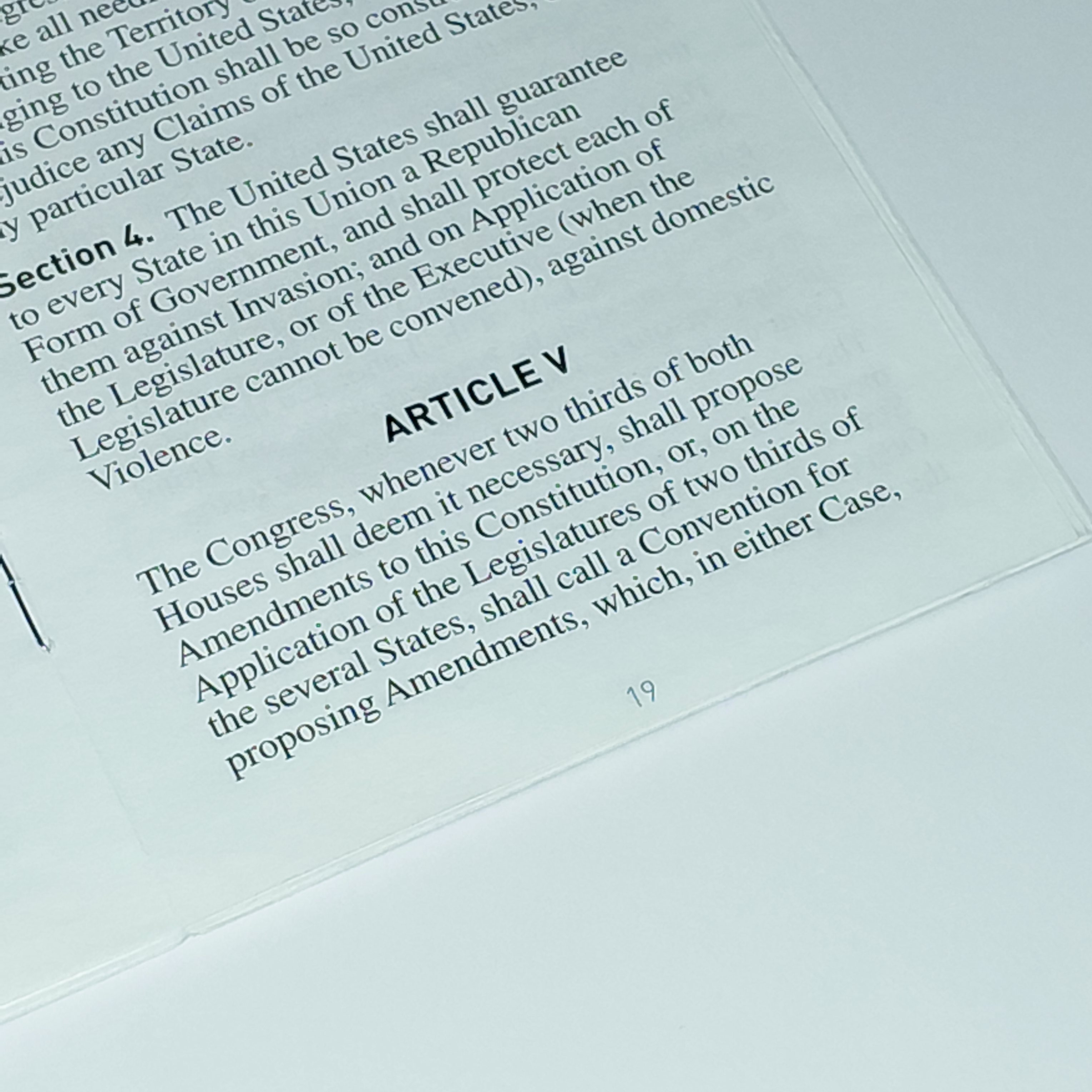
Those thoughts were on my mind at the time the ruling came out, and I considered posting them, but sadly, did not get around to it.  Now, as Mr. Trump’s second term reveals its true form, it is clear that ruling was not only cynical, but at the same time equally naive.  By freeing the President from any accountability other than impeachment (the highest hurdle in the legal system and one which has not once taken effect, in nearly 250 years), the court’s ruling has encouraged him to act as he pleases, including to persecute with impunity anyone he chooses.

Moreover, in doing so while also leaving in place his virtually unlimited power to pardon, the Court allows him to hand a ‘Get out of Jail Free’ card to anyone who does his bidding.  Far from protecting the nation, this greatly encourages improper acts of any sort by anyone who believes they can maintain the President’s favor.  In the few short months of this administration, we can already see this effect at work; that the Court’s majority did not foresee this outcome but instead enabled and encouraged it, exhibits breathtaking naivete, at the least. 

The result of these twin privileges, one clear in our Constitution and the other added to it by the recent decision, is that the chief executive may now act out his every whim, without fear of legal restraint for him or his followers.

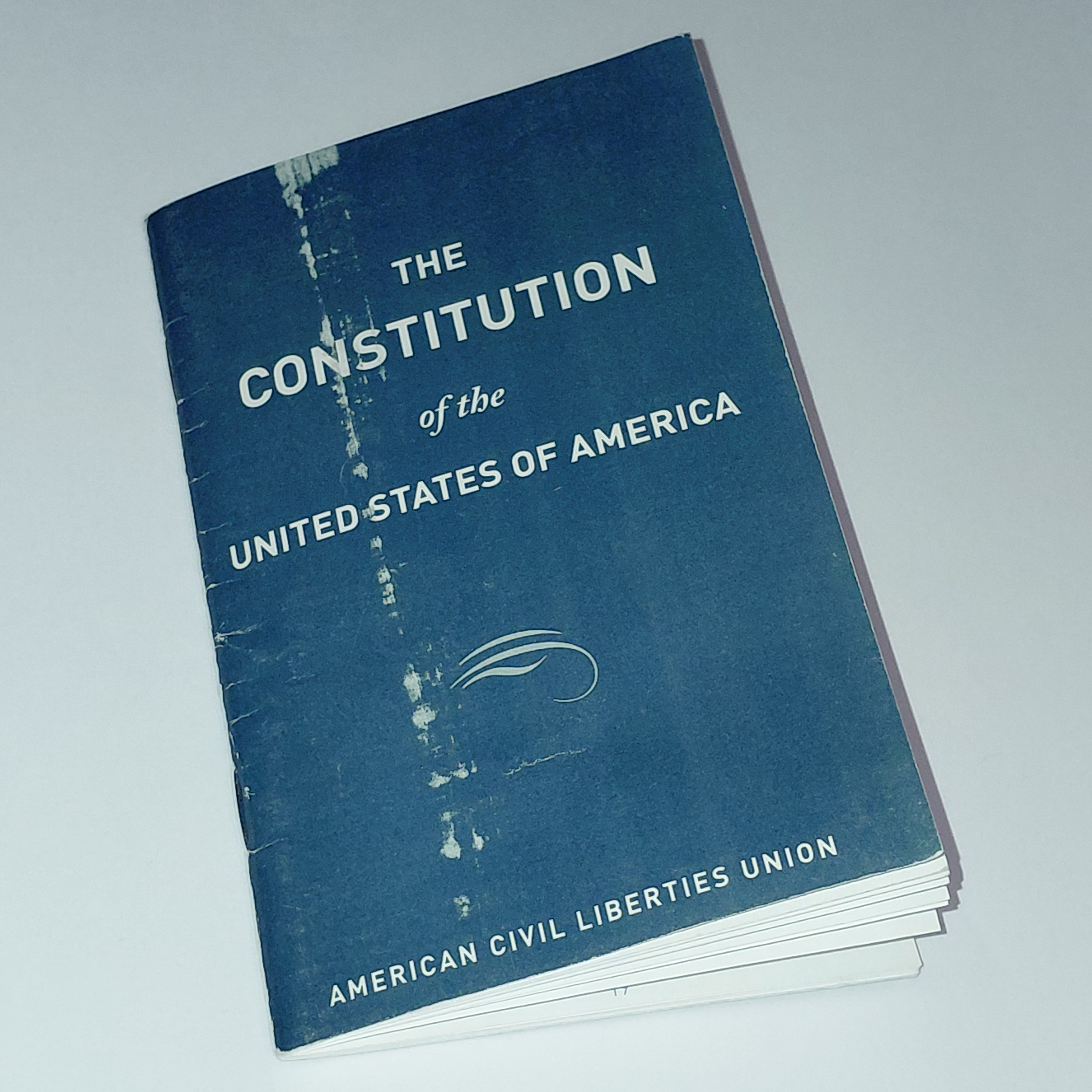
If this was the ‘original intent’ of the authors of the Constitution, then that document is not at all what generations of us have been taught to believe it was.  If that was not the original intent, then shame be on the authors of the Court’s opinion in the case so very aptly named: Donald J. Trump versus the United States.

U-flying-O’s!

Started yesterday on the front porch, breathing in the scent of fresh rain – our first in several months – and reading about the Executive’s use of our armed forces to summarily execute a boatload of what it claims (without substantiation) were ‘terrorists’ because they were transporting drugs headed (again, without substantiation) to consumers in our nation.  This despite the Constitution’s clear directive that it is Congress, not the Executive, who has the authority to commit the nation to war.

At the same time, we have clear statistical indicators that the economy is heading downward and the budget deficit upward despite the supposed magic bullet of a massive tax increase – in the form of tariffs – being arbitrarily imposed on the masses (us all) without Congressional authorization, and an upcoming deadline to pass a funding bill in order to avoid another government shutdown with all that that implies.

Not to mention extortionate prosecutions of news, educational, scientific and legal institutions for the sin of exposing the Executive’s actions to logic, fact and the laws by which all the rest of us must abide.

So it was of interest, scanning headlines before heading inside for another cuppa, to see that Congress was, at that very moment, using the People’s time, facilities and dollars for a hearing on whether or not the military is hiding evidence regarding UFOs.

Can there be any better illustration that this Congress has abdicated its role in governing the nation, than this – that with so many intensely real and vitally urgent issues of authority, accountability and simply doing their jobs, our representatives are pursuing rumors about U-flying-Os!

P. S. – That day ended with news of the killing of activist and influencer Charlie Kirk.   Terrible news; a tragic destruction of life and an unjustified act of pointless violence, regardless of his or anyone else’s political opinions.  Here’s hoping the killer is quickly apprehended and brought to justice to discourage any others from similar acts.

Paris Undercover

Version 1.0.0

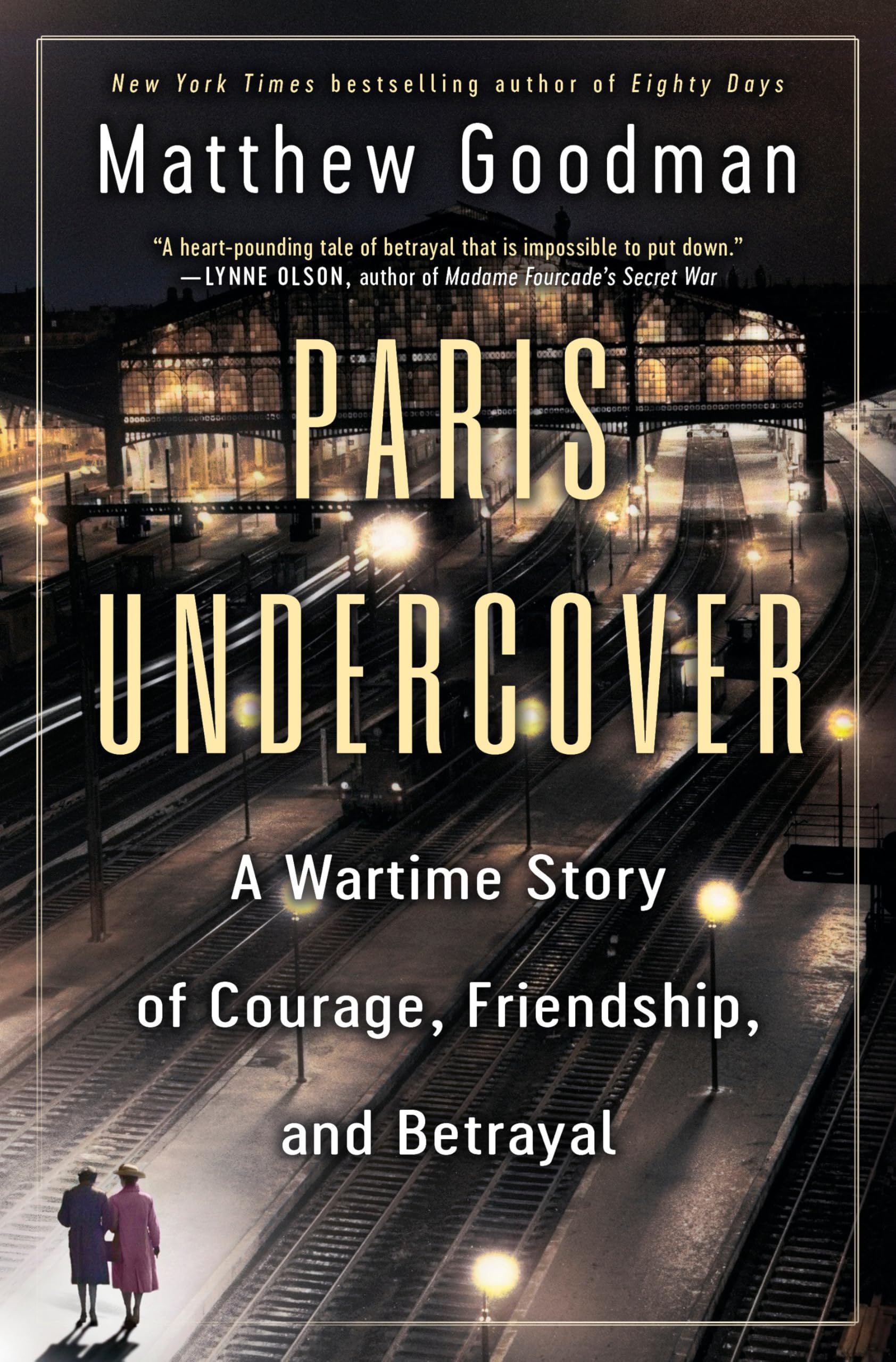
Paris Undercover – A Wartime Story of courage, Friendship and Betrayal, Matthew Goodman (2025)

At times inspiring, at others horrific, this is an impressive example of historical scholarship and its value in setting the record straight – as opposed to its all too prevalent effect of skewing history to the writer’s preferences.

In the midst of WWII the Etta Shiber’s purported memoir Paris-Underground is published in New York describing the exploits of herself and Kitty Bonnefous, two female resistance workers in Nazi-occupied France.  How that book came about, how much it was fact and how much fiction, and what were the effects its publication, are this current book’s subjects.

Part One of this volume gives us a factual record of the women’s actual lives and actions, up through Etta’s capture trial and imprisonment by the Nazis, thru her eventual release and arrival in New York. (At least I believe this is the factual version.  Given what follows, I do wish Goodman gave us a more explicit assurance to that effect.  In particular, his choice to open with the moment of Etta’s arrival in New York and then backtrack to their exploits confused me when, in Part Two, he informed us that is the way in which Etta’s book was structured.)

Readers looking for a pleasant and inspiring book could perhaps stop right here, and be somewhat satisfied.

Part Two is Goodman’s account of how Etta’s book came to be, how it was or was not written and by whom (there are differing accounts), and the impacts it had on her life..(This is where Goodman details that book’s departures from fact, and where I became a bit confused as to whether what I’d previously read was the true facts, or a replaying of the wartime book’s fabrications.  Perhaps a more diligent reader would not experience any confusion, but I did). What does seem clear though, is that Paul Winkler, himself a Jewish refugee from France, had the leading role as publisher and assembler and probably came out farther ahead financially than anyone else did.  Certainly the book sold well, and Etta Shriber did not get much for it.  What is also clear is that the book’s publication would certainly cause the Nazis to revisit Kitty’s case with even more sadistic vigor than before, likely with deadly consequences for her and others.

By the end of this section, one is angry with Winkler and others, but mostly on the edge of one’s seat, impatient to learn where Kitty has been imprisoned how she has fared while this profit-oriented sideshow was taking place in the safety of North America.  An excellent demonstration of how even a nonfiction book can be structured to maximize its suspense.

Part Three: Into the Night and Fog is the crux of Goodman’s work, a detailed account of Kitty’s imprisonment and mistreatment, the effect of Etta’s book on her such, the terrible  privations she and other prisoners of the Nazis had to endure to survive and even after being ‘freed’ by Soviet troops and, at long last, Kitty’s eventual return to the land of the living, where she lived to very nearly 80 years of age, at last enjoying some comforts and peaceful pleasures despite the debilitating effects of her ordeal.

(Given the chaos and destruction endemic to wartime, especially the end of a World War, it is amazing that Goodman is able to reconstruct this period in such detail and anecdote.  Since the overall purpose of the current volume is to expose the fabrications of Etta’s earlier book, it would have been worthwhile for him to address head on how he is able to be so comprehensive and how he avoided inserting his own imaginings in it, though the extensive Acknowledgements, Notes and Bibliography do help in this regard.)

As with other accounts of wars and particularly the Nazi Reich, one comes away from Paris Underground near despair at the eagerness of some men (and a few women, too) to inflict unnecessary pain and agony on other humans.  And, at the same time, amazed at the ability of many humans to survive mistreatment and hardships that would seem, if described in the abstract, unendurable.

A compelling and thoroughly worthwhile read, but not pleasant, and not for the faint of heart.

Doublespeak Becomes our National Language

The events of January 6, 2021, wherein thousands overran security at the U. S. Capitol Building, directly and violently assaulted security forces then broke into and vandalized that pre-eminent Federal facility, all while threatening bodily harm and even death to the elected representatives doing the nation’s business there, did not require the then-President to take any action and were actually “a day of love,” in Mr. Trump’s words or “a normal tourist visit,” in those of Georgia Representative Andrew Clyde.

But:

The events of the last few days in Los Angeles, wherein crowds gathered in predominantly peaceful demonstrations, are “a rebellion or danger of a rebellion against the U. S. government”– the standard set by 10 U. S. C. 12406 of the Code on Armed Services which the administration has abused to justify creating a national crisis by deploying Federalized National Guard and active duty Marine troops – despite urgent assurances by both local and state authorities that there was no need to do so.

Doublespeak, George Orwell’s prescient creation, is alive and active in the words of those who now govern our nation.

(There’s no excuse for throwing rocks or anything else at police forces. No excuse for looting or vandalism either, but such criminal offenses are properly and regularly addressed by civil law enforcement forces. Assembling in public to voice and demonstrate common feelings about events in one’s community is neither rebellion nor incursion but a right guaranteed to all in the U. S. by our Constitution, our laws and abundant examples in our nation’s glorious history.

Mr. Trump, who famously declared “I love wars,” who tried to declare himself, “a wartime president” back in 2020, and is eagerly anticipating his opportunity to preside over a grand military pageant, made a tactical mistake by predicating his current reign on avoiding foreign wars. To escape this bind, it seems, he has decided it is in his political and economic interest to find himself a domestic war. Stones thrown in LA are merely the pretext for this latest escalation of his own aggrandizement.)

“Good night and good luck,” indeed.

Autocracy Now!? – a personal opinion

Following Mr. Trump’s second ascension to the Oval Office, Op Ed pages were flush with pundit pieces pondering whether our nation might be slipping toward autocracy.

Now, less than 10% thru the man’s political resurrection, the verdict seems clear. Since January 20th, 2025, we’ve:

Watched Mr. Trump invite elected leaders of sovereign nations to the White House on pretense of official business only to then enact staged humiliations (complete with laughably inaccurate accusations despite his having the entire resources of the Federal Government at his disposal to provide accurate information), all to generate “…great television…” in his perpetual self-promotion campaign.

Cringed at his lazy and feckless use of social media (“Vladimir, STOP!”), to ‘negotiate’ international disputes on which turn the lives and fates of millions, no doubt provoking scathing contempt among the hardened dictators who simply ignore his maunderings as they go about their bloody business.

Witnessed him elevate minor entertainment personalities to positions of real power despite their lack of relevant experience, and begun to see the damage their recklessness is inflicting both at home and abroad.

Cringed as his craven ‘spokespersons’ dodge, divert and dissemble to suggest his public pronouncements do not mean what their words plainly say and that reality is whatever their Don says it is, rather than what we perceive with our own eyes, ears and reason.

Seen him predicate foreign policy not on the basis of any lasting principle, nor of the Nation’s interests, but of his own need to appear ‘strong’ and to ingratiate himself with the most brutal and paternalistic figures on the world stage, currying their favor and reveling in the pomp and praise and gilded royal treatment they gladly dispense as a cheap price for neutering our nation’s hard-won soft power.

Observed him repurposing the Justice Department into a tool for personal vendetta, while neutering the rule of law wherever else it suits him through pardons, elimination of oversight and simply ignoring any statute, decision, precedent or custom he does not choose to follow.

In short, the question those Op Eds asked has already been answered: As of this writing and for all practical purposes, governance of the United States is no longer enacted by Congress, nor administered by the various Federal agencies and offices, nor constrained by the rule of law.

Those functions have, instead, been subverted to the whims of a single person whose overriding goal is to elevate his self-image above even the office of the Presidency while simultaneously feeding his obsessive greed and coagulating power in his name alone.

The autocracy is here, and it is U.S.

(The current questions are: how long will it last, and how badly will it end?)

Gabriel’s Moon – William Boyd ventures into George Smiley territory

Boyd’s eighteenth novel expands his collection of espionage stores – along with Restless, Waiting for Sunrise and Solo (his Bond installment).  This time out, we are very much in Le Carre territory; 1960’s Britain and Europe, Soviet machinations, MI6 blundering its upper-class way through a maze of deceptions and counter-deceptions.  Boyd makes excellent work of this all, with vivid settings and interesting personalities.  His conclusion is fittingly tragic and portentous, while leaving plenty of room for possible sequel(s).

Small quibble in that the prose her is sometimes overabundant and studiously colorful.  May well be a gesture toward that of the main character, travel writer Gabriel Dax, who is teased by his controller  (and one time lover) Faith Green for purpling to excess. A bit distracting but tolerable, as there is real wonder and appreciation of the world’s many pleasures.  Dax’s alcohol consumption is another striking aspect, we seem to proceed directly from one cocktail to then next bottle of wine to brandy to the next morning’s pick me up.  How the man remains vertical is a mystery.  Possibly intended as period correctness, (along with the relentless smoking and cover art which recalls title sequences of the early Bond films) but again, a bit distracting.

There’s also a large gap in the story’s wrap-up – Gabriel has learned some facts about the fire which killed his mother (facts we already knew as that event was the novel’s opening scene) and while the explanation has helped his insomnia and angst, for the reader it feels incomplete.  Nor is the fact that his father died in a plane crash in Persia while working for BP.  Given that Gabriel’s older brother Sefton is a bent diplomat and the secrets lurking elsewhere, one must wonder if that death was a cover for more espionage, but Gabriel never seems to imagine that, much less pursue it. Perhaps that too is being saved for future installments?

All in all, a very creditable and enjoyable addition to the genre and to the author’s estimable collection.   

(Oh – sure enough, while fact checking for this summary I happened upon a Wikipedia note characterizing this as the first volume of a planned trilogy, with the second due for publication in 2025.  Definitely something to look forward to.)

The Spy Who Loved, Clare Mulley

The paperback of this historical biography looks just about as substantial as a copy of Ulysses sitting on the shelf, but at 350 pages it is roughly half as long; is it printed on heavier-than-typical stock perhaps?   Or just buttressed by two Appendices, over thirty pages of attributive notes, a dozen of bibliography, and other supporting material.  Not that the story isn’t substantial, as we follow Christine Granville (nee: Krystyna Janina Skarbek) through the twists, turns, detours and (literal) dead-ends of WWII espionage in a depth of detail which is quite astounding, given that the crucial years of her life were lived in wartime, in secret and under varying names and legends.

Daughter of a dying aristocracy and a nation about to enter the two-stage coma of Nazism and Communism, Christine found purpose and a home of sorts among the secret service and, even more, the partisans, guerillas and Maquis of occupied Europe. For years she dared and dodged, evaded and enabled in ways that clearly contributed to the war effort. That she survived it all is little short of astonishing. When the war ended, however, and the British establishment decided it no longer required her services, she found herself adrift in many ways.  Despite the assistance and loyalty of many comrades, especially those also of Polish origin, she was still struggling to find a place in peacetime when a bit player – a merchant seaman with whom she had struck up a friendship of uncertain intimacy, then left – murdered her in an act of jealous impotence. 

Mulley does a fine job documenting all of this, and has clearly done an enormous effort in the research collating and checking departments.  More than that though, she has depicted the impact of the war from an original viewpoint, with special attention Britain’s taking advantage of Polish patriotism before abruptly abandoning their cause in order to appease Stalin – so he would assist the allies in correcting the damage caused by their earlier appeasement of Hitler…

Nor does the author ignore feminist elements of this story – the unusual degree to which Christine’s father treated her as equal or superior to her older brother, the many ways in which men in authority used her skills and then plied her for her favors, the independent and forward-looking manner in which she withheld or dispensed those favors for her own ends. And her own enjoyment. The tragic way in which what worked in wartime with principled and selfless patriots may have contributed to her death in a peacetime setting peopled by men with far fewer values or scruples. 

A bit slow to start, this slippery-slide through WWII gathers speed, tension and impact right up to its end, the final evening of Skarbec’s life, and more than retains interest through a brief but critical epilogue, where we see how several of the same men who competed for her love and endured disappointment when their efforts were not requited, formed an alliance to protect her memory from the worst tabloid exploitation and prudish disparagement.  That she engendered such loyalty is one more testament to the unique qualities of an extraordinary woman.  Brava.


These Truths, Jill Lepore

It is difficult to imagine a more appropriate book for this time (summer 2020 – the lead-up to The Trump Election) and place (anywhere, USA). Lepore employs her awesome knowledge of US history to remind us who we are and enlighten us as to who, what and where we come from. 

This she does with all the drama and detail of an excellent novel, using individuals and their words to illustrate each minute point of disagreement, argument and compromise.  And it is that last which sticks in this reader’s mind; how our constitution and form of government, rather than being the immaculate perfection suggested by those who laud them in defense of their own (usually reactionary) purposes, are and always have been the flawed result of a process that not only pressured, but actually required persons of principle to accept results which complied only partly to their principles.

Another eye -opener is the limited role which rigid principles have played in our history.  Had all the persons alive during the founding refused to compromise on their principles, there would quite simply be no USA.  Perhaps a miscellany of separate states (with some still slave-owning up to the present?), perhaps some component of a prolonged British Empire, or perhaps something even more strange to us – a continent divided horizontally somewhere near the Mason Dixon line into an  enormous Mexico and equally expansive Canada.  This thread illuminates also the role of fundamentalism in elevating disagreements to become fights and, not in- frequently, wars.  Lepore cites many different sorts of fundamentalism – religious, capitalist, democratic, constitutional, etc., considering how they often interrelate and how our current state of technical evolution has enhanced them and so lead us into the legislative paralysis we are currently experiencing.

Another oh-so timely note: without overtly linking herself to the BLM movement or 1619 project, the author’s contention on race is unmissable: that distinctions on the fallacious basis of skin color and the dominance of wealthy property owners over a more-populous slaving/working  class are as intrinsic to our background as is the love of democracy and equality, if not even more so.

No brief description can do this effort justice, just as any less-expansive book would fail to do its subject justice.  Fascinating and depressing, These Truths can also remind us that turmoil such as we are living through today is no stranger to the USA, any more than it is a stranger to all the nations, cultures and civilizations humans have spawned and discarded over the millennia.

All of which places These Truths is very high on the list of most valuable volumes I’ve read in years.

The Splendid and the Vile, Erik Larson

A splendid telling of Winston Churchill’s first year as Prime Minister of Britain, 1940 to 1941, as the vile German war began its malignant blooming.  Drawing from the absurd wealth of diaries, letters and official records which exist from that time, Larson shows us the British Bulldog’s personality, character and lifestyle, as well as those of his family and closest confidants, while epic episodes of politics, drama and suffering provide the footlights’ glare.

Whatever else one may think of WSC, he was certainly an individual; his willingness to exhibit personal idiosyncrasies – and even his unclothed person – suggest someone who had been raised under the gaze of servants and caretakers, grown up in the glare of the media and by old age must simply have assumed everything about him was already public, so why hide it.

On a less salutary note, it is impossible to dismiss the luxury of British upper class existence, even in the midst of The Blitz.  Debs debut and the posh pose in clubs, gardens and elegant dining rooms even as soldiers die in far off places and civilians around the block.  Churchill has his preferred vintage of bubbly and brandy, his cigars and twice-daily baths and weekends at a country house to entertain family and friends – along with those officials whose cooperation he ensures by such bonding.  Most creepy of all, are the civilians in their gardens, lying back on the grass to follow aerial battles between friend and foe.  Forebears of us all, perhaps, watching disaster footage on the TV or internet from an even greater remove.

The greatest impression for this reader, given the date and place of reading (August, 2020, USA) is the contrast between one larger than life character and another. Where Trump demeans everything he touches, Churchill raised Britain from nation to ideal, elevated Beaverbrook (for just one example) from greedy industrialist to miracle worker, and uplifted each casualty of the war from cipher to symbol of heroic sacrifice in a just cause.  His speeches raised not only the ‘rabble’ but thinking minds as well and were driven not by hatred of the enemy but by love of its victims.  A subtle difference, perhaps, to some, but a crucial one. Would that all leaders had such character.

How splendid and fortuitous that the Eurocentric world had a leader like Churchill ready to step up when the future turned so very dark and cloudy.  And how splendid that later generations have authors like Larson to show us yet another angle from which to appreciate their value and their stature. 

The Way of the World, David Franklin

Browsing a Vegas Goodwill shop for some throw-away layers to wear at the cold early-morning start of a marathon, decided to pick up a lightweight travel–read as well, and this slim volume peeped out from among the shelves and shelves of generic cops and lovers. In 239 highly-readable pages Franklin traces human-kind’s progression from purely survival-driven tribalism to today’s globe-girdling, technology-dependent, relatively-rational and somewhat-open-minded civilization, postulating 8 major steps that got us here:

Becoming Human; Inventing Civilization; Developing a Conscience; Seeking a Lasting Peace; Achieving Rationality; Uniting the Planet; Releasing Nature’s Energies; and Ruling Ourselves

Echoing others who have called the Twentieth ‘The American Century,’ he presents a case that the USA’s eminence is due not to any inherent moral superiority but simply to the lucky accidents that allow it to embody humanity’s most progressive (most progressive to date, he might caution) traits and achievements. With that as back ground, he then speculates on what the next century might hold for our blue, white, green and brown orb. Nearly twenty years in on that adventure now, it is interesting to note that Franklin wrote here in 1998 of the threat posed by the most-radical factions in Islamic cultures (and fundamentalism in general), rightly characterizing it as a rejection of rationalism; a willful step backward on our communal journey. Clear evidence, if any were needed, against those who imply that those forces only became visible on 9/11, and a prescient analysis of our current big picture.

Most striking of Franklin’s observations are those which connect over the centuries – ancient Greek thoughts and actions which seem eerily apt descriptions of contemporary ones; and Rome’s struggle to survive, which appears so similar to some scenarios of our own system’s woes. Of course this author is not the first to make such connections, as he himself points out.

Ultimately optimistic in its view of a species whose intelligence has, for six thousand years, led to the gradual but unmistakable improvement of most persons’ lives, this is also a cautionary tale – progress is neither continual nor assured. But, the record suggests that it is possible, and should we continue to avoid self-destruction, any periods of stagnation or back-sliding are likely to be followed by eras of further progress.

A comforting outlook that extends past any one moment of circumstance; the very exemplar of why History is worth studying.

Unlike the second-hand hoodie I purchased that morning and tossed onto a pile near the start line outside St. George, this book is staying on my shelf.