Tag Archives: Espionage

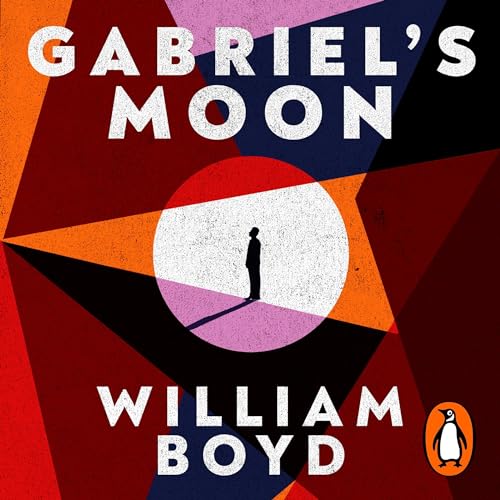
Gabriel’s Moon – William Boyd ventures into George Smiley territory

Boyd’s eighteenth novel expands his collection of espionage stores – along with Restless, Waiting for Sunrise and Solo (his Bond installment).  This time out, we are very much in Le Carre territory; 1960’s Britain and Europe, Soviet machinations, MI6 blundering its upper-class way through a maze of deceptions and counter-deceptions.  Boyd makes excellent work of this all, with vivid settings and interesting personalities.  His conclusion is fittingly tragic and portentous, while leaving plenty of room for possible sequel(s).

Small quibble in that the prose her is sometimes overabundant and studiously colorful.  May well be a gesture toward that of the main character, travel writer Gabriel Dax, who is teased by his controller  (and one time lover) Faith Green for purpling to excess. A bit distracting but tolerable, as there is real wonder and appreciation of the world’s many pleasures.  Dax’s alcohol consumption is another striking aspect, we seem to proceed directly from one cocktail to then next bottle of wine to brandy to the next morning’s pick me up.  How the man remains vertical is a mystery.  Possibly intended as period correctness, (along with the relentless smoking and cover art which recalls title sequences of the early Bond films) but again, a bit distracting.

There’s also a large gap in the story’s wrap-up – Gabriel has learned some facts about the fire which killed his mother (facts we already knew as that event was the novel’s opening scene) and while the explanation has helped his insomnia and angst, for the reader it feels incomplete.  Nor is the fact that his father died in a plane crash in Persia while working for BP.  Given that Gabriel’s older brother Sefton is a bent diplomat and the secrets lurking elsewhere, one must wonder if that death was a cover for more espionage, but Gabriel never seems to imagine that, much less pursue it. Perhaps that too is being saved for future installments?

All in all, a very creditable and enjoyable addition to the genre and to the author’s estimable collection.   

(Oh – sure enough, while fact checking for this summary I happened upon a Wikipedia note characterizing this as the first volume of a planned trilogy, with the second due for publication in 2025.  Definitely something to look forward to.)

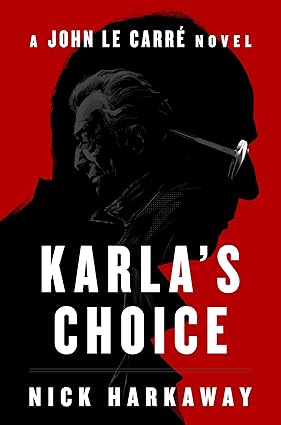
Karla’s Choice, Nick Harkaway

Picked this up less than fully convinced that a John Le Carre novel sans Le Carre was really needed.  Fact it was penned by the master’s son, Nick Harkaway, made it somewhat more promising than the various Ian Fleming-less Bond retreads by unrelated followers (of whom Harkaway is one, the admirable William Boyd another).  Was encouraged before the start by a statement in the Author’s Note that “There were always supposed to be more Smiley books.”  LeCarre’s having graciously left ten years of blank foolscap between The Spy Who Came in From the Cold and Tinker Tailor Soldier Spy also suggested room for this insertion.

From the start, what I found was encouraging, gliding along quite happily to the familiar rhythms and contexts of LeCarre’s world as scored and conducted by Harkaway (who has the benefit of having actually been present and somewhat privy to his father’s creative processes).   A pleasant enough experience, but not eye-opening – until somewhere around 80% of the way through – stop reading here if you don’t want to spoil the experience for yourself…

Just as I’d begun to worry this might be all retread, Susannah, the naive civilian whose cry for help initially set the entire story into motion, despairs at Smiley’s apparent lack of principle and crosses the Iron Curtain into Hungary (at the time a Communist autocracy tightly leashed to the Soviet Union) to commandeer his mission for herself.  Though believable based upon her earlier actions and personal history, this impulsive act nonetheless flips us into another plot entirely, as Smiley and his professionals must improvise in hopes of catching up with her.  Then, just as I’d accepted that and begun to anticipate the excitement it must generate, Harkaway switched form entirely – stopping the clock to preview various character’s future reminiscences on whether Smiley’d had no idea this was coming and was now in totally reactive mode, or had anticipated and accepted Susannah’s action as inevitable and gone with the flow or had, in fact, callously conceived, arranged and ensured such a dangerous act in order to achieve his own ends at the probabl cost of her innocent life.  By dancing a follow-spot rapidly over Smiley’s talent, skill and commitment even as it highlights several canonic characters’ own abilities and relationship to the master, Harkaway makes clear that moral principle, guilt and regret are the true subjects of the novel, assuming LeCarre’s mantle very nicely, thank you. 

Minutes later (in reading time, that is) we’re back into thriller form, watching as George discovers he has been made and is being tailed, and then as this unassuming ‘little man’ deals brilliantly with the challenges (including a car chase with Smiley at the wheel – never thought we’d see that!).  These scenes are virtuosic for both character and author, and from there it is a race to a signature LeCarre finish: bloodshed held off-screen, morality front and center and more than a hint of anticlimax, until Harkaway surgically exposes just what values and choices lay behind the various participants’ actions. Despite the infamous Karla (through-line villain of the entire Smiley oeuvre) having appeared very sparingly and with minimal back story, it turns out that his ‘choice’ is indeed the true point of this novel.  Not to mention a worthy gift to the fans in how it adds color and insight to Le Carre’s own chronologically-later volumes. Very nicely done!

Credit where credit is due:  I read this in e-book form – one of the more benevolent byproducts of our evolving digital hegemony.  An e-book I had borrowed online from a public, i.e. ‘government funded’ (cue the sinister theme music) library – one of those many liberal-culture institutions from which our marginally-elected leaders are currently scrambling to rescue us.  Had downloaded it in moments and for free – another benefit of the ‘mommy state’ imposed upon us by the ‘deep state’ which is now being shredded in favor of absolute free-market fundamentalism. Who knew we had so much to lose?  Anyone with eyes…

Having thus tested the waters and found them delicious, I’ll now be purchasing a hard-copy of Karla’s Choice so as to compensate author and industry for conspiring to make such an entertaining and worthwhile title available.

Kköszönöm mindenkinek – ’Thank you everyone.’

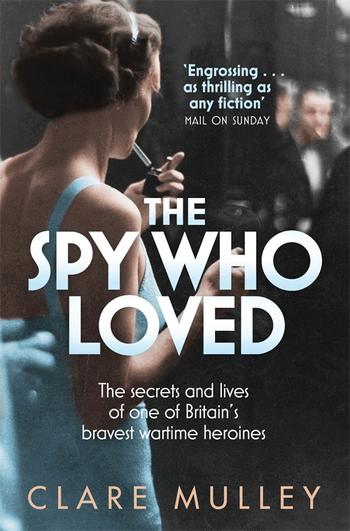
The Spy Who Loved, Clare Mulley

The paperback of this historical biography looks just about as substantial as a copy of Ulysses sitting on the shelf, but at 350 pages it is roughly half as long; is it printed on heavier-than-typical stock perhaps?   Or just buttressed by two Appendices, over thirty pages of attributive notes, a dozen of bibliography, and other supporting material.  Not that the story isn’t substantial, as we follow Christine Granville (nee: Krystyna Janina Skarbek) through the twists, turns, detours and (literal) dead-ends of WWII espionage in a depth of detail which is quite astounding, given that the crucial years of her life were lived in wartime, in secret and under varying names and legends.

Daughter of a dying aristocracy and a nation about to enter the two-stage coma of Nazism and Communism, Christine found purpose and a home of sorts among the secret service and, even more, the partisans, guerillas and Maquis of occupied Europe. For years she dared and dodged, evaded and enabled in ways that clearly contributed to the war effort. That she survived it all is little short of astonishing. When the war ended, however, and the British establishment decided it no longer required her services, she found herself adrift in many ways.  Despite the assistance and loyalty of many comrades, especially those also of Polish origin, she was still struggling to find a place in peacetime when a bit player – a merchant seaman with whom she had struck up a friendship of uncertain intimacy, then left – murdered her in an act of jealous impotence. 

Mulley does a fine job documenting all of this, and has clearly done an enormous effort in the research collating and checking departments.  More than that though, she has depicted the impact of the war from an original viewpoint, with special attention Britain’s taking advantage of Polish patriotism before abruptly abandoning their cause in order to appease Stalin – so he would assist the allies in correcting the damage caused by their earlier appeasement of Hitler…

Nor does the author ignore feminist elements of this story – the unusual degree to which Christine’s father treated her as equal or superior to her older brother, the many ways in which men in authority used her skills and then plied her for her favors, the independent and forward-looking manner in which she withheld or dispensed those favors for her own ends. And her own enjoyment. The tragic way in which what worked in wartime with principled and selfless patriots may have contributed to her death in a peacetime setting peopled by men with far fewer values or scruples. 

A bit slow to start, this slippery-slide through WWII gathers speed, tension and impact right up to its end, the final evening of Skarbec’s life, and more than retains interest through a brief but critical epilogue, where we see how several of the same men who competed for her love and endured disappointment when their efforts were not requited, formed an alliance to protect her memory from the worst tabloid exploitation and prudish disparagement.  That she engendered such loyalty is one more testament to the unique qualities of an extraordinary woman.  Brava.


The Spymaster of Baghdad – A true story of bravery, family and patriotism in the battle against ISIS, Margaret Coker

Coker, a reporter with a long resume in the Middle East and elsewhere, shines a light on how Iraqis (like the citizens of most nations colonized and fought over by the so-called great powers) have borne more of the burdens and demonstrated a greater share of the virtues in our wars than our day-to-day political discourses admit.  Necessary to that, she also provides a cram-course on the sectarianism which fuels every development in Iraq, unfortunately dooming many of them to failure despite all the good intentions in the world.

(Coker is wise enough also, to provide an early digression on how names are commonly-formed and casually-used in the region; not by the given- and sur-names to which Euro-Americans are so used, but suffixes for place of origin  and prefixes that illustrate relationship, with fatherhood and first sons predictably given the same assumption of primacy they occupy in so many traditional cultures.)

The spymaster of the title is one Abu Ali al-Basri.   After opposing Saddam and choosing exile over death, he returns after the US-led invasion, hopeful he can be part of creating a better Iraq, but despite talent, skill and dedication, ends up heading one tiny branch of a Hydra-headed intelligence apparatus that serves more to protect the power bases of its various legislative benefactors than to secure the nation.  When ISIS forms though, the need for real success becomes undeniable and Ali is finally allowed to assemble a small force of serious spies, nicknamed The Falcons.

The al-Sudani family has suffered in its own ways, living in the Shiite near-ghetto of Sadr City, a Saddam-created slum lorded over by Muqtada al-Sadr and his descendants and militias.  Two Sudani sons, Harith and Munaf, join Ali’s Falcons, for very different reasons, but with equal dedication and commitment.

Meanwhile the young Sunni student Abrar al-Kubaisi has lived a privileged life yet still succumbs to the lure of fundamentalism, as so many college-age women and men have succumbed to whatever political trend is ripe at the moment their own desire for a cause is flowering.  She then ends up on the opposite side of the ISIS fight.

It is these players whom Coker follows as their stories converge, diverge and end in various forms of tragedy, as lives are lost, broken or destroyed with alacrity by a culture evolved and divided over centuries.  There are good people here, and good intentions, but no magic wands.   For every bit of progress, it seems, people like Harith sacrifice their lives at alters created by people like Abrar whose twisted morality makes them see horrendous evil for anything but what it is. 

Not a screed for any particular military or political policy, The Spymaster of Baghdad is a dash of ice-water in the face of the notion that outside forces can readily fix any of this (and, incidentally, that keeping US troops forever in Iraq is the way to attempt it).  Nothing new there, of course, but a message which deserves broadcasting, illuminated here from an unfamiliar aspect, and so vitally worth repeating and sharing.

Sometime the real James Bond speaks Arabic.

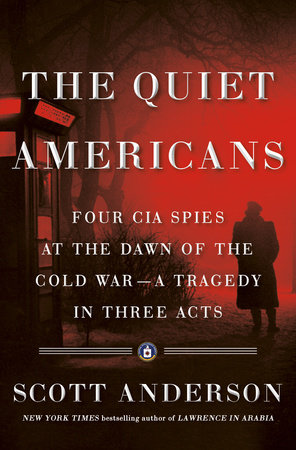
The Quiet Americans: Four CIA Spies at the Dawn of the Cold War – a Tragedy in Three Acts, Scott Anderson

Not sure who thought such a convoluted title was a good idea, but writing and publishing this book certainly is one – a good idea, that is.  In telling the story of how the CIA evolved out of WWII’s OSS, Anderson actually shows us how the Cold War began and how it was – if his account is as valid as it feels – prolonged and its damages increased geometrically by the infighting and maneuvering of a smattering of egotistical self-believers.  Who are not, in fact, the four operatives upon whom Anderson hangs his narrative, but the more famous political operatives – Roosevelt, Stalin, Truman, Hoover (J. Edgar, not Herbert), Eisenhower, Kennedy and perhaps most of all, the Dulles brothers, Allen and John Foster, titular heads of the Agency and the State Department, respectively.

One begins reading in anticipation of spy-craft and derring-do, and while there is some of that, it is far outweighed by the bureaucratic maneuvering – who is put in what job at what moment, by whom, with what instructions and accountability, or lack thereof.  Even more so, who in Washington is using the entire intelligence effort for what purpose of their own – to justify a policy or a budget, to settle a score, to win election (or re-election), to demonstrate the gospel truth of their own worldview and ambition.

John LeCarre’s George Smiley and Karla must be looking on from above with bittersweet satisfaction at having their cynicisms confirmed by Anderson’s skewering of post-war intrigue in Berlin and Eastern Europe as pointless and heartless missions with no hope of success except in justifying the ambitions of higher-ups who neither understand nor care about their human cost.  And all those who protested the Viet Nam War would be similarly reassured by his evisceration of its genesis in pre-war colonialism and failed schemes to prop it up after the war, followed in failure by anti-communism-at-any-cost.  Just as the protesters claimed at the time, what happened in Southeast Asia in the fifties and sixties had little to do with the needs of the Vietnamese people and everything to do with the fortunes of politicians tens of thousands of miles away.

The volume’s Epilogue opens by recounting John Foster Dulles’ admission in 1958 that his rabidly anti-communist reading of so many self-determination movements around the world was utterly mistaken.  And yet that vaunted ‘Domino Theory’ continued to guide US policy in Vietnam for over ten years more, and in other places still seeks to drive it today. 

Thus, where first we expected the ‘Tragedy’ of the title to refer to how its four protagonist’s lives played out, we eventually see that that is only partly the case.  Yes, the good and dedicated Frank Wisner was broken by all the deception and waste of lives, eventually taking his own.  But Ed Lansdale managed a more or less successful life to the age of 79, Michael Burke an almost James Bond-ian series of re-inventions to pass away in the quiet Irish countryside, and Peter Sichel lived till at least 97, becoming the wise and wry elder who apparently provided much of the material for this book.  No, it is to the greater geopolitical tragedy, whose cost is measured not in single digits but in the millions of lives, that is really the subject here.  A cautionary tale for those who seek to understand current events – and one can only hope – for those who seek to guide them.

(There are, for what it’s worth, several other books available about Ed Lansdale; Peter Sichel and Michael Burke have written their own memoirs; and Neil Sheehan’s A Bright Shining Lie bears mention as well, among so many others, for further reading on the themes plumbed here.)