Tag Archives: Current Events

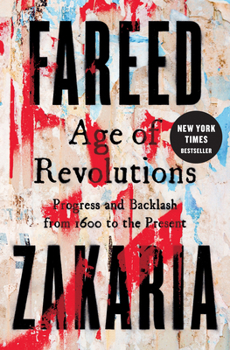
Age of Revolutions – Progress and Backlash from 1600 to the Present

In the historical/political realm, the word ‘revolution’ is commonly applied to a singular event of momentous change. In the realms of physics and mechanics, as Fareed Zakaria reminds us early in this very timely political history, ‘revolution’ means movement of an object or a system around its center, in which any point other than that exact center moves in a circle, initially getting farther away from where it once was but eventually returning to that same point before repeating the cycle.    

With that in mind, the author cogently and persuasively recounts several significant revolutions of the past 500 years, considering each as a cycle driven by some changed circumstances (new knowledge, new inventions, ravaging disease, etc.) and shaped by human choices (often with crucial contributions by extraordinary individuals).  Most importantly, he points out how in each case, the great upheaval we tend to best remember was followed by counter-revolution, a complimentary (in the geometric sense, that is, not the conversational) effort by those not in favor of that revolution’s effects to roll back the cycle of history.

A second crucial point of Zakaria’s is visible in his choice of ‘revolutions’ on which to focus: not only the political (England’s supposedly ‘Glorious Revolution,’ France’s admittedly horrific one) but also technological, economic and social revolutions.  Innovations in navigation and ship building lead to wider trade which brings different cultures into contact, at the same time it finances urbanization and thus greater education and innovation.  Industrialization creates new occupations and allows leisure for intellectual pursuits while also allowing wealth to be generated with less reliance on slavery, conquest or serfdom.  The printing press disseminates knowledge faster and wider than ever before, fostering ideals of personal choice and expectations that government should be a protector of freedom rather than an instrument of domination.  Paper and print in turn are overtaken by an electronic information revolution leading – well, we’re not yet sure where this one is taking us.

Less bloody than overt political ‘Revolutions’, it is arguably these knowledge revolutions which played the greatest role in enabling most humans today to live healthier, more comfortable and perhaps more satisfying lives than any who came before us, even as they present our greatest challenges for the future.

That’s the bulk of the book as finished in late 2023, and it’s an engrossing and valuable analysis.  Given how long it takes for even a veteran author’s work to navigate the publishing gauntlet, though, Zakaria has added an Afterword composed in the wake of Mr. Trump’s 2025 re-ascent to the highest office in our land. 

This crucial update begins by recounting China’s ‘Cultural Revolution’(1966-1976), a backward-facing assault on what Mao perceived as the threat of modernization and ‘liberal’ thought among his subjects. Tellingly, the excesses and destruction of Mao’s minions soon led to their own counterrevolution; an opening up and partial shift toward capitalism and entrepreneurism resulting in tremendous economic progress for the people of the PRC (though far less on social fronts). This history serves as a lamp under which Zakaria examines the USA’s current leadership and direction, bringing to mind another observation about ‘revolutions’ in classical mechanics: that when a revolving object or system is simultaneously moving along a larger axis – a wheel, say, revolving around its axle as a cart moves along a road, or humankind’s cycle of innovation/reaction/regression/innovation as it moves along the axis of time, for another – what results is not an endless repetition of the same events, but a sine curve of events rising up and then sinking down before beginning to rise up again. At any given moment, in fact, some specific parts of the revolving system are moving ‘forward,’ others rising up or dropping down and some are even, for an equal moment, moving backward, despite the entire system continuing its overall progress along its axis of road or time.

Do not mistake one moment’s regression for permanence, Zakaria’s text reminds.  Humanity throughout known history has been incessantly creative and innovative in seeking betterment.  For all recorded history, despite individual points upon civilization’s wheel moving upward, downward or backward, the overall motion of us all has been forward, in the direction of greater equality, greater freedom and greater physical wellbeing for more and  more of us.  If we can avoid the greatest catastrophe of total self-destruction, there is every reason to believe that future revolutions of time’s wheel will see us our fitful history continuing to move in those directions.

A reassuring conclusion in this very daunting moment…

P. S.: E Unum Pluribus is a new novel that considers where our current divisiveness may lead in the near term, and how even tragic events can spawn possibilities for better futures. It is currently being serialized at robinandrew.net and you can be among the first to read its opening pages there in the post titled ‘E Unum Pluribus.’

If you like what you read here or at robinandrew.net, please share any posts as widely as possible – and consider subscribing: it’s totally free!
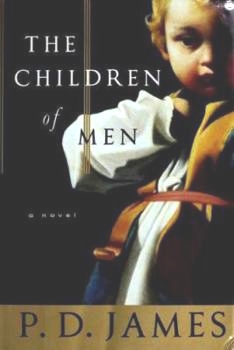
The Children of Men, P. D. James

A Timely Commentary on current events – written nearly thirty-five years ago!

Grabbed this off a neighborhood free-books shelf on basis of the author’s familiar name and work; was surprised to find in place of the expected tea and class-system detective story a speculative political fiction written decades ago yet uncannily timely in its themes.  James* has always been a reliable commentor on the British government and governing class – she spent thirty years in the civil service after all (or rather, before being able to write all her more familiar titles) – but that has previously seemed incidental to the solving of mysteries.  Here, it is the main point.

Though first published in 1992, the novel is set in 2021 with a sci-fi sounding premise – that 25 years earlier it had become unavoidably obvious that all human males in the world had become infertile.  With the birth rate crashing in months to absolute zero, all of humanity was suddenly forced to comprehend the existential doom of universal aging, disability and death without the consolation of watching younger generations grow to replace them.  We are then given to understand how this resulted in apathy and lawlessness, perfect conditions for the rise of a fascistic strongman named ‘Xan’ (reference to Alexander ‘The Great,’ I’d guess).  Our guide through what follows is Dr. Theodore (Theo) Faron, an Oxford historian with a mythologically-tragic reason for retreating from public life but who was also a childhood friend of Xan and, until recently, an advisor to him in his autocratic reign.  When Theo is approached by a band of laughably incompetent would-be revolutionaries, the first half of the novel is set in motion. The second half (spoiler alert) is brought about by the discovery that Julian, a (female, despite the name) member of that conspiracy for whom Theo immediately begins to develop romantic feelings, is pregnant, a monumental event which suggests she and her child have the potential to save humanity from its dire fate.  From that development James builds a compelling thriller addressing moral questions of ends and means, guilt and forgiveness, God or not God and the temptation which even the most honorable person may experience when offered the chance to exercise power over others for what they believe to be good or necessary ends.

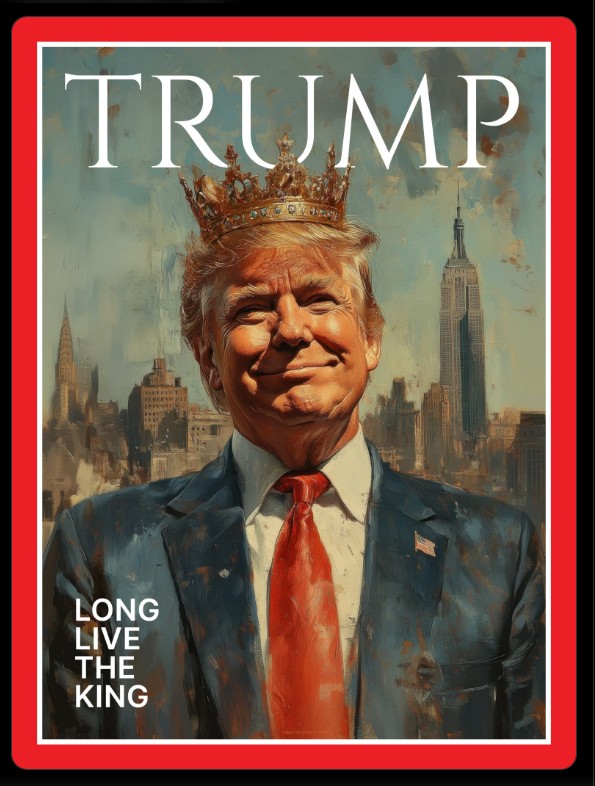
Xan’s resemblance to the current U. S. President is striking, and the arguments for his usurpation of total control over English life track almost perfectly with MAGA’s claims of necessity: societal disorder, citizens lost in despair and apathy, crises requiring responses more immediate than any deliberative process could manage, the purportedly inherent weakness and fecklessness of all so-called democratic processes.  The effects too, are symmetrical – arbitrary laws and judgement, scapegoating of immigrants and other ‘others,’ curtailment of individuals’ rights under brutal policing and cruel incarceration and an invasive security state to ensure those who have seized power get to hold it indefinitely.

All of this, James handles with intelligence and generosity (if sometimes overmuch time spent on the exact physiognomy of a face, niceties of vegetation, quality of sunlight or sky and the furnishings of various interiors; the one aspect in which the novel feels rooted in the author’s generation and previous genre).  Theo is a modest and honorable foil for Xan, who is himself allowed sufficient rope to make a moral case for his usurpation.  Their ultimate confrontation is well-scripted if a bit forced and the final decision which results from it is of Sophoclean magnitude and weight.

Among many impressively crafted moments is one where Theo, acting out of necessity to secure resources for the imminent birth of Julian’s child, discovers in himself the potential to enjoy violating norms and forcing others to his will, even to the edge of brutality.  Not only a worthy observation on human nature, this new self-knowledge plants a seed which allows the novel’s final moments and message to ring true.

Schooled by a difficult life, James may have honed her skills in the trenches of genre fiction, but The Children of Men affirms her a true literary artist.  It deserves to be revisited for that reason alone, and especially so in this moment, when its fictional time period has arrived and is turning out strikingly similarly, in some important respects, to what she imagined nearly thirty five years before.

*Officially: Phyllis Dorothy James White, Baroness James of Holland Park!

Note: There is also a somewhat loose film adaption by the same title, credited to five writers and directed by Alfonso Cuaron (Harry Potter and the Prisoner of Azkaban) with Clive Owen portraying Theo.  The film received critical acclaim, numerous award nominations and a few wins, as well as positions on various “Top” lists, but did poorly at the box office).

Feel free to share this post if you like.

If you appreciate what you find on this site, please subscribe – it’s totally free!

One Ring to Rule Them All – The Breathtaking Cynicism (and Naivete) of Trump v. United States

It is over a year since the Supreme Court issued their 6-3 ruling on Docket no. 23-939, Donald J. Trump versus the United States of America, which ruling granted the President immunity from Federal prosecution for virtually any acts while in office.

No such immunity having been written in the Constitution, their reasoning (originalism be damned) seems to have been that the fear of prosecution would be an undue distraction from the office’s duties and that the fear of such prosecution would impede a President from taking actions he otherwise believed necessary or justified. 

This ruling was cynical first in that it assumed a person who had sought and won the highest office in the land would value his own fate (political, financial or otherwise) more highly than the proper execution of that office.   Sadly, in the opinion of some observers, they have already been proven correct on that count.

The ruling was cynical second in assuming that even such a self-interested person, upon achieving the office whose responsibilities include selecting the head of its Department of Justice would not have sufficient faith in his appointees and the legal system they administer to rely upon that system to issue proper verdicts in the event he was subjected to improper prosecution. In this, the Court disregarded the basic conservative rationale that the possibility of prosecution provides a necessary and effective deterrent to illegal behavior. In this respect, their cynicism has freed the incumbent to act with total disregard of credible legal justification.

Third, and most cynical of all, is that the Justices did not themselves have sufficient faith in the American legal system, of which they are the figurehead, to use their position, prestige and ruling to assure the President that he could rely upon that system for protection.  Every other person in every U. S. jurisdiction lives every day of their lives knowing they could be prosecuted for something of which they do not believe they are guilty, and every one of us has no choice but to trust in the legal system to protect us.  And yet, our Supreme Court deemed it unwise to ask the holder of the highest public trust to do the same?  Breathtakingly cynical, and shameful.

Those thoughts were on my mind at the time the ruling came out, and I considered posting them, but sadly, did not get around to it.  Now, as Mr. Trump’s second term reveals its true form, it is clear that ruling was not only cynical, but at the same time equally naive.  By freeing the President from any accountability other than impeachment (the highest hurdle in the legal system and one which has not once taken effect, in nearly 250 years), the court’s ruling has encouraged him to act as he pleases, including to persecute with impunity anyone he chooses.

Moreover, in doing so while also leaving in place his virtually unlimited power to pardon, the Court allows him to hand a ‘Get out of Jail Free’ card to anyone who does his bidding.  Far from protecting the nation, this greatly encourages improper acts of any sort by anyone who believes they can maintain the President’s favor.  In the few short months of this administration, we can already see this effect at work; that the Court’s majority did not foresee this outcome but instead enabled and encouraged it, exhibits breathtaking naivete, at the least. 

The result of these twin privileges, one clear in our Constitution and the other added to it by the recent decision, is that the chief executive may now act out his every whim, without fear of legal restraint for him or his followers.

If this was the ‘original intent’ of the authors of the Constitution, then that document is not at all what generations of us have been taught to believe it was.  If that was not the original intent, then shame be on the authors of the Court’s opinion in the case so very aptly named: Donald J. Trump versus the United States.

Autocracy Now!? – a personal opinion

Following Mr. Trump’s second ascension to the Oval Office, Op Ed pages were flush with pundit pieces pondering whether our nation might be slipping toward autocracy.

Now, less than 10% thru the man’s political resurrection, the verdict seems clear. Since January 20th, 2025, we’ve:

Watched Mr. Trump invite elected leaders of sovereign nations to the White House on pretense of official business only to then enact staged humiliations (complete with laughably inaccurate accusations despite his having the entire resources of the Federal Government at his disposal to provide accurate information), all to generate “…great television…” in his perpetual self-promotion campaign.

Cringed at his lazy and feckless use of social media (“Vladimir, STOP!”), to ‘negotiate’ international disputes on which turn the lives and fates of millions, no doubt provoking scathing contempt among the hardened dictators who simply ignore his maunderings as they go about their bloody business.

Witnessed him elevate minor entertainment personalities to positions of real power despite their lack of relevant experience, and begun to see the damage their recklessness is inflicting both at home and abroad.

Cringed as his craven ‘spokespersons’ dodge, divert and dissemble to suggest his public pronouncements do not mean what their words plainly say and that reality is whatever their Don says it is, rather than what we perceive with our own eyes, ears and reason.

Seen him predicate foreign policy not on the basis of any lasting principle, nor of the Nation’s interests, but of his own need to appear ‘strong’ and to ingratiate himself with the most brutal and paternalistic figures on the world stage, currying their favor and reveling in the pomp and praise and gilded royal treatment they gladly dispense as a cheap price for neutering our nation’s hard-won soft power.

Observed him repurposing the Justice Department into a tool for personal vendetta, while neutering the rule of law wherever else it suits him through pardons, elimination of oversight and simply ignoring any statute, decision, precedent or custom he does not choose to follow.

In short, the question those Op Eds asked has already been answered: As of this writing and for all practical purposes, governance of the United States is no longer enacted by Congress, nor administered by the various Federal agencies and offices, nor constrained by the rule of law.

Those functions have, instead, been subverted to the whims of a single person whose overriding goal is to elevate his self-image above even the office of the Presidency while simultaneously feeding his obsessive greed and coagulating power in his name alone.

The autocracy is here, and it is U.S.

(The current questions are: how long will it last, and how badly will it end?)