Category Archives: Uncategorized

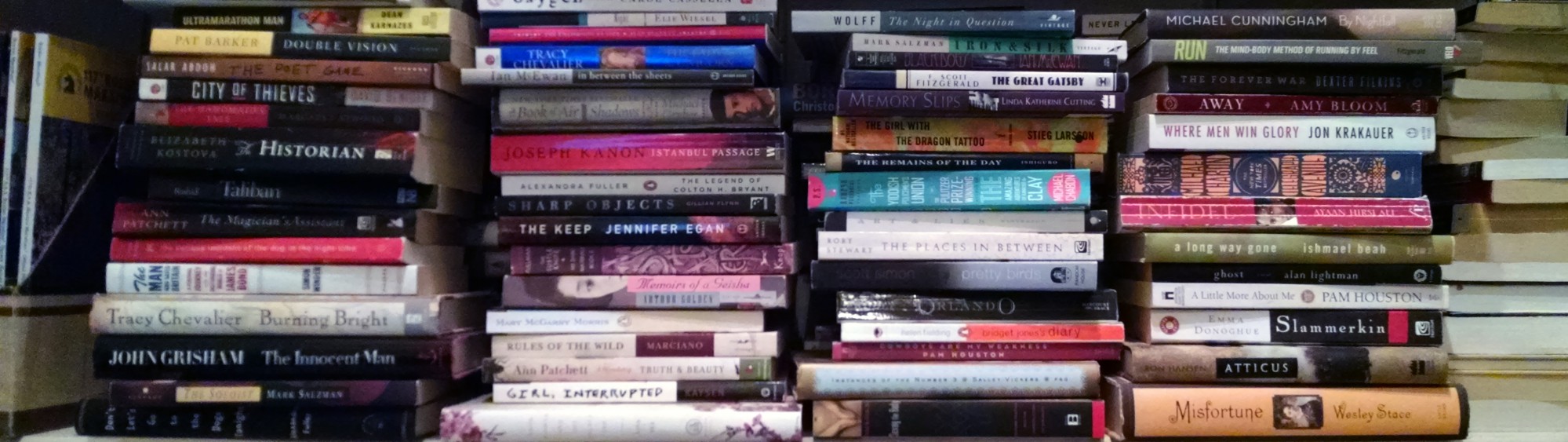
The Places In Between, Rory Stewart

This remarkable journey – walking across most of Afghanistan shortly after the U.S. invasion – calls to mind the tales of early Brits who first introduced the folks back home to the Middle East, Africa and Asia. It makes clear the discrepancy between our brash intent to bestow democracy and pluralism upon the Afghan people, and those peoples’ ingrained sense of their own culture and values, which have been thousands of years in the making.

Stewart writes in a modest and fluid manner which underplays the risks of his journey; if not for his apparently-excellent language skills, he would almost certainly have been killed any number of times, so the book works as well as drama as it does as personal memoir.  It is also an effective rebuttal to the notion that any amount of outside ( read ‘U. S.’) force will mold these mountain dwellers to a Western-style pluralistic democratic society in any time frame acceptable to the political interests that have put us there.  His knowledge of the region’s culture and history (which, by the way, is longer than that of our own nation) reminds one that the residents have their own traditions to honor and continue.  They are not waiting around for us to remake them in our image, thank you very much.

Deserves to  become a classic of twentieth century exploration, and a critical puzzle-piece to the history of post 9-11 American adventurism .


Room, Emma Donoghue

Room sets off on a Movie-of-the-Week premise – five-year old Jack has lived his entire life in a single room, victim along with his mom (Ma) of a tabloid kidnapping/imprisonment – and takes it farther, into Ellie Wiesel territory; human-kind’s capacity for adaptation, the saving power of love and the forces shaping one’s perception and world view. In doing so, it goes way beyond genre and expectation, offering insights relevant well-beyond the tiny population who’ve suffered any similar fates. Donoghue’s hand is, for the most part, light, as we sense Ma’s desperate coping mechanisms only thru Jack’s child-centric perceptions.  Donoghue allows us to feel the desperation of their escape attempt (the least believable element, until the Opra-esque TV interview which follows it) and the awkwardness of reunion with others after 7 years in their own little world. The novel’s intent at brevity is evident in some after-escape segments, but all in all that is a blessing, as Jack’s first-person voice can be a bit tiresome.

The final beats reinforce the author’s strongest theme – that for Jack their tiny  room was not a prison, but home, and in some ways a bit of a paradise: Ma all to himself 24/7/365, safe and filled with all he had ever known – and nearly all he ever wanted.  By making it his only world, Ma protected her baby, but at the same time, prevented him from understanding his true fate, and so from growing beyond its four, very limiting, walls

A useful analogy, and a keeper of a tale.

No More ‘Run of the Mill’ Workouts!

It’s winter again (at least in this northern hemisphere). That wonderful time of the year when many a runner’s enthusiasm has to be dragged out of the hibernation cave by its blackened toenails. Right on schedule, magazines and websites are suggesting we learn to live with boring treadmill workouts. Well, boring is boring, and life is short, so here’s the Follow-dog’s recipe for a treadmill workout that will hold your attention.

Ingredients – one treadmill, one runner, said runner’s preferred music, one heart rate monitor (that doesn’t require your hands on the treadmill grips), one water bottle and one sweatband – of the functional type, ‘cause you’re gonna need it.

Warning: As with any exercise, you gotta do what is appropriate for your body, your fitness, your health. Don’t take my work for what you can do; make your own choices; work up to high exertion levels gradually and only when you know you can handle them. In doubt? Talk to a doctor, trainer or other professional, which I am not.

The recipe – set the mill to at least 1% incline and start slow, with the belt moving just fast enough for a running stride. (Or start at a walk and work up to a run, whatever works for you).

After one to two minutes, speed up a notch and run at that steady pace. After two minutes, speed up another notch and hold that pace. Repeat as many times as it takes to arrive at your own 5K pace and hold that for two minutes. Choose your starting pace and notches so you arrive at that 5K pace about fifteen minutes in, or however long it takes your body to be truly warmed-up and muscles fully-loose, because this is where it gets real.

After two minute at 5K pace, speed the mill up another notch (I progress mostly in 30 second/mile notches, but there’s no magic to that). Do two minutes at that pace, then throttle up another notch. Rinse and repeat…

When (not if) you reach the point where you cannot keep raising the pace without a break, hop on the rails for fifteen to thirty seconds while you throttle the mill down to a comfortable long-run pace, then hop back on for the remainder of two minutes. Watch how quickly your heart rate drops! After that rest, ramp the mill up to one notch higher than your last interval and hold that pace for two minutes, then rest and increase again. Check in with your heart rate at the end of each interval and rest to watch how it rises and falls with intensity.

When (not if) you reach a pace you can’t hold for two minutes, challenge yourself to hold it for one and a half. Then for one.

When (not if) you get to a pace you can only hold for 30 seconds, even with two minute rests between intervals, start working your way back, slowing the pace a notch for each interval, and increasing the duration back to one minute and eventually two. When you get back down paces you can easily hold for two minutes with rests between, it’s time for a cool-down as you meditate upon how much easier a given pace felt when you laddered-back to it than it felt when were first laddering-up to it.

Variation A, if your warm-weather running includes hills: once you get the pace back down to where you can hold two minute intervals, start laddering the incline up, dropping the pace when you must, till you get to such steep incline/slow pace that running is less efficient than walking.

Variation B, if your summer ambitions include trail runs with lots of vertical: do a similar ladder of intervals, but set the mill at maximum incline (15% for most) for the slow start, then as you ladder up the pace, notch the incline down so your 5K segment is as at maybe 2 or 2 1/2%.

The goal – to use the treadmill’s most maddening attribute – the ability to maintain a constant and known pace – to give yourself a continually changing challenge, while using the clock to break the time into segments too short for boredom to set in, and the heart monitor to learn about your body’s performance and give the complaining-brain something else to focus on.

“Oh the weather outside is frightful, but this treadmill’s so delightful!”

(OK, maybe that’s going too far…)

The Way of the World, David Franklin

Browsing a Vegas Goodwill shop for some throw-away layers to wear at the cold early-morning start of a marathon, decided to pick up a lightweight travel–read as well, and this slim volume peeped out from among the shelves and shelves of generic cops and lovers. In 239 highly-readable pages Franklin traces human-kind’s progression from purely survival-driven tribalism to today’s globe-girdling, technology-dependent, relatively-rational and somewhat-open-minded civilization, postulating 8 major steps that got us here:

Becoming Human; Inventing Civilization; Developing a Conscience; Seeking a Lasting Peace; Achieving Rationality; Uniting the Planet; Releasing Nature’s Energies; and Ruling Ourselves

Echoing others who have called the Twentieth ‘The American Century,’ he presents a case that the USA’s eminence is due not to any inherent moral superiority but simply to the lucky accidents that allow it to embody humanity’s most progressive (most progressive to date, he might caution) traits and achievements. With that as back ground, he then speculates on what the next century might hold for our blue, white, green and brown orb. Nearly twenty years in on that adventure now, it is interesting to note that Franklin wrote here in 1998 of the threat posed by the most-radical factions in Islamic cultures (and fundamentalism in general), rightly characterizing it as a rejection of rationalism; a willful step backward on our communal journey. Clear evidence, if any were needed, against those who imply that those forces only became visible on 9/11, and a prescient analysis of our current big picture.

Most striking of Franklin’s observations are those which connect over the centuries – ancient Greek thoughts and actions which seem eerily apt descriptions of contemporary ones; and Rome’s struggle to survive, which appears so similar to some scenarios of our own system’s woes. Of course this author is not the first to make such connections, as he himself points out.

Ultimately optimistic in its view of a species whose intelligence has, for six thousand years, led to the gradual but unmistakable improvement of most persons’ lives, this is also a cautionary tale – progress is neither continual nor assured. But, the record suggests that it is possible, and should we continue to avoid self-destruction, any periods of stagnation or back-sliding are likely to be followed by eras of further progress.

A comforting outlook that extends past any one moment of circumstance; the very exemplar of why History is worth studying.

Unlike the second-hand hoodie I purchased that morning and tossed onto a pile near the start line outside St. George, this book is staying on my shelf.

Simple is Good

A few of the reasons that otherwise-normal human beings start to run:

“Mirror, mirror on the wall…” – wait a minute; who is that person in my mirror?!

Reminiscing about that college (or high school) (or junior-high-school-J-V) sports experience

Oh, *@##**! – I just spent how much on new skis? Time to get in shape for next ski season

Oh, *@##**! – I just spent how much on airfare and hotel? Time to get in shape for this vacation

A friend asks you to keep them company while they train (my personal gateway drug)

Seeing someone you love finish an event, and seeing the expression on their face

Hearing:

…Bruce Springsteen’s ‘Glory Days’ after you spent last evening binge-watching old TV shows while eating trash-food.

…The Rolling Stones’ ‘Start Me Up’ while watching a friend toe the starting line for a local 5K

…Melissa Etheridge’s ‘I Run For You’ – anytime

Seeing the video of Meb Keflezighi winning Boston 2014, then wrapped in the flag while smiling like a puppy in a pile of tennis balls


And once you do run that first event, thinking:

That was easier than I thought – I’m gonna do it again

That was tougher than I thought – I’m gonna do it again, but better

That totally kicked my butt – now it’s my turn to kick back!


But why, years and miles later, are we still running?

Because any day now, we might be forced to stop. And when that time comes, we will miss it. So as long as we can, we do (which seems like a pretty good summation of LIFE, by the way).

Not as often as someone else does. Not as far (no hundred milers for these legs!). And definitely not as fast – hence the Mid-Pack Runner label on this blog.

But we do run and we will run because mobility is a gift, breathing in fresh air is a gift, freeing our brains for a short time of all the complications and frustrations of the rest of the world is a gift, and finding we have something in common with all those younger/faster/more-graceful beings out there, is a gift.

If you run, you are A Runner. If you are A Runner, you run.

Running is simple.

Simple is Good.

Vexation Lullaby, Justin Tussing

Wonderful surprise; a rock-n-roll novel that feels true and real while transcending its setting and subject to reveal real thought and humanity, rising beyond the stereotypes and neuroses.

As much as I enjoyed the dissolute rock-star Jimmy Cross – skillfully complexified by Tussing – and the protagonist Peter Silver, it is the exploration of obsessive fan Arthur Pennyman (‘Everyman’?) which jolts this out of genre, as he gains a love interest and a life. Or perhaps it is really the women – Arthur’s Rosslyn, Peter’s Maya and Jimmy’s Judith – who humanize the men and the novel. In any case, it is the relationships and dynamics that surprise and reward here, not the drunken debauchery, which comes across mostly as habit and self-medication rather than joyful or even truly sordid.

A human and humane story set in a milieu not typically known for either, spun out with a sure hand, even down to Pennyman’s obsession with footnoting.

(Footnote – I look forward to checking out ‘The Best People in the World’ Tussing’s earlier novel, which is listed as winner of a Ken Kesey Award)

And the Beat Goes On…

Plenty of runners use a GPS watch, and plenty of those offer heart-rate monitoring. As a mid-pack runner, I didn’t give it much attention for years, but lately I’ve found that, even when not using it as a primary guide for training and progress, this data offers a window into what’s going on inside our bodies as we run.

The most practical info I’ve gotten so far is about warming up. Over time I’ve noticed that if I just lace up and start running, even at a very easy pace, my heart ramps up quickly to a rate that usually comes with a full-on sprint. If I keep running, it takes quite a while to settle down to a normal cruising rate, which is fatiguing and seems like it must waste energy. If, on the other hand, I stop running for even a little while, the rate drops down quickly and when I start up again it settles right into normal cruising range. I can’t speak to the exact cause here, but what it feels like is that, to run efficiently, my body needs to adjust its internal settings and biochemical processes from what they are in lighter activity. When I jump right in, the machine is trying to put out high power while still set to ‘idle,’ and that over-work makes it take longer to reset itself. Signaling the body that an effort is coming by just a little bit of running, and then allowing it a brief pause, provides time for biology to catch up with intent

With that info, I’ve been trying a new warm-up on days when I’m aiming for my best performance. Instead of just starting slow and increasing speed as I feel more loose, I alternate a minute or two of running with a similar period of walking around, then run some more, then walk, and so on. Over ten or fifteen minutes, I work those short spurts up from very gentle to almost a sprint. None of that is enough to drain reserves or feel fatigue, but when I start the day’s real work all the internal dials and knobs are on their ‘RUN’ settings and I can put out whatever level of effort is desired at a reasonable heart rate, not the frantic over-revving I’d get from a cold-start. I used that strategy before a recent 5-K and had a really satisfying run, so I’m gonna keep at it.

Another thing I’ve noticed: as a long run goes on, my heart rate slowly goes up, even though I’m holding the same pace (or, more likely, slowing down!). In other words, the longer I run, the higher the heart rate for any given pace. Again, I’m no physiologist, so I can’t say exactly why that is, and I haven’t figured out how to make use of it, but it’s definitely interesting.

Each body is unique and so is each person’s heart rate profile. There are tables out there that say what the resting and exercising rate is likely to be for a certain age (rates generally decrease with age) but they may not apply to you. I happen to be a smallish person and my heart rates run considerably higher than the tables indicate for my age – I call it hummingbird syndrome. To get the most out of any heart rate monitoring, follow it long enough and frequently enough to have a good idea of your own individual resting range, steady-state-running range and high-exertion or maximum range.

(Besides, checking heart rate now and then is a useful way to get your mind off of how hard you’re is working and sweating!).

And the beat goes on…

What Can Go Wrong, Will. (Part I)

The New York City Marathon is one of the so-called Majors – six big events in famous locales that some runners aim to bag. Having grown up in the greater NYC area (on ‘Lawn-Guy-Land,’ as our loving offspring tell me I still pronounce it) I toyed with the idea, but not seriously, until our eldest son moved to Harlem and offered me a free bed (actually a small rectangle of floor, but hey, I expect Pheidippides slept on the ground the night before his big run…), so in late 2018 I sent in my application. The lottery for open entries was formidable, with 117,708 applications for 10,510 available slots – a 1-out-of-11 chance – but I got lucky.

I arrived at my Airbnb two days ahead (having allowed for potential winter travel delays, a lesson I learned several years ago when I had to literally run the streets of Boston to reach the expo as security was shutting the doors and volunteers packing away unclaimed bibs and packets). That left Saturday for touring with Owen and Sunday for a gentle shake-out run, a carbo load dinner and laying out my clothes and gear for the early start. I think I left the apartment at 3:30 AM, for a 10:30 wave gun, but I could be wrong, those hours are a blur…

Anyway, after a long cold wait, helped immensely by the coffee, fleece beanies, bagels and other treats TCS and Dunkin Donuts so generously provided, we set off. Which is when the ‘ugh’ started, as I discovered I’d somehow gotten my GPS set up so that instead of recording each mile as a lap and letting me know what pace I’d run it, the thing was cycling every 1.61 miles instead.

That may not seem like much, but when you’ve trained for years by pace, it’s an important tool to tell a stressed-out brain when it’s OK to maintain cruising speed, and when it’s time to suck it up and work a bit harder. Now, instead of instantly knowing I’d just completed that last mile in, say 9:26, I was faced with long division of times: quick, what’s 14 minutes and 31 seconds divided by 1.61, anybody? Don’t all raise your hands at once, I know mine’re in my lap. What’s the difference in pace between 15:11/1.61 and 14.31/1.61? Beats me, Prof, can we go to the pub now?

Another thing about NYCM, is the field size, over 50,000 runners. Even with wave starts grouped by expected pace, that means a crowded course and constant pace changes: speed up to get around someone before the slot closes, then slow down to wait for an opening to get around the next knot. Comparing my starting place with my finishing place, it appears I passed nearly 4400 runners along the way – not because I was fast, I’m not – but just because every day is a new day for every runner. In any case, with that many bodies on that much real estate, settling into a smooth efficient pace was out of the question.

About the time I was accepting those two distractions, I reached for the snack-baggie I carry on long runs, full of electrolyte capsules and a few Ibuprofen. I prefer to carry water rather than electrolyte drink; the better to wash down the gels and chews I use for fueling. Also because I’d rather pour plain H2O over my head and neck when it gets hot than Powerade or Propel!  In any case, when I reached for the baggie, I found I’d brought along an identical one, containing instead, the daily vitamins I’d counted out for the trip…so goodbye regular electrolyte hits.

The best laid plans, they say, are the most fragile (do they say that? I think they should. I’m gonna start saying it…), and at that point I lost control of pace, nutrition and incentive. Hopes of a good time were replaced by simply finishing, especially when we turned north onto First Avenue, eerily clear of its perpetual traffic snarl, and could look almost three miles straight ahead to the Bronx, and see for ourselves that up–town is not  flat-bush.

All’s well that ends well, though; I was able to finish the run and enjoy again the thrill of completing something which, for most of my life, I could never have imagined even attempting. Lessons learned? Be even more careful about checking gear the night before (maybe two different types of snack-baggie?) and think carefully before entering events with more than 1000 starters per mile: leave the broken-field running to the NFL, if you ‘re a mid-pack-runner and hope to find your ‘zone’.

BTW, there was an unexpected pay-off: that slower pace meant my legs felt better the next day than after any other marathon I’ve run. Staying in a sixth- floor walk-up to avoid NYC hotel prices? No Problem!

Thank you New York City Marathon, first responders and citizens. Thank you TCS for sponsoring a great event, and thank our lucky stars for every day we can run, no matter what goes sideways.

Cheers,

The Death of Politics, Peter Wehner

Subtitled ‘How to Heal our Frayed Republic After Trump,’ this comes from a former speechwriter to Ronald Reagan, protégé of Wm. Bennet and official in both Bush administrations.  Credentials which would have made him a credible conservative and Republican in earlier years, but not today, as he would likely be labeled a RINO for calling out the willfully-ignorant behavior of the current administration and its enablers. Call it out he does though, beginning with a brief history of the term ‘politics’ (the affairs of the City, to the ancient Greeks) and progressing to analyze what has led to such contempt for the actual hard work of governing and for those persons who commit themselves to an honest effort to get it right. The ‘death’ to which the title refers is more an assassination, by those who’ve given up hope of getting anything right through diligence and have turned instead to destruction, or who’ve seized on past dysfunction as an opportunity to advance for their own agendas/celebrity through claiming to hold the magic wand that will make it all better, effortlessly.

Wehner presents himself also as a Christian, and includes a chapter on Politics and Faith, which will probably prevent the loudest current voices in that realm from hearing his arguments either, as he has no truck with their support for Trump. Religion is, in the author’s view, a necessary component of a decent life and an integral basis for ‘Politics’ with a capital ‘P.’ Agree or disagree with that (I disagree…) but it is refreshing to hear one of such beliefs who is not fooled by Trump’s charade of piety for the sake of votes.

All that goes down very well with this reader; Wehner seems knowledgeable and reasonable (except his defense of the invasion of Iraq, but that is more of an afterthought, something he seems to feel needs defense for sake of his overall credibility).  Unfortunately though, his prescription for ‘healing’ the situation is minimal; basically an exhortation for us all to be more rational, more committed and to work harder. There is precious little specific advice on how to get the nearly-half of the populace that voted for and still supports Trump to change their behavior. Except perhaps to wait out the generational shift which is in progress, until enough of us old white males have died off to allow the rest of you to return the nation to some level of reason and endeavor – if it survives the wait.

Remarkable Creatures, Tracy Chevalier

This volume extends Chevalier’s genre: novelized accounts of moments in cultural history, told not through the typical male icons we are used to hearing so much about, but from the perspective of women who participated in ways that have not yet been given the same recognition.  In this case the focus is on  Mary Anning and Elizabeth Philpot, whose excavation of fossils along the beaches around Lyme Regis, England, helped spawn the field of paleontology and with it, our modern understandings of evolution, zoology and biology.  This the author does with grace and generosity, if somewhat of a Hallmark Channel/young adult vibe.

The tale is told in alternating first person narratives, with Annie’s broken grammar the main indicator of who is speaking as each section begins.  Despite the intimacy of the first person, one never feels a visceral connection with either woman, likely due to the formality and reticence which characterize their era (the early- to mid-nineteenth century). Yes, their romantic disappointments are addressed, but there is little reflection or revelation, Chevalier’s concentration is very much on the science and sociology of the story, and it is there, in the women’s interactions with the men who rule those spheres, that more heat is produced. Anning’s loss of repute for being ‘on beach’ with a man, Philpot’s need to secure a male escort for any public errand in London, these are clear and impactful; a woman’s life was in large-part a prison, and when gender did not suffice to complete its enclosure, then drudgery did, witness Anne’s mother, Molly Anning, or Philpot’s servant, Bessy.  It is so telling that the novel’s high points of suspense and drama are Philpot’s unescorted excursion to overhear a lecture (she must hide on a back stair to do so), and her later boldness in approaching the Geological Society, even with her young nephew as escort. While a couple of the ‘scientists’ show nascent traces of open-mindedness, the men in this story are by and large smug, self-satisfied and uninterested in the world around them, except for their narrow spheres of ‘expertise’. The most interesting of them, Mary’s Dad and Elizabeth’s nephew, are only minor players.

This, in retrospect, is the most important message of the novel; not what these two intelligent and driven women discovered, but what they had to overcome to do so, and then to attain even modest recognition in their lifetimes. Remarkable Creatures is, in effect, a prison-break story; The Great Escape for women imprisoned by custom, manners and gender. Bittersweet, as it must be, but very well worth the telling and remembering.