Author Archives: robinandrew0804

Unknown's avatar

About robinandrew0804

Robin Andrew is my pen name; I’m a runner, a writer, and a parent, from a small town in central Colorado. As a youngster, my biggest athletic aspiration was to not be the last person picked when teams were chosen for games. Since taking up running for stress relief (right about the time our kids entered their teen years - go figure) and fun, I’ve run fifteen marathons and dozens of other events, on both pavement and trails. This site is my way of sharing the joy and sense of accomplishment I’ve found in simply putting feet into motion, plus a few other bits and pieces of what I find interesting and worth caring about.

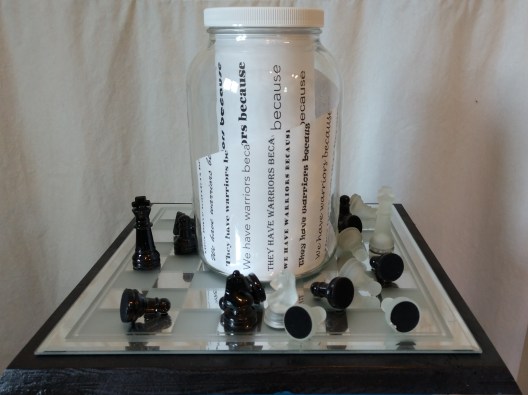
FREEDOM

FINAL

FREEDOM

Digital Image, Robin Andrew, 2019

A World War II marking on a building in London serves as background for an idea which is much easier to believe in and defend when it is narrowly construed.

The Legend of Coulter H. Bryant, Alexandra Fuller

A legend in structure and voice, this bittersweet volume recounting the unfairly-short life of one Wyoming cowboy/oil-hand has the added virtue of being true.

Bittersweet it is, in how tightly Bryant’s great assets – humor, modesty, caring, headstrong eagerness – are tied to his less-practical qualities – impatience and impulsiveness, difficulty with book learning, and a general unwillingness to make careful preparation for anything, including his own continued existence.

Bittersweet too, in  how the admirable desire to make a living in the midst of rugged nature can evolve into reckless exploitation and endangerment.  How the joys and virtues of Wyoming (or any other near-frontier region)and its lifestyle are intertwined with its hardships and its dangers.  Which seems, after all, the real root theme of Fuller’s slightly-dramatized biography, and no doubt the reason this Africa-born-and-raised author has chosen to make such a state her home.

Fluid and entertaining, The Legend of Coulter H. Bryant is also deeply moving; and very nearly poetic at times.

An masterful piece of work on an eye-opening topic, to an admirable journalistic end.

Protest as Proof – The American Ayatollah

When thousands of Iranians demonstrated in their streets recently, Mr. Trump seized on it as proof that their nation’s leaders and system of government were broken, a failed system.

“Big protests in Iran,” Trump tweeted on New Year’s Eve. “The people are finally getting wise as to how their money and wealth is being stolen and squandered on terrorism. Looks like they will not take it any longer. 

His UN Ambassador, Nicki Haley echoed that sentiment, saying “This is the precise picture of a long-oppressed people rising up against their dictators.”

Frankly, I’d agree with them there.

For the sake of honesty and consistency though, will our Dear Leader agree that when millions of Americans demonstrated to protest his election and the policies he had promised to promote – and did so again a year later – logic dictates that also be regarded as proof that his leadership and administration are fundamentally broken, and represent a failure of democratic principles?

Of course not.  For this is a man who recognizes no logic except his own survival and prospering, no rules except the rule of his own gratification.

Our very own American Ayatollah.


Who’s in Charge Here?

Mr. Trump, in regard to questions about his possibly-upcoming interview under oath with the FBI, stated “I’m looking forward to it, actually…” “I would love to do that… I’d like to do it as soon as possible.”

This man, famous for his independence and confidence, then uttered weasel words to the effect that he would do so “…subject to my lawyers, and all of that.”

Bull****.

Mr. Trump, if you are the man you claim to be, you will do the interview regardless of what your attorneys say. Who’s in charge here anyway? Your entire campaign was – and your incumbency is – based on the claim that you and only you have what it takes save the U S of A from decadence and decline – and now you cannot decide for yourself whether to take an interview?

Bull****.

Put Up or Shut Up, Mr. Trump. Take the interview.

Attachment and Cost

Reading a novel recently ( Beautiful Ghosts, by Eliot Pattison – an intriguing mix of crime thriller and Taoist reflection on the culture and modern history of Tibet) I came upon a passage from the Tao that immediately made me think of running:

“The stronger the attachments, the greater the cost”

Approaching a run with a specific goal or expectation can help optimize results, whether in training (go long or go fast, intervals or consistency at a specific pace, go all out or baby that latest minor injury…) or just for health and recreation (to explore a new route, join with other runners, tick off a personal first…).  Holding those goals too tightly though, can lead to overdoing it, and that in turn can lead to injury.  Even without injury, failing to achieve a too-closely-held goal can turn an otherwise exhilarating experience discouraging and dispiriting.  Any of which can lead to less running.

Repeated and regular running is the most basic goal of a mid-pack runner, and enjoyment is the best incentive for that.  Enjoyment of the setting, of the human body’s incredible potential, of being part of the quiet family that is all runners, of putting one’s own health and well-being – fro a small period of time – ahead of the multitude of demands  which life can make…

So, set goals and monitor them, but never let them get in the way of all the other blessings of running.

Enjoy yourself!


Complicit?

In a recent tweet about immigration, our President stated that those who do not agree to his preferred measures aimed at controlling illegal immigration become, by their disagreement, complicit in any future murders committed by illegal immigrants.

There are certainly many grounds upon which to disagree with that claim, but an intriguing alternative response might be to take it at face value.  For if the logic is valid – that taking a position on a political issue makes one morally complicit in any negative instances that might possibly occur relative to that position (regardless of the balancing positive effects) – then the following is also and equally true.

All those who advocate for gun ownership, gun rights, in fact the enter Second Amendment debate, are complicit in every murder or wounding committed with a legally-owned firearm.

And yes, Virginia, that is a far larger number, every year, than the number of murders committed by illegal immigrants.

But we will not hear that from our President,


Fair Is Fair

In the news today, US auto sales fell 1.8% in 2017.

So, the next time our current President claims credit for some suggestion of economic growth (such as the rise in the stock market, which is clearly the continuation of a long-term trend that began long before he took office), will he also accept credit for this development, which ended seven years of growth?

Let’s watch and see….

Giving it 110%, or “Have some gravy with them biscuits!”

Long runs can be tough.

Starting out might be the easiest part – you’re fresh and enthusiastic and (hopefully) feeling healthy and fit, but if you’re really going long – whatever that is for you, on any given day – there’s probably also some apprehension about all that time/distance ahead of you. Or downright dread maybe.

The middle part, is definitely tough, when it seems you’ve been running forever and still have forever to go.  Calorie reserves dwindling, pressure points announcing themselves, any lingering weak points of the physiology becoming more and more prominent, this is where runners build character, whether we want it or not.

But then there’s the last portion, when you can smell the barn and see the light… Despite fatigue, aches and pains, this may just be the best part of a long run – cruising to the finish.  Unless…

Unless you’re ramping-up to some long goal or event, following one of those training plans where every week or two (or three for those of us who need a lot of recovery time) you make that weekly long run a little bit longer (10% more than the last one is the oft-spoken rule, so that’s what we’ll refer to).    Adding distance means that just as you are getting to what last time around was the payoff, you have to “go the extra mile,” and that is no small deal, since by definition the lead-up you’re now staggering to complete is 100% of the max you’ve run before in this training cycle.   Aching, sticky with sweat or frozen with cold, stomach grumbling (at best), bowels raising the alarm (definitely not the best scenario) the prospect of going even farther can be pretty daunting, especially if the earlier miles haven’t gone particularly well.  Some thoughts that have helped this follower-dog “keep on keepin’ on”:

One:  A lagging pace in that final extra distance doesn’t affect your average pace nearly as much as it might seem.  The reason is basic math – proportions.  Let’s say your pace in the added 10% drops by one minute per mile.  Since you’ve already run 10 times as far, the impact on average pace will be 60 seconds divided by 11, or less than 6 seconds – a rounding error for those of us in the middle of the pack.  Even if the pace lags more than that, if you’ve given it your best for the bulk of the  distance, that added 10% is all about the doing, you don’t need to ace it.

Two: When temptation rears its ugly head, suggesting you call it a day and do that long-run-plus in a couple of days, or next week, (or any other time but right now, which is what I’m really thinking, right about then), it may help to remind yourself what it took to get to where you even have the choice whether or not to do that 10%.  If you bag it today, you’ll have to run the whole 100% again, just to be where you can make this decision.  That’s right folks, you can end the pain and suffering here and now, but then you’ll have to go through it all again just to get back where you are today.

And Three: if you can just make it through that extra 10%, what a sense of satisfaction you’ll have!  Whereas,if not, you’ll have done somewhere up to 90.9% of the work (that’s 100% out of 110%) for none of the payoff.  Talk about a rip-off!

Biscuits-and-gravy comes to mind – that 100% you’ve already run is like the biscuits – hearty and nutritious, but by themselves more than a little dry and grainy.  The added 10% is the gravy, the part your mouth has been watering for, and that will make all the rest go down smooth and easy.  If you’ve gotten anywhere near it, push on through and make the miles.


In most areas of life, “giving it 110%” is a cliché – and worse, one that flies in the face of logic and mathematics.  In running though, it can be very real, and all the literature seems to agree it has big benefits. So make a training plan and ratchet up the distance, and when you find yourself on the cusp of calling it off, remember: that extra 10% is what makes the meal worth savoring.

Long runs?  Yummie!

(Easy enough to say when I’m sitting at this keyboard…)


Scribbling the Cat, Alexandra Fuller

This author continues to impress both for the  boldness of the people about whom she writes, and for the conscience with which she records and expresses lives lived on the edge of what most mainstream readers and writers would consider to be the modern world.  From her own raggedly individualistic and idiosyncratic family to the Wyoming roughnecks of The Legend of Coulter H. Bryant, to this tale of an African ex-soldier on the cusp of regret and despair, she reminds that civilization is neither uniformly progressed nor equitably shared.  Along the way we are amused, thrilled, at times appalled and always captivated by the variety and beauty of lives lived less carefully than our grade-school teachers taught us we should do.

As in her two family memoirs, Africa is a central character here, her raw beauty, blood-smeared history and sometimes-fatally-high demands treated with love and respect.  One is left with a great desire to see  the place for oneself – note ‘see’ rather than ‘experience;’  Fuller is all too successful at exposing the faults and folly of those who hope to observe this land casually or in safety, and the risks one must accept in order to even begin to get to know this continent or its people.

There is, in this travelogue of a road trip (an expanded meaning for that expression, to be sure!) with the soldier identified as ‘K’ more than a little revelation of the author as well. Clearly Fuller was struggling to understand and accept her then-current existence as a married mother in safe, comfortable Wyoming.  As with Hemingway and so many others, the total immersion and sensory overload of life in the midst of conflict or on the edge of subsistence appears to beckon and fulfill in ways the workaday cannot.   It is no surprise then, to find in a Wikipedia search that another of Fuller’s volumes, Leaving Before the Rains Come, chronicles the disintegration of her marriage some time after the journey described in ‘Scribbling…’ (That title, by the way, is one of the multitude of euphemisms K and his fellow combatants use for the act of killing.)

A book to keep on the shelf, and an author to pursue.  Expect I’ll soon be reading the remaining 2 of her six volumes to date.

Out and Back and Out and Back

Most runs fall (though usually not literally) into one of a few categories – out and back, loop, point to point, or laps. A recent pace run has given me reason to appreciate a variation I’d never considered – the repeated out and back.

Back-story: I set out this past Saturday on a mid-length run, aiming to sustain a particular pace (faster than any of my recent long runs, but not as fast as shorter ones), but quickly began to fear the packed snow and ice on local streets was a recipe for injury.  Deciding to stop and consider my options, I actually did fall  down – thanks to a hidden patch of glare ice,  and so packed it in right there and headed to a Rec. Center treadmill to finish an abbreviated workout.

On Sunday, still hungry for real miles, I drove some distance to where the lower elevation meant a paved trail would be clear and safe. I planned to run 5 miles out before turning around, but nearing 2 1/2, began to suspect the treadmill intervals might have taken too much out of my legs to keep the targeted pace that long.  Plus I had no idea how far downhill I’d go on the rest of the out bound leg and have to climb back up later. The prospect of finding myself five miles downhill from my car, with worn out legs, did not seem fun, or even very wise.

It was then that Plan B occurred to me: how about turning back at 2 1/2 miles, and pushing hard back to the car at 5?   That’d give a better shot at maintaining goal-pace, limit downhill to what I’d already seen (not much to that point), and still leave the option of heading back out for more. Done deal!

The first discovery was the added optimism I felt turning around at 2.5, as if I’d already achieved something.  Next was the realization that since I’d just covered them in the other direction, I had a clear idea what each of the next 2.5 would bring, and the confidence to attack them more aggressively.  Approaching the 5 mile mark, it was surprisingly comfortable to push the pedal down and hit my goal pace with a ten-second margin, the satisfaction of which was more than enough incentive to head back out again (after a short breather).

Not surprisingly, the next 2.5 began a bit tough, but well-before the turn-around the ol’ legs had cleared themselves of exhaust gases and seemed eager to revisit the same stretches they had just ‘conquered.’   Plus I could tell myself I’d already succeeded for 5 miles, so had a lot more reason to believe I could do the same distance again.

End of story: after initially wondering if my intended run was possible, it turned out to be very much do-able and fun; not only able to beat goal pace for the first half, I managed to come within just a few seconds of it over the entire distance.  Plus I can now compare splits on the two halves and see clearly what role fatigue played on identical terrain, something you don’t get ever get on a loop, point-to-point or single out-and-back (where covering grades in reverse prevents any direct comparison).

Out and back, out and back – it’s really another way of saying you can run laps on any route, it doesn’t have to be a track or even a loop.  That turns out to be a great way to break up a long effort (see Divide and Conquer, 10/22/17) and also to hedge your bets if the weather is iffy, the terrain unknown or your own readiness in question.

Who would’a thunk?  Not this mid-packer, at least.