
Tag Archives: history

The Splendid and the Vile, Erik Larson

A splendid telling of Winston Churchill’s first year as Prime Minister of Britain, 1940 to 1941, as the vile German war began its malignant blooming.  Drawing from the absurd wealth of diaries, letters and official records which exist from that time, Larson shows us the British Bulldog’s personality, character and lifestyle, as well as those of his family and closest confidants, while epic episodes of politics, drama and suffering provide the footlights’ glare.

Whatever else one may think of WSC, he was certainly an individual; his willingness to exhibit personal idiosyncrasies – and even his unclothed person – suggest someone who had been raised under the gaze of servants and caretakers, grown up in the glare of the media and by old age must simply have assumed everything about him was already public, so why hide it.

On a less salutary note, it is impossible to dismiss the luxury of British upper class existence, even in the midst of The Blitz.  Debs debut and the posh pose in clubs, gardens and elegant dining rooms even as soldiers die in far off places and civilians around the block.  Churchill has his preferred vintage of bubbly and brandy, his cigars and twice-daily baths and weekends at a country house to entertain family and friends – along with those officials whose cooperation he ensures by such bonding.  Most creepy of all, are the civilians in their gardens, lying back on the grass to follow aerial battles between friend and foe.  Forebears of us all, perhaps, watching disaster footage on the TV or internet from an even greater remove.

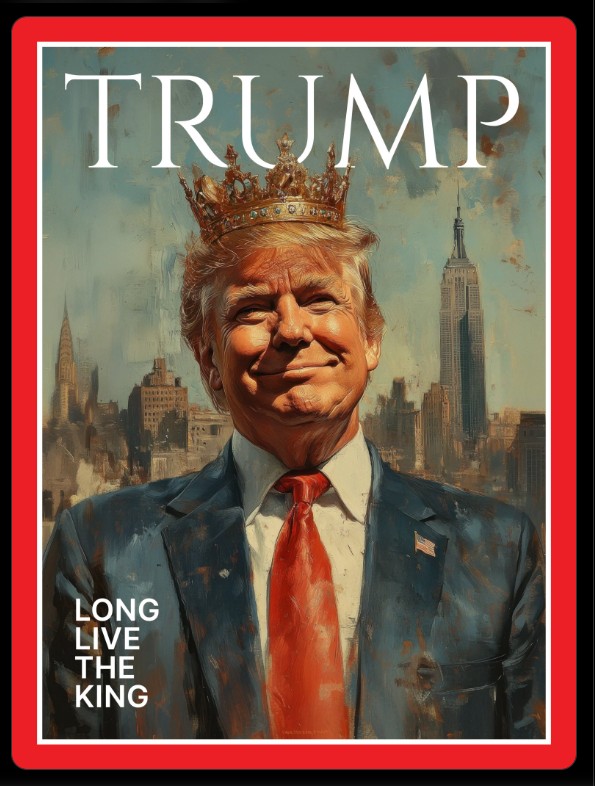
The greatest impression for this reader, given the date and place of reading (August, 2020, USA) is the contrast between one larger than life character and another. Where Trump demeans everything he touches, Churchill raised Britain from nation to ideal, elevated Beaverbrook (for just one example) from greedy industrialist to miracle worker, and uplifted each casualty of the war from cipher to symbol of heroic sacrifice in a just cause.  His speeches raised not only the ‘rabble’ but thinking minds as well and were driven not by hatred of the enemy but by love of its victims.  A subtle difference, perhaps, to some, but a crucial one. Would that all leaders had such character.

How splendid and fortuitous that the Eurocentric world had a leader like Churchill ready to step up when the future turned so very dark and cloudy.  And how splendid that later generations have authors like Larson to show us yet another angle from which to appreciate their value and their stature. 

The Way of the World, David Franklin

Browsing a Vegas Goodwill shop for some throw-away layers to wear at the cold early-morning start of a marathon, decided to pick up a lightweight travel–read as well, and this slim volume peeped out from among the shelves and shelves of generic cops and lovers. In 239 highly-readable pages Franklin traces human-kind’s progression from purely survival-driven tribalism to today’s globe-girdling, technology-dependent, relatively-rational and somewhat-open-minded civilization, postulating 8 major steps that got us here:

Becoming Human; Inventing Civilization; Developing a Conscience; Seeking a Lasting Peace; Achieving Rationality; Uniting the Planet; Releasing Nature’s Energies; and Ruling Ourselves

Echoing others who have called the Twentieth ‘The American Century,’ he presents a case that the USA’s eminence is due not to any inherent moral superiority but simply to the lucky accidents that allow it to embody humanity’s most progressive (most progressive to date, he might caution) traits and achievements. With that as back ground, he then speculates on what the next century might hold for our blue, white, green and brown orb. Nearly twenty years in on that adventure now, it is interesting to note that Franklin wrote here in 1998 of the threat posed by the most-radical factions in Islamic cultures (and fundamentalism in general), rightly characterizing it as a rejection of rationalism; a willful step backward on our communal journey. Clear evidence, if any were needed, against those who imply that those forces only became visible on 9/11, and a prescient analysis of our current big picture.

Most striking of Franklin’s observations are those which connect over the centuries – ancient Greek thoughts and actions which seem eerily apt descriptions of contemporary ones; and Rome’s struggle to survive, which appears so similar to some scenarios of our own system’s woes. Of course this author is not the first to make such connections, as he himself points out.

Ultimately optimistic in its view of a species whose intelligence has, for six thousand years, led to the gradual but unmistakable improvement of most persons’ lives, this is also a cautionary tale – progress is neither continual nor assured. But, the record suggests that it is possible, and should we continue to avoid self-destruction, any periods of stagnation or back-sliding are likely to be followed by eras of further progress.

A comforting outlook that extends past any one moment of circumstance; the very exemplar of why History is worth studying.

Unlike the second-hand hoodie I purchased that morning and tossed onto a pile near the start line outside St. George, this book is staying on my shelf.