Category Archives: Books Worth Keeping

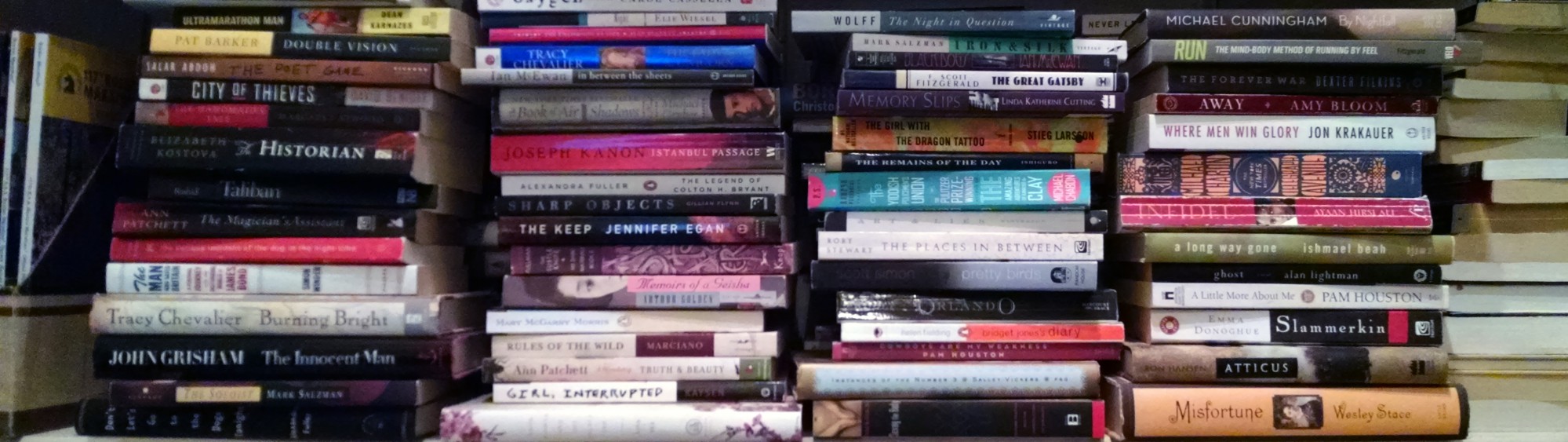
Plenty of books are worth reading once.
These selections are good enough that they deserve shelf space; to be remembered and referred to, and to cherish the prospect of one day experiencing them again.

Inside the Dream Palace, Sherill Tippins

Subtitled The Life and Times of New York’s Legendry Hotel Chelsea, this revelatory recap on a counter-culture icon should cement its position in urbanist history.  Rooted in socialist utopianism of the mid-nineteenth century, the Chelsea  Home Club (as it was initially known and intended) has twisted and morphed to survive through a century and a quarter of changes in its physical, political and spiritual context.  As Tippins makes clear, though the physical plant has some novel and benevolent characteristics (its roof-top garden being among the most interesting), that survival is primarily the result of individuals; the many idiosyncratic and committed artists involved, from architect Philip Hubert – a self-defining non-conformist from an ‘artistic’ family – and his initial cadre of well-healed demi-monde, all the way through the fin de siecle , Roaring Twenties, depression, McCarthyism, Beats and Summer of Love to the tawdry decline of the Punk era.  Only now, in the twenty-teens, does it appear to have been taken over by the Mammon of real estate interests, which hope to re-open it in 2018 as – one fears – a high-tier simulacrum of artsy prestige.  One hopeful note is that the present speculative owners have been required to continue to accommodate a couple of dozen long term residents, even as they modernize and apostatize it to their own ends.

This is urban life in all its richness, chaos and fertility.  No where else would one find Mark Twain, Boss Tweed, O.Henry, Thomas Wolfe, Edgar Lee Masters, Dylan Thomas, Jack Kerouac, Brendan Behan, Arthur Miller, Arthur C. Clarke, Christo, Warhol, Kubric, Dylan, Ginsberg, Lennon Joplin, Hendrix, Viscious, Rotten – indeed any such assemblage of single-named notoriety – cohabiting with the nineteenth-century-sounding artist Alphaeus Cole, whose photo in his studio at the ripe old age of 108 concludes the volume’s illustrations.

Entertaining, enlightening and inspiring, this is a gem.  Long live the Chelsea!

(For those with a continuing interest, the accumulation of Chelsea-iana continues at  http://www.chelseahotelblog.com/  )

The Yiddish Policeman’s Union, Michael Chabon

The Yiddish Policeman’s Union, Michael Chabon

A joyful romp through an alternative future, at once familiar, and yet definitely not.  Around the bones of a noir-detective story, Chabon has draped the ‘what if’ of an alternate resolution to the Jewish people’s search for a homeland following the horrendous events of the mid- twentieth-century.  What if, rather than re-bordering the middle-east, world powers had somehow coerced those settlers to accept in its stead a sparsely-populated region of – southeastern Alaska?  Though less bluntly brutal than the real story, this hypothetical exile to Alaska gives vent still to that culture’s desire for self-fulfillment, along with their literature’s flair for tragedy, and for perseverance in her face.

Recognizable as relatives of New York tropes, these characters are just like anyone else, only more so – more ordinary, more battered, more lost in their own histories – and all the more sympathetic, for it.  Swept up in events they can barely comprehend, much less control, they search for small satisfactions wherever they can find them, which is mostly in one another – though “god-help-me if I’ll ever admit it to you,” is the universal attitude of greatest affection.

I raced through this novel, never wanting to put it down, till I saw the ending coming all too soon.  An ending, by the way, which felt not quite equal to an otherwise immensely impressive display of imagination and craft, but that is minor carping.  My final words on the subject?  Get it; read it, enjoy it.

A Yellow Raft in Blue Water, Michael Dorris

A work which grows, as one progresses through it, from anecdote, to story, to fable.  Dorris effectively manipulates the reader by telling first the tale of the youngest of three women – Rayona – inviting us to form opinions (or judgments, given the poor nature of some of her choices) of her character and actions.  He then proceeds to tell first her mother’s – and then her mother’s – stories, overlapping, braiding and, in the process, shattering our neat conceptions about what is good or bad, and who is right or wrong, victim or abuser.

Dorris’ prose is generally straightforward, allowing objects, events and his characters’ thoughts to tell the story.  Only occasionally does it rise to more florid description, but it is the detail and personalities which make the story seem so real, the women totally convincing even when their actions are not ones with which many readers may sympathize.  That, and the author’s even-handed telling, which seems to reflect the moral conviction with which his bio suggests he lived his too-short life.

A work which has its own objectives, neither the quick entertainment of the popular novel, nor the showy intellectualism of the academic, but an honest desire to tell of people too easily forgotten, and thru them reveal a bit of basic human truth.

West With the Night, Beryl Markham

It is delightful to read of a woman having such adventures in the early 20 th century without apparent trace of gender resistance or romantic overlay.  Perhaps it is the wildness of Africa that allows this, or perhaps self-editing, but either way, Beryl Markham’s memoir  furnishes a shining example of the non-universality of our commonly held stereotypes.

As a writer, Markham tends to the florid, as is typical of her era.  Still, she can kindle excitement at a chase, and when it comes to her own actions, she leans to dryness and understatement.  One actually wonders if a biographer might expose even more drama in this material than does the subject herself.  The Africa of which she tells has plenty of inequality, though the racism which underlies it seems, in what is perhaps a Colonialist’s view, genteel and respectful.  Of course there is plenty of exploitation going on beyond the horizon, setting the stage for later, less sanguine, interactions.

An enjoyable and eye-opening artifact of time and place, as well as a glimpse of an admirably independent spirit.

Any Human Heart, William Boyd

What a Find!

I picked this up at the informal lending-library outside a local liquor store, just on the strength of the back-cover blurb, and it turns out to be one of my most satisfying reads in years. A sort of super-literate anglophile Forrest Gump, this is neither more nor less than the story of one life, well-lived and equally well-told.

While the central conceit – a bundling up of episodes & intermittent journals – at first sounds limiting, it actually frees the author to tell only the parts of Logan Mountstuart’s life he chooses, and to insert ‘editorial’ exposition where needed to bridge the gaps of time or detail. At the same time, the first person voice of a protagonist who is credibly both educated and introspective gives access to thoughts and emotions without seeming fake or forced. The upshot is that this reader experienced Logan’s ups and downs quite personally, especially the decades-later mourning of his second wife and daughter, random victims of the London Blitz.

In my book, Boyd is a writer to seek out, up there with Ann Patchett and Michael Cunningham – smart, generous, entertaining and meaningful.

Where Men Win Glory, Jon Krakauer

Journalism at its best, as Krakauer rescues a worthy role model from the politically-motivated banality to which the mass media reduced him.  His telling makes one feel the loss or Pat Tillman – and the Defense Department’s subsequent cover-up of the fact that it was friendly fire that killed him – as a visceral personal tragedy.  His extensive attributions and quotations of the perpetrators’ self-justification convincingly assure that this is not a hatchet job.  What it is,  is one more example of the random wastage of a nation’s greatest resource, with no point or benefit in the instance, whatever one’s opinion of the validity of the cause which has been proclaimed.

Especially poignant is Krakauer’s treatment of the moment of Tillman’s death – a passage which cannot be read without pausing for tears and an acknowledgment of the ubiquity of death and injustice.  Equally moving is the plight of Marie Tillman, Pat’s widow, who seems consigned to live on, knowing how unlikely it is she can ever match the heights of love and joy she shared with Pat.

Painfully-effective storytelling, and a service to both the protagonists and the wider community.

Case Histories, Kate Atkinson

From a rocky start – three dark mysteries laid out w/o connection or relief – Case Histories accelerates steadily, to wrap the reader in a web of interconnections and references, some real and substantial, some only coincidental. Its cast of characters is a bit broad to follow at times; still it illustrates the breadth of human experience (at least a white, British slice of it).

Atkinson’s sympathies are clearly with the misfits, though she’s wise enough to know that most are at least partly responsible for their fates. She’s also ethical enough to spend far more time with the intriguing victims than the hateful villains, relegating the latter to brief glimpses sufficient to drive the plot but never the bus.

Central figure Jackson Brodie owes a lot to Sam Spade, though he’s a bit more enlightened, with a black army-buddy and an eight-year-old daughter in tow. He’s also British, which surrounds him with an entrenched class structure, old money and inherited poverty, and a more textured context than San Francisco can provide.  Thanks to her diverse characters and focus on how family & relationships shape and drive them, Atkinson has crafted far more than an homage-de-Hammett; Case Histories is a capable novel which creates its own world as a mirror to the real one, using the murder mystery to raise the stakes, not as an end in itself.

Structurally, Atkinson goes way beyond Hammett’s ebony falcon, with multiple story lines that touch and reflect-upon one another, sometimes truly entangled – as when Theo befriends, and is saved by, young Lily-Rose – other times merely bumping in the (existential) night, as when Jackson nearly runs off the road to avoid a silver Mercedes later revealed to have been driven by none other than Caroline (who is really…..).

And finally, almost as coda, Atkinson reveals the real stories beneath the pat crimes. In this view, villainy and heroism are rarely as simple as the record seems to say. Actions may have consequences, but they also have origins, and finding out that a prime suspect didn’t commit the crime for which we’ve been led to blame him, does not in any way imply that he is blameless.

A gem to remember and recommend. Wow.

Fugitive Pieces, Anne Michaels

For once, a book that lives up to its cover praise – combining near-poetic prose with the gravity of great tragedy and redemption.

The first 2/3 are clear and affecting, the unusual love between Athos and Jakob is convincingly portrayed, as they (and the author) find beauty and value in the small pleasures of life after having experienced great cruelty and deprivation.

The last 1/3 becomes disorienting, as Michaels switches without explanation to other narrators. Eventually the reader realizes she is telling a different survivor’s story, paralleling Jakob’s.  This portion feels less successful, yet there is still the same lyrical quality and surprising revelations.  Eventually the two strands are tied together, though not all is explained (why did Jakob and Michaela not return from Athens – were they killed?)  Perhaps a second reading would illuminate – which in this case is less critique than acknowledgment of the depth and complexity of this novel.  The prospect of a second read is a pleasure to be anticipated, rather than a necessary chore.

A book to keep, to revisit, to learn from. A winner.

Fugitive Pieces, Anne Michaels

For once, a book that lives up to its cover praise – combining near-poetic prose with the gravity of great tragedy and redemption.

The first 2/3 are clear and affecting, the unusual love between Athos and Jakob is convincingly portrayed, as they (and the author) find beauty and value in the small pleasures of life after having experienced great cruelty and deprivation.

The last 1/3 becomes disorienting, as Michaels switches without explanation to other narrators. Eventually the reader realizes she is telling a different survivor’s story, paralleling Jakob’s.  This portion feels less successful, yet there is still the same lyrical quality and surprising revelations.  Eventually the two strands are tied together, though not all is explained (why did Jakob and Michaela not return from Athens – were they killed?)  Perhaps a second reading would illuminate – which in this case is less critique than acknowledgment of the depth and complexity of this novel.  The prospect of a second read is a pleasure to be anticipated, rather than a necessary chore.

A book to keep, to revisit, to learn from. A winner.

Case Histories, Kate Atkinson

From a rocky start – three dark mysteries laid out w/o connection or relief – Case Histories accelerates steadily, to wrap the reader in a web of interconnections and references, some real and substantial, some only coincidental. Its cast of characters is a bit broad to follow at times; still it illustrates the breadth of human experience (at least a white, British slice of it).

Atkinson’s sympathies are clearly with the misfits, though she’s wise enough to know that most are at least partly responsible for their fates. She’s also ethical enough to spend far more time with the intriguing victims than the hateful villains, relegating the latter to brief glimpses sufficient to drive the plot but never the bus.

Central figure Jackson Brodie owes a lot to Sam Spade, though he’s a bit more enlightened, with a black army-buddy and an eight-year-old daughter in tow. He’s also British, which surrounds him with an entrenched class structure, old money and inherited poverty, and a more textured context than San Francisco can provide.  Thanks to her diverse characters and focus on how family & relationships shape and drive them, Atkinson has crafted far more than an homage-de-Hammett; Case Histories is a capable novel which creates its own world as a mirror to the real one, using the murder mystery to raise the stakes, not as an end in itself.

Structurally, Atkinson goes way beyond Hammett’s ebony falcon, with multiple story lines that touch and reflect-upon one another, sometimes truly entangled – as when Theo befriends, and is saved by, young Lily-Rose – other times merely bumping in the (existential) night, as when Jackson nearly runs off the road to avoid a silver Mercedes later revealed to have been driven by none other than Caroline (who is really…..).

And finally, almost as coda, Atkinson reveals the real stories beneath the pat crimes. In this view, villainy and heroism are rarely as simple as the record seems to say. Actions may have consequences, but they also have origins, and finding out that a prime suspect didn’t commit the crime for which we’ve been led to blame him, does not in any way imply that he is blameless.

A gem to remember and recommend. Wow.