Author Archives: robinandrew0804

Unknown's avatar

About robinandrew0804

Robin Andrew is my pen name; I’m a runner, a writer, and a parent, from a small town in central Colorado. As a youngster, my biggest athletic aspiration was to not be the last person picked when teams were chosen for games. Since taking up running for stress relief (right about the time our kids entered their teen years - go figure) and fun, I’ve run fifteen marathons and dozens of other events, on both pavement and trails. This site is my way of sharing the joy and sense of accomplishment I’ve found in simply putting feet into motion, plus a few other bits and pieces of what I find interesting and worth caring about.

The Mid Pack View – Part 2 – Rabbits

Distance running is about maintaining a relatively high level of effort over a long time, and that takes concentration and motivation.  In the middle of the pack, we can work off other runners to make it both less difficult and more fun, by choosing a ‘rabbit.’

Once the initial warm-up is over, and you’ve settled into goal pace (which you’ll know from your GPS, stopwatch, or level of effort), pay attention to the other runners around you, noting who’s struggling to maintain that pace or dropping away, and who’s breezing off into the distance.  Keep your eyes peeled for a runner who passes you with confidence, but pulls way only gradually, and when that happens, challenge yourself to match their pace and keep a consistent distance instead of letting him or her disappear ahead.

You’ll know pretty soon if you’ve chosen well – if you quickly start feeling winded, let ‘em go, settle back, and see who else comes along. But if find you can keep up with just a bit more effort than you had been giving before, then you’ve chosen right.  Keep on his or her heels for a few minutes – or a few miles – and that rabbit may provide the focus you need to push yourself to do your best.

The goal is not to finish the run in a dead-heat competition – most times your paces will diverge long before that, but chasing rabbits every now and then can make any distance seem shorter – and way more fun.  It just may make the difference between a ho-hum run and one that truly satisfies.

Rabbits – one more reason the mid-pack view is nothing to sniff at!

2 < ≠ 450,000

A nerdy formula with a simple meaning: “Two is less than, and not equal to, 450,000.”

In the case of the 2013 Boston marathon tragedy, the number 2 represents the pair of misguided, impotent fools who tried to make the event a symbol of something they thought was wrong in the USA and the world.  (‘Impotent,’ is used intentionally, because despite what was apparently months of planning and preparation, and the ruination of their own lives and family, all those two really accomplished was to show just how little they could achieve and how much was wrong inside their own frustrated and cowardly minds.)

The 450,000 represents, in rough estimate, the number of positive energies present along the course that Monday, based on media statements that Boston (yeah, even mid-pack runners can pretend to a first-name basis with the Big Event) draws upwards of 400,000 spectators, plus knowing that in 2013 there were 26,000 scheduled runners, and allowing for the thousands of staff, volunteers (thank you, to every one of you) and media who were present.

Whenever I think back to that day, after taking time to remember the innocents who lost so much, I remind myself to focus on the astounding outpouring of support, encouragement and pure joy that went on for over five hours before the tragedy.  For 26.2 miles it seemed there was barely a ten foot stretch on either side of the course without a spectator; for most of the route they were lined shoulder to shoulder – sometimes several deep – and all of them making a continuous joyful noise for family, friends and strangers alike.  It truly felt, in the middle of that pack, like you were all running together, being cheered on by one enormous family, in pursuit of a goal you had each set by choice and worked for, out of a common human desire to strive and to achieve.

That positive energy – not the horror and grief – is the true meaning of Boston, even in 2013, and the running community will not allow any two individuals to take that away from the multitude who put so much of their better nature into that day.

Cruising Speed

If you’ve ever read the reviews in a boating magazine (yes, I’ve wasted plenty of hours in my lifetime…), one thing you may have noticed is that although a boat has a top speed, what seems more important to the reviewers is its ‘cruising speed.’

The Oxford online dictionary defines Cruising Speed as “a speed for a particular vehicle, ship, or aircraft, usually somewhat below maximum, that is comfortable and economical.”

For a runner, ‘cruising speed’ is that pace at which you realize your body is doing something it was actually designed to do, and you feel (for the moment) like you could go on forever (though the objective mind knows that is not actually the case….).

Mid-pack runners are well served to find their own cruising speed, and use it as a baseline, consciously choosing when to run faster (that last gallop to the finish, or when someone you passed a half-mile back shows up in the corner of your eye and starts to creep ahead…) and when to run slower (that December-weekend long run in the snow and slush).

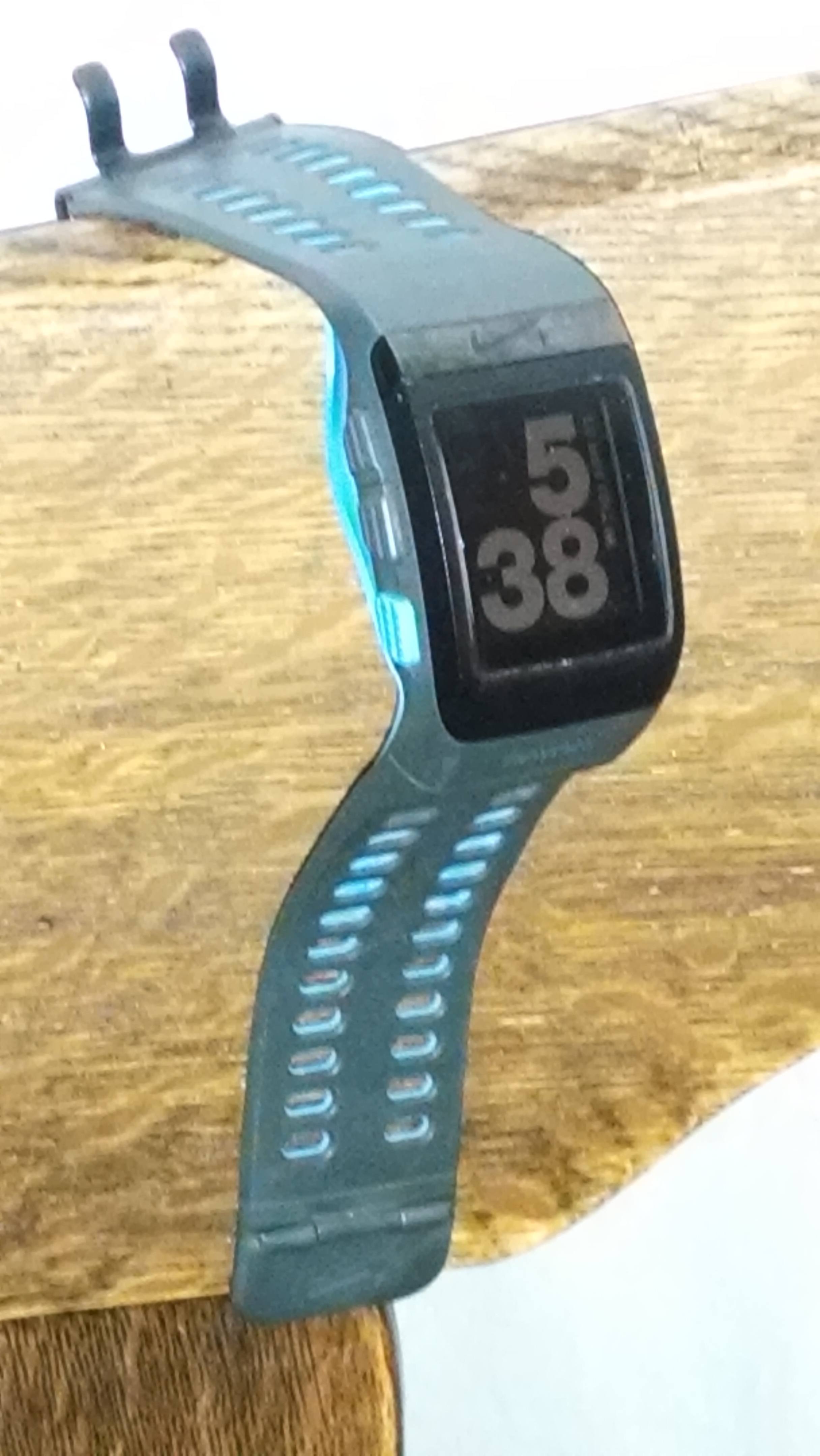
You’ll find your cruising speed by feel, but it helps to have a measurement and a way to compare from day to day.  Since mid-pack runners generally aren’t doing laps on a track with a stopwatch, keeping track of total time and distance every time you run is generally the way to go, but since your pace varies from beginning to end, it will be pretty inexact.  For those ready to make a larger investment, a GPS watch that tells your pace at any given time is great, but whatever way you measure your cruising speed, it’s really the feeling that matters.


In Praise of the Hemithon

There’s a real cachet to the Marathon – that Greek history, all the great runners who’ve made a name for themselves by winning in New York, Boston, Chicago, London, or the Olympics, the sheer absurdity of any normal mortal actually choosing to run that far.  But 26.2 miles is a long way to go, and an even longer distance to train for.

The half marathon has a lot in common with the full. It’s long enough that you must train, so there’s a real sense of achievement, and it draws on many of the same skills – goal-setting, proper pacing, hydration and nutrition, developing an efficient and non-injurious stride.  And, there’s much the same camaraderie stepping up to the start and at the finish, plus there seem to be a lot more ‘halfs’ around (maybe because they can accommodate more runners with less traffic-management and fewer volunteers/staff).

The only thing holding back this otherwise very appealing event is that name – half­- marathon.  Like being half-asleep, or half-qualified (or half-pregnant!) it just doesn’t sound very satisfying.  I mean, where’s the sense of accomplishment in completing half of anything!

The 13.1 mile run deserves its own full name, and my modest suggestion is to call this event the Hemithon – as in hemisphere, hemihydrates, or the ubiquitous hemidomaphobia (fear of half a house).    It’s got the same punch as its longer sibling, and sufficient semantic resemblance to connect to that grand heritage, but rolls quickly enough off the tongue to sound casual and confident. And even thought we all know ‘hemi’ really means the same thing as ‘half,’ that Latinate construction obscures things just enough to sound like a whole of its self (and a lot more credible than ‘Halfathon.’)

13.1 miles, I hereby christen thee, the Hemithon.

P.S. – The folks in Green River, Utah used to put on a wonderful small event in scenic Goblin Valley, which offered an Ultramarathon (anything over 26.2 qualifies; this one was 50k or about 30 miles) and a 25 k event (about 15 miles).  I did the latter, and ever since have struggled to figure out how to explain my Goblin Valley Ultramarathon t-shirt:  did I run a half-ultra-marathon, or an ultra-half-marathon, or half an ultramarathon – or maybe not an ultra-anything-at-all?   There’s just no way to combine ‘half’ and ‘ultra’ in the same language that doesn’t sound like you’re trying to get away with something, but if my plan gets enough traction, maybe I can finally be proud to claim my Ultrahemithon completion.

R_U_N MPR?

So, what – or who – is a ‘mid-pack runner’ (an ‘MPR’)?

First off, if you step up to the starting line with any real expectation of leading the race and contending for the overall victory, you are not an MPR; you’re a Lead Dog, and my hat’s off to you.  You‘ve earned the open road, the clear view.  But:

If, instead, you start each event knowing there’s always going to be someone ahead of you to claim the big public prize and headline photo, then you are an MPR.

Maybe you’re someone who never thought of yourself as an athlete, and still feels a sense of surprise that you are out there doing what you are doing.  If so, chances are very good that you are an MPR.

Perhaps you’re a really young – or somewhat old – runner who has a shot to place in your division but not the overall; in that case, you’re still an MPR, because you accept that there’s someone in their prime out there, who’s going to finish ahead of you, no matter how good your day.

If you accept, for whatever reason, that you will never be the fastest runner on the course, and look to find your satisfaction somewhere else; then you are an MPR, and you get my applause – for determination, humility, and creativity.  For keepin’ on keepin’ on.

R_U_N_MPR? I_M.

West With the Night, Beryl Markham

It is delightful to read of a woman having such adventures in the early 20 th century without apparent trace of gender resistance or romantic overlay.  Perhaps it is the wildness of Africa that allows this, or perhaps self-editing, but either way, Beryl Markham’s memoir  furnishes a shining example of the non-universality of our commonly held stereotypes.

As a writer, Markham tends to the florid, as is typical of her era.  Still, she can kindle excitement at a chase, and when it comes to her own actions, she leans to dryness and understatement.  One actually wonders if a biographer might expose even more drama in this material than does the subject herself.  The Africa of which she tells has plenty of inequality, though the racism which underlies it seems, in what is perhaps a Colonialist’s view, genteel and respectful.  Of course there is plenty of exploitation going on beyond the horizon, setting the stage for later, less sanguine, interactions.

An enjoyable and eye-opening artifact of time and place, as well as a glimpse of an admirably independent spirit.

A Yellow Raft in Blue Water, Michael Dorris

A work which grows, as one progresses through it, from anecdote, to story, to fable.  Dorris effectively manipulates the reader by telling first the tale of the youngest of three women – Rayona – inviting us to form opinions (or judgments, given the poor nature of some of her choices) of her character and actions.  He then proceeds to tell first her mother’s – and then her mother’s – stories, overlapping, braiding and, in the process, shattering our neat conceptions about what is good or bad, and who is right or wrong, victim or abuser.

Dorris’ prose is generally straightforward, allowing objects, events and his characters’ thoughts to tell the story.  Only occasionally does it rise to more florid description, but it is the detail and personalities which make the story seem so real, the women totally convincing even when their actions are not ones with which many readers may sympathize.  That, and the author’s even-handed telling, which seems to reflect the moral conviction with which his bio suggests he lived his too-short life.

A work which has its own objectives, neither the quick entertainment of the popular novel, nor the showy intellectualism of the academic, but an honest desire to tell of people too easily forgotten, and thru them reveal a bit of basic human truth.

The Mid Pack View, Part 1

So what is the view, if you’re not Lead Dog?  Well, to start with, it’s usually full of fellow runners, every one of them different – and potentially instructive.  Watch who stays ahead of you, who passes, and who drops behind – and you can learn a lot about running, and about yourself.

One example: in the early miles of a local event a few years ago, I played leapfrog with a runner who looked to be about my age and fitness level, trading places when one of us would slow down for a water station or a short uphill.   After I passed him on a stretch of straight and level pavement though, I pulled away strongly in my ground-covering strides, breathing relaxed and deep, while he was mincing along with quick, short steps that looked like the product of approaching exhaustion.  Confident I wouldn’t be seeing the guy again till the after-party, I put him out of mind.  It was a shock then, to see him come up on my shoulder with a couple of miles to go,

My competitive spirit said there was no way I was going to let this guy get the best of me, but when I boosted my pace to stay on his heels, it was quickly clear I wouldn’t be able to keep that up for the duration. In desperation, I tried copying his cadence – speeding my steps up as fast as he was doing, and lo-and-behold, I was able to keep the space between us constant – for a short time.  That gait didn’t feel natural though (I hadn’t trained for it, after all) and soon enough I fell back into my own style – and watched mister short-steps disappear into the distance ahead.

Struck by that experience, I began to read more closely, and train more consciously, teaching myself to run with shorter strides and more of them, and I’ve seen my times and endurance profit from it – a growth experience which only came about because I was in the middle of the pack, mixing it up with a whole range of other runners.

Lead dogs have no one to watch, and no one but themselves to learn from.  Just one reason the mid-pack view can be pretty grand, if you look at it with open eyes!