Author Archives: robinandrew0804

Unknown's avatar

About robinandrew0804

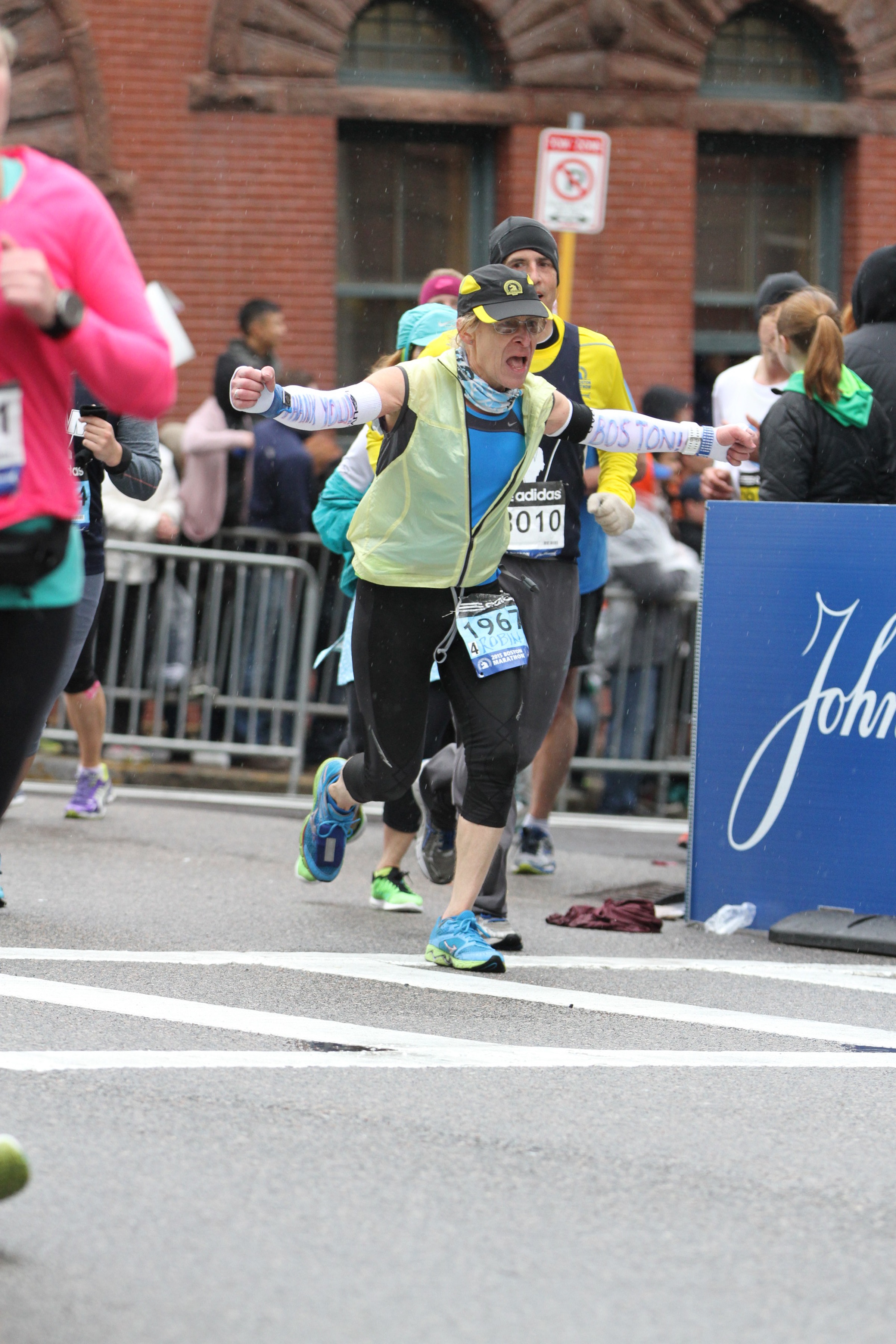
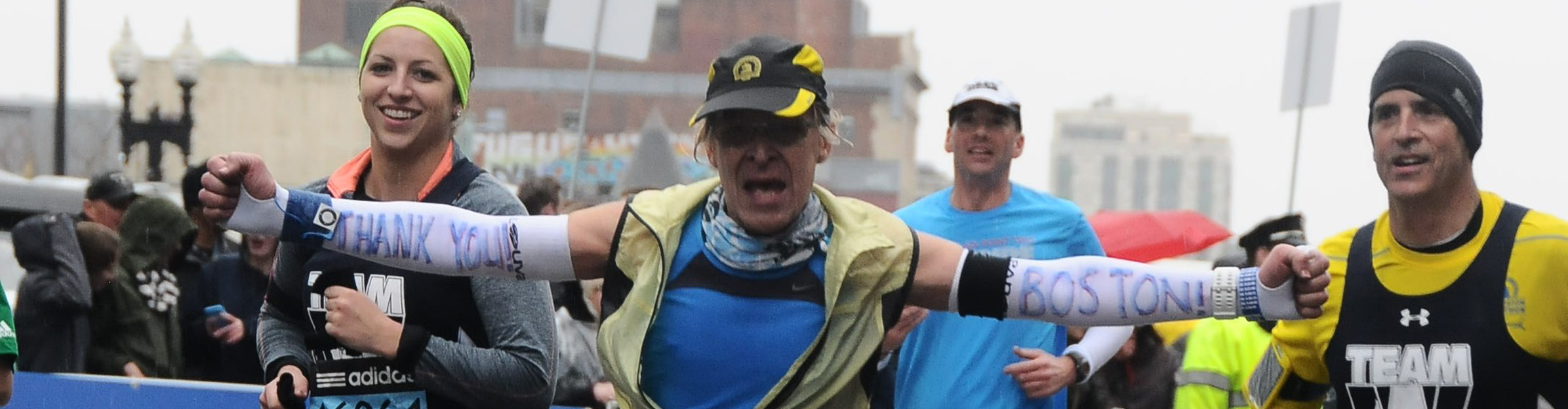
Robin Andrew is my pen name; I’m a runner, a writer, and a parent, from a small town in central Colorado. As a youngster, my biggest athletic aspiration was to not be the last person picked when teams were chosen for games. Since taking up running for stress relief (right about the time our kids entered their teen years - go figure) and fun, I’ve run fifteen marathons and dozens of other events, on both pavement and trails. This site is my way of sharing the joy and sense of accomplishment I’ve found in simply putting feet into motion, plus a few other bits and pieces of what I find interesting and worth caring about.

Run for Your Life – But Don’t Count On It

  There is a time for being ahead, a time for being behind; a time for being in motion, a time for being at rest, a time for being vigorous, a time for being exhausted;*

 There’s a small lake near my home, with a ¾ mile paved path around it – perfect for tempo training – and overlooking that path is the home of a woman with the long, lean sort of build you might well pick out of a crowd as a being a natural-born runner, who sometimes waves or shouts encouragement as I go tootling by. She did in fact run competitively from high school thru early-middle age, though no more; her hips; she says, just cannot take the pounding…

One reason I’m still able to run may be that I started quite late in life, encouraged by a good friend who’d been running shorter distances for decades, and wanted to step up to a hemithon.  We trained and finished that event almost a dozen years ago, and several more together, till he ran up against a string of injuries. Now, after his only-semi-successful knee surgery and therapy, we find other thing to do together, besides running…

And then there are those moments sitting at the desk or on an airplane when you move your feet and feel a twinge on the inside of one knee.  Or the first steps of a run, where one ankle seems about to crack, so you vary your stride and hope it goes away once things get warmed-up a bit.  The hip feeling ‘wonky’ as you walk down the stairs for morning coffee.   The trail-running tumble last summer that initially seemed like just another case of road rash, but now you’re wondering if that shoulder is ever again going to have the same range of motion as the other one…

The possibilities, unfortunately, are endless, and so, on this cold and damp and grey morning-of-the-tired-legs, when I can readily come up with multiple excuses not to get out there again, my better-self reminds me to:

Run like you’ve been running all your life; it’s natural it’s healthy; it’s one of the things our bodies evolved to do;

  • Run like you will be running all your life;
  • But don’t ever take it for granted –
  • Don’t ever count-on being able to do it forever, because you know that an injury could end your career at any time,
  • And, as a direct consequence of that knowledge: make the best of every day on which you can get out there and pull one foot off the ground before the other one touches down.
  • Be all the more grateful for knowing how precarious that gift is.

Run for your life!

(* Stanza 29, Tao te Ching, A New English Version, by Lao-Tzu as translated by Stephen Mitchell, Harper & Row, 1988)

Run-up to Boston – Part 5 – That Crowd!

I’d read about it before my first trip to Boston, but nothing in print prepares one for the reality, which includes:

Homeowners and compatriots hooting and encouraging from their front lawns as you leave the holding area at a Hopkinton school yard to walk the half-mile or so to the actual starting corrals.

Friends and family six-deep and more at the start, snapping shots of loved ones as they finally find enough open pavement to break into a run, bursting with energy pent-up thru several hours of waiting, queuing and standing shoulder-to-shoulder.

Barely as much as twenty feet of unoccupied curb on either side for the entire distance.  (Except one thinly-wooded stretch early-on, where lots of male runners were stopping relieve themselves, barely off the route and not at all concealed – come on guys!)

Service-women and -men in uniform controlling traffic at many of the side street intersections along the way; a great honor to be so cared-for by you.

The colleges: yes, there are hundreds of college students in Wellesley and Boston College, generously offering the kind of hysterical enthusiasm that comes from being cooped up on small campuses with large expectations.  Much appreciated!

Signs – some clearly aimed at a particular runner, but tons offering non-specific encouragement, with the result that even an out-of-towner feels like they are running thru family and friends the whole time, making this feel like a home-town event, no matter where one hails from.

The volume!  You want to plug-in for extra encouragement thru the late-teen miles? Fugeddabout it!  Not only is it impossible to hear over the crowd without cranking-up to a head-splitting level; it quickly becomes clear that not even Born To Be Wild is as effective a spur as all those voices and faces!  Plug-out and observe; this is priceless

Crescendo – by mile 22 or so, the bigger buildings are closing-in, the crowds even thicker and the volume just continues to grow, equally-heartening whether you are struggling to hang on or ready to start squandering some hard-won hoarded reserve for a strong finish.

Rounding the turn onto Herford street it seems like it can’t get any better (visions of Olympic rings and Super Bowl trophies may come to mind, as you picture your own private ‘Miracle on Ice’), until that final left onto Boylston kicks you in the shorts even more.  How can you not give your all to these people who fill the sidewalks, standing in the cold, or rain, or baking sun, beaming their own personal energy and emotions out to supplement whatever you have left?

Which brings up a somber thought: none of the reporting I’ve seen about the tragedy of 2013 has sufficiently emphasized that the bombs were placed not on the course, but in the midst of the spectators at the finish.  The majority of those injured that day – and all of those killed – were not runners at all, but people who had come to cheer them on. People who would get no medals that day, would have no finishing-time to put in their logbooks; who were only there to encourage others.

And the next year, the crowd was bigger than ever!

Running a marathon is in many ways a selfish pursuit; spectating at one is just the opposite; an act of generosity and even love.

SO THANK YOU BOSTON CROWD, YOU ARE WINNERS, EVERY ONE! 

This Little Piggy Got…Stormsocks

So you’ve got great running shoes that fit just-right with the type and weight of socks you like to wear, and along comes cold or wet or wind – or some nasty combination of the three.  Do you spend a hundred-exty bucks for a new pair of shoes sized-up to fit a couple pair of heavy socks?  Or maybe even more for ones with a Gore-tex interlayer that makes them (somewhat) waterproof?  Tough it out with wet cold toes?  Or just hang it up until the weather clears?

Stormsock

Another alternative, and one I think is the best of the bunch, is these Hyperlite Stormsocks, by Seirus.  They’re thin enough to fit in your regular shoes, over your regular socks, and as far as I’ve found they’re totally effective at keeping out water, snow and wind.  In fact, it’s kind of interesting to step in a frigid puddle with ‘em, ‘cause for a second you think your feet are getting soaked, then a moment later you realize they’re totally dry – it was just the rapid heat loss due to water being more dense than air, which goes away as soon as you’re no longer stepping in it and the normal bending motions of running squeeze most of the moisture out of the fabric and padding of your shoes.

And the best part?  Unlike a water-proof shoe, Stormsocks are tall enough to protect your ankles as well, and prevent gaper-gap with running tights (I put the socks on first, then pull tights on over them to keep it all sleek and make sure any water that rains or splashes onto my legs will run down outside the Stormsocks, not in.  Though they’re not insulated, that extra layer adds warmth too – I’ve run in very thin low-top socks plus these, in shoes that have really-open mesh uppers for summer ventilation, and been comfortable on icy roads in temps down in the twenties.  Only below about twenty five do I switch to a pair of calf-high wool-blend socks (Seirus makes those too, as do SmartWool and others) with the Stormsocks on top to cut the wind.  If it’s too harsh outside for that combo, it’s time to take up mushing.

They say in life, it’s the little things that count; so if you want to keep on runnin’ when the weather gets sloppy, I suggest you get your little piggies to market and pick up some Stormsocks, pronto.

In Control of Your Goal

In soccer, one goal is a big deal; in basketball…not so much.

In running, goals are not the be-all and end-all as they are in ball-sports, but they’re very useful motivators.  Over time I’ve come to believe that three goals is the perfect number for an MPR to consider for any event.

Goal Number One is what you have been training for and realistically believe you have a good shot at making. It may be modest or ambitious, but it is generally quite pragmatic and objective, like:

To complete a distance longer than you’ve done before

To finish under a certain time

A new PR, even if by seconds

A new PR, at a specific time or pace


Goal Number Two is the dream – not only making your Number One, but even surpassing it.  We don’t hit this one very often, but when we do, it can be a lifetime memory.

PR by some significant margin

To place in your division

To complete a distance that used to be a struggle, and do so with the feeling that you own it; that from now on it’s no longer ‘can I do it?”, but ‘how well can I do it?’


Goal Number Three is the fall-back:  if  things go wrong, and you see goal Number One slipping out of reach (and goal Number Two starts to feel like a cruel tease you’ve played upon yourself), having (or improvising) a strategy to salvage the day can be a crucial motivator.  This is also where the MPR attitude comes into play: we are not out to ‘win.’ We are not out to beat any other person. We are out to demonstrate something of ourselves to ourselves, and to experience the experience.  With that in mind, Goal Number Three might be:

To match the time you had in a similarly rough run last year

To at least be under XX time; some significant-sounding roundish-number which is short of your original goal, but seems do-able in the thick of today (‘recalibrating’ your goal)

If you’re on a new or more challenging course or distance, then just to complete it

If you’re on a distance or course you’ve struggled with before, then to finish without it feeling as much of a struggle – even if your time is not  what you had hoped (note: this is a very worthwhile goal, and too often ignored in the push for a specific time)

To keep a certain pace for at least part of the course

To ace one part the course – a strenuous uphill, a technical downhill – even if the rest of the day is not so great

To have enough juice left to make a push in the final half-mile (or hundred yards, or fifty, or ten!)

To still be running at the finish line (there are days….)

Simply to finish the distance without injury, ready to go back out and train some more for another day (again, a very worthwhile goal).  For an MPR with eyes open to the big ol’ world out there, any day we can run, is a good day!


What is important about an Goal is that it be meaningful to you; that it reflects why you – individually and uniquely, you – are running at all.  Something you can choose and achieve(or not) regardless of how well others may do that day.

Which is where MPRs differ the most from Lead Dogs: a Lead Dog’s success is highly dependent on how the other dogs do.  MPRs are in control of our goal(s), and that is a grand place to be! 

On the Inside, Looking Down

The December 2014 issue of Vanity Fair contains an article by Michael Kinsley about the battles between Amazon and Hachette over e-book pricing – and thus, quite possibly, the future of publishing.  Amid many entertaining anecdotes and some useful insights, Kinsley inserts own prejudices towards that future.

Speaking of “Amazon’s self-published authors’ books…” Kinsely blithely dismisses them as universally “genre” work (his quotes not mine), then goes on to characterize these authors as taking their revenues from those on the print publishers’ side: “biographers, historians, midlist novelists… the authors of books that sometimes took a decade to write…”  In other words, self-published authors are hacks, who are stealing the bread from the mouths of real writers.

This is, to put it in decidedly non-literary terms – bullshit.

First off, the financially-successful self-published authors  who so frighten Kinsley are a teeny, tiny, infinitesimal fraction of self-publishing authors (for convenience, let’s adopt the acronym SPAs), the vast majority of whom will spend considerable time and money creating, self-packaging, self-listing, self-printing and attempting to self-distribute their work, and make very little or no money for their efforts.

Second, while some of those SPAs may indeed crank out work quickly, so do plenty of paper authors – perhaps Mr. Kinsley is aware of one James Patterson, profiled in the very next issue of the same mag.?  For every crank-it-out SPA, there are far more who have spent years or even decades on their works too, many with no support from the “Universities and foundations” to whom Kinsley worries his more-worthy paper-bound scribes must turn for support when advance and royalty checks are not available.  Truth is, most authors, paper or print, will never make a living wage from their work (just like most actors, most musicians, dancers, visual artists and mimes), and whether or not a writer gets an agent or publisher depends on far more than either the quality of their work or the amount of effort which went into writing it.  That Mr. Kinsley seems to think otherwise, suggests that he – being an industry-insider, is ignorant of – or perhaps has just forgotten – the obstacles which most authors must surmount in order to achieve the elevated viewpoint.

A little farther along in the article, Kinsley recounts a visit to his agent’s palatial offices, where “I sat in the waiting room with Picasso’s grand-daughter – it’s that kind of place.”  Apparently Kinsley is so besotted with rubbing those surnamed elbows that he does not realize he’s just admitted one of the reasons the SPA movement is not only not evil but necessary: one’s admittance to the offices of today’s agents and print publishers is far more contingent upon having a famous name than having a great book, whether it took months, years or decades, to write.

This condition exists for a good reason; the limited capacity of the print-publishing marketplace .  Publishers daily face an onslaught of written work, not all of which they can possibly print and sell at a profit.  To deal with this, the industry has spawned exclusionist mechanisms; a complex and effective filtering system (of which agents are the first line of defense) to weed out all works other than those most likely to be commercially successful at the scale required by industrialized print publishing.  Add to that a celebrity-crazed culture, and it is growing more and more difficult for any work, regardless of merits, to be hard-published unless its author has a ‘platform’ – a pre-existing public identity to serve as advertisement without reference to the work’s merits.  Thus it is easier for a reality-TV supporting actor, minor pro-athlete or painter’s granddaughter to get an agent and a print deal than a previously-un-published biographer, historian, novelist or academic.

And yes, I am taking it as a given that print-publishers are less than perfectly-efficient; that they do not actually locate and publish every worthwhile work that has been created.  Trusting that Mr. Kinsley would not argue that point, I will in fact go farther; I believe there are large numbers of worthwhile writings that will never be seen by any but their authors unless those authors take upon themselves the financial burden and risk.  Fortunately, many of them are willing to do that, which is the real reason SPAs abound, not some rapacious desire to steal out of the mouths of their betters’ babes without doing the work of ‘real’ writers.

The true value of electronic- and self-publishing is this: no longer must an author convince first an agent and then a publisher that her work will appeal to a wide-enough segment of the hard-copy market to justify a five- or six-figure investment of someone else’s capital for printing, promoting and distributing hard copies. It is now possible for a work of value with (perhaps) more limited appeal to be brought to light, albeit usually for a much smaller audience.  This, Mr. Kinsley, is not a bad thing; for writers, for readers, for the general culture.  And it does not come about because SPAs are stealing the legitimate paychecks of paper-authors.  It comes about because the times they are a-changin’.

I am reminded of another famous inside-down-looker, Rousseau’s un-named “great princess.”

SPAs are not settling for cake either.

The Yiddish Policeman’s Union, Michael Chabon

The Yiddish Policeman’s Union, Michael Chabon

A joyful romp through an alternative future, at once familiar, and yet definitely not.  Around the bones of a noir-detective story, Chabon has draped the ‘what if’ of an alternate resolution to the Jewish people’s search for a homeland following the horrendous events of the mid- twentieth-century.  What if, rather than re-bordering the middle-east, world powers had somehow coerced those settlers to accept in its stead a sparsely-populated region of – southeastern Alaska?  Though less bluntly brutal than the real story, this hypothetical exile to Alaska gives vent still to that culture’s desire for self-fulfillment, along with their literature’s flair for tragedy, and for perseverance in her face.

Recognizable as relatives of New York tropes, these characters are just like anyone else, only more so – more ordinary, more battered, more lost in their own histories – and all the more sympathetic, for it.  Swept up in events they can barely comprehend, much less control, they search for small satisfactions wherever they can find them, which is mostly in one another – though “god-help-me if I’ll ever admit it to you,” is the universal attitude of greatest affection.

I raced through this novel, never wanting to put it down, till I saw the ending coming all too soon.  An ending, by the way, which felt not quite equal to an otherwise immensely impressive display of imagination and craft, but that is minor carping.  My final words on the subject?  Get it; read it, enjoy it.

Run-up to Boston – Part 4 – Why Bother?

Run-up to Boston – Part 4 – Why Bother?

One thing – maybe the thing – that makes Boston different from nearly all other marathons, is the qualifying requirement.  Where other events welcome all comers, and manage their numbers – if necessary – via lottery or ridiculously fast sell-out, Boston is unabashedly elitist, using its multi-tier registration process to ensure it admits only the fastest of those who apply each year, which pretty much guarantees that MPRs who make the cut at all will start and finish at the back of the field.  Yup; a person used to finishing in the middle of the pack at other events, could well find herself a ‘squeaker’ here, lining up in the last wave wearing bib number 26,236 out of 28,000 and, thanks to the multiple waves with multiple corrals in each, finishing hours after the big names have received their awards and headed for the showers.  On top of that, it’s expensive to travel and stay in Boston, an hours-long cattle-call getting to the starting line (which temporarily consumes the tiny town of Hopkinton like a nebula-cloud enveloping the Starship Enterprise), almost impossible to find friends at the finish, and requires seven to 14 months of forethought and planning.  So why bother?  Well, there’s…

Bragging rights – to a lot of your family, friends and people you meet now or in the future, the Boston Marathon may well be the only running event they know by name (except perhaps the Olympics, which is even more difficult to get to).  Civilians who know nothing else about this sport (pastime? addiction? religion? – whatever it is to you) will know that running this one is a landmark, so being able to say, with utmost casualness, ‘yeah, I’ve done Boston’ is one of the most satisfying ways to reassure yourself that you actually are ‘A Runner.’

Schwag – the BAA folks, who put on this event – have great taste. Their unicorn logo is cool in an ‘old-patrician-establishment meets new-age-mysticism’ sort of a way, and pulling out your participant shirt is always reassuring after a disappointing workout.  I have to admit though, to being of two minds about the jacket – seeing someone show up at a 5K wearing one engenders an odd mixture of respect with disdain – ‘you ran Boston – you must be good’ is immediately followed by ‘but what are you trying to say by flashing that here,’ which flows all too quickly into ‘are you gonna’ be good enough today to justify that flash?’  On the other hand, it’s a great way to connect with others who have shared that same experience. I manage my jaundiced attitude by wearing a t-shirt, logo-cap or visor – recognizable to those in the know, but less flashy than a bright yellow jacket with ‘BOSTON’ plastered across it.  Yeah, I didn’t buy the jacket ‘cause I didn’t need to go around ‘showing it off’ – but now I wish I had.

Ego – those jacket-musings point up the mixed emotion this MPR feels.  Is wanting to run Boston a grand aspiration that helps you ‘be all that you can be’ or is it evidence of an unenlightened ego with something to prove?  My current platform position – subject to change as the election cycle progresses – is that it’s all of the above and more, in which vein I take some solace from stanza 68 of the Tao te Ching –

“The best athlete wants his opponent at his best….

All of them embody the virtue of non-competition.

Not that they don’t love to compete,

but they do it in the spirit of play…

and in harmony with the Tao.”*

That’s an attitude I am happy to admit – we MPRs go to Hopkinton for the joy of measuring ourselves against its yardstick – not to prove how good we are, but that we have done our best.

(we also go for THE CROWD – but that’s a story for another day…)

*Credit: Tao te Ching, A New English Version, translated by Stephen Mitchell, Harper & Row, 1988.

I N A T O P – I A W Y C D -T

What is that, some Welsh tourist attraction?  Nope, it’s one of my running mantras, origin as follows:

This past summer I took part in a backcountry race which I was fully-aware would be – for me – downright grueling.  I’d run the same event two years before, finishing long-after the time for which I’d hoped; exhausted, lame, doubled-over sick, and emotionally wrecked.  And even though this year I had a better idea what to anticipate, and had trained assiduously for the series of long climbs, almost from the start it seemed my view was nothing but butts disappearing into the distance.  The one-third point found me watching two runners who, when they first came up from behind had looked like folks I should be able to hang with, but were now steadily pulling away, and as we neared the end of a quarter-mile-long open meadow I looked the other way to see – not a soul visible behind me.

As I watched those two runners disappear without apparent effort into the woods – where I knew another climb awaited – discouragement settled in like a thirty-pound pack.  What was the point, an inner voice asked, if I was feeling this depleted this early, and every other runner was handling the terrain better than I?  Was I really going to be the last person to finish?

What salvaged that day was, in retrospect, nothing more or less than experience; having run enough events by now for another inner voice to pop-up and remind the first one that ‘how you feel in the middle of an effort is not necessary indicative of how you will feel at the end.’  (“Of course not – you usually feel much worse at the end!  – that’s not really true, but I just had to say it, because I know a lot of runners will be thinking it…)

Enough events too, that conditioning and habit kept my feet moving while those and other thoughts got processed, by which time I was into the woods, cresting that next climb and headed for a magical stretch of gently-undulating single track through forest straight out of Lord of the Rings.  It was in those woods I remembered someone writing or saying, ‘it’s not about the other guy,’ and realized how especially true that sentiment is for a mid-pack (or rear-pack, as the day may have it) runner.

Lead-Dogs are there to fight it out, agonizing over who is ahead of who (whom?), but we MPRs are in the game for other reasons; to find out what each of us is capable of, on a given course, on a given day, which puts it all in a whole different light.  Everyone pulling away from me?  Wish them well. No one behind me? Less pressure!  It’s a beautiful day, a wonderful trail, a blessing to be able to run – period – and me doing my best is not dependant on how well or poorly anyone else is doing.

‘It’s not about the other guy,’ struck a chord, and began repeating in my head (though I quickly substituted ‘person’), but this was a long run, and pretty quickly that simple mantra become elaborated into:

It’s not about the other person

It’s about what you can do

Today

Repeating those words over and over again pushed discouragement out of mind, and when it threatened to return I switched over to figuring out the anagram –  I-N-A-T-O-P, I-A-W-Y-C-D, T – and figuring out a way to pronounce it (no, I’m not even going to try writing that out phonetically).  Those games distracted the left brain long enough to get me to the next aid station, where encouraging volunteers (THANK YOU!), a PBJ and the sight of other runners started to turn things in a better direction.  There were plenty of slow stretches still to come that summer day, but that early one proved the worst, as focusing on the right objective put the rest into perspective. I really did feel better at the finish this year, smiling – able to stand upright – and with plenty of room to improve next year.

So keep on running, MPRs; for yourself, for your own reasons.   Every run is more experience under your belt; more proof that –

I N A T O P

I A W Y C D

T

however you pronounce it.

Images of The Prophet?

In the aftermath of Paris, we’re hearing a lot of talk about whether or not Islam truly prohibits images of the Prophet, but that is an entirely wrong-headed question for the broad public debate. 

Sure, that particular question is important to practitioners of Islam, and if they believe it is so, they should be (and so far as I know, are) free to not create such images, not display such images in their homes, their mosques, etc., and to not purchase materials which contain such images.

But their freedom to practice their religion cannot be allowed to create a constraint on the equal religious freedom of others.  I am not a Muslim, and I do not accept that their religious teachings have any bearing on whether I wish to draw, sell or view images of the man they call The Prophet.  To accept or legislate that would be an abridgement of my freedom of religion.

If you are offended by Charlie Hebdo, don’t buy it!  If you are offended by even seeing it for sale,  stay away from places that sell it – or better yet, take control of your emotions, and walk on by.  Any human being can be (and probably is) exposed on a daily basis to appearances or behaviors they do not like, or by which they feel offended, but your feeling offended is not sufficient reason to curtail anyone else’s freedom.

Which exposes the true breadth of the issue at hand; that if criminality or prohibition of any behavior is determined on the basis of whether or not someone is offended or their feelings hurt by it, then all semblance of rationality, consistency or proportionality is lost, because persons can choose to be offended by anything.  That is neither freedom nor justice.


Run-up to Boston – Part 3

So, OK – you’ve made your BQ, sent in your registration, received the very nice notice they send out and posted it somewhere you cannot possibly miss seeing upon waking up every day. Now what?

First of all, it’s a wait. With registrations confirmed in September or early October and the run in mid-late-April, that’s up to seven months to anticipate. Seven months is 28 weeks give or take, and there are plenty of 20- or 16-wk. marathon training plans out there, so lots of latitude building your own schedule to arrive fully-prepared.  Set a plan and follow it; ‘nuff said.

Second – Boston is a big city, but close-in, affordable (everything is relative) accommodations fill-up early for race weekend, so find a place to stay as soon as you’re confirmed.  The event website has great info on travel arrangements and my experience is they are decent deals, so check them out and get something booked soon.

Plan other activities.  The race is held on Patriot’s Day, for goodness sake, and Beantown (beware, no one from or in Boston ever calls it that) has tons of U.S. history.  Touring the Old North Church or Paul Revere’s house takes on extra meaning when you’re in town to participate in one of its best-known events, and you’re sure to see other runners (recognizable by their jackets, shirts, caps etc. from the current or past years). For one or two days before and after the running it feels like the entire town is dedicated to marathoners, so plan time to soak it up – this weekend is a good as it gets for the sweat-soaked, black-toenailed crowd (and unless you tell them, no one knows or cares where in the pack you will start or finish).

Shop the gear – maybe I’m a dork, but it really fuels me to have a cap or shirt even before getting to the expo, plus it helps us loonies recognize one another.  Beware though, I’ve found the official Addidas shirts and shorts are proportioned for storks, giraffes, super-models and stick figures.  If you’re the least bit teapot-shaped (‘short and stout’) like me, they may not work all that well…

Tell people!  Many MPRs are kinda shy about their achievements – I mean we are the folks who bust our butts, consume our mornings, evenings, lunch breaks and weekends, spend our money and baffle our families – knowing full-well we will never actually win a race… But even most total-non-runners are aware that Boston is special, so drop a (brief) clue in conversation, and enjoy the reaction.  You’ve earned it!

More to come…